-
-
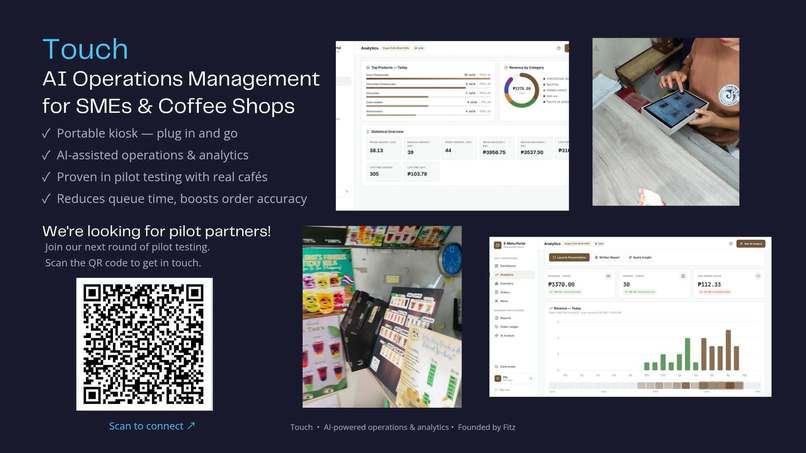
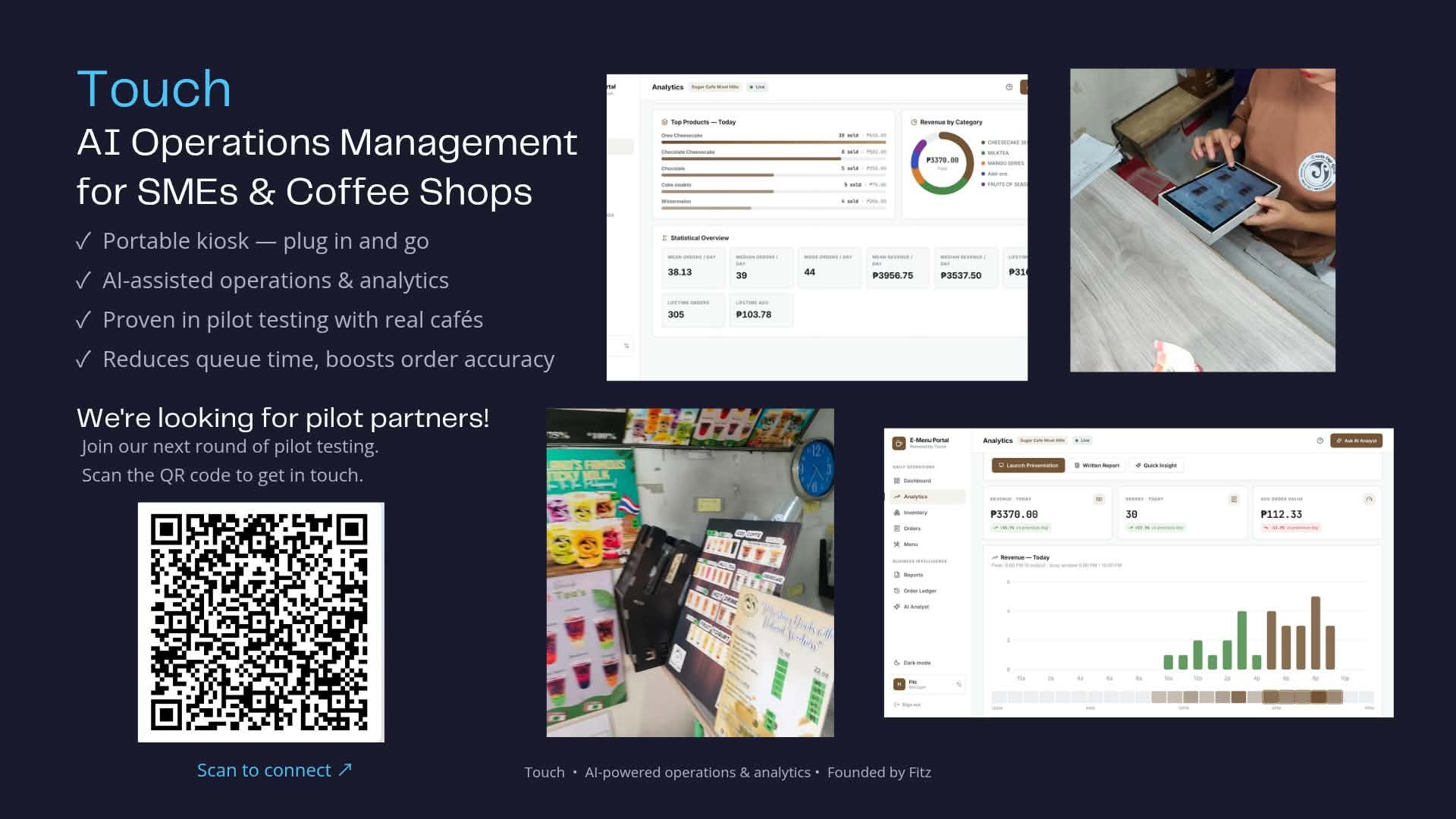
This is our presentation deck for the start-up idea: E-Menu Portal by Touch
-
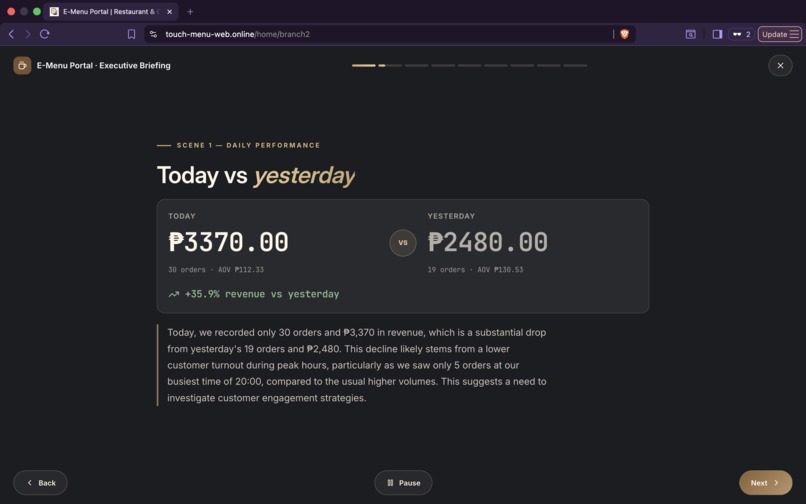
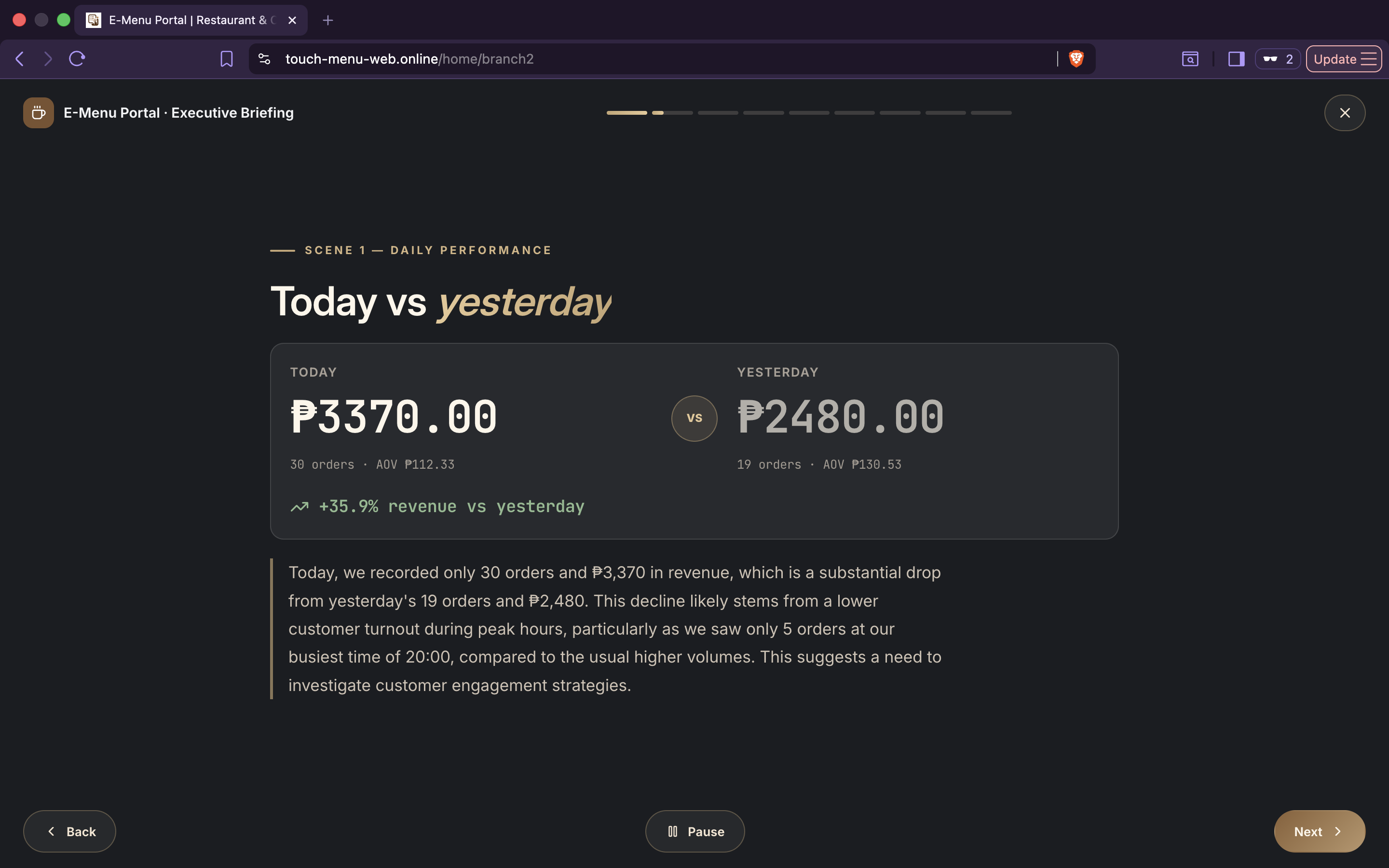
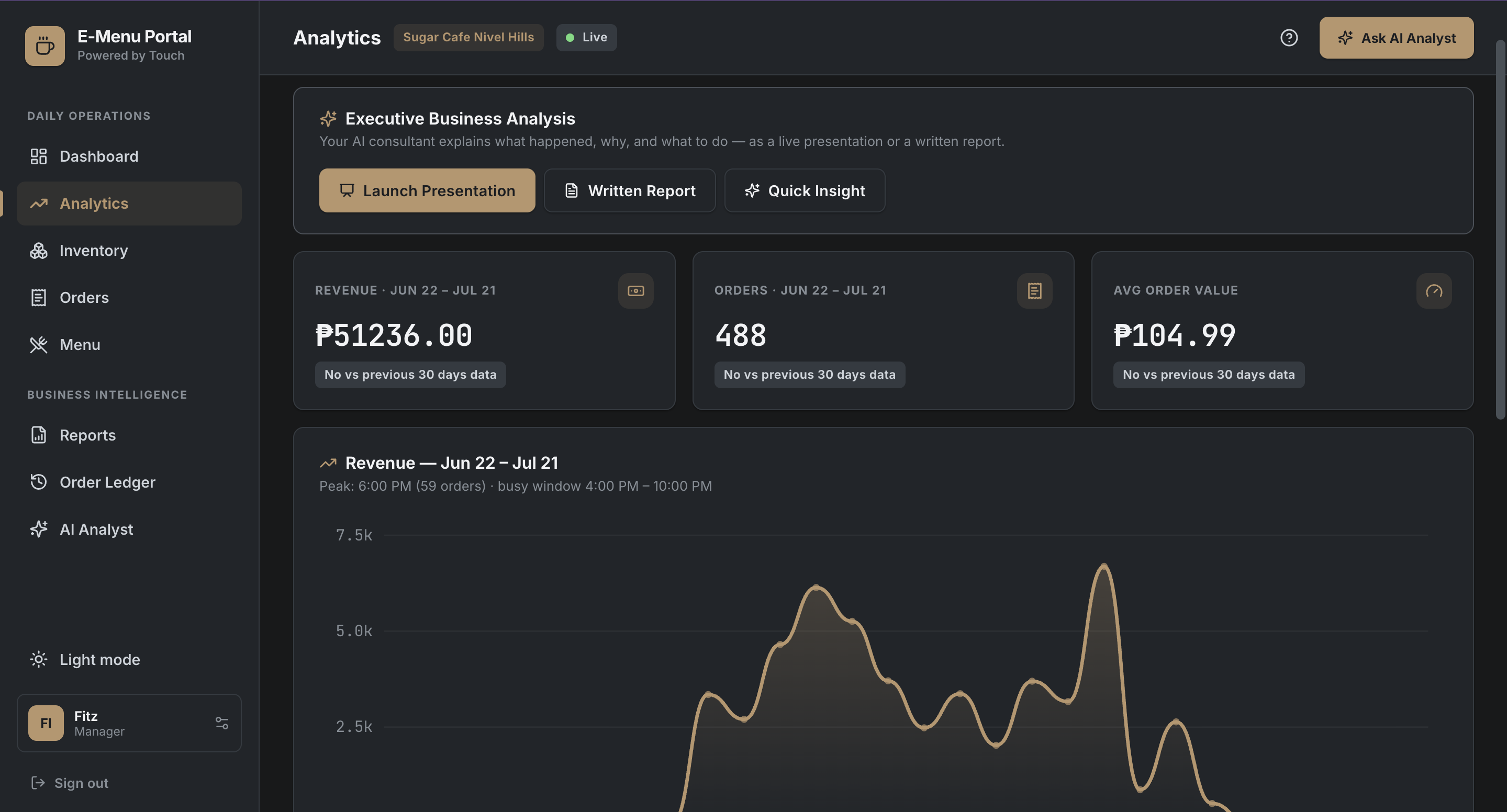
One of the recorded analysis during the pilot-testing weeks
-
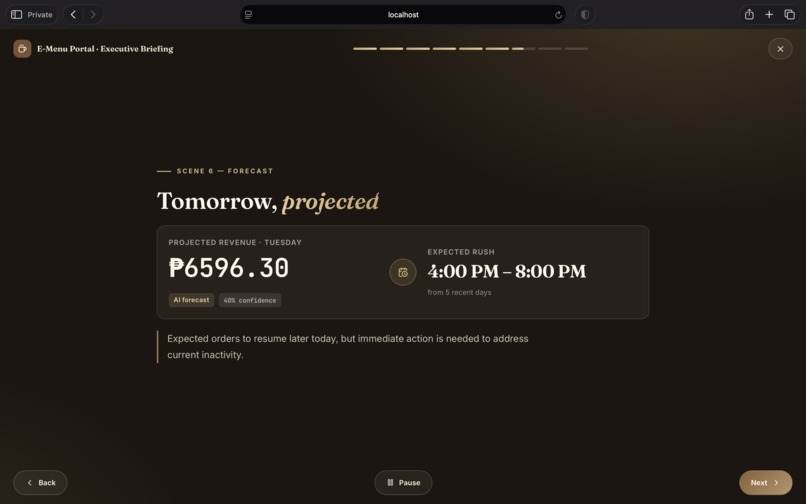
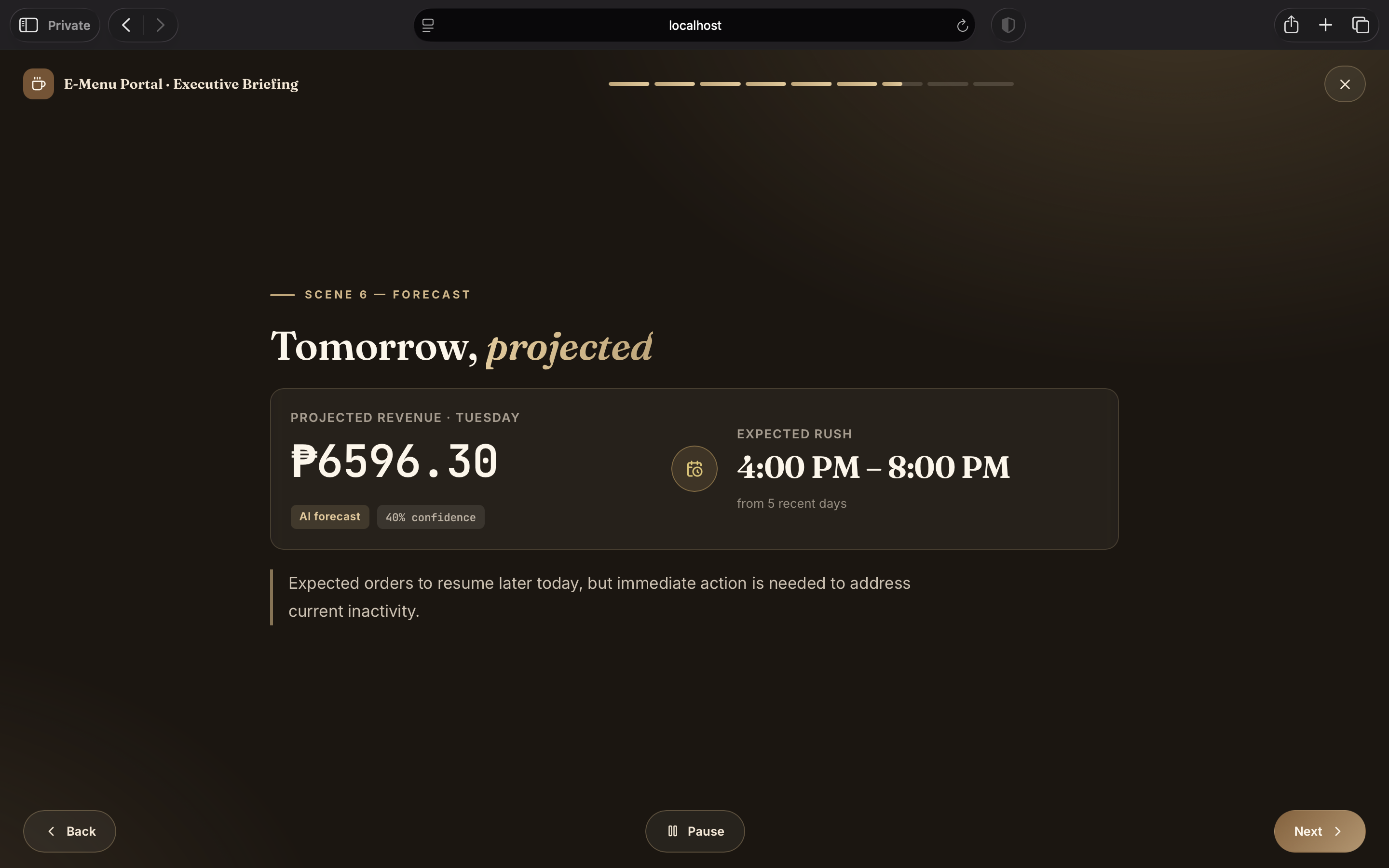
AI Predictions based on current and previous data (still recorded analysis during pilot-testing weeks)
-
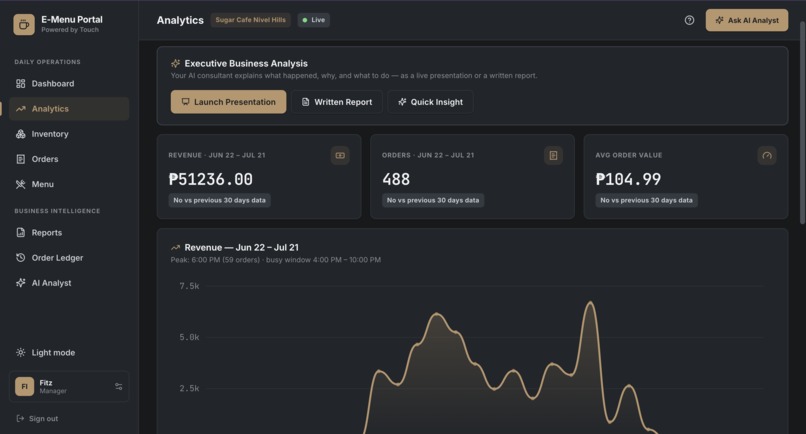
Overall results of the pilot-testing phase
-
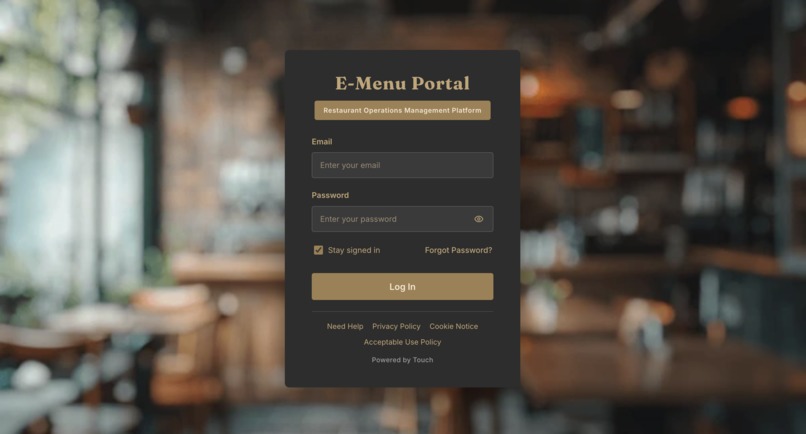
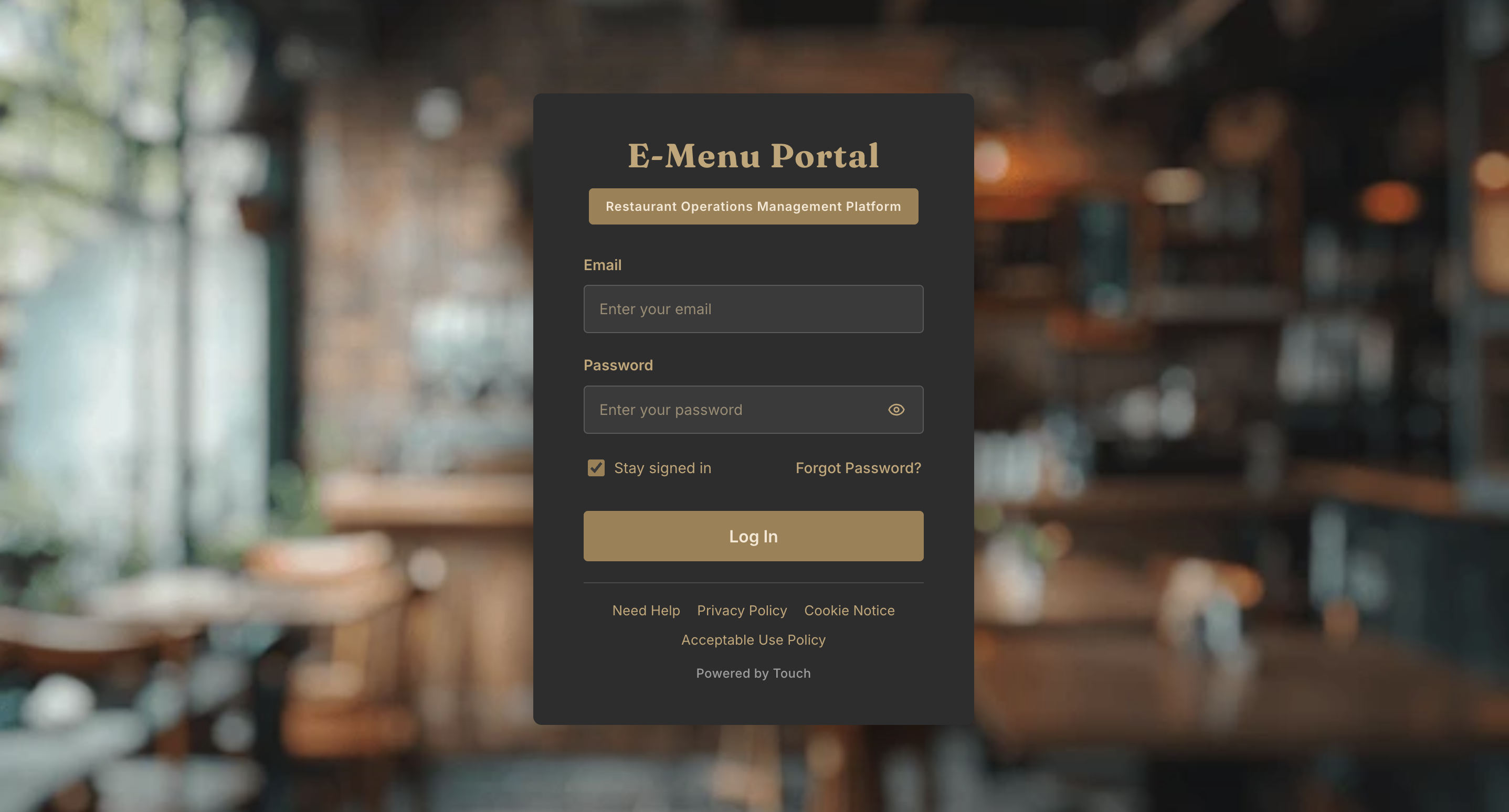
Login Page
Inspiration
Restaurant owners make hundreds of decisions every day, yet many only have access to sales totals at the end of the day. During our conversations with local café owners and while conducting a real-world pilot, we realized that traditional POS systems answer "What happened?" but rarely answer "Why did it happen?" or "What should I do next?"
We wanted to build something that acts like an operations manager rather than another reporting dashboard. Our goal was to help small and medium-sized restaurants gain access to the kind of operational intelligence that is normally only available to large enterprises with dedicated analysts.
That vision became E-Menu Portal – AI Operations Management Platform.
What it does
E-Menu Portal combines restaurant operations, analytics, and AI into a single platform.
Restaurant data is synchronized in real time through Firebase, processed into business metrics, and then analyzed using OpenAI models through a secure FastAPI gateway.
Instead of overwhelming owners with raw numbers, the platform generates executive-ready insights including:
- Executive Reports
- AI Shift Handoffs
- Live Operations Analysis
- Revenue Leak Detection
- AI-powered Recommendations
- Natural language conversations with an AI Business Analyst
The result is an operational assistant that helps restaurant owners understand what is happening inside their business and make faster, data-driven decisions.
How we built it
We built E-Menu Portal using a modern cloud architecture designed for real-world deployment.
- React + Vite powers the management dashboard.
- Firebase Authentication secures users.
- Firebase Realtime Database synchronizes restaurant operations.
- FastAPI serves as an authenticated AI gateway.
- OpenAI powers business reasoning and executive analysis.
- Railway hosts the backend services.
One important design decision was keeping OpenAI completely server-side. The frontend never communicates directly with OpenAI; every request is authenticated before being securely forwarded through our backend.
Challenges we ran into
The biggest challenge was balancing ambitious ideas with the realities of a hackathon.
During development we redesigned the architecture multiple times to improve security, simplify the AI workflow, and make the system production-ready.
We also encountered deployment issues involving authentication, CORS, backend routing, and production infrastructure. Solving these problems forced us to understand cloud deployment, API security, and system architecture far beyond simply writing application code.
Another challenge was deciding what not to build. We focused on delivering a reliable AI-powered workflow instead of implementing every planned feature, allowing us to ship a polished and functional product.
Accomplishments that we're proud of
What we're most proud of is building something that goes beyond a prototype.
E-Menu Portal has already been deployed, connected to real restaurant data, and evaluated through an actual pilot test with a local café.
We successfully integrated OpenAI into a complete operational workflow instead of using AI as a standalone chatbot. The AI generates explanations, recommendations, executive reports, and business insights based on live operational data.
We are also proud of transforming months of learning into a working platform that combines frontend engineering, backend APIs, cloud deployment, authentication, databases, analytics, and AI into one cohesive system.
What we learned
This project taught us that building AI products is much more than calling an API.
We learned the importance of architecture, security, authentication, prompt engineering, cloud deployment, API design, and designing systems that users can actually trust.
Perhaps the biggest lesson was that successful AI applications are built around solving real business problems, not simply showcasing AI technology.
Working directly with a real restaurant also reinforced how valuable user feedback is. Many of our design decisions changed after observing how restaurant owners actually interact with operational information.
What's next for E-Menu Portal: AI Operations Management Platform
This hackathon marks the beginning rather than the finish line.
Our next goal is to continue expanding the platform through additional pilot restaurants while improving inventory intelligence, forecasting, operational automation, and executive decision support. To further expand our start-up Touch, and we will continue improving this project under TouchOrders, E-Menu Portal: AI Operations Management Platform
We also plan to evolve E-Menu Portal into a more capable AI operations platform where multiple specialized AI capabilities work together to help restaurant owners monitor operations, identify risks, explain business performance, and recommend actions in real time.
Our long-term vision is simple:
Make enterprise-grade operational intelligence accessible to every small and medium-sized restaurant through AI.

Log in or sign up for Devpost to join the conversation.