-
-
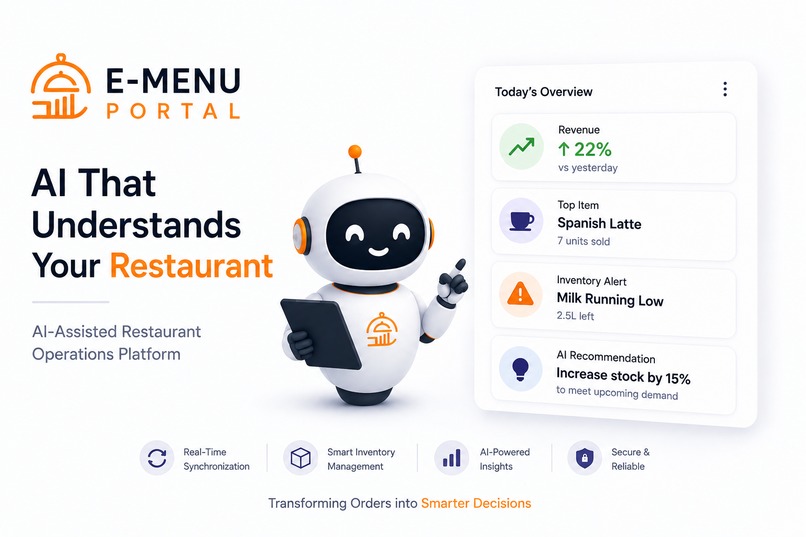
An AI Operations Management
-
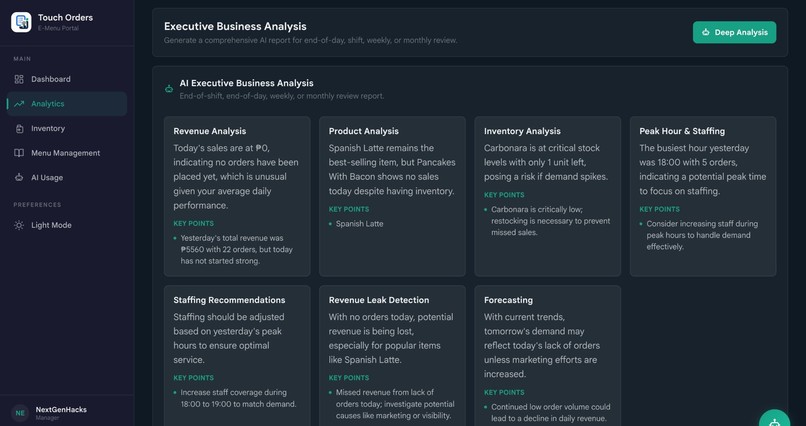
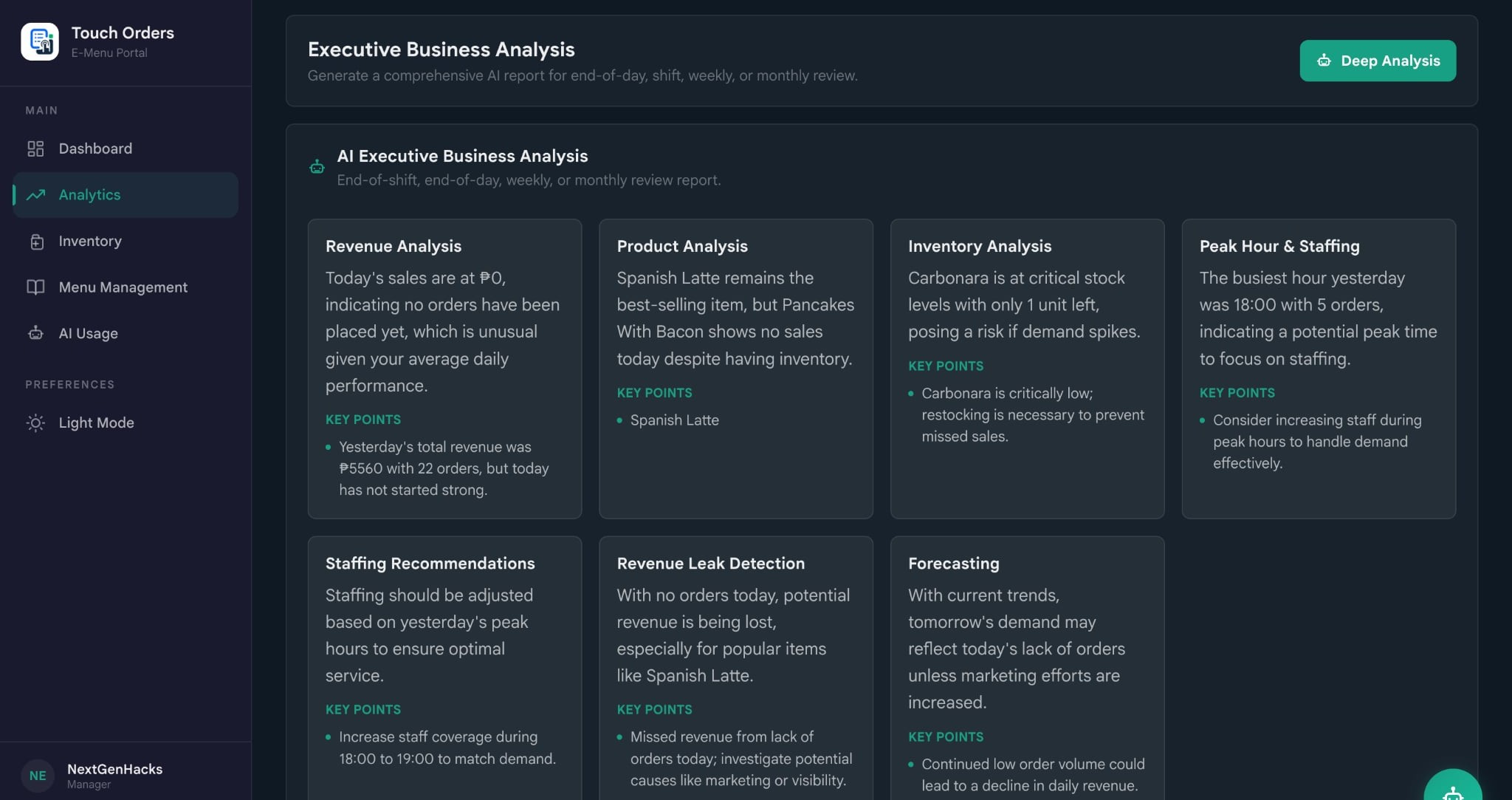
Deep Analysis
-
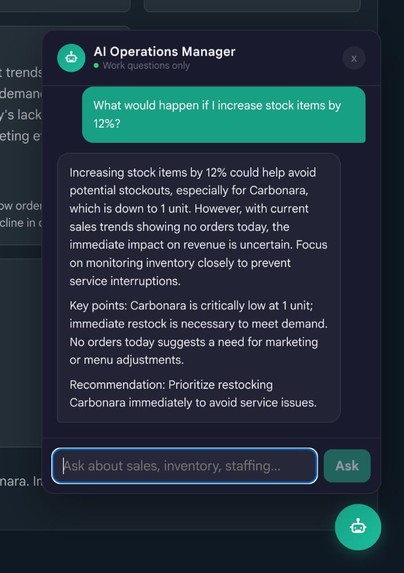
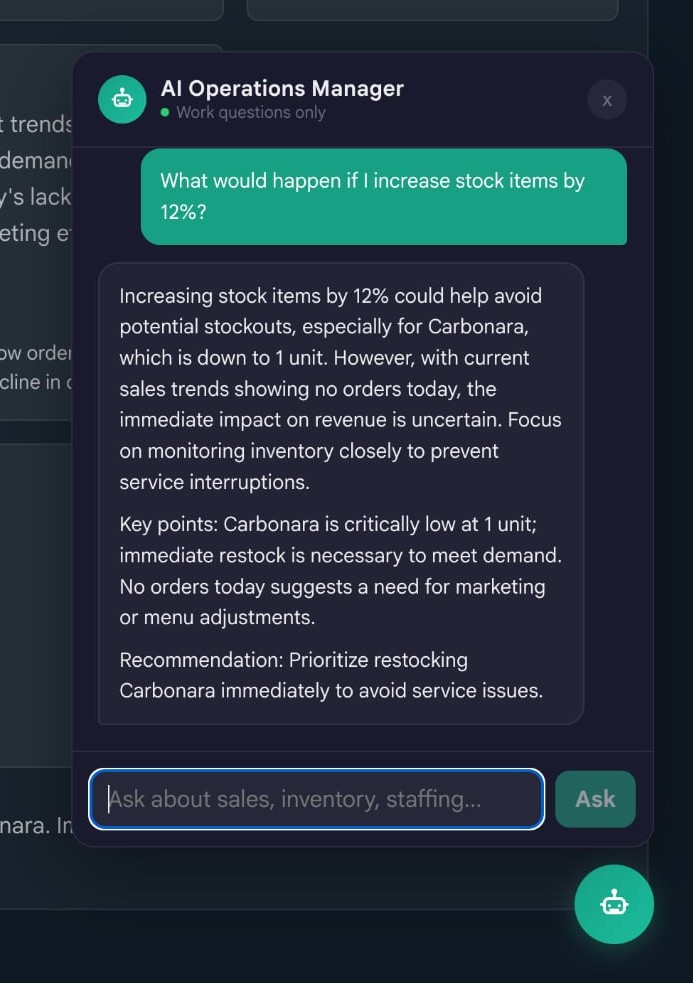
AI Chats
-
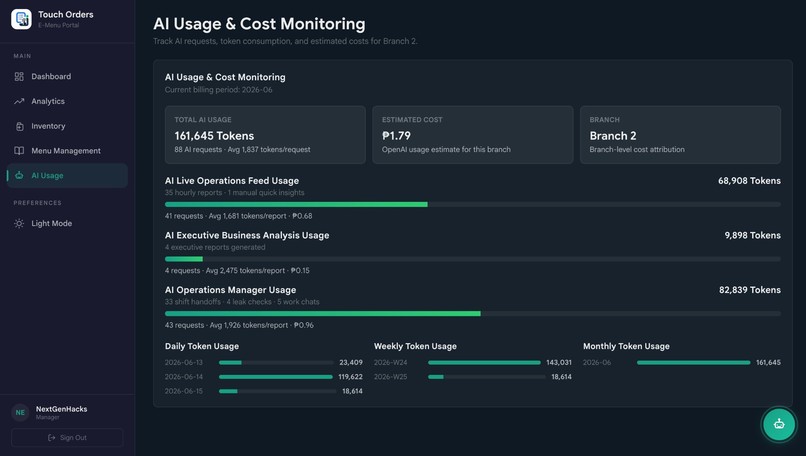
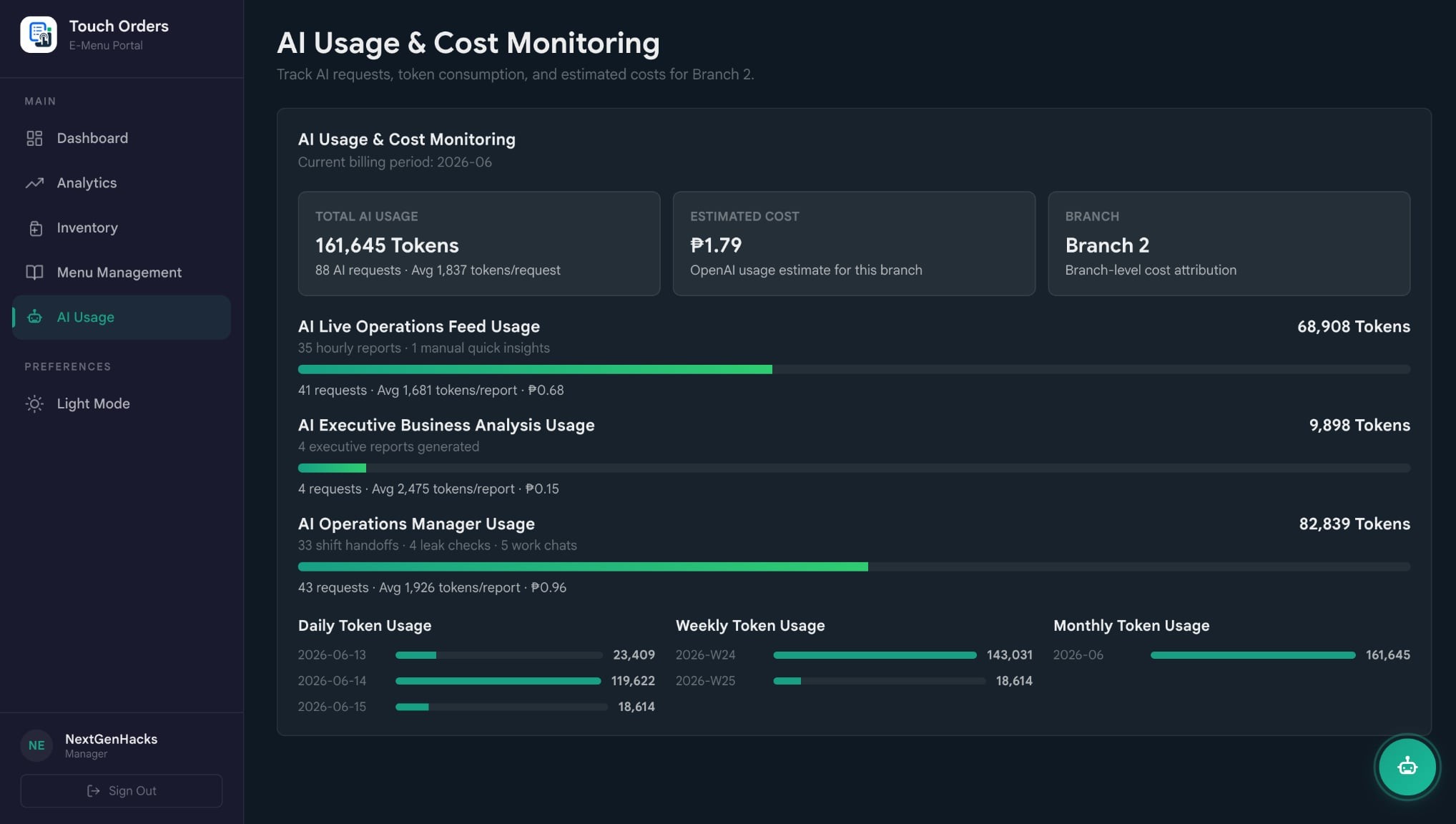
AI Usage Monitoring
-
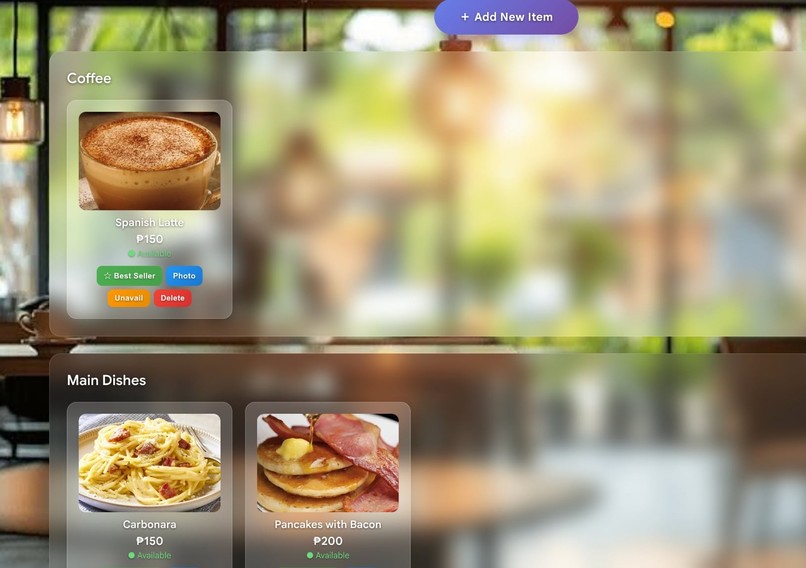
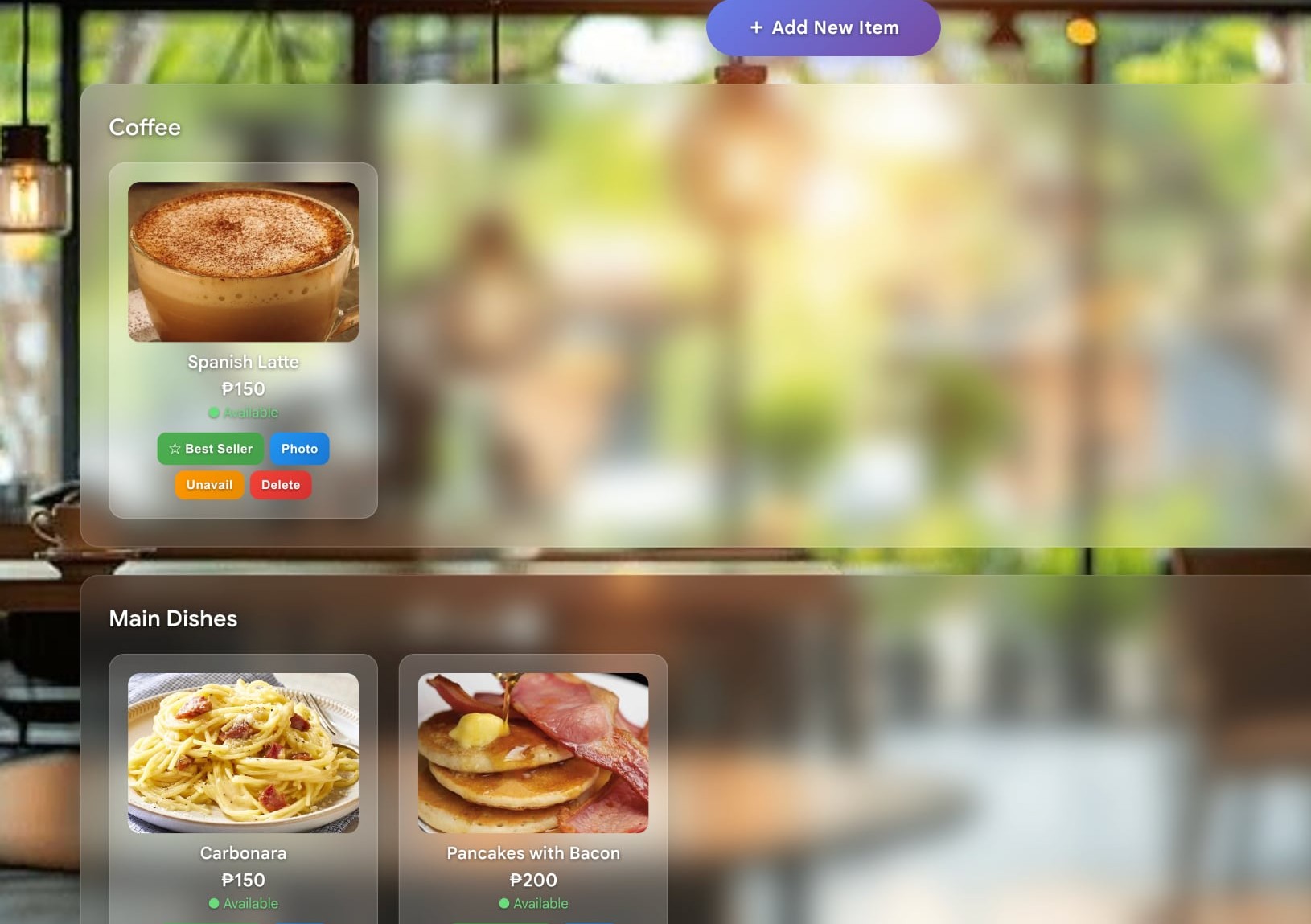
Menu Interface Management
-
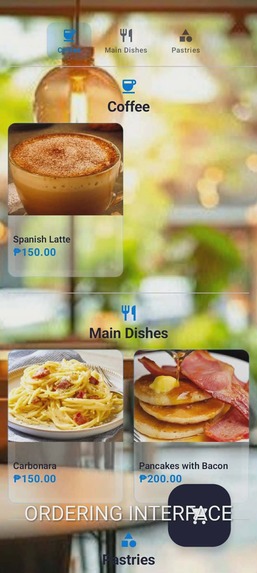
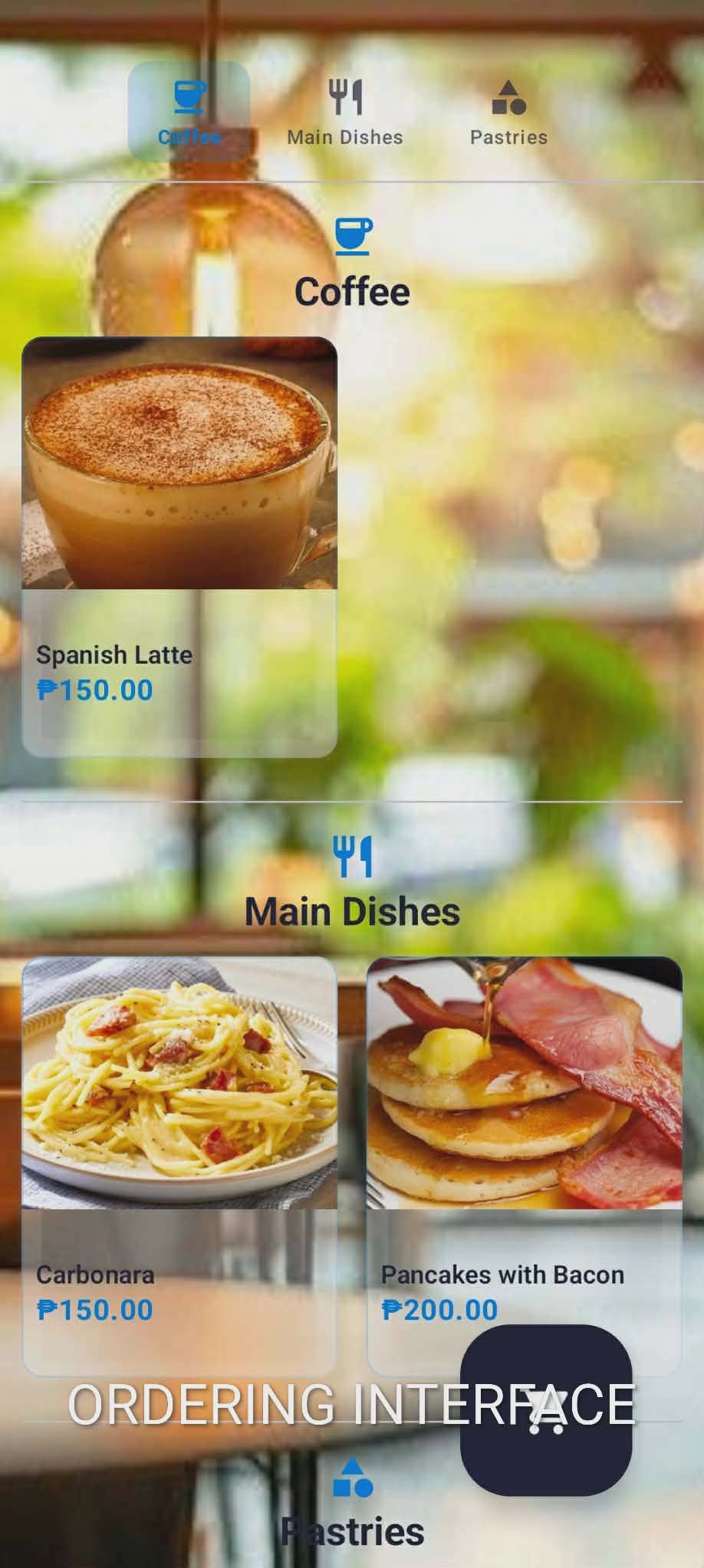
Ordering Interface for Application Side
Inspiration
Our inspiration came from observing how self-service technologies have transformed the customer experience in major restaurant chains. Today, customers are familiar with ordering through self-service kiosks in restaurants like McDonald's and Jollibee, and many small and medium-sized business owners want to adopt similar technologies to improve efficiency and modernize their operations.
However, most existing kiosk solutions are expensive, difficult to deploy, require specialized hardware, and often lack the operational intelligence needed to help businesses make better decisions. For many small and growing restaurants, the cost and complexity become barriers to adopting technology. We wanted to make these capabilities accessible to smaller businesses.
That led us to create a portable, easy-to-deploy kiosk system built around affordable tablet hardware, paired with E-Menu Portal, an AI-assisted restaurant operations platform. Beyond digital ordering, E-Menu Portal helps managers and owners understand what is happening inside their business through real-time analytics, inventory awareness, operational recommendations, audit tools, and AI-generated insights.
Our goal is to give small and medium-sized restaurants access to the same level of technological advantage that larger chains enjoy, without requiring large budgets, complex installations, or dedicated analytics teams.
What it does
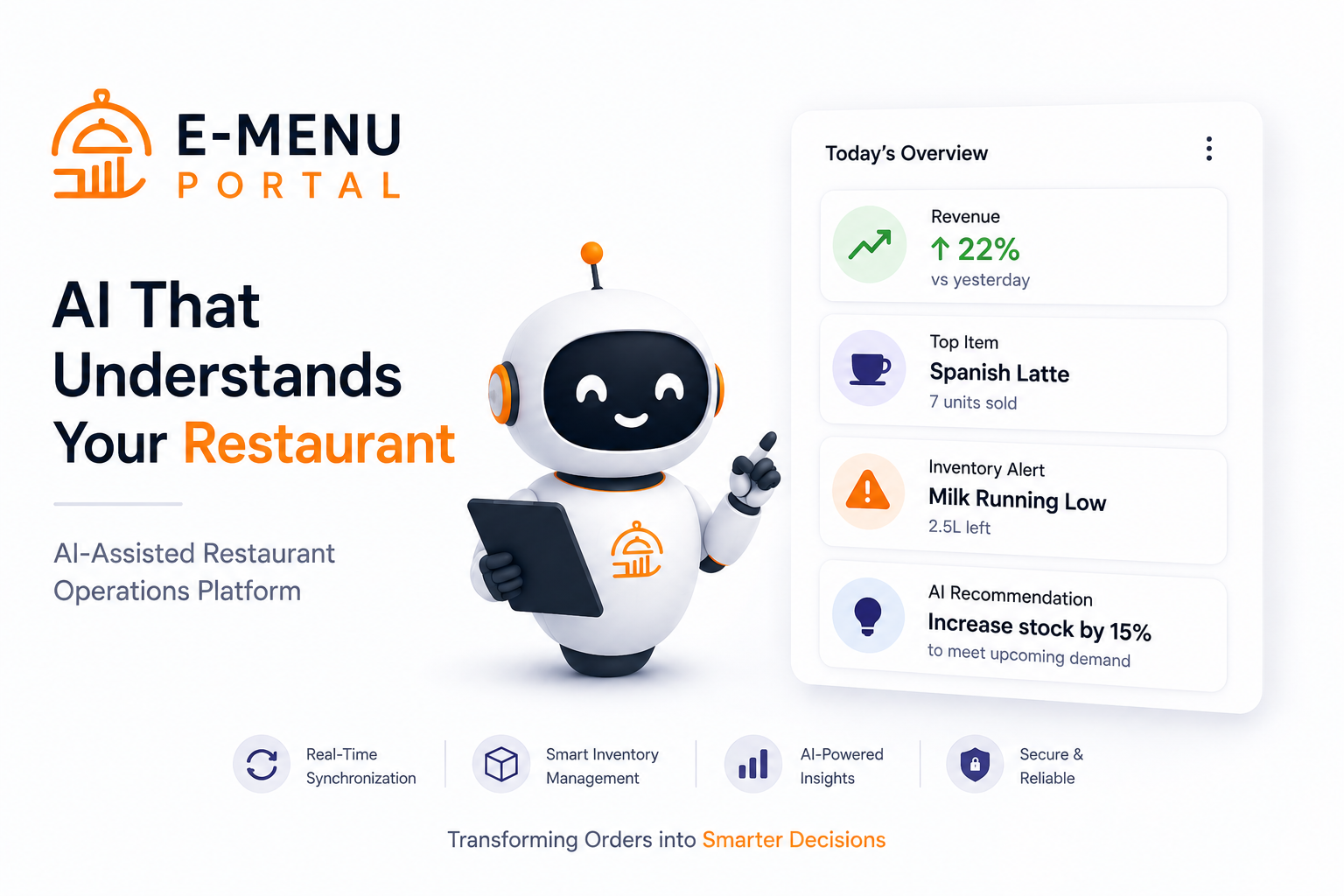
E-Menu Portal is an AI-powered restaurant operations platform designed to help restaurant owners and managers make better decisions in real time.
The platform combines digital ordering, sales analytics, inventory monitoring, operational intelligence, and AI-powered decision support into a single dashboard. As orders are placed through the kiosk system, E-Menu Portal continuously analyzes sales activity, product performance, inventory levels, and operational trends across each restaurant branch.
Managers receive an AI Daily Briefing when they start their shift, followed by a Live Operations Feed that proactively delivers recommendations and alerts throughout the day. The platform can identify trending products, inventory risks, unusual business activity, and opportunities to improve operations before problems occur.
For deeper insights, managers can request Quick Analysis for immediate recommendations or generate comprehensive Deep Analysis reports containing revenue insights, forecasting, inventory assessments, and operational recommendations.
To maintain analytics accuracy, E-Menu Portal includes an Analytics History and Order Correction System that allows managers to exclude mistaken or duplicate orders from business analytics without deleting historical records. The platform also tracks AI usage and estimated costs across multiple branches.
By transforming restaurant data into actionable recommendations, E-Menu Portal acts as a digital operations analyst that helps restaurants move from passive dashboards to active AI-assisted operations.
How we built it
We built E-Menu Portal as an AI-powered restaurant operations platform designed to help multi-branch food businesses move beyond passive dashboards and into AI-assisted decision-making.
The platform combines digital ordering, analytics, inventory monitoring, auditing tools, and operational intelligence into a single system. Using React, Vite, Firebase, and OpenAI, we created a workflow where restaurant data is continuously transformed into actionable business insights.
Instead of requiring managers to manually interpret charts and reports, E-Menu Portal acts as an AI Operations Manager. When managers log in, they receive an AI Shift Handoff summarizing branch performance, inventory risks, growth opportunities, and operational recommendations. Throughout the day, the AI Live Operations Feed proactively monitors branch activity and delivers alerts about demand spikes, stock risks, revenue changes, and operational concerns.
Managers can request Quick Insights for immediate analysis, generate Deep Analysis reports for executive-level business reviews, and interact with an AI Operations Chat that answers restaurant-specific questions and performs operational what-if scenarios.
To ensure analytics accuracy, we built an Analytics History and Order Correction System that allows managers to exclude duplicate, test, or incorrect transactions from analytics without deleting historical records. This preserves auditability while maintaining reliable forecasting and reporting.
The platform also includes branch-specific dashboards, inventory awareness, AI usage monitoring, and secure backend AI processing through Firebase Functions, ensuring that API keys remain protected and never exposed to the browser.
Our vision is simple: restaurant managers should not spend their time interpreting data. They should spend their time making decisions. E-Menu Portal transforms restaurant sales, inventory, and operational data into an AI Operations Manager that helps businesses understand what is happening, why it matters, and what action to take next.
Challenges we ran into
One of our biggest challenges was designing AI that behaved like an operations analyst rather than a generic chatbot. We wanted the system to provide actionable business recommendations based on restaurant activity instead of simply responding to prompts. This required us to carefully separate proactive AI features such as the AI Shift Handoff and Live Operations Feed from interactive features such as the AI Operations Chat.
Another challenge was maintaining analytics accuracy. Restaurant data can contain duplicate orders, testing transactions, staff training orders, or accidental entries that can distort revenue and performance metrics. Rather than allowing records to be deleted, we designed an Analytics History and Order Correction System that preserves auditability while excluding invalid transactions from analytics and forecasting.
We also faced challenges integrating AI securely. Since the platform relies on OpenAI for operational analysis, we needed to ensure that API keys were never exposed to the frontend. To address this, we moved all AI requests to secure backend Firebase Functions and implemented server-side environment variable management.
From a product design perspective, we spent significant time determining how managers would actually consume information during busy restaurant operations. Traditional dashboards often overwhelm users with data, so we redesigned the experience around AI-generated briefings, operational alerts, and concise recommendations that help managers make decisions quickly.
Finally, balancing multiple systems including branch management, analytics, inventory monitoring, AI insights, audit trails, and usage tracking into a cohesive experience was a major challenge. Ensuring that all components worked together while remaining intuitive for restaurant managers required multiple iterations of both the architecture and user interface.
These challenges ultimately helped shape E-Menu Portal into a platform focused not only on collecting data, but on transforming that data into operational intelligence that restaurant managers can immediately act upon.
Accomplishments that we're proud of
We are most proud of transforming a traditional restaurant dashboard into an AI-assisted operations platform that actively helps managers make decisions.
Rather than building another analytics dashboard, we successfully created an AI Operations Manager experience that combines real-time monitoring, operational intelligence, inventory awareness, and business recommendations into a single workflow. Managers can begin their day with an AI Shift Handoff, receive proactive operational alerts throughout the day, request immediate insights when needed, and generate executive-level analyses for deeper business reviews.
Another accomplishment was integrating multiple operational components into a unified platform. Sales analytics, inventory monitoring, AI-generated recommendations, branch management, historical auditing, and AI usage tracking all work together to provide a complete operational view of a restaurant branch.
From a technical perspective, we are proud of implementing a secure AI architecture where all OpenAI interactions are handled through backend services, preventing sensitive API keys from being exposed to the client side. Also, the database was secured enough that even if the apk of our ordering system application was leaked; it cannot disrupt the operations flow of the website at all.
Most importantly, we are proud of building a solution aimed at helping small and medium-sized restaurant businesses access operational intelligence that is typically only available to larger organizations with dedicated analysts and management resources. Our goal was to make advanced decision-support tools more accessible, practical, and actionable for everyday restaurant operations, and we believe E-Menu Portal is a strong step toward that vision.
What we learned
Throughout the development of E-Menu Portal, we learned that successful AI products are not built by simply adding AI to existing workflows. The real challenge is designing systems that deliver the right information at the right time in a way that helps users make better decisions.
We learned that restaurant managers often do not need more charts, reports, or raw data. They need clear insights, operational context, and actionable recommendations. This realization influenced many of our design decisions, including the AI Shift Handoff, Live Operations Feed, Quick Insights, and Deep Analysis features.
From a technical perspective, we gained valuable experience integrating React, Vite, Firebase, and OpenAI into a secure and scalable architecture. We learned the importance of handling AI requests through backend services, protecting API keys, managing real-time data, and designing systems that can support multiple branches while keeping data separated and organized.
We also learned the importance of data quality. Analytics and AI recommendations are only as reliable as the data behind them, which led us to build auditing and correction tools that help maintain accurate business intelligence without sacrificing historical records.
Most importantly, we learned how to think beyond building features and focus on solving real operational problems. Every feature we created was evaluated through a simple question: “Will this help a restaurant manager make a better decision?” That mindset helped shape E-Menu Portal into a practical AI-assisted operations platform rather than just another analytics dashboard.
This project reinforced our belief that AI is most valuable when it augments human decision-making, helping people work more effectively instead of simply generating information.
What's next for E-Menu Portal
The name of our startup, Touch, represents our vision of creating meaningful interactions at every level of business operations. We believe technology should not replace human decision-making—it should enhance it. Our goal is to build systems that strengthen the connection between people, businesses, customers, and technology through intuitive, intelligent, and accessible experiences.
This philosophy is reflected in E-Menu Portal. Every interaction in the platform is designed around collaboration between humans and AI. Managers remain in control of decisions, while the AI continuously monitors operations, identifies risks, highlights opportunities, and provides recommendations. Rather than automating people out of the process, we aim to create human-centered systems where technology acts as a trusted operational partner.
Looking ahead, our next goal is to evolve E-Menu Portal from an AI-assisted operations platform into a more automated business operations ecosystem. We plan to expand its capabilities to support B2B workflows, allowing restaurants and other businesses to automate repetitive operational processes while maintaining human oversight for critical decisions.
Future development areas include intelligent inventory replenishment recommendations, supplier coordination workflows, operational forecasting, multi-branch performance optimization, business process automation, and deeper integration with business management systems. We also plan to improve predictive analytics and scenario simulations so managers can evaluate operational decisions before implementing them.
A key part of our roadmap is building stronger Human-in-the-Loop frameworks. We believe the most effective AI systems are those that combine automation with human judgment. As E-Menu Portal grows, AI will take on more monitoring, analysis, and recommendation responsibilities, while managers and business owners retain approval authority over important operational actions.
Our long-term vision is to build intelligent business systems that help organizations make better decisions, operate more efficiently, and scale sustainably. E-Menu Portal is our first step toward that future, a future where humans and technology work together to create smarter, more responsive businesses.
Built With
- firebase
- openai
- react.js


Log in or sign up for Devpost to join the conversation.