Inspiration
As high school seniors transitioning into young adulthood, we are starting to make real financial decisions for the first time, and things like credit cards have suddenly become important. However, while scrolling online blogs and platforms like Reddit to learn more, we found that much of the information was conflicting, anecdotal, and difficult to apply to our own situations. With so many cards, reward structures, and unwritten rules around credit history, approval chances, and what card to get next, the whole process felt overwhelming.
Most people our age need guidance based on their own profile, habits, and goals instead of more lists of "best credit cards." We wanted to build something that helps users understand what fits them now and see a realistic path toward the cards they want in the future.
What it does
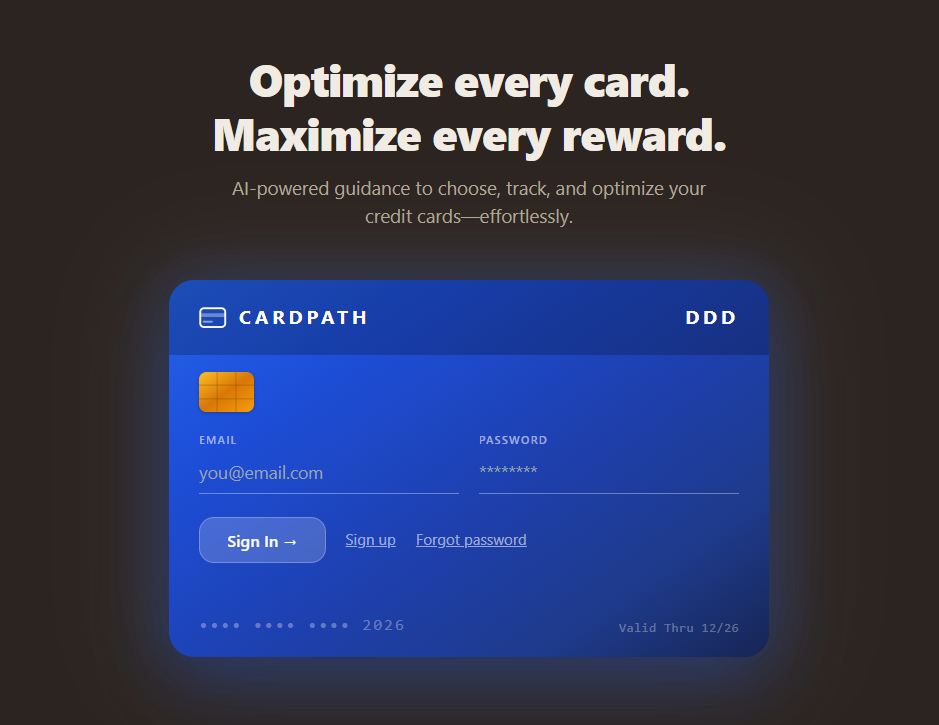
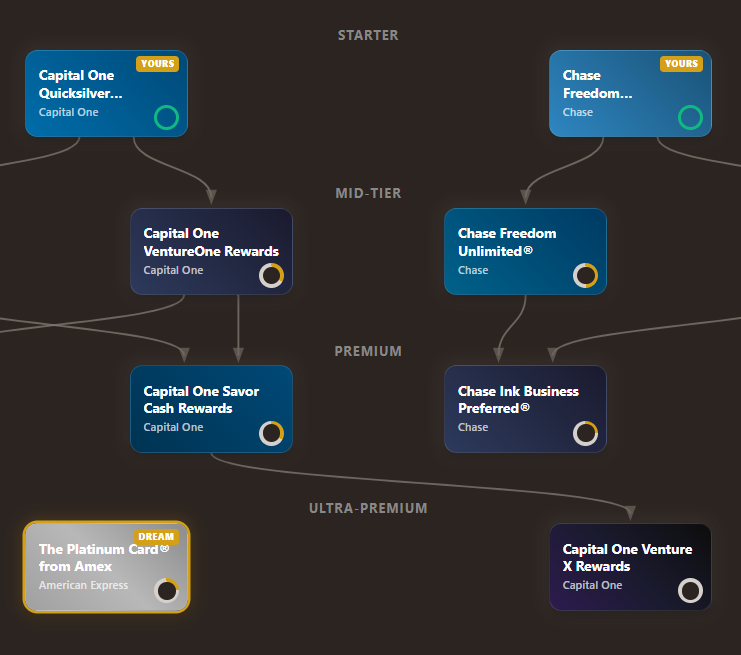
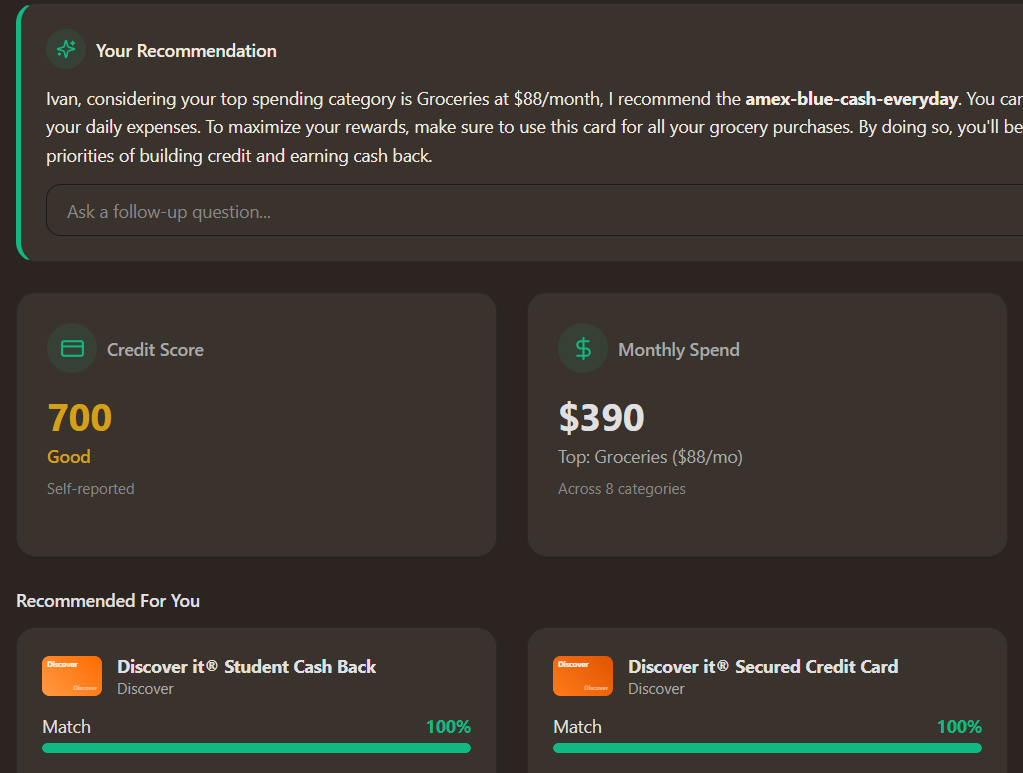
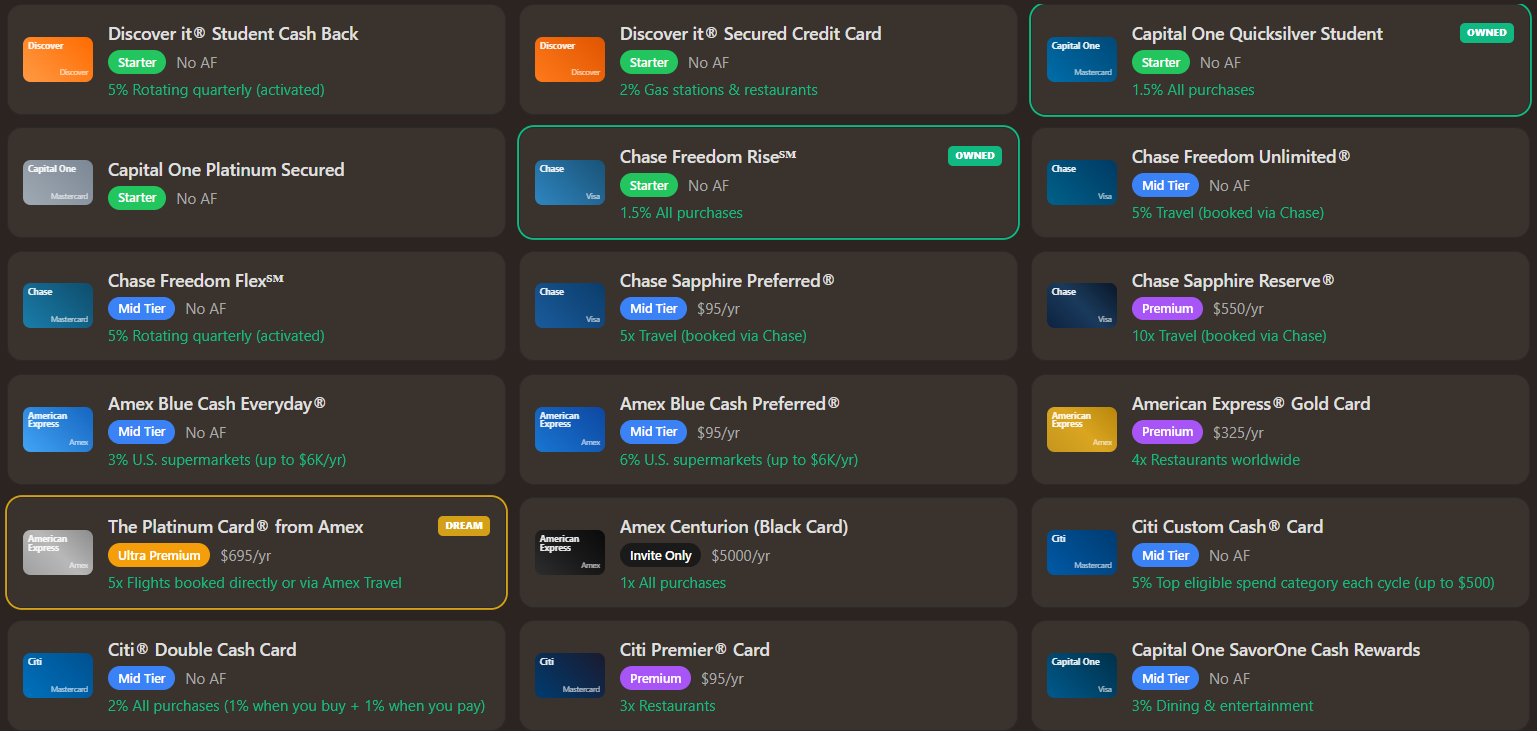
CardPath takes initial user data such as credit profile, spending habits, current cards, and personal preferences, then uses that information to recommend cards that fit the user now and generate a realistic path toward the cards they want later. It also includes an AI-powered advisor and card database to help users better understand their options, compare cards, and make more informed decisions.
How we built it
Our pipeline works in three main steps:
User Profile + Preference Collection
We collect information through an onboarding flow, including the user’s credit profile, current cards, spending habits, and priorities like cashback, travel rewards, low APR, or building credit.Recommendation Engine + CardPath Planning
We built a local database of credit cards and a rule-based matching system that evaluates each card against the user’s profile and preferences. Based on that, the app recommends cards that make sense now and generates a step-by-step path from the user’s current position to their target card.AI Financial Advisor
We use Claude to transform the app’s structured outputs into personalized, readable guidance. This allows users to ask questions, understand why certain cards fit their situation, and get clear advice on what to do next.
Challenges we ran into
- Translating design into code: One of our biggest challenges was taking the UI we designed in Figma and implementing it cleanly in the app. Some layouts looked polished in the mockup but were harder to recreate consistently in code while keeping the interface responsive and intuitive.
Accomplishments that we're proud of
This was the first hackathon for all of us, and we're happy that we were able to work collaboratively and efficiently to create a project we're proud of. Moreover, we’re proud that CardPath tackles a problem we have personally run into and turns it into something more structured, useful, and approachable.
What we learned
We learned that ideating takes a considerable amount of time and is just as important as execution. It is easy to rush into building with a blurry idea and feel productive, but that usually leads to wasted time, unclear features, and work that has to be redone later. We really took our time early on to clarify what we wanted CardPath to do, which helped us make better decisions once we started building.
What's next for CardPath
CardPath could more accurately assess users by analyzing real transaction data rather than relying on self-reported estimates. In the future, we could implement a feature to scans a user's Gmail for purchase confirmations and transaction emails to automatically identify spending patterns. Tracking these transactions would build a more accurate picture of the user's habits and generate better card recommendations and upgrade paths.
Built With
- claude
- groq
- javascript
- lucide
- node.js
- postgresql
- react-native
- supabase
- tailwind
- vite


Log in or sign up for Devpost to join the conversation.