-
-
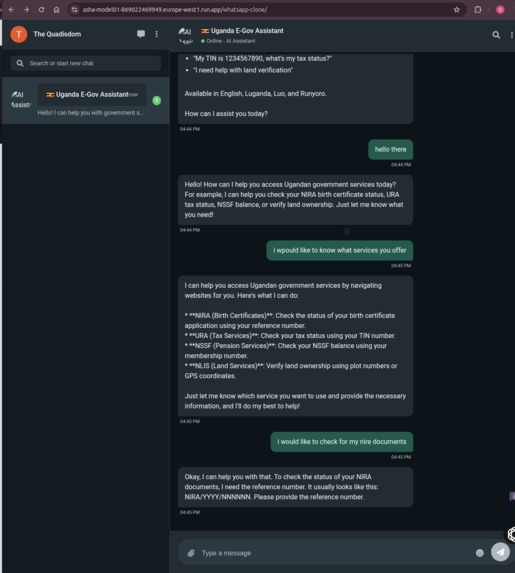
whatsapp clone interface
-
-
-
-
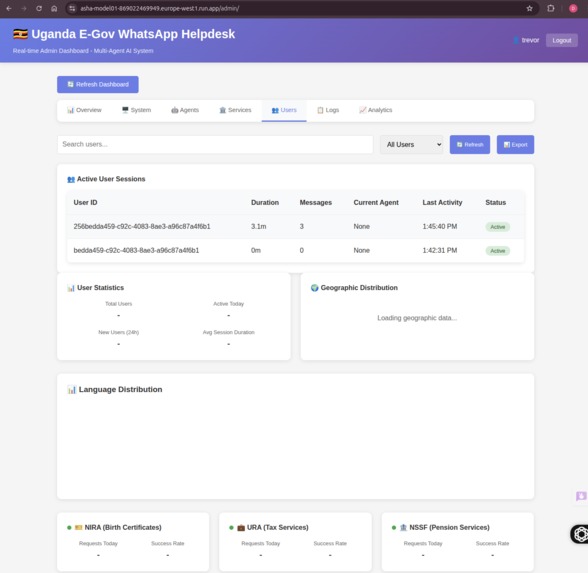
-
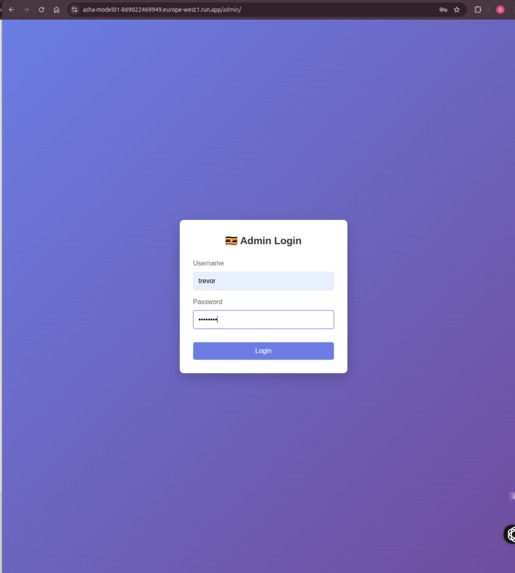
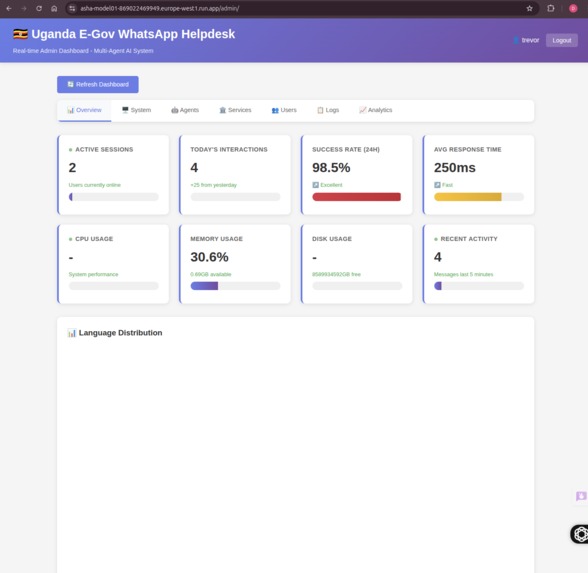
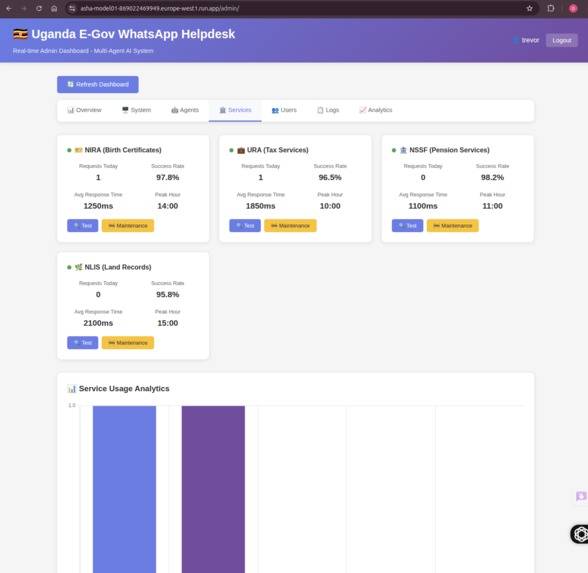
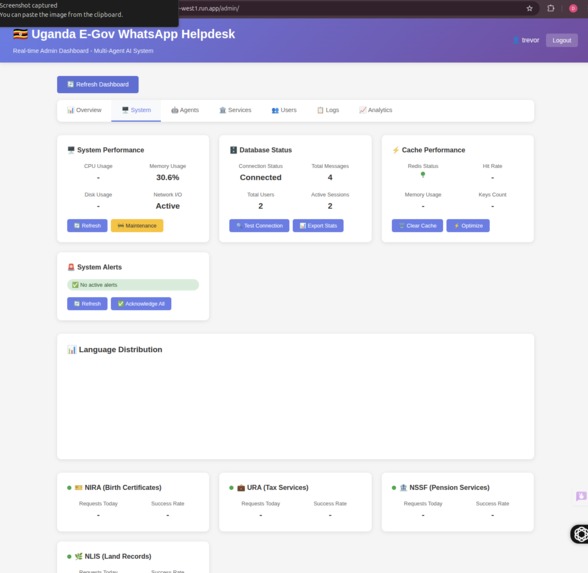
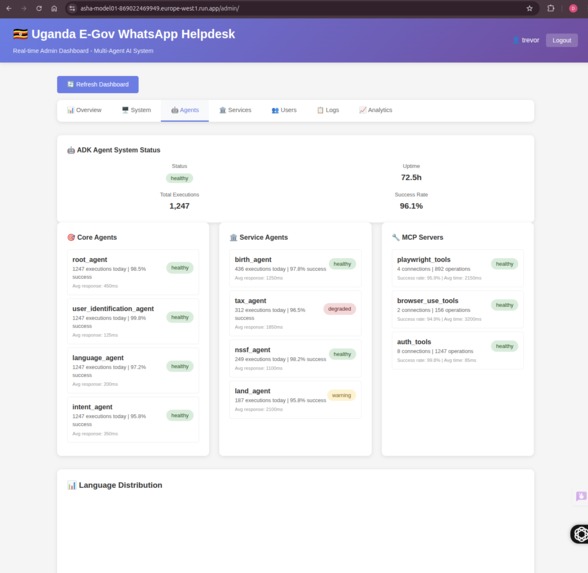
admin login
-
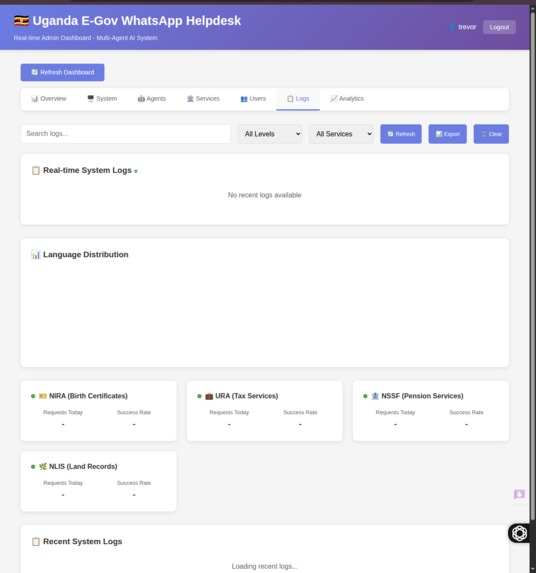
-
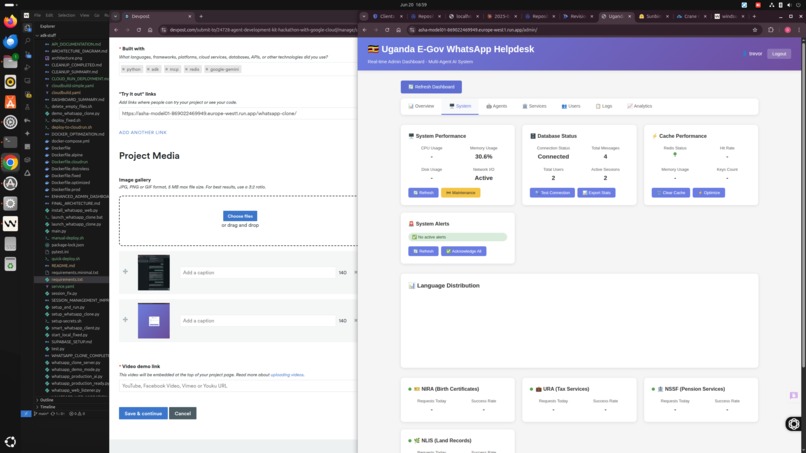
-


Inspiration
We were inspired by the idea of making government services as accessible as sending a message on WhatsApp. In particular, we saw that the Indian MyGov Helpdesk on WhatsApp allowed millions of citizens to access services like DigiLocker and vaccine certificates simply by chatting egov.eletsonline.com . That success showed us how a conversational agent could put “governance and government services at the fingertips of citizens” egov.eletsonline.com . We wanted to build on this vision: an AI-powered helpdesk where anyone can ask questions about e-government processes (forms, deadlines, procedures, documents, etc.) and instantly get accurate answers. With a Google ADK hackathon theme, we realized that a multi-agent chatbot on WhatsApp could bridge government information and the citizens who need it.
What it does
Our ##E-Govt WhatsApp Helpdesk is a conversational chatbot that runs on WhatsApp. It lets users send natural-language questions (like “How do I apply for a birth certificate?” or “What’s the status of my permit?”) and receive helpful, human-like responses in seconds. Under the hood, the system orchestrates multiple specialized agents (using Google’s ADK) in a hierarchy google.github.io . For example, one sub-agent handles FAQs about common services, another retrieves official form links or document templates, and another performs live web searches if a query falls outside the core knowledge base. This modular design – “composing multiple specialized agents” google.github.io – makes the system both scalable and flexible. We also equipped the agents with diverse tools: for instance, a search tool to look up government guidelines and a code executor to retrieve or format data google.github.io . In practice, a user simply messages our WhatsApp number, and the backend agent routes the request to the right sub-agent(s) and returns a concise answer. It feels just like chatting, but powered by AI that knows about e-government services.
How we built it
We built this system using Google’s new Agent Development Kit (ADK) in Python, along with the WhatsApp Cloud API and Google Cloud services. ADK is “a flexible and modular framework for developing and deploying AI agents” google.github.io , which was perfect for our multi-agent design. We defined an LLM-driven LlmAgent to handle user intent, and several SequentialAgent and ParallelAgent workflows to implement tasks like information retrieval and form lookup. The ADK framework let us attach pre-built tools (e.g. a web search tool) and custom functions (e.g. a scraper for government PDF links) to the agents google.github.io . For the WhatsApp integration, we used the official WhatsApp Business Cloud API: incoming messages from users hit our webhook, which invokes the ADK agent pipeline to generate a response. To deploy everything, we containerized the agents and ran them on Google Cloud Run (as suggested by ADK’s documentation) for scalability google.github.io . The result was a smooth pipeline from WhatsApp → ADK agents → answer. We also leveraged Vertex AI’s underlying LLM (e.g. Gemini or PaLM) through ADK’s integration, ensuring our agent had a powerful language model to understand and respond to queries. In summary, our stack included Python ADK (Google ADK v1.0), Google Cloud Run, the WhatsApp Cloud API, and standard web frameworks (Flask) glued together by ADK’s orchestration.
Challenges we ran into
We encountered a mix of technical challenges while building this helpdesk. For one, learning the ADK multi-agent framework had a learning curve – designing the agent hierarchy and state transitions required planning so conversations would flow naturally. Ensuring context was maintained (so follow-up questions worked) meant carefully using ADK’s session memory. Integrating with WhatsApp also posed hurdles: setting up the webhook, handling message templates, and formatting our JSON replies to meet WhatsApp’s requirements took extra debugging. We also had to curate or generate reliable content for government processes; in some cases, we needed to write prompt engineering rules so the agent would give accurate, up-to-date answers rather than hallucinate. Finally, time was tight. Building a polished end-to-end system in a short hackathon period required us to prioritize core features (like basic FAQs) and leave advanced ones (like multi-turn form filling) for future work. Despite these hurdles, we iterated quickly by testing on real WhatsApp chats and refining our agents’ prompts and tools. Accomplishments that we're proud of We’re proud of several milestones in this project. First, we got a working conversational loop: a message on WhatsApp reliably triggers the agent workflow and sends back a coherent answer. Getting a multi-agent ADK pipeline to activate in response to a live chat was a big accomplishment. Second, we successfully implemented key services: for example, the bot can explain how to apply for a driver’s license, provide status updates for certain applications, or fetch links to official forms. These core features worked smoothly in our testing. Third, we managed to containerize and deploy the system to Cloud Run, meaning it runs continuously and can scale if many users try it simultaneously google.github.io . Finally, we set up basic evaluation: using ADK’s built-in evaluation tools, we ran a few test cases (questions with known answers) to verify that the agent was returning the correct information, which helped us tune the responses. Overall, seeing the bot handle a variety of e-gov queries correctly was a breakthrough – it felt like a proof-of-concept that such a helpdesk can really function end-to-end.
What we learned
Through this project we learned a lot about building AI agents and integrating them with real-world platforms. Technically, we became proficient with the Google ADK: from defining LlmAgents and workflows to using ADK tools and callbacks, we learned how to craft a flexible agentic system. We also learned about deploying AI applications on cloud infrastructure – containerizing the agent and setting up Cloud Run gave us practical DevOps experience. Integrating with the WhatsApp API taught us about handling webhooks and asynchronous messaging. On the data side, we learned how important it is to test and evaluate an AI agent: ADK’s documentation highlights built-in evaluation for measuring “final response quality and step-by-step execution” google.github.io , and we saw firsthand that writing good test prompts is essential for reliability. Beyond tech, the biggest insight was how powerful conversational interfaces can be for public services: for example, MyGov’s chatbot has already engaged millions of users egov.eletsonline.com . We saw that even a minimal bot can dramatically improve access to information, which inspires us to keep refining this helpdesk.
What’s next for E-Govt WhatsApp Helpdesk
Looking ahead, we have several plans to improve and scale the project. First, we want to expand the knowledge base: add more covered services (like birth/marriage registration, utility payments, etc.) and keep all information up-to-date. We plan to connect the bot to official open data APIs or RSS feeds so that the agent always has the latest announcements. Second, we will refine the multi-agent logic and use ADK’s evaluation framework more extensively – for example, writing systematic test cases and using those to iteratively improve answer accuracy google.github.io . Third, on deployment, we hope to make the system production-ready: setting up proper monitoring/logging, handling edge cases, and potentially deploying on Vertex AI’s agent engine for larger scale google.github.io . We’re also considering localization (support for regional languages) so that the helpdesk can serve a wider audience. Ultimately, we envision open-sourcing the project and collaborating with government IT teams or NGOs: the goal is to see this helpdesk actually live on WhatsApp, making e-government services truly accessible to everyone. With continued work, our E-Govt WhatsApp Helpdesk could become a model for citizen-centric digital governance. Sources: We built this system using Google’s open-source ADK framework google.github.io google.github.io and took inspiration from real-world government WhatsApp chatbots egov.eletsonline.com . All development is documented on our GitHub repository.desk

Log in or sign up for Devpost to join the conversation.