Inspiration
The inspiration for E-Shop came from a frustrating, universal reality shared by modern online shoppers: the phantom inventory trap and unexpected delivery delays. Too often, traditional platforms allow users to purchase items that are actually out of stock at the nearest fulfillment center, leading to backorders and logistics confusion. We realized that the core issue wasn't a lack of delivery assets, but a lack of real-time, synchronized communication between the customer's front-end booking action and the back-end supply chain.
Furthermore, during the conceptual phase, we experimented with Medo AI to help map out our system architecture. This experience provided an unexpected spark of inspiration: we realized that if an AI required highly specialized, repetitive prompts just to understand our complex business logic, then a traditional, loosely coupled database system would struggle even more to execute it reliably in real time. We set out to build an e-commerce platform where booking a product guarantees its physical isolation instantly, and the delivery timeline is algorithmically optimized from the millisecond the checkout button is pressed.
What it does
E-Shop is an end-to-end e-commerce and logistics management ecosystem built to bridge the gap between instant consumer demand and supply chain execution.
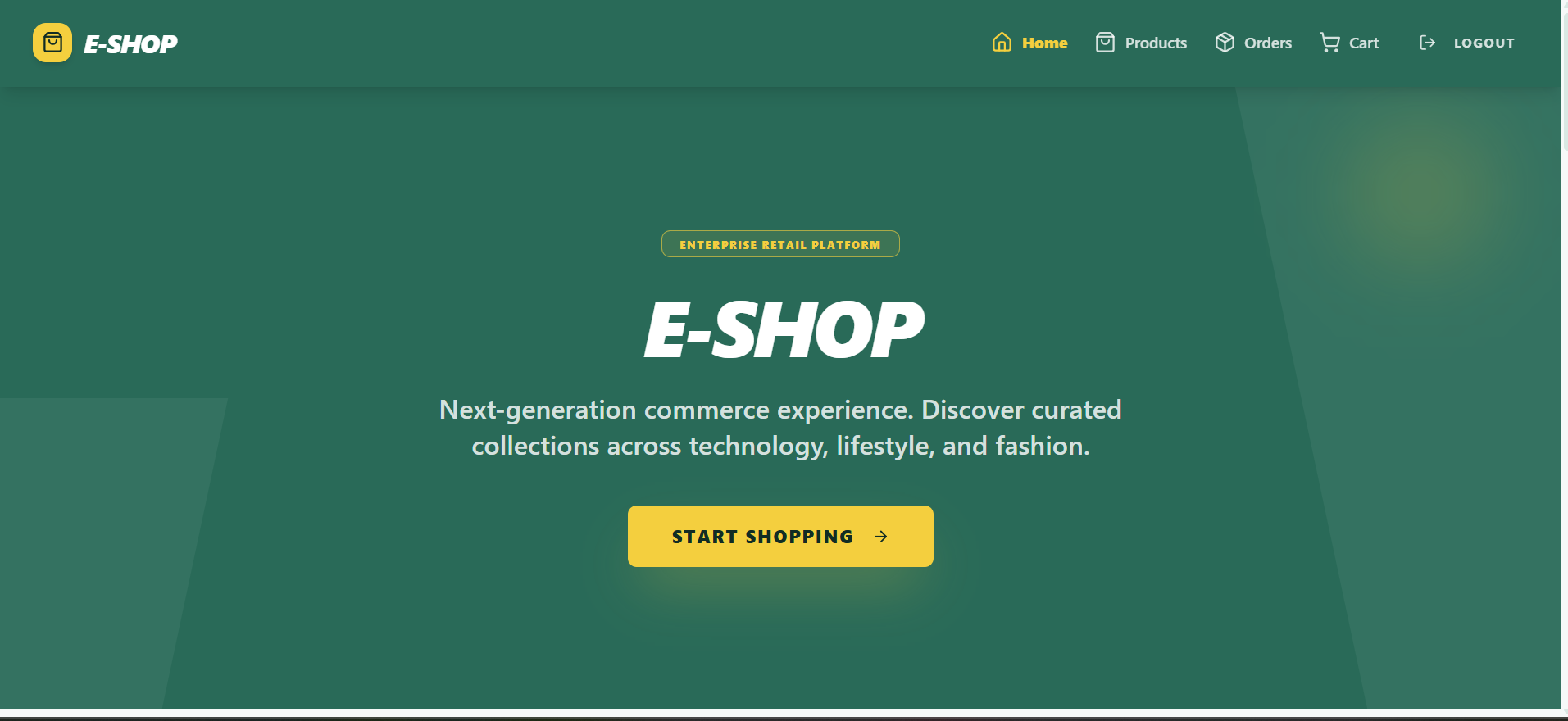
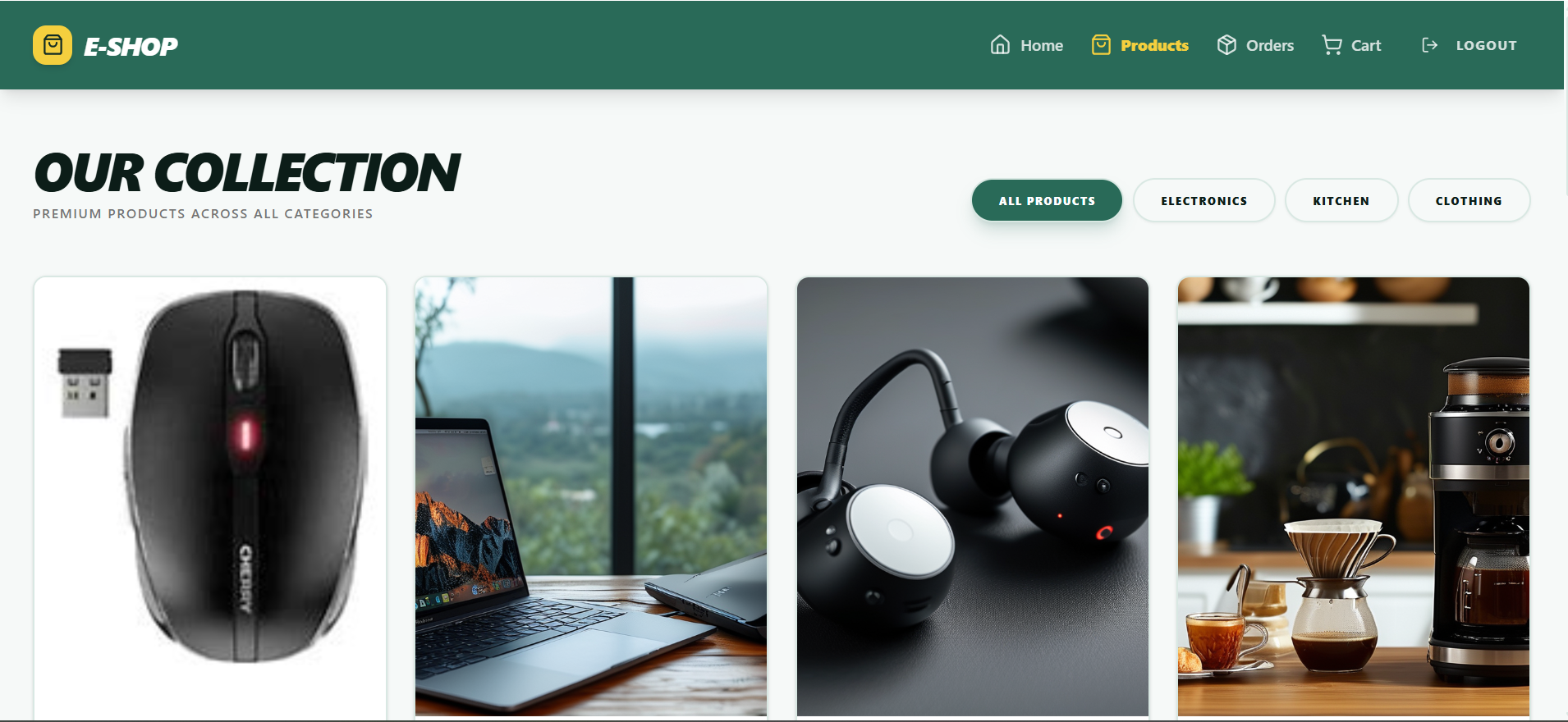
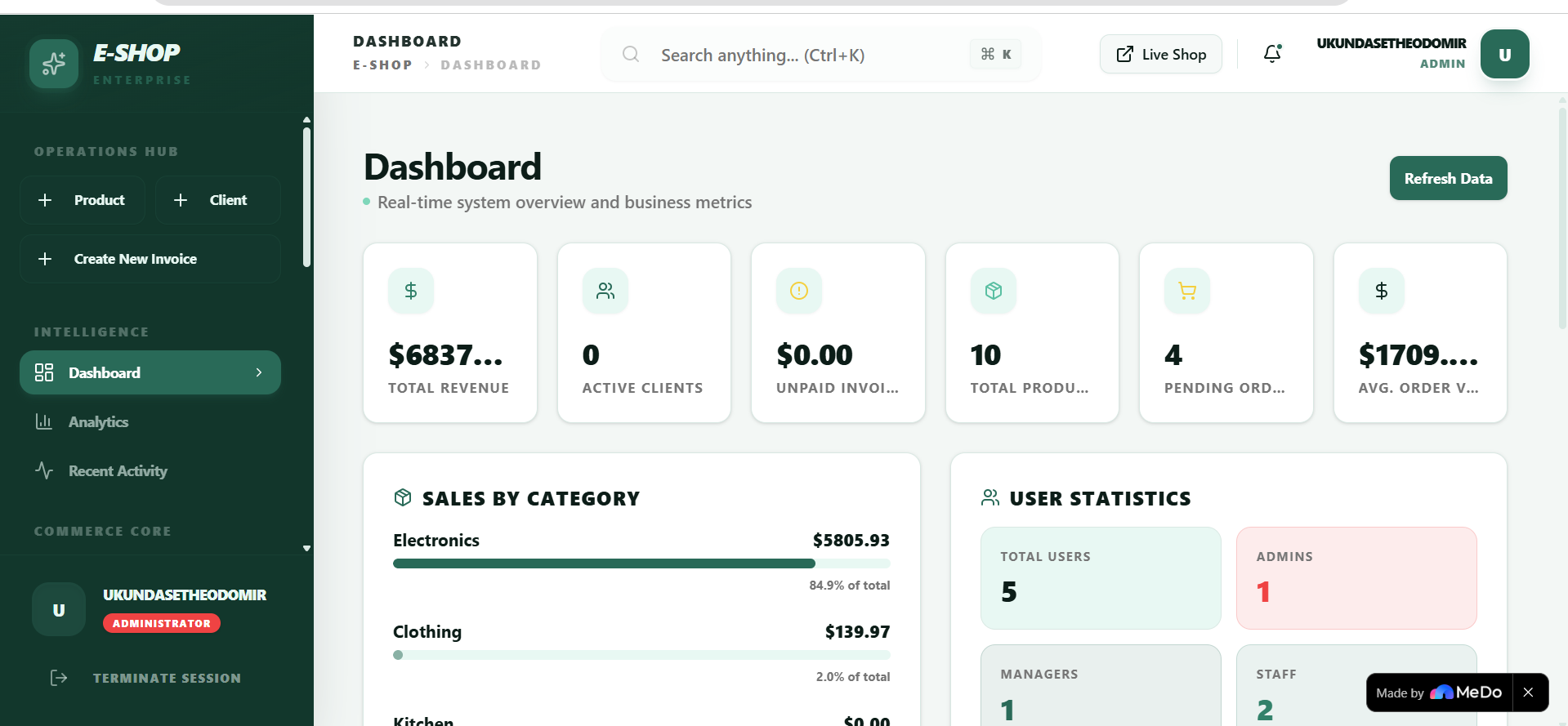
For the everyday user, it provides a crisp, user centered interface for instant online product booking. For the fulfillment team, it operates an intelligent, data-driven routing and inventory backend. By combining real-time inventory locking with predictive dispatch algorithms, E-Shop ensures that when a customer books an item, it is immediately secured to prevent double-booking. The system then automatically calculates and assigns the product to the fastest possible delivery vector, directly tackling and solving the problem of product delivery delays.
How we built it
The e-shop was built based on solving problem by figuring how it will works, the features it has and the Ui/Ux which is very professional and user centered and make the prompt to the medo dev respectively and continue to prompt in order the Medo ai can make everything relevant according to our needs and the problem we are solving.
Challenges we ran into
Our development journey was marked by both technical and workflow challenges:
- Prompt Fatigue & AI Misalignment with Strong Business Logic During the design phase using Medo AI, we hit a major bottleneck: prompt fatigue. Because E-Shop relies on incredibly strict, interconnected business logic (such as millisecond-accurate inventory states and dynamic threshold routing), generic AI models constantly oversimplified our backend constraints. We found ourselves writing endless, hyper-detailed prompts over and over again just to get the AI to generate code that respected our system's edge cases without breaking the transactional flow. Resolution: We stopped using ad-hoc prompting and instead compiled a rigid, single-source-of-truth Core Product Specification Sheet. By feeding this comprehensive logical blueprint to the AI context window upfront, we eliminated the need for repetitive prompting and kept the business rules perfectly intact.
- Race Conditions During High-Traffic Bookings During flash booking windows, thousands of users would attempt to reserve the same limited stock simultaneously. Early testing showed that standard database queries suffered from race conditions, leading to accidental double-booking and subsequent fulfillment delays. Resolution: We migrated our inventory tracking to an in-memory data structure store utilizing pessimistic locking. This ensures that an item's stock count can only be decremented by one isolated thread at a time.3
Accomplishments that we're proud of
Some of the accomplishment we proud of is that our e-shop web application solves the real problem in society related to buying and selling of products online because many people are being scammmed by the online fake shops but for us it will have the headquarter in every country it will operate in and this will increase service delivery and confidence among public, Remember everything was done simply by medo ai.
What we learned
Developing E-Shop taught us valuable lessons about software architecture, modern supply chains, and AI collaboration:
Explicit Documentation Saves Time (and Prompts): Relying on an AI tool to "guess" your business logic through conversational prompts is exhausting. We learned that treating business logic as an immutable mathematical specification sheet upfront saves hundreds of lines of bad code and hours of prompt micromanagement.
Logistics is an Information Problem: Most delivery delays do not happen because drivers are slow; they happen due to poor data communication between fulfillment hubs. Keeping software states perfectly mirrored with real-world physical items eliminates administrative lag.
What's next for e-shop
The next with e-shop is to increase the campaigns and advertisement so that they can use it while buying the products. and as engineer wwe continue improve it and support user to understand how to work with it effectively.


Log in or sign up for Devpost to join the conversation.