-
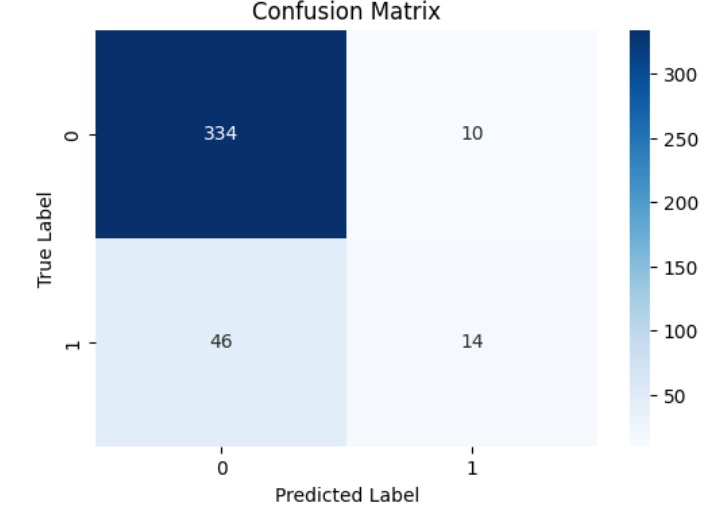
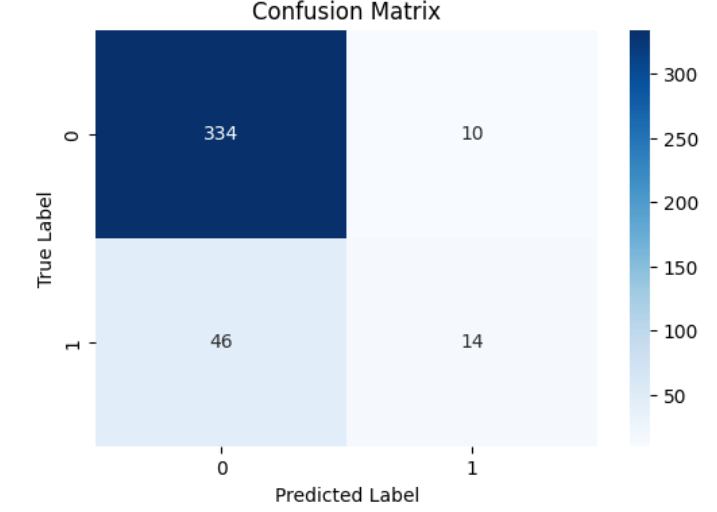
Confusion Matrix
-
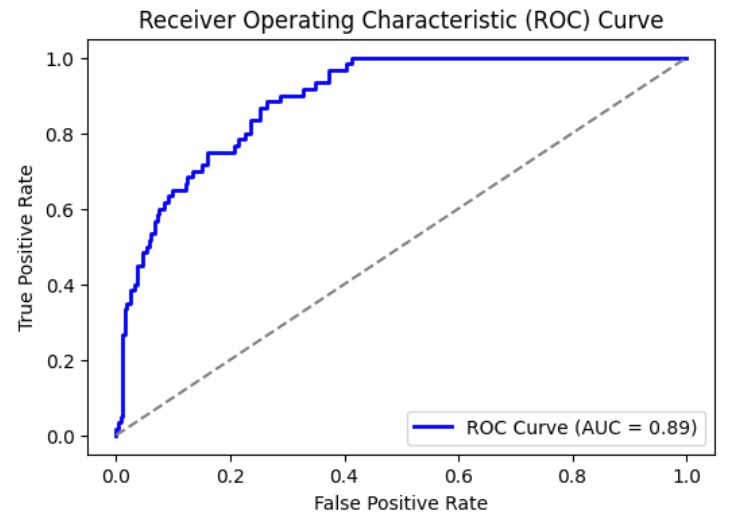
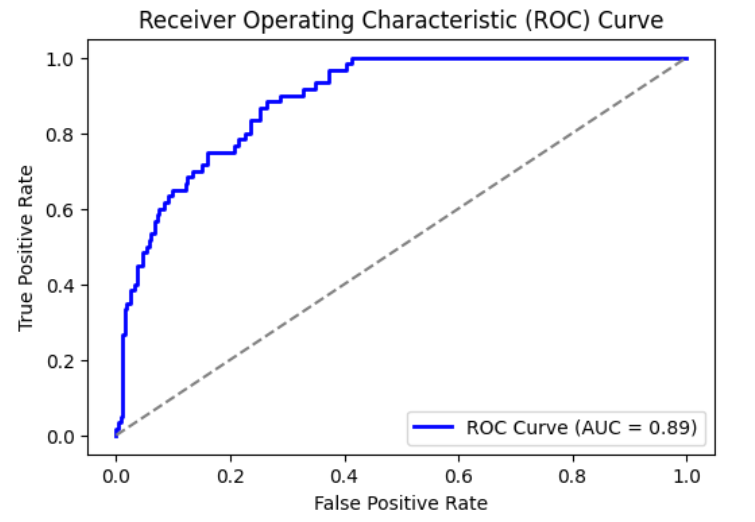
ROC Curve
-
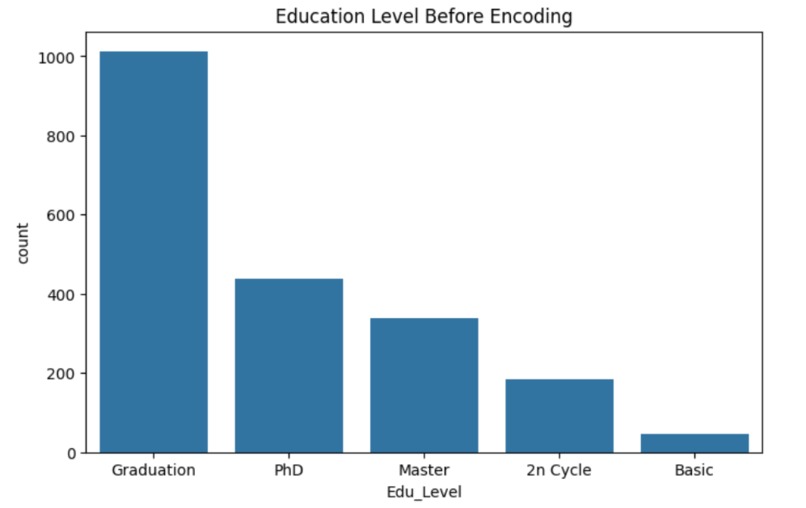
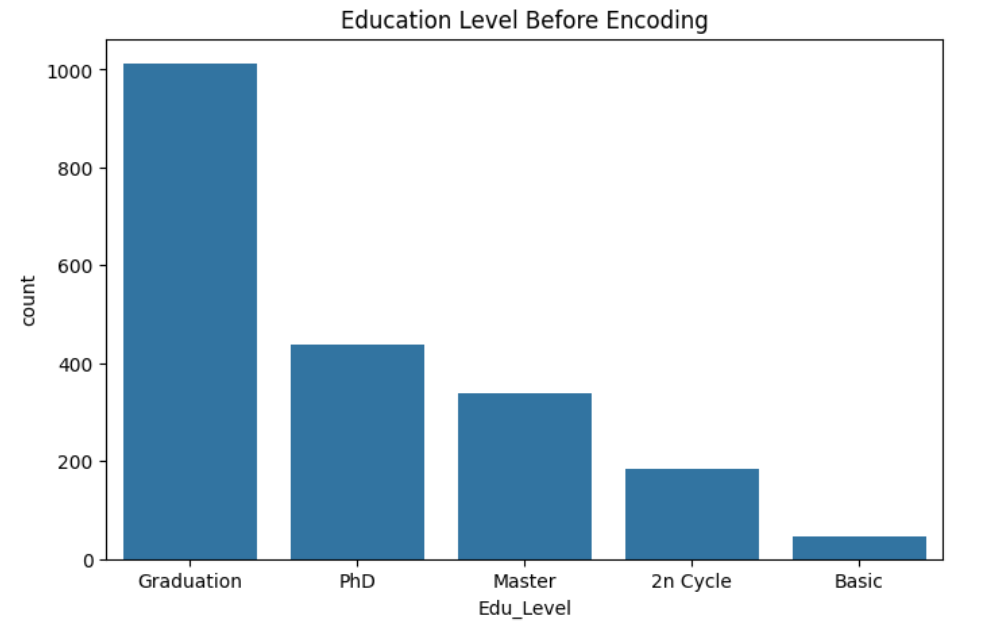
Education Level Before Encoding
-
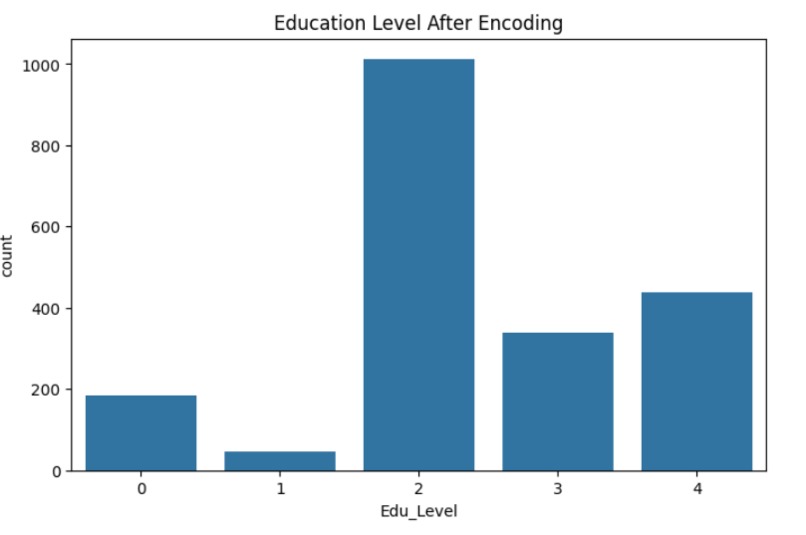
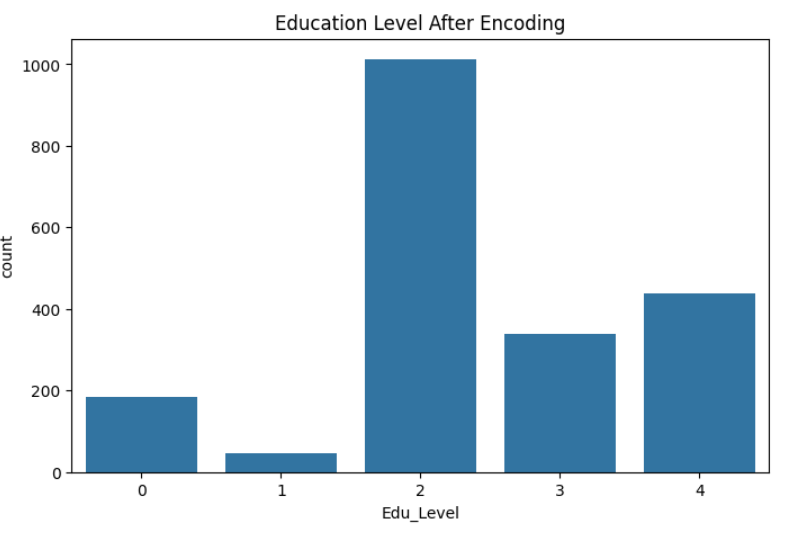
Education Level After Encoding
Inspiration
E-commerce businesses face challenges in predicting customer purchases, which impacts marketing efficiency and customer engagement. We aimed to build a solution that leverages data to drive better decision-making.
What it does
Our predictive model analyzes customer purchasing behavior based on demographics, past spending, and engagement metrics. It determines the likelihood of a customer making their next purchase, helping businesses optimize their marketing strategies.
How we built it
Data Preprocessing: Cleaned and structured the dataset by handling missing values, encoding categorical features, and normalizing numerical attributes.
Feature Engineering: Derived useful insights like age from birth year and encoded purchasing patterns.
Model Selection: Trained and evaluated multiple models, including Random Forest and Neural Networks, to identify the most effective approach.
Performance Tuning: Used SMOTE for data balancing, hyperparameter tuning, and cross-validation for better results.
Challenges we ran into
Imbalanced Dataset: The dataset had a significantly higher proportion of non-buyers, affecting model performance.
Feature Selection: Identifying the most influential features required iterative testing.
Optimizing F1-Score: Achieving a high F1-score for the minority class was challenging and required advanced balancing techniques.
Accomplishments that we're proud of
Successfully trained a model that predicts future purchases with 86% accuracy.
Implemented feature importance analysis, ROC curve evaluation, and confusion matrix visualization to gain deeper insights.
Developed a framework that businesses can integrate to enhance marketing strategies.
What we learned
The importance of balancing datasets when working with imbalanced classification problems.
How different machine learning models perform on structured data.
The significance of hyperparameter tuning and feature engineering in improving predictive accuracy.
What's next for E-Commerce Purchase Prediction
Deploying the model as an API for real-time business use.
Integrating deep learning techniques for further improvement.
Enhancing customer segmentation using clustering techniques to personalize marketing campaigns.
A/B Testing with businesses to measure real-world impact and refine recommendations.
Built With
- jupyter-notebook
- matplotlib
- python
- seaborn
- sklearn
- xgboost

Log in or sign up for Devpost to join the conversation.