-
-
Logo ZivaDzidzo By ChiedzaAI
-
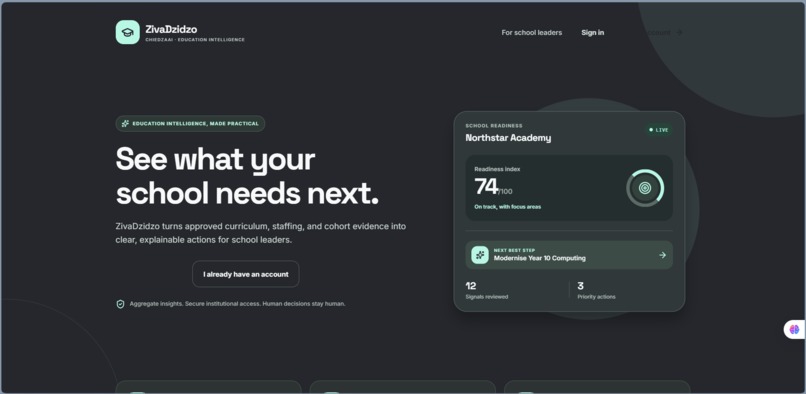
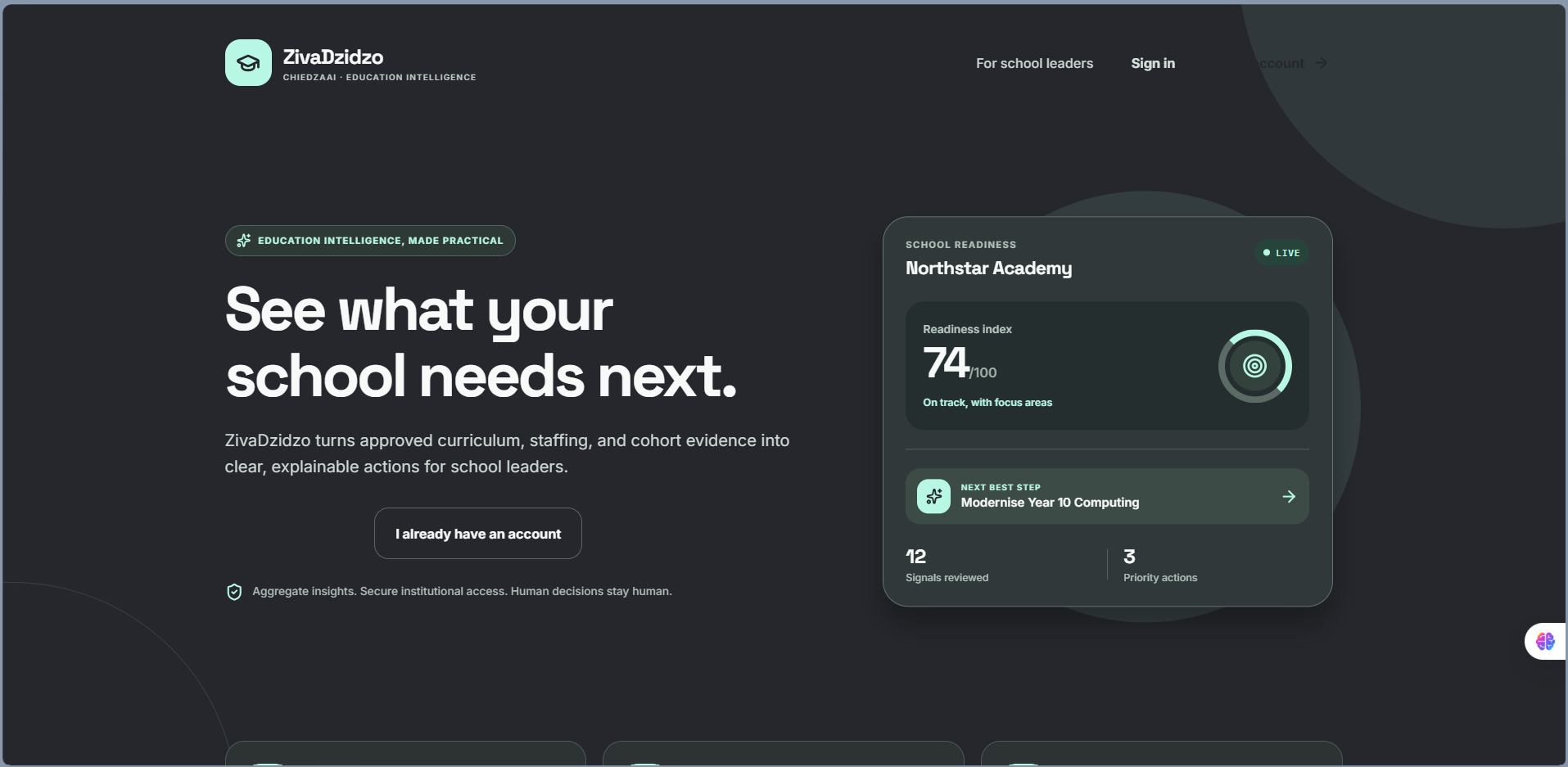
Landing Page
-
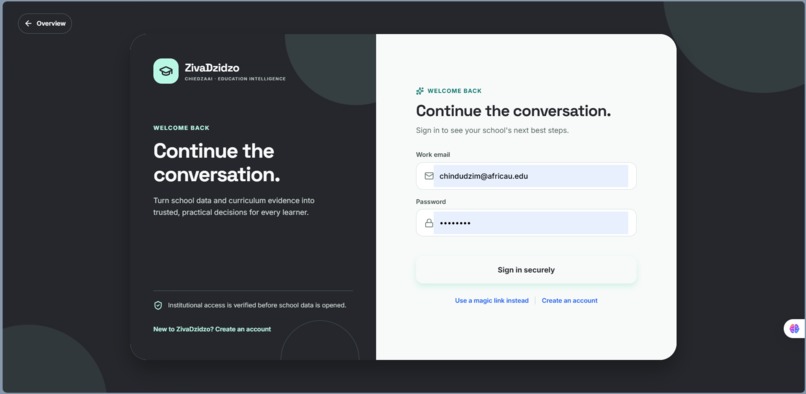
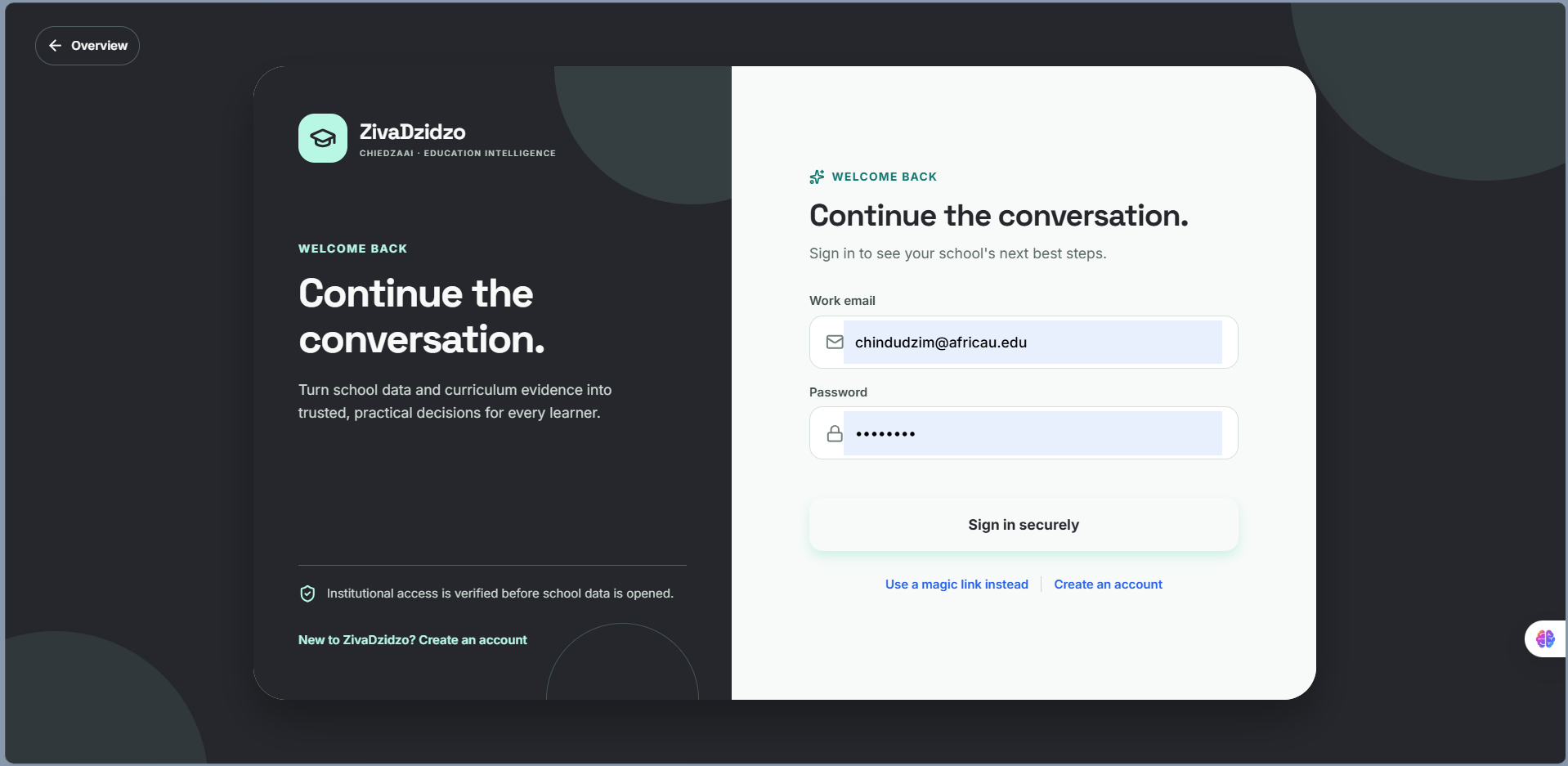
Signin Page
-
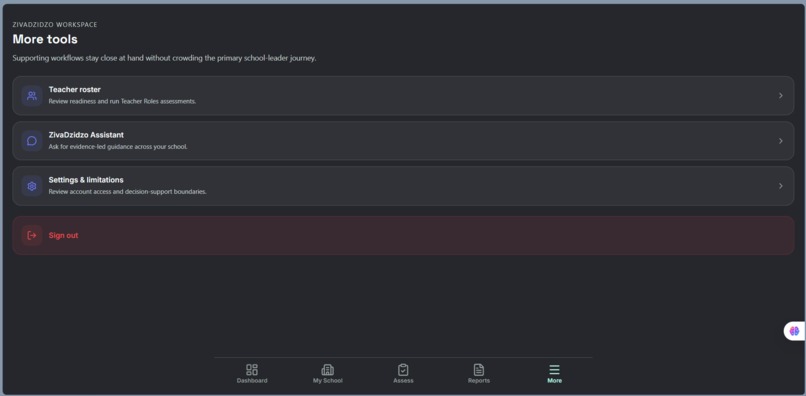
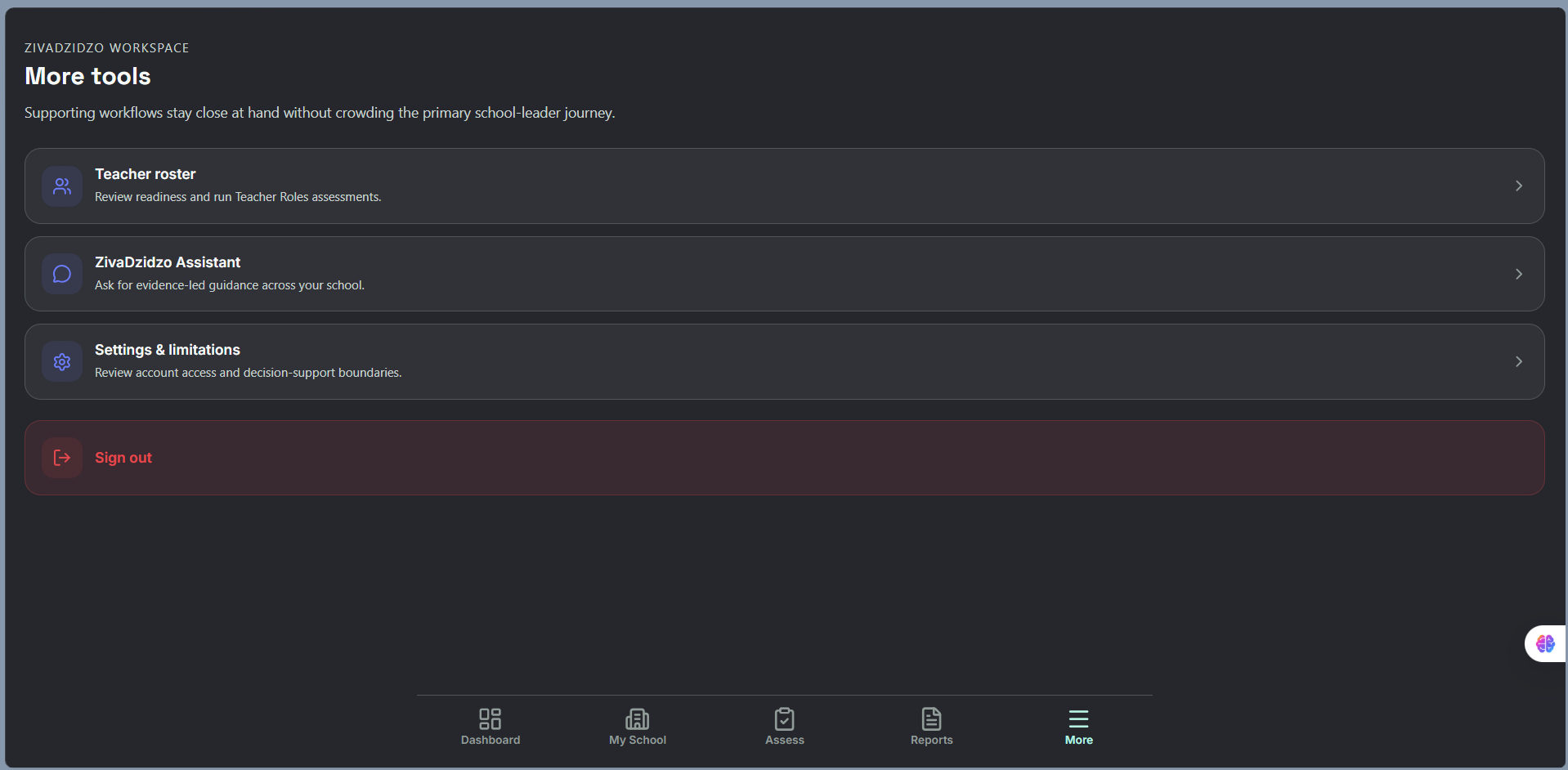
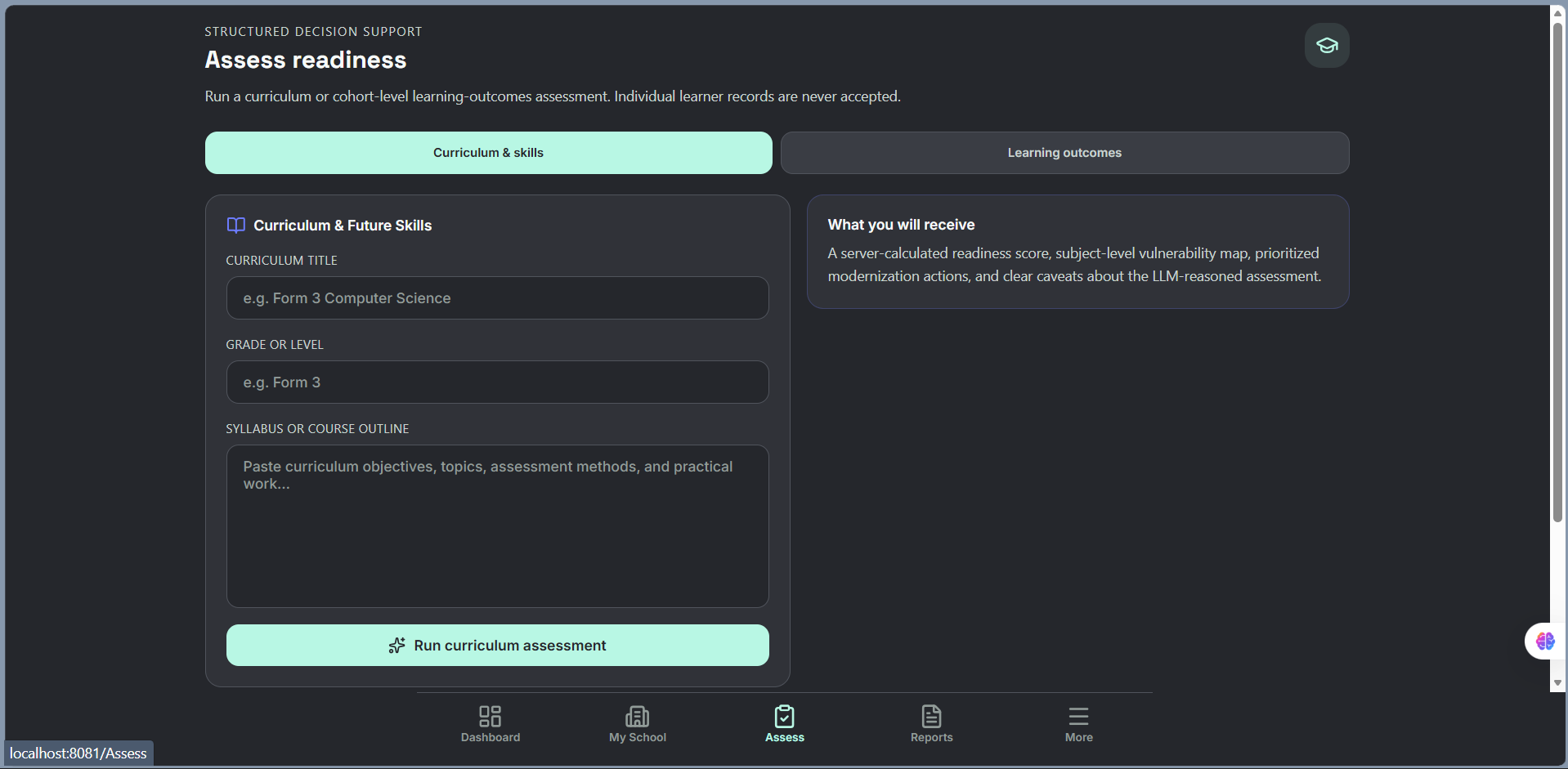
More Tools
-
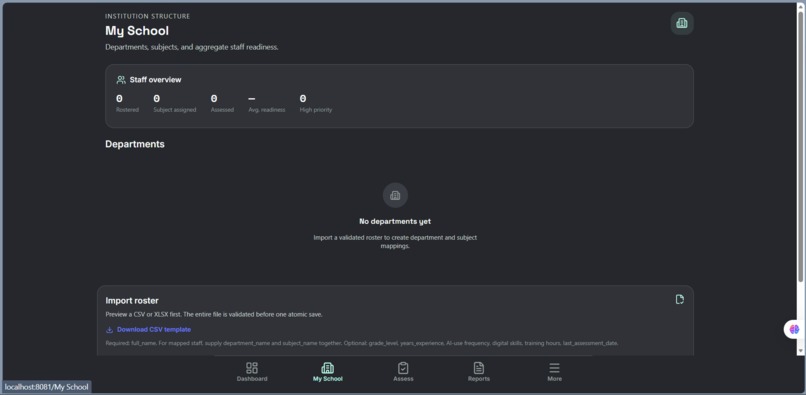
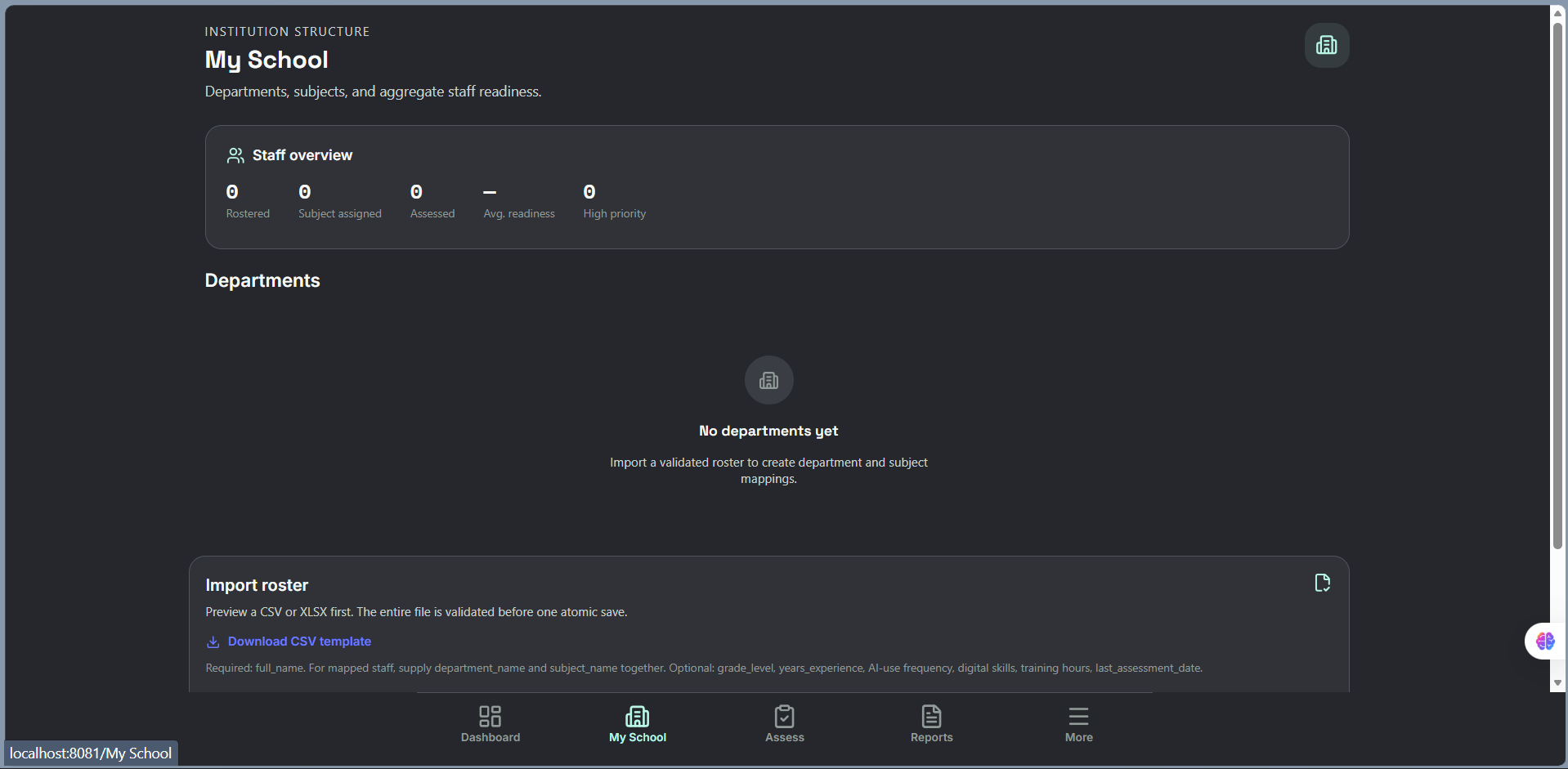
My school
-
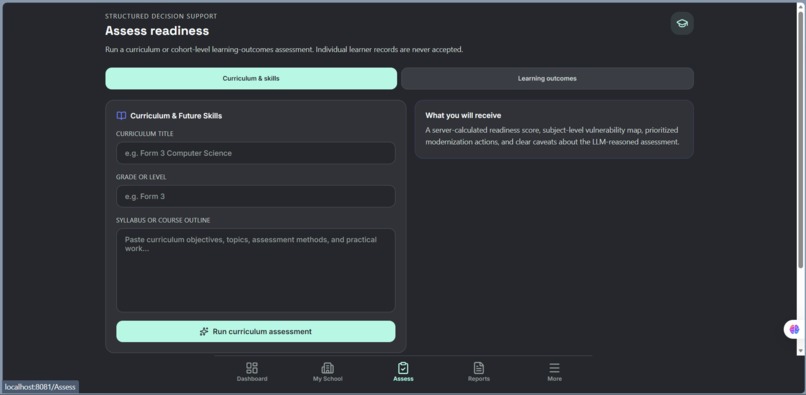
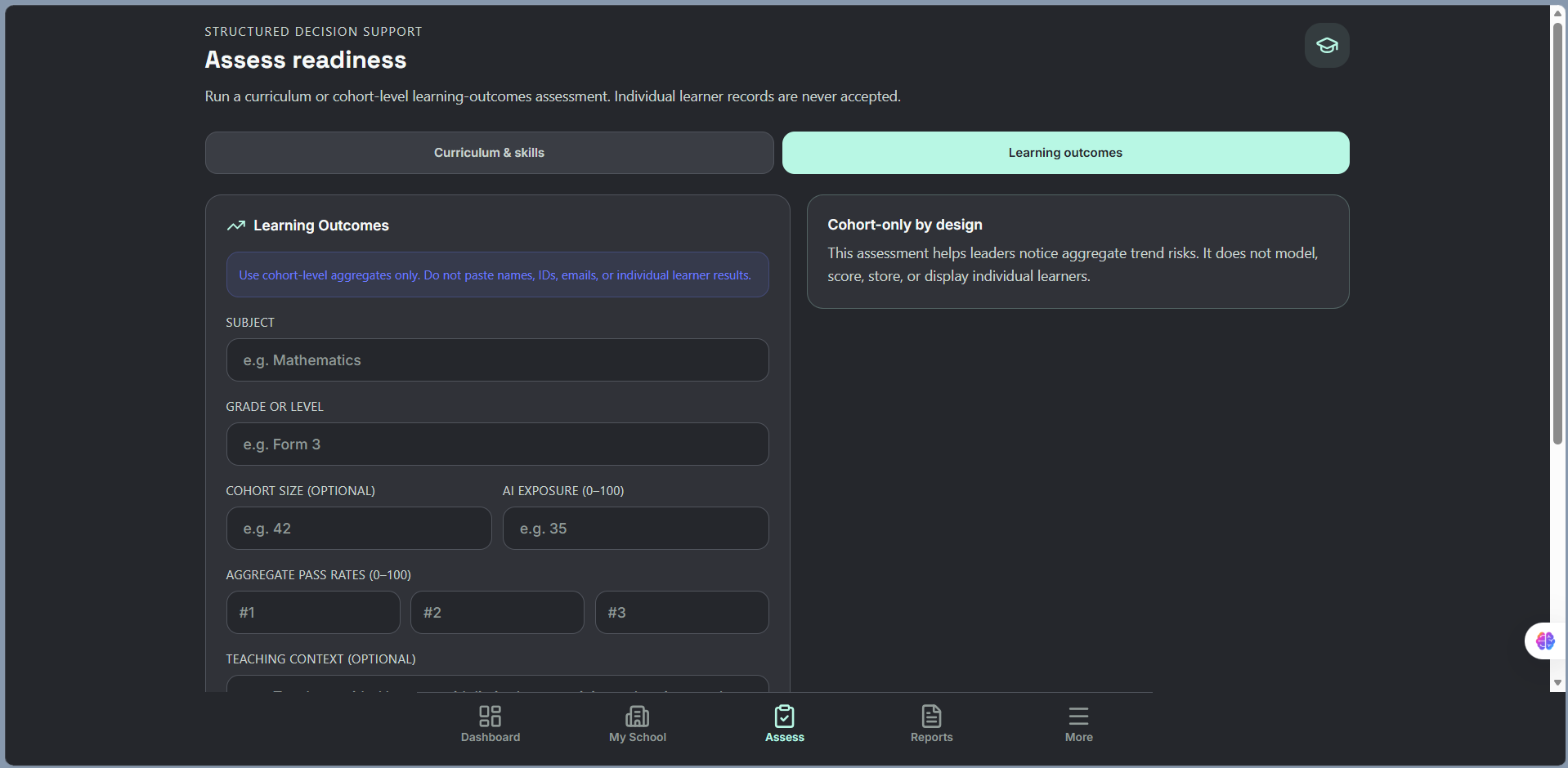
Prediction 1
-
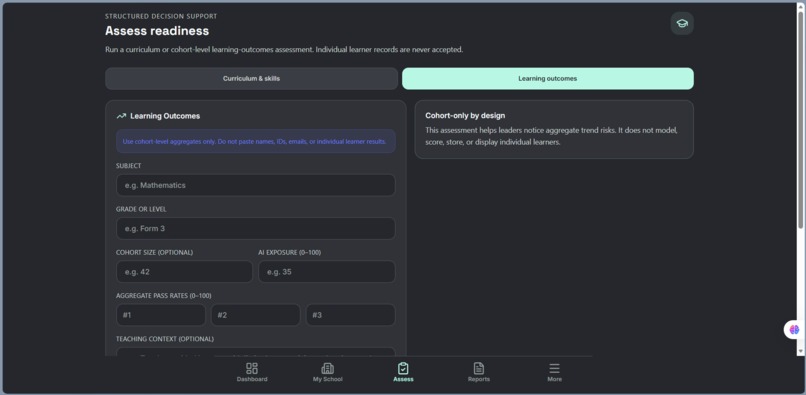
Prediction 2
-
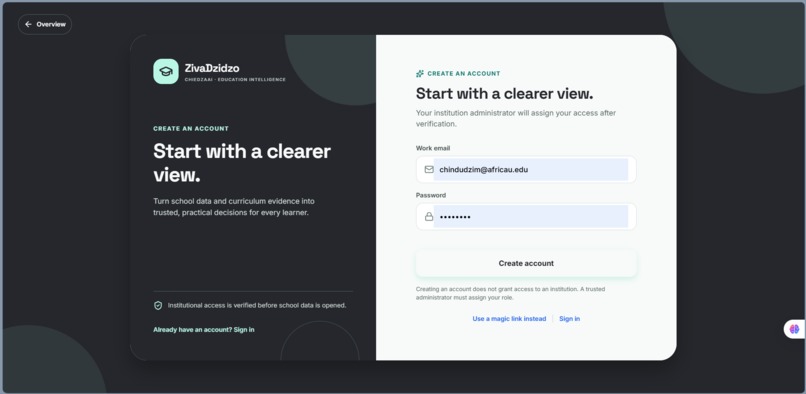
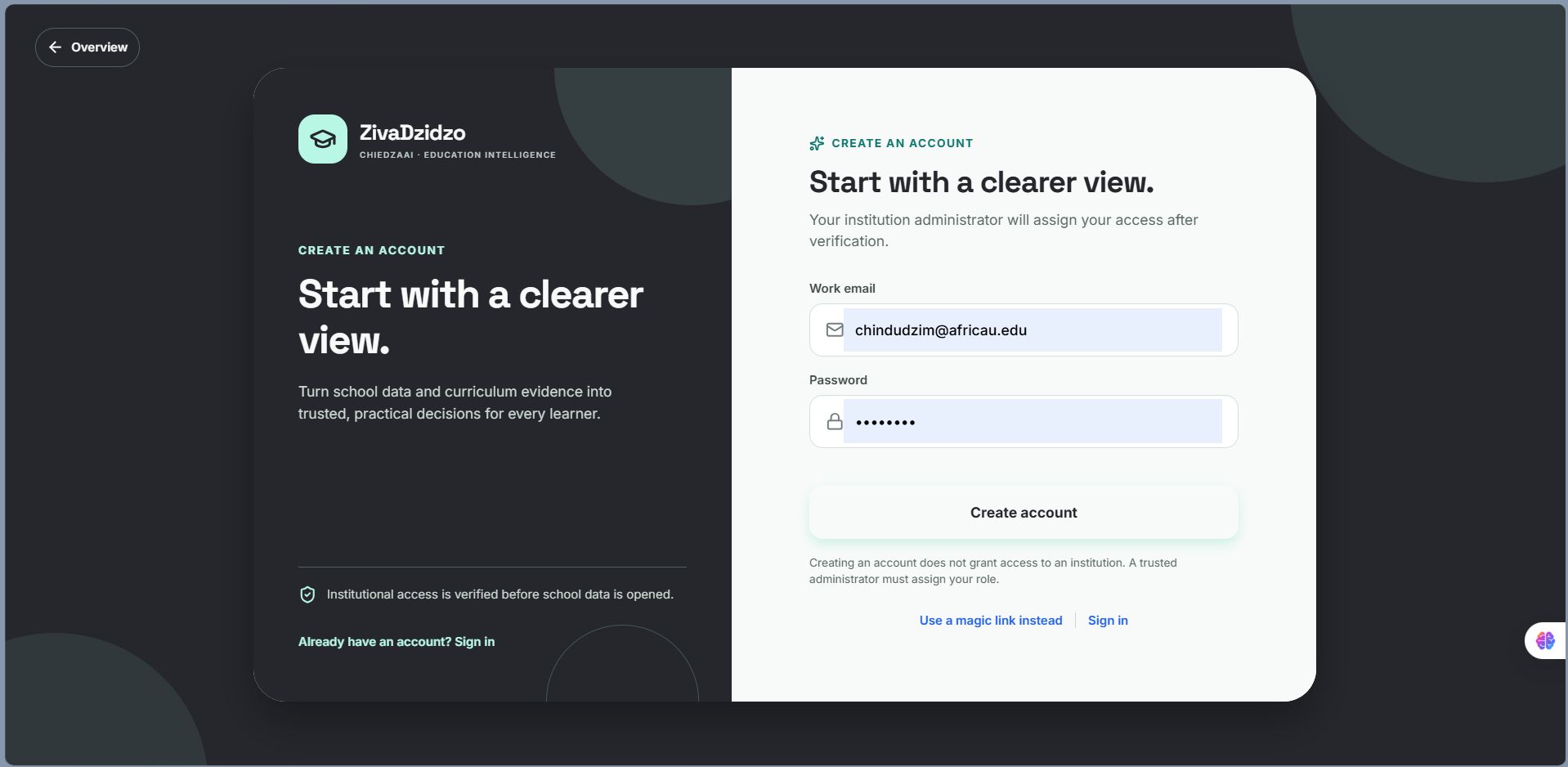
Signup Page
About ZivaDzidzo (by ChiedzaAI)
💡 Inspiration
In Zimbabwe and across Sub-Saharan Africa, the curriculum taught in classrooms has historically struggled to keep pace with rapid global industry shifts. Today, with the sudden leap into agentic AI systems, this gap has widened into a chasm. Educational organizations, teachers, and students are constantly forced into a reactive stance—reacting to technological disruption only after the job market has already shifted.
At ChiedzaAI, we believe in bringing light (Chiedza) and clarity to the future of learning.
We were inspired to build ZivaDzidzo (combining "Ziva"—to know, and "Dzidzo"—education in Shona) to give educators, school administrators, and policy-makers a predictive, data-driven "weather forecast" for education. Instead of guessing how AI affects learning, we wanted to build a tool that mathematically audits syllabi and maps them directly against incoming tech shifts to prepare students for the future of work.
🛠️ How We Built It
We engineered ZivaDzidzo using a robust, highly scalable modern tech stack designed to handle complex data analysis and intuitive data visualization:
                    ┌─────────────────────────────┐
                    │    React Native Frontend    │
                    │   (Styled with NativeWind)  │
                    └──────────────┬──────────────┘
                                   │  (REST API / JSON)
                                   ▼
                    ┌─────────────────────────────┐
                    │     Node.js Express API     │
                    └──────────────┬──────────────┘
                                   │  (Database Connection)
                                   ▼
                    ┌─────────────────────────────┐
                    │   Supabase (PostgreSQL)     │
                    └─────────────────────────────┘
- The Intelligence Core (GPT-5.6 & Codex): We utilized GPT-5.6 to perform semantic curriculum audits. It ingests complex, unstructured syllabus documents and runs high-level reasoning algorithms to contrast them against real-world tech-sector demands. Codex acted as our dedicated agentic partner inside VS Code, accelerating our development velocity by generating backend API integrations and database schemas on the fly.
- The Backend: A high-performance Node.js and Express server acting as the orchestrator.
- The Database: Supabase (PostgreSQL), which stores curriculum metadata, historical trend scores, and user audit histories.
- The Frontend: A responsive dashboard built with React Native and styled via NativeWind to allow educators to upload syllabi, review visual graphs of automated subjects, and interact with predictive sliders.
📐 The Predictive Math Behind ZivaDzidzo
To ensure our predictions are grounded and scientific rather than arbitrary, ZivaDzidzo implements a Skills Obsolescence & Readiness Index (SRI).
The system computes the readiness index $R$ of a specific curriculum using the weighted sum of its core subjects, penalizing topics highly vulnerable to automation while rewarding future-proof competencies:
$$R = \sum_{i=1}^{n} w_i \cdot \left(1 - A_i\right) + \alpha \cdot F$$
🚧 Challenges We Faced
- Unstructured Data Ingestion: School syllabi come in wild variations of layouts, tables, and PDF formats. Standard parser libraries struggled with inconsistent headers. We overcame this by using GPT-5.6's robust structural reasoning to parse raw text streams into uniform JSON structures before database insertion.
- Developing Real-Time "What-If" Simulations: Generating deep analytical forecasts via large language models on every slider adjustment caused UI latency. We resolved this by pre-computing core matrix variables on the Node.js backend and using our mathematical formula locally on the client side to render instant visual predictions, only calling the full model suite for final, heavy-duty reports.
- Dependency and Environment Configurations: Getting the local Supabase connections to map nicely with our mobile Expo framework during rapid prototyping presented several hurdles, which we systematically debugged by configuring strict environment standards inside our VS Code workspaces.
🧠 What We Learned
- Codex is a force multiplier: Having Codex alongside us inside the IDE changed how we write boilerplate code. Instead of spending hours writing SQL migrations or boilerplate Express routing, we defined high-level requirements in natural language and let Codex generate clean, functional scaffoldings, giving us more time to focus on refining the AI integration logic.
- AI in EdTech must go beyond Tutoring: The vast majority of AI EdTech is student-facing. We learned that focusing on the structural and systemic side of education—helping teachers and school administrations modernize their core content—actually has a much wider, more sustainable impact on systemic learning outcomes.
Built With
- artificial-intelligence
- codex
- data-visualization
- edtech
- expo.io
- express.js
- git
- github
- gpt-5.6
- javascript
- json
- latex
- machine-learning
- markdown
- nativewind
- node.js
- openai-api
- postgresql
- predictive-analytics
- react-native
- rest-api
- supabase
- tailwind-css
- typescript
- vs-code

Log in or sign up for Devpost to join the conversation.