Inspiration
Our project seeks to make information more accessible for individuals with dyslexia.
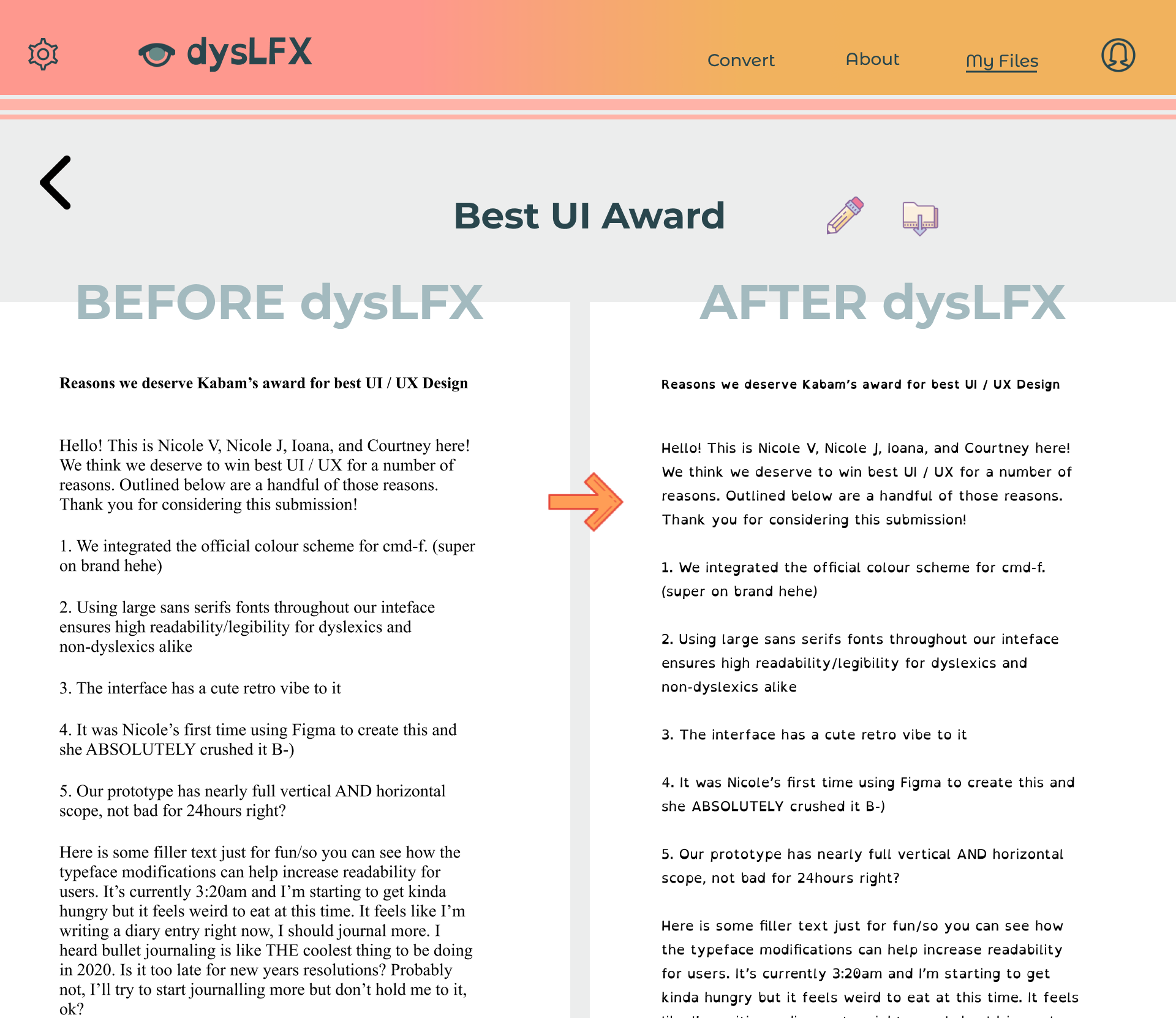
Dyslexia is a learning disorder that involves reading challenges. Dyslexic individuals experience reading fatigue as processing text requires larger cognitive load. Some dyslexics report that letters are hard to identify/decode, and certain fonts (i.e typefaces with serifs, small point size, short stems) are especially hard to read.
One of our group members has dyslexia and reported that reading documents provided by colleagues and professors took her a long time to read and resulted in reading fatigue. Her story inspired us to create an interface that would remedy some of the problems she faces as a dyslexic.
What it does
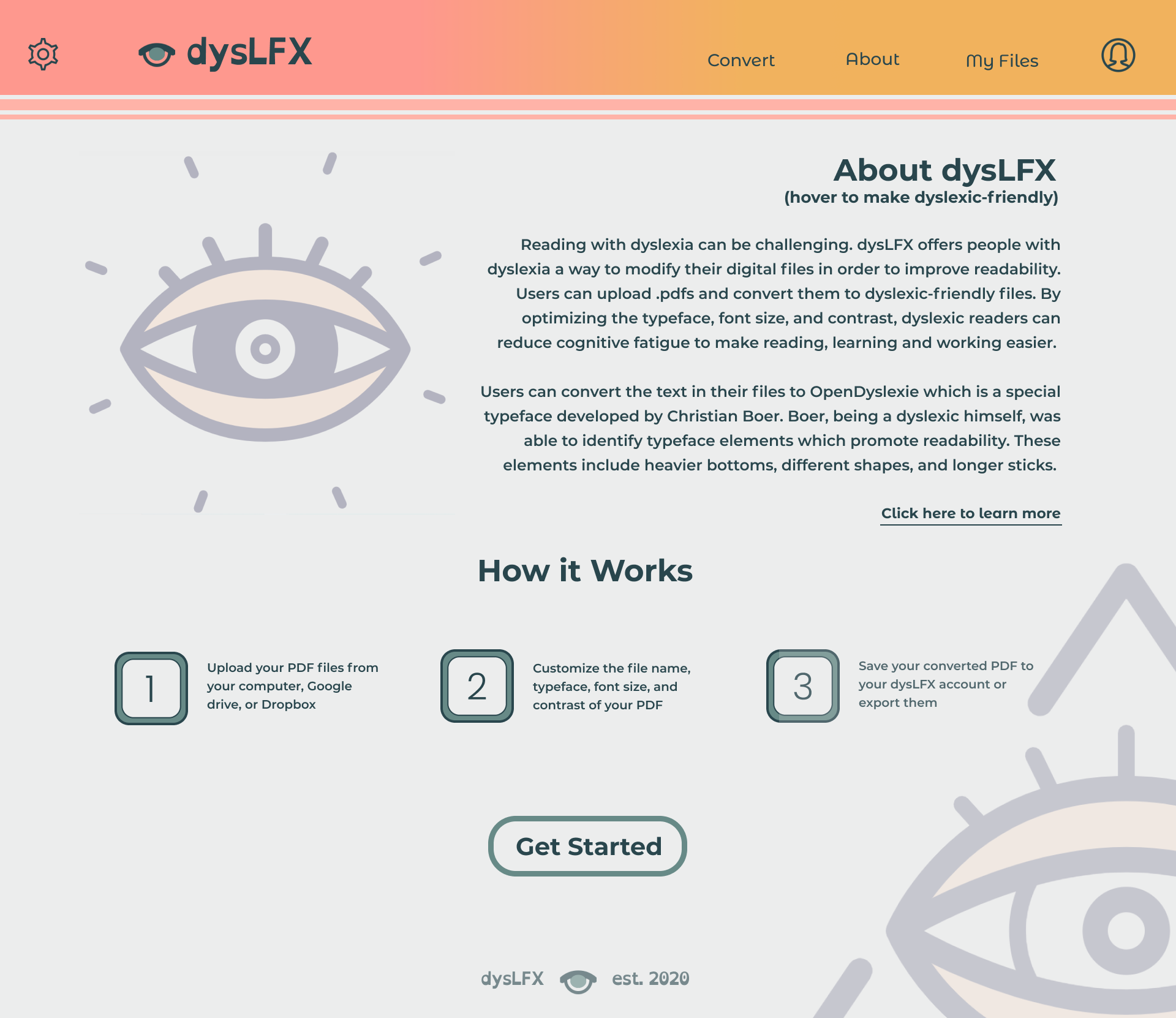
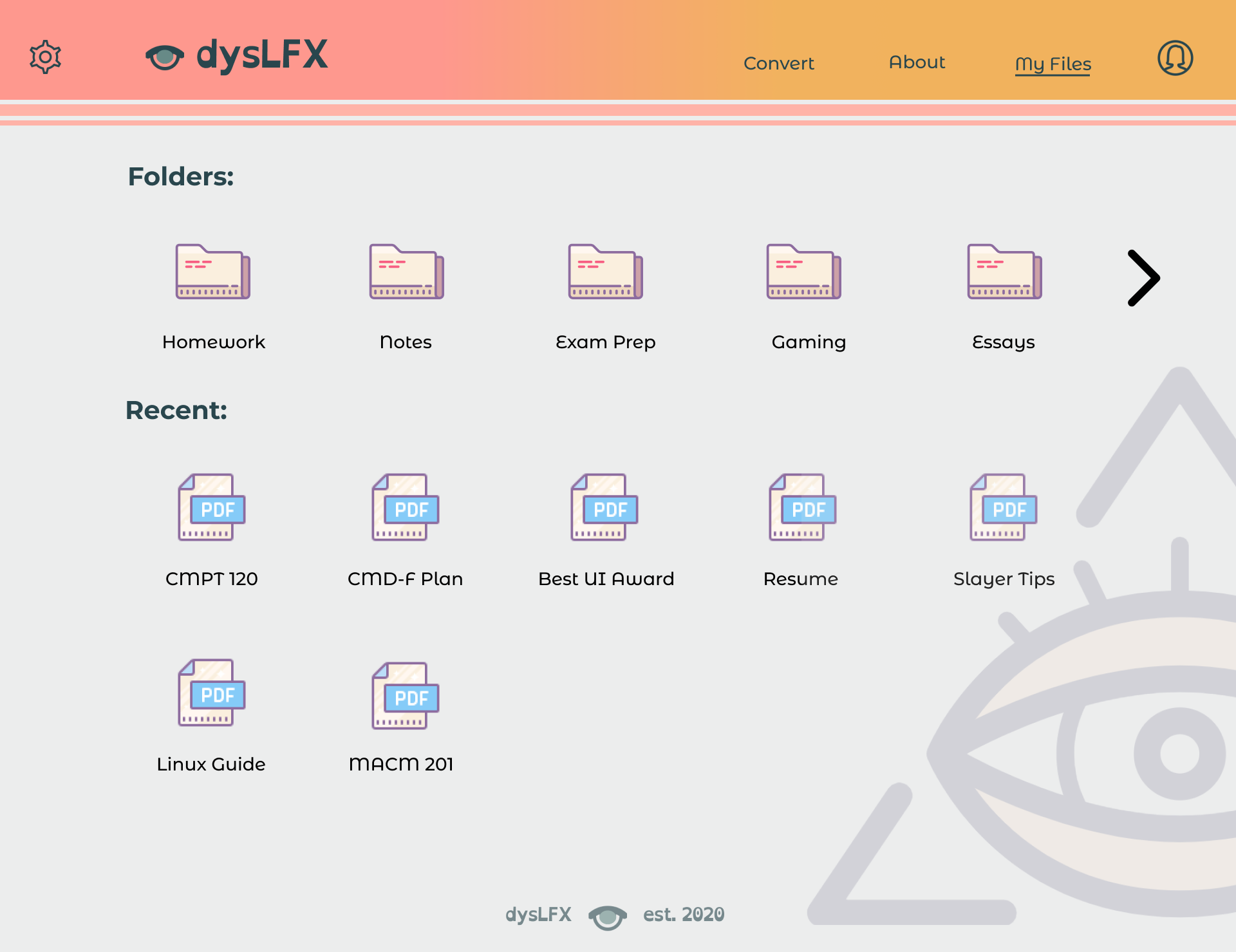
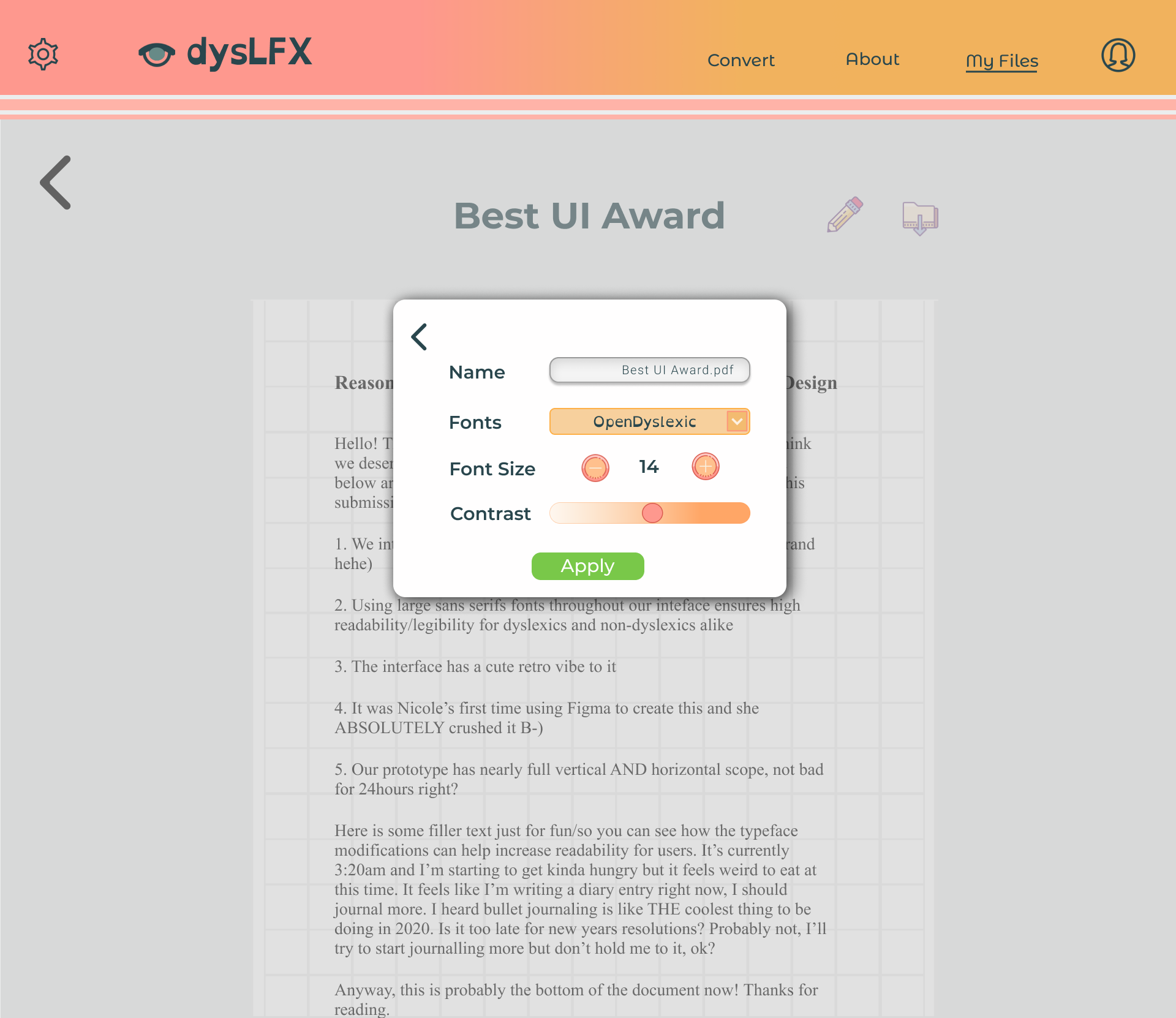
Reading standard texts for work and school poses problems for individuals with dyslexia. dysLFX aims to remedy readability issues by allowing users to upload and modify their own PDF texts. The web interface provides ways for users to modify their texts (i.e change to dyslexic-friendly font, increase font size, increase text contrast). Upon converting PDF files to a dyslexic-friendly format, users can export their documents or save them locally
Technology Involved
Javascript
HTML
Uppy.io
Text Parsing API
Cloud Upload API
Figma
How I built it
Prototypes We began with a paper-prototype. This low fidelity prototype outlined the main pages, elements, and functionalities we wanted to implement. We created a storyboard - style wireframe prototype to capture the interaction between pages and elements. We used this prototype to run a cognitive walkthrough in order to identify any user issues. Finally, we used Figma to create a medium fidelity prototype with both horizontal and vertical scope.
Code There were many ideas for code. Initially, we started with the idea of an Andriod app. It evolved into a desktop Node.js application with PDF upload functionality and text-parsing capabilities.
Challenges we ran into
We had many issues with integrating the upload system into our website. After realizing what our problem was, we moved to determine how to access the uploaded PDFs from the server which hosted them. We realized that we needed to use APIs to call this information and pdf.js to be able to parse through the text and modify as necessary. However, being beginners at web development, we did not advance as far as we had planned - but we learned a lot along the way.
Accomplishments that we're proud of
Our highly interactive Figma Prototype
Built With
- figma
- html
- javascript

Log in or sign up for Devpost to join the conversation.