-
-
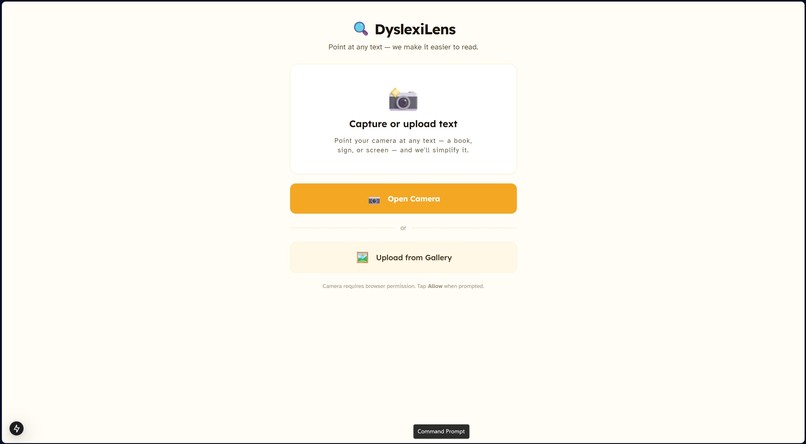
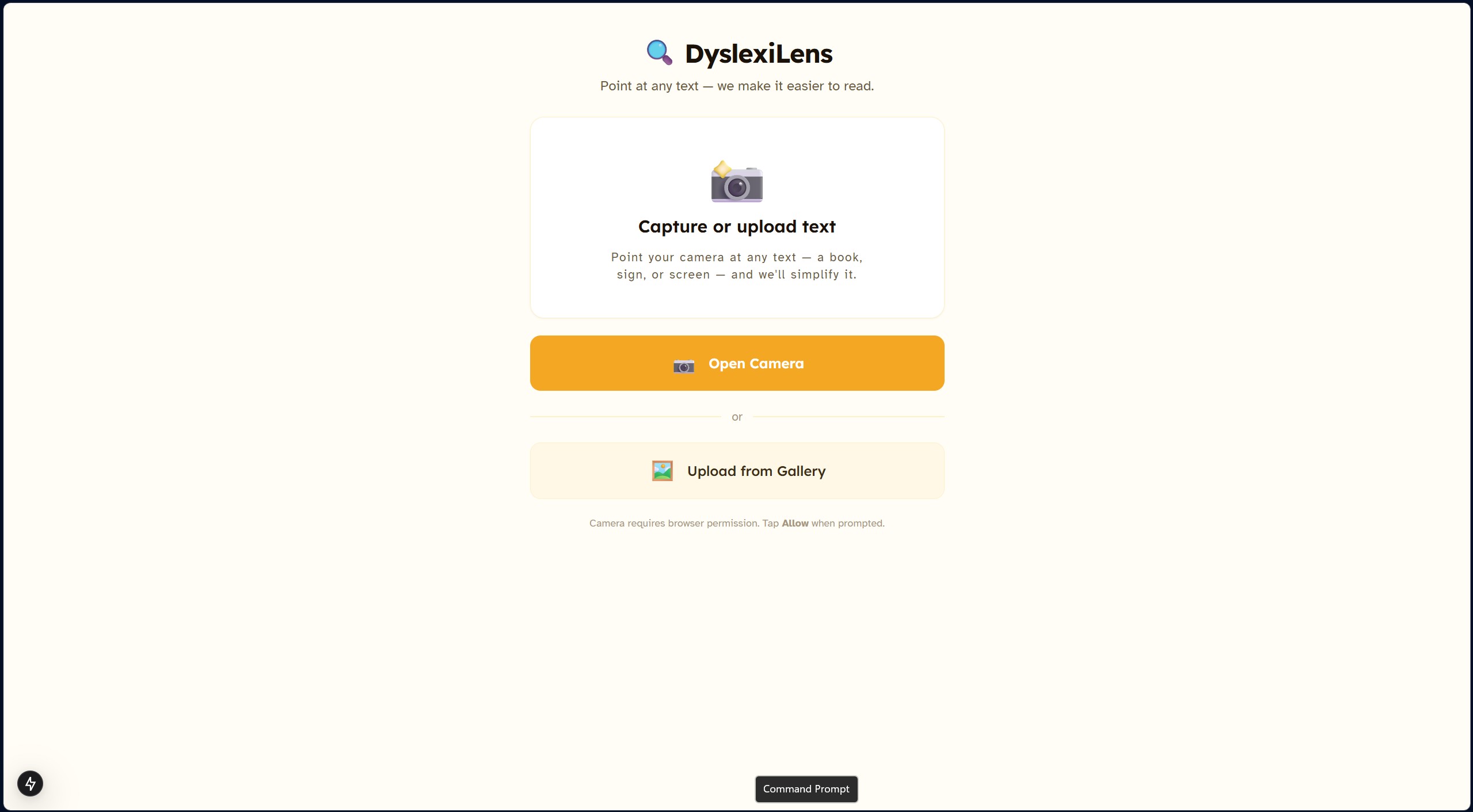
Homepage - laptop
-
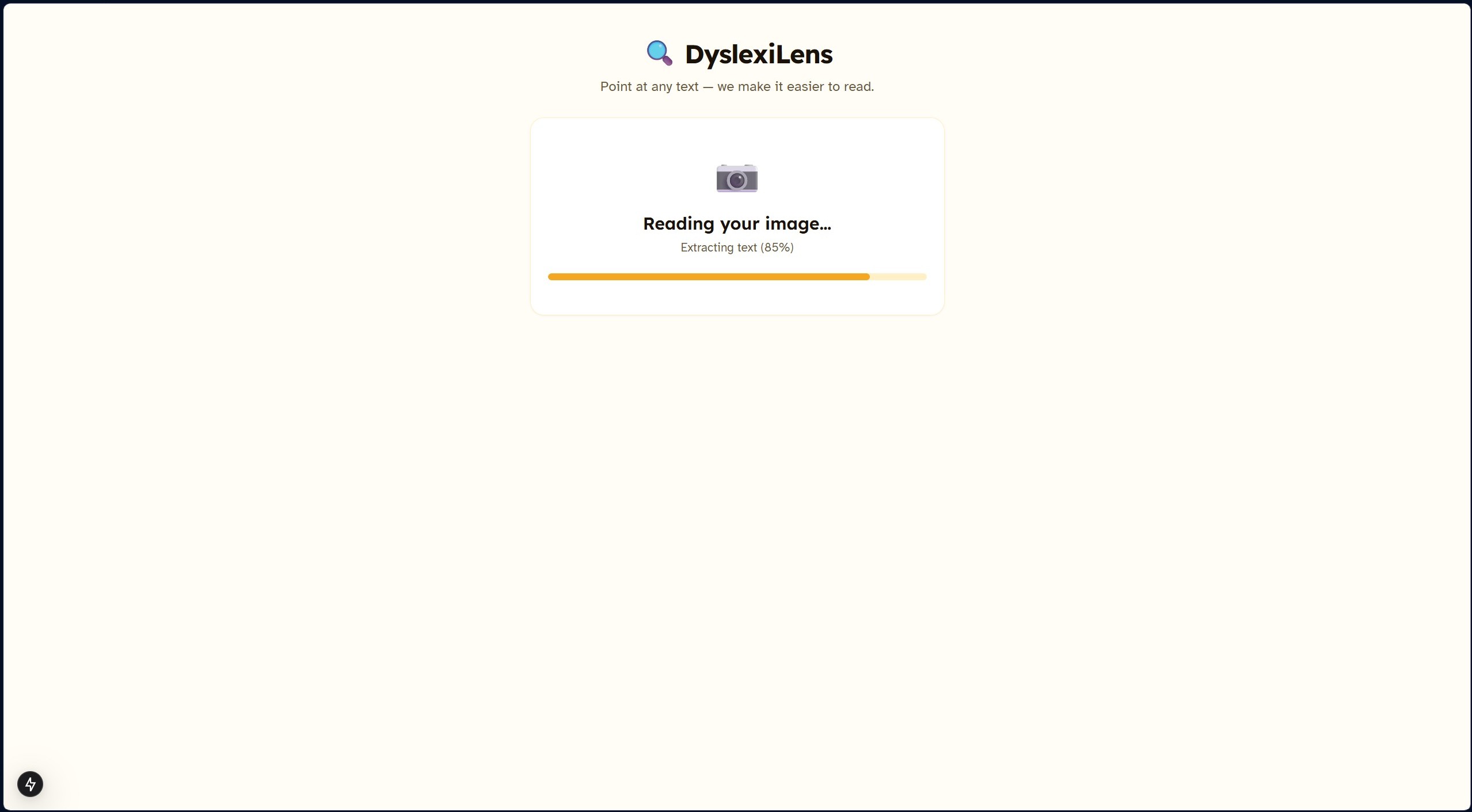
Image scanning - laptop
-
Image processing - laptop
-
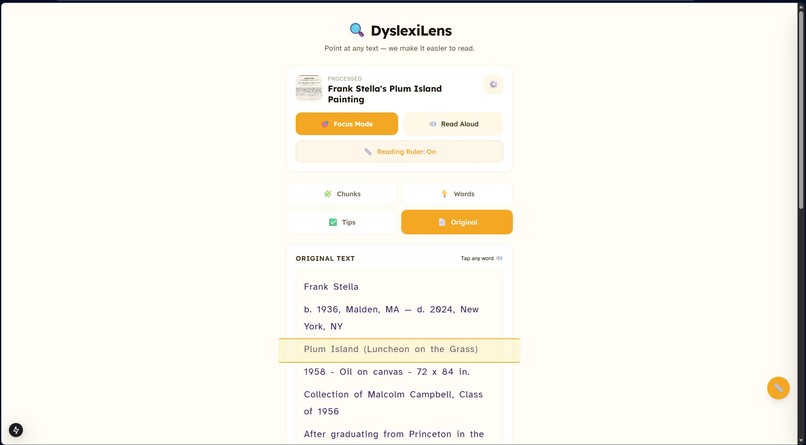
Result - laptop
-
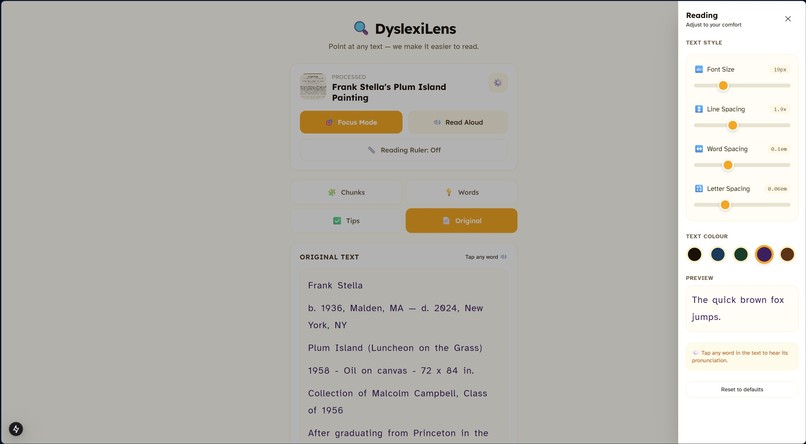
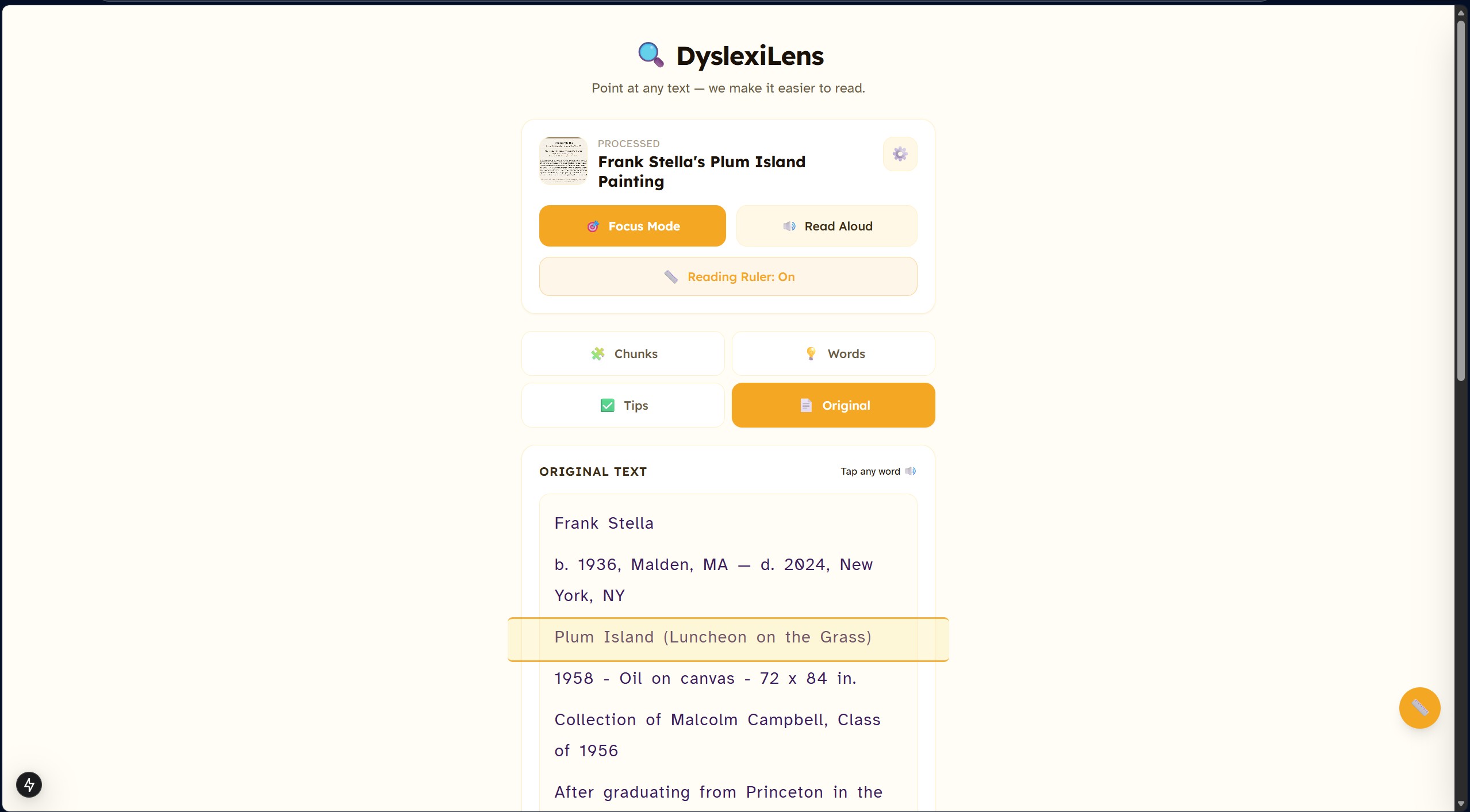
Formatting Result - Laptop
-
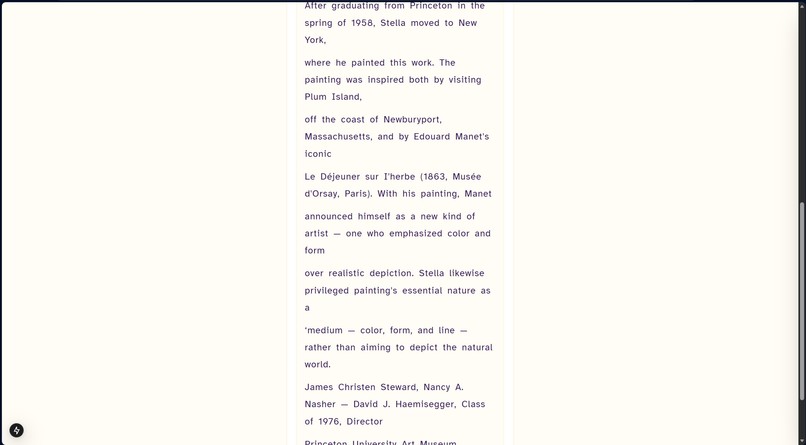
Rest of the extracted text
-
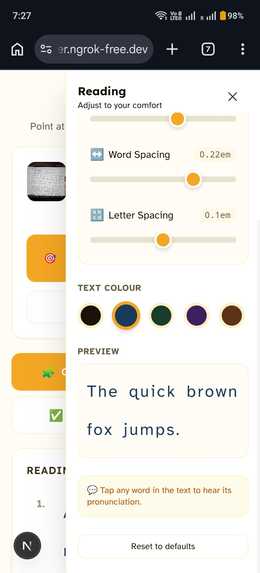
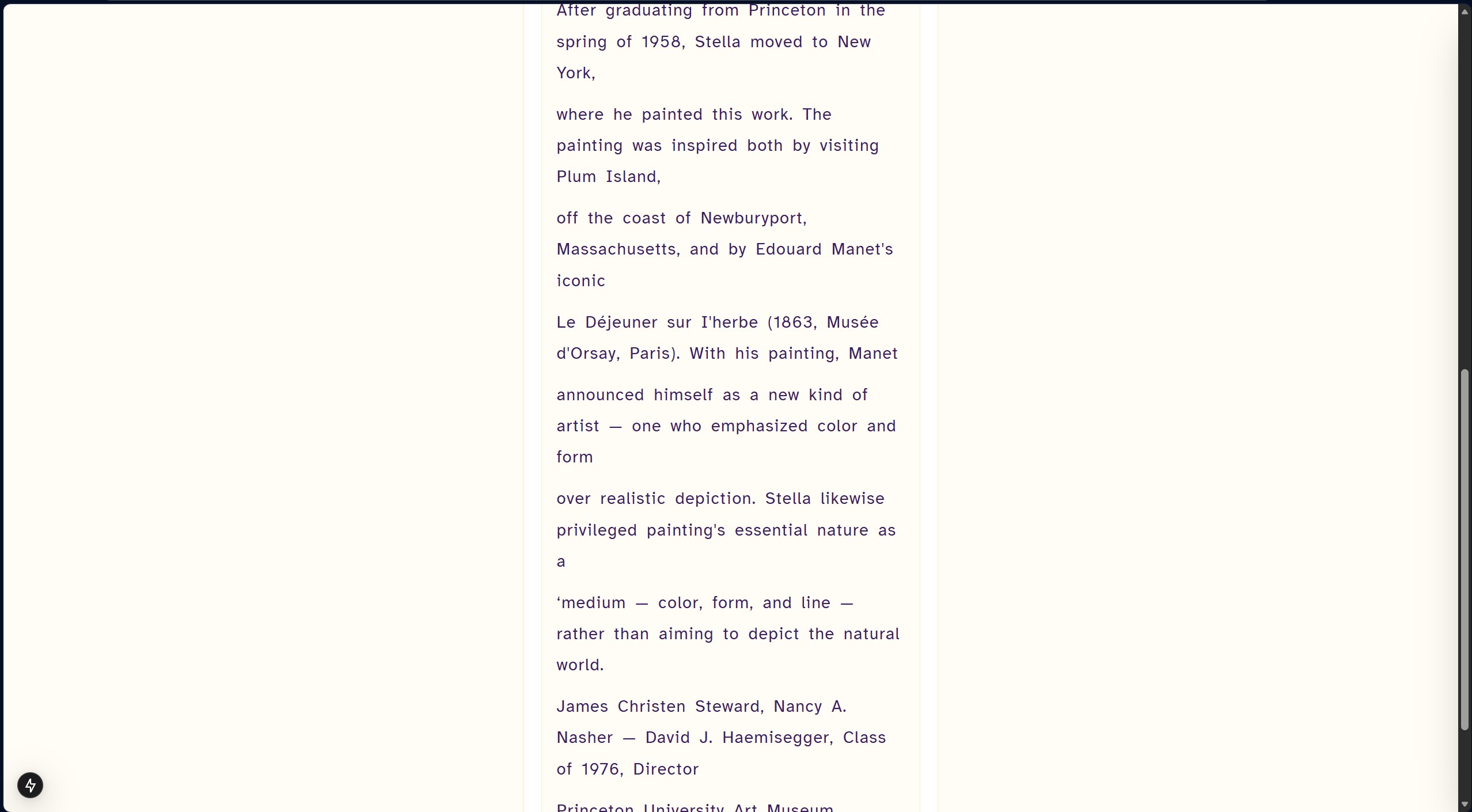
Original text being customized
-
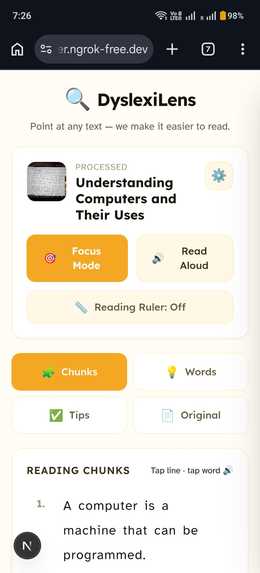
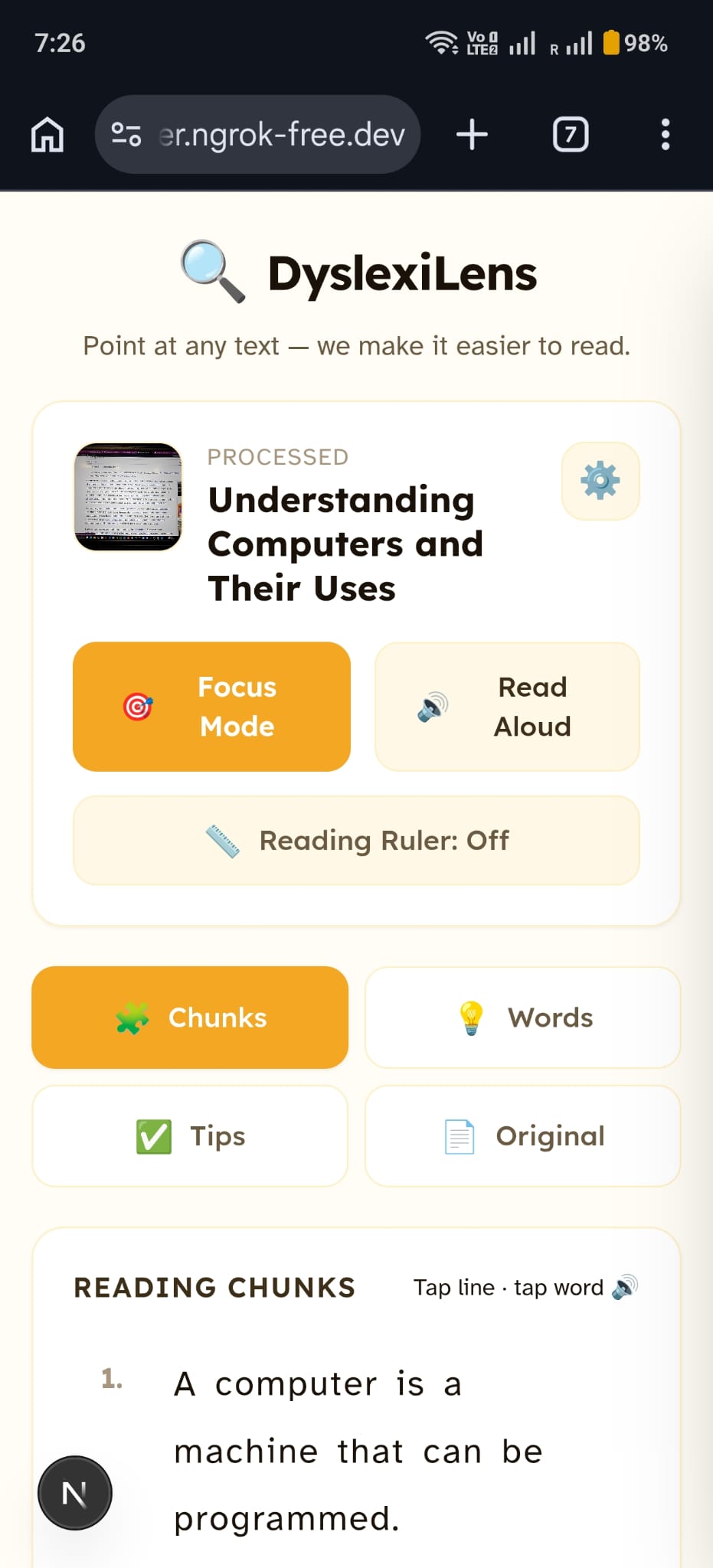
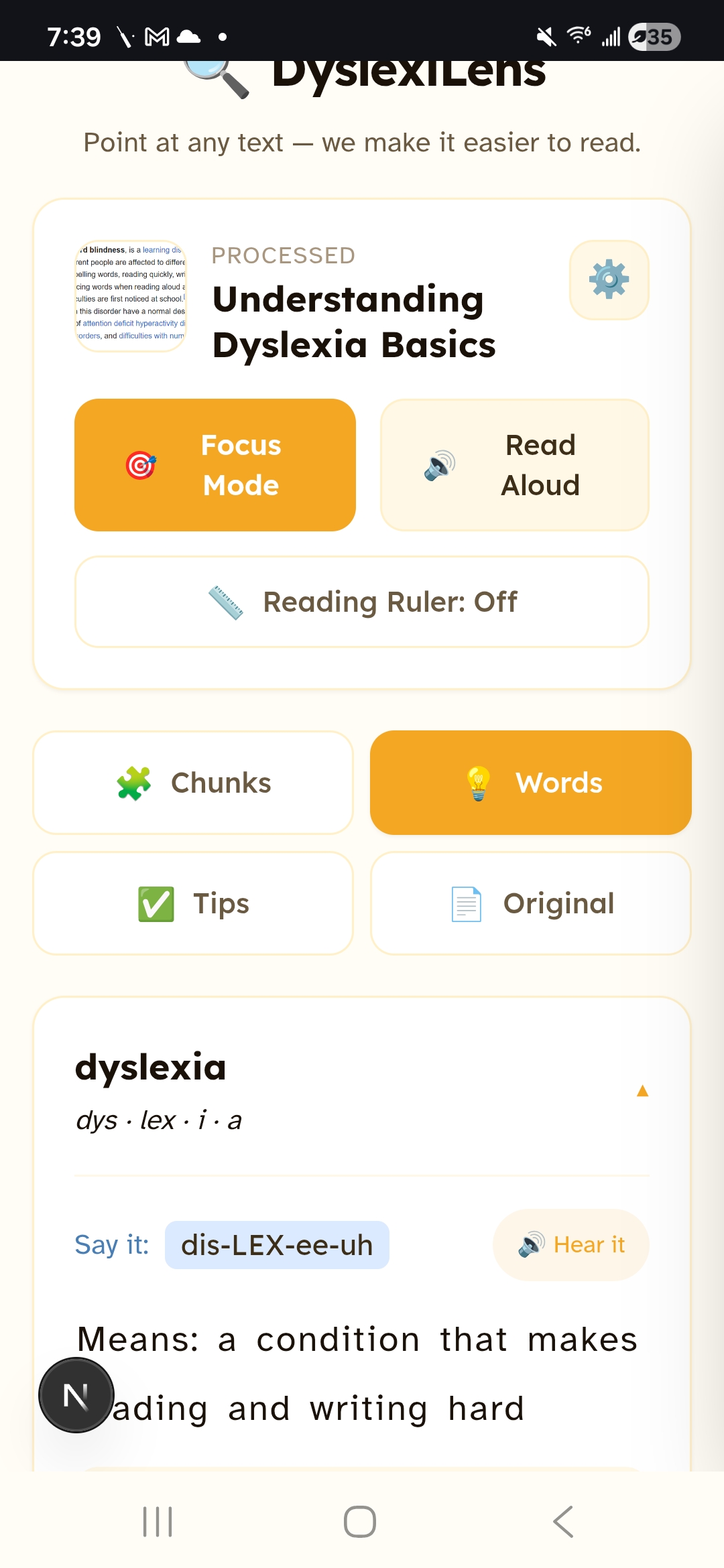
Phone image processed
-
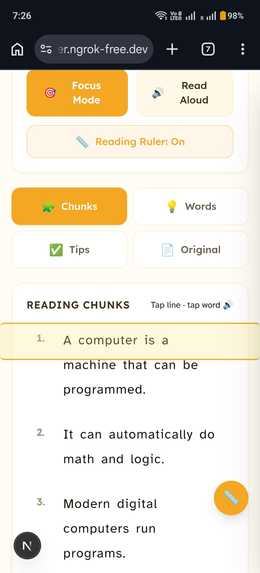
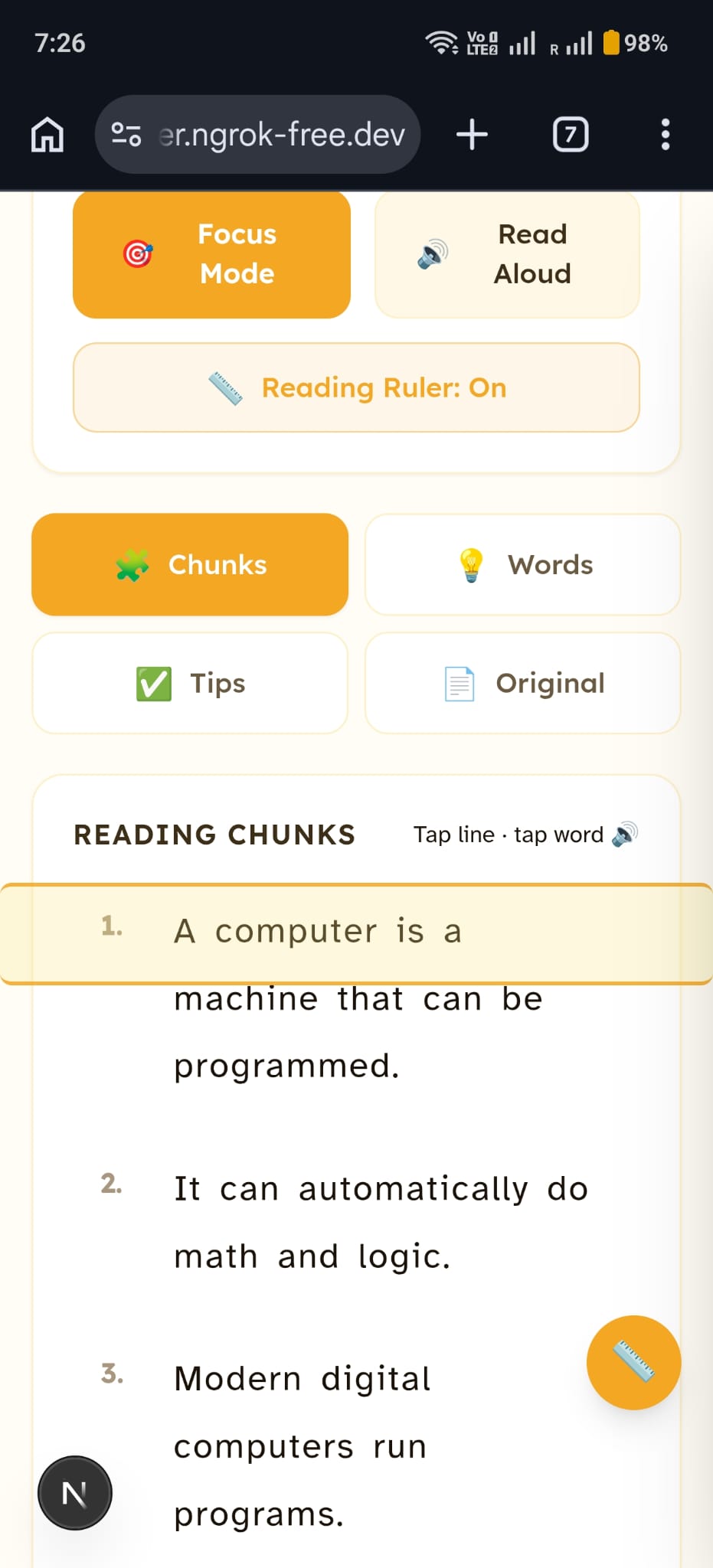
Chunks feature
-
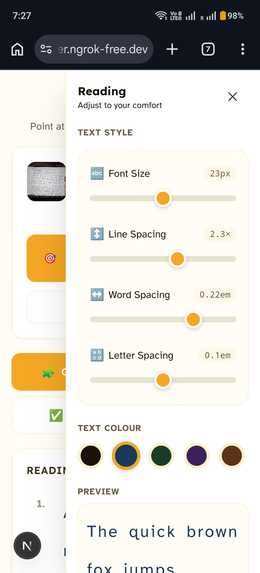
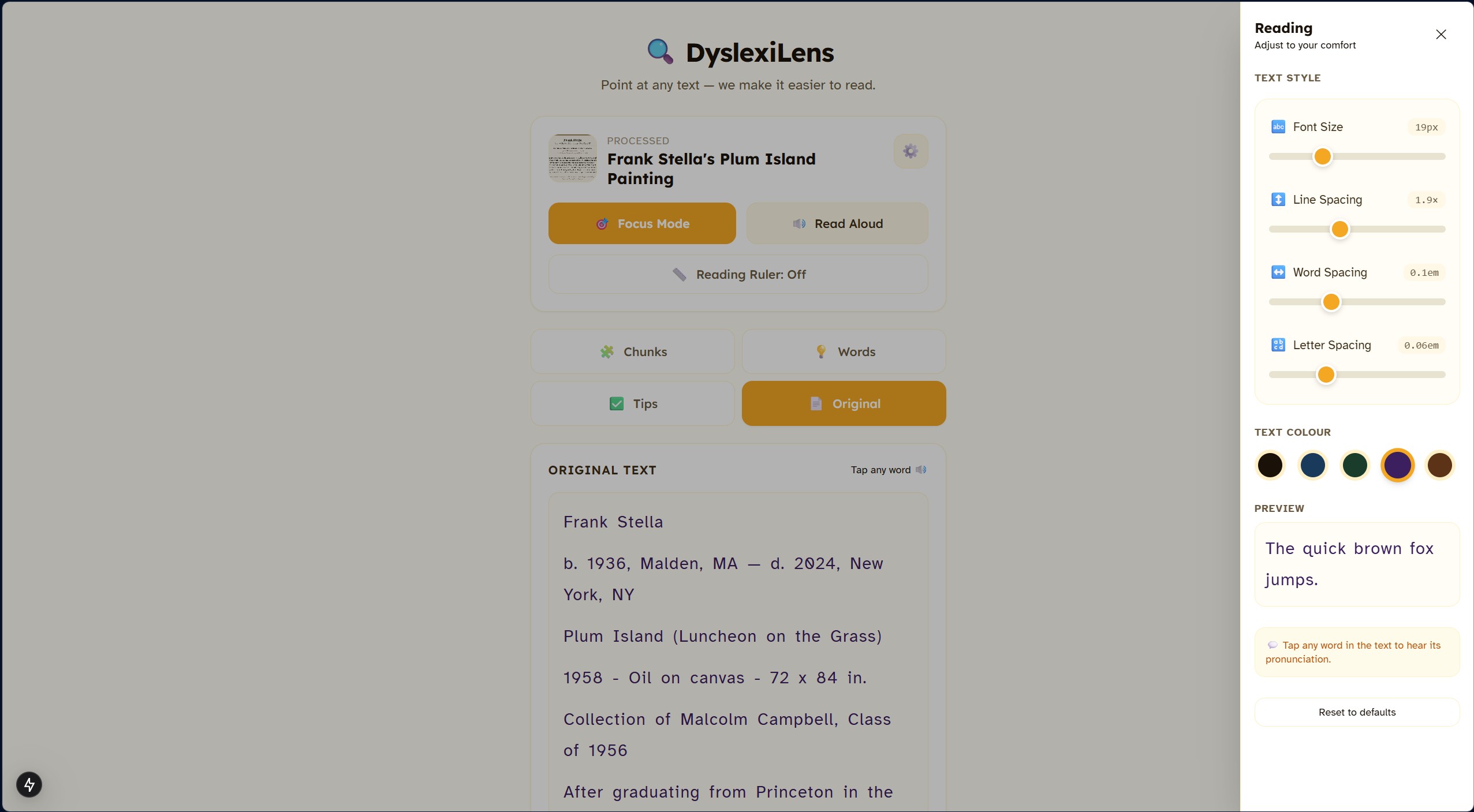
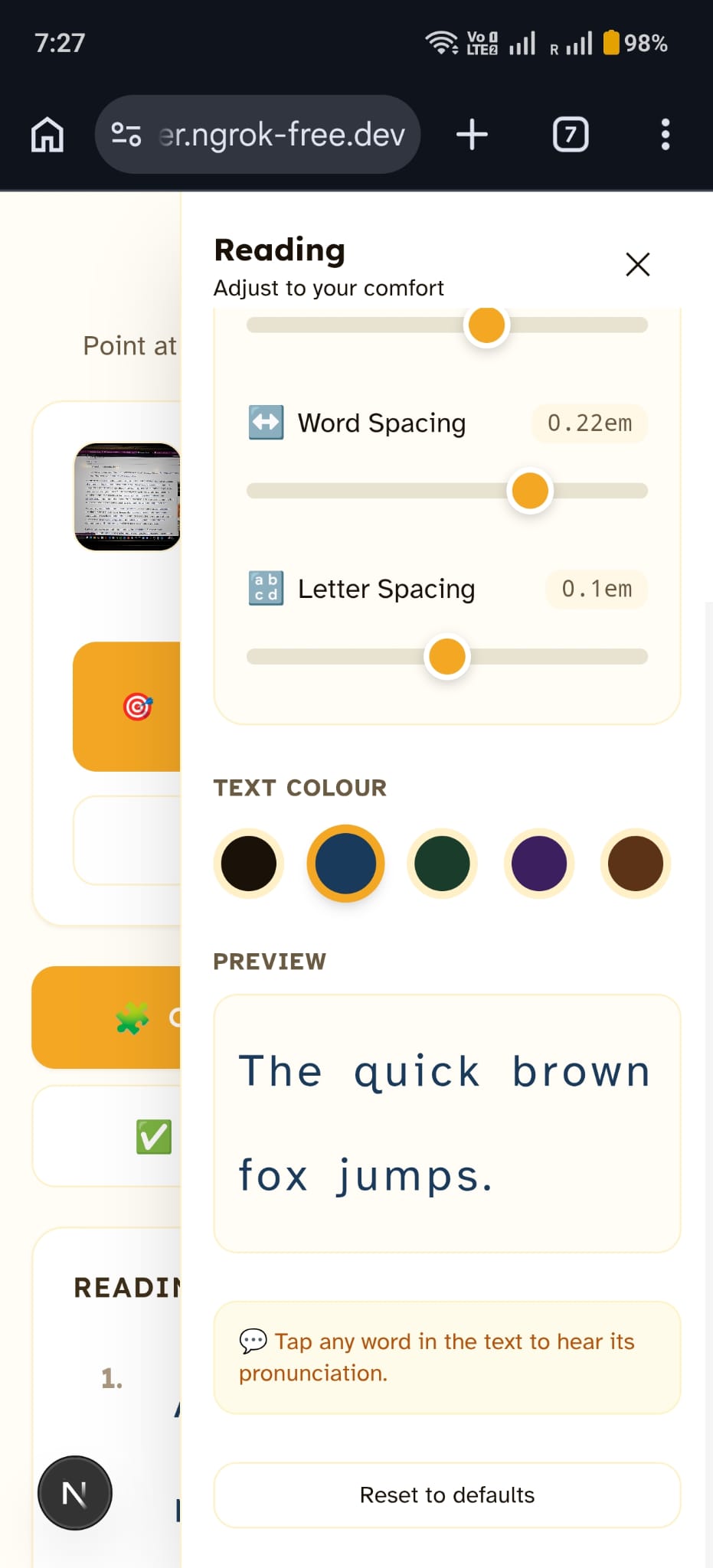
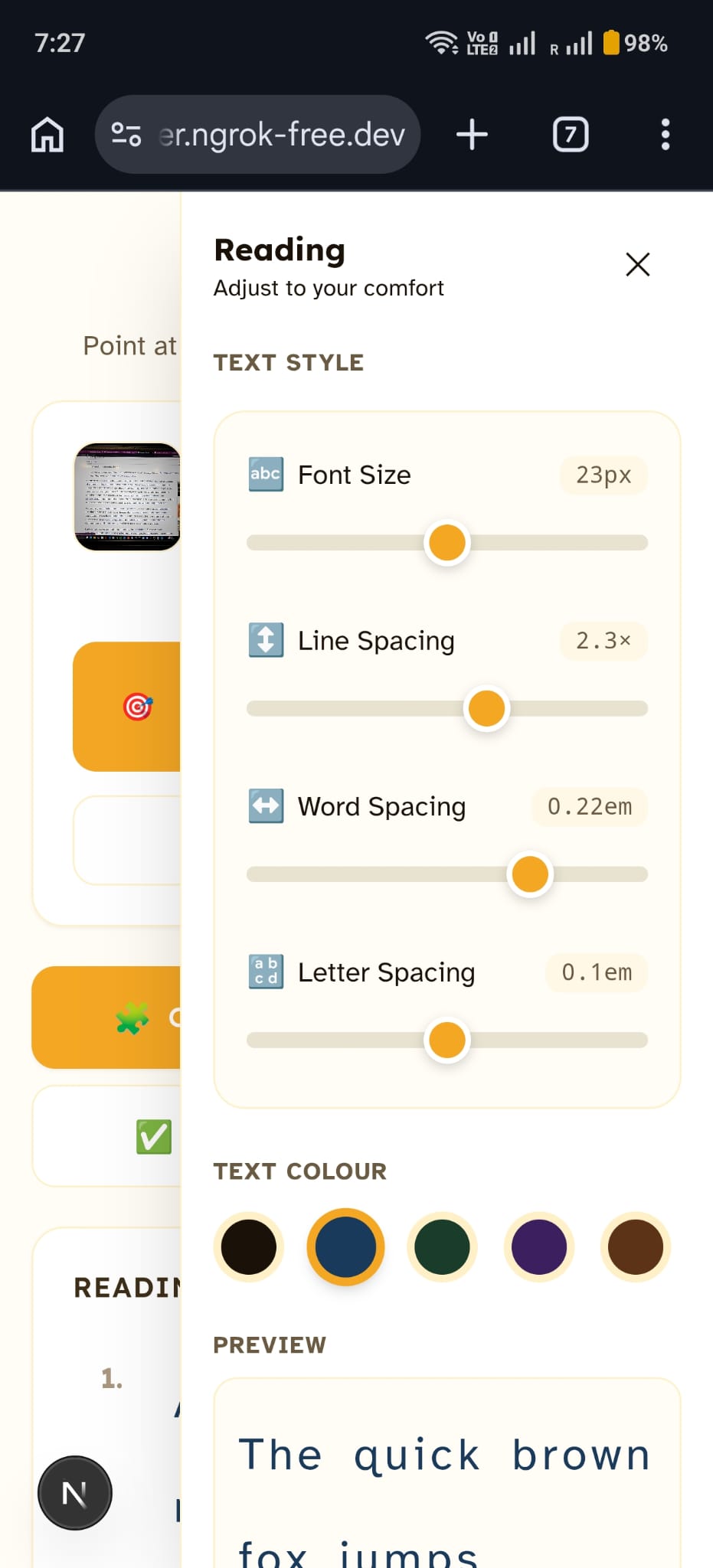
Other customization options
-
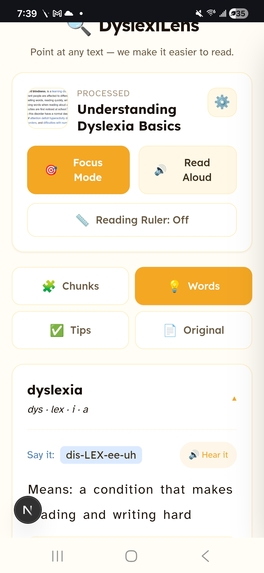
Word syllables and pronunciation help
Inspiration
It is really sad to think that dyslexic people are not able to read everyday things like medicine labels, school handouts, restaurant menus, and so on without experiencing any barriers. So, we wanted to build a tool that a dyslexic person can utilize to any moment to reduce their difficulties with reading.
What it does
It is a web app that turns any converts any image of text into a format intro dyslexia-friendly experience in seconds.
How we built it
Next.js 15 + TypeScript frontend, Tailwind CSS for styling. OCR runs entirely on device via Tesseract.js which means no image ever hits a server. Then, the extracted text is sent to K2-Think-v2 which returns a structured JSON result for parsing. Read Aloud uses the browser's native Web Speech API.
Challenges we ran into
The biggest challenge we ran into was getting consistent and mostly accurate JSON data from the LLM that we implemented through the use of the API. This is especially through when optimizing and debugging the images got through the camera.
Accomplishments that we're proud of
We are proud of creating an OCR pipeline which extracts text directly from an image, and we were able add a customizable experience that tends to an individual's needs. For instance, depending on the person's visual comfort, they can adjust the font, letter spacing, line height, word spacing, and background overlay color to reduce eye strain and make reading feel less overwhelming.
What we learned
We learned that modern LLM APIs are surprisingly interchangeable — switching from Gemini to K2-Think-v2 mid-hackathon took minutes, not hours. Running OCR directly in the browser with Tesseract.js was something we'd never done before, and it changed how we think about what belongs on a server versus what can stay on the user's device. We also didn't expect how messy real-world OCR output could be and had to build backend logic to clean and structure it before the AI could work with it effectively.
What's next for DyslexiLens
Include computer vision, and the models in Google AI studio to extract text from images in a more accurate manner, as it can really help improve the reading experience for people suffering from dyslexia.
Built With
- css
- k2thinkapi
- next.js
- ngrok
- node.js
- react
- tailwind
- tessaract.js
- typescript

Log in or sign up for Devpost to join the conversation.