Inspiration
DyslexiCore was inspired by how late and stressful dyslexia detection usually is for kids. In many schools, children are only checked after they repeatedly fail tests, get low grades, or are seen as “slow” or “not trying.” By then, they’ve already lost confidence and feel judged, even though their brain just processes language differently. Existing tools are either too clinical, too expensive, or too boring for young children, so we wanted to build something that makes early detection gentle, fun, and accessible—starting at home or in the classroom, not in a clinic.
What it does
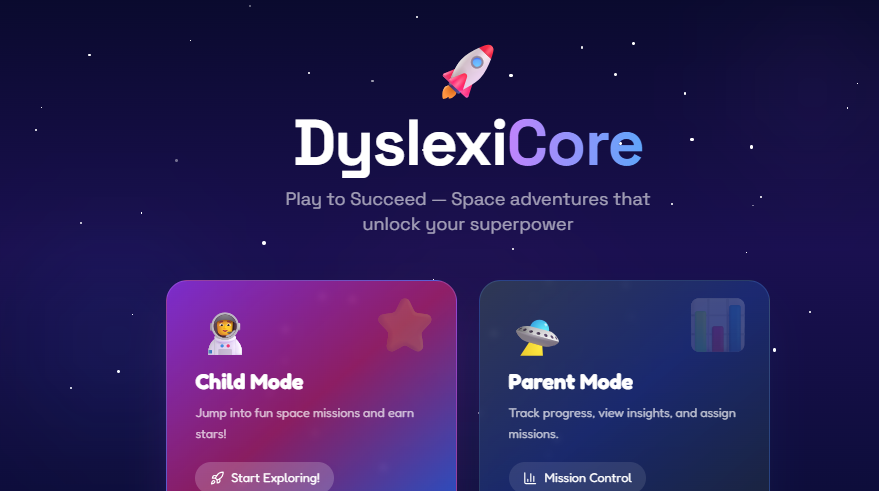
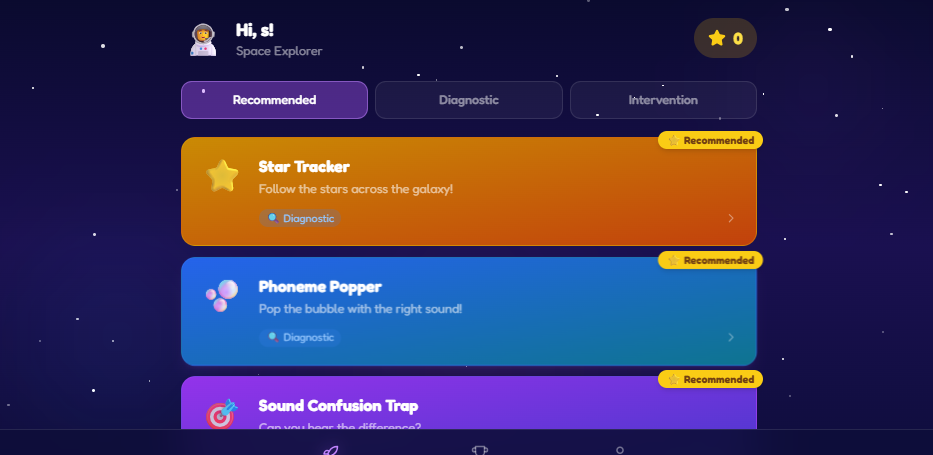
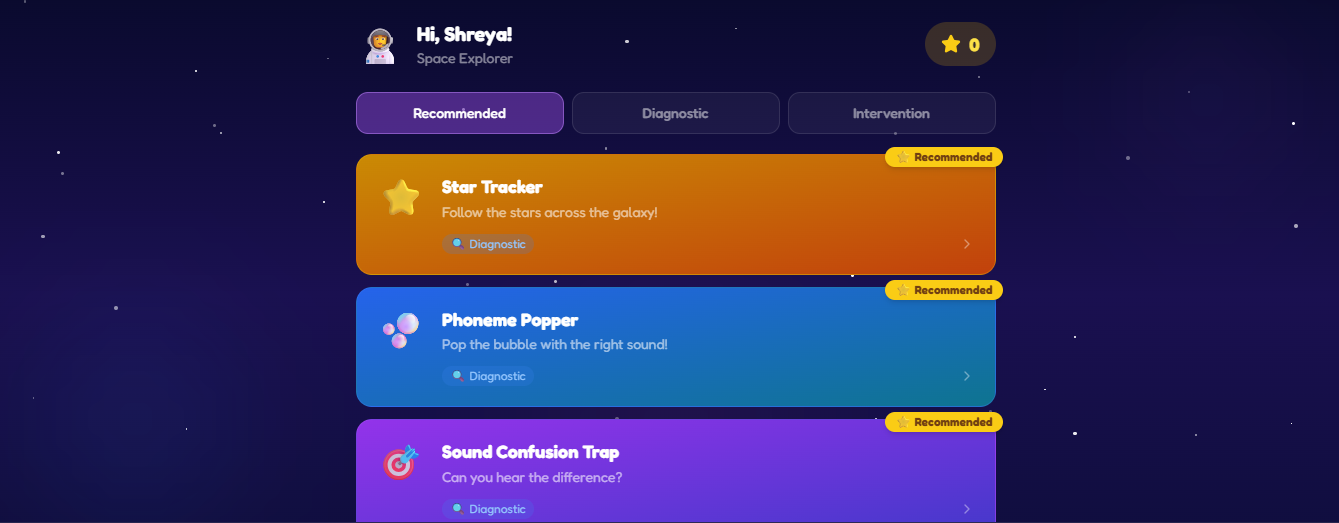
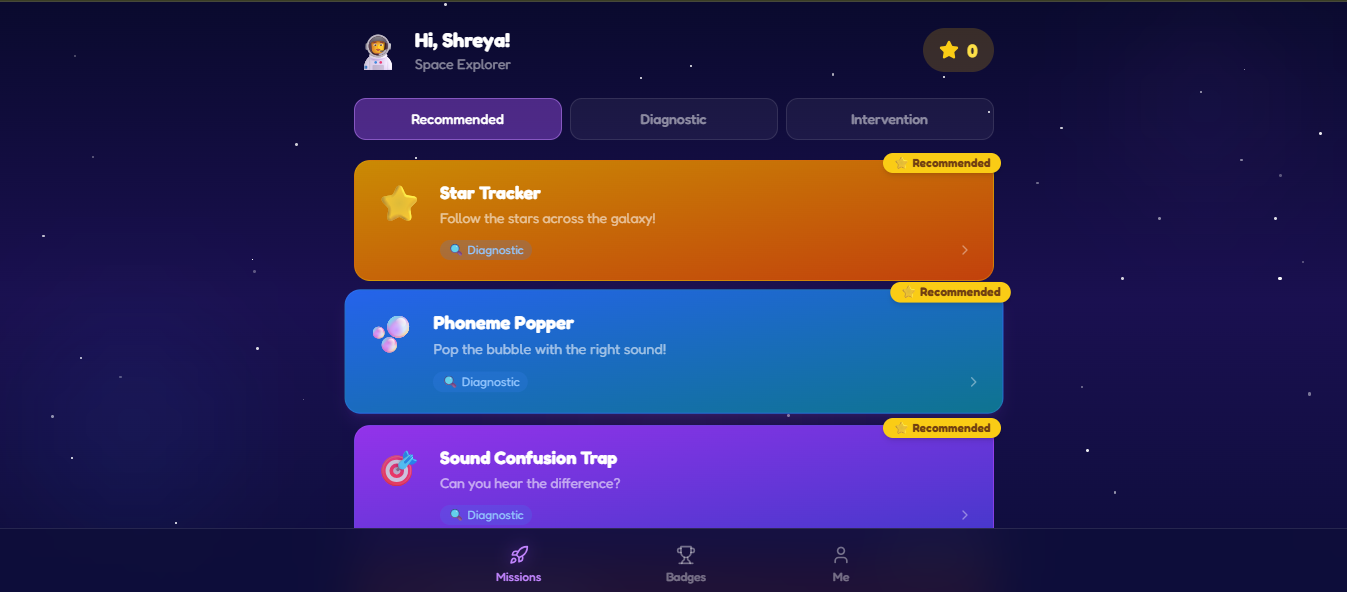
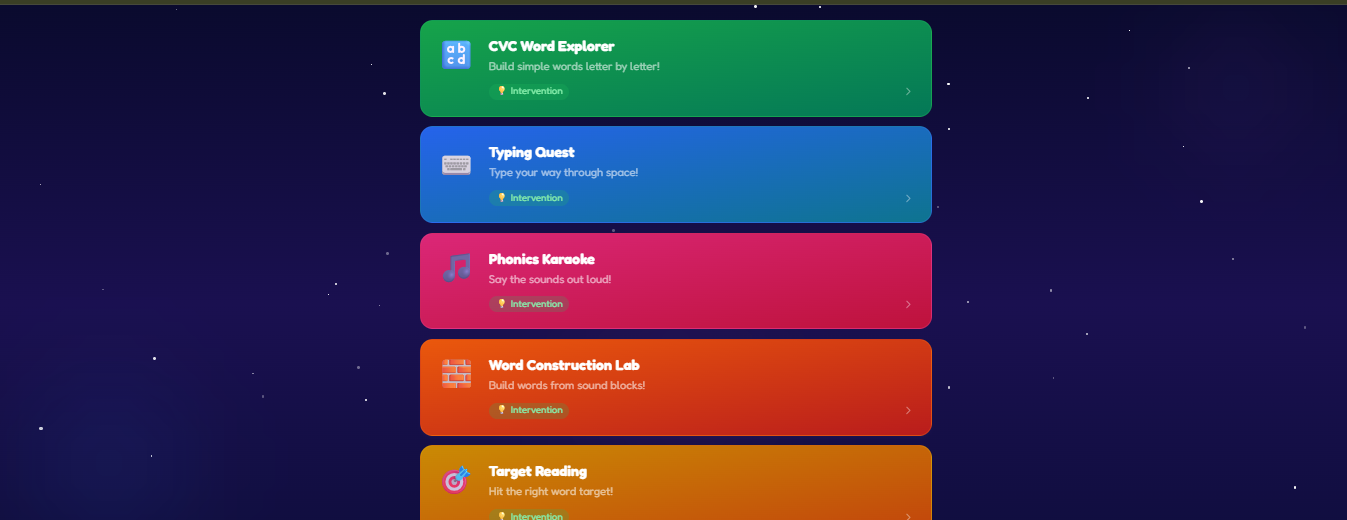
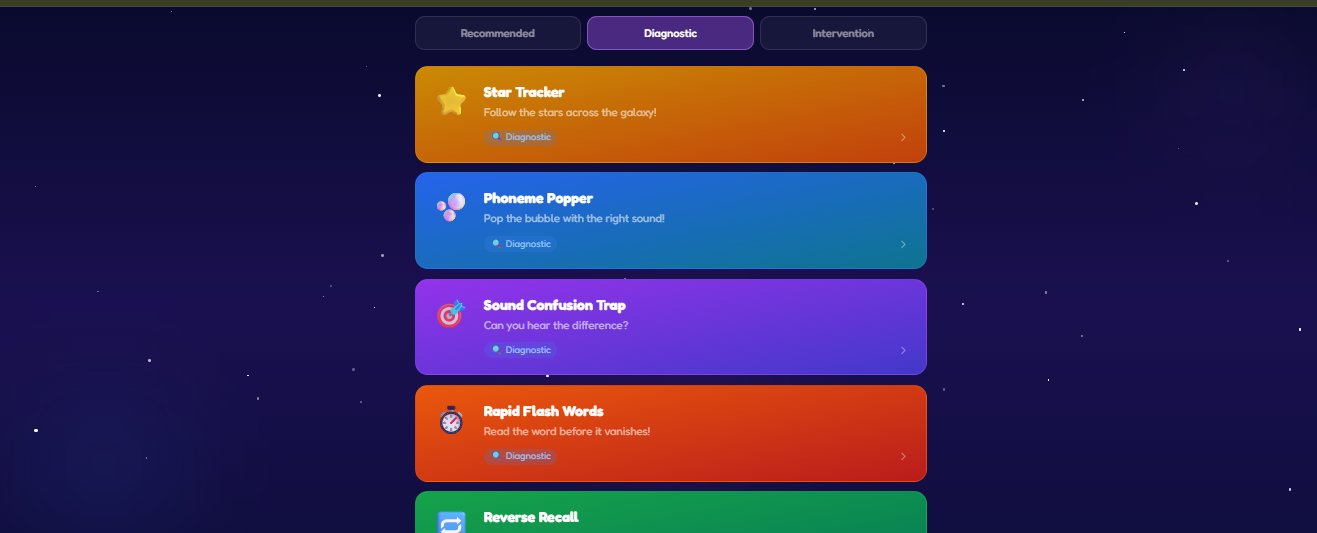
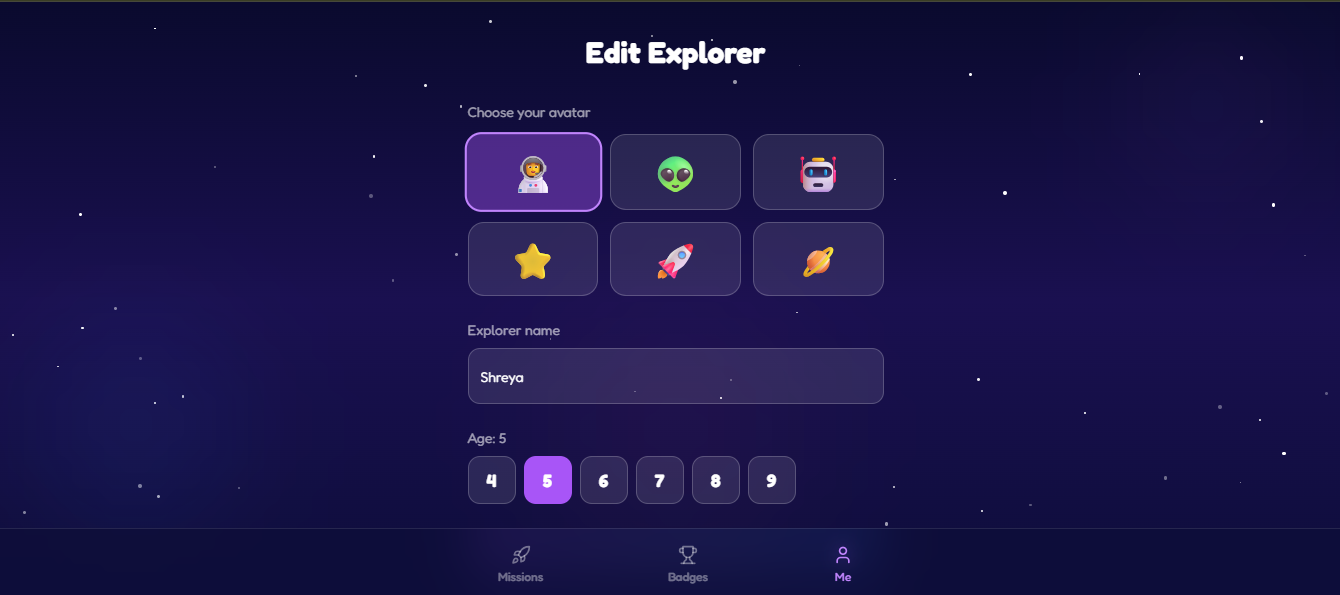
DyslexiCore is an AI‑powered, gamified platform that helps detect and support dyslexia in children aged 4–9 in a playful, low‑pressure way. Instead of formal tests or long assessments, kids play short, colorful games like “Star Tracker” (eye‑movement tracking), “Phoneme Popper” (sound recognition), and “Word Explorer” (word‑reading patterns). As the child plays, the system quietly collects micro‑data on response time, mistakes, attention, and phonological skills.
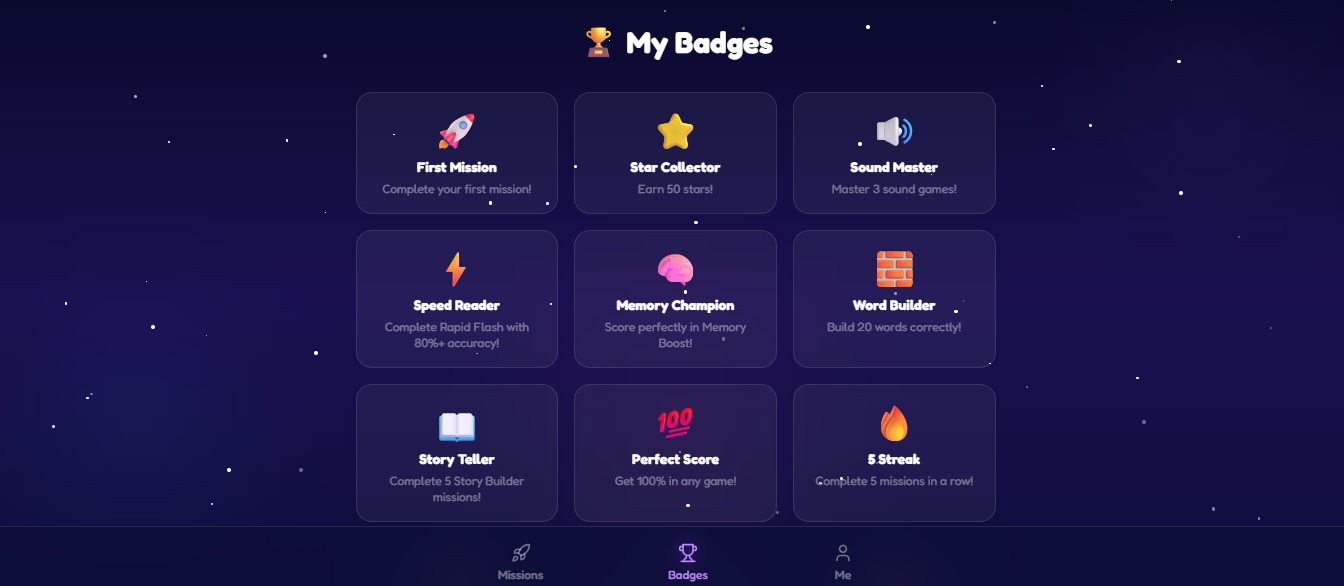
An AI engine analyzes this gameplay and generates a dyslexia risk score and learning‑behavior insights, so parents and teachers can see early signs without waiting for academic failure. A parent dashboard shows progress curves, patterns in the child’s learning style, and simple, jargon‑free suggestions. The platform also offers an adaptive learning path with mini‑“quests” that automatically adjust difficulty and track improvement over time, turning practice into small, motivating missions instead of repetitive drills.
How we built it
DyslexiCore is a full‑stack web app built from scratch using modern tools.
- The frontend is built with React and Phaser.js, which lets us create the game screens, child‑facing UI, and parent dashboard in the same codebase while keeping everything responsive and browser‑friendly.
- The backend is built with Python + FastAPI, providing RESTful APIs for user accounts, game sessions, AI results, and recommendations.
- We store user profiles, game logs, and progress data in PostgreSQL, with simple time‑series‑style modeling for session‑by‑session analysis.
- The AI/ML module (owned by Shreya) runs pattern‑based analysis on gameplay data—features like response time, error clustering, and phoneme‑recognition accuracy—to compute risk‑style scores and insights, which are then exposed through clean API endpoints to the frontend.
The whole system was designed so that the UI, backend, and AI could be developed in parallel during the hackathon, with clear contracts (JSON schemas, simple request/response formats) between components.
Roles in the team
Shreya – Team Lead, AI/ML Engineer
Shreya leads the project and owns the AI/ML and data side. She designs pattern‑based models that analyze user behavior and interaction data from the games to generate insights and scores. She is comfortable with Python, data analysis libraries, and basic machine‑learning workflows (feature engineering, training, evaluation). As team lead, she defines the architecture, coordinates timelines, and makes sure the AI outputs are easy to plug into the frontend and backend.
Challenges we ran into
- Aligning the AI model with the games: Making sure the features extracted from gameplay (like response time, error patterns, and phoneme‑related actions) were actually meaningful and interpretable for risk‑style scoring.
- Keeping the UI simple yet powerful: Balancing a child‑friendly, playful interface with a parent dashboard that still shows enough data to be useful without feeling cluttered.
- Real‑time(ish) feedback: Getting the games, backend, and AI to talk to each other quickly enough so parents see insights shortly after a session, even within the hackathon timeline.
- Fun vs valid learning signals: Designing games that feel like play but still capture enough structured, measurable behavior for the AI to learn from, not just random clicks.
Accomplishments that we're proud of
- A fully working prototype that actually analyzes gameplay and generates a dyslexia‑risk‑style score, not just a mockup or fake backend.
- A cohesive parent dashboard that turns raw AI outputs into clear, non‑technical insights anyone can understand, without complex jargon.
- Multiple gamified mini‑games that genuinely feel like games to kids, not “tests in disguise,” but still log structured data behind the scenes.
- A tight integration of frontend, backend, database, and AI into one end‑to‑end system, all built and tested within the hackathon timeframe.
What we learned
- How to design AI models around natural user behavior instead of clean, lab‑style data—working with noisy, real‑play interactions.
- The importance of keeping the UI extremely simple for parents and teachers, even when the backend and AI are doing complex things.
- How to balance speed of development with readable, maintainable code in a time‑boxed setting.
- That gamification + AI can take a heavy, clinical topic like learning disabilities and make it feel light, playful, and less intimidating for kids and caregivers.
What’s next for DyslexiCore
- Voice‑based features and a multilingual AI companion (e.g., English, Hindi, Tamil) that can guide the child with an encouraging, adaptive tone and read questions or feedback aloud.
- Expanding the adaptive learning path with more personalized exercises, stronger feedback loops, and concept‑map‑style progression so the platform feels like a true curriculum.
- Running small pilot tests with schools, learning centers, or therapists to validate the model’s predictions, refine the games, and gather real‑world usage data.
- Offline or mobile‑friendly versions so families with limited internet or no laptops can still use DyslexiCore at home, whether on a phone, tablet, or simple browser.
Built With
- fastapi
- javascript
- mongodb
- next.js
- node.js
- python
- react.js
- tailwind-css
- web-speech-api

Log in or sign up for Devpost to join the conversation.