-
-
DyslexiaCare Logo
-
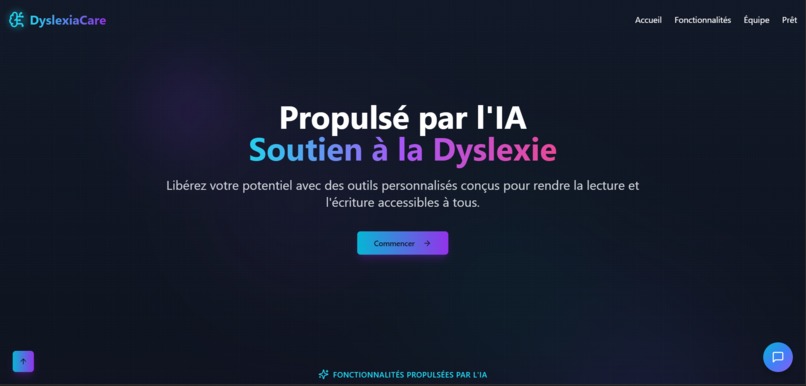
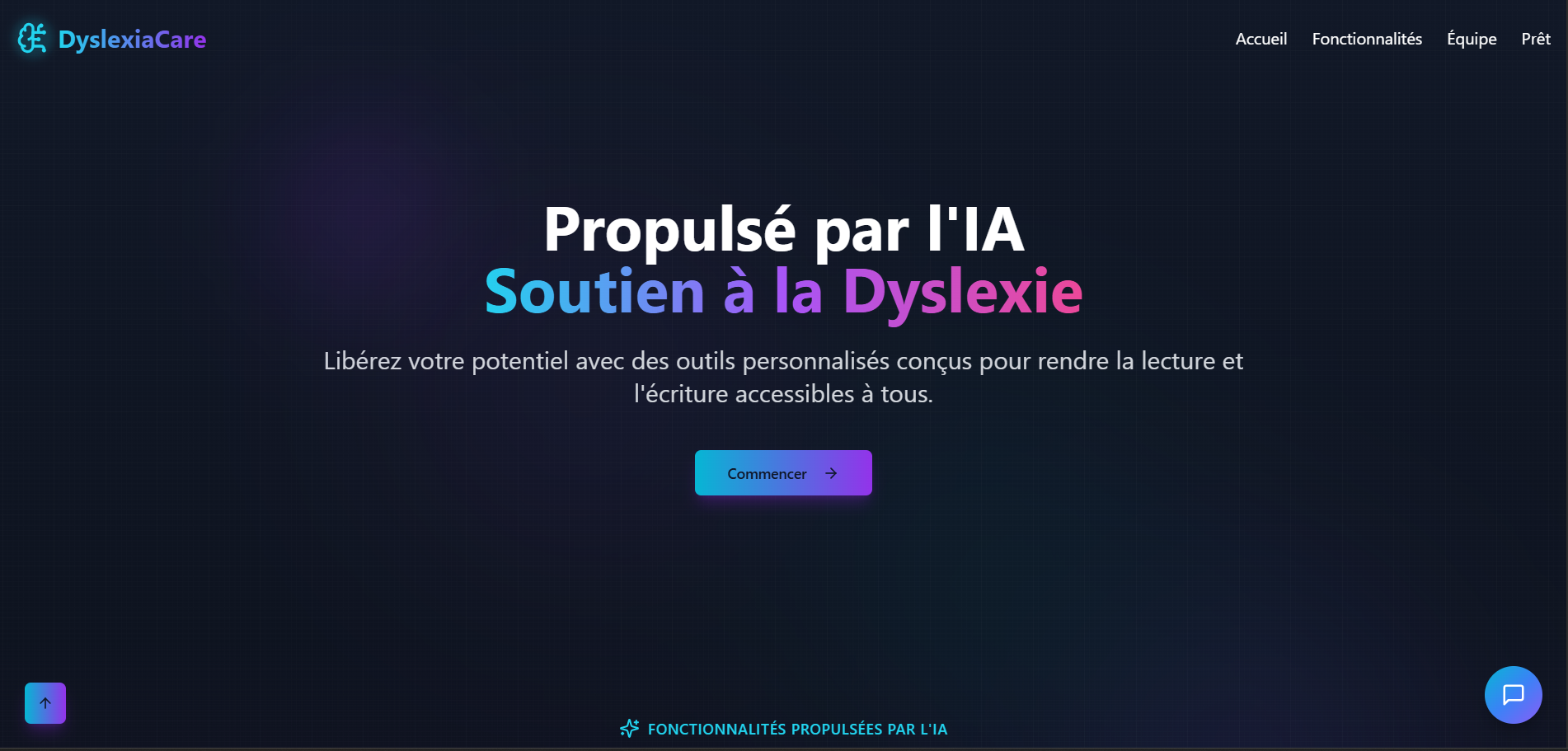
Home Page
-
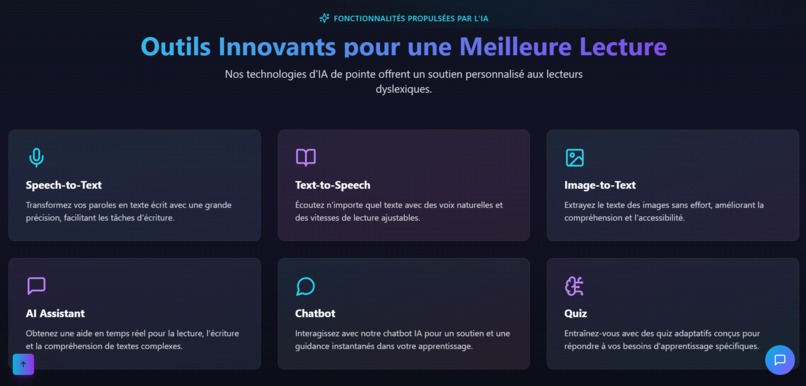
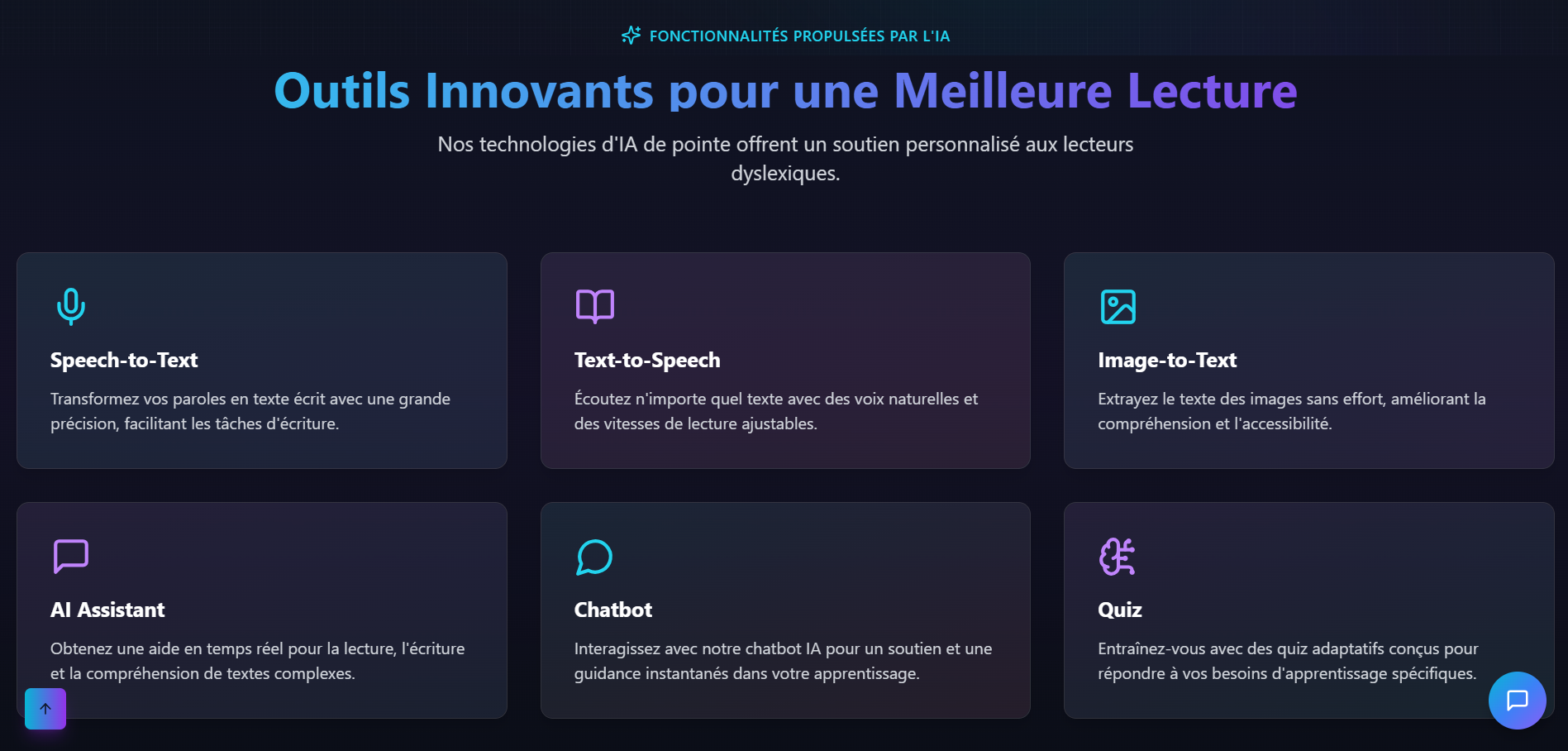
Features
-
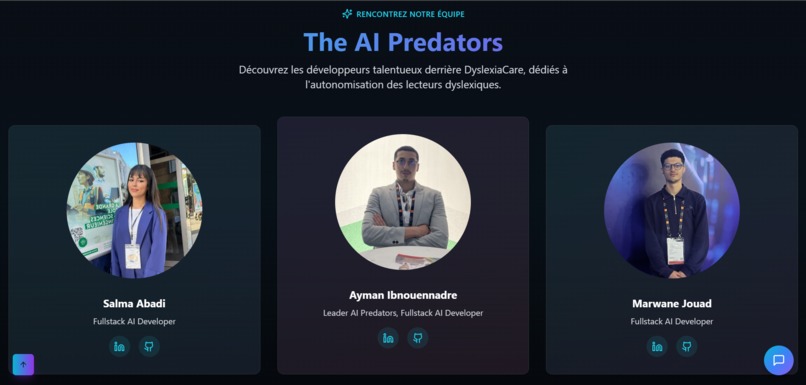
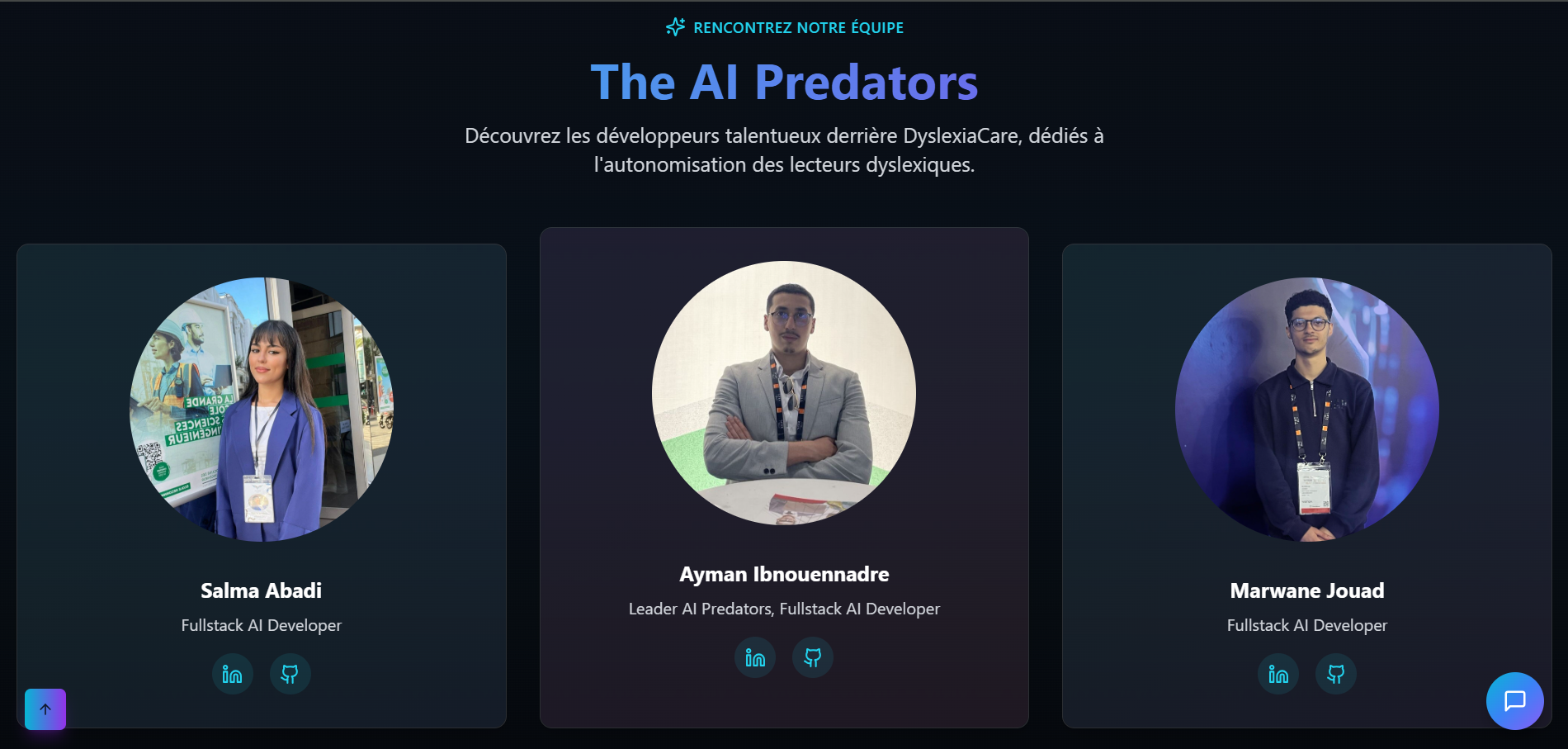
AI PREDATORS MEMBERS
-
AI PREDATORS LOGO
💡 Inspiration
As a software engineer with a close family member working in speech therapy, I’ve witnessed firsthand how difficult it is for dyslexic patients to access proper support — especially in Arabic or French. Despite the growing role of AI in health and education, very few solutions are truly adapted to their cognitive and linguistic needs. That insight inspired me to create DyslexiaCare: a platform designed not just to assist, but to empower.
🧠 What it does
DyslexiaCare is a bilingual AI-powered platform that supports dyslexic patients by offering accessible and intelligent tools to improve reading, writing, comprehension, and pronunciation. The platform combines AI-driven exercises, voice and chat assistants, and personalized feedback to offer a holistic, inclusive learning experience. It’s designed to be simple, motivating, and respectful of each patient’s pace.
🛠️ How we built it
DyslexiaCare was developed by placing user needs at the center of every decision. The goal was not only to use the latest technology, but to translate a real medical and educational challenge into an intuitive solution. From concept to execution, everything was guided by accessibility, simplicity, and cultural relevance — especially for users in Morocco and the Arab world.
🧩 Challenges we ran into
One major challenge was to strike the right balance between simplicity and usefulness. Dyslexic patients need clarity, not clutter — but at the same time, they deserve powerful tools. Another challenge was designing features that feel human, not robotic — especially in the case of AI feedback and virtual assistants. Finally, creating a bilingual solution required a lot of sensitivity to language structure and accessibility.
🏆 Accomplishments that we're proud of
We’re proud to have created one of the first AI platforms of its kind in the Arab world, entirely focused on dyslexia. We’ve built something that doesn’t just function — it has meaning. We’re proud to have offered a voice to a group of people who are too often left behind in the digital transition, especially in non-English-speaking contexts.
📚 What we learned
We learned that empathy is just as important as engineering. Building for people with learning difficulties requires more than technical skills — it takes active listening, real-world feedback, and a commitment to making each interaction count. We also learned how much of a difference inclusive design can make in someone’s educational journey.
🚀 What’s next for DyslexiaCare
The next step for DyslexiaCare is to move from prototype to a fully functional, independent, and deployable platform. To do this, we need both technical resources and financial support.
Our first goal is to stop relying on external APIs like Gemini or LLaMA and instead train and fine-tune our own AI models. This will allow us to better adapt to the linguistic, cultural, and therapeutic context of Arabic and French dyslexic users, while also improving performance, data privacy, and cost control.
We plan to:
Train and optimize AI models in-house for speech recognition, natural language understanding, and feedback generation, tailored to our target audience.
Transform the current prototype into a full mobile application, accessible to users on Android and iOS.
Deploy the platform online, making it available to schools, therapists, and individuals.
Adopt a scalable financial model, as described in our full proposal, with free, premium, and enterprise tiers.
Promote the platform through marketing campaigns and seek collaborations with schools, speech therapists, and healthcare providers in the MENA region.
This is exactly why we are participating in the AIWA Hackathon: to get the visibility, mentorship, and potential funding to bring DyslexiaCare to life. Our goal is not just to build a tool, but to create a lasting solution that empowers people and transforms access to inclusive learning through AI.


Log in or sign up for Devpost to join the conversation.