-
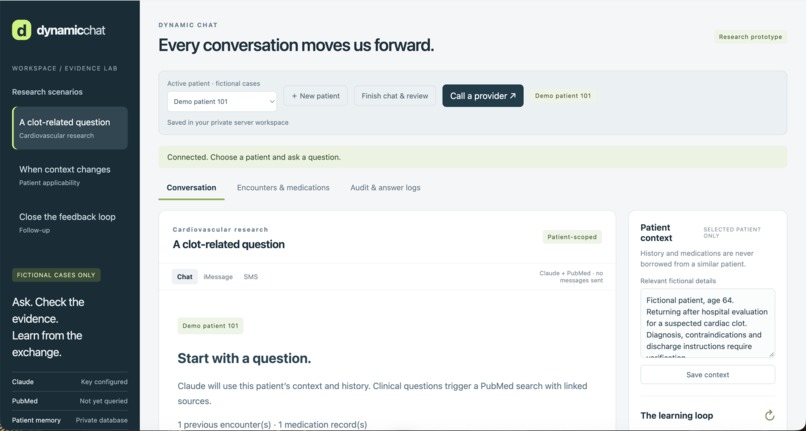
Home Page
-
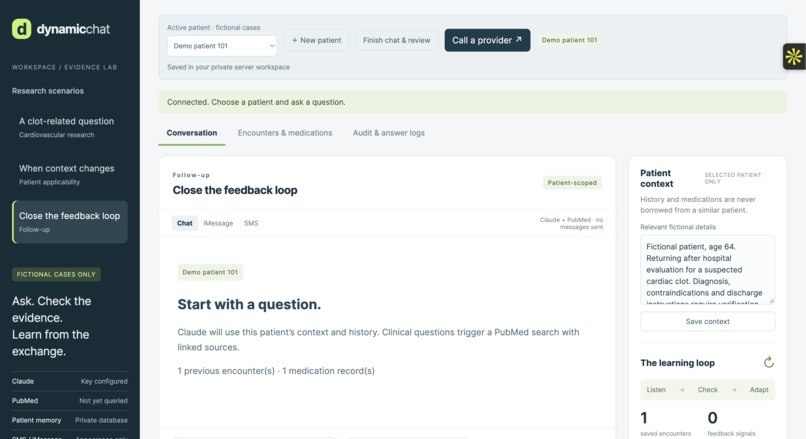
Feedback Loop
Inspiration
I love healthcare. I want to see more for the world in healthcare software, having building in this field for the past 3 years of my life. When I noticed Impiricus' systems for pharma-driven data, I loved the speed and organizability of it. The thing with this, and with many things in healthcare, is that streamlining a process all comes down behind just... the physician. The actual person in the chair. The chat doesn't know how stressed the doctor is when making the decision, or how the prescriptions have changed since, or how critical a time-window this may be. Those are downstream of many other cascading effects, and more than just getting it right, the chat needs to be able to fill in with independent evidence, as well as a means of dynamic feedback and adjustment to the conditions that the doctor is working in. People's lives are on the line.
What it does
DynamiChat leverages Claude API to be able to systemize the healthcare process with both independent and pharma-driven data points. Leveraging a mechanism commonly seen in OpenEvidence, it's able to bring independent-derived peer literature, allowing doctors to make more robust and organized choices regarding the system. Secondly, it has a memory system, working well for patients who are coming back again to the same doctor, or if a similar system of illnesses is seen in another patient that can be treated. Thirdly, it's patient-context-dependent, leveraging ideas of the context behind the situation without violating any patient rights and systems, allowing for the system to gain memory about the situation and also for the system to get an idea of the situations that the physician is working in, allowing for an easy means to gain a lot of robust feedback on the actual distinct processes that occur in the day-to-day. This all works in a dynamic system that gains a lot of feedback per reviewing chat systems and also asking for interventionist feedback at the end of each patient system, allowing for physicians and software to genuinely work in the loop, properly.
How we built it
I leveraged OpenAI's Codex alongside Claude as well as just ideas I'd gained from many different Impiricus sessions and questionnaires.
Challenges we ran into
A challenge was ensuring that the APIs were embedded into the system, which restricts data flow and resource allocation. Another challenge was context-dependent systems and how careful we had to be about that since it is the only way we are bringing patient based systems into the loop.
Accomplishments that we're proud of
I'm proud to have built this alongside my other key project, allowing me to learn and gain a lot of skills on the sense. I'm also happy to have been able to find problems in this through research and understanding, as a lot thrive on the smallest changes that really show up when you look through the cracks.
What we learned
I'd learned a lot about the entire dynamic behind healthcare software. I'd never known Impiricus was a system beforehand, so it gave me a lot of insight into the world of pharma-derived information delivered timely to patients, as well as dynamic texting to many different physicians and doctors that take a lot of data and have to organize correctly for correct information within the loop.
What's next for DynamiChat
I'd love to see this actually be tested by physicians in a non-hospital setting (i.e. test scenarios). They'd be able to figure out what is good, what's supposed to be removed, and the way I work correctly with established legal standards and existing competition.

Log in or sign up for Devpost to join the conversation.