Inspiration
Studying often feels repetitive and inefficient — we read notes, but forget them quickly. Tools like flashcards exist, but they’re usually static and time-consuming to create. We wanted something smarter, faster, and adaptive: a study tool that generates flashcards automatically from notes, adapts to the learner’s progress, and feels like having a personal AI tutor.
What it does
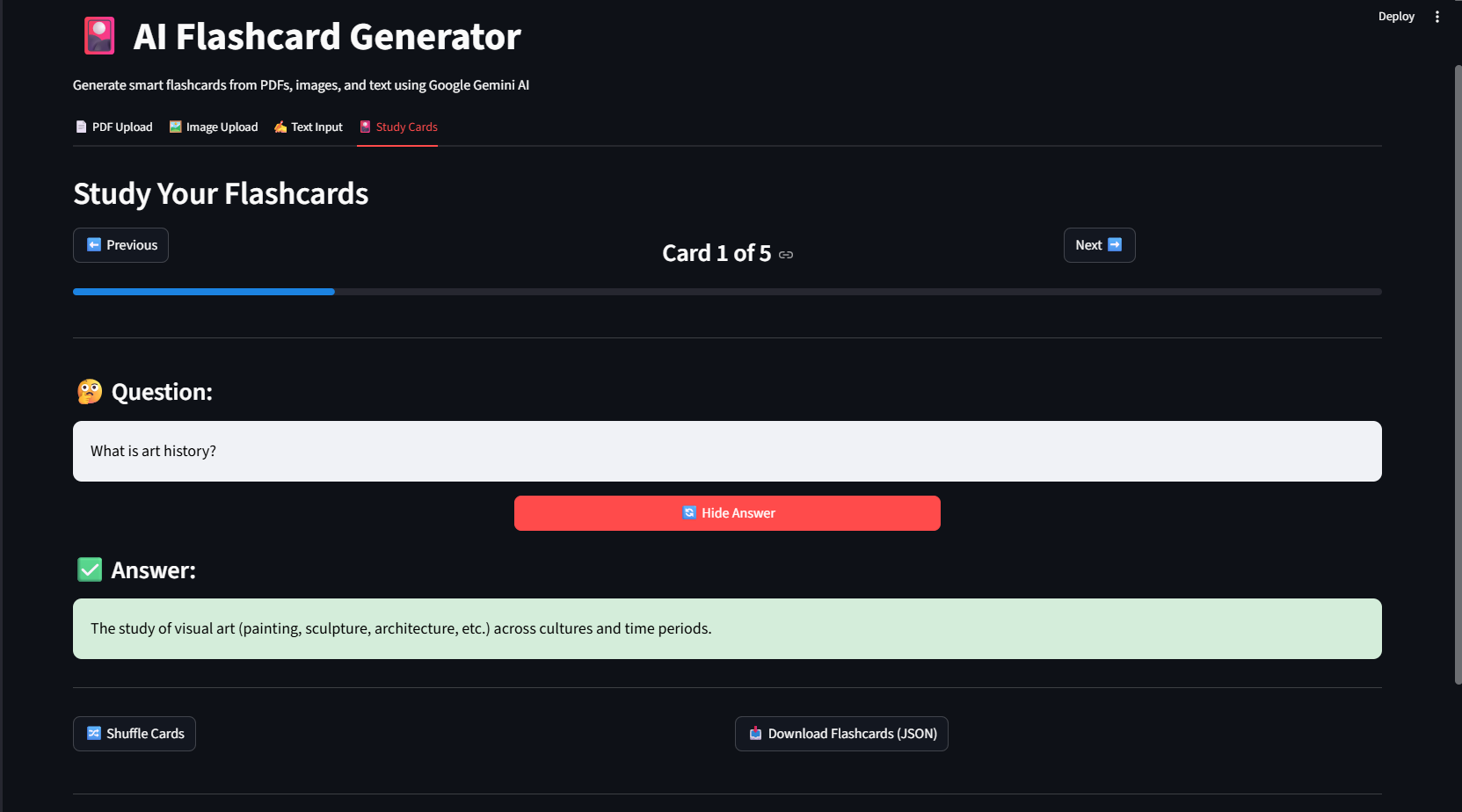
Dynamic Study Flashcards is an AI-powered learning app that turns your notes into smart flashcards. Upload or paste your study material. Our system summarizes the content, generates Q/A flashcards, and rewrites answers at different difficulty levels. When you practice, the app adapts: cards you struggle with reappear more often, and cards you master are spaced out (like Anki/Leitner system). It’s like having a flashcard system that learns with you.
How we built it
Frontend: Built with Streamlit for rapid prototyping and interactive UI. APIs: Summarizer API → condenses long notes into key points. Prompt API → transforms key points into flashcards (question/answer pairs). Writer API → rewrites or simplifies answers depending on difficulty. Adaptive Learning Logic: Implemented spaced repetition inspired by the Leitner system to decide which flashcards show up more often.
Challenges we ran into
Designing the right prompt structures for generating accurate and useful flashcards. Balancing simplicity vs. depth — making answers concise but still meaningful. Managing state in Streamlit so that flashcards flip correctly and progress is tracked. Integrating multiple APIs smoothly without making the app feel slow.
Accomplishments that we're proud of
Built a working AI-powered flashcard generator in just [X hours/days]. Successfully combined multiple APIs into a single learning workflow. Created an adaptive system where the flashcards actually get smarter the more you study. Delivered a tool that feels practical for students, self-learners, and professionals.
What we learned
How to integrate multiple AI APIs into one cohesive application. The power of prompt engineering in shaping AI outputs. The importance of user experience in EdTech tools — learning is not just about accuracy, but also about motivation and engagement. How to use Streamlit
What's next for DYNAMIC STUDY FLASHCARDS
Support for multiple study modes (MCQs, true/false, fill-in-the-blank). Adding speech mode so flashcards can quiz you verbally. User accounts + cloud storage to save progress. Gamification (streaks, badges, leaderboards) to keep users motivated. A mobile-friendly version so learners can revise anytime, anywhere.

Log in or sign up for Devpost to join the conversation.