Inspiration
Local communities often face critical emergencies like floods, power outages, and road blockages that require rapid, coordinated response. Traditional crisis management depends heavily on manual reporting and slow communication. Our goal was to build an AI-powered agent that automates data ingestion, analysis, and response orchestration to save lives and improve safety at scale.
What it does
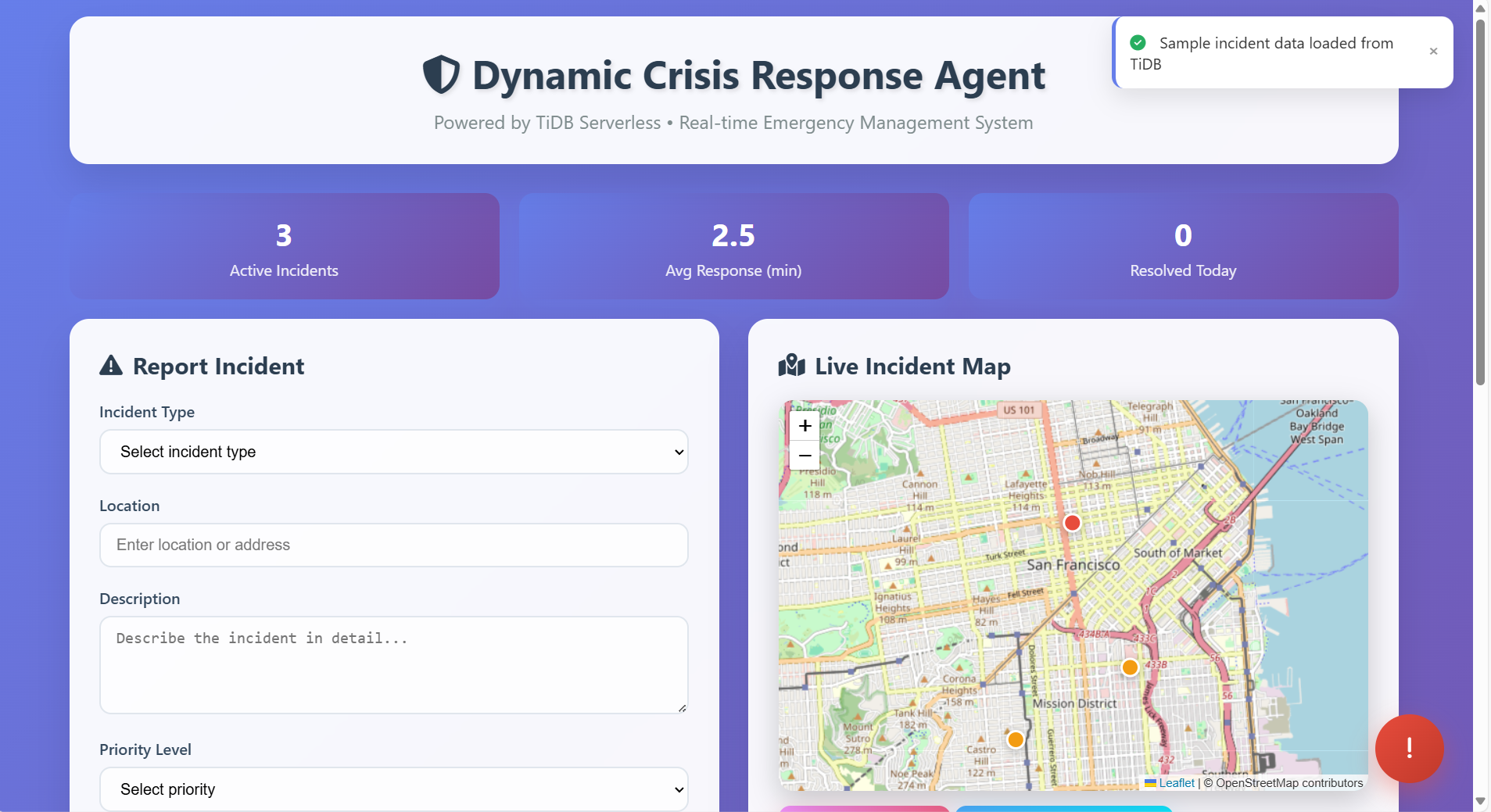
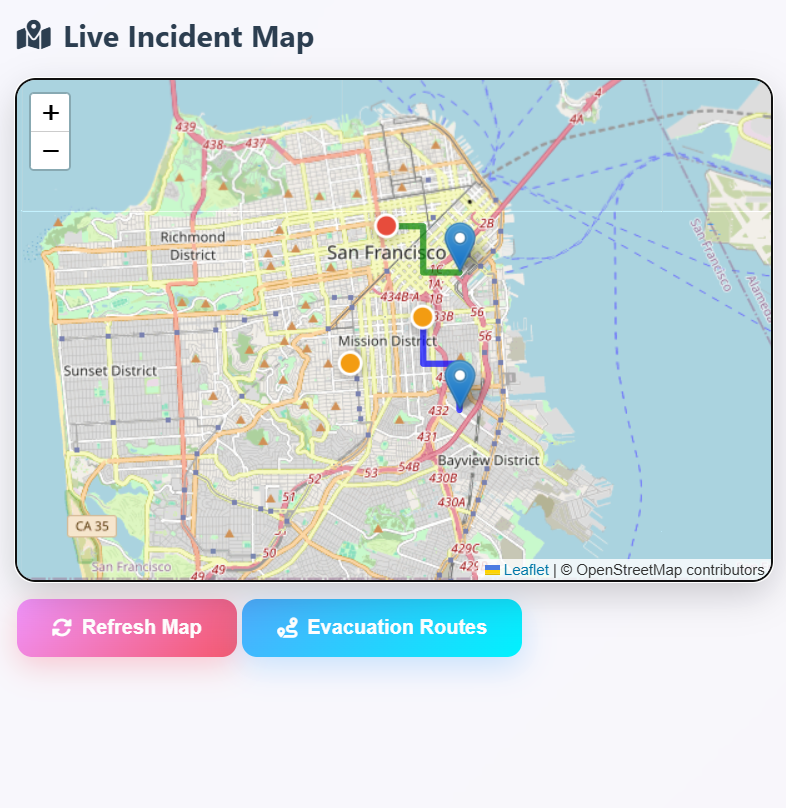
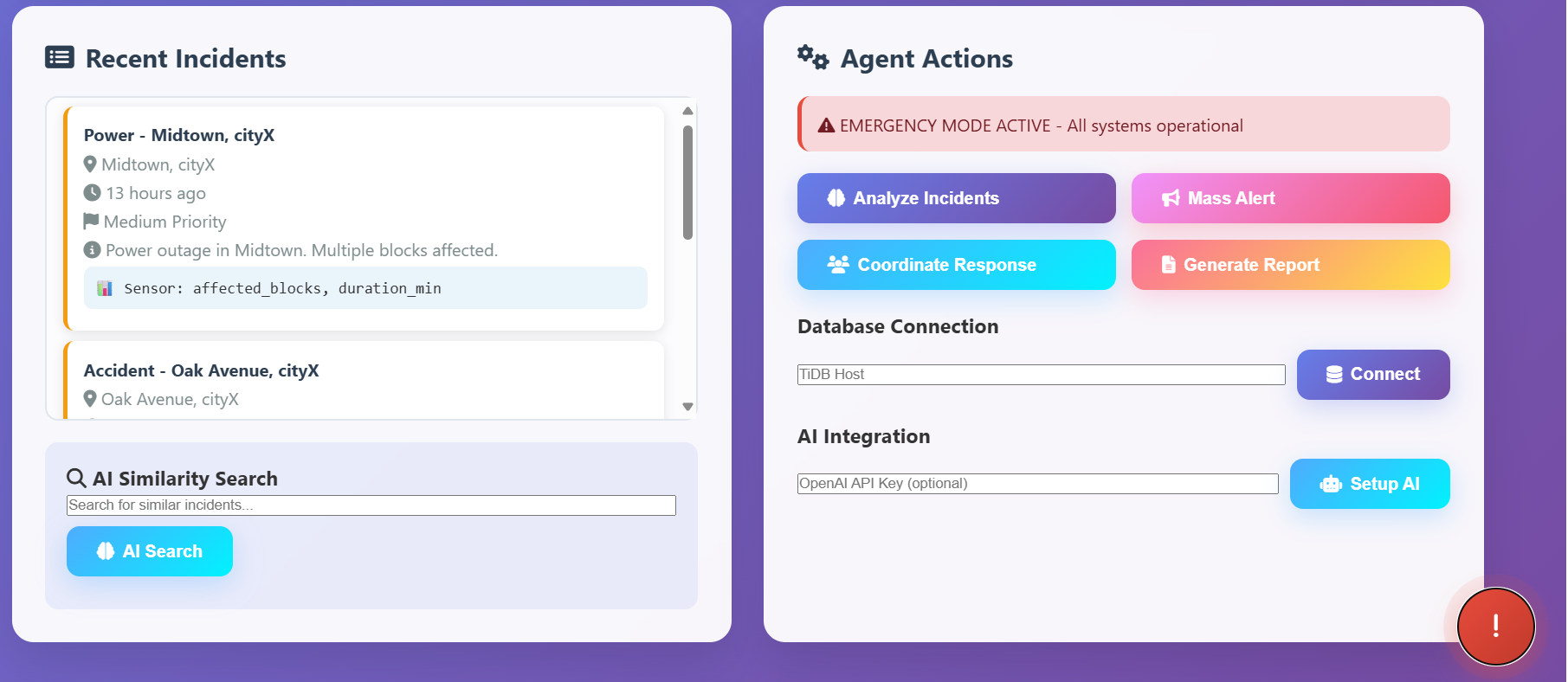
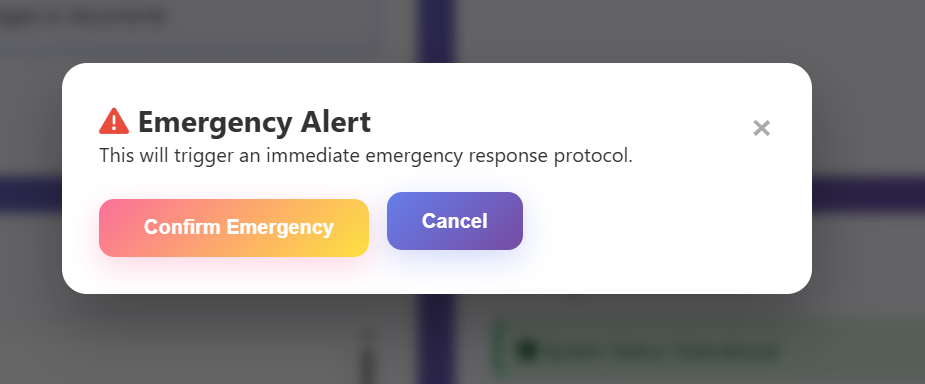
Dynamic Local Crisis Response AI ingests multi-modal data—text reports, images, and sensor feeds—indexes them with TiDB Serverless vector search, and uses chained LLM calls to analyze, prioritize, and generate actionable alerts. It automatically notifies responders, suggests evacuation routes, and coordinates communications in real-time.
How we built it
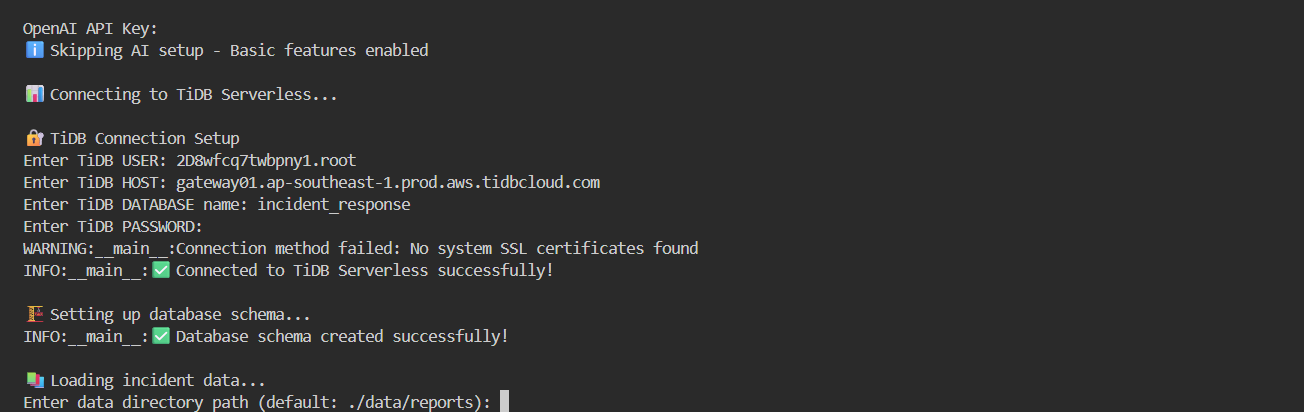
We leveraged TiDB Cloud Serverless for scalable vector and metadata storage, LlamaIndex for document ingestion and vectorization, and Python to chain multi-step workflows. The system integrates external APIs for mapping and notifications, orchestrated through automated vector searches and LLM-generated summaries to achieve seamless crisis response.
Challenges we ran into
- Handling multi-modal data ingestion and mapping it to a unified schema.
- Managing large vector insertions within API and network packet size limits.
- Designing end-to-end multi-step workflows that reliably connect data indexing, LLM calls, and external API triggers.
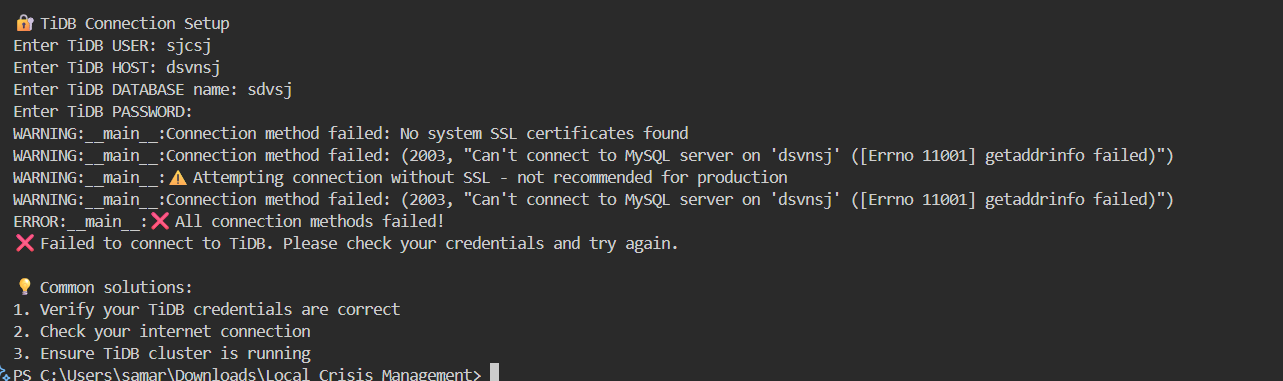
- Ensuring security and smooth integration with TiDB Cloud's authentication and TLS configuration.
Accomplishments that we're proud of
- Successfully built an end-to-end multi-step AI agent demonstrating real-world crisis workflows on TiDB Serverless.
- Automated ingesting, indexing, and embedding of diverse data types into a single vector store with rich metadata.
- Created a scalable pipeline with batch insertions and smooth integration of LLM reasoning to coordinate response actions.
- Developed clear documentation and demo files to support easy reproducibility and hackathon judging.
What we learned
- TiDB Serverless’s vector search capabilities simplify building intelligent, scalable embeddings-driven applications.
- Multi-step chaining of AI agents with real-world external APIs is complex but powerful for real impact.
- Data ingestion design and batch control are critical in working with large vector databases.
- Good metadata and schema design greatly enhance search relevance and agent functionality.
What's next for Dynamic Local Response AI
- Incorporate live IoT sensor integrations and direct citizen report feeds.
- Enhance the LLM workflows for dynamic decision-making with region-specific logic and priority handling.
- Add multi-language support and accessibility features for diverse community outreach.
- Explore deployment models to offer this as a free open-source emergency response platform for small cities and rural areas.
Built With
- css
- html
- javascript
- openai
- python
- tidbcloudstorage

Log in or sign up for Devpost to join the conversation.