Inspiration
We started Dynamic Languages in 2018, after moving to Valencia, Spain. Dave wanted to learn Spanish using his VR headset (Rift CV1), and there were no apps available. We'd recently attended an amazing Björk VR exhibition in London that used 360 video, and had been blown away by Felix & Paul's "The People's House". The immersion of 360 video was unlike anything else and Dave was excited to use his video production skills for this new format.
So we bought a 360 camera and arranged to film Dave's first few Spanish lessons with a teacher, as a pilot. Katie, an experienced language learner and teacher, shaped the teaching. Since then, five more languages have been added (two more coming soon), with content filmed in 11 countries. We help learners to be immersed in the places where a language is spoken and engage with cultures around the world. We give them a way to practice speaking their new language out loud, every day, without the same level of fear and anxiety that speaking in the real world brings.
For this hackathon, our inspiration has been the Meta VR Glasses, which have the form factor that we believe is essential for wider VR/AR adoption. The entry includes two updates, both publicly available. We've released v6.0, which includes our first AI conversation partner, called Belo, followed by v6.1 for which we have implemented hands-only interactions, as well as a new onboarding process that gives new users more personalised guidance for using the app. Both updates are significant steps forward in our mission.
We'd be remiss not to mention how AI coding (particularly Claude) has enabled our small team to produce 10-100x more output. The last few months of development have been incredible. The AI coding tools are inspiring us to develop and test more features, helping us on our mission to be the best language learning tool in the known metaverse.
Immersion in a language is the key to learning it, so VR is a natural fit, and now that users are able to use their hands, the immersion is even deeper. Having an AI speaking partner to talk with about the cultural information and grammar presented in our 360 interactive videos is another huge step forward for our bootstrapped team.
Finally, we'd like to mention accessibility. One of our main inspirations has been our co-founder's sister, who has severe back issues and is forced to lie on a bed for most of the day. Creating immersive travel and cultural content, so people are able to experience the world from their home, is a big part of our mission. We've even had specific feedback from other housebound users about this, and we are very proud to be supporting users with mobility issues. We believe a greater understanding of different cultures and languages is the key to ensuring peace and harmony between different peoples.
What it does
Dynamic Languages is a Meta Quest app for learning languages and connecting with cultures in real places, through short, seated, daily sessions, fully immersed in the language without distractions.
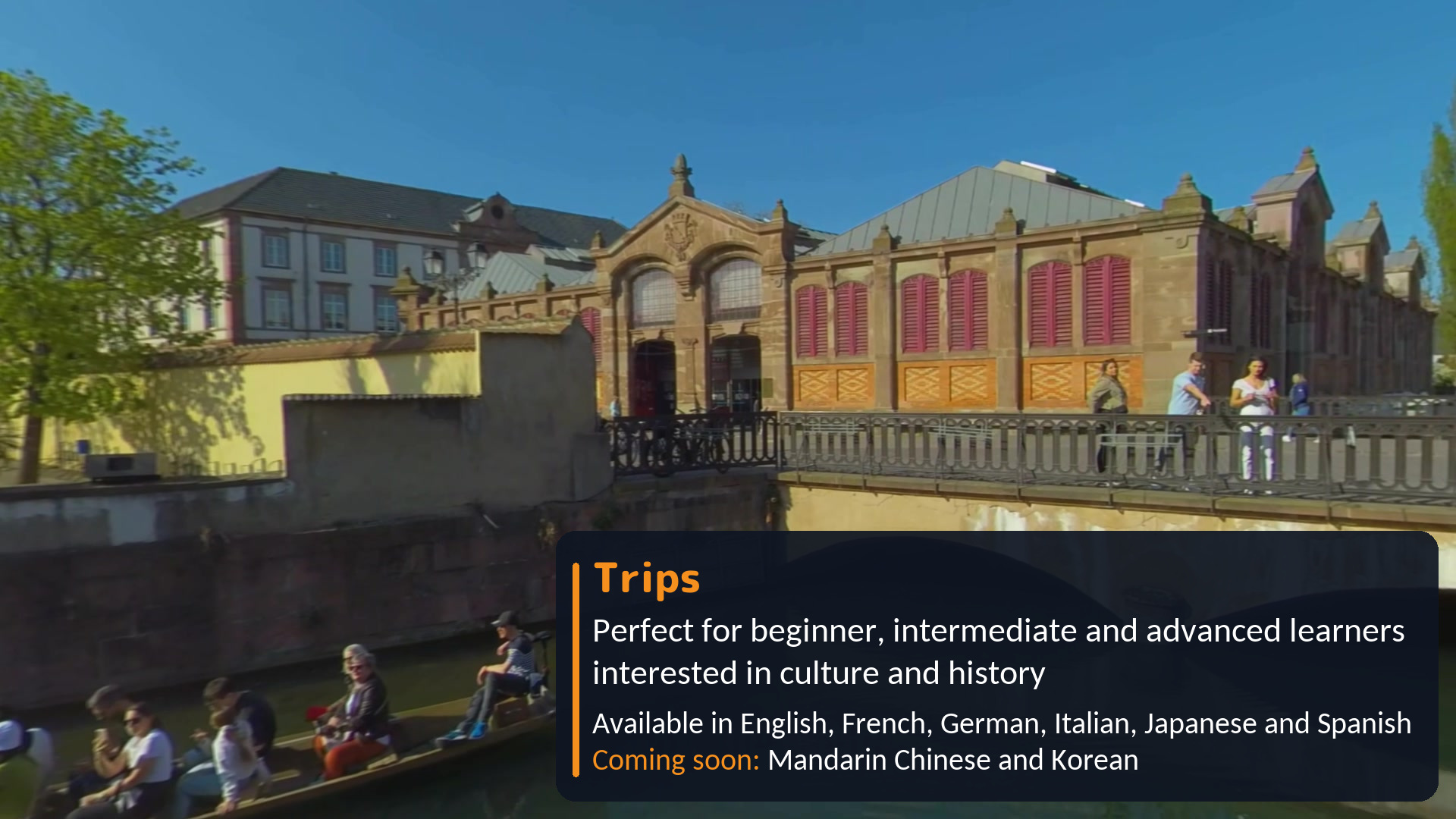
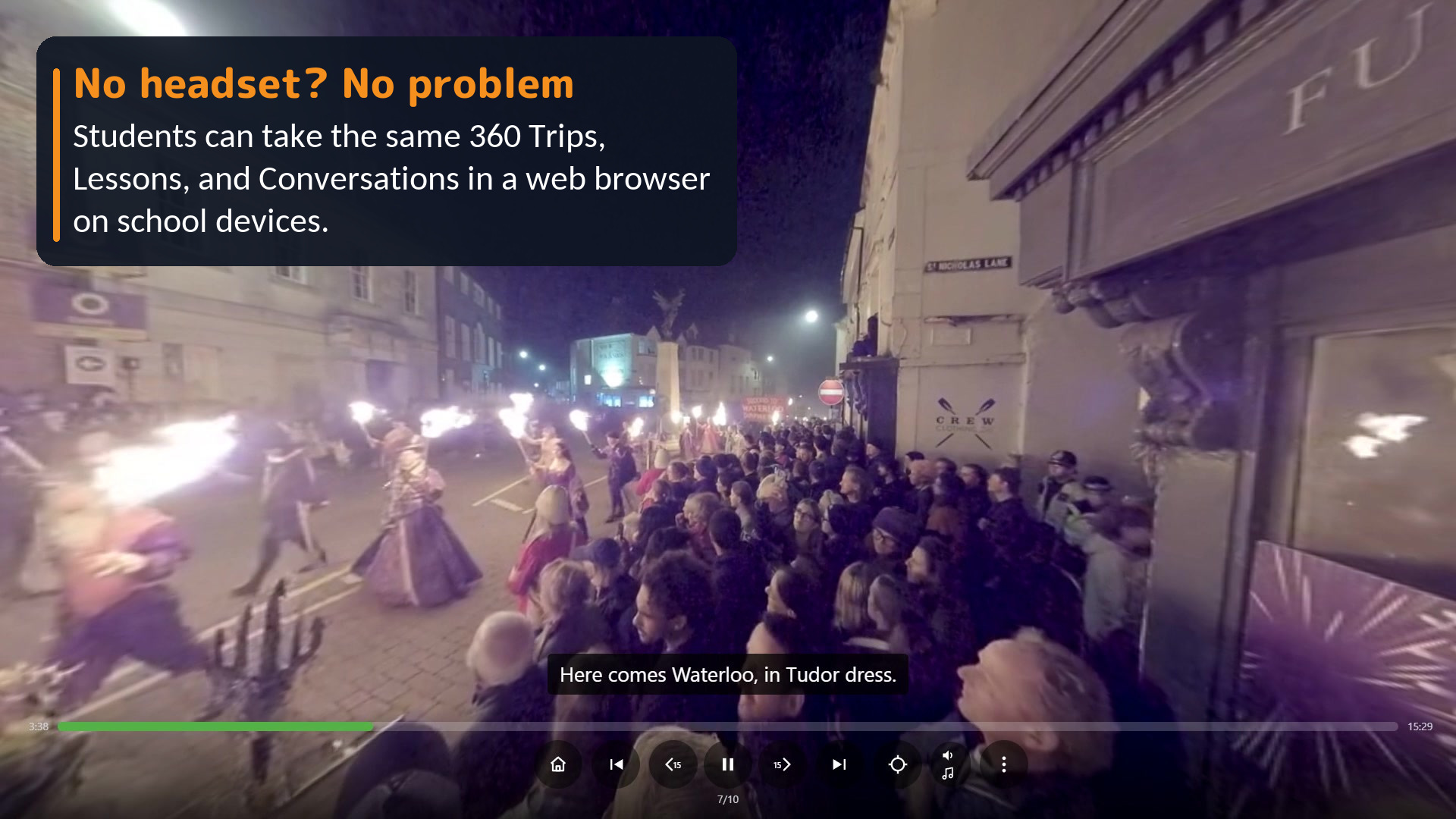
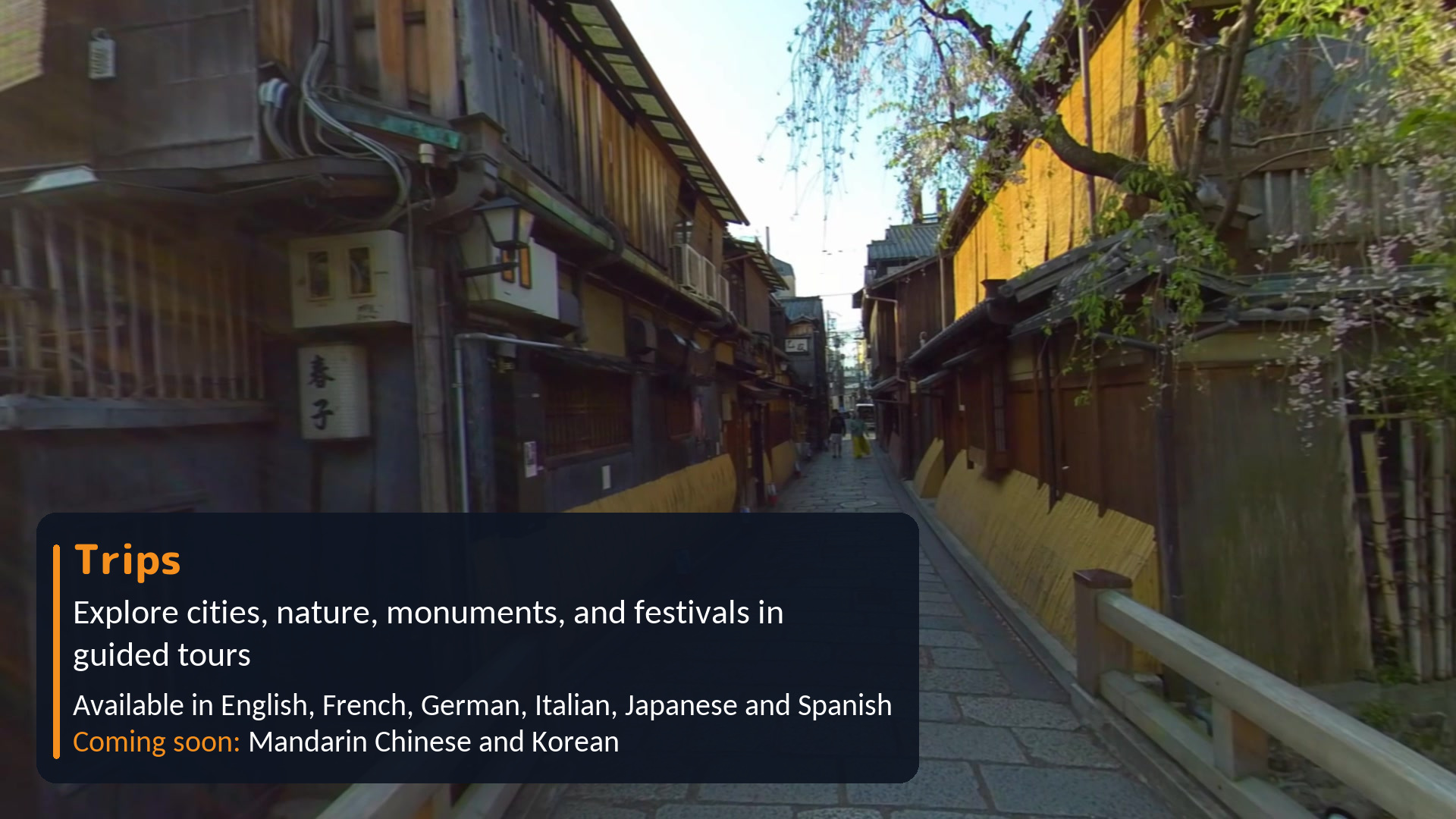
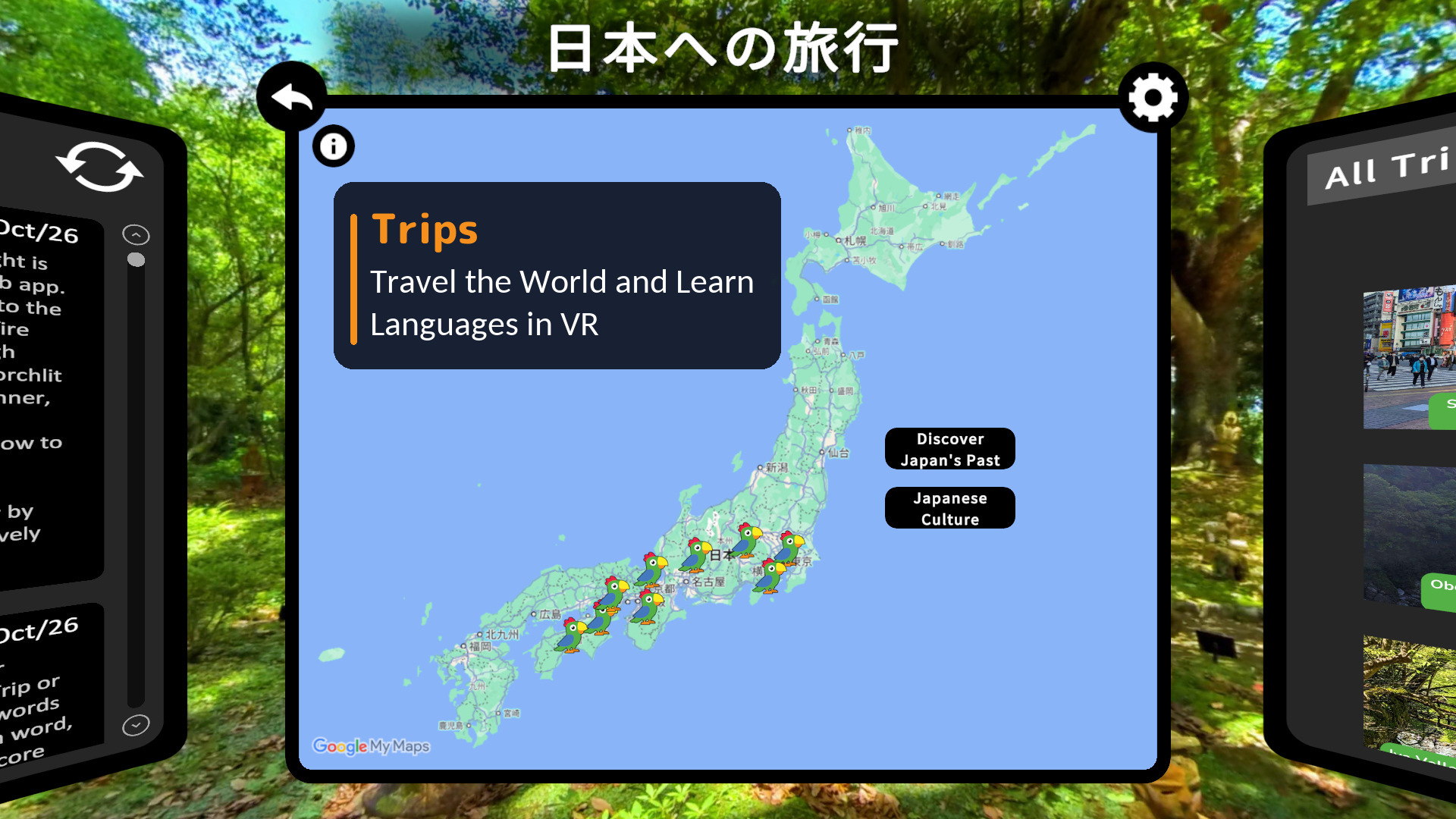
- Trips: guided 360° explorations filmed on location, narrated at the learner's level, with questions answered out loud. More than 250 Trips in six languages: English, French, German, Italian, Japanese and Spanish. We have Mandarin Chinese and Korean coming in the next few months as well.
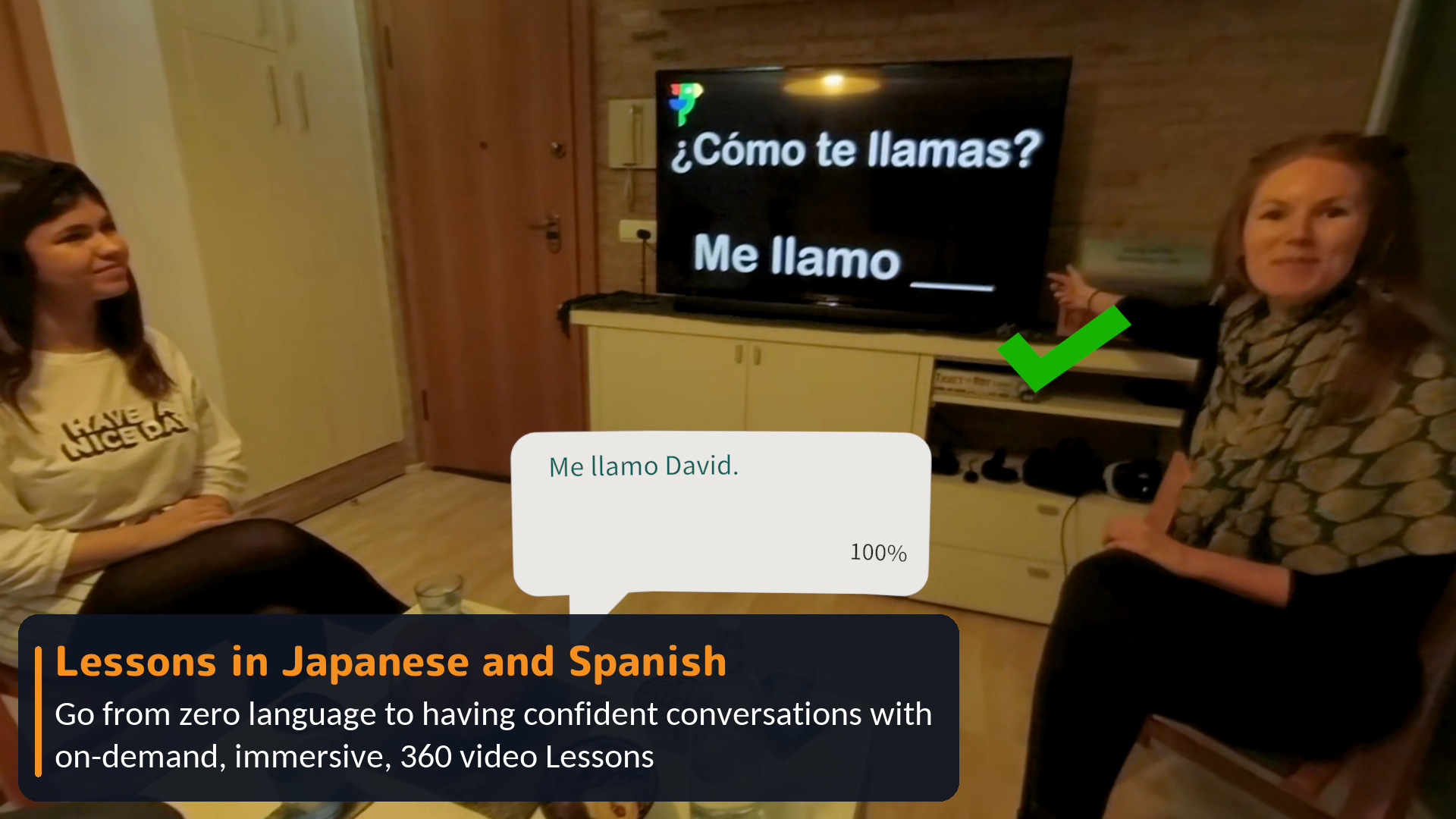
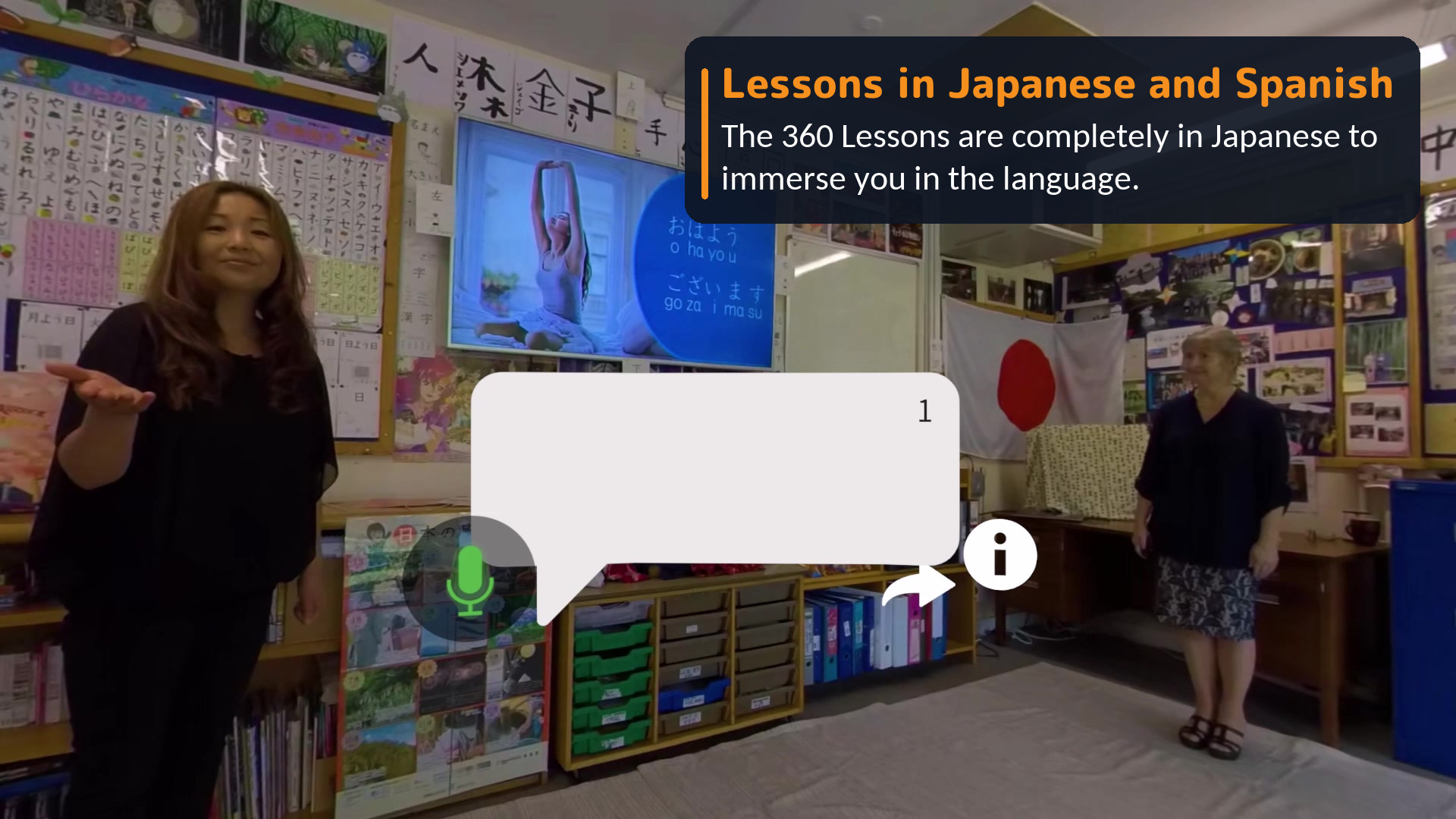
- Lessons: 360° classroom lessons with real teachers, including a 40-lesson beginner Japanese course that takes a user from zero Japanese to confidently having basic conversations.
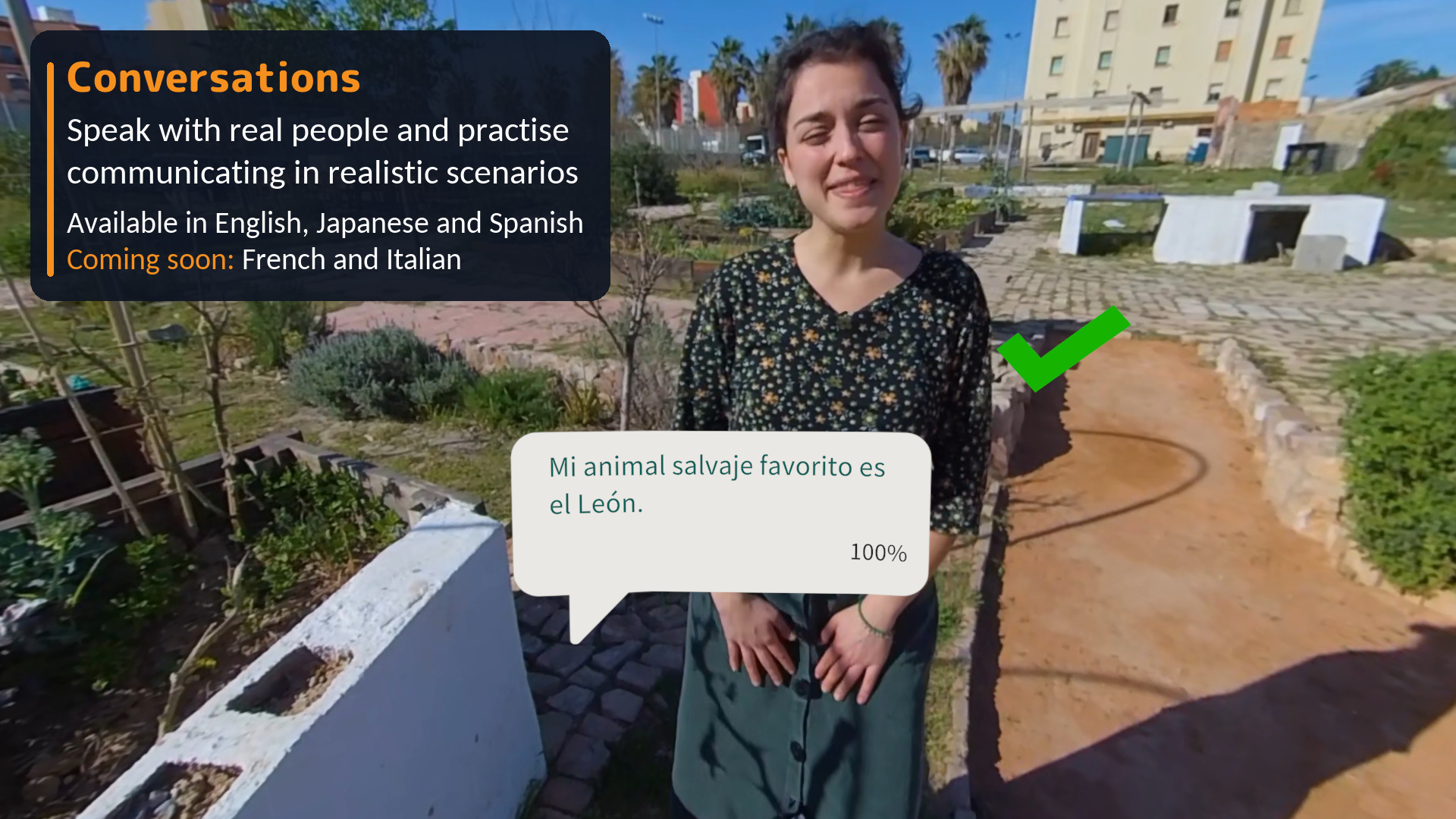
- Conversations: realistic interactions with real people filmed in 360°, who ask questions and wait for your answer.
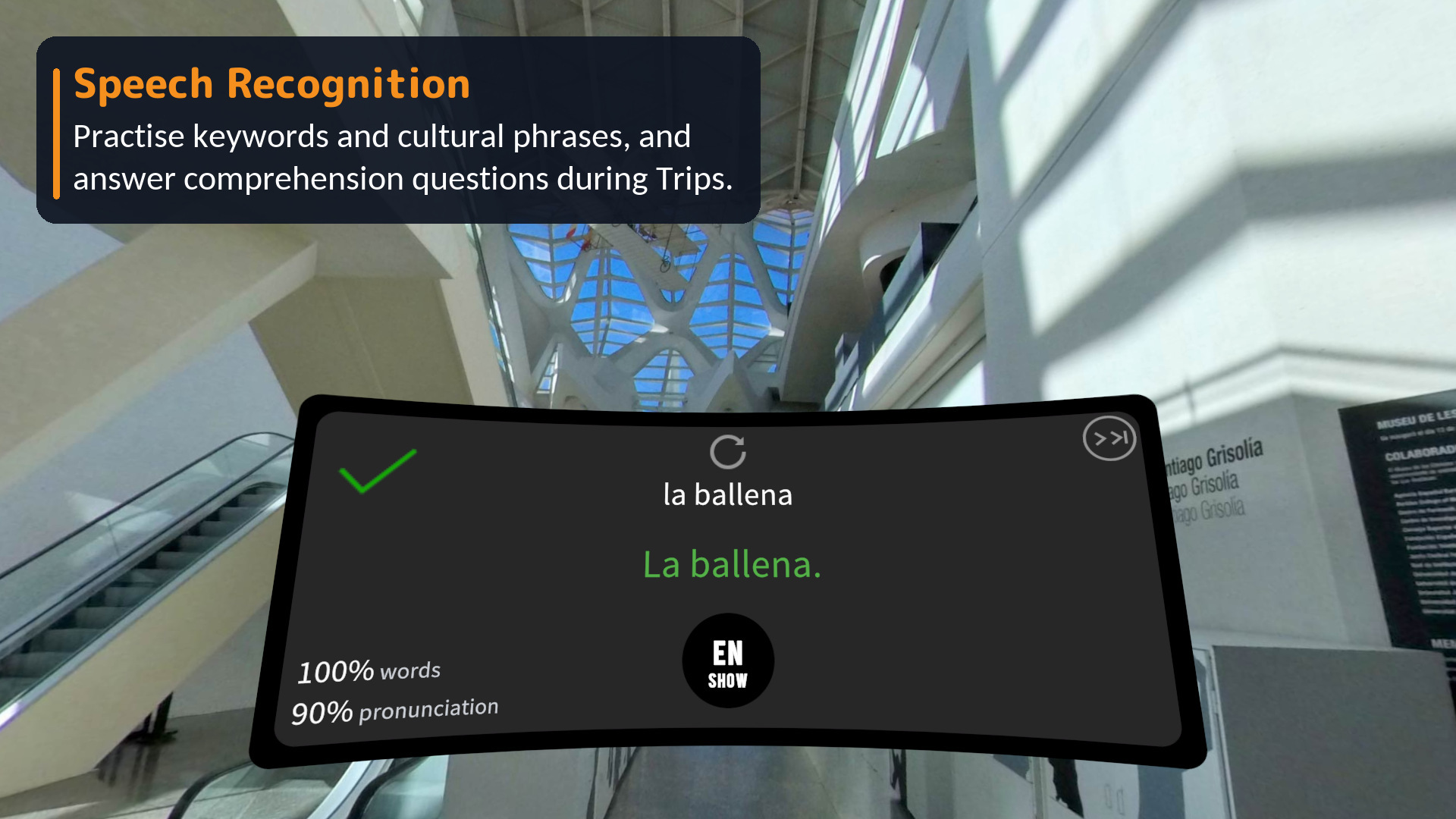
- Recall Quizzes: practice a Trip's key words and phrases after you finish it.
- Pronunciation Analysis: (new for v6.0) scores each word you say to highlight what you need to improve, which you can then work on with Belo.
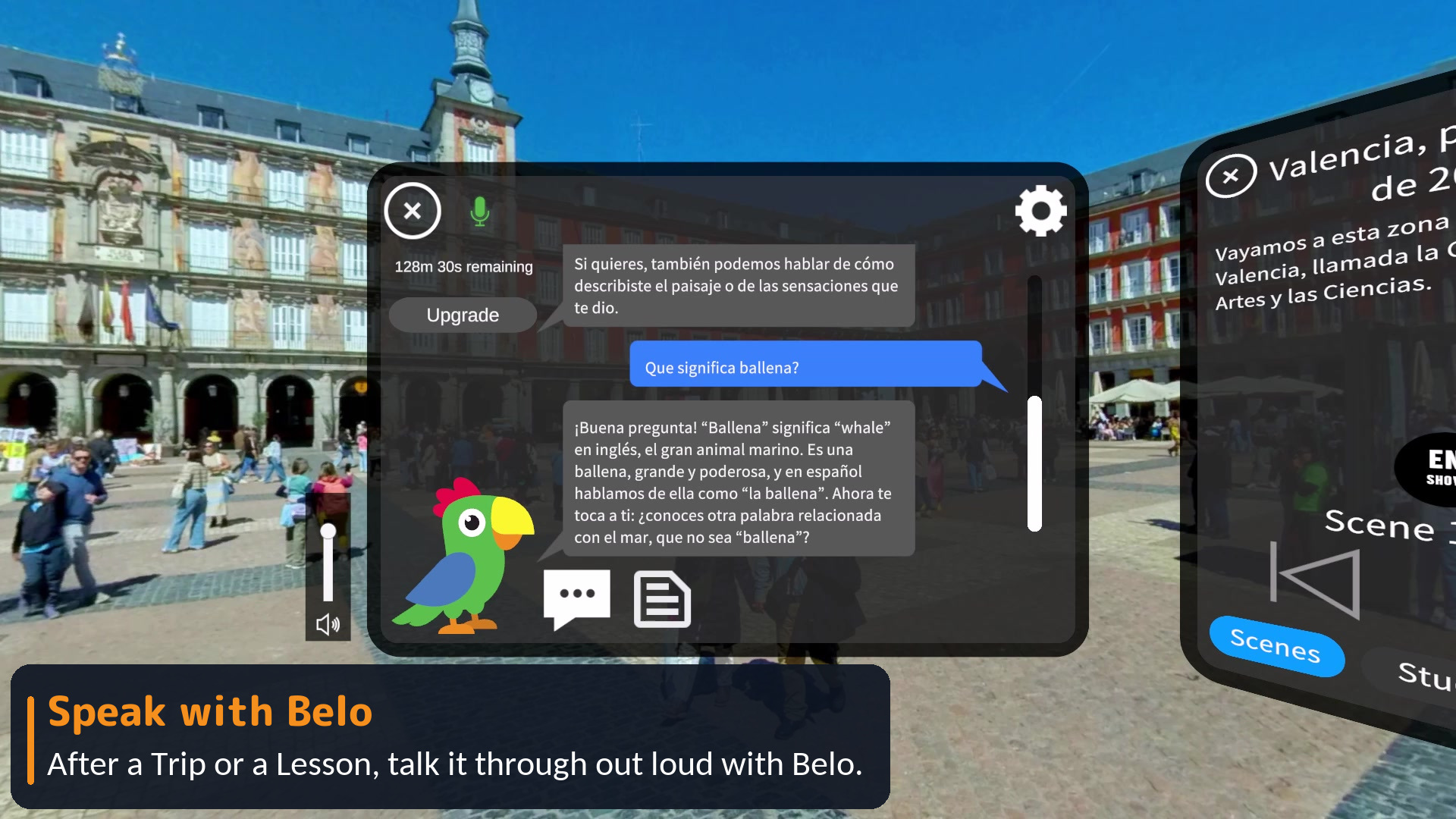
- Belo: (new for v6.0) an AI travel buddy that you can talk to out loud, in real time, for further language practice. Belo knows the Trip, Conversation or Lesson you just did and the questions you missed. You work through your weak points first, then talk about the place you just visited or the details of the lesson. You can do this in both your target language and native language. When logged in with a personal account, Belo remembers your earlier conversations, so the next session picks up where the last one stopped. Belo adds a new way for users to engage more deeply with the immersive experiences.
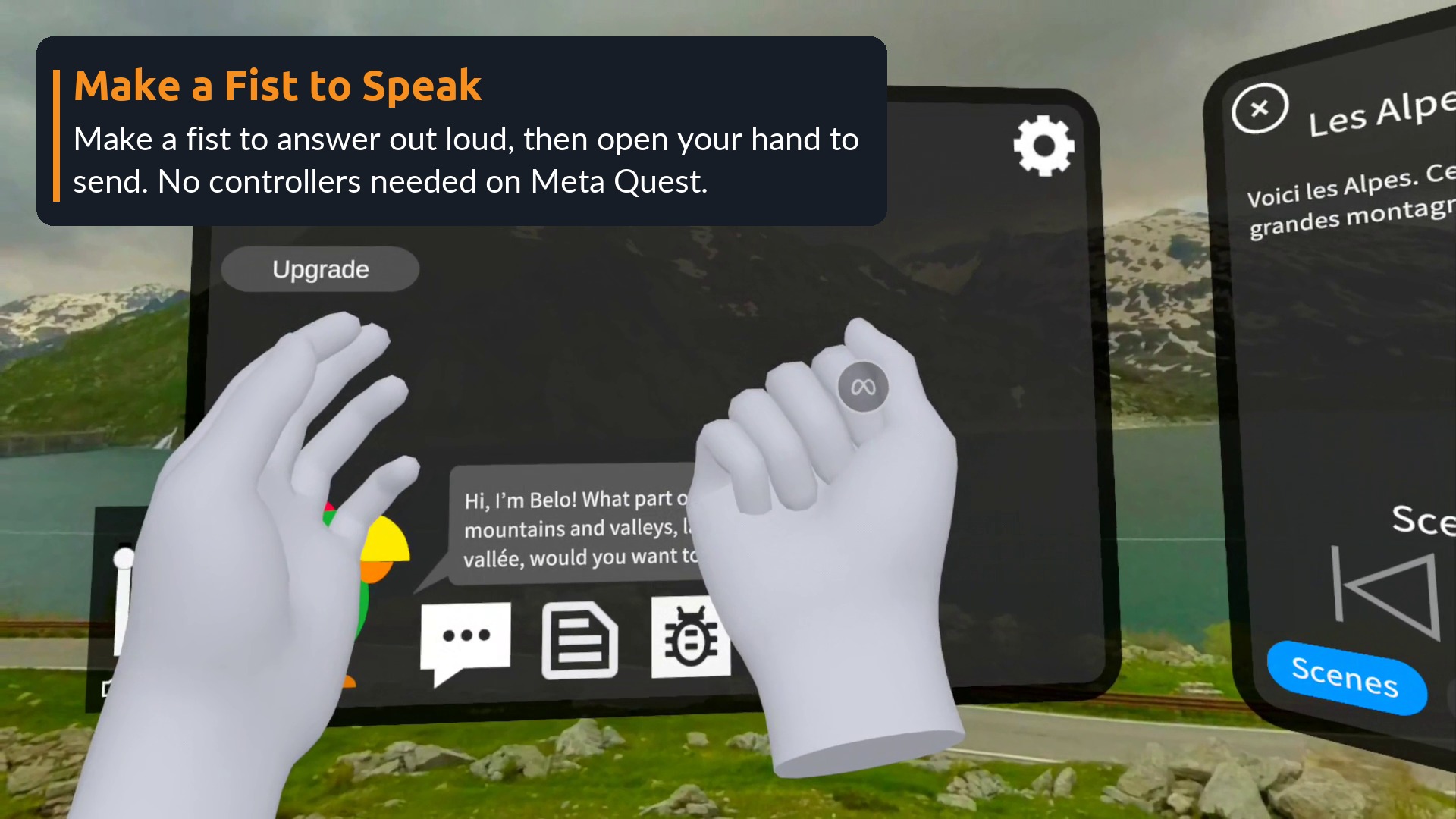
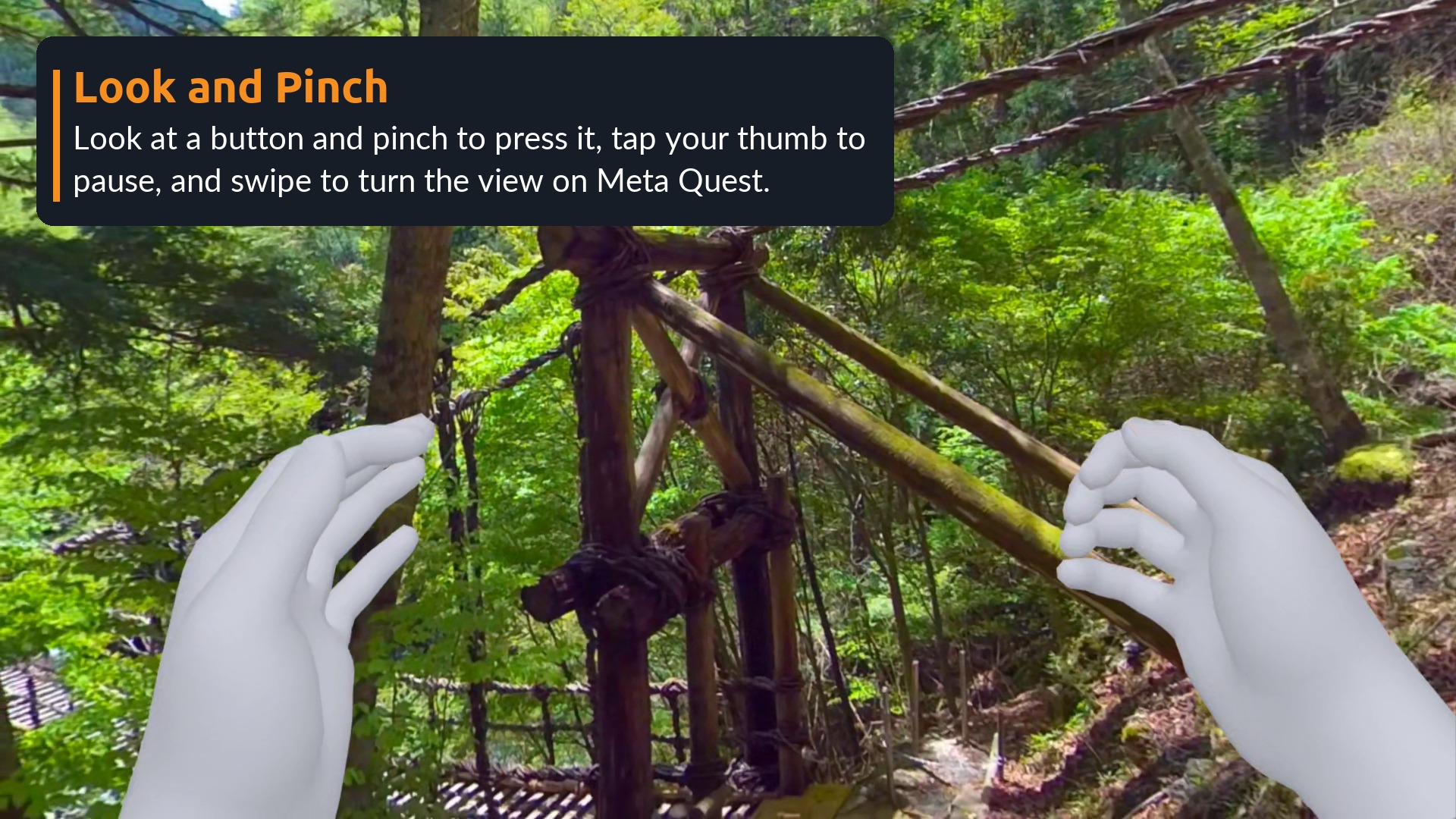
- Hand-tracking: (new for v6.1) interact entirely without controllers. Users can sign in, choose a Trip, Lesson or Conversation, answer questions out loud, open hint boxes and scene descriptions, and talk with Belo, using only their hands (and mouth).
How we built it
Unity 6.3 with OpenXR, both updated for v6 and this hackathon. Unity's XR Hands gives the joints, and Meta's XR Core SDK draws the hand model and reads the thumb microgestures. Our own pointer service drives the curved panels from a head ray. 360° video is filmed on location and plays at up to 6K 3D. Speech uses Azure Speech, Belo uses OpenAI's Realtime API, and the backend is Firebase.
Challenges we ran into
- Making a pinch mean only a pinch. In one early test, five of 19 thumb gestures and 13 of 38 fists also registered as a pinch. Now a pinch counts only on a steadily tracked hand, and a hand lost in the middle of a pinch presses nothing.
- In 87 minutes of recordings with 202 pinches on panels, we found the fingertip midpoint moves as the fingers close, which spoiled clicks and slider values, so drags are now measured from the knuckle.
- Choosing an AI conversation partner (price vs quality) and ensuring each session with Belo has the correct context for that session.
Accomplishments that we're proud of
Every core flow now works with hands, and a learner can answer a Japanese teacher, a Spanish Trip guide, or Belo by making a fist and speaking. The fist feels like a very natural gesture for speaking (like holding a microphone), and seems to give the user a positive boost, with a sense of control and confidence as they speak their foreign language.
What we learned
We started with finger pointing rather than head gaze and found that the user's hand was getting tired during a session. We are regular Quest 2/3 users but almost always use the controllers, so it has been a steep learning curve making gestures feel natural and avoiding hand strain. That being said, having noticed that the Quest OS uses finger pointing more than head gaze, we are adding the option in settings for v6.2 after further testing.
We have also learned a lot about AI voice agents, their prohibitive API cost when it comes to long conversations, and the need to have functions that the voice agent can call to improve performance during a chat. We're hoping to integrate different AI partners (including Muse) so we can deliver the most value to our students.
What's next for Dynamic Languages
Production
- We filmed in Taiwan and Korea earlier this year, so we will be adding Trips and Conversations in Mandarin Chinese and Korean.
- We are producing more scenarios for language learners to practice in authentic situations in all eight languages.
- We would love to produce another 40-lesson beginner course similar to the existing Japanese lessons, this time for Mandarin or Korean. Any prize money would go towards that production.
Software
- We will add eye tracking for look-and-pinch on headsets that have it, once we can test on the Meta VR Glasses. In the meantime, we will add finger pointing, so users can choose their preferred hand interaction controls in v6.2.
- We want to continuously improve Belo, so he becomes a personal language tutor and coach for our students, suggesting activities and producing materials in and out of the headset.
- Live Mode will be a new B2B feature for educators to run sessions, with students joining a lobby to make classroom management simpler.
- Trip Builder is another B2B feature we want to add, so educators can use our video library to build their own stunning immersive experiences.
Built With
- amazon-web-services
- avpro-video
- azure-speech
- c#
- cloud-firestore
- curvedui
- firebase
- firebase-cloud-functions
- meta-xr-core-sdk
- openai-realtime-api
- openxr
- typescript
- unity
- unity-xr-hands
- wit.ai


