-
-
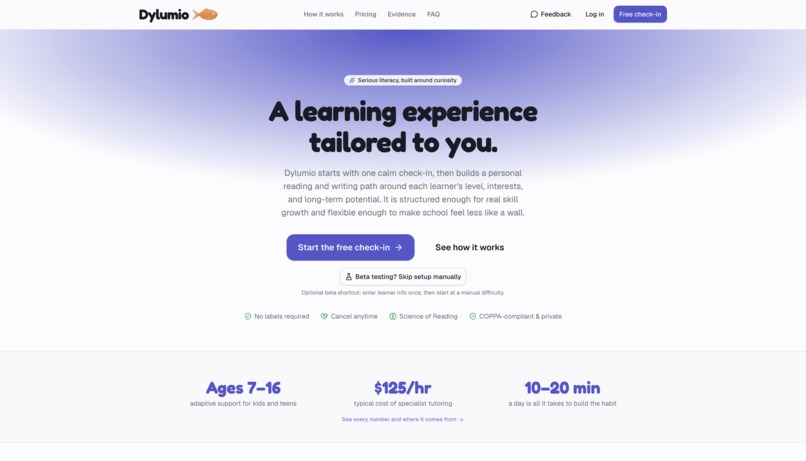
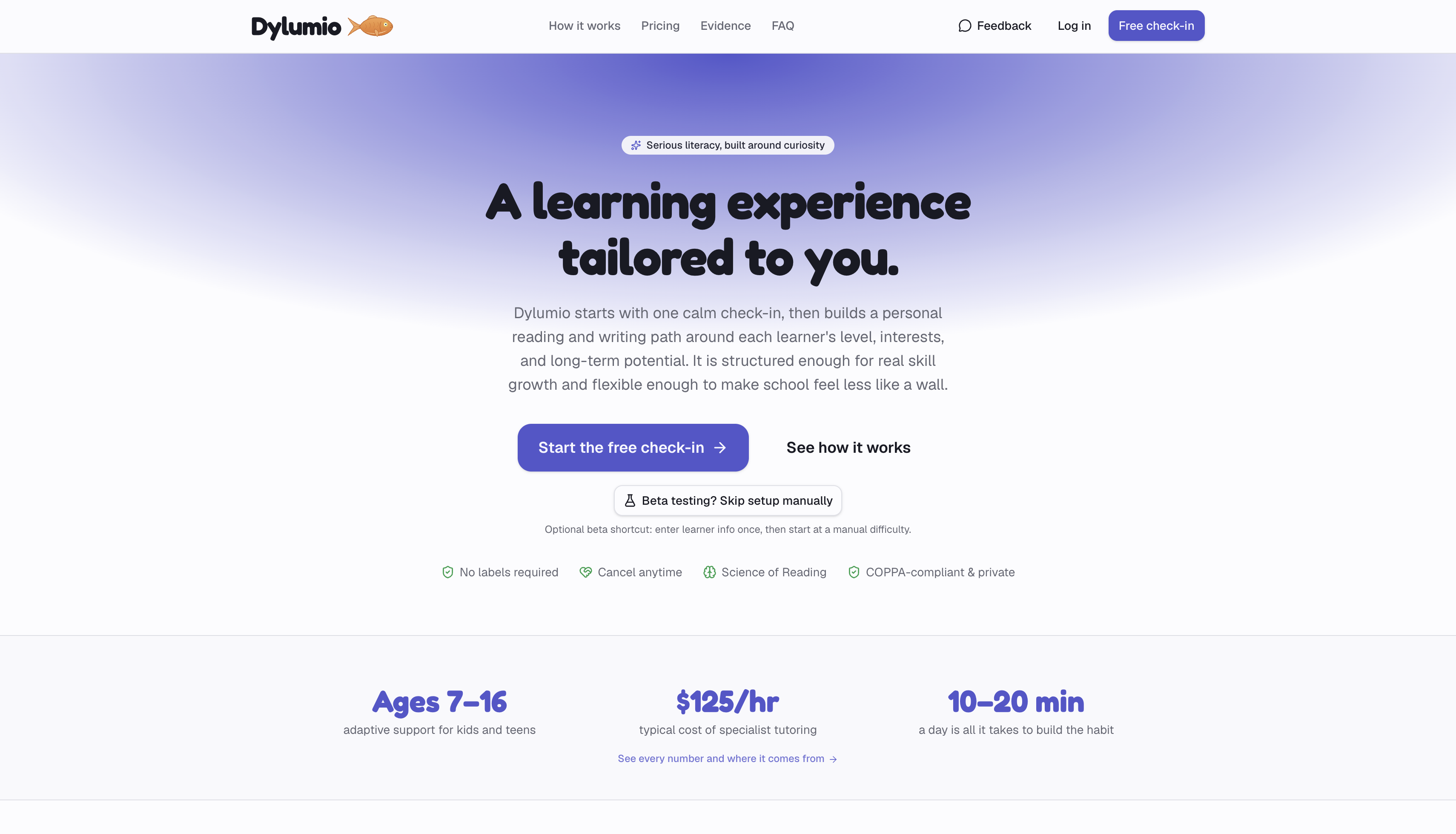
This is our homepage including answers to any potential parent questions and all the sources used for figures we show.
-
The company name and mascot.
-
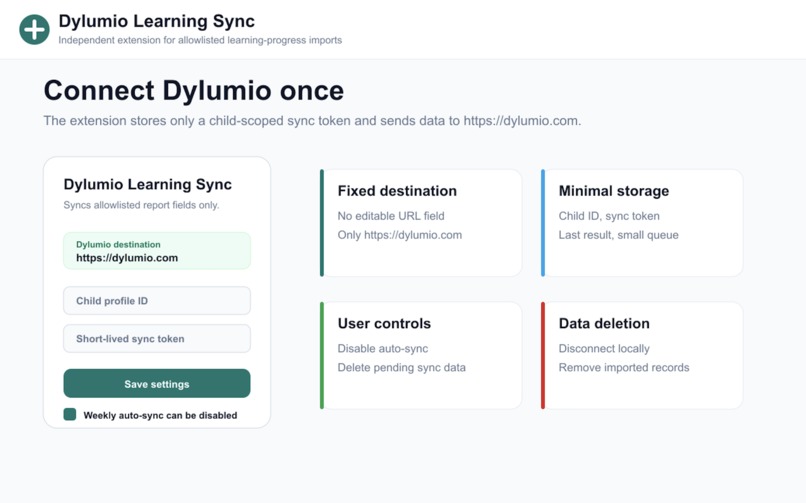
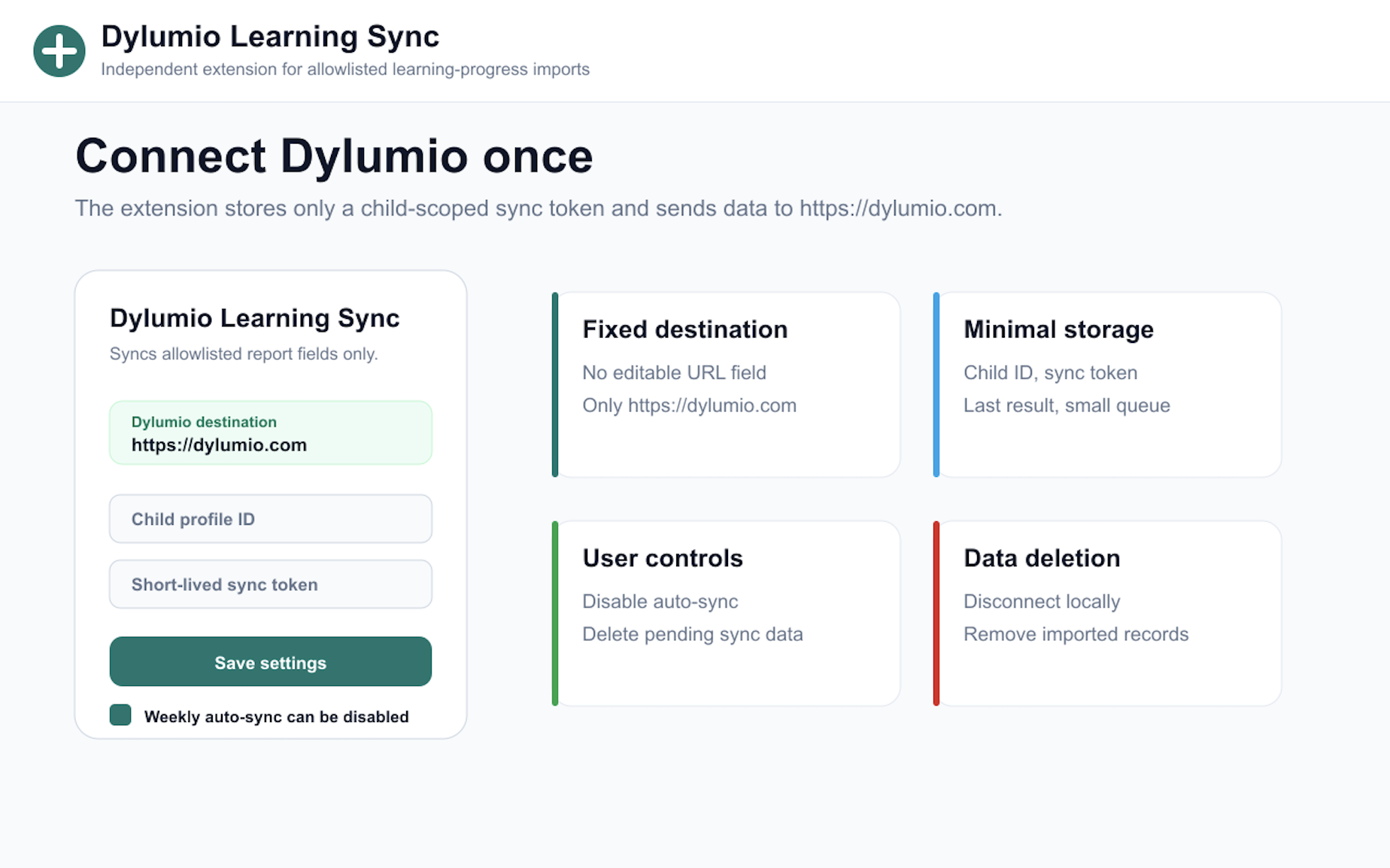
Dylumio Learning sync extension.
Inspiration
In seventh grade I had a friend named Kai, he was smart and curious, but a short attention span paired with dyslexia made it hard for him to finish work on time. He was regularly staying up past midnights to finish homework but no matter the effort it ended in frustation, bad grades, reading and writing never got easier. His parents didn't know how to help, even where to start. Aside from extended time on quizzes the school was also ineffective. Over time, Kai began to stop staying up so late, stop pushing so hard, he resigned to low grades and low college prospects. Now he goes to Mission high one of San Francisco's worst public schools. I thought this must be a problem for other people to and in almost no time found out that 15 million kids and teens throughout the country struggle with dyslexia and up to 40% have below grade level reading proficiency. These people are'nt less intelligent and don't give any less effort than others, they simply don't fit our single track educational system and don't have the financial resources for tutors or specialists which charge up to 150 dollars an hour. That's why I am making Dylumio.
What it does
Dylumio is a personalized reading and writing platform for kids and teens who need learning support that actually adapts to them. It starts with an adaptive check-in that estimates a learner’s reading, writing, spelling, comprehension, attention, and skill profile, then places them into a custom learning path instead of a generic grade-level track. From there, Dylumio combines structured literacy lessons, daily word games, AI feedback, parent progress reports, and interest-based course pathways. The goal is to make learning feel less like a punishment and more like a system that understands the student: what level they are at, what skills are holding them back, what topics they care about, and what kind of feedback helps them improve. Continuing with this goal I've even started building "Subpaths" which take one specific thing such as weather systems and goes super in depth the hope with this is to
How we built it
We built Dylumio as a full-stack web app using Next.js, Supabase, Stripe, Resend, and AI models for analysis, feedback, and personalization. Supabase handles authentication, learner profiles, progress data, privacy controls, and structured learning records. The app includes parent and child dashboards, adaptive placement, lesson progression, AI-assisted feedback, daily games, and privacy-conscious data connectors. The AI layer is used carefully: not to replace instruction, but to interpret learner signals, generate clearer feedback, summarize progress for parents, and help personalize recommendations. The learning engine combines placement results, lesson performance, interests, skill confidence, and imported education data from tools like Canvas, Google Classroom, IXL, and Khan Academy into a more complete learner picture.
Challenges we ran into
The greatest challenge was making personalization fully ingrained rather than surface level cosmetic differences. To truly achieve a system capable of responding to skill level, confidence, interests, performance trends, and 8 other sources which feed into an engine that must break that data down into usable signals between 6 different skill categories while keeping the user experience smooth and consistant was very difficult especially given it's responding in near real time so theres not much time for all the processing to take place. Another major challenge was privacy. Dylumio works with child learning data, so security, deletion, export controls, scoped connector tokens, and careful AI boundaries had to be created and adhered to strictly or else we risked violating COPPA regulations. This in particular presented a new form of challenge to me because I'm only 15 and wasn't even familiar with COPPA until recently. We also had to balance depth with usability: the app needs to support serious learning, but still feel approachable to a tired kid and understandable to a parent who may not know where to start, made worse by the fact that UI and asthetic choices made for the app must appeal to a broad audience 7-16 year olds.
Accomplishments that we're proud of
We are proud that Dylumio was brought from a demo to real website with mobile version and nearing commercial luanch in only 4 days (All be it 4, 14 hour days of work.) It has a real learning engine, adaptive placement, structured curriculum, child and parent experiences, progress tracking, subscription infrastructure, email flows, privacy exports, account deletion, and early connector infrastructure. We are also proud of the specialized pathways. Once students demonstrate readiness, they can move into deeper courses like climate systems, health biology, civic media, product entrepreneurship, and money decisions. That matters because struggling readers are often treated as if they only need remediation. Dylumio is built around the opposite belief: support the fundamentals, then help students find something rigorous they genuinely care about. One more very recent highlight from just an hour ago was the approval of our extension Dylumio learning sync to the chrome extension store.
What we learned
We learned that it's not just children with Dyslexia struggling but a much broader swath of children across the country and internationally. We also learned what truly goes into making software that's the product. No matter how good AI gets you must always hold the vision and be understand the work or else you wont be able to direct it. I remember first trying to use AI to fill lesson content and what came out can only be described as slop. Refining and growing that prompt until what came out was beautiful and something that can actually help who I want to help. Checking over 100's of lessons trying to find quality gaps by Chatgpt and constantly refining how I worked based on the results. So what I learned from this project was you don't have to know how to code well. What you need is to know how to think through a product and direct the coder to make sure it follows your vision and creates what you intended not a half baked version resembling it.
What's next for Dylumio
We'll continue developing the course catalog especially "Subpaths" and try to find a school or literacy program to partner with to get feedback from real learners for product refinement and hopefully a university study to validate the efficacy of how I've designed our courses. Longer term, the vision is for Dylumio to become an affordable learning support system for kids who fall through the cracks: not just a reading app, not just a dyslexia tool, and not just an AI tutor, but a personalized pathway platform that helps students rebuild confidence, strengthen core skills, and discover what they are capable of learning deeply. We want to be a digital learning ecosystem, you can already learn Languages, History, Science, Math, and Reading on digital platforms but we want to connect them to take all of those independent apps and stitch them into a seamless digital learning experience that anyone can access.
Built With
- accessibility
- anthropic
- api
- classroom
- css
- dyslexia
- edtech
- education
- extension
- next.js
- openai
- personalized
- postgresql
- posthog
- react
- resend
- sentry
- stripe
- student
- supabase
- tailwind
- typescript
- vercel

Log in or sign up for Devpost to join the conversation.