Inspiration
The project was inspired by seeing how often people struggle to get proper customer support. Many apps, banks, shopping websites, and learning platforms have chatbots that only give fixed FAQ answers. This becomes frustrating when someone needs real help but keeps getting repeated automated replies. I noticed friends and students wasting hours trying to solve small issues like login errors or failed payments. That made me think: “What if support could be faster, smarter, and more accurate using AI?” That question became the spark for this project.
What it does
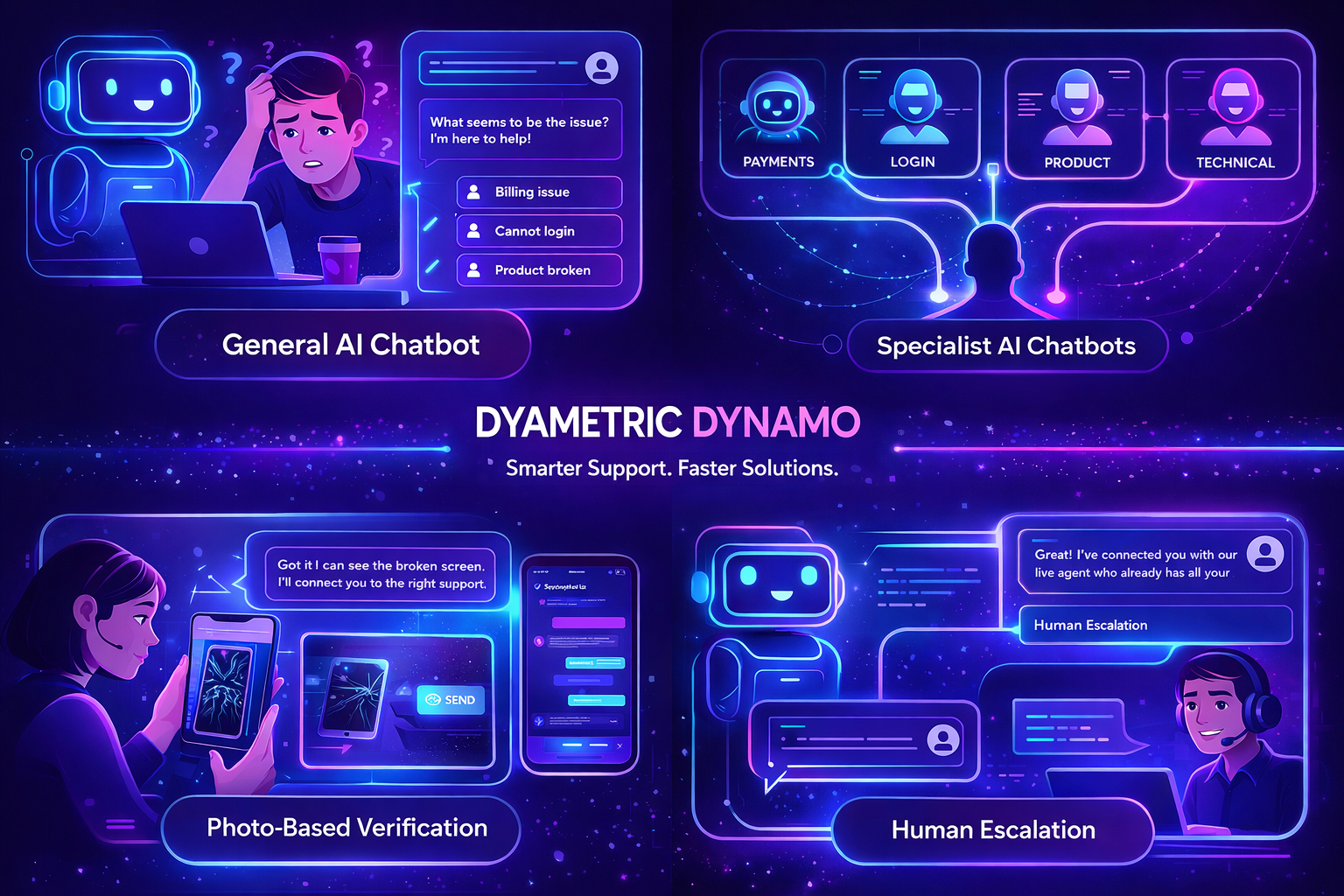
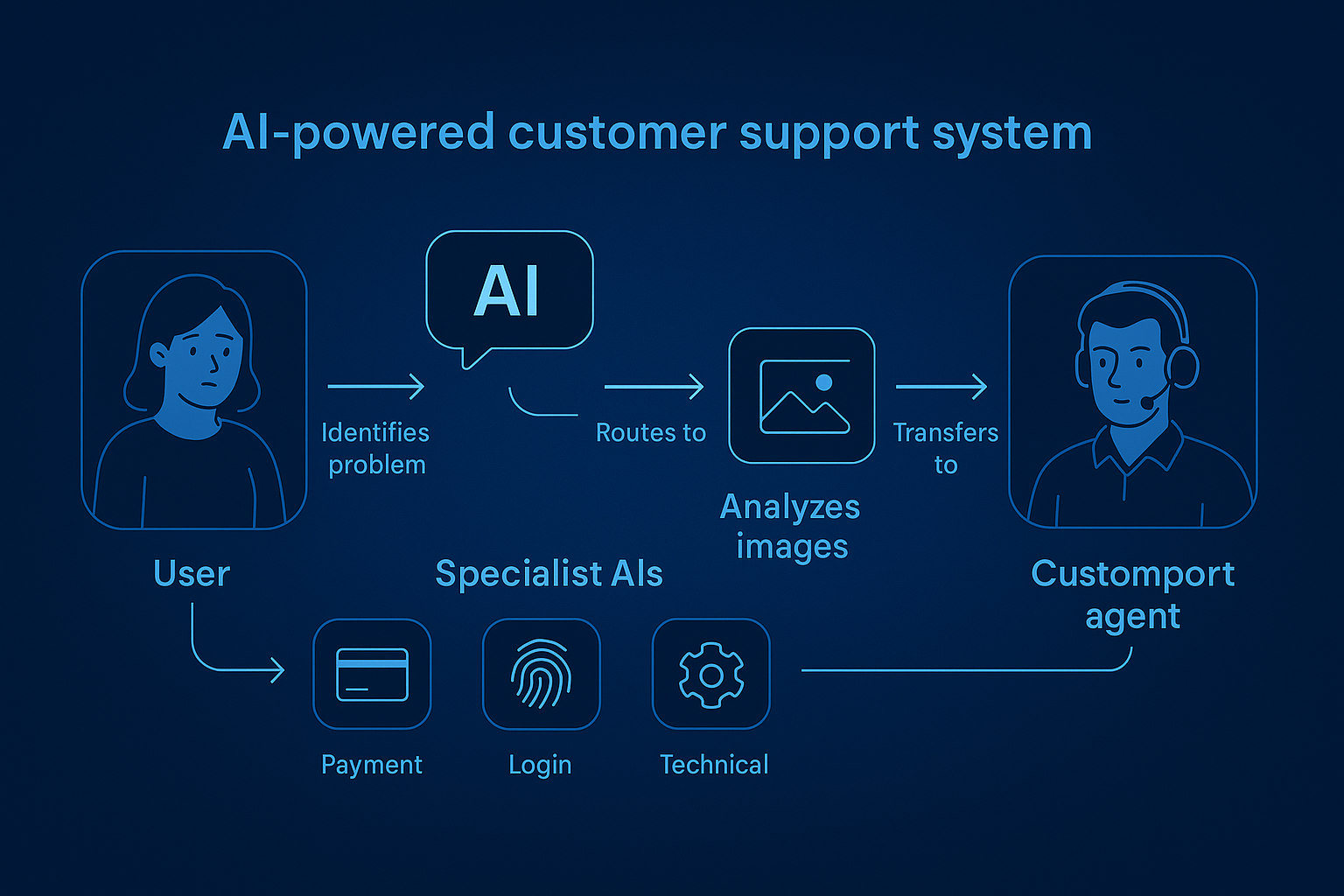
Our system uses a multi-layer AI support model:
First AI — asks basic questions to understand the user’s problem.
Specialized AI — once the issue is categorized (payment, login, technical, product), a focused AI takes over that knows more about that specific topic.
Photo/ Screenshot Understanding — the system can request images to confirm the issue.
Human Escalation — if the case needs a real person, the AI passes full context so the user never has to repeat themselves.
The goal is simple: accurate, fast support without frustration.
How we built it
We built the idea step-by-step:
Mapped user flow – identified how a normal support journey works and where delays happen.
Defined issue categories – login, payment, product, technical.
Designed AI logic – the first AI uses classification questions; the second level uses domain knowledge.
Integrated visual confirmation – planned how the AI would analyze uploaded photos or screenshots.
Created escalation logic – built a flow where human support receives all previous messages and AI analysis.
This created a complete, smarter support pipeline.
Challenges we ran into
Understanding vague user messages Many people explain problems in unclear ways, so designing good clarification questions was challenging.
Balancing privacy and image uploads We had to think seriously about secure, temporary processing without storing sensitive content.
Making the flow smooth Designing transitions between the general AI, specialized AIs, and human agents without confusion required careful planning.
Avoiding repetitive explanations Most support systems fail here—our system had to keep full context at every stage.
Accomplishments that we're proud of
Creating a multi-step AI support model that feels realistic and practical.
Designing a system where the user never repeats themselves.
Thinking deeply about privacy, inclusivity, and real-world use cases.
Turning a simple idea into a fully structured solution that can actually help thousands of users.
What we learned
How AI can classify user issues based on intent detection.
Why most support bots fail and how a layered system is more effective.
How to handle sensitive data ethically and securely.
Importance of user-centered design—simple questions and clear steps matter.
How multiple AIs can work together like a team, each with its own specialty.
What's next for Dyametric Dynamo
Build a working MVP with real conversation flows.
Add voice-based support so people who struggle with typing can still get help.
Implement multilingual support starting with English, Hindi, Tamil, and Malayalam.
Integrate live analytics to measure accuracy, user satisfaction, and time saved.
Develop plug-ins so apps and websites can add this support system easily.
The long-term dream for Dyametric Dynamo is to become the world’s fastest, clearest, and smartest AI support engine for any platform.


Log in or sign up for Devpost to join the conversation.