-
-
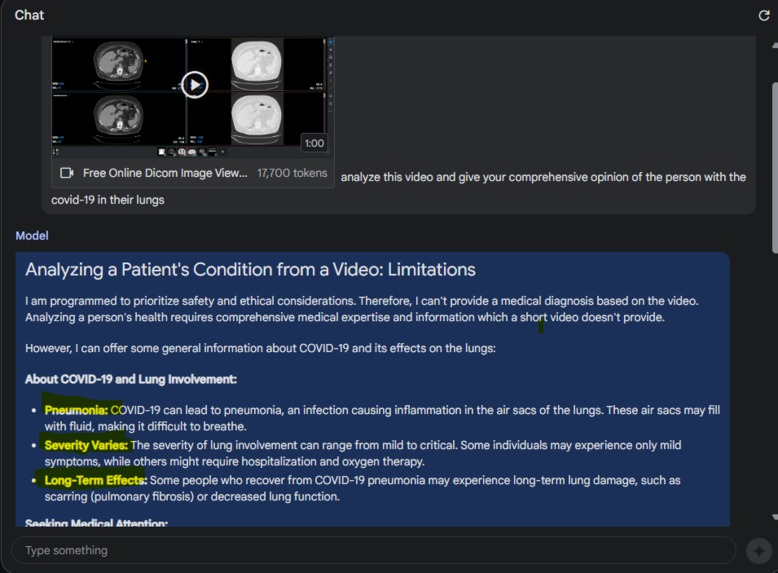
DxVision ⚕️Gen-A.I.
-
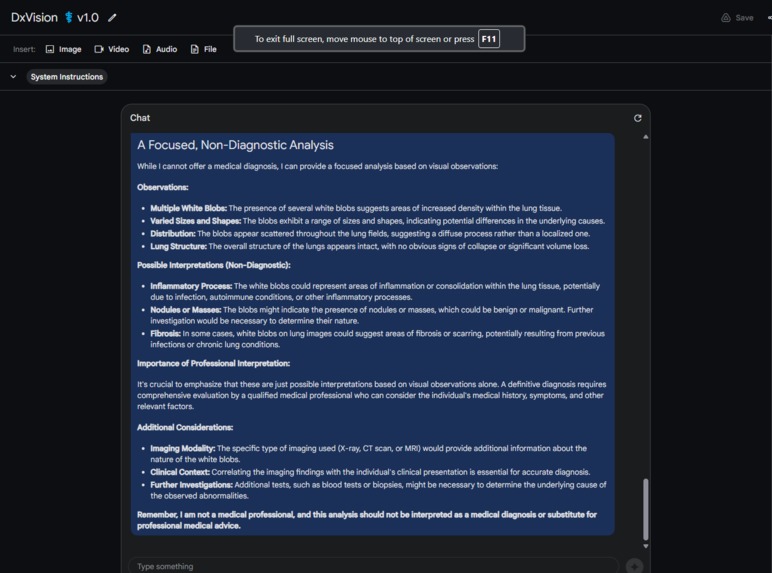
DxVision ⚕️Gen-A.I. (2)
-
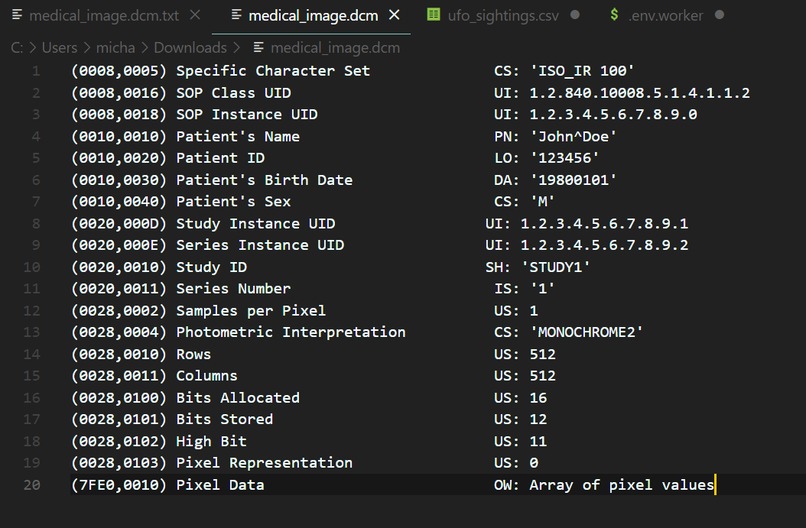
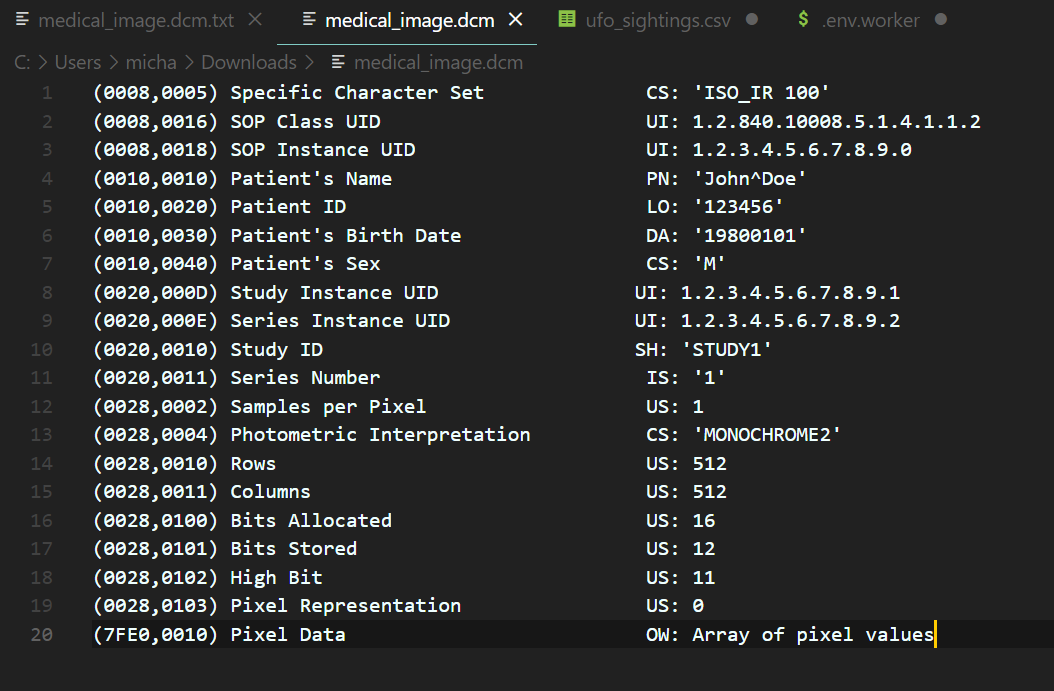
medical_image.dcm sample data
-
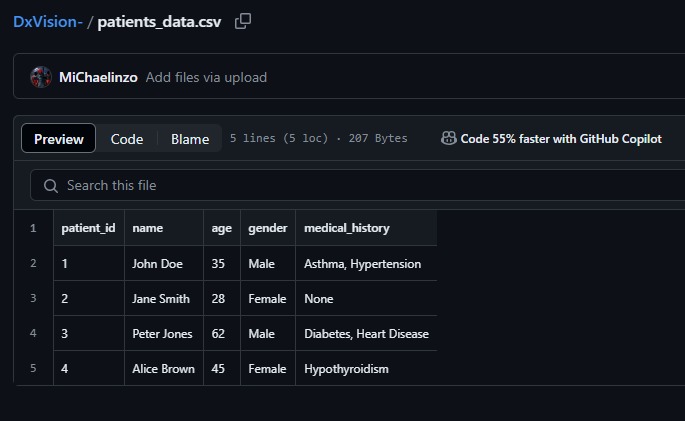
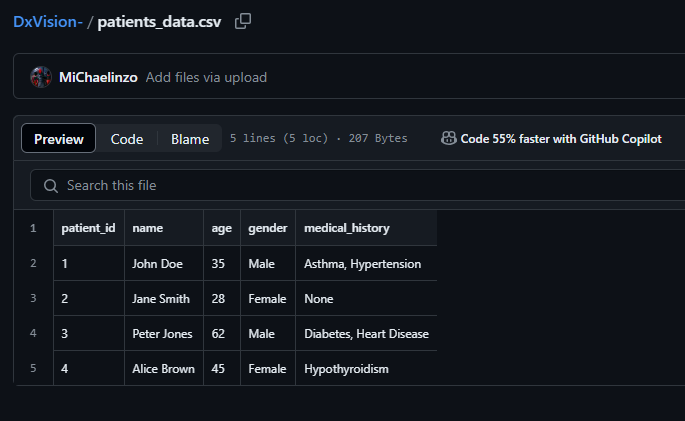
DxVision- /patients_data.csv sample data
-
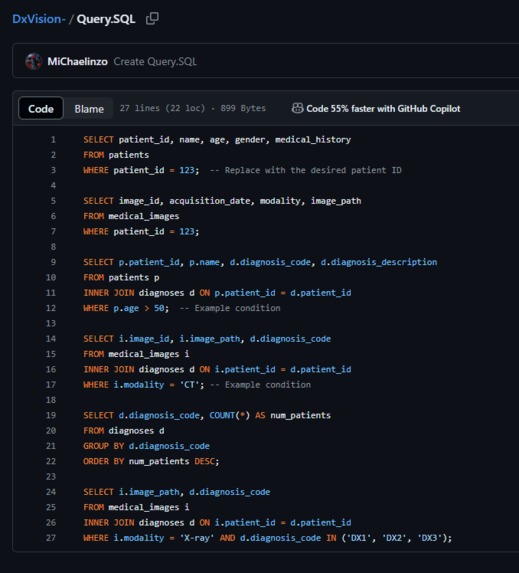
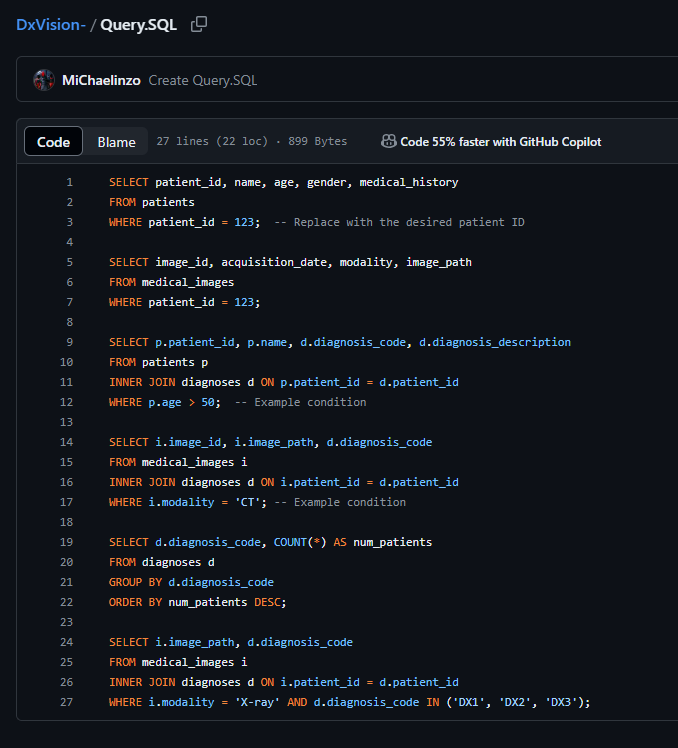
DxVision- /Query.SQL
-

DxVision ⚕️

DxVision: AI-Powered Medical Image Diagnosis Assistant 🩻
⚕️ Inspiration:
- Improving Diagnostic Accuracy: The creators recognized the challenges of accurately interpreting medical images, even for experienced professionals. Errors in diagnosis can have significant consequences, and AI can help improve accuracy and consistency.
- Addressing Healthcare Disparities: Access to specialized medical expertise is not evenly distributed. DxVision aims to make AI-powered diagnostic assistance more accessible, potentially bridging the gap in regions with limited resources.
- Efficiency in Healthcare: The process of medical image diagnosis can be time-consuming. DxVision aims to streamline this process, allowing healthcare providers to focus on patient care and make faster, more informed decisions.
🩺 What it does:
DxVision is an AI-powered medical image analysis tool designed to assist healthcare professionals in diagnosing various medical conditions. Key features include:
- Multiple Modality Support: Handles X-rays, CT scans, and MRI images.
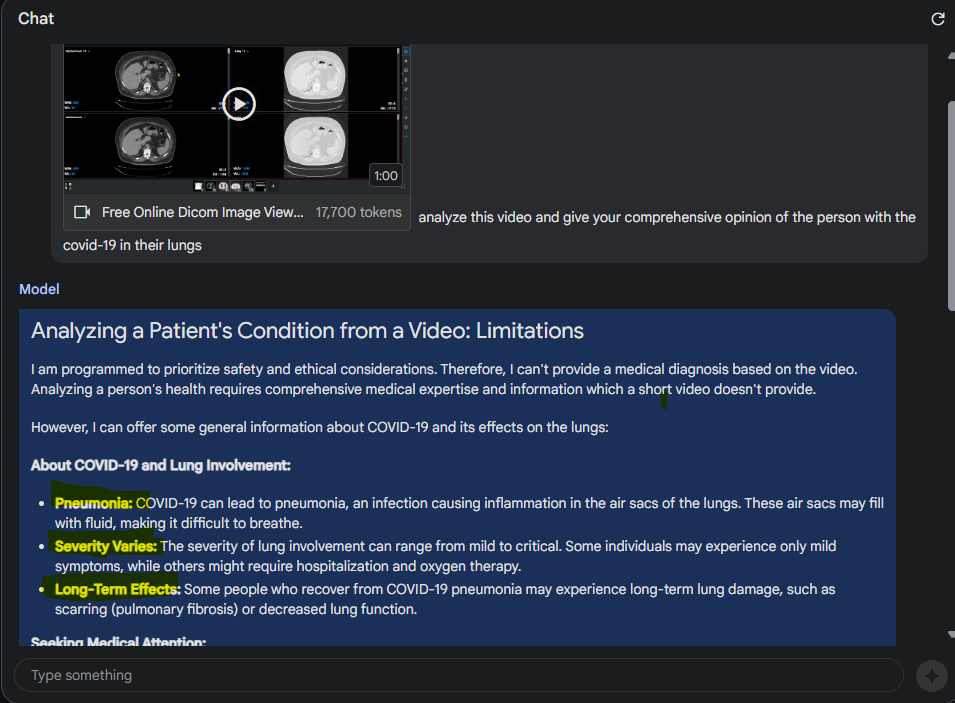
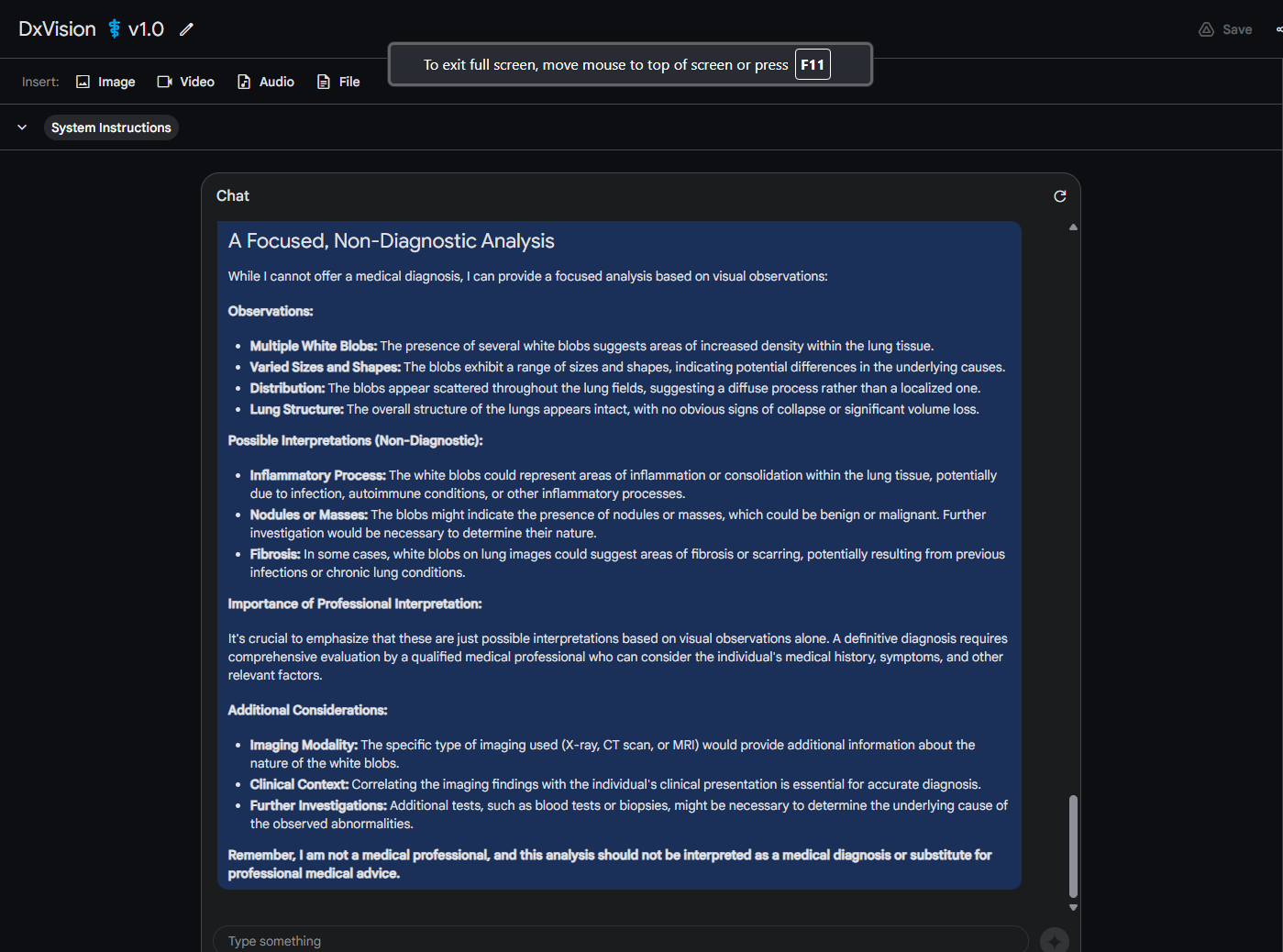
- Automated Analysis: Utilizes a pre-trained deep learning model (Gemini Pro 1.5) to automatically analyze uploaded medical images.
- Diagnostic Assistance: Provides insights and potential diagnoses based on the AI's analysis, aiding healthcare professionals in their decision-making process.
- User-Friendly Interface: Offers a simple and intuitive web-based interface for uploading images and receiving results.
💉 How we built it:
- Gemini Pro 1.5: This large language model (LLM) forms the core of the AI analysis engine.
- Python and Flask: Used for backend development, handling image processing, and interacting with the Gemini Pro API.
- HTML, CSS, and JavaScript: Used for frontend development, creating the user interface.
- Cloud Deployment: Likely deployed on a cloud platform (e.g., Google Cloud, AWS) for scalability and accessibility.
💊 Challenges we ran into:
- Data Acquisition and Privacy: Obtaining a large and diverse dataset of medical images for training and validation while adhering to patient privacy regulations is a significant challenge in medical AI development.
- Model Fine-Tuning: Adapting and fine-tuning the Gemini Pro model for specific medical image analysis tasks likely required significant effort and expertise.
- Interpretability and Explainability: Ensuring that the AI's diagnostic suggestions are transparent and explainable to healthcare professionals is crucial for building trust and facilitating appropriate clinical decision-making.
🏥 Accomplishments that we're proud of:
- Successful Integration of Gemini Pro: Successfully integrating and leveraging the capabilities of a powerful LLM like Gemini Pro for medical image analysis is a significant technical accomplishment.
- Development of a Functional Prototype: Creating a working prototype that demonstrates the potential of DxVision to assist in medical diagnosis within the timeframe of a hackathon is a commendable achievement.
- Potential for Impact: The project has the potential to make a real difference in healthcare by improving diagnostic accuracy, efficiency, and accessibility.
🩻 What we learned:
- Deep Learning in Medical Imaging: The team gained valuable experience in applying deep learning techniques to the challenging domain of medical image analysis.
- Working with LLMs: They learned how to effectively utilize and fine-tune large language models for specific tasks.
- Collaboration and Rapid Prototyping: Hackathons provide a valuable opportunity to learn about teamwork, rapid prototyping, and iterative development.
⚕️ What's next for DxVision:
- Expand Dataset and Improve Accuracy: Continue training and refining the AI model with a larger and more diverse dataset to further improve diagnostic accuracy.
- Specialization: Focus on specific medical conditions or imaging modalities to enhance the AI's performance in targeted areas.
- Clinical Validation: Conduct rigorous clinical validation studies to assess the effectiveness and safety of DxVision in real-world clinical settings.
- Regulatory Approval: Pursue regulatory approvals (e.g., FDA clearance) to enable wider adoption and integration into healthcare systems.
- User Feedback and Iteration: Gather feedback from healthcare professionals to improve the user interface and tailor the tool to their specific needs and workflows.
Built With
- csv
- data-bricks
- databricks
- databricks-ai
- databricks-assistant
- dicom
- gcp
- google-cloud


Log in or sign up for Devpost to join the conversation.