-
-
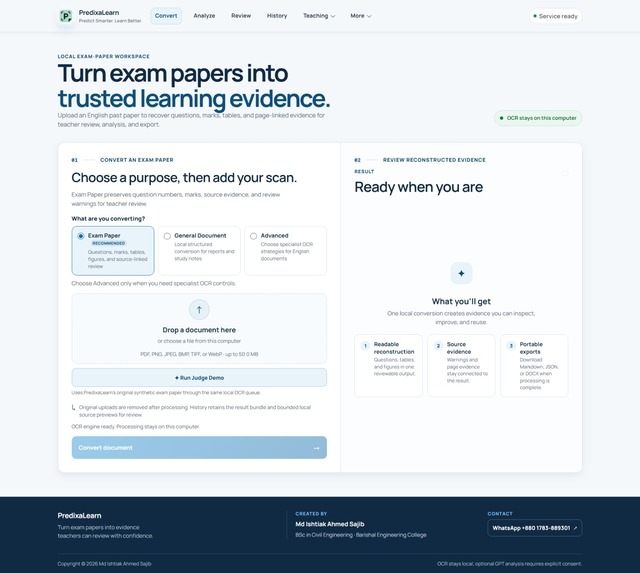
Homepage
-
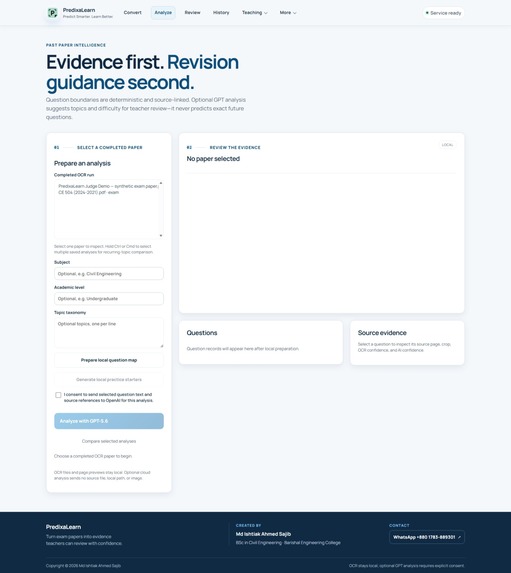
Analyze Section
-
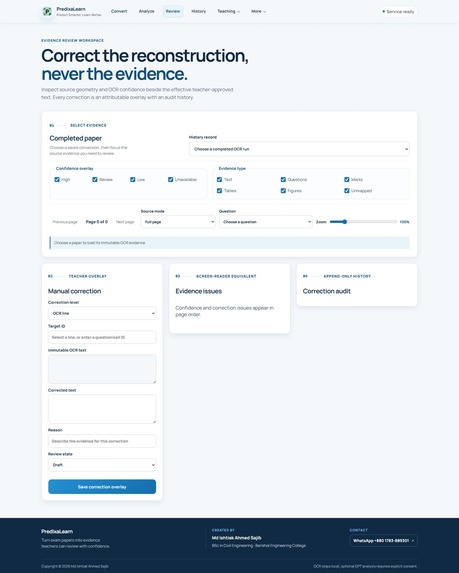
Review Section
-
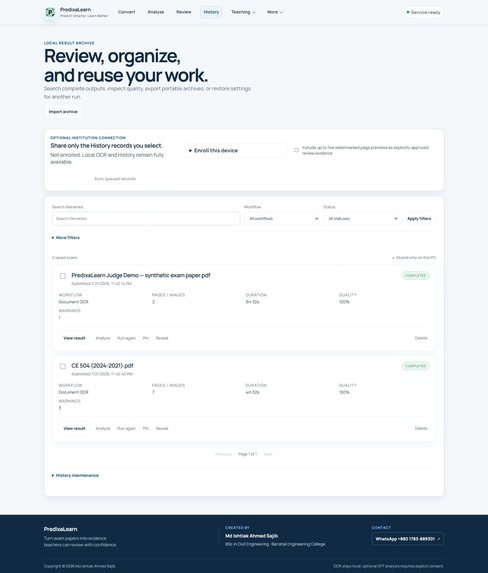
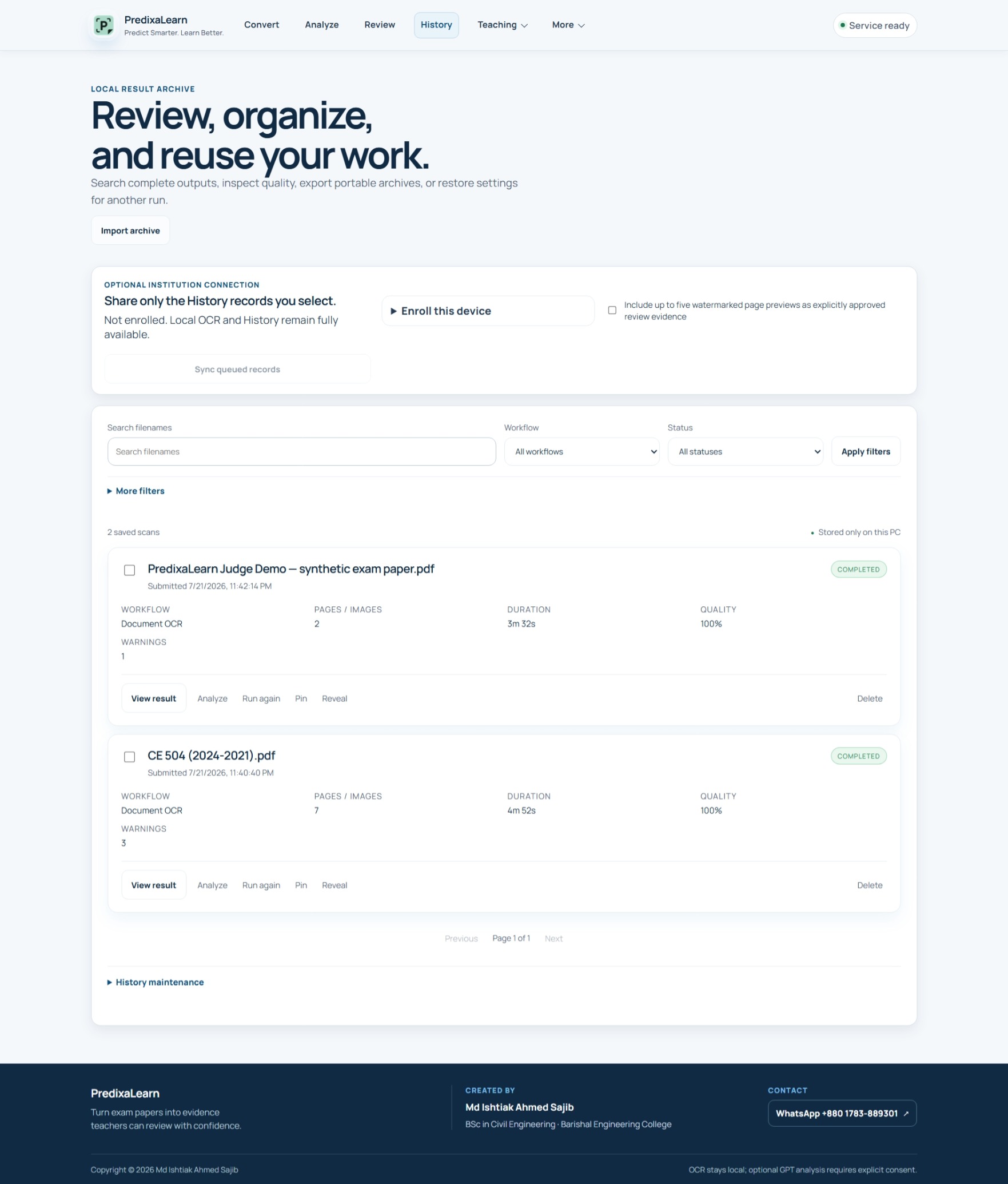
History
-
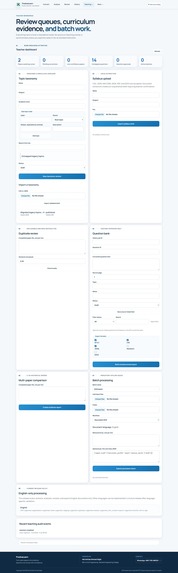
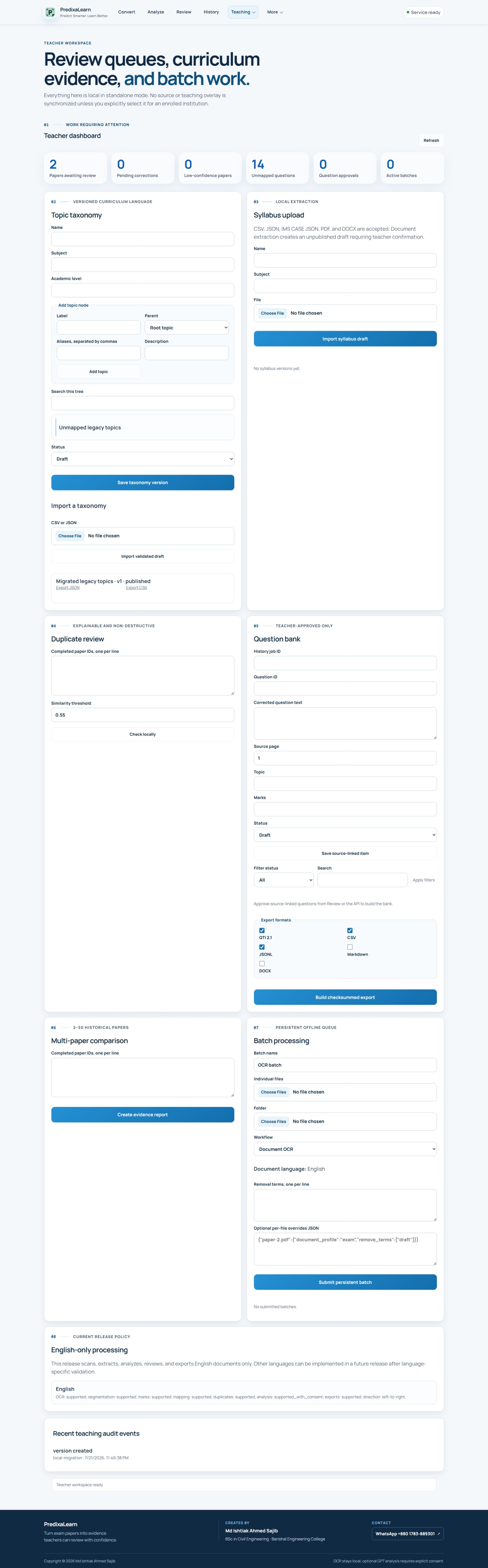
Teacher Workspace
-
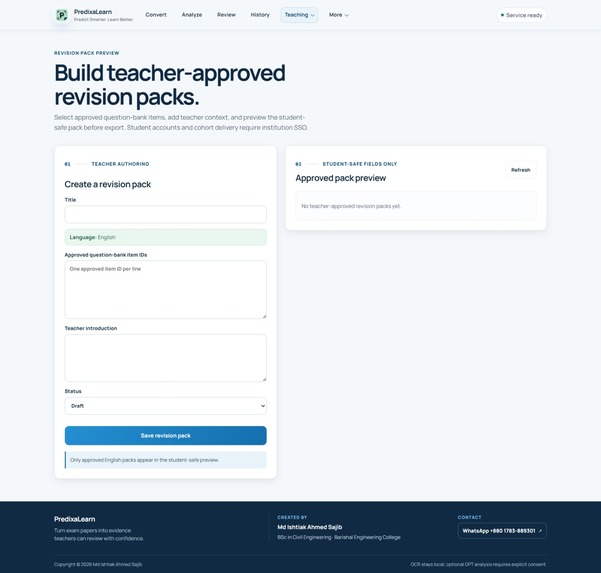
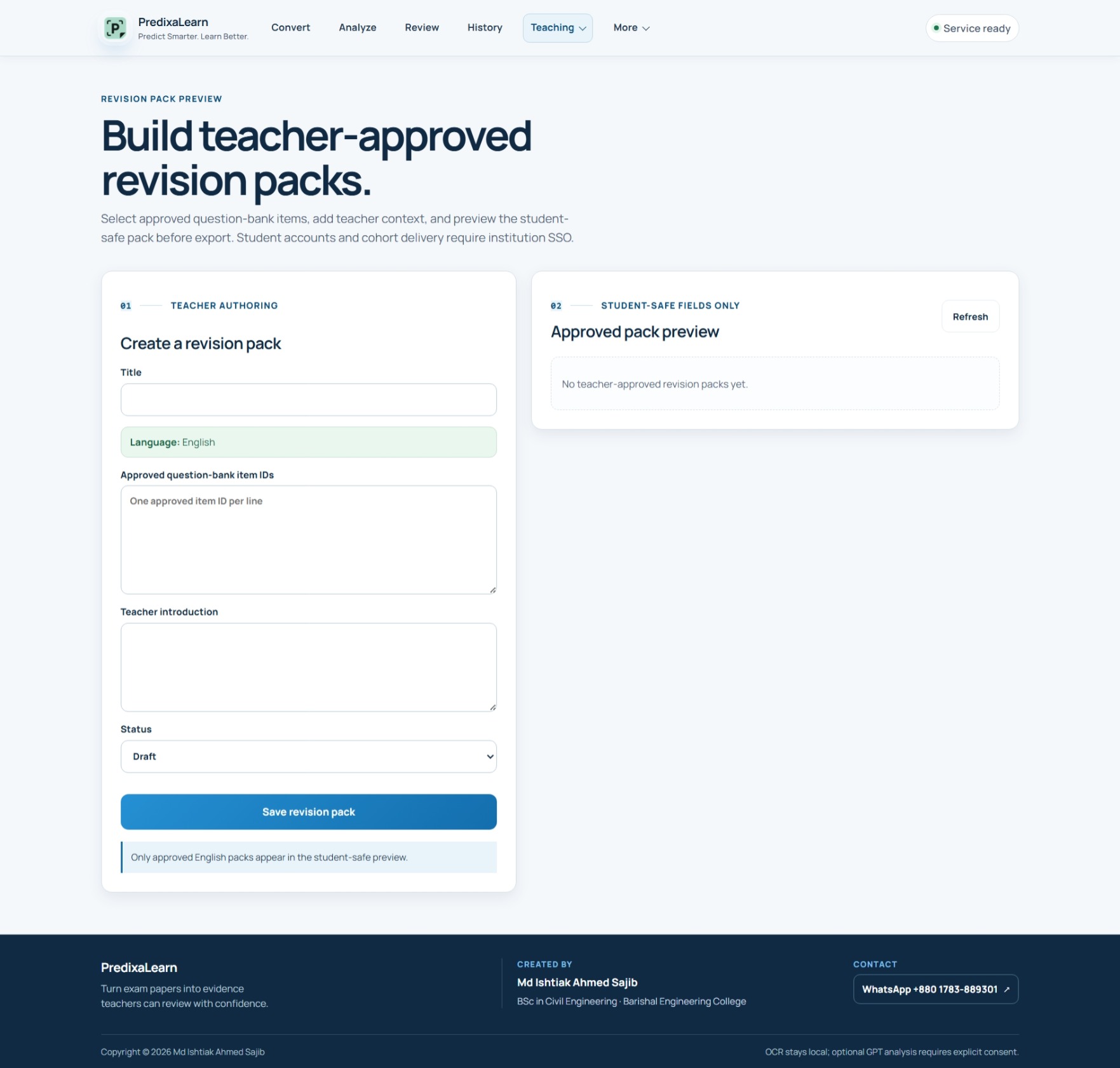
Revision pack preview
-
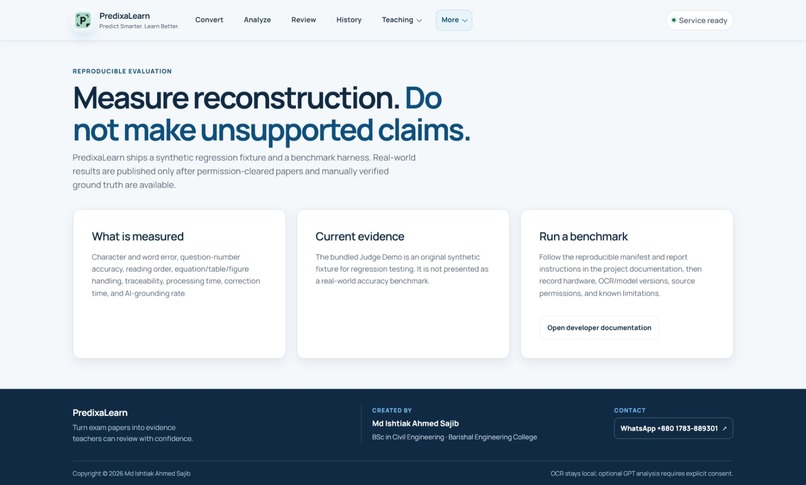
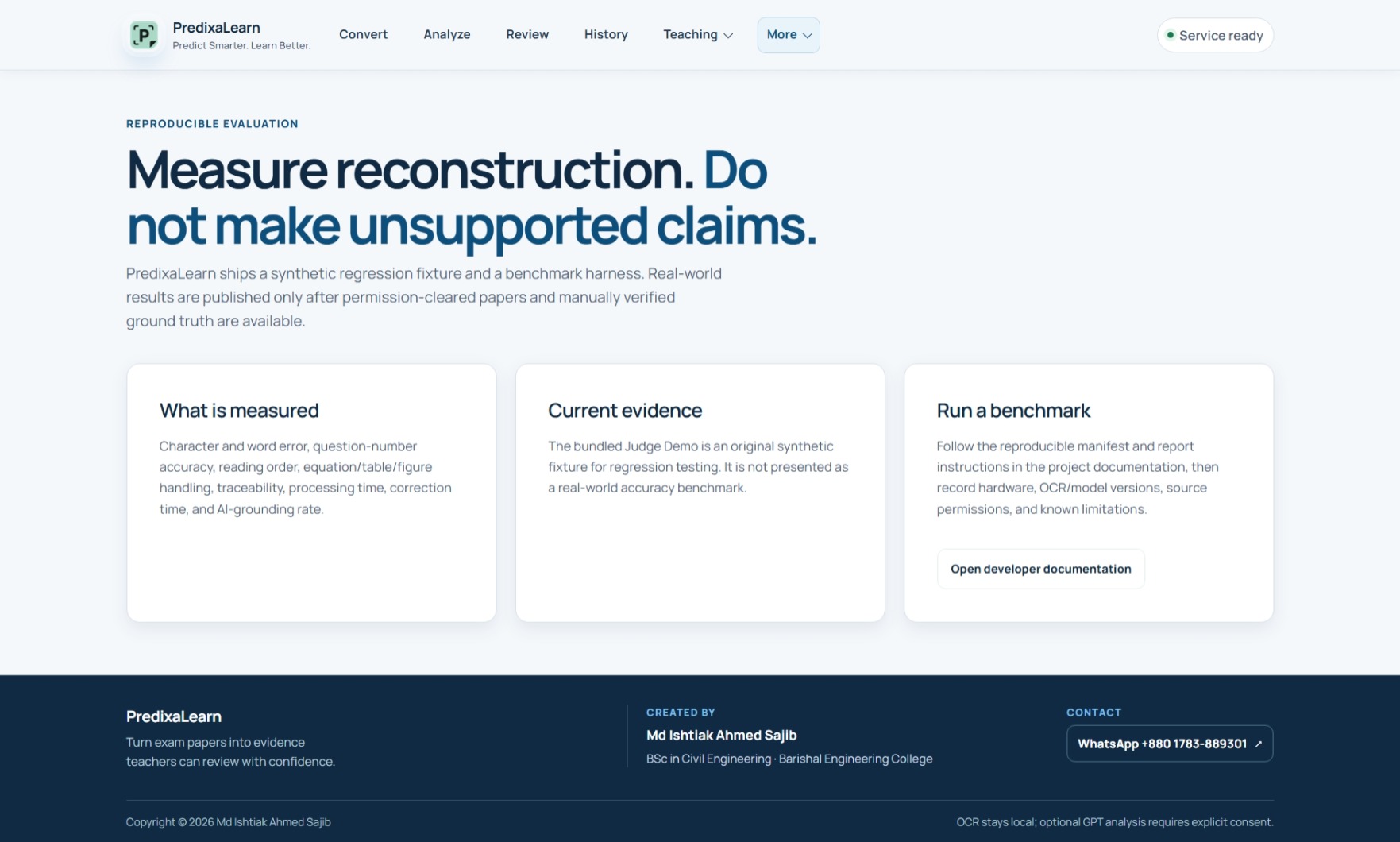
Reproducible evaluation
-
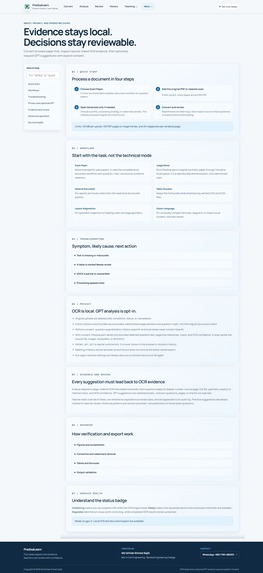
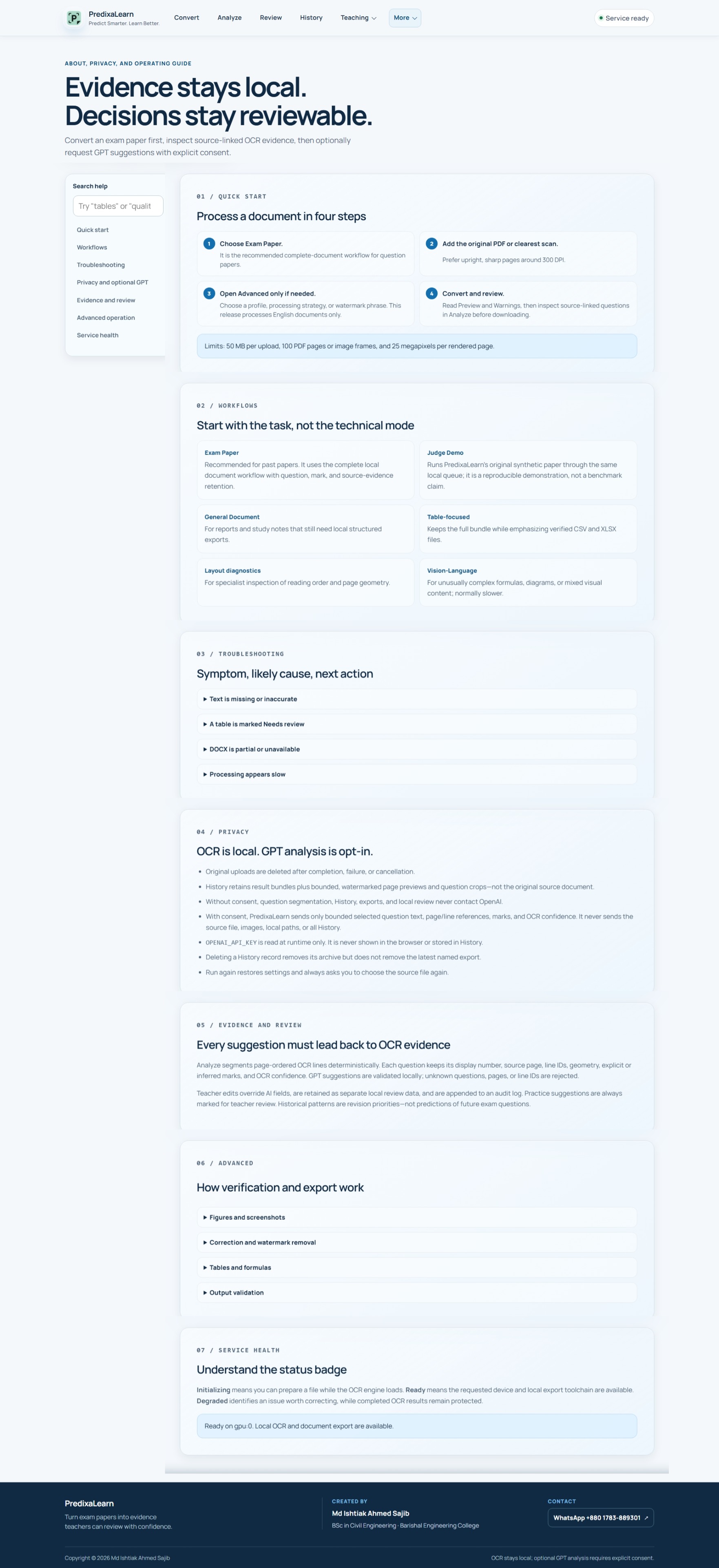
About, privacy, and operating guide
-
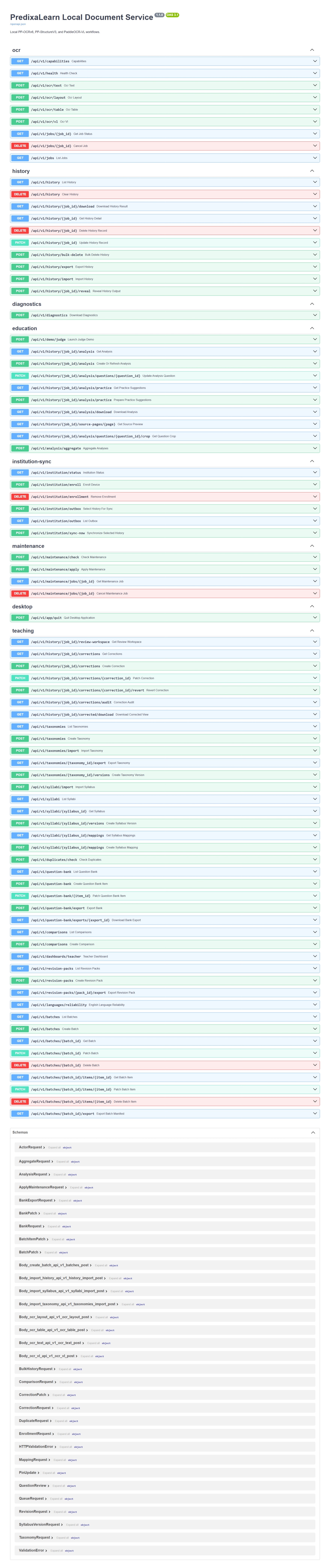
Developer API
Inspiration
I am Md Ishtiak Ahmed Sajib, a BSc in Civil Engineering student at Barishal Engineering College. As an engineering student, I have often felt that the right way to learn is to make study materials more compact, cleaner, and easier to trust.
My usual preparation process is simple: first learn the basics, then analyse past exam papers, create short notes, and finally prepare for the exam. However, this process is not always easy. Many topics seem difficult not because the concepts are impossible, but because students lack organised materials, useful guidance, and a clear connection between the syllabus and past exam questions.
That experience inspired me to create PredixaLearn: a tool that helps transform scattered exam papers into structured, source-linked, teacher-reviewable learning materials.
What it does
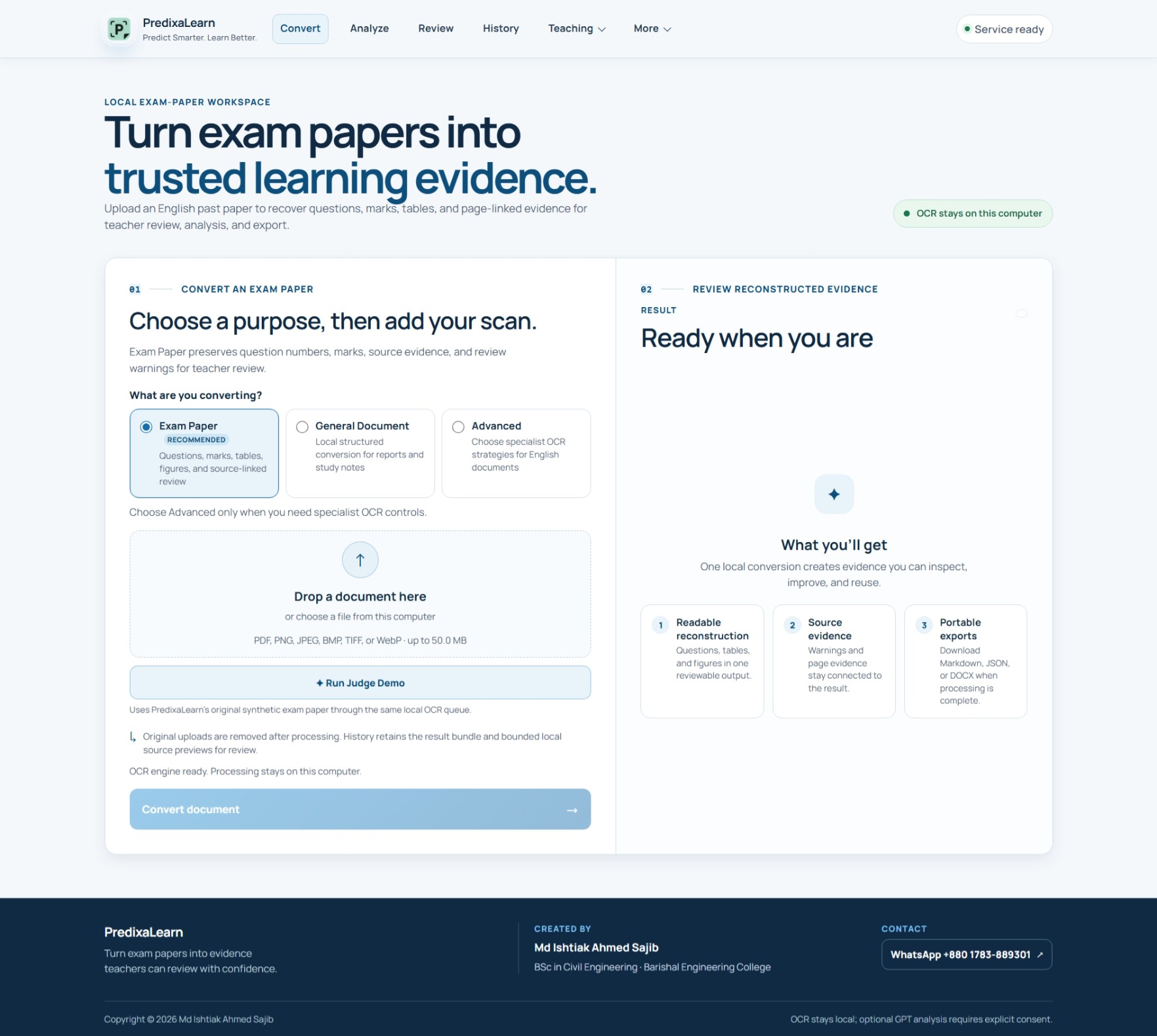
PredixaLearn is a local-first exam-paper intelligence workspace for English exam papers.
Users can upload a PDF or image of an exam paper and process it locally with OCR. The app reconstructs readable content while preserving links to the original source evidence. It helps identify questions, marks, tables, figures, and review warnings rather than treating OCR output as automatically correct.
The workflow is designed around a practical learning path:
Convert → Analyze → Review → History → Teacher → Revision
PredixaLearn includes:
- Local OCR for PDF and image-based exam papers
- Source-linked reconstruction of text, questions, marks, tables, and figures
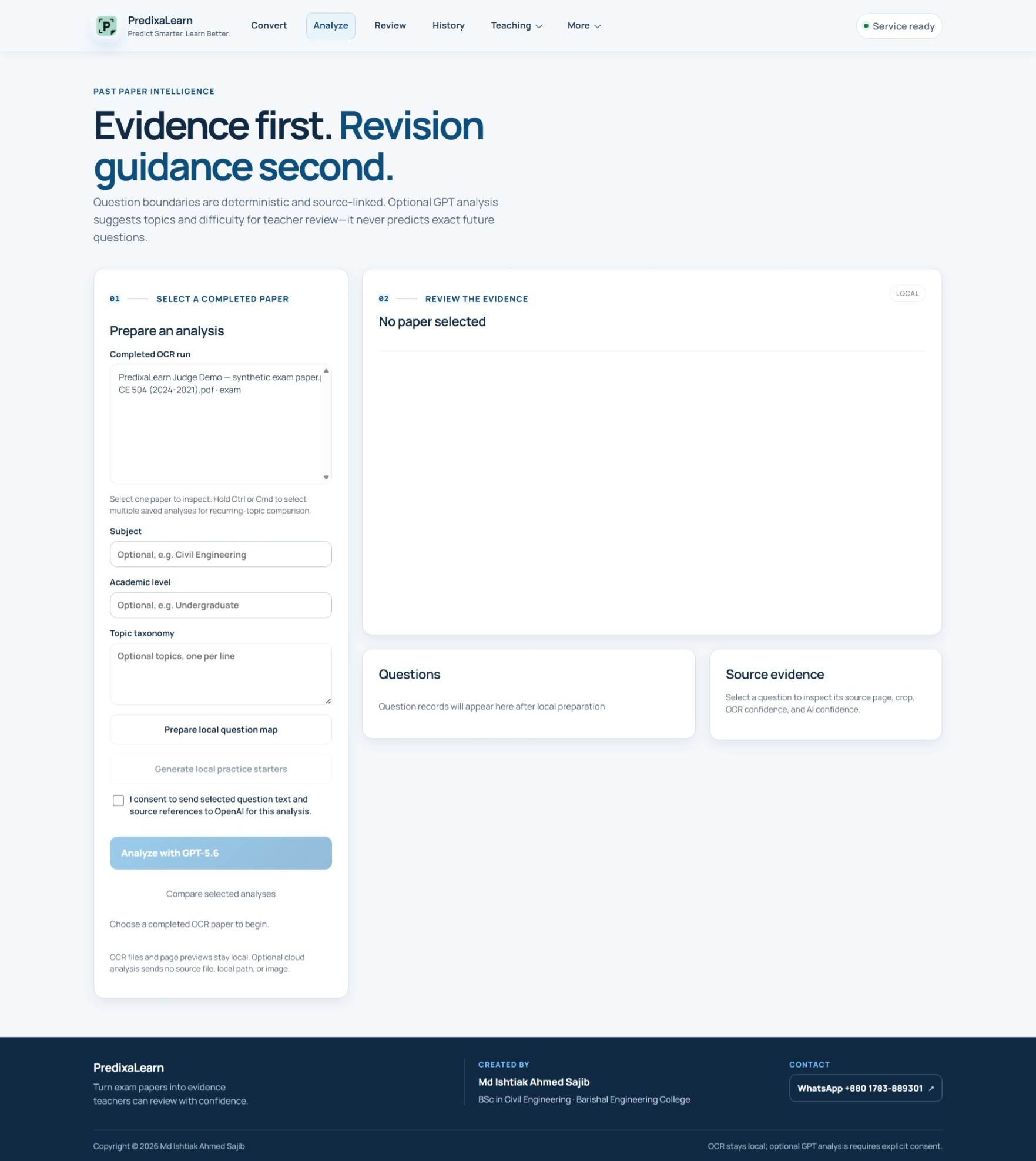
- Evidence-based question analysis
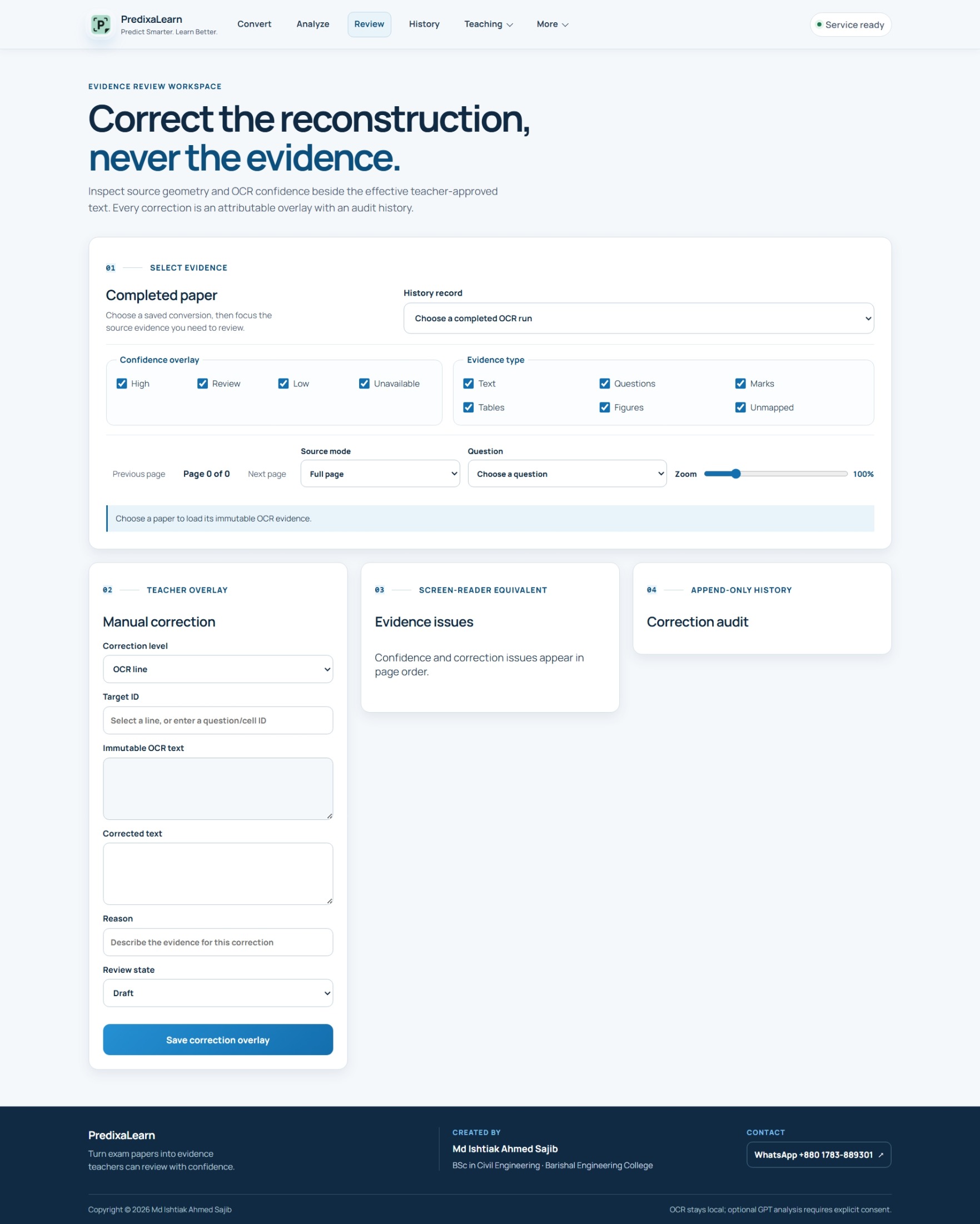
- Side-by-side source and reconstructed-content review
- Confidence overlays for content that needs attention
- Manual corrections with append-only audit history
- Markdown, JSON, and DOCX exports
- Local history and portable result archives
- Topic taxonomy and syllabus-import tools
- Teacher-approved question banks
- Duplicate review and multi-paper comparison
- Revision packs based on approved, source-linked questions
It does not predict future exam questions. Its purpose is to help learners and teachers understand and reuse the exam papers they already have.
How we built it
I built PredixaLearn as a local-first web application with a FastAPI backend and a browser-based interface designed for desktop, tablet, and mobile use.
The OCR workflow uses local processing and keeps source geometry so that reconstructed text can be traced back to the page or region where it came from. Instead of overwriting OCR results when a teacher makes a correction, the app records a correction overlay with an audit trail. This keeps the original OCR evidence intact while making the reviewed version useful for teaching and revision.
I also built teaching tools around the OCR workflow. Teachers can organise topics into versioned taxonomies, import syllabus drafts, review source-linked questions, export question-bank content, and create revision packs from approved material.
Privacy was an important part of the design. OCR stays on the user’s computer, and original uploads are deleted after processing. Optional GPT analysis requires explicit consent and is designed to support teacher review, not replace it.
Challenges we ran into
One major challenge was that OCR is not enough on its own. Exam papers can contain unclear scans, tables, figures, equations, marks, question numbers, and different page layouts. Even when OCR text appears readable, it can still contain mistakes.
To solve this, I focused on making every important result reviewable. PredixaLearn provides source evidence, confidence indicators, page and question-level inspection, correction tools, and audit history. The goal is not to hide uncertainty, but to show it clearly.
Another challenge was balancing advanced tools with a simple user experience. Features such as evidence review, question-bank management, syllabus uploads, revision packs, and exports can make an interface feel overwhelming. I worked to organise the product into clear stages and responsive layouts so that users can focus on the next useful action.
Making the design work consistently on PC, tablet, and Android-sized screens was also challenging. I improved navigation, form layouts, heading hierarchy, touch targets, and responsive content stacking across the workspace.
Accomplishments that we're proud of
I am proud that PredixaLearn is more than a basic OCR tool. It treats exam-paper reconstruction as a process that needs evidence, review, and accountability.
Some accomplishments I am proud of are:
- Building a complete workflow from scanned paper to revision-ready material
- Keeping OCR and evidence review local-first
- Preserving immutable OCR records while allowing teacher corrections
- Creating source-linked exports instead of disconnected text
- Adding teacher tools for syllabus organisation and approved question banks
- Supporting accessible and responsive interfaces across different screen sizes
- Making optional AI analysis teacher-reviewable and consent-based
- Being transparent about the product’s limits, including its English-only scope and its non-predictive purpose
The included Judge Demo is a synthetic regression fixture that shows the workflow, not a claim of real-world benchmark accuracy. Any future benchmark claims will require permission-cleared papers and manually verified ground truth.
What we learned
Building PredixaLearn taught me that educational technology should not only generate more content. It should help people create better, clearer, and more trustworthy learning material.
I learned that source evidence matters. A reconstructed question becomes much more useful when a teacher can inspect where it came from, understand its confidence level, and correct it without losing the original record.
I also learned the importance of responsible AI and privacy. AI suggestions can be useful, but they must remain optional, reviewable, and connected to real source material. Teachers and learners should remain in control.
Most importantly, I learned that many learning difficulties come from poor organisation rather than lack of ability. Better study materials can make difficult subjects feel more manageable.
What's next for PredixaLearn
Next, I want to strengthen PredixaLearn with permission-cleared, real-world benchmark papers and manually verified ground truth. This will help measure reconstruction quality responsibly instead of making unsupported claims.
I also plan to improve teacher workflows, expand revision-pack tools, refine question-bank organisation, and continue improving accessibility and mobile usability.
PredixaLearn will remain focused on its core purpose: helping students and teachers turn past exam papers into compact, reliable, and useful learning materials.
The vision is simple:
Past paper → source-linked evidence → reviewed material → focused revision
Built With
- ai
- api
- axe-core
- education
- fastapi
- inno
- javascript
- libreoffice
- local-first
- optical
- pdf.js
- playwright
- powershell
- pydantic
- pytest
- python
- recognition
- rest
- ruff
- software
- sqlite
- technology
- typescript
- web
- windows


Log in or sign up for Devpost to join the conversation.