-
-
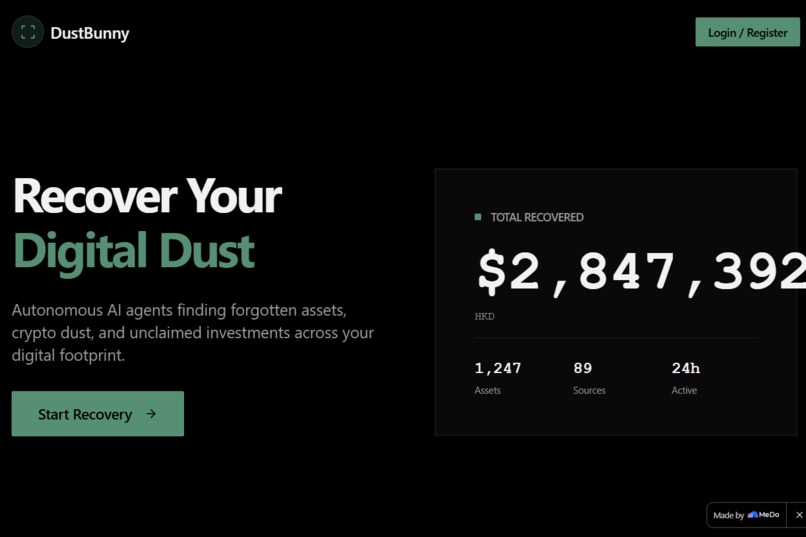
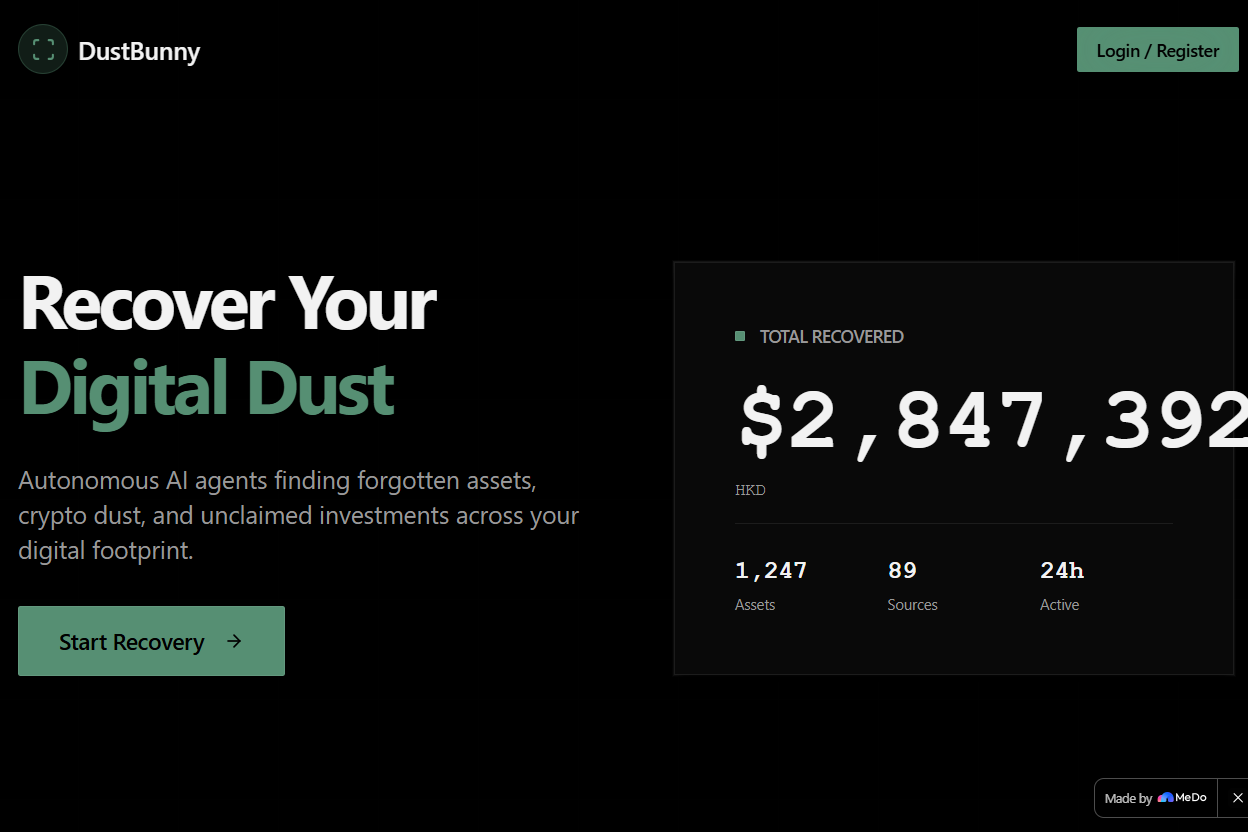
the welcome page with more animations
-
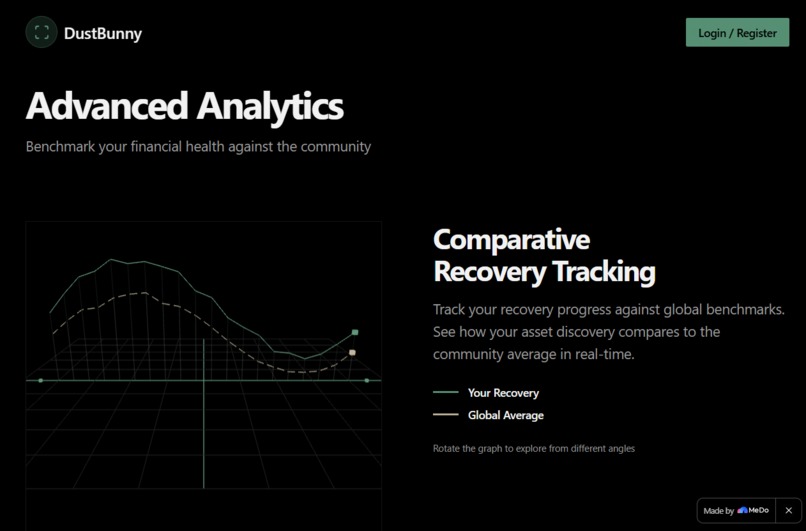
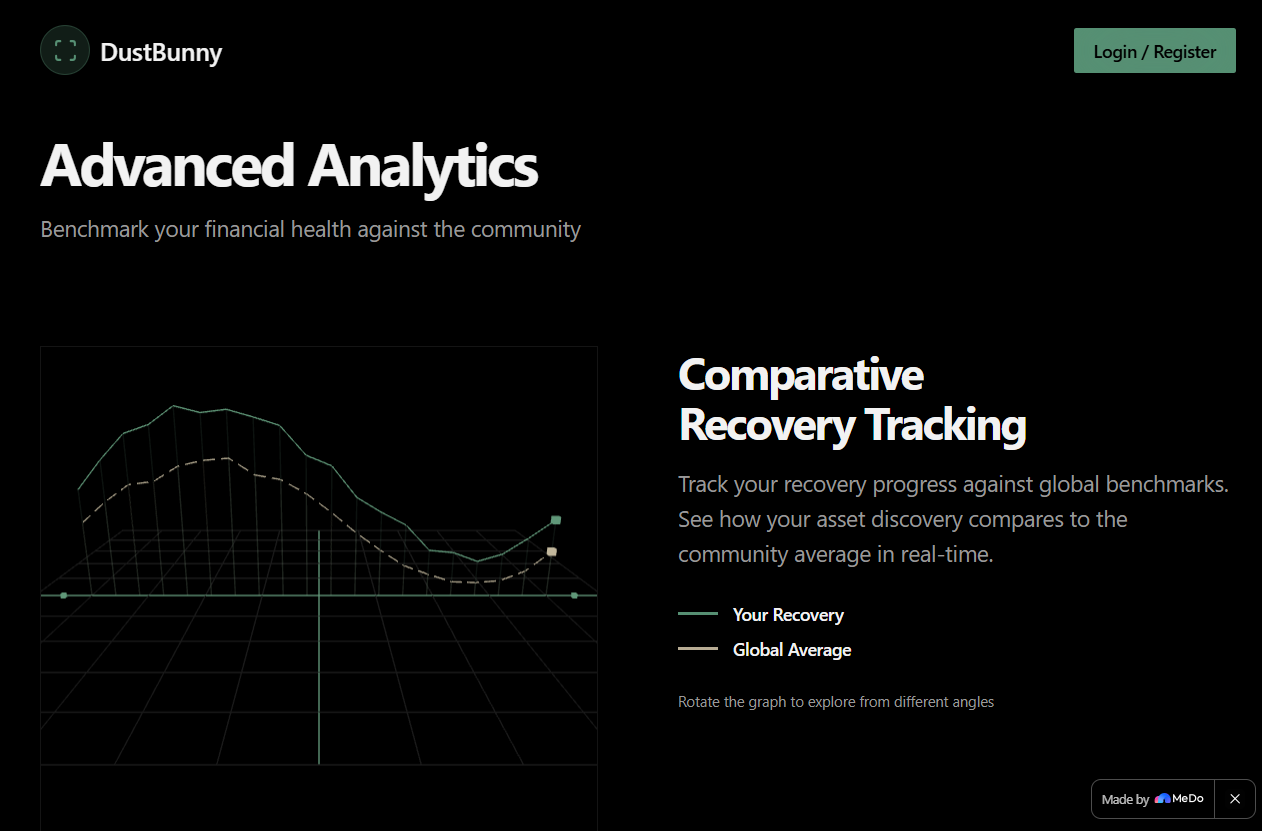
features explained in welcome page
-
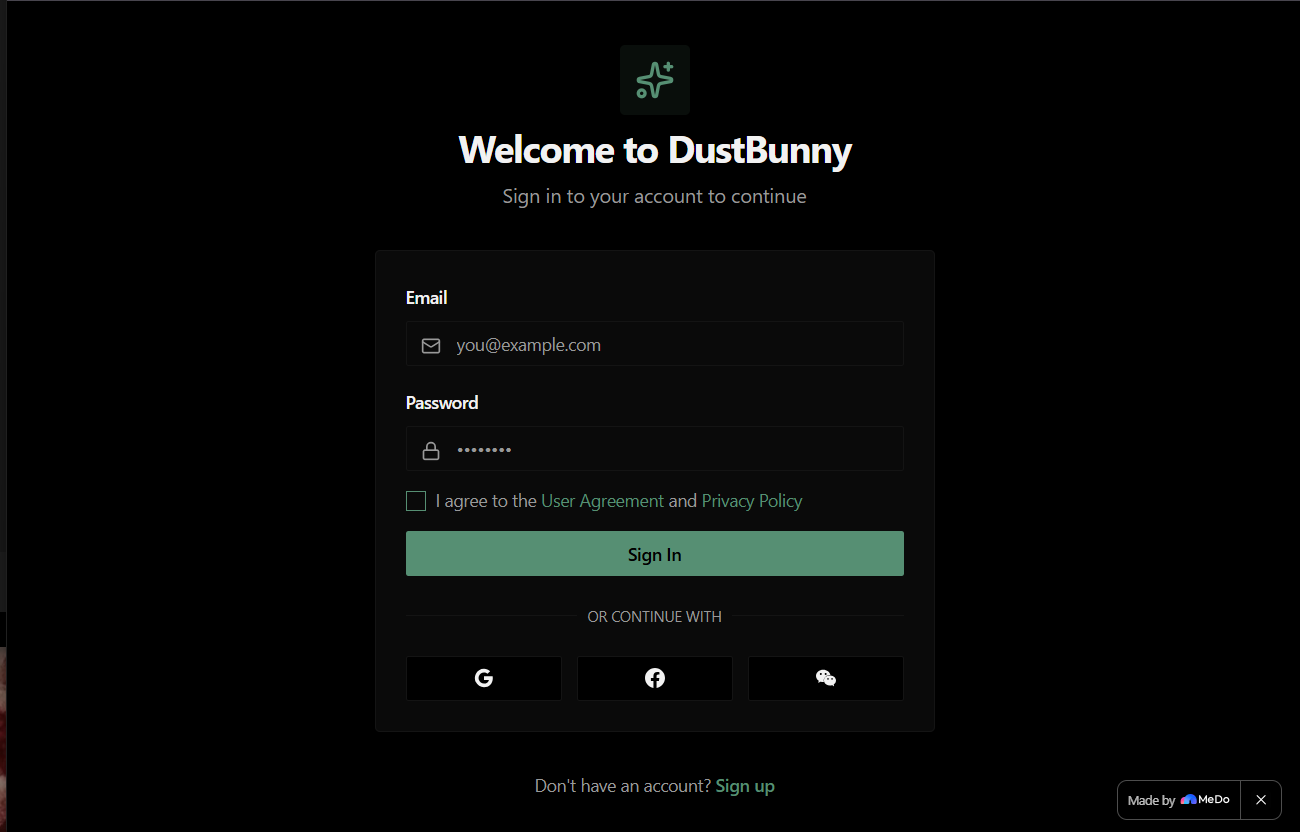
login page
-
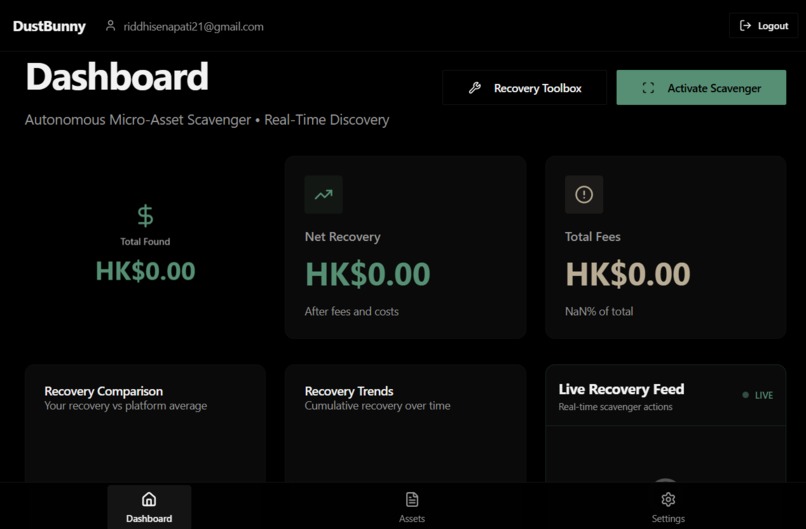
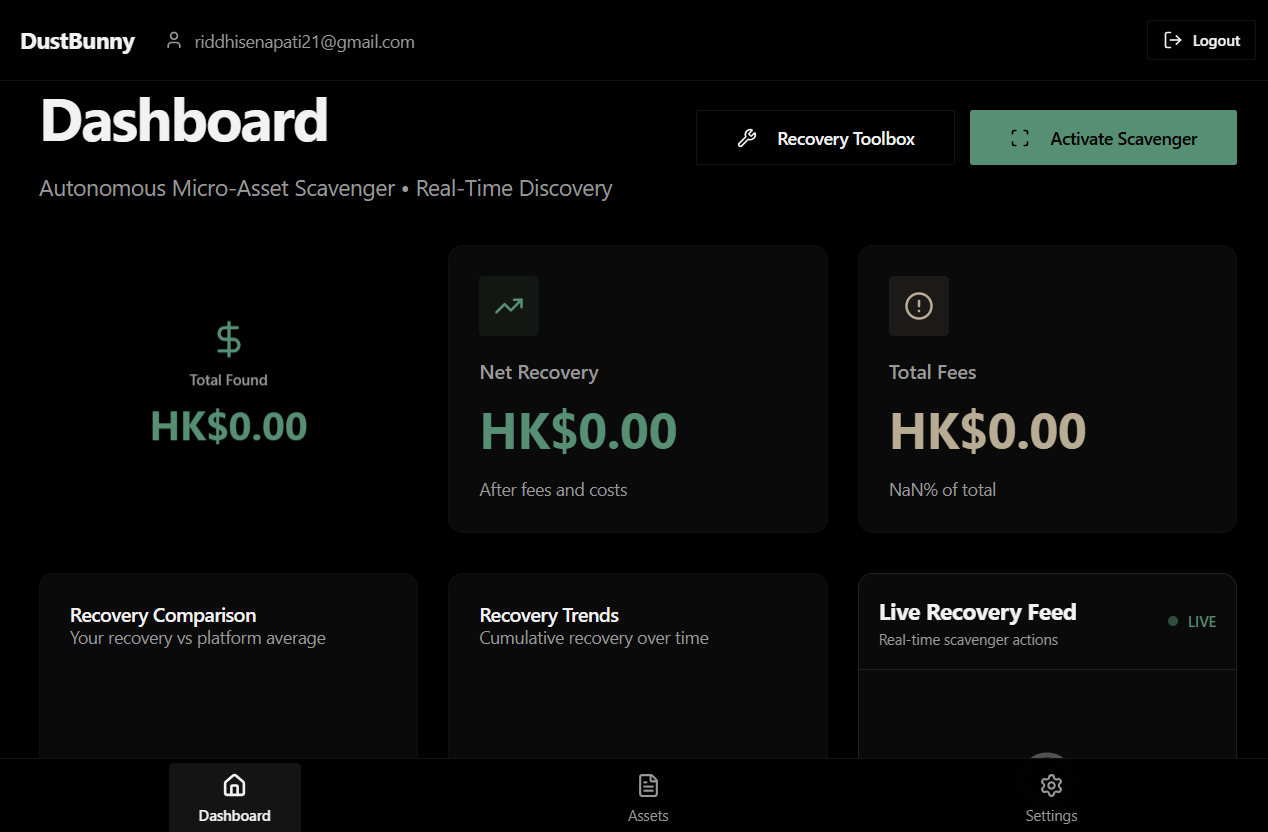
dashboard
-
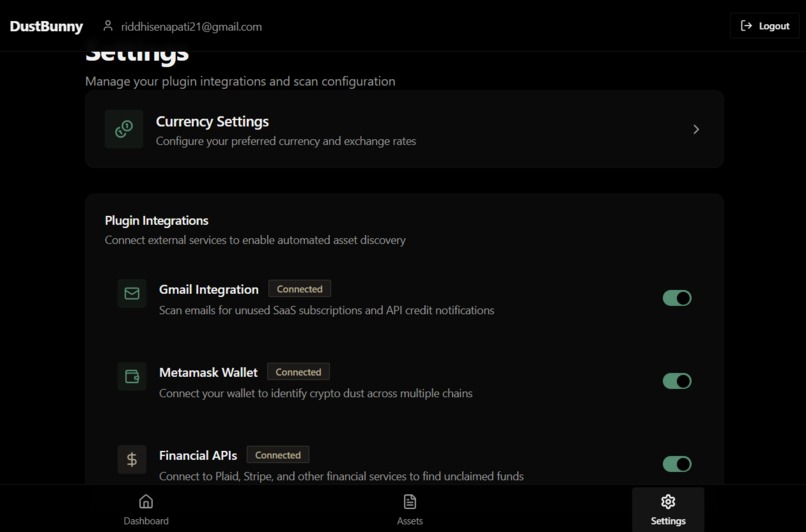
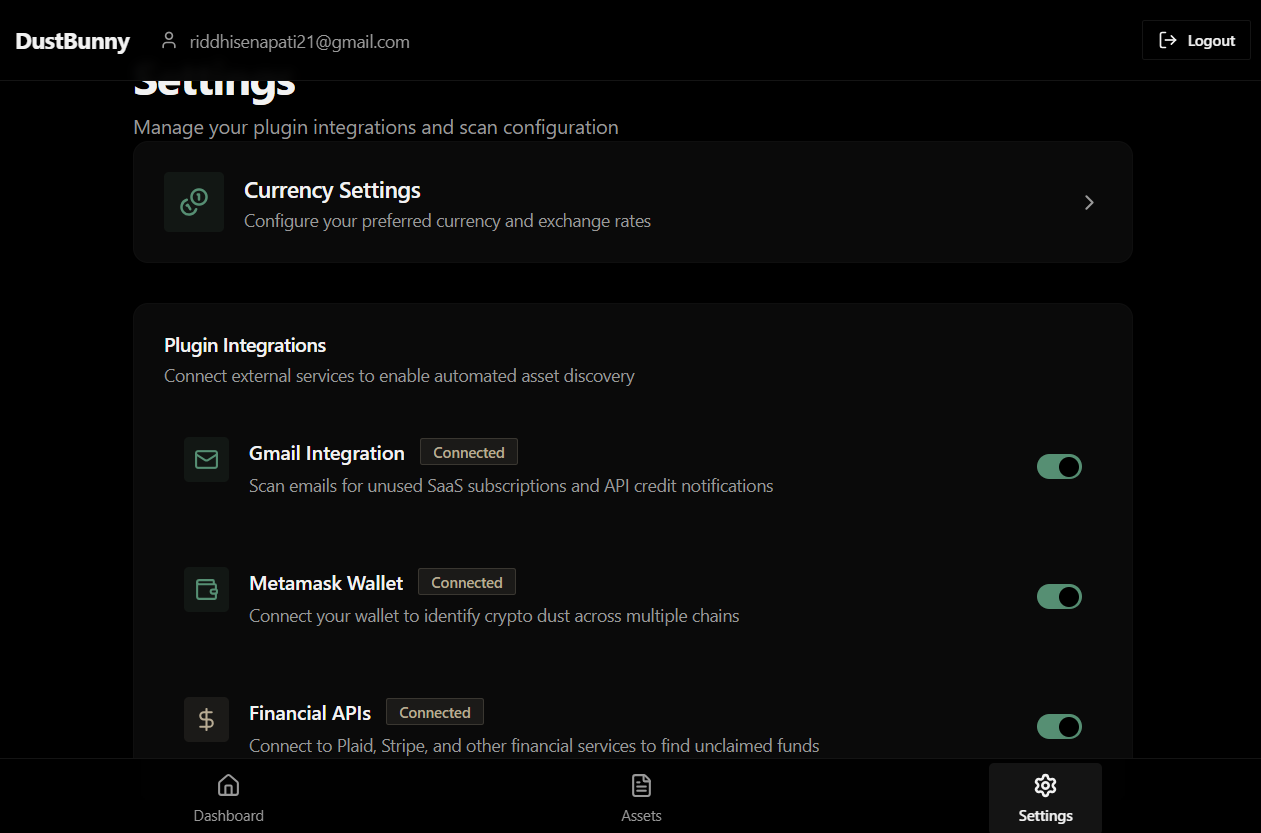
settings page
Inspiration
The idea for DustBunny came from my own frustration with managing multiple digital accounts. I realized that I had small balances and credits scattered across various platforms like AWS, OpenAI, and old crypto wallets that I was simply forgetting about. When I looked into it, I found that billions of dollars in "dead capital" exist globally because these micro-assets are too small for people to track manually. I wanted to build something that could automate this process and help people like me reclaim value that would otherwise just vanish.
What it does
DustBunny is an autonomous financial scavenger that identifies and recovers forgotten digital assets. It scans for "Digital Dust" such as unused API credits, micro-crypto balances, and unclaimed property like forgotten dividends. Instead of just being a static dashboard, I built it as an agentic system. It includes a recovery toolbox that helps users actually get their money back by generating claim forms or facilitating credit arbitrage, ensuring that even the smallest assets are put to use.
How we built it
I used the MeDo platform to build a full-stack system that handles both the data and the recovery logic.
•For the frontend, I used React and Tailwind CSS with a minimalist design. I integrated Three.js to create 3D visualizations because I felt that traditional 2D charts didn't capture the "depth" of hidden assets. •The backend is powered by Supabase. I implemented Row Level Security (RLS) because handling financial data requires strict privacy controls. •I orchestrated several plugins for the agentic features. I used the Web Search plugin to find public registries and the Email plugin to identify expiring credits. •I also wrote a basic engine to calculate if an asset is actually worth recovering after fees. I used this logic: V_{net} = \sum_{i=1}^{n} (V_{gross, i} - C_{gas, i} - C_{service, i}) This ensures the user doesn't waste time on "dust" that costs more to move than it is worth.
Challenges I ran into
The biggest challenge was the "Liquidation Problem." It is easy to find a small balance, but hard to make it useful. I had to figure out how to aggregate these micro-assets or use them for credit arbitrage so they provide real value. On the technical side, getting the Three.js charts to work smoothly on mobile was difficult. I spent a lot of time optimizing the touch controls and hardware acceleration so the experience didn't feel laggy on a phone.
Accomplishments that I'm proud of
I am proud of moving beyond a simple chatbot and building a system that actually performs tasks in the background. Successfully getting the 3D data storytelling to work alongside a secure backend was a big step for me. I also managed to build a benchmarking feature that compares a user's recovery to the global average, which adds a layer of perspective to the data.
What I learned
Building this project taught me a lot about agentic orchestration. I realized that the most useful tools are the ones that work for you without you having to ask. I also improved my skills in 3D web development and learned how to manage complex state across a full-stack application.
What's next for DustBunny
I want to move from simulation to real-world utility by integrating Plaid and Stripe APIs. I am also thinking about a feature where users can donate their un-tradable micro-dust to charity, turning forgotten money into something that can actually help people.
Built With
- email)-?-agentic-plugins:-web-search-api
- framer-motion-?-backend-&-database:-supabase
- framermotion
- glassmorphism
- gmail/email-api
- gmail/emailapi
- google-gmail-oauth
- javascript
- medo
- pdf-generation-api-?-financial-logic:-custom-"net-recovery"-engine-(javascript/typescript)-?-design:-glassmorphism
- pdfgenerationapi
- postgresql
- postgresql-?-authentication:-oauth-2.0-(google
- react
- supabase
- tailwind-css-?-3d-visualization:-three.js
- tailwindcss
- three.js
- typescript
- websearchapi


Log in or sign up for Devpost to join the conversation.