Inspiration
After observing different hardware options, the dust sensor was especially outstanding in its versatility and struck us as exotic. Dust-particulates in our breaths are an ever present threat that is too often overlooked and the importance of raising awareness for this issue became apparent. But retaining interest in an elusive topic would require an innovative form of expression, which left us stumped. After much deliberation, we realized that many of us had a subconscious recognition for pets, and their demanding needs. Applying this concept, Pollute-A-Pet reaches a difficult topic with care and concern.
What it does
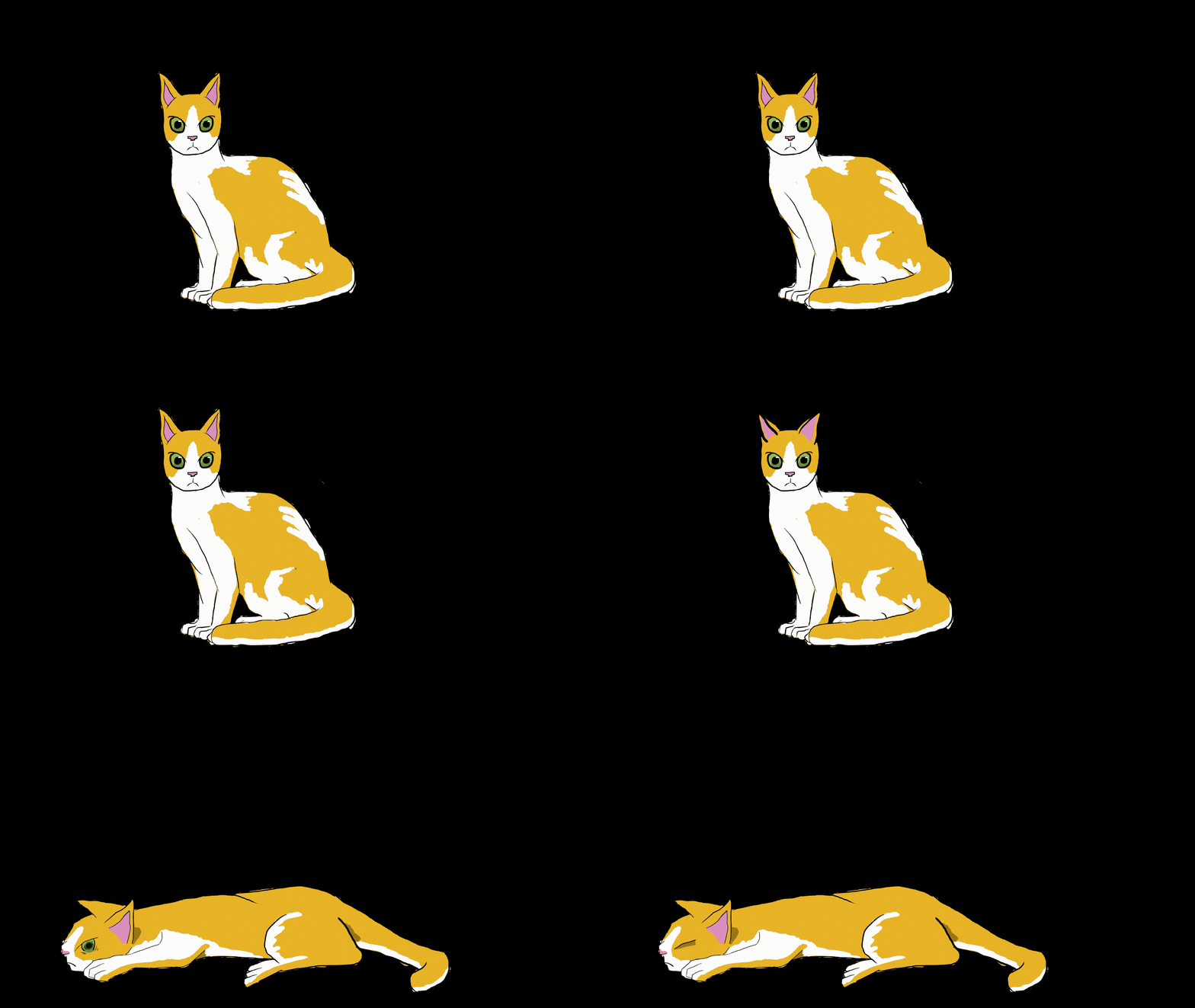
Pollute-A-Pet tracks the particulates in a person's breaths and records them in the behavior of adorable online pets. With a variety of pets, your concern may grow seeing the suffering that polluted air causes them, no matter your taste in companions.
How we built it
Beginning in two groups, a portion of us focused on connecting the dust sensor using Arduino and using python to connect Arduino using Bluetooth to Firebase, and then reading and updating Firebase from our website using javascript. Our other group first created gifs of our companions in Blender and Adobe before creating the website with HTML and data-controlled behaviors, using javascript, that dictated the pets’ actions.
Challenges we ran into
The Dust-Sensor was a novel experience for us, and the specifications for it were being researched before any work began. Firebase communication also became stubborn throughout development, as javascript was counterintuitive to object-oriented languages most of us were used to. Not only was animating more tedious than expected, transparent gifs are also incredibly difficult to make through Blender. In the final moments, our team also ran into problems uploading our videos, narrowly avoiding disaster.
Accomplishments that we're proud of
All the animations of the virtual pets we made were hand-drawn over the course of the competition. This was also our first time working with the feather esp32 v2, and we are proud of overcoming the initial difficulties we had with the hardware.
What we learned
While we had previous experience with Arduino, we had not previously known how to use a feather esp32 v2. We also used skills we had only learned in beginner courses with detailed instructions, so while we may not have “learned” these things during the hackathon, this was the first time we had to do these things in a practical setting.
What's next for Dustables
When it comes to convincing people to use a product such as this, it must be designed to be both visually appealing and not physically cumbersome. This cannot be said for our prototype for the hardware element of our project, which focused completely on functionality. Making this more user-friendly would be a top priority for team Dustables. We also have improvements to functionality that we could make, such as using Wi-Fi instead of Bluetooth for the sensors, which would allow the user greater freedom in using the device. Finally, more pets and different types of sensors would allow for more comprehensive readings and an enhanced user experience.

Log in or sign up for Devpost to join the conversation.