-
-
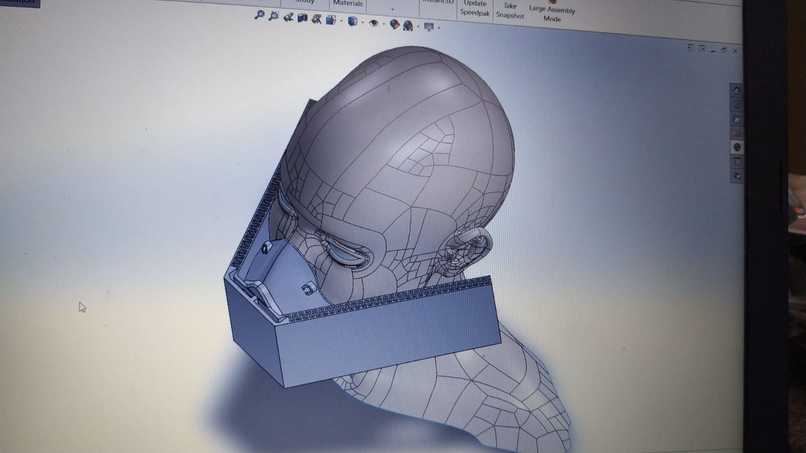
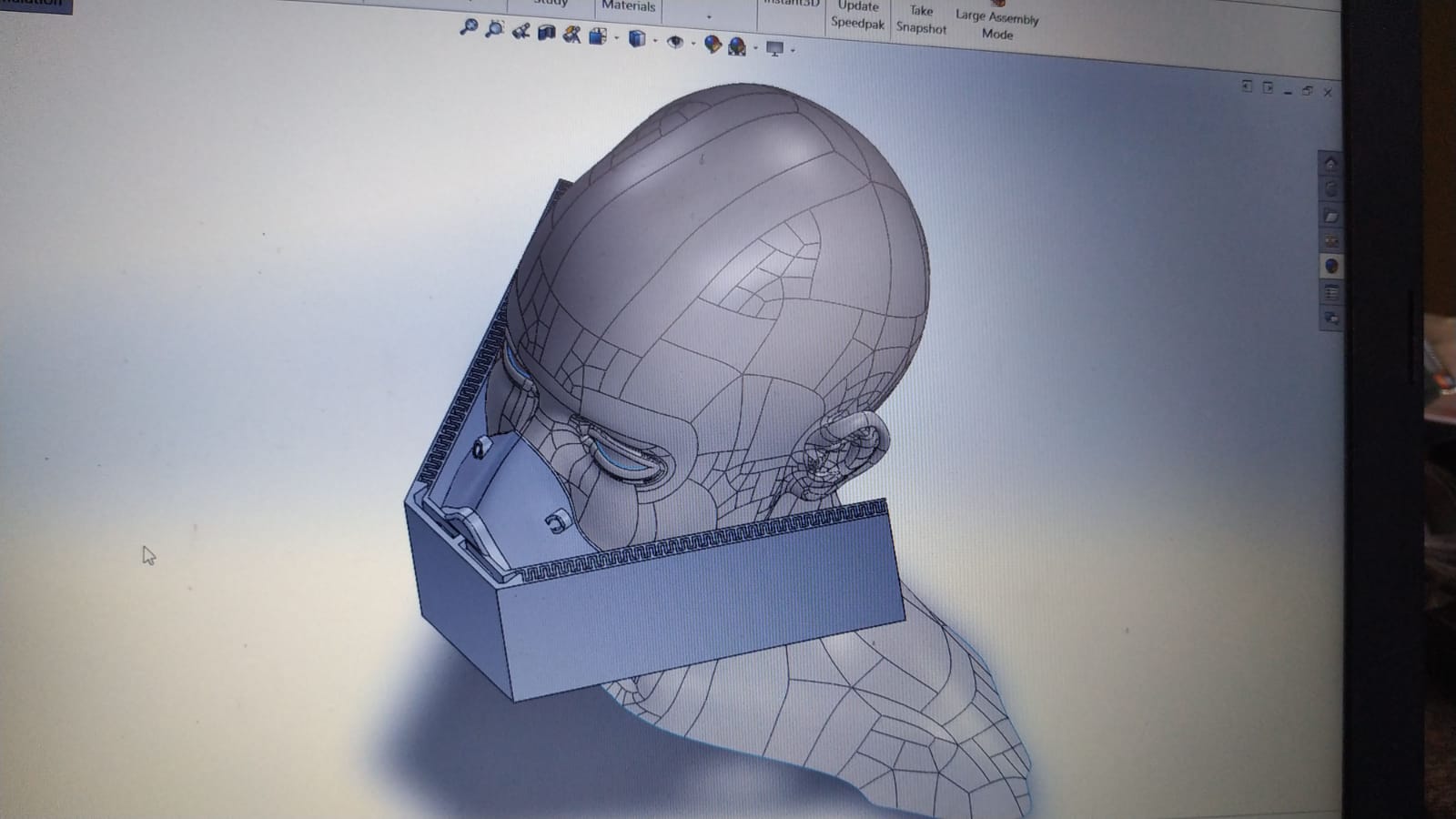
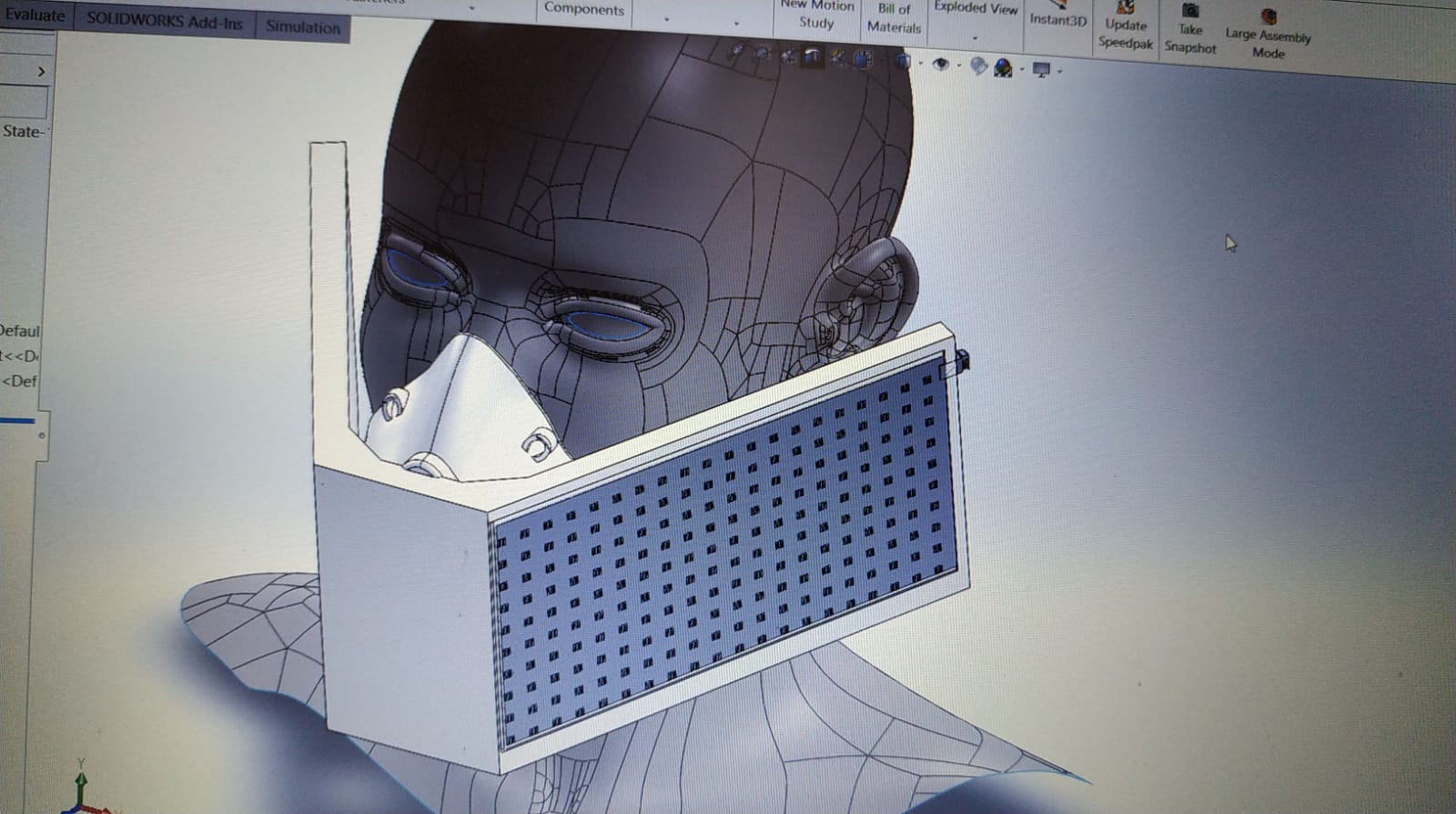
Active Filter Respirator
-
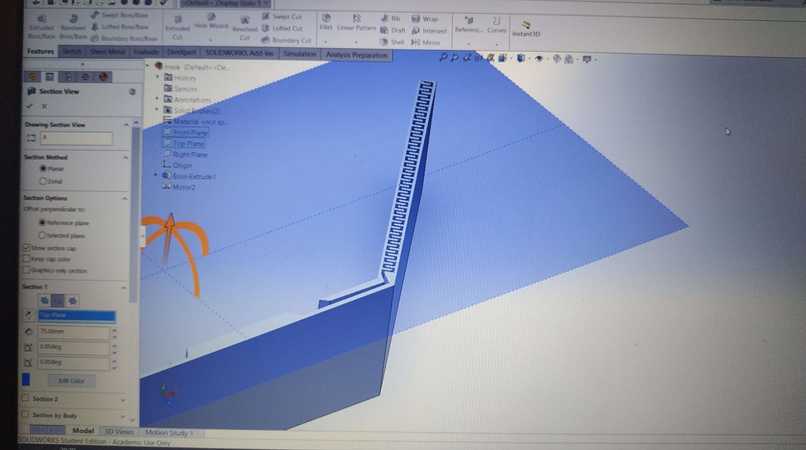
Form factor
-
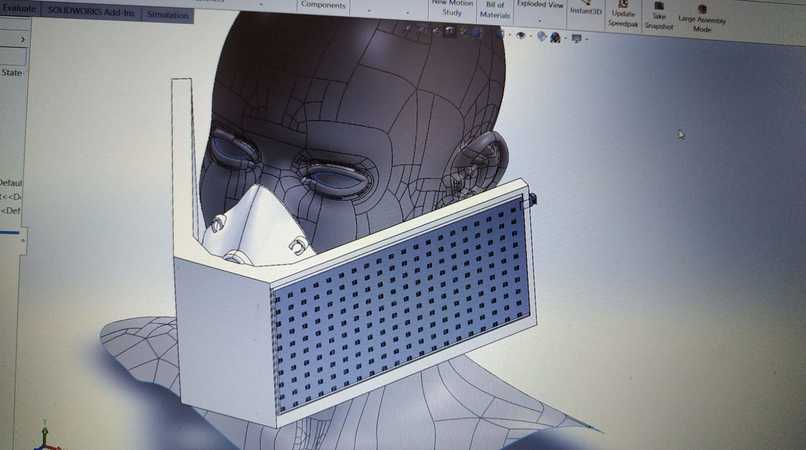
Embedded LED lighting
-
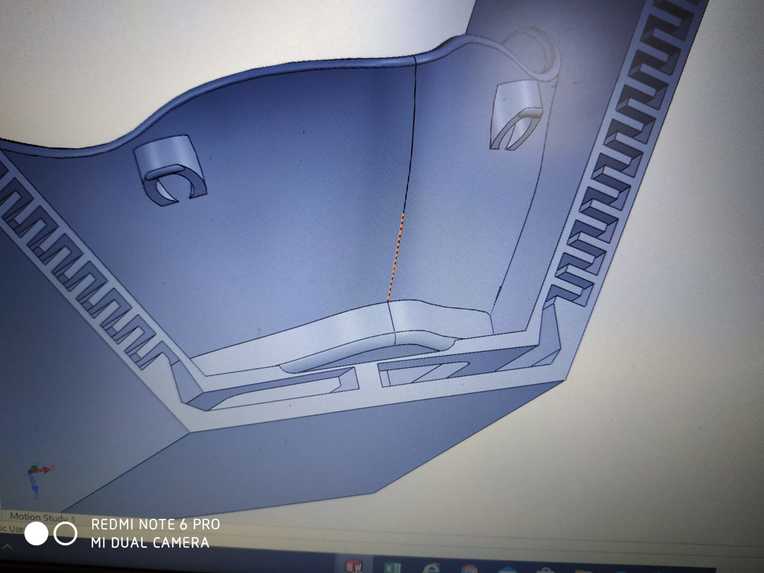
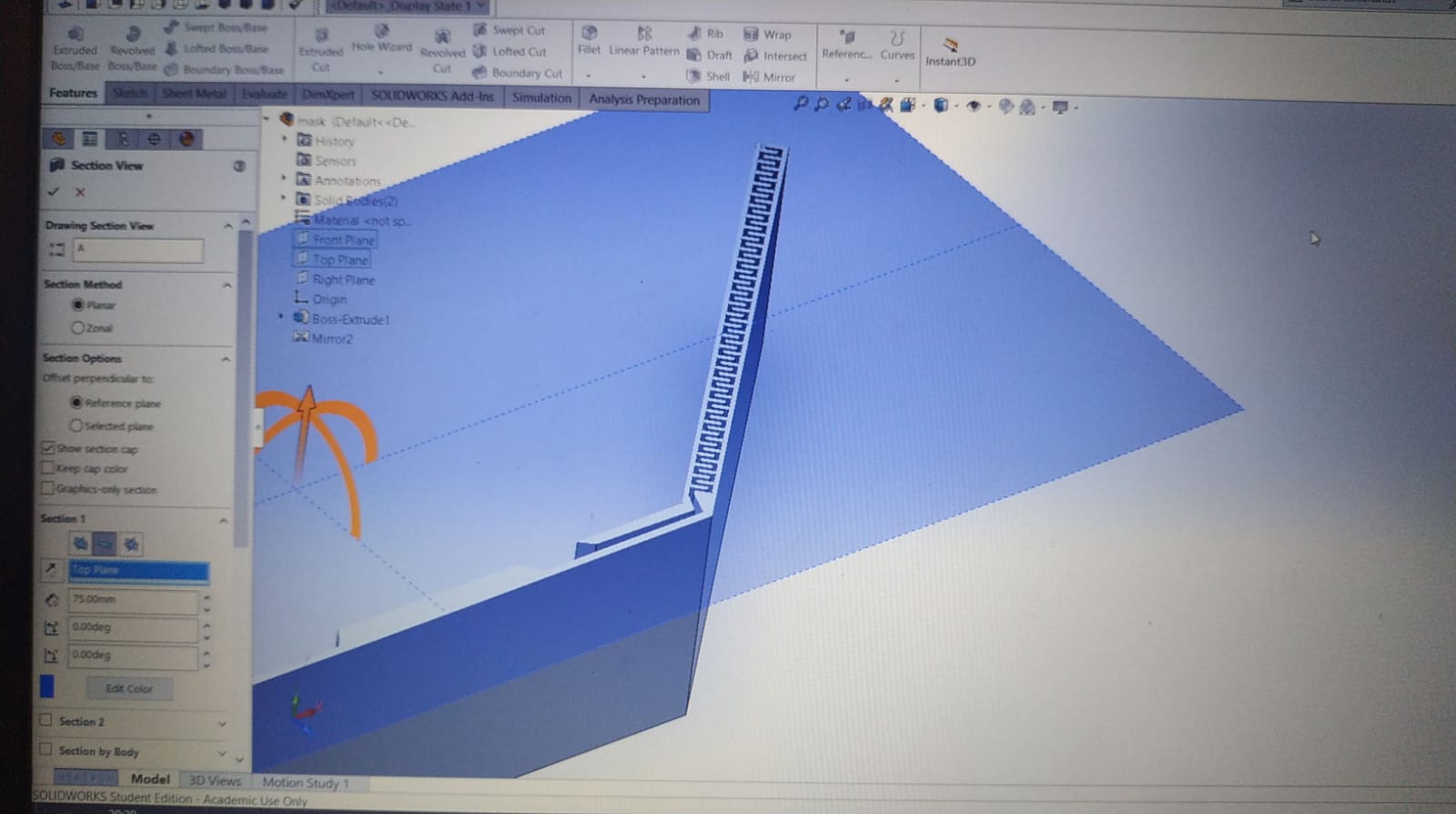
Structured packing material manufactured by 3D printing
-
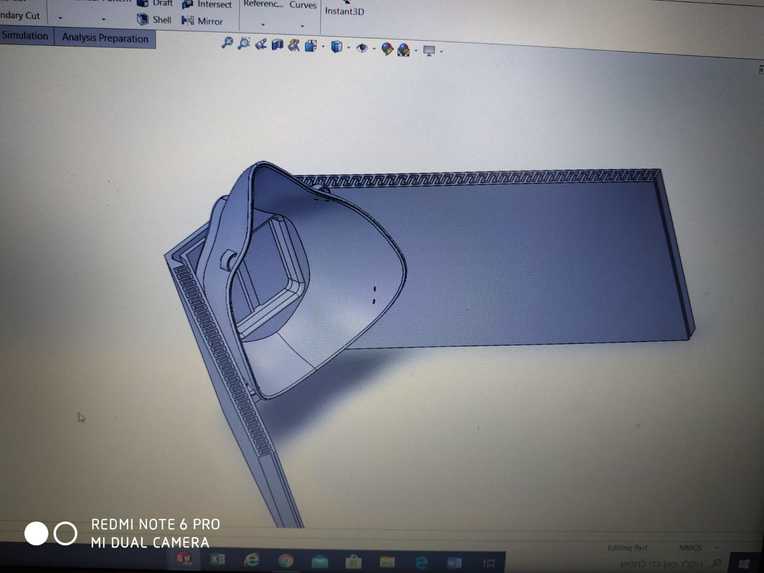
Configuration detail
Inspiration
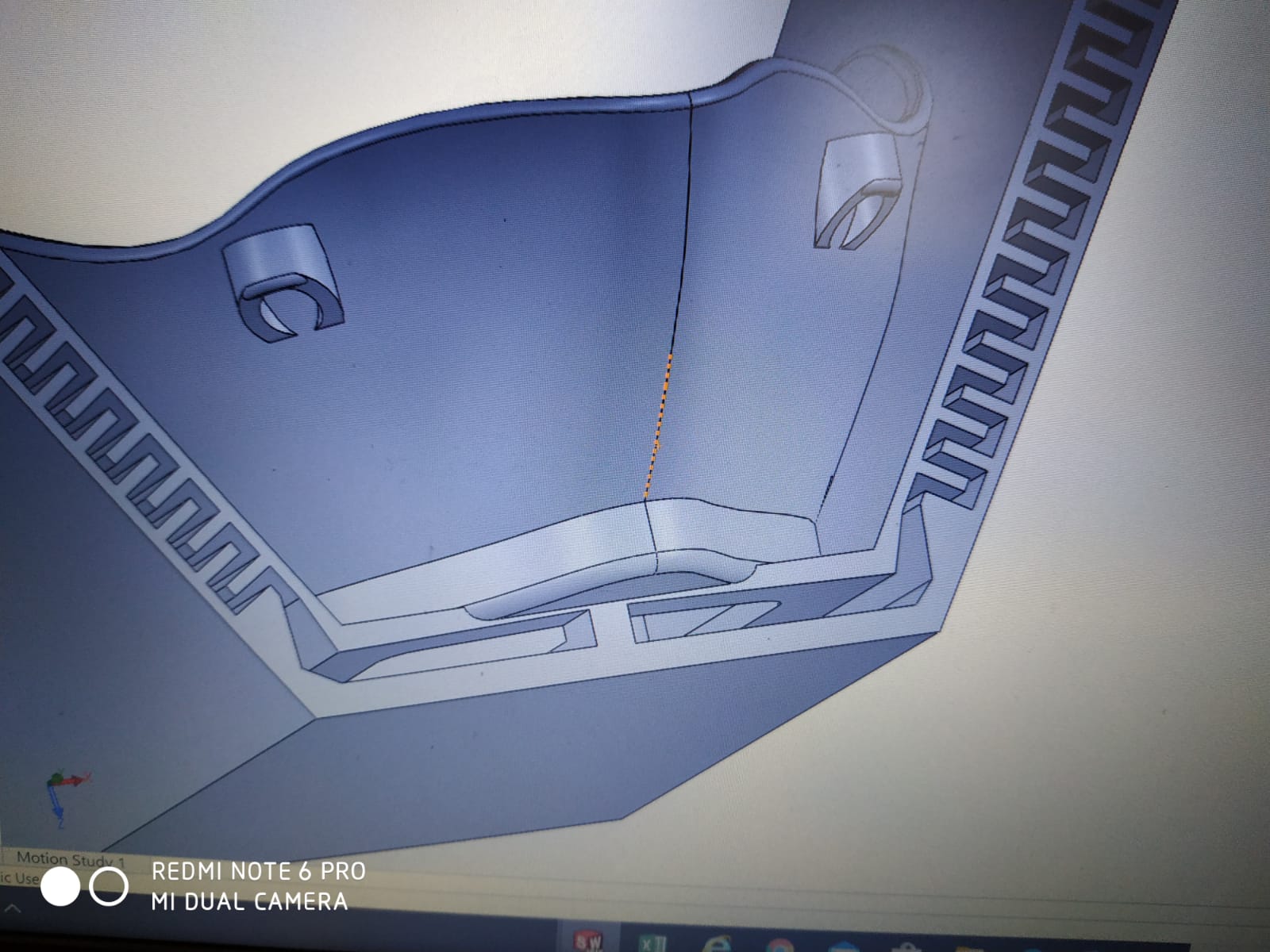
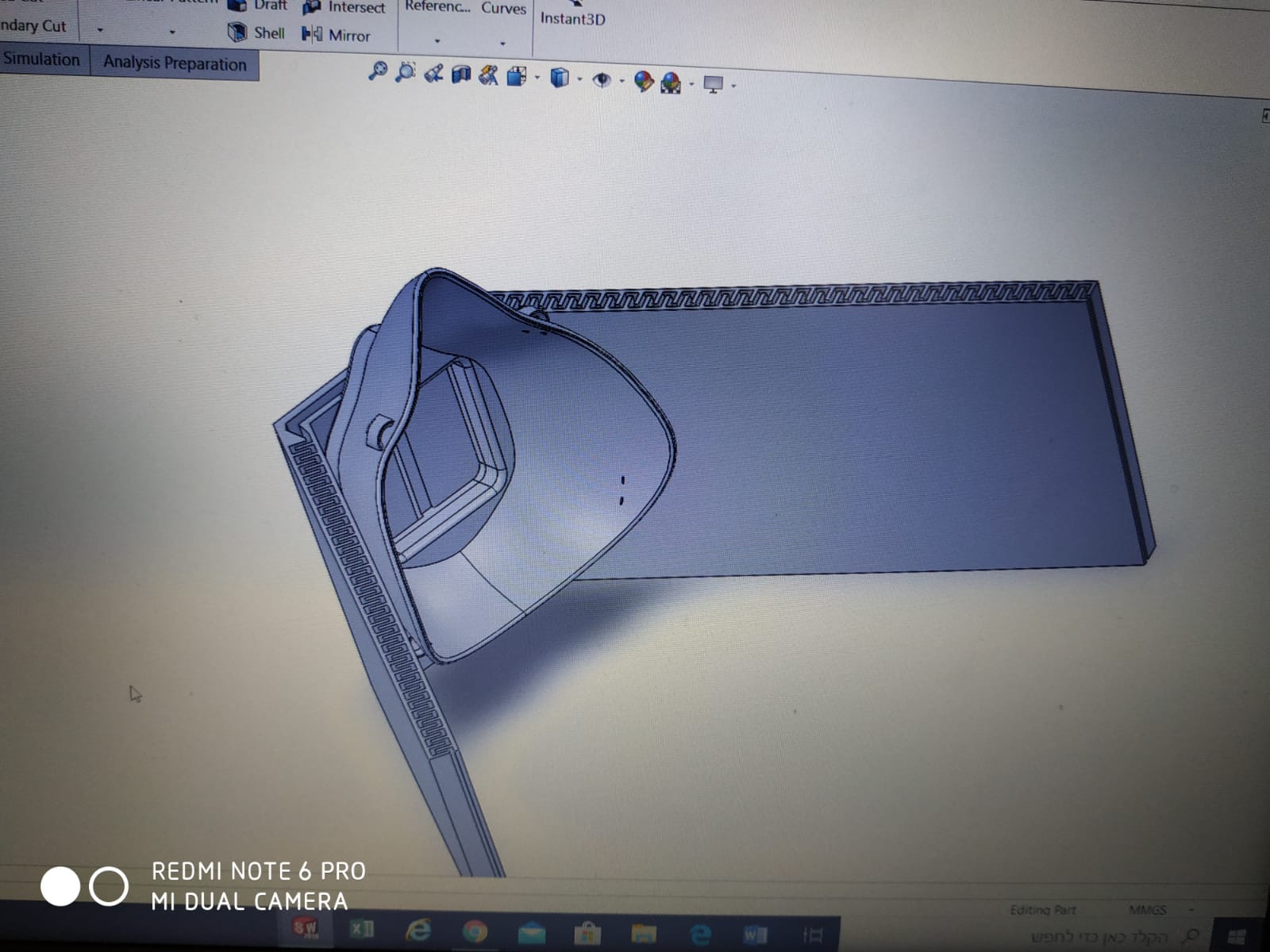
With the corona virus continuing to spread, a need araises for a reusable, effcient mask. We offer a UV light-based mask that was designed in a way that takes full advantage of the ever-growing field of 3D printing. We cramped up a full 1m long path and LEDs to a compact 10*20*1cm case to ensure the air you are breathing is thoroughly sanitized. It will be possible to produce these "digital" masks to protect the population, and especially those who are highly exposed.
What it does
The facemask circulates air through a long network of channels that maximise surface area and exposure to far-UVC light, while providing an adequate breathing rate (6-8 L/min). The facemask is lightweight and leverages the same power supply available through an USB-C port, for example commercial power banks. The facemask is easy to clean and reuse because there are no sensitive fabrics and filters. The action of the far-UVC light in combination with the air baffle completely inactivates the virus RNA so that it does not pose a danger to the wearer and also protects bystanders. This is particularly the case for medical personnel that would have to replace the facemask several times per day, and even for patients with a viral load when they are intubated. Since the internal surfaces are free of active virus, it will be much easier to decontaminate.
How I built it
The project makes use of 3D printing, however the structures that can be built with these "additive methods" are much more sophisticated than what can be achieved with traditional manufacturing methods. In particular, this manufacturing technology allows building models of "structured packing" at a resolution of tens of micrometers, maximising the surface area of the material. Similarly we have designed the layout of the channels so that the length that the air has to travel is maximised. The long exposure time together with the large surface area ensure that the virus is exposed to more than the 6.6mJ/cm2 dose required for deactivating Corona type viruses. Another benefit of 3D printing is that the SMT (surface mount technology) LEDs can be embedded during the printing process. This is simply achieved when the printer reaches a certain stage, halting automatically for the operator to insert the LED circuit in the form of a strip, and resuming the operation of the printer. This is particularly important for finally encasing the structure in reflective cladding to ensure that the UVC light does not escape from the channels. Another effect of the cladding is that it will serve as a heat dissipation element, much the same way as the case of a mobile phone.
Challenges I ran into
Some of the software available for designing 3D models has a learning curve, for this reason we have a team member who is quite skilled in this software package. Also presenting the idea in a way that can be comprehended in a straight-forward manner can be challenging. The natural tendency of engineers is to present the concept as a scientific paper, while someone experienced with technology communication will focus more on visual aspects.
Accomplishments that I'm proud of
Omry was able to design the facemask in the 3D software incredibly quickly. He grasped the idea really well and suggested some features and improvements. I think the design also looks really cool. Orna put together the report on short notice. It is amazing what can be achieved with a small team, especially considering that we never met before!
What I learned
In addition to UVA and UVB, there are UVC light rays. Furthermore UVC can be further divided into near UVC, far UVC and vacuum UVC. UVC rays do not reach the surface of the earth because of the ozone in the upper atmosphere, thus micro-organisms have not been able to adapt to them at all. There is a peak "germicidal" action at about 265 nm wavelength, which corresponds to far UVC. 3D printers can be used to build more advanced structures, rather than duplicating the protection devices already manufactured with traditional methods. Most plastics are opaque to UV light, however COC (Cyclic Olefin Copolymer) is transparent. Moreover, COC is also resistant to degradation from UV light. UV light will cause mutations in DNA and RNA, thus its germicidal ability. There are widely available reference scientific publications listing the doses required for inactivating micro-organisms.
What's next for Dune
The design of the non-disposable mask has progressed nicely. There are some lessons to be learned about the technology and its capabilities. In particular the design needs to be printed in the actual 3D printer, and tested. The underlying technology is already available for manufacturing this advanced facemask. The future of this project is to transfer it to operations. By doing and building we will be able to continuously improve the efficiency of the shapes that can be created with 3D printing and the integration of electronic components (and be able to measure it). We're open for discussions and collaboration with partners and investors.


Log in or sign up for Devpost to join the conversation.