Inspiration
I'm Adenike Hannah Fateye from Nigeria, and what inspired this project was something that has been on my mind for a long time now.
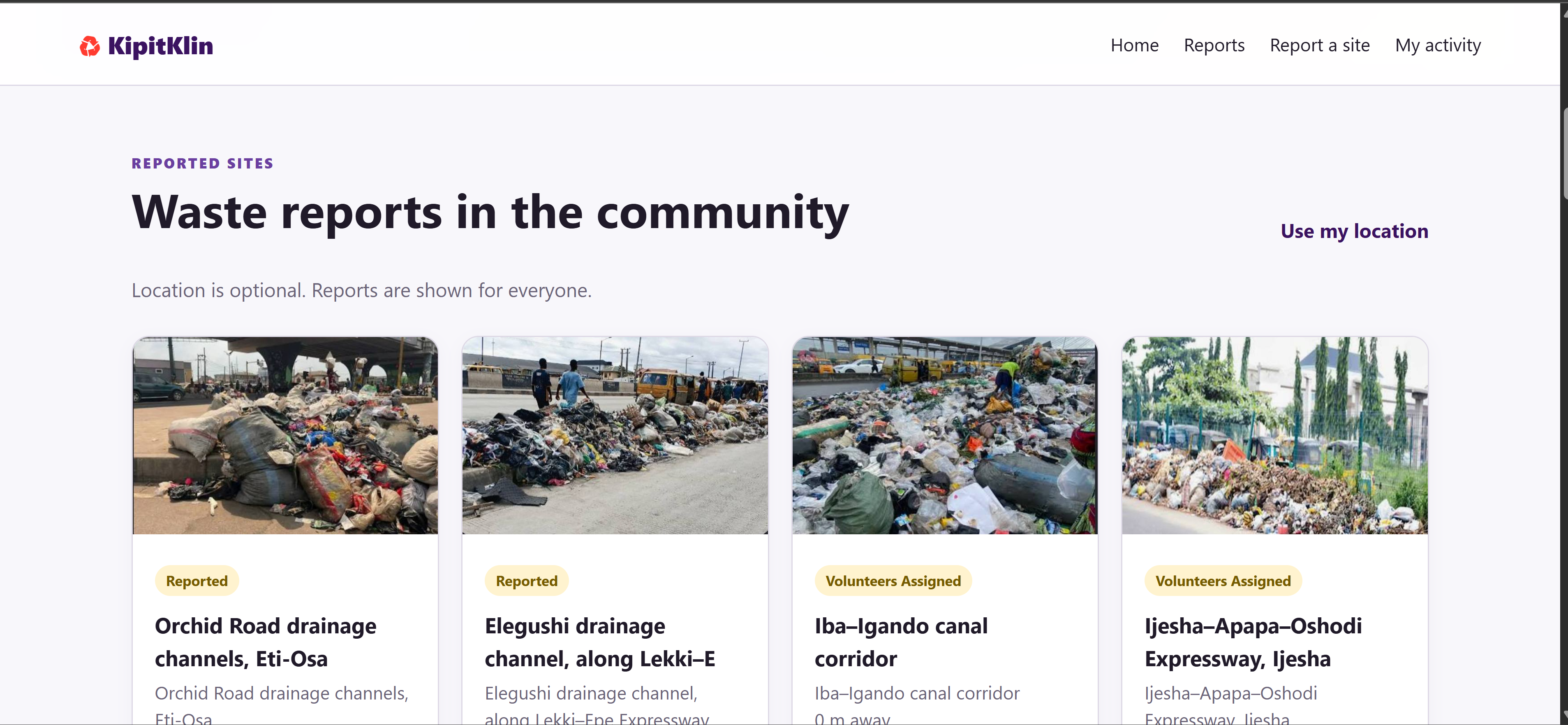
In the community where I live, waste disposal is not affordable for the average household, or better put, people consider it irrelevant when they can just walk out into the street and find a clear spot beside the road, or most times, the line that separates two lanes, the one moving forward and the one going backward.
A lot of Nigerians have resorted to that as their major go to for waste disposal, and I've observed that it makes crossing to the other lane harder because you have to jump over heaps of dirt to get across. Most times you have to hold in your breath when passing through, because of the stench that comes from the contents of the dirt.
The idea really came together after I registered for this hackathon and saw a reel on Instagram of a young Nigerian cleaning up a dumpsite, something I'd only ever seen foreigners do online. It had over a million likes, and that helped me realize something: there's a real percentage of people out there with a genuine heart to clean up their environment. Like me, they probably just needed something to make volunteering easier, safer, and a little more enticing to actually follow through on.
What it does
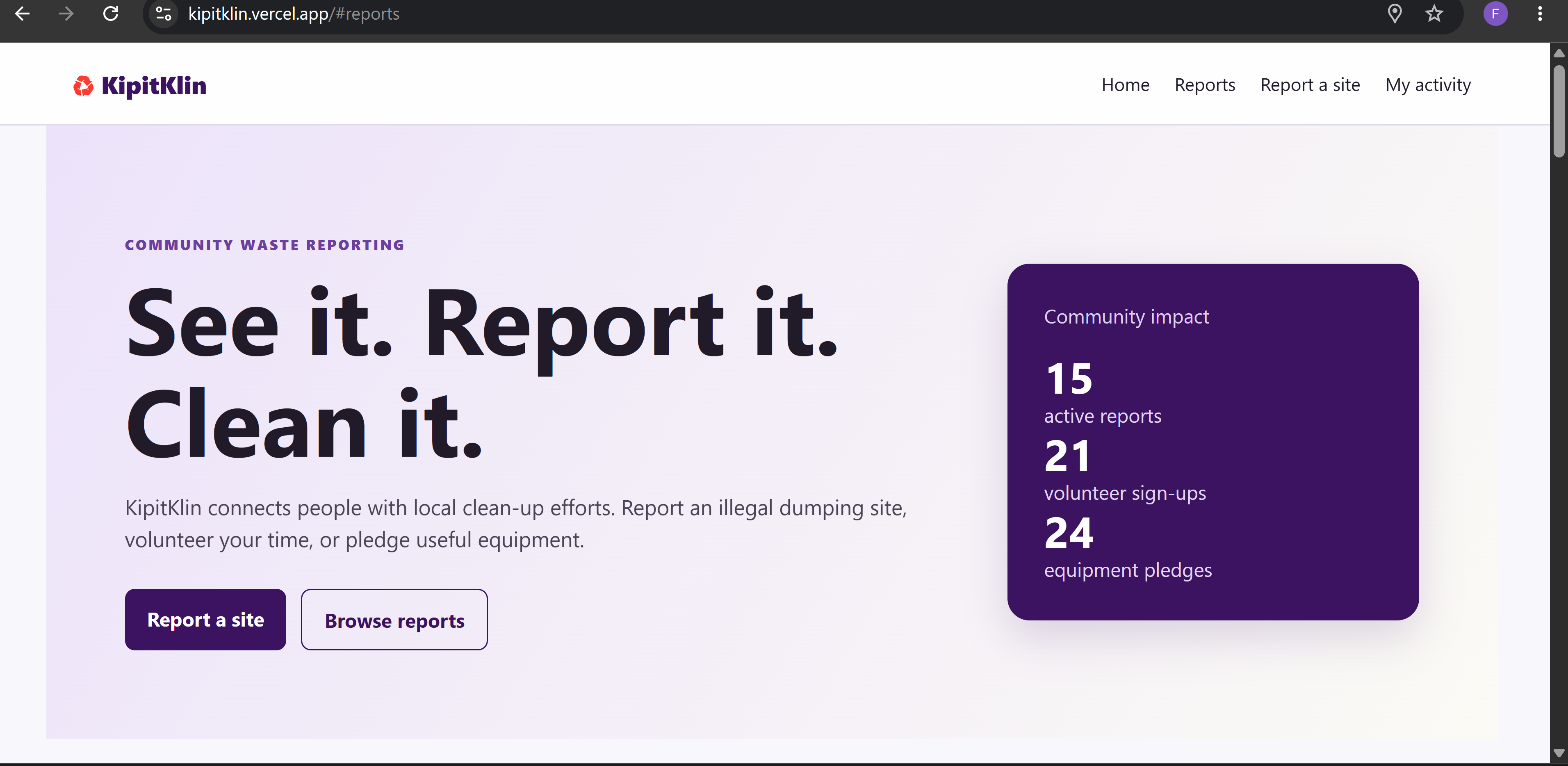
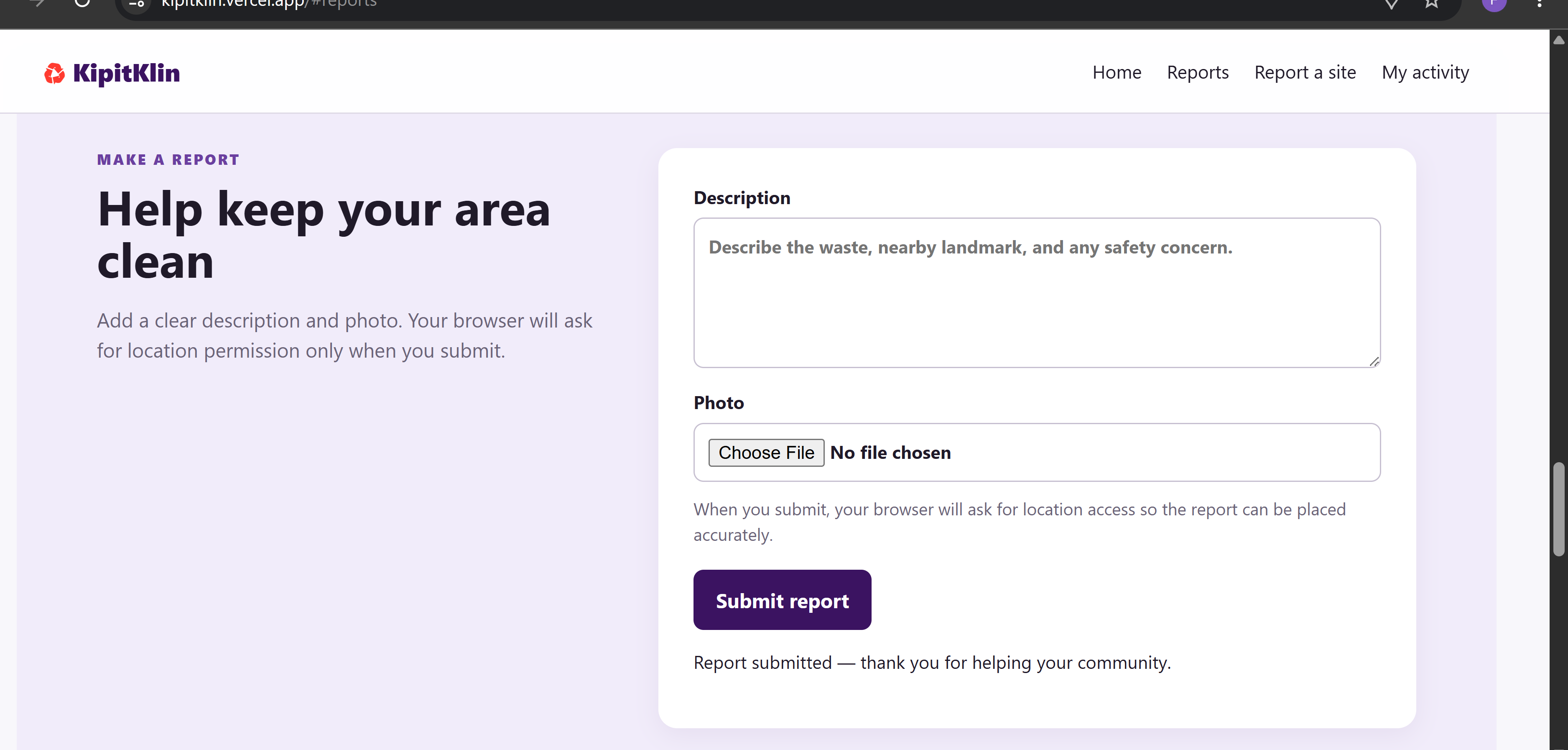
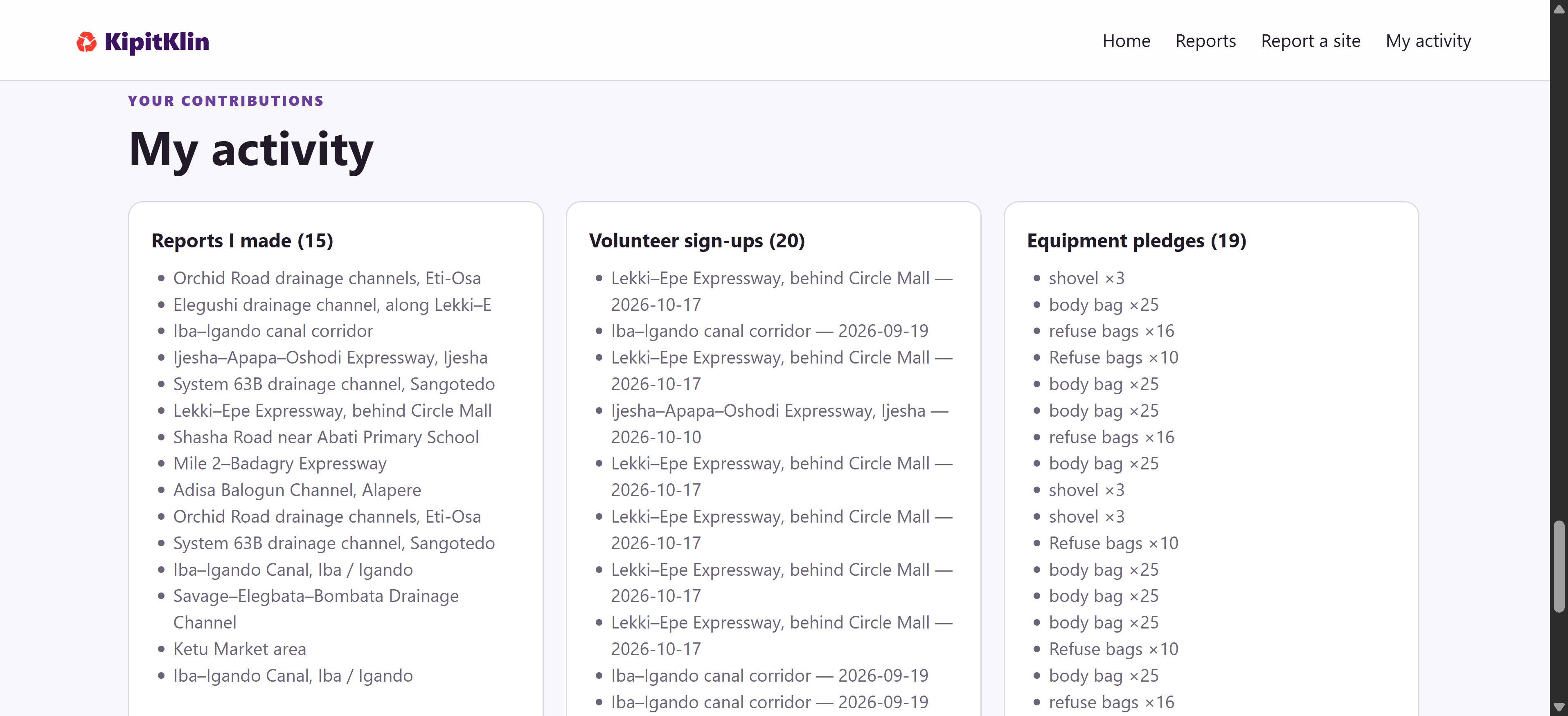
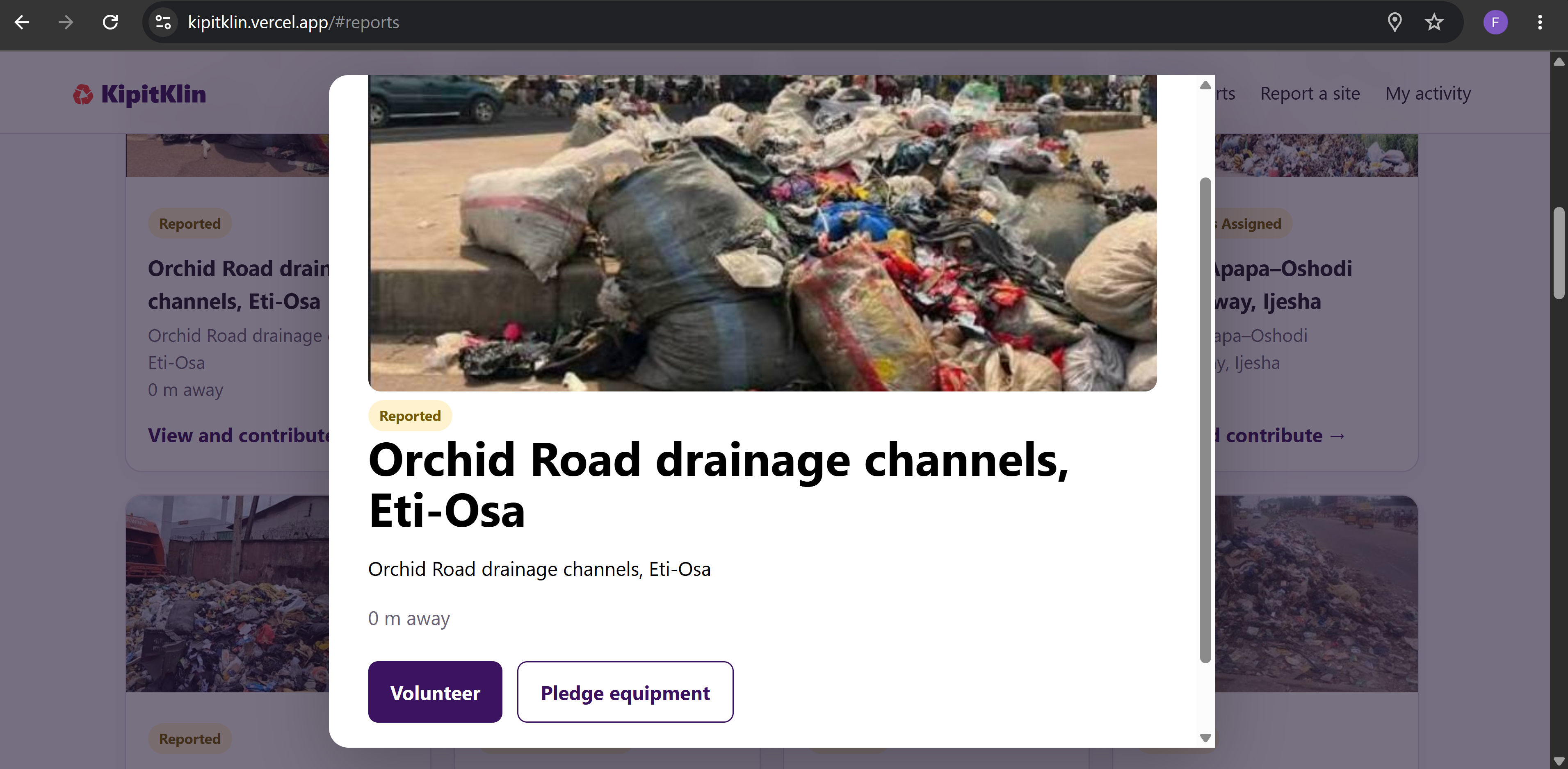
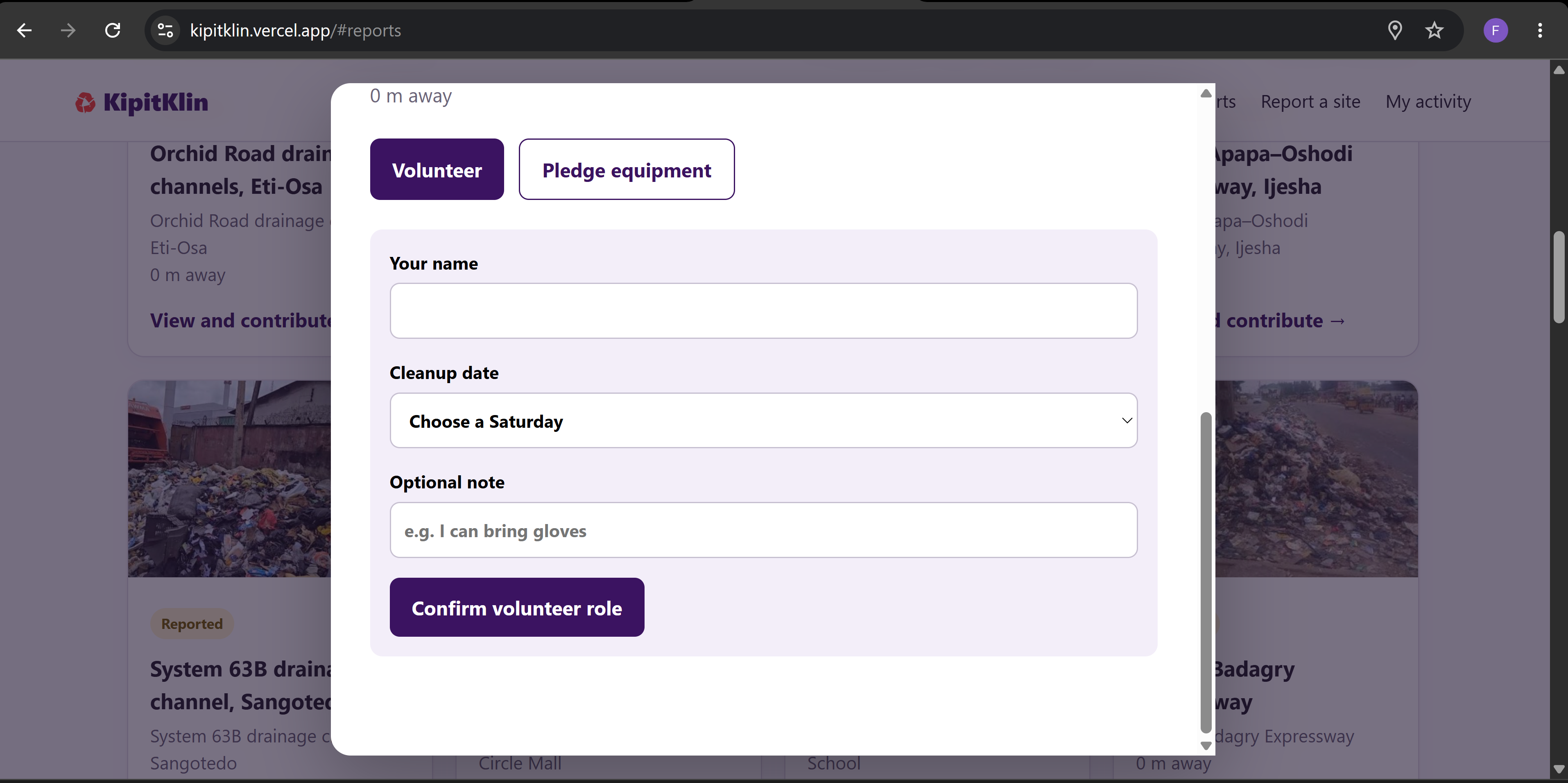
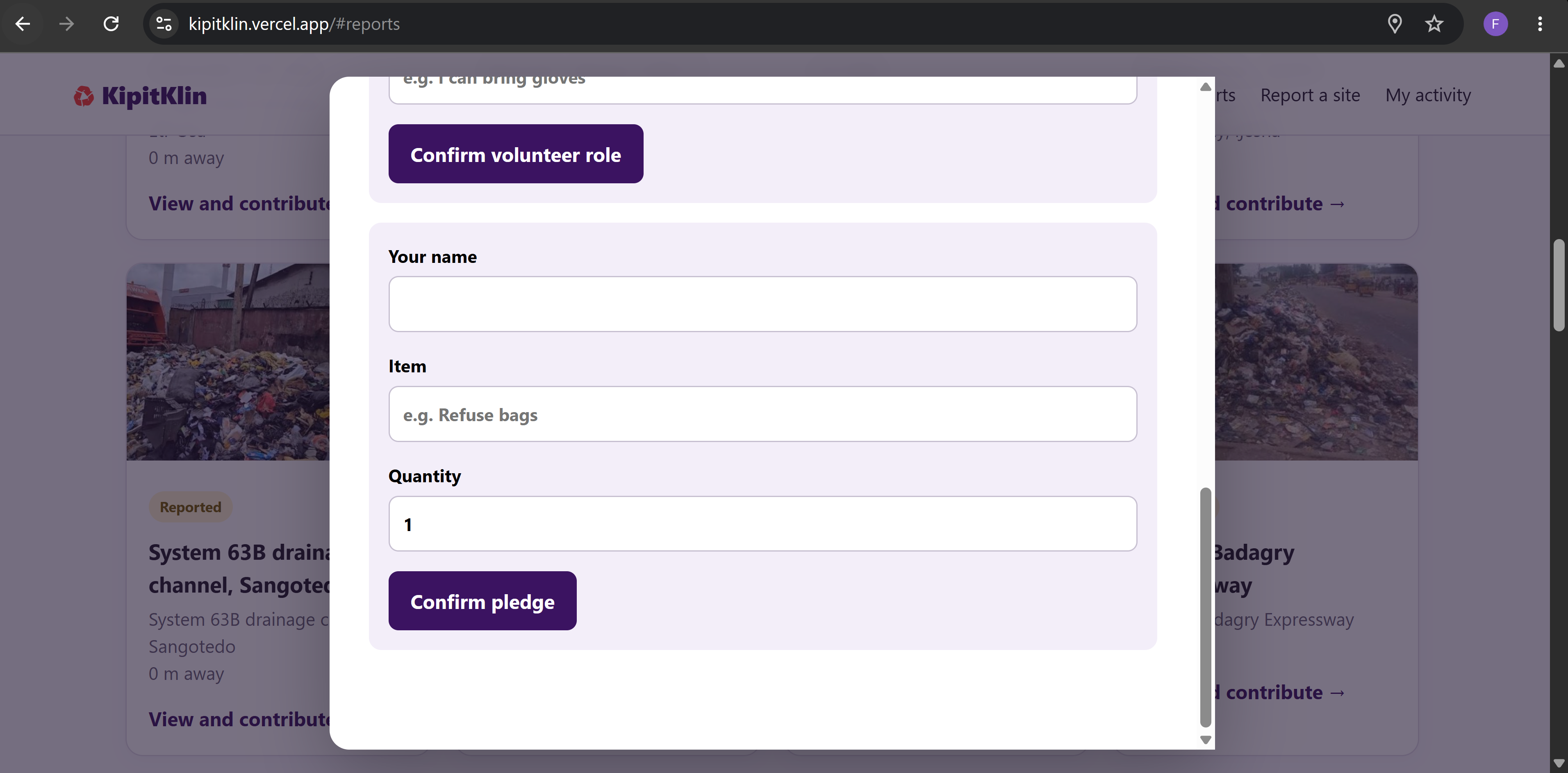
KipitKlin links illegal waste disposal sites to volunteers who can clean them up, donate equipment, or report new sites. Users report a dumpsite with a photo, description, and live location that is registered automatically based on the user's location when they reported, it instantly appears as a color-coded pin on a shared map. From there, anyone can view the site's details, sign up to volunteer for one of the fixed cleanup dates (the second and fourth Saturday of each month), or pledge equipment like gloves, masks, or bags for that specific site. The goal is a cleaner environment, free of litter, foul odour, and the flooding it causes when waste clogs drainage systems during rain, especially for a small community like mine
How I built it
I started by drafting a plan to solve the problem and then dividing it into phases which included:
- Report a site,
- View sites on a map
- Volunteer
- Pledge equipment, All before i started writing my code. From there I designed the core screens, defined a data model connecting users, sites, volunteer signups, and pledges, and picked my stack:
- React Native with Expo for a cross-platform app
- Firebase (Firestore, Authentication) for a real-time backend
- Cloudinary for photo storage and
- Google Maps for live location and pin tracking.
Every report a user submits writes directly to Firestore and appears on the map in real time. Volunteers pick from scheduled cleanup Saturdays rather than an open ended commitment, making it easy to coordinate group cleanups instead of one off efforts. I also validated the idea early with a survey before committing to the build.
Challenges I ran into
I ran into a lot of challenges that almost made me give up, especially working solo and having little time left till the deadline for my project submission. One of which was while testing my code the after i reported a site and hit the submit button it took a while to submit so I had to reduce the quality to make submission easier and faster for the user. Now although this might not be demonstrated in the demo, there's also a cleaned feature sited automatically get cleaned and deleted off the map after a month of the submission to reduce clutter on the map. To also provide accuracy I added a distance to any site you clicked on, that shows you how far the site is from where you stay so you can easily walk out of your house on a Saturday and volunteer to clean a site selected, this increases the probability if the user actually showing up to volunteer.
Accomplishments that I'm proud of
I carried out a survey, and 70% of respondents said they had actually considered volunteering to clean up sites like these, and would be even more motivated to participate if the right equipment were provided. That directly shaped my decision to make equipment pledging a core feature from day one. By the end of the build, every part of that vision was real and working:
- reporting
- live map pins
- volunteer signups tied to real dates and
- equipment pledges,
- all backed by a live database built solo, start to finish.
What I learned
A lot about code structure, real-time data flow between a mobile app and a cloud database, and building interfaces that stay simple even as more features get added underneath them. It was also my first time working with expo go and I learnt a lot about other tools I didn't know about before.
What's next for KipitKlin
To actually go out and run real volunteer clean-ups using the app, and to provide certificates of participation licensed by LAWMA, Lagos state's official sanitation authority, so volunteers get real, recognized credit for their contribution.
Built With
- cloudinary
- firebase
- firebaseauthentication
- firestore
- github
- google-maps
- react-native
- typescript
- vercel

Log in or sign up for Devpost to join the conversation.