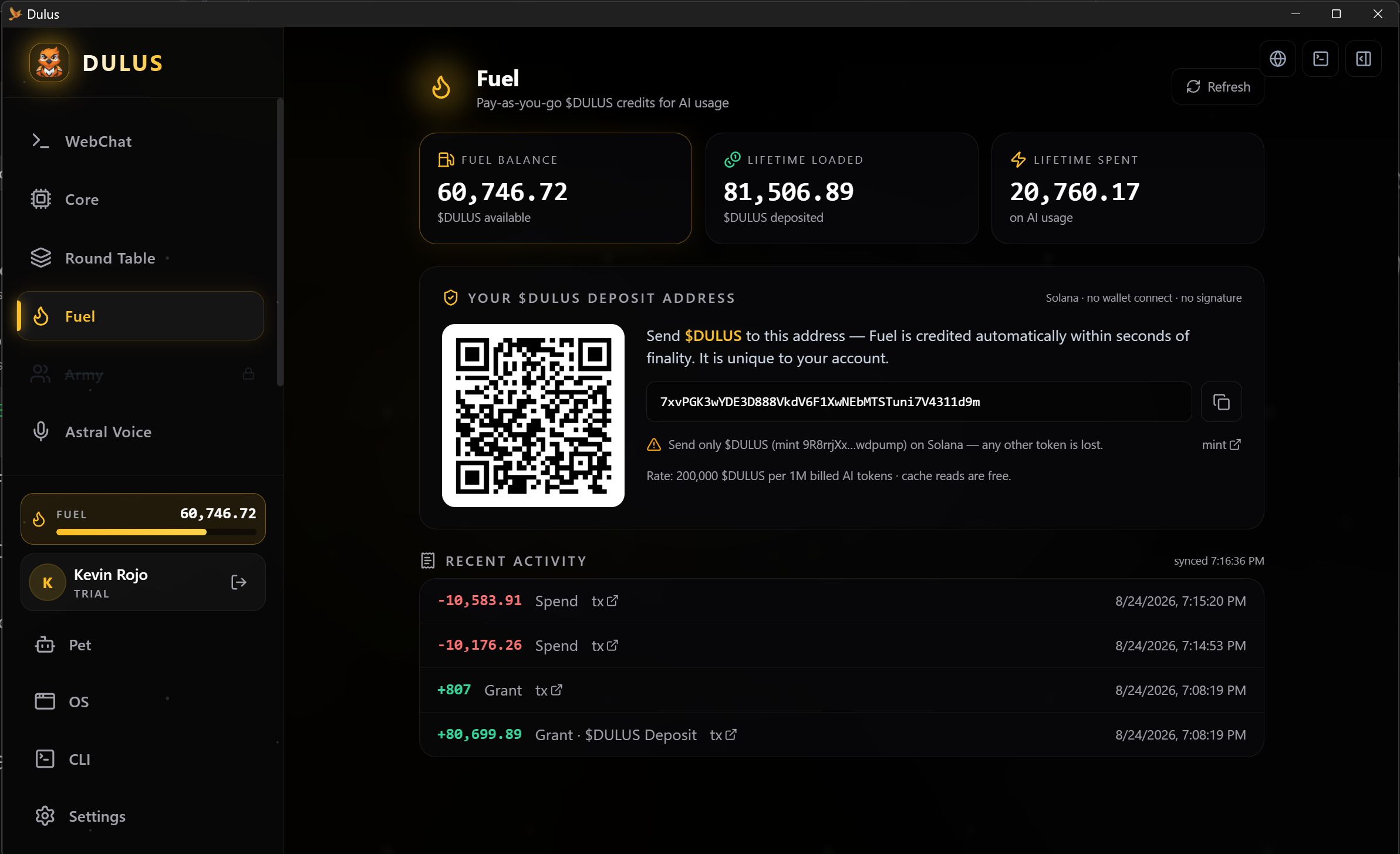
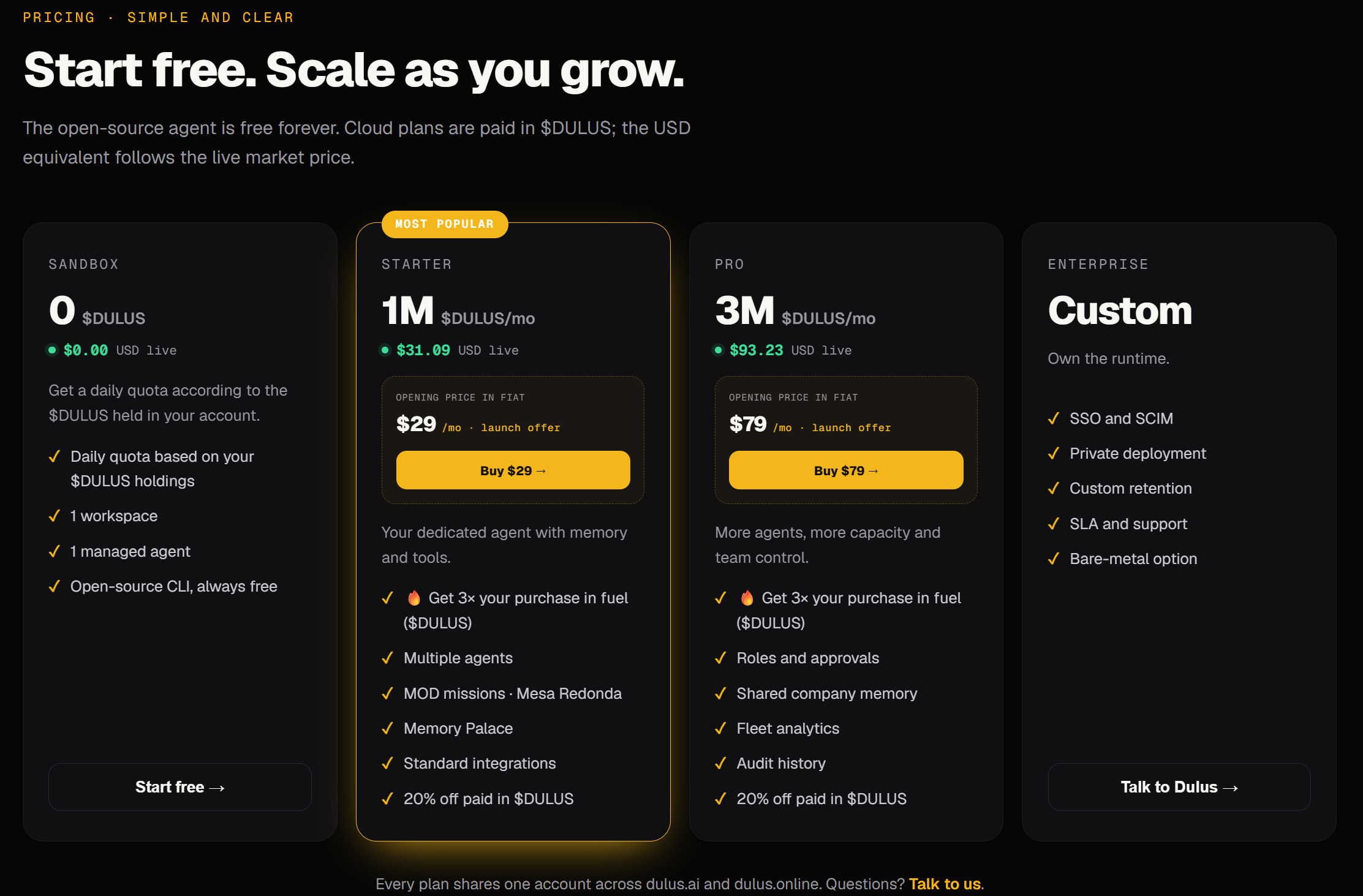
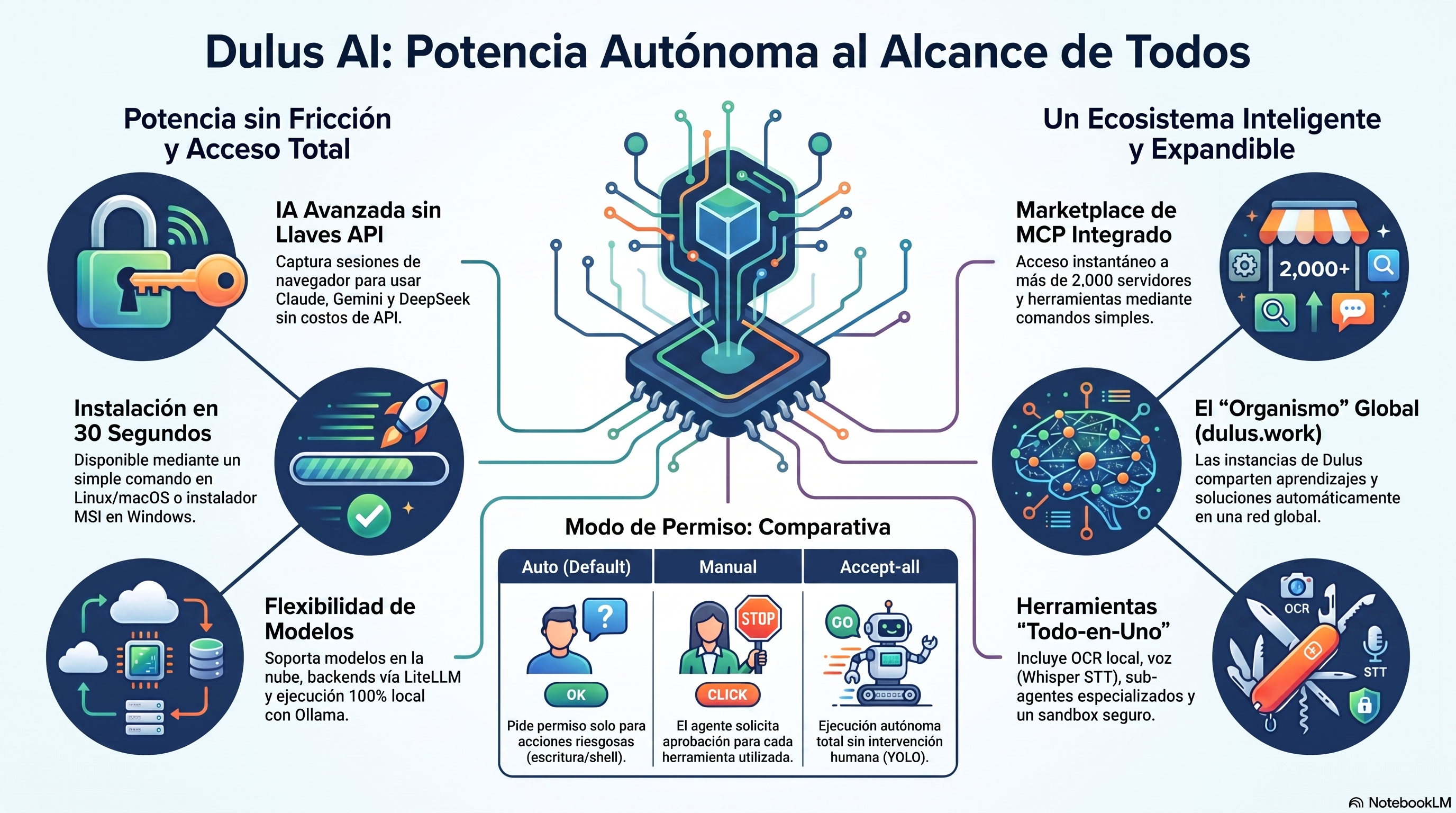
Inspiration Dulus Ai was inspired by a simple problem: most AI tools are built for people who already know how to code, speak English fluently, or have access to expensive infrastructure. But in LATAM, millions of businesses, creators, communities, and developers need practical AI agents that work where they already operate: WhatsApp, Telegram, Slack, and the browser. The name comes from Dulus dominicus, the Dominican palmchat, connecting the product to our Dominican and LATAM roots. Our goal is to build an AI agent OS that feels accessible, useful, and Spanish-first from day one. What it does Dulus Ai is an AI agent operating system that helps users create, run, and coordinate autonomous agents across tools and workflows. At its core, Dulus lets users: Run AI agents from a CLI. Connect agents to tools, commands, and workflows. Use multiple AI models through browser-based automation. Build agents for communities and businesses on WhatsApp and Telegram. Automate repetitive tasks like answering questions, managing communities, generating content, and coordinating operations. The bigger vision is to make AI agents affordable and usable for LATAM businesses, creators, and developers — especially those who need Spanish-first automation without enterprise complexity. How we built it We built Dulus Ai with a Python-based CLI and an agentic architecture that can connect to multiple models and tools. One of the main technical ideas is a browser bridge we call Harvest. Instead of depending only on paid APIs, Harvest can open model websites through browser automation, preserve sessions, and let the CLI interact with models like Gemini, Claude, Kimi, and DeepSeek. We also built an agent loop where model responses can include structured tool-call tags. Dulus parses those tags, runs commands locally, captures the output, and sends the result back to the model. This creates a functional agentic workflow using browser automation as the transport layer. The system combines: Python CLI tooling. Browser automation with Playwright. Multi-model routing. Tool-call parsing. Command execution. Early integrations for business/community use cases. Challenges we ran into The biggest challenge was making agents powerful without making them expensive or hard to use. Many agent systems depend heavily on paid APIs, complex setup, or English-first workflows. We wanted Dulus to be practical for builders and businesses in LATAM. Some of the main challenges were: Handling different model websites and session behaviors. Making browser-based model access stable enough for CLI workflows. Designing a safe and understandable tool-call loop. Balancing developer flexibility with business-friendly use cases. Keeping the product simple while building toward a much bigger agent OS vision. Translating advanced AI agent concepts into something usable for Spanish-speaking users. Accomplishments that we're proud of We are proud that Dulus Ai already works as more than just an idea. We built a real CLI, created a browser bridge for multiple AI models, and proved that agents can run through a low-cost, API-light workflow. We are especially proud of: Building Harvest for Gemini, Claude, Kimi, and DeepSeek. Creating an agentic loop that can execute commands from model output. Building from the Dominican Republic with a Spanish-first LATAM identity. Designing Dulus as both a developer tool and a future business automation platform. Keeping the product focused on affordability, accessibility, and real-world use cases. Turning Dulus from a concept into a working foundation for autonomous agents. What we learned We learned that the biggest opportunity is not just “more AI,” but more usable AI. Businesses and communities do not necessarily want complicated dashboards or abstract agents — they want automation that helps them sell, respond faster, manage operations, and save time. We also learned that: Spanish-first AI products are still underserved. LATAM businesses need practical workflows more than hype. Browser automation can unlock creative ways to access AI models. Agent systems need to be transparent, controllable, and easy to explain. Community platforms like WhatsApp and Telegram are essential distribution channels in LATAM. The best wedge for Dulus is combining developer credibility with business automation. What's next for Dulus Ai Next, we are focusing on turning Dulus Ai from a powerful technical foundation into a product people can use every day. Our next steps are: Launching WhatsApp and Telegram agents for communities and small businesses. Building simple SKUs for restaurants, creators, and community owners. Improving the CLI and multi-model agent experience. Adding better dashboards for configuring and monitoring agents. Expanding integrations with payments, business tools, and community platforms. Growing the developer community around Dulus as an open-source AI agent OS. Long term, we want Dulus Ai to become the Spanish-first operating system for AI agents — built from LATAM for the world.
https://dulus.ai/ https://github.com/KevRojo/Dulus https://github.com/Dulus-Ai/Dulus-bar
All the info:
https://x.com/KevRojo/articles
sorry guys, im soooo bad filling these apps or explaining my ideas hahaha god bless u ♥


Log in or sign up for Devpost to join the conversation.