-
-
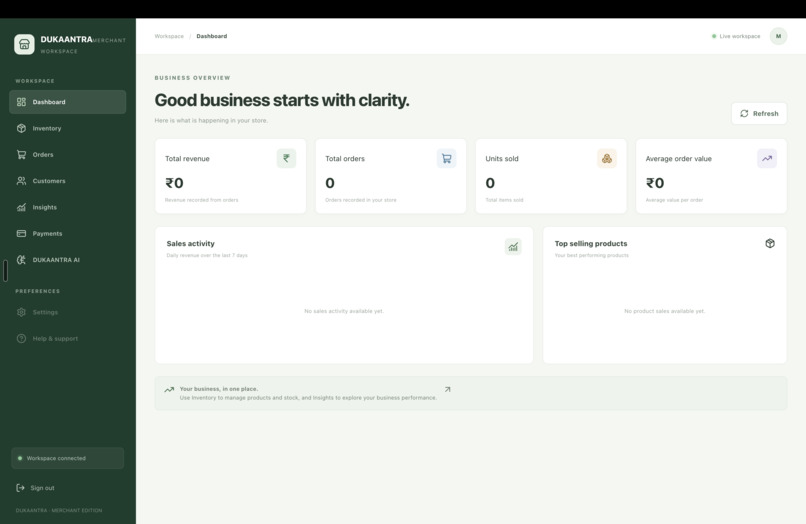
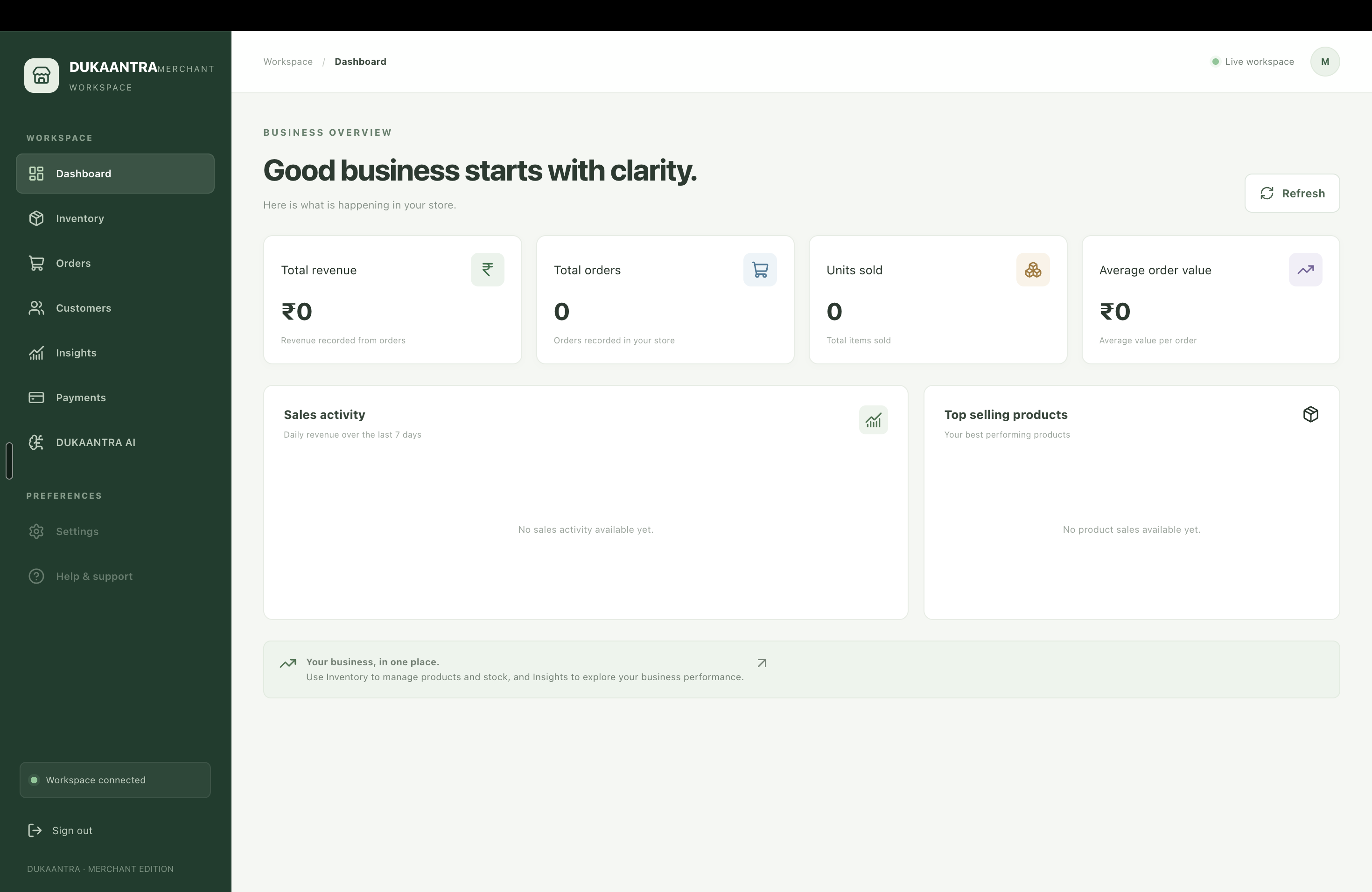
Dashboard
-
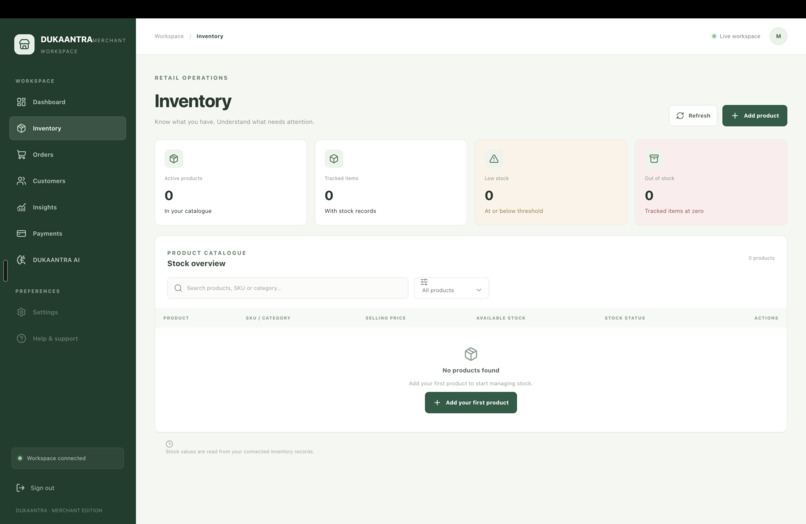
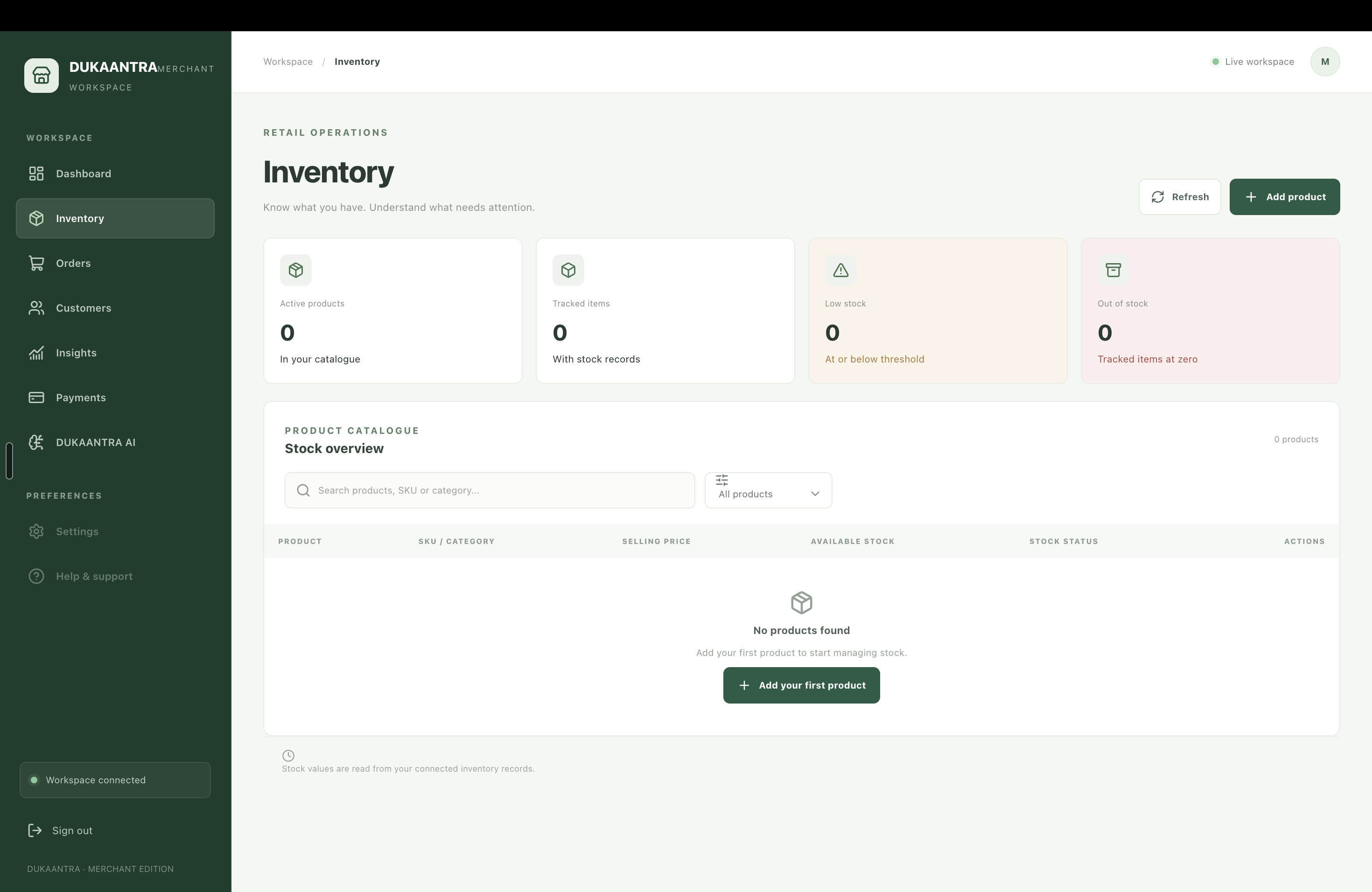
Inventary
-
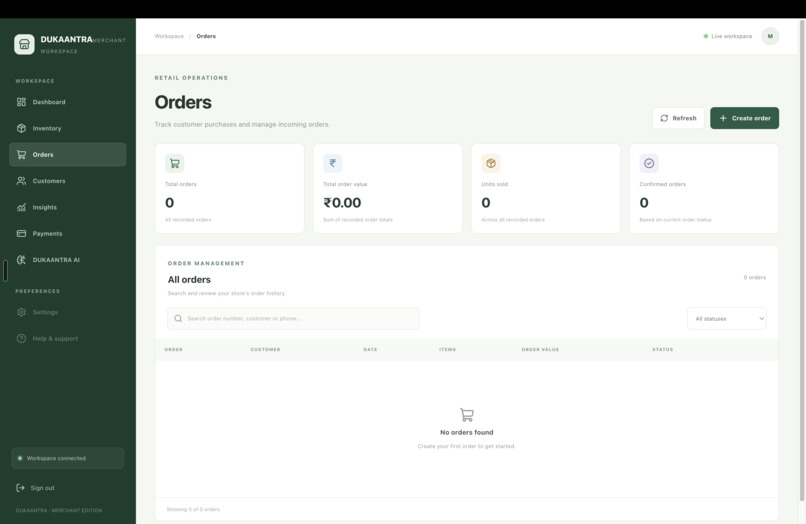
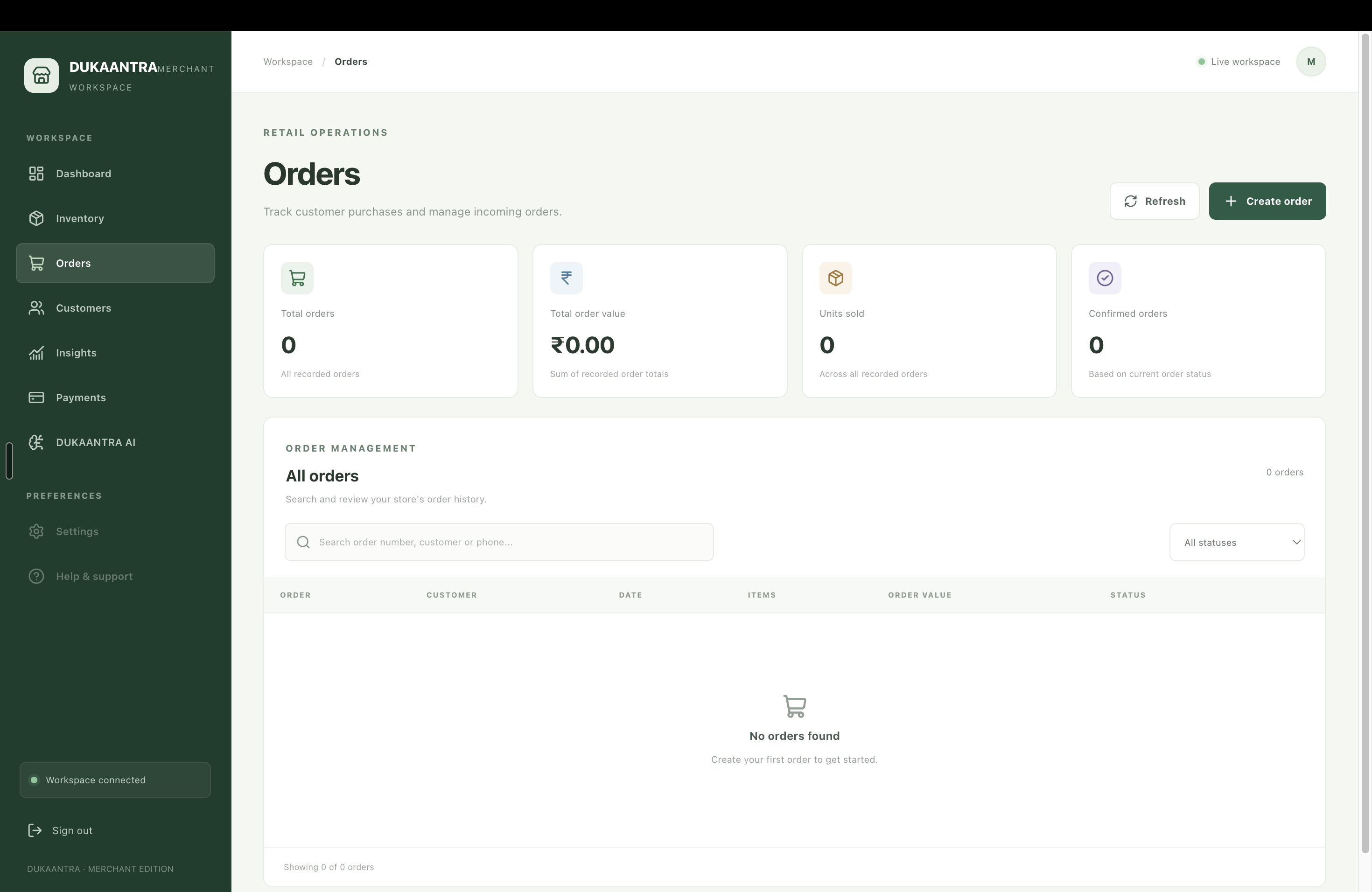
Orders
-
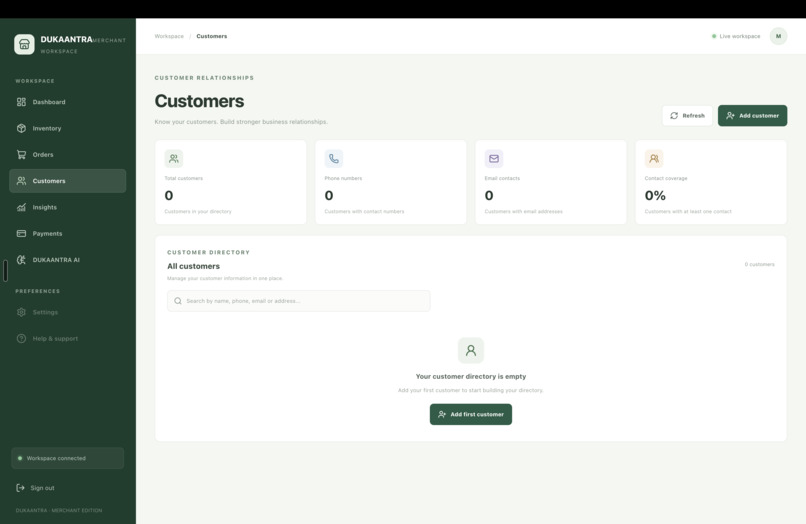
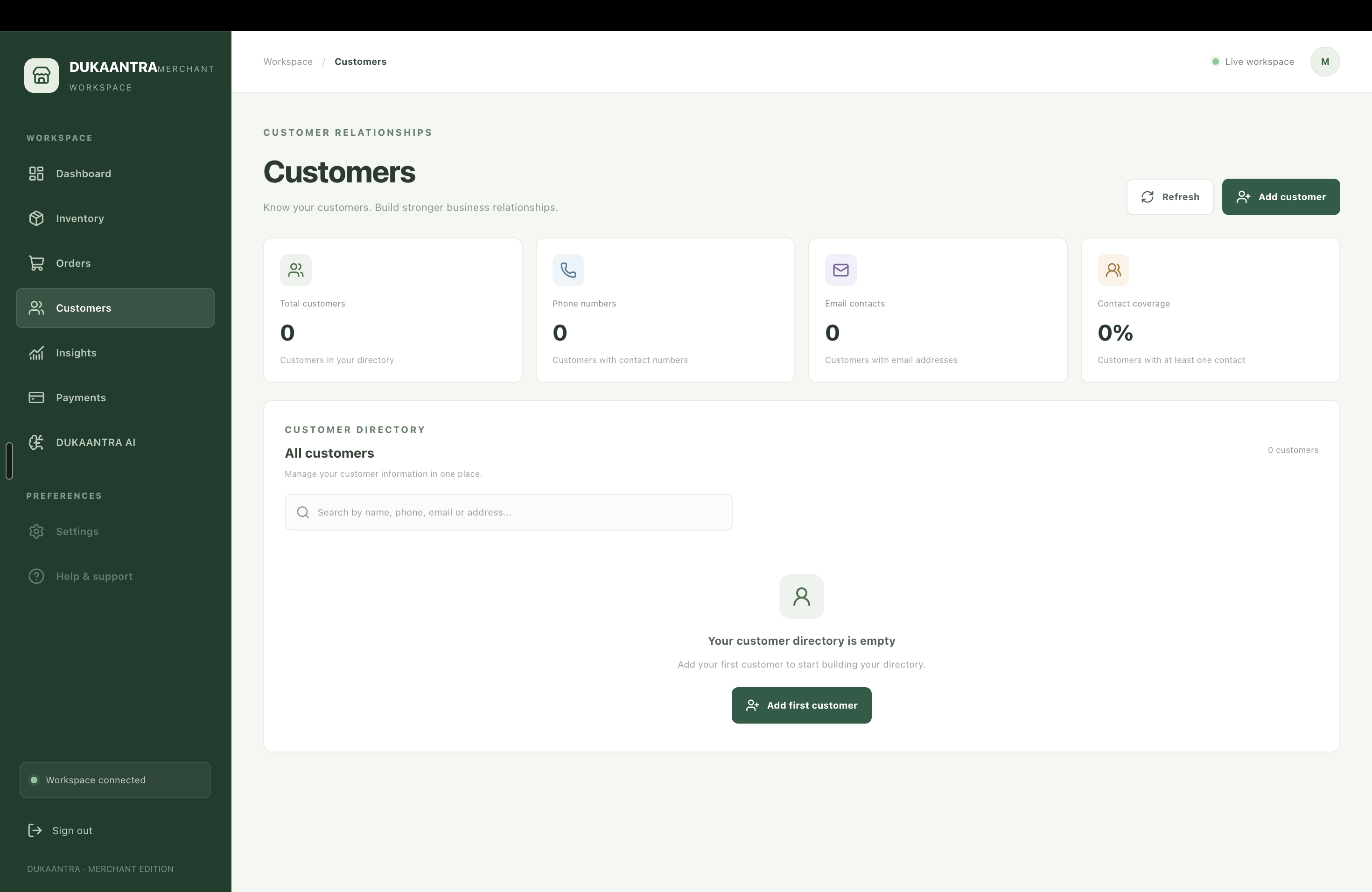
Customers
-
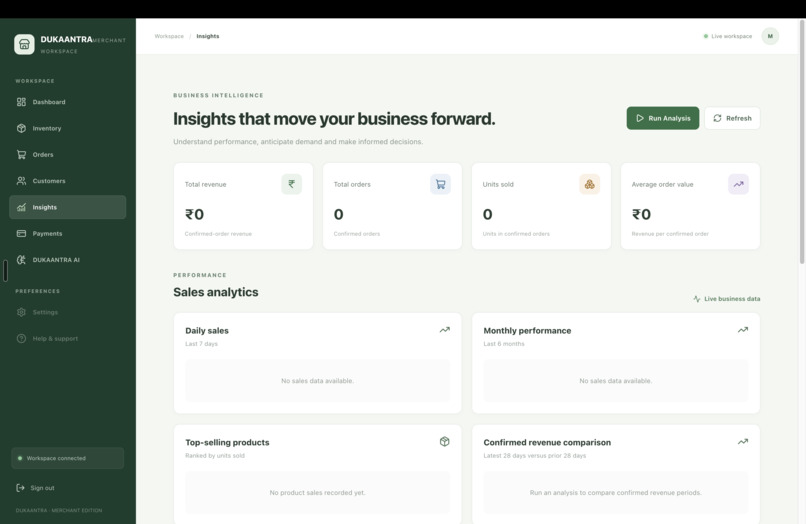
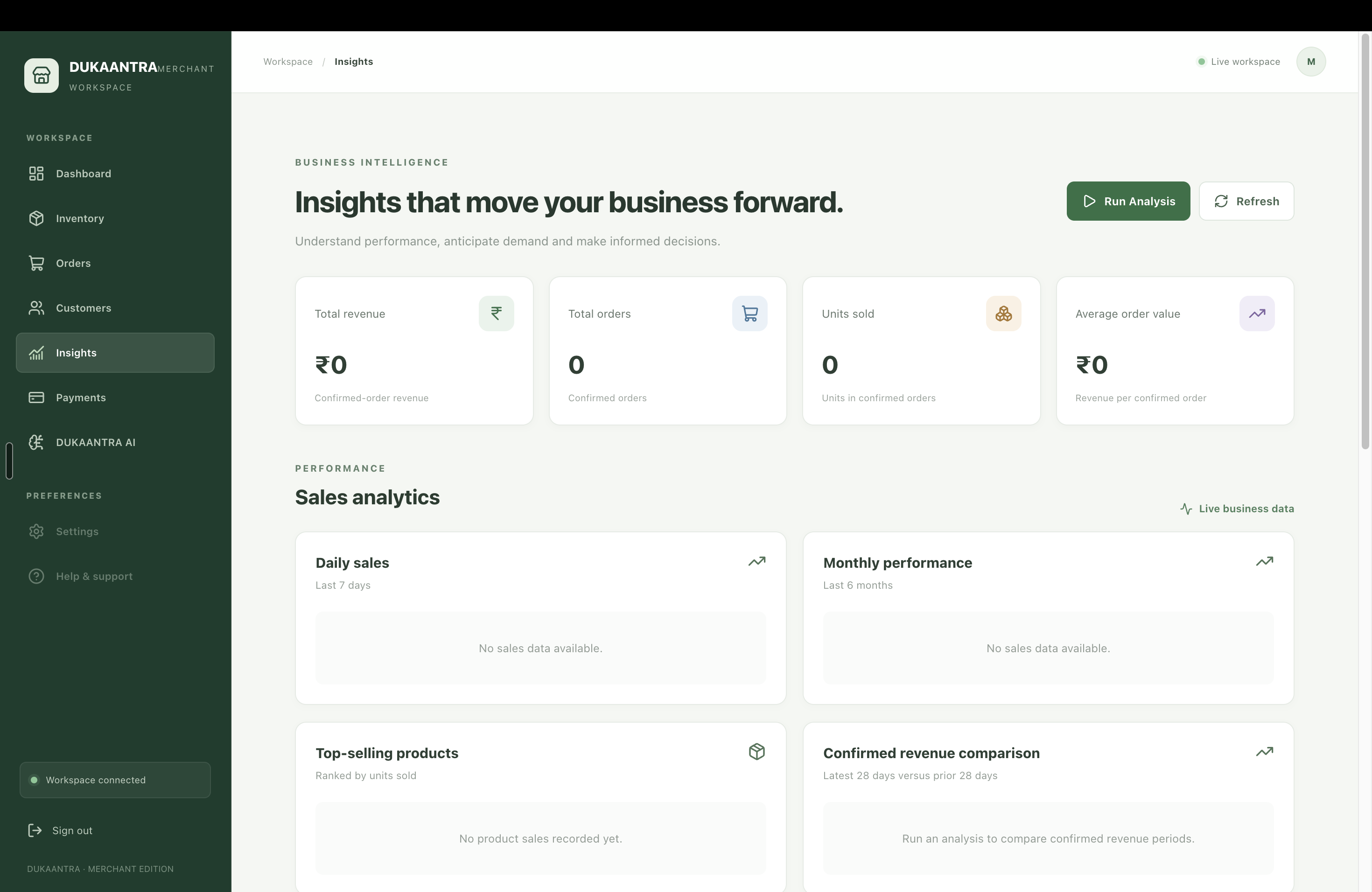
Insights
-
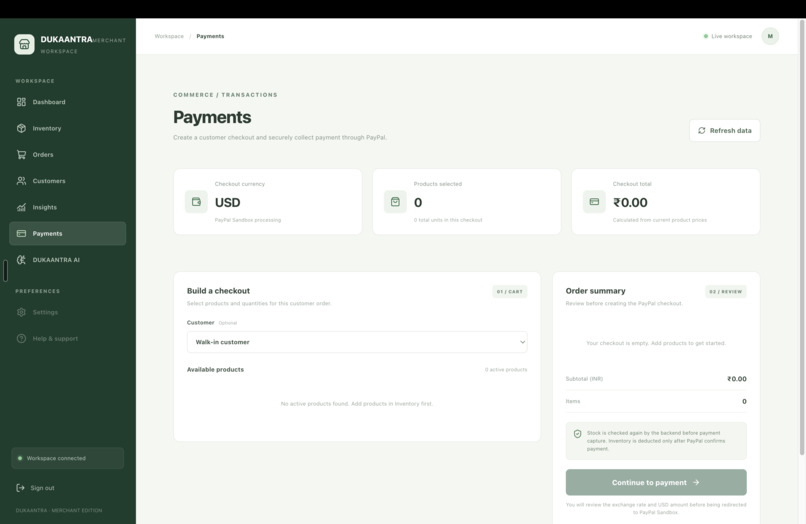
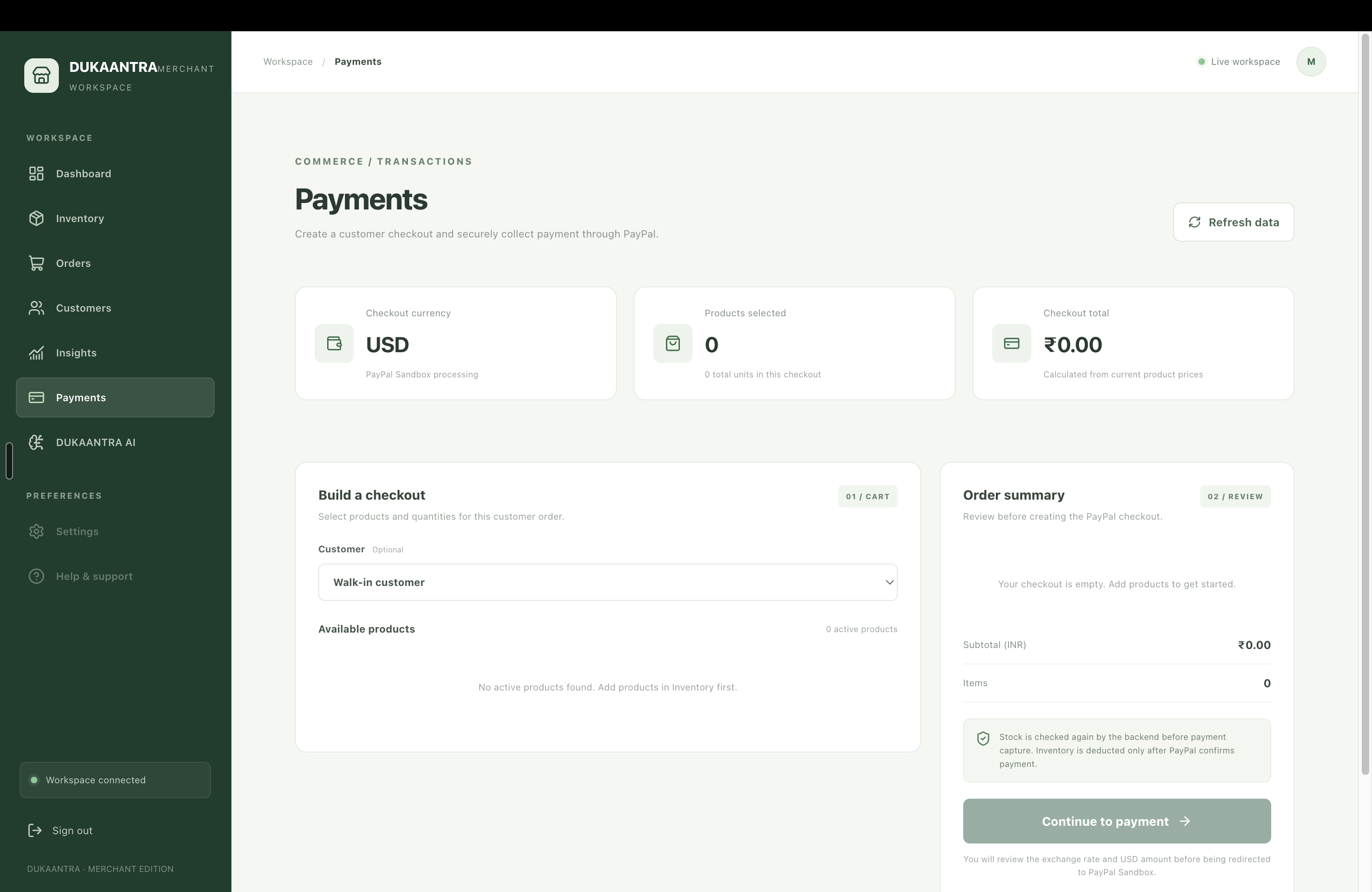
Payments
-
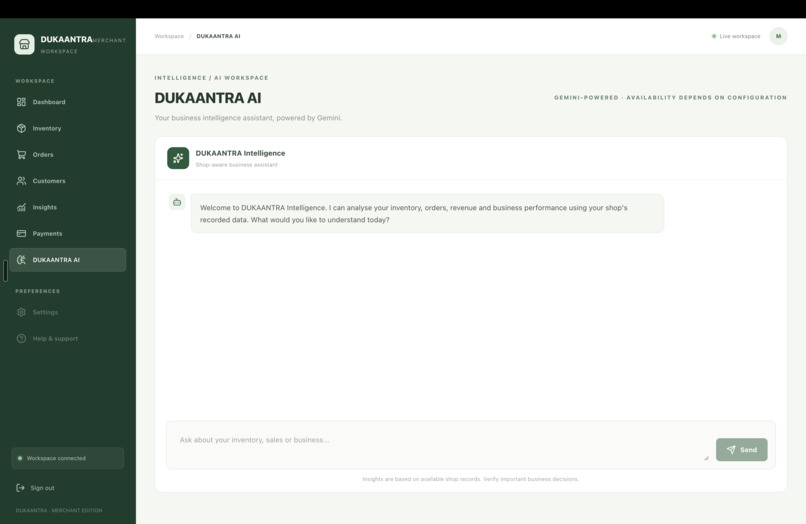
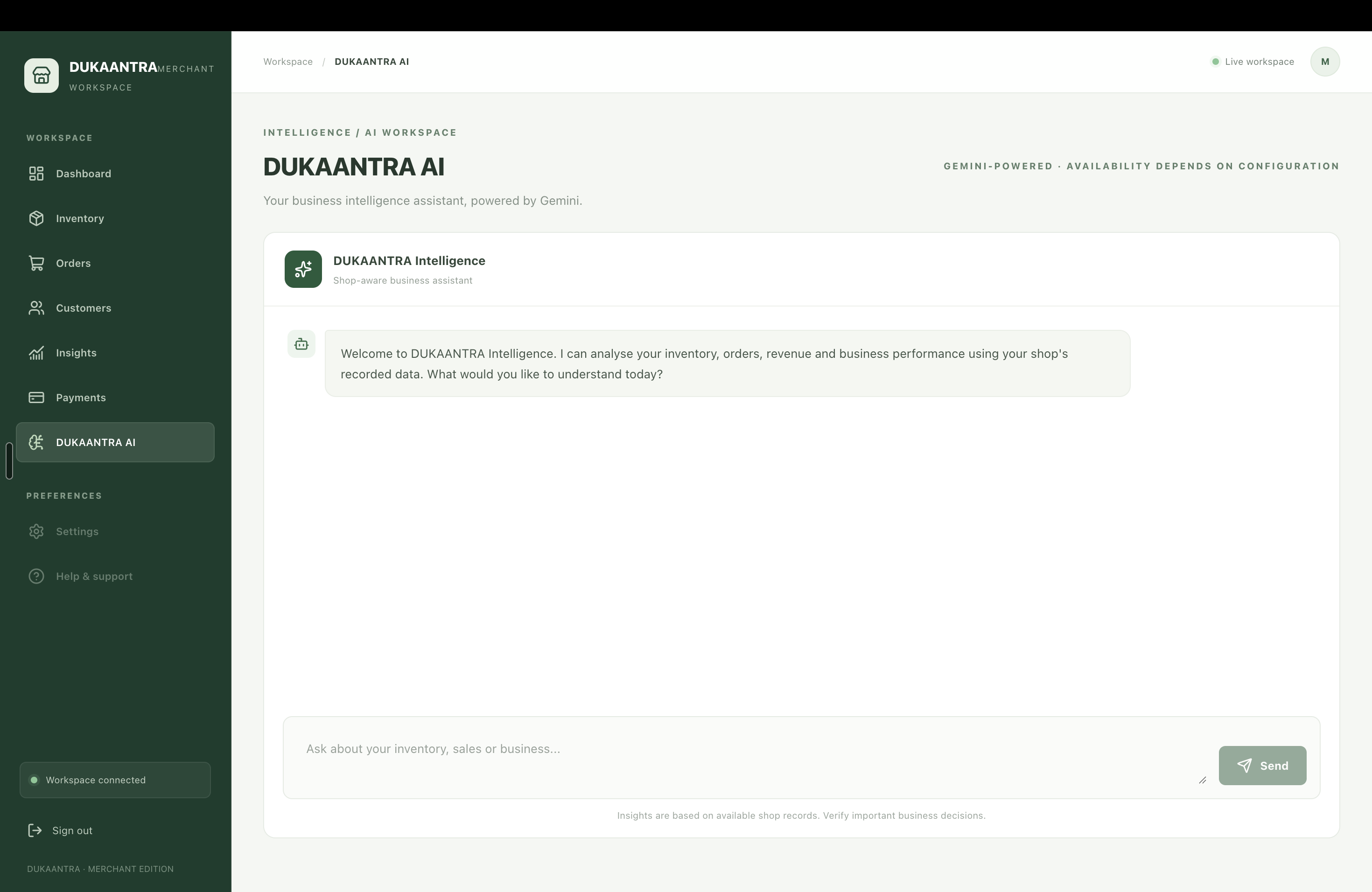
Dukaantra AI
Inspiration
The idea for DUKAANTRA came from thinking about how local shops and kirana stores manage their daily work. Many small shop owners still handle inventory, sales, customer details and orders manually or use different tools for each task. Keeping everything organised can become difficult, especially when the shop has many products and regular customers.
I wanted to build something that could bring these activities together in one place and make daily shop management easier. I also wanted to explore how AI agents could help with some of these tasks instead of making the project just another inventory management application. That is how I came up with DUKAANTRA.
What I Built
DUKAANTRA is a web application designed for local shop owners. It brings together features such as shop management, product and inventory tracking, customer records, order management, sales analytics and payment functionality.
I also developed an AI Workforce with different agents for inventory, sales and growth, and demand-related tasks. These agents are organised through an orchestrator so that different tasks can be handled in a structured way.
For the technical side, I used Next.js and React for the frontend, Python and FastAPI for the backend, and PostgreSQL for storing application data. I used SQLAlchemy for database operations and Alembic for database migrations.
I also worked on integrating PayPal Sandbox to explore the payment flow. I was able to test a USD-to-USD sandbox payment successfully. This helped me understand how payment integration works, although it is still a sandbox implementation and not a production-ready payment system.
How I Built It
I started by planning the main features and deciding how the frontend, backend and database would communicate with each other. I built the backend APIs first and worked on authentication, shop onboarding, product management, inventory, customers and orders.
After that, I connected the frontend to the backend and started testing the complete flow. One important part of the project was making sure that each shop could access only its own information. I worked on shop ownership checks and authentication to handle this.
I also developed the AI agent structure and baseline machine learning functionality. The agents are intended to help shop owners understand inventory and sales-related tasks. I added safeguards for situations where there is not enough data to produce a meaningful result.
Finally, I deployed the frontend and backend separately and connected them. I used Vercel for the frontend and Render for the backend.
Challenges I Faced
One of the biggest challenges was making sure that different parts of the application worked together correctly. For example, when an order is placed, the related inventory and sales information must remain consistent.
I also had to work on preventing duplicate order requests, handling database migrations, and making sure that one shop's data was not accessible to another shop.
Deployment was another learning experience. Even though the application worked locally, connecting the deployed frontend and backend caused issues, especially with CORS configuration. I had to investigate the problem, correct the configuration and test the connection again.
Payment integration also took some effort because sandbox testing helped me understand that payment behaviour can depend on the account and currency combination being used.
Some parts of the AI integration are still being worked on. The Gemini provider integration is present in the codebase, but its production configuration is not complete yet, so I have not presented it as a working feature in the deployed application.
What I Learned
Building DUKAANTRA taught me much more than just writing code. I got practical experience with full-stack development, REST APIs, database design, authentication, AI-agent workflows, payment integration and deployment.
I also learned that having a feature in the code does not automatically mean it is fully working. Testing, handling errors and checking real behaviour are equally important.
There were times when things did not work as expected, but debugging those problems helped me understand how the different parts of a real application depend on each other.
What's Next
I would like to continue improving DUKAANTRA by completing the remaining AI integrations, improving the agents, testing more payment scenarios and making the analytics more useful as more shop data becomes available.
This project has been a valuable learning experience for me because I got to take an idea, build the application step by step, face real development problems and deploy it as a working web application.
Built With
- ai-agents
- alembic
- artificial-intelligence
- css
- fastapi
- javascript
- machine-learning
- next.js
- paypal
- postgresql
- python
- react
- rest-api
- sqlalchemy
- tailwind
- typescript

