
Inspiration
I noticed something uncomfortable about my own to-do lists: writing a task down felt like progress. The list got longer, I felt productive, and nothing actually moved. Every task app I tried made capturing tasks effortless — but none of them made me decide anything.
That became DuesDay's core idea:
Written is not done. Decided is begun.
What it does
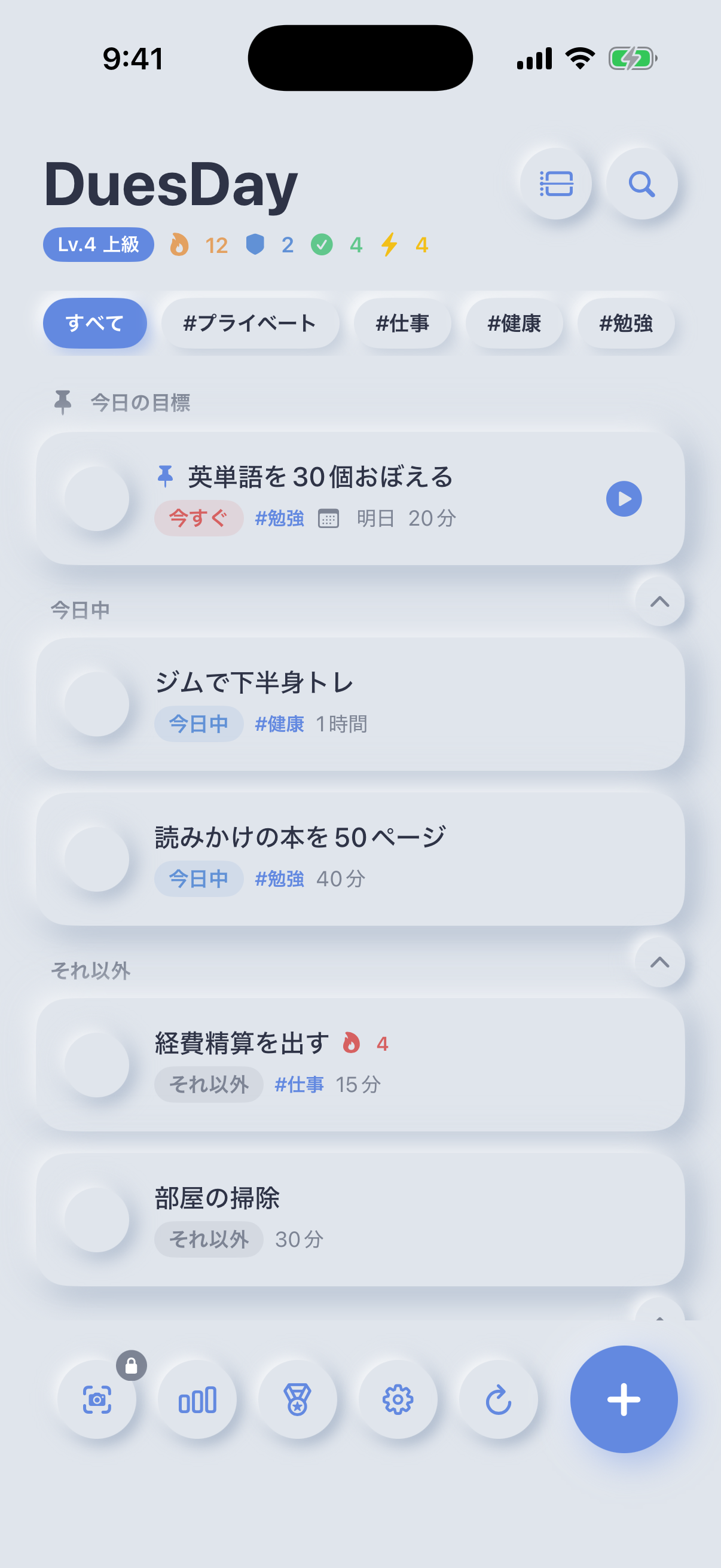
DuesDay is an anti-procrastination task app for iOS. Before you can open your task list each day, you go through a short swipe ritual that sorts every task:
- → Right: Now
- ← Left: In a few minutes
- ↑ Up: Today
- ↓ Down: Not today — with a required reason
Your list only unlocks after every task has a decision. The "down" swipe is intentionally the only one with friction: you can postpone, but you have to say why. That one small step turns vague avoidance into a conscious choice.
Getting tasks in and out of DuesDay is just as easy:
- Photo to Tasks — take a photo and turn it into tasks instantly
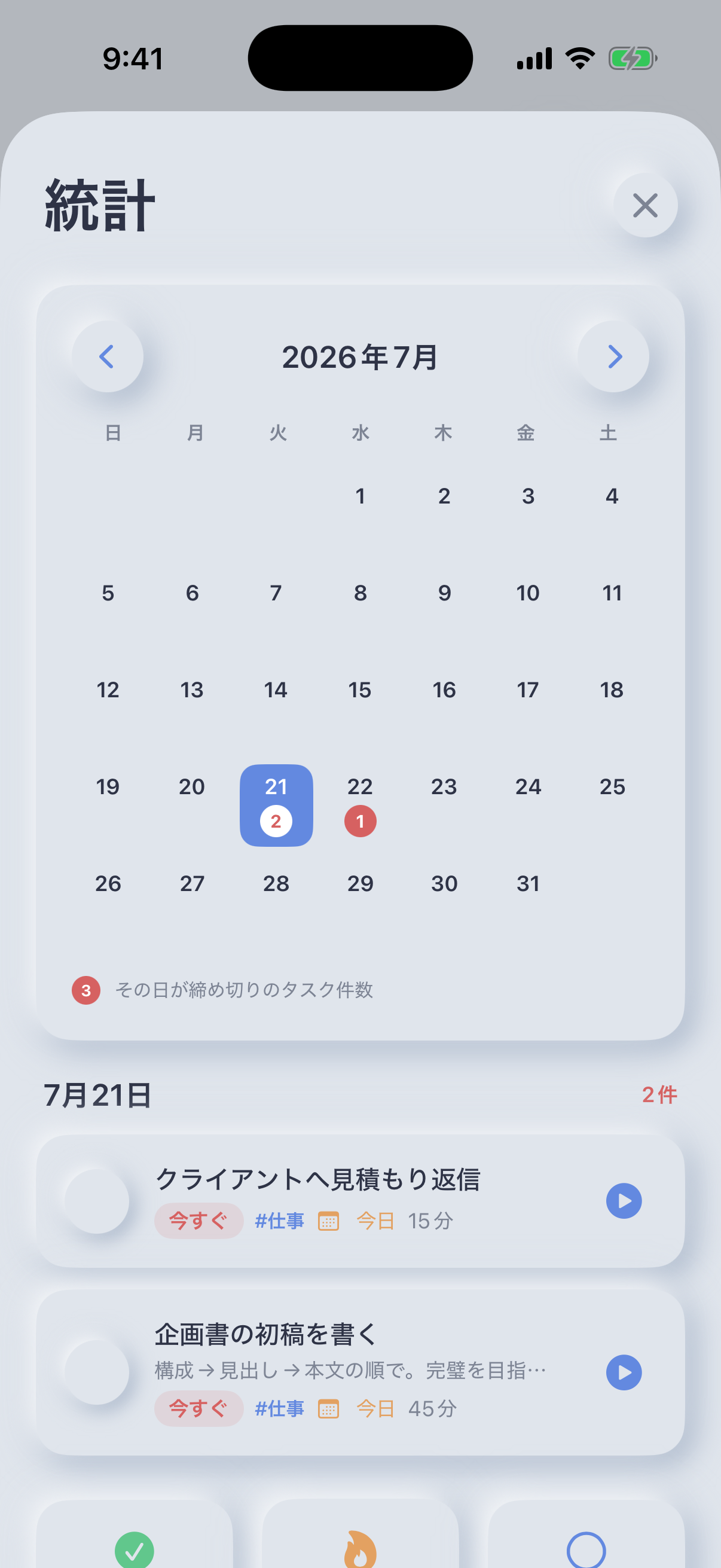
- Google Calendar sync — decided tasks land directly on your schedule
How we built it
- SwiftUI + SwiftData for the app and local persistence (iOS 17+)
- WidgetKit and Live Activities so today's decided tasks stay visible outside the app
- Google Calendar integration to connect decisions with the user's real schedule
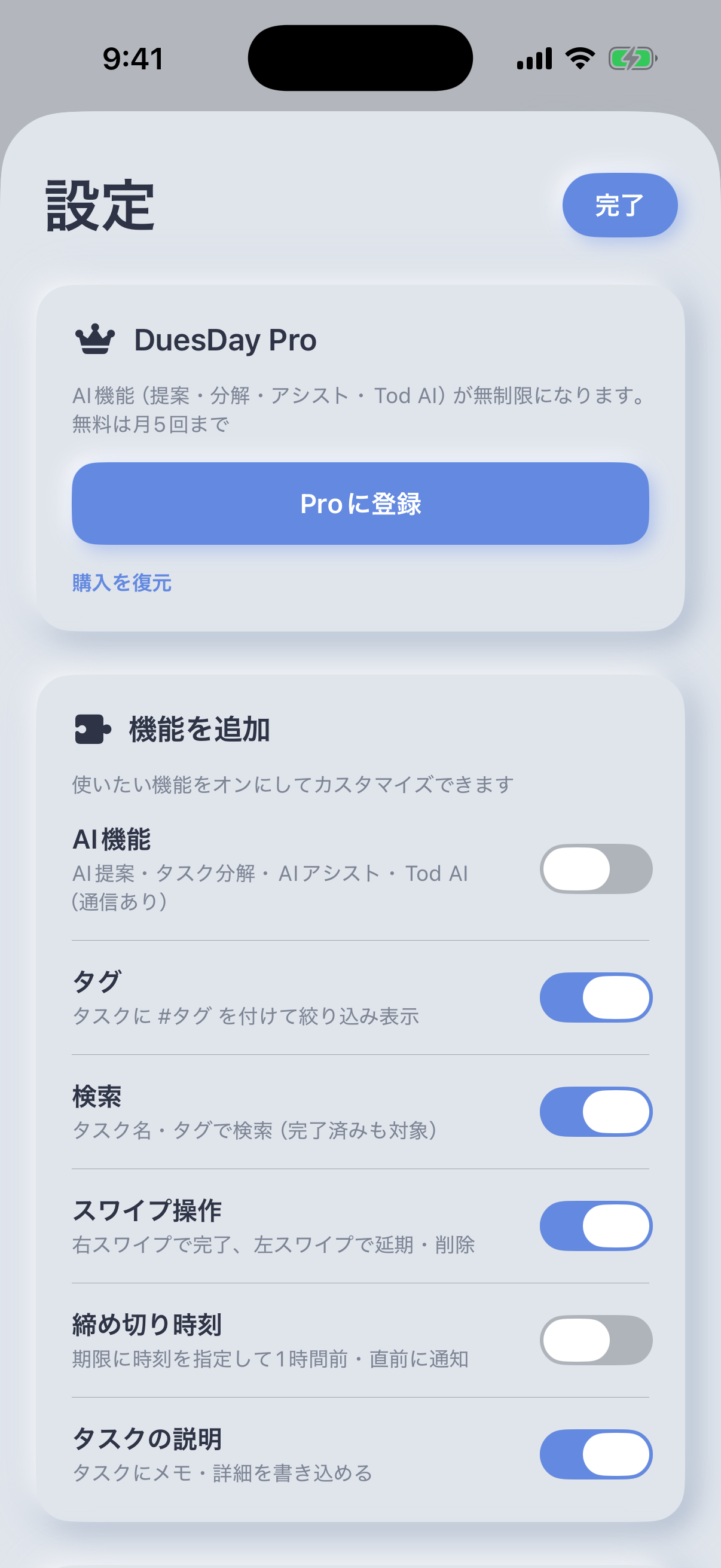
- RevenueCat for in-app purchases — v1.0 is fully free with a tip jar, and a Pro subscription with a 7-day free trial is already implemented behind a feature flag for the next release
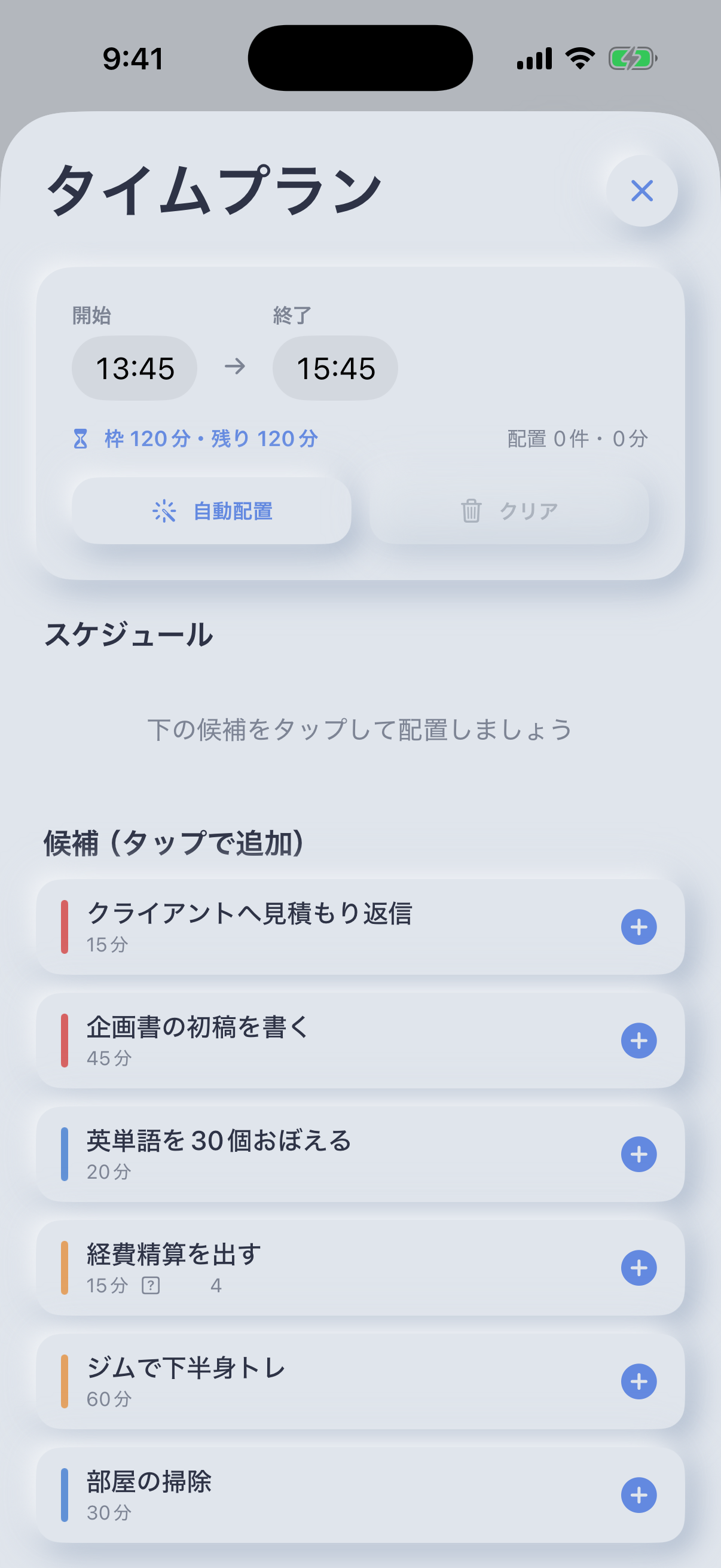
- A custom neumorphic UI with a periwinkle accent, designed so the daily ritual feels calm rather than punishing
- All copy written natively in both Japanese and English, with Japanese as the primary market
Challenges we ran into
- Designing a gate that doesn't feel like a punishment. Blocking access to your own list is a strong move. Getting the swipe gestures, animation, and wording right took many iterations so it feels like a ritual, not a lock screen.
- Naming. I went through 25+ candidates before landing on DuesDay — "dues" (what you owe yourself) plus "day."
- Bilingual copy. Short, rhythmic lines work very differently in Japanese and English, so every message was written for both languages rather than translated.
Accomplishments that we're proud of
- Shipping v1.0 to the App Store as a solo student developer
- Turning a behavioral idea — commit before you act — into a single, simple daily interaction
- Making capture effortless with Photo to Tasks and Google Calendar sync, so the only real effort left is the decision itself
- Keeping the core experience completely free, while building a RevenueCat-powered monetization path (tip jar now, Pro subscription next) that doesn't compromise it
- A distinctive neumorphic design that makes a productivity app feel calm instead of stressful
What we learned
- Friction placed in the right spot changes behavior more than any reminder does.
- For a gesture-driven app, real device recordings communicate the experience far better than generated footage.
- Launching free and building the subscription behind a feature flag let me ship sooner without locking in pricing decisions too early.
What's next for DuesDay – Anti-Procrastination ToDo
- v1.1 with AI features and the Pro subscription (7-day free trial)
- Refining the daily ritual based on feedback from early users
- Growing the Japanese user base first, then expanding to English-speaking markets

Log in or sign up for Devpost to join the conversation.