-
-
DueGuide - Main page 1
-
DueGuide - Main page 2
-
DueGuide - Main page 3
-
DueGuide - Main page 4
-
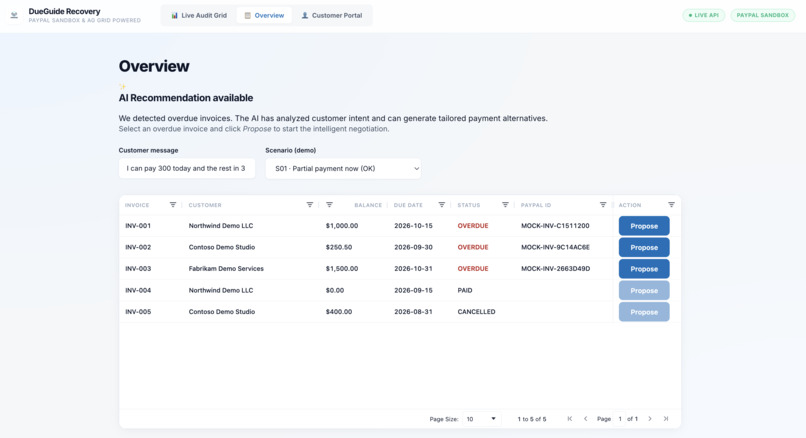
Overview - DueGuide 5
-
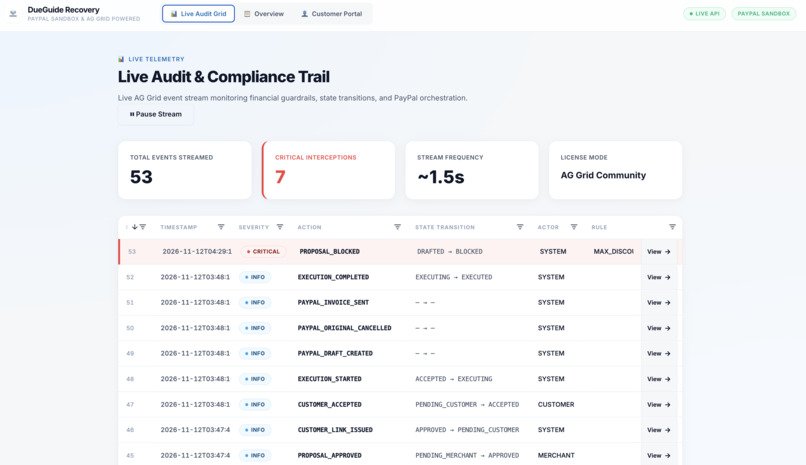
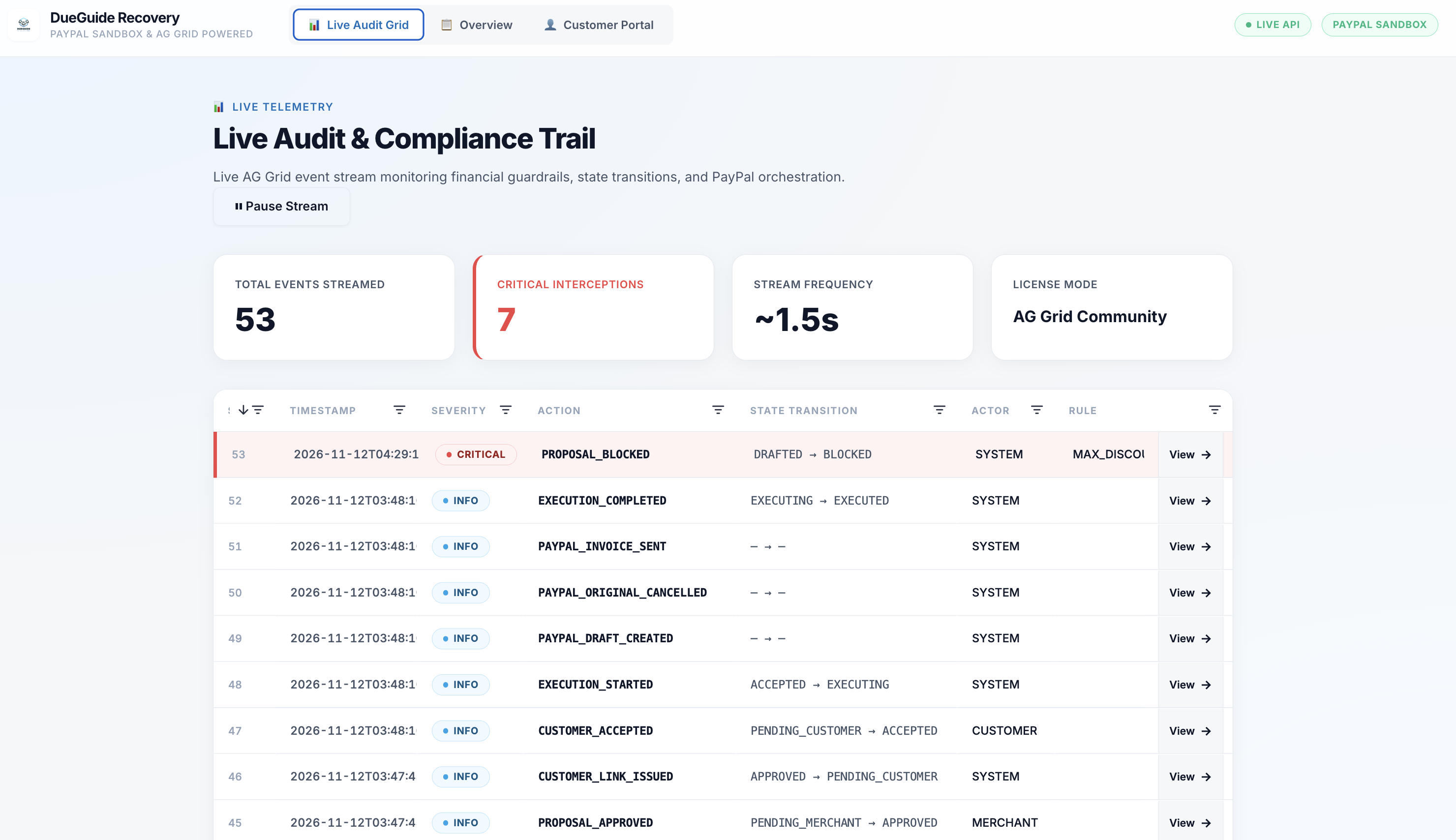
Live Audit - DueGuide 6
-
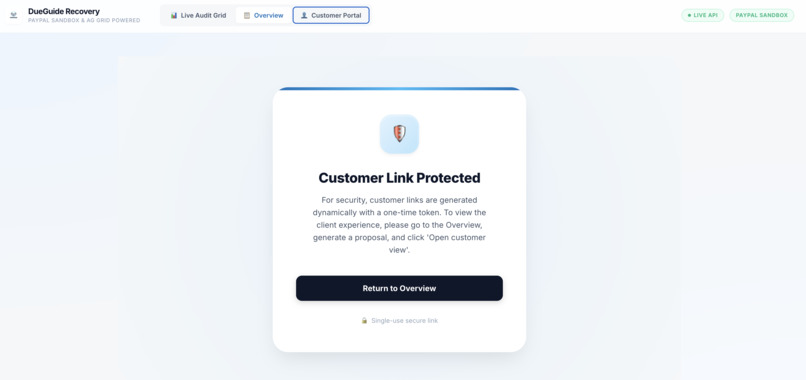
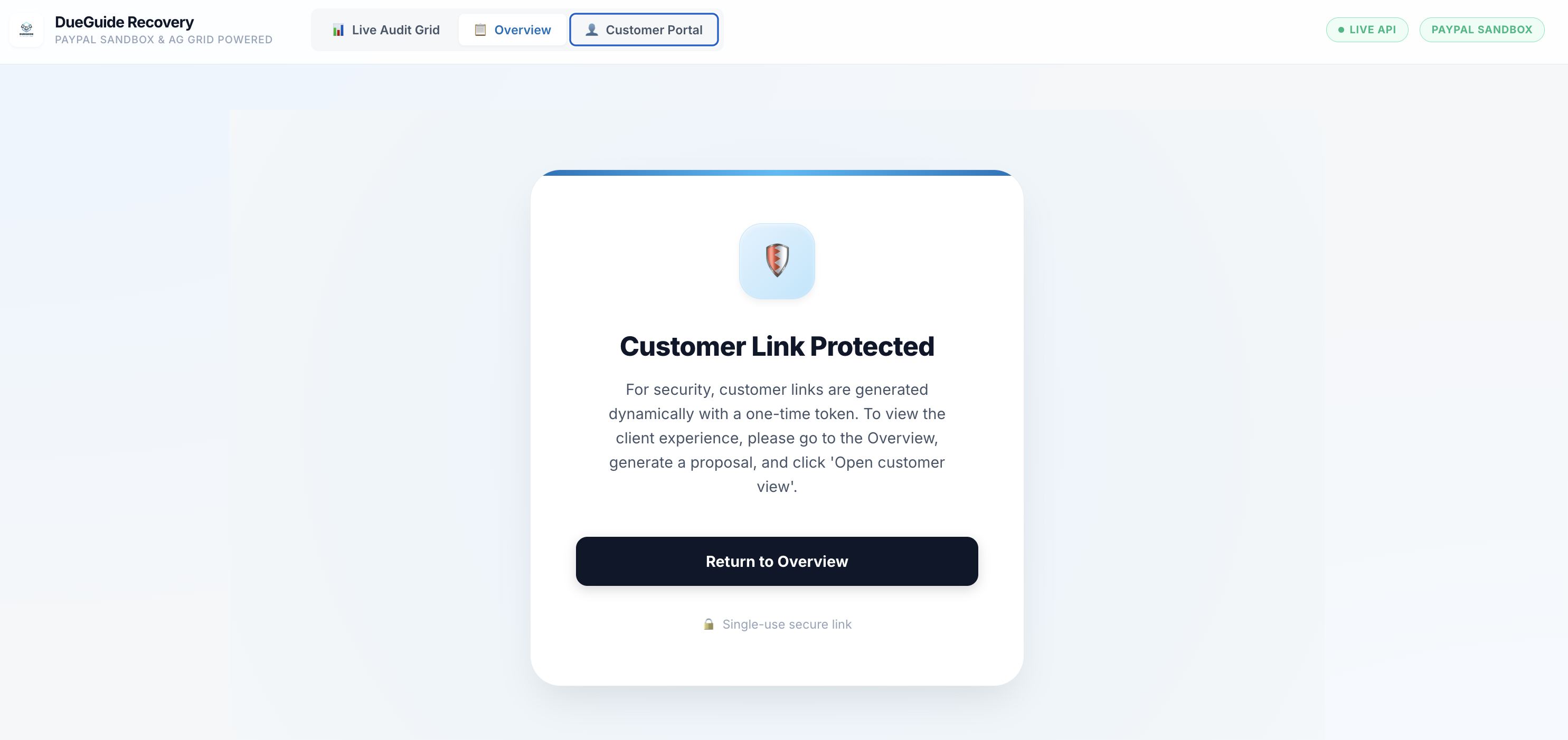
Customer Portal- DueGuide 7
-
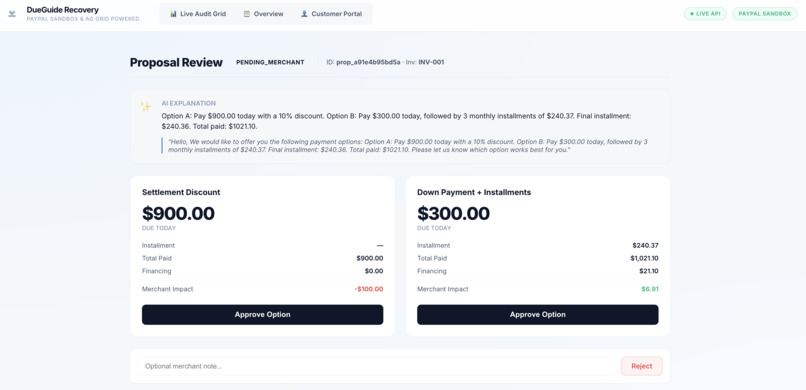
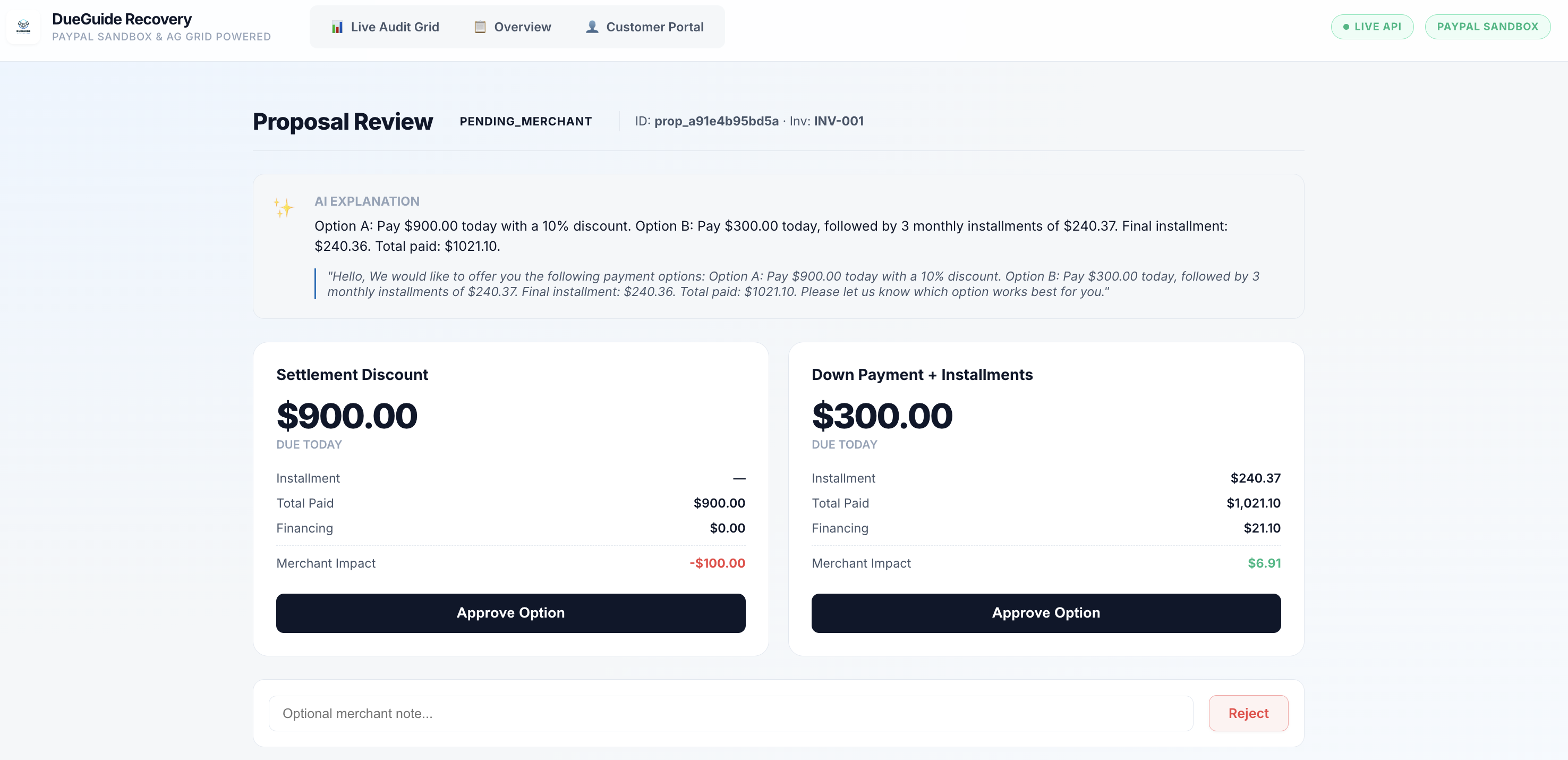
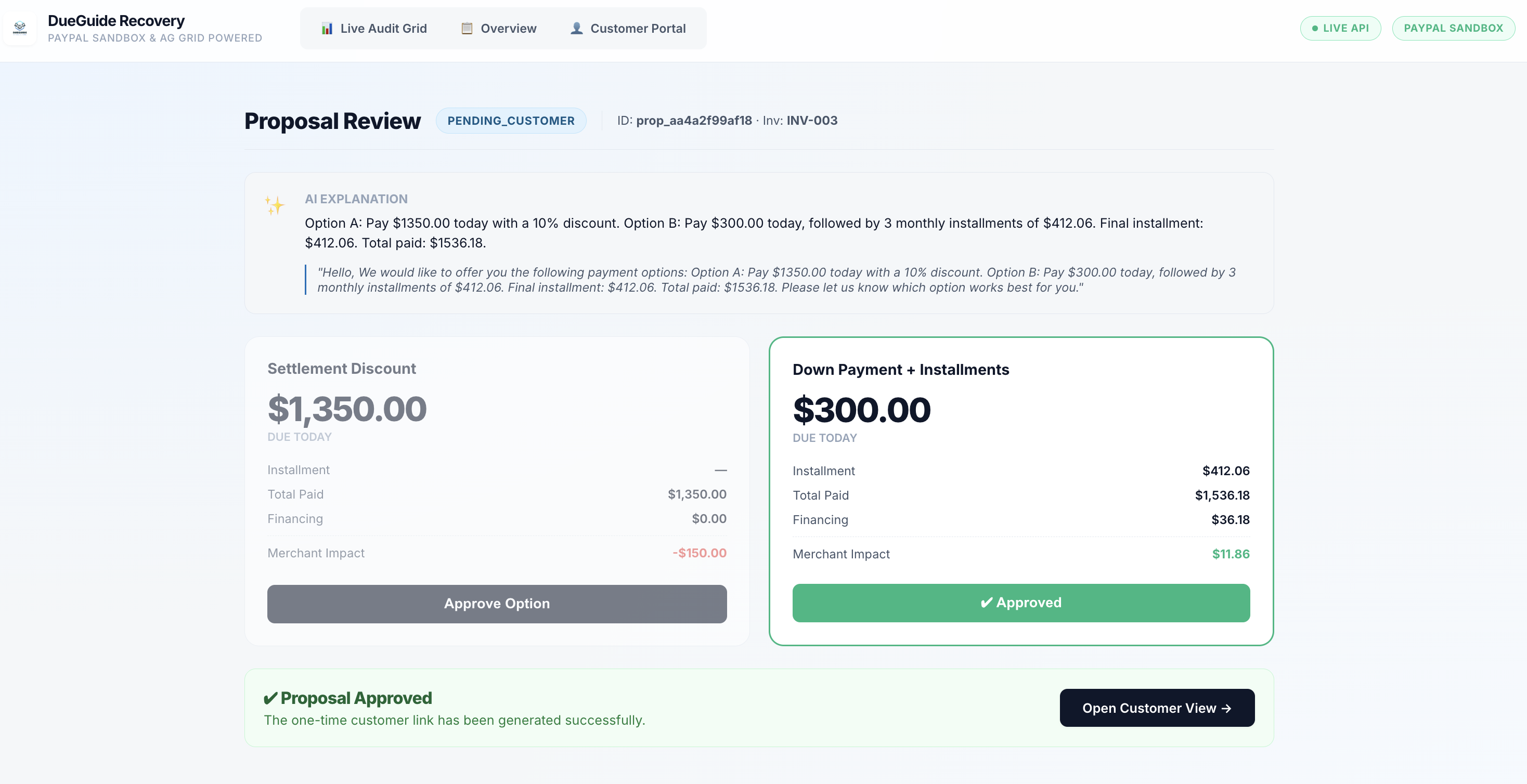
Proposal Review - DueGuide 8
-
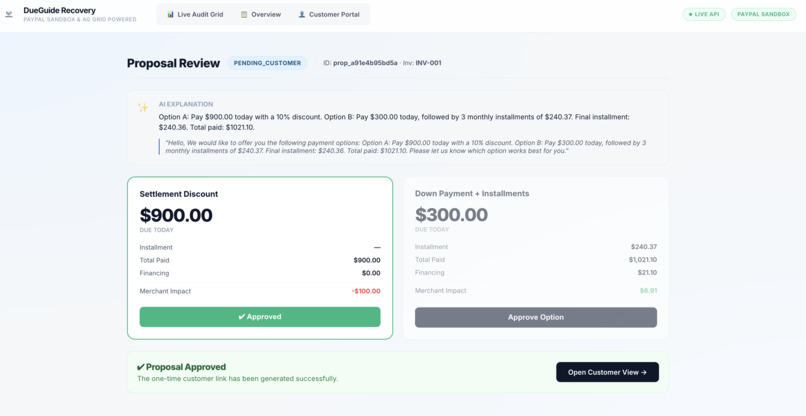
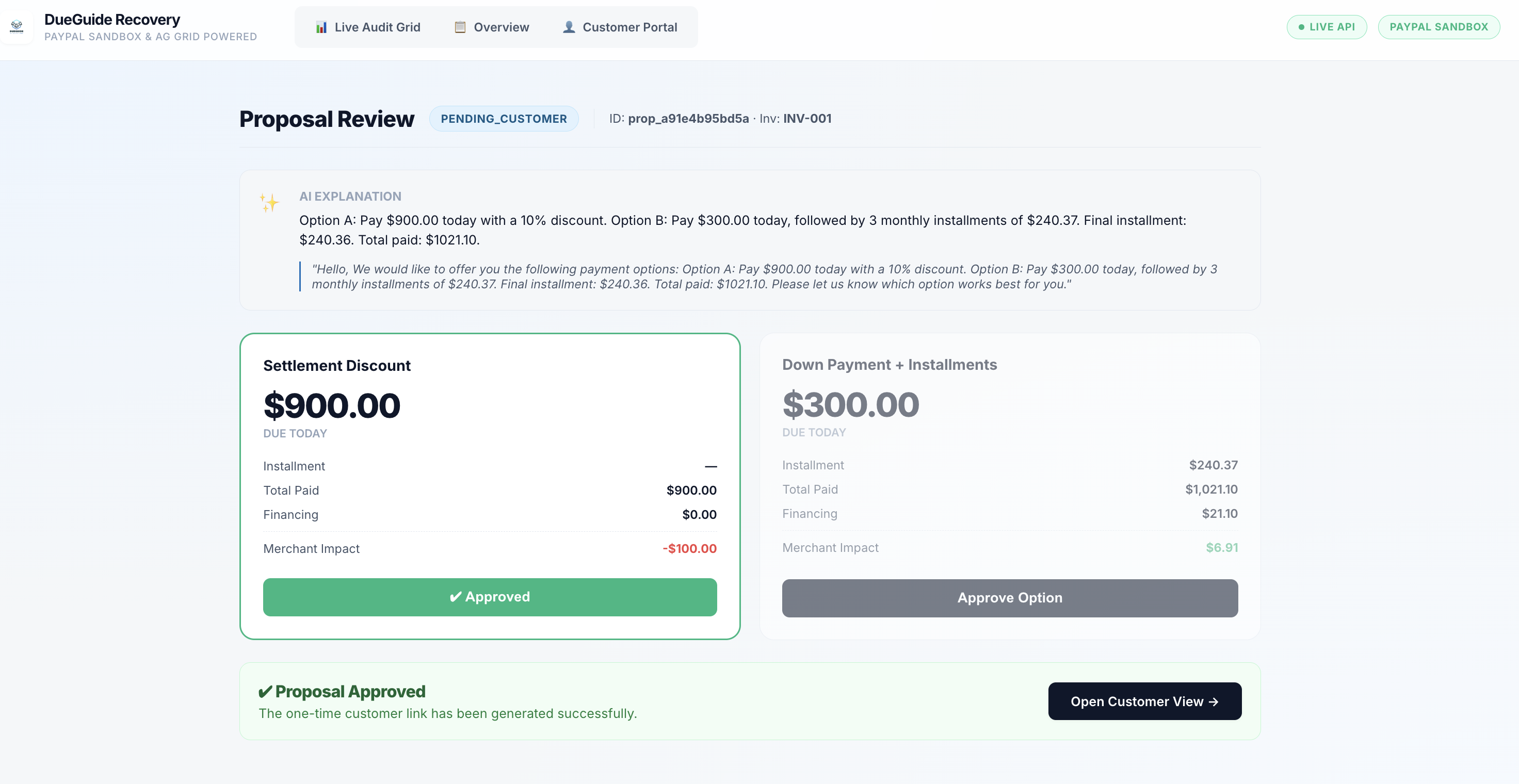
Proposal Approved Settlement - DueGuide 9
-
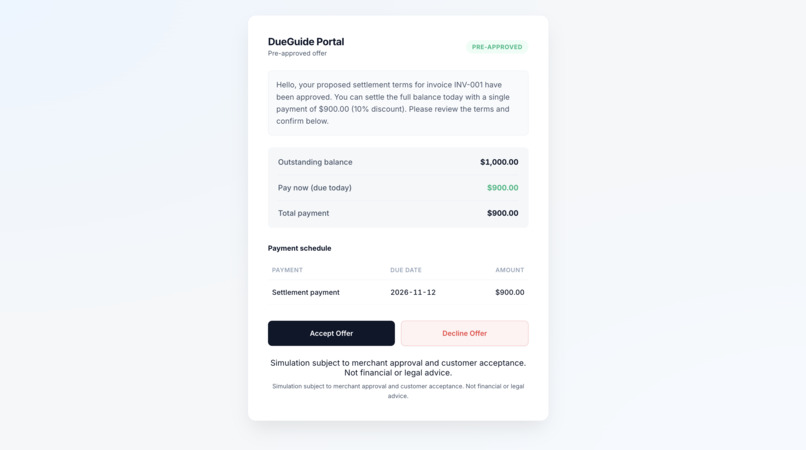
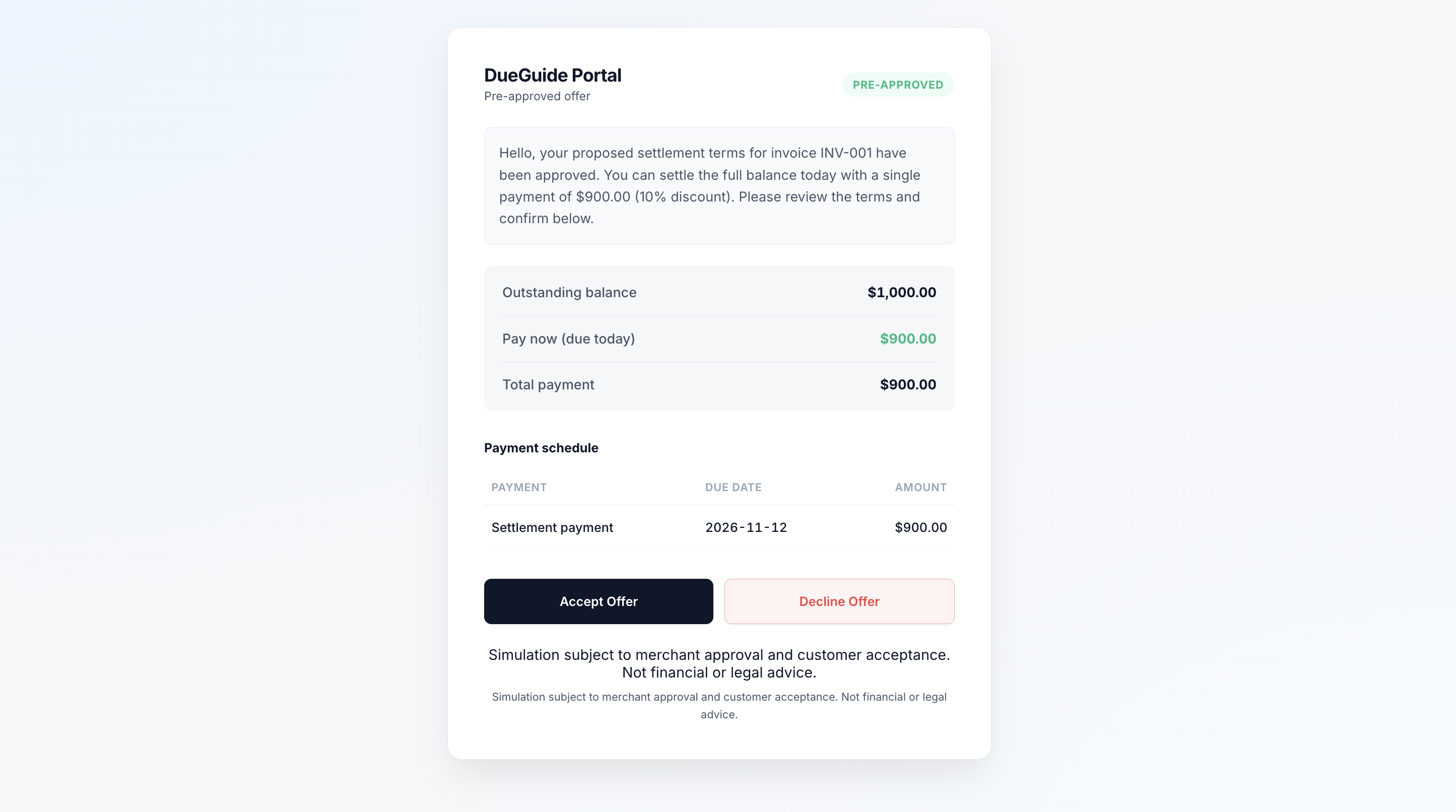
Pre-Approved offer - DueGuide 10
-
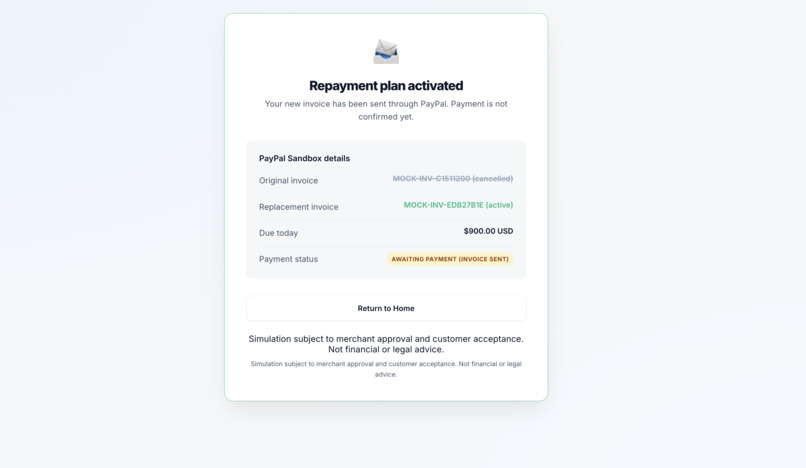
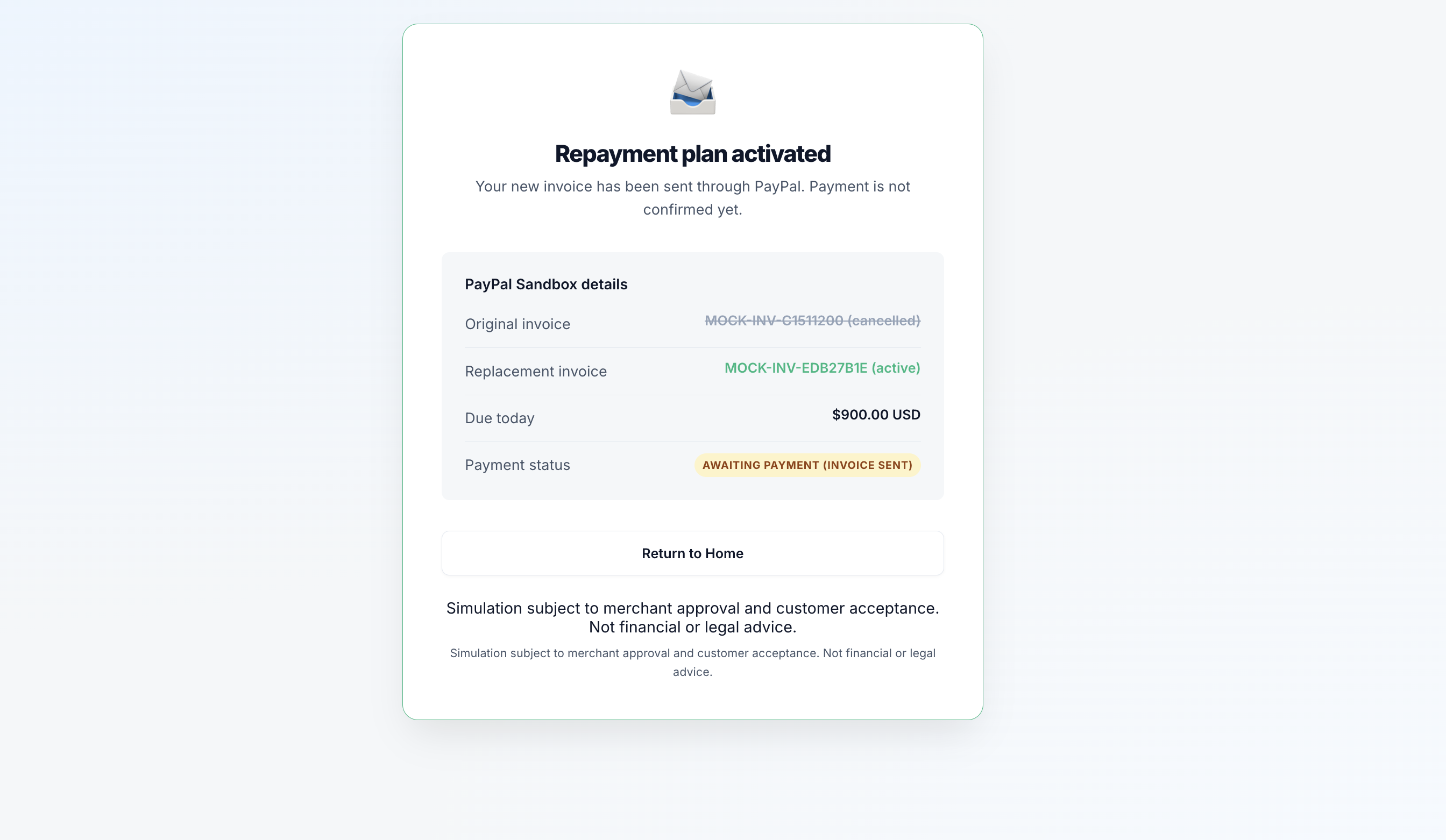
Repayment Plan Activated - DueGuide 11
-
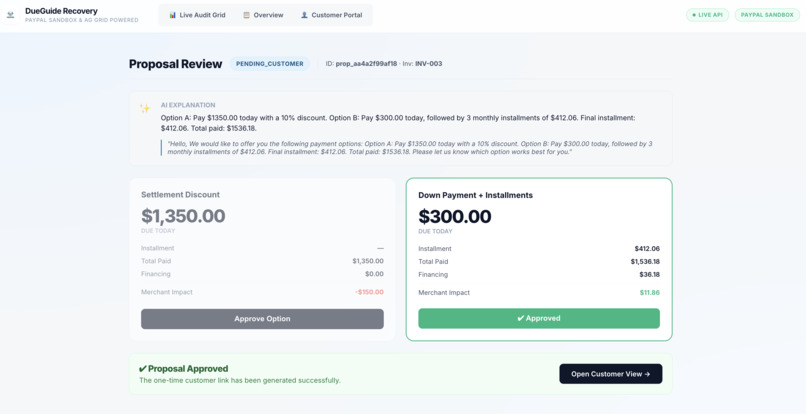
DownPayment Approved - DueGuide 12
-
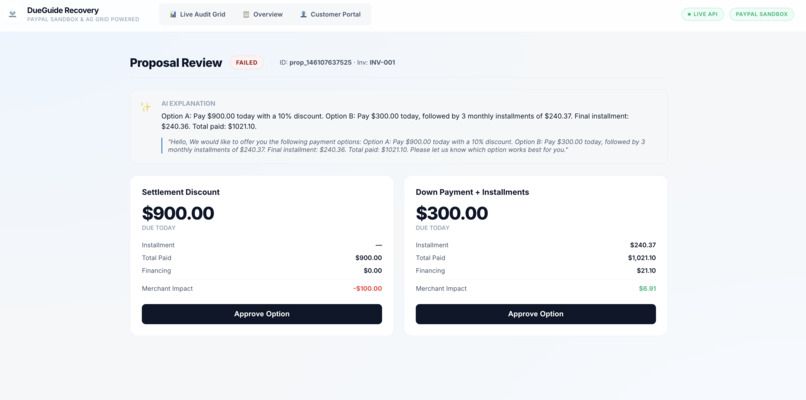
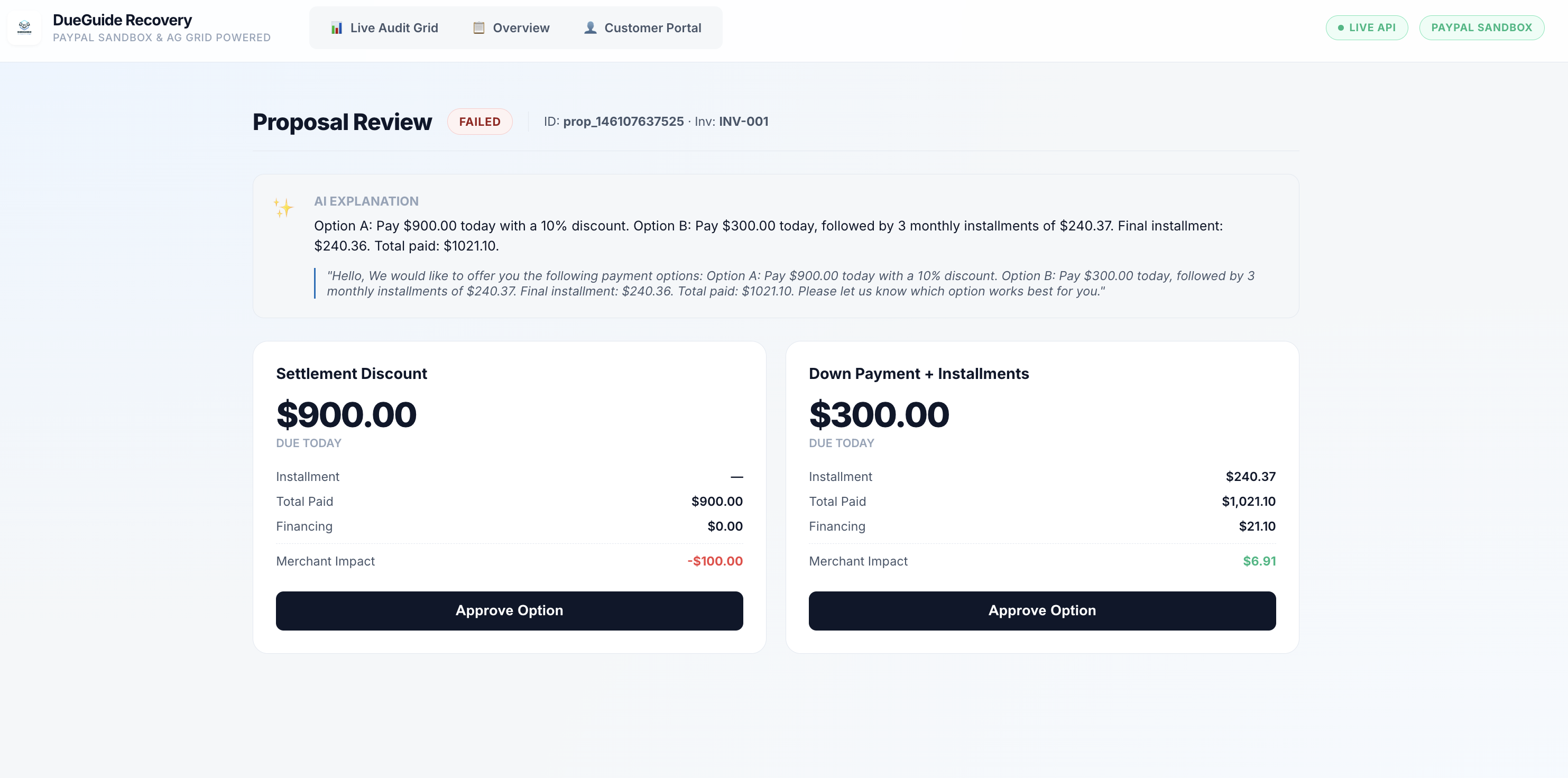
Proposal Failed - DueGuide 13
-
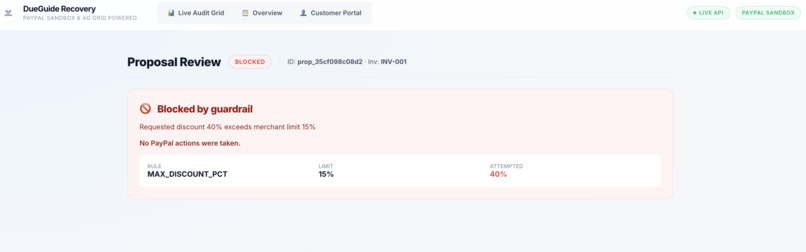
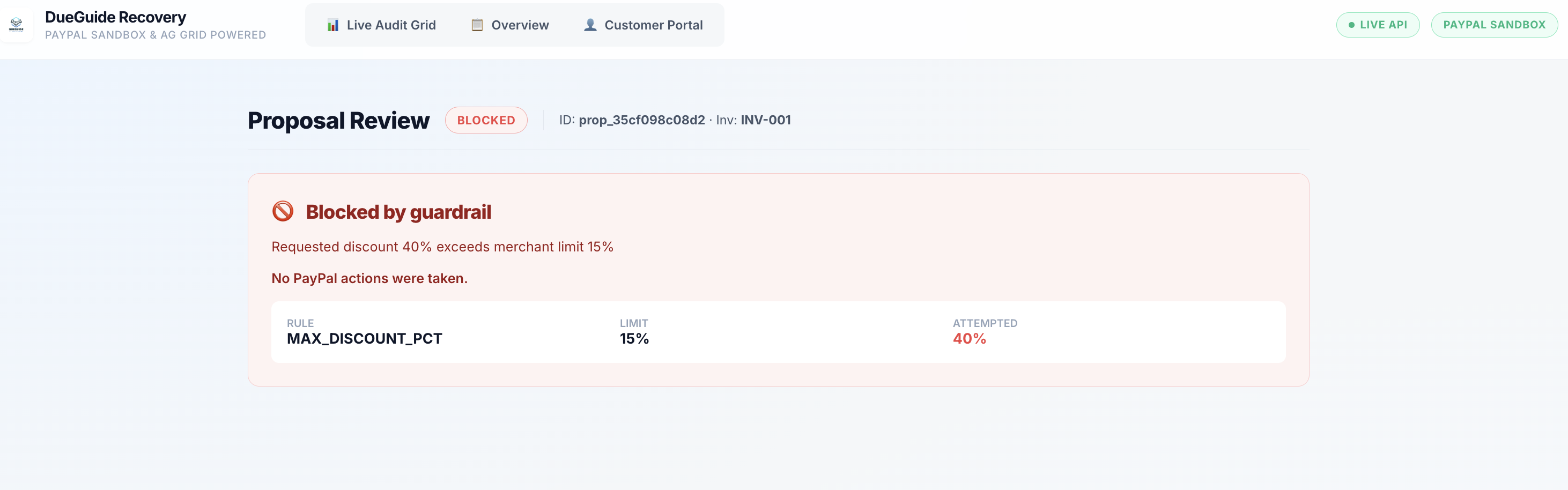
Proposal Review Blocked - DueGuide 14
-
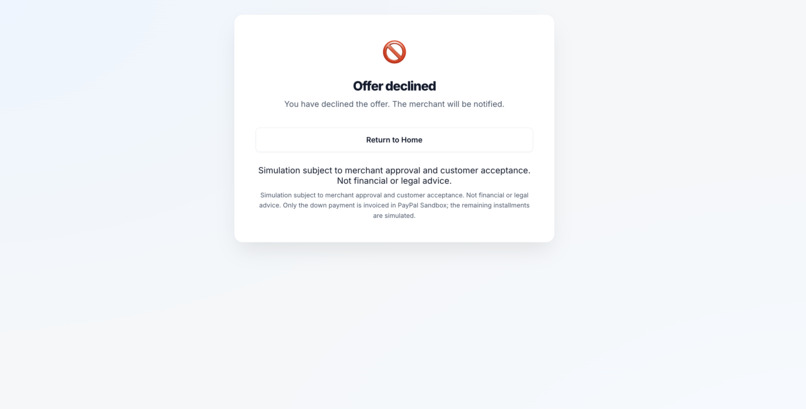
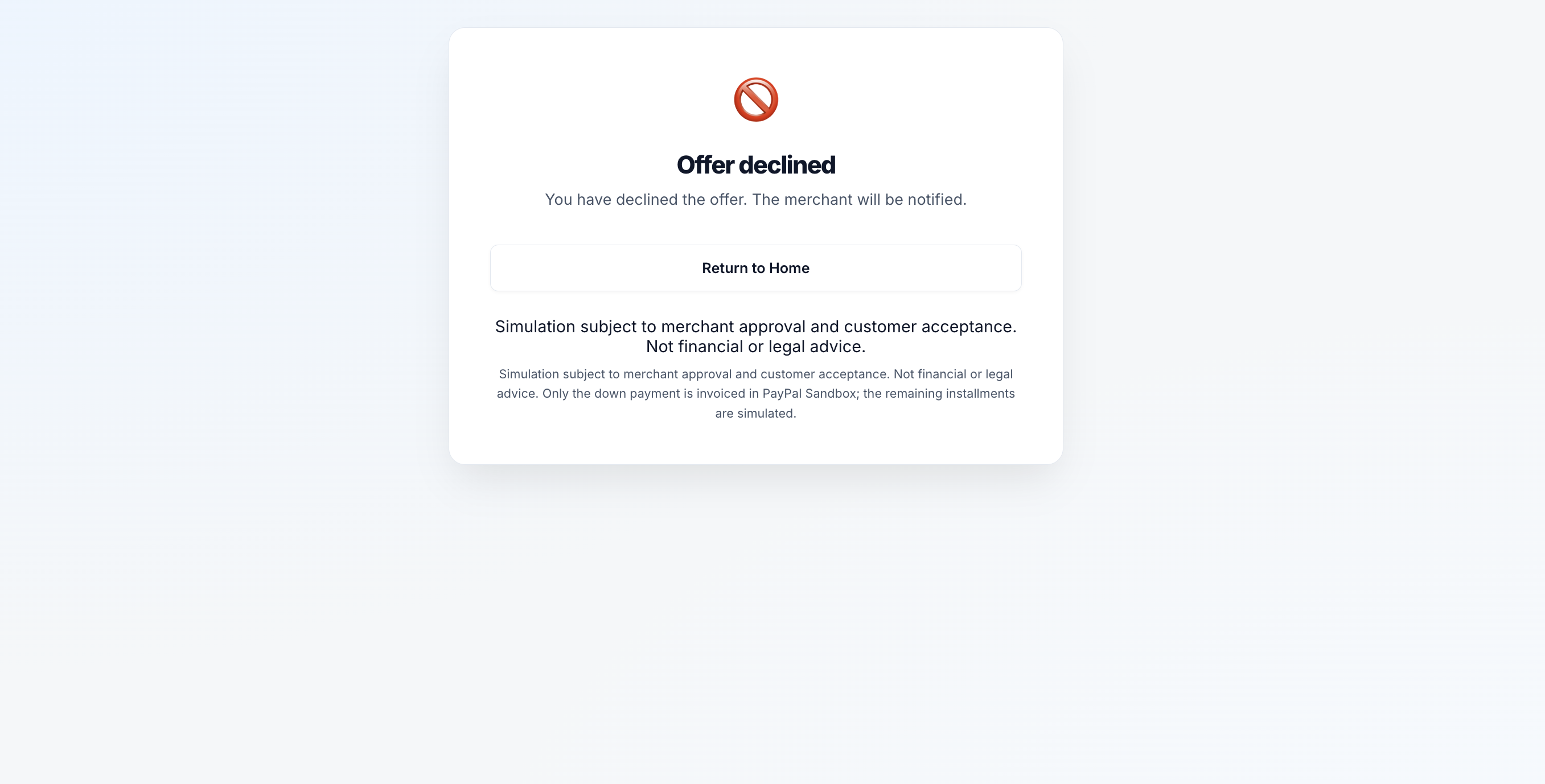
Offer Declined - DueGuide 15
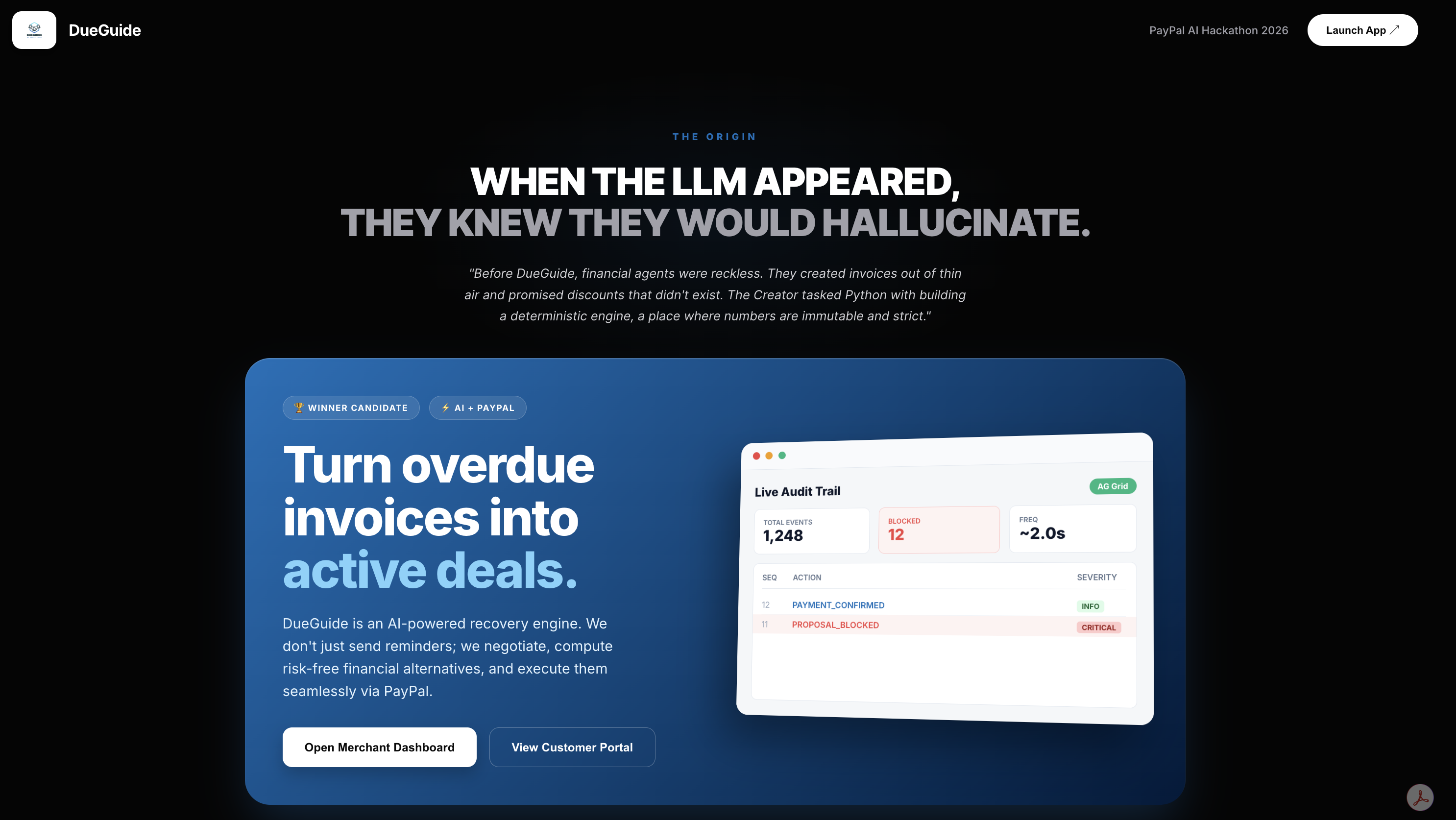
A late payment shouldn't automatically mean a lost customer.
Inspiration
The problem isn't always that customers won't pay. Sometimes, it's that the original payment terms no longer work.
Every overdue invoice tells two stories.
For a business, it represents revenue that hasn't arrived, cash flow under pressure, and valuable time spent chasing payments.
For a customer, it may represent an unexpected expense, a temporary financial setback, or the inability to pay everything at once.
Traditional collections often reduce this complex situation to a binary choice: pay in full or remain overdue.
But what if there were a third option?
What if businesses could recover more outstanding revenue by offering financially viable alternatives, without sacrificing control over their money?
And what if AI could help both sides reach those alternatives faster?
That's why we built DueGuide.
We believe invoice recovery shouldn't be about chasing people harder. It should be about finding a smarter way forward.
What it does
From overdue to opportunity.
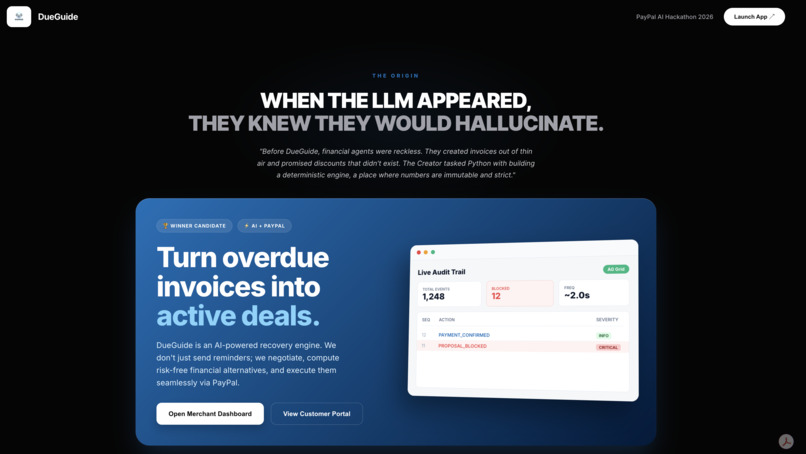
DueGuide is an AI-assisted invoice recovery and negotiation platform powered by PayPal.
It transforms a traditionally rigid collection process into a structured, transparent workflow where businesses can recover outstanding payments while giving customers realistic options to settle their obligations.
Imagine a customer owes a business $1,000 but cannot pay the full amount today.
Instead of sending another reminder, DueGuide helps evaluate alternatives:
- Settlement: An eligible discount in exchange for an agreed payment.
- Down payment + installments: An immediate partial payment followed by a structured repayment schedule.
- Extended payment terms: More time to pay, within the merchant's financial policies.
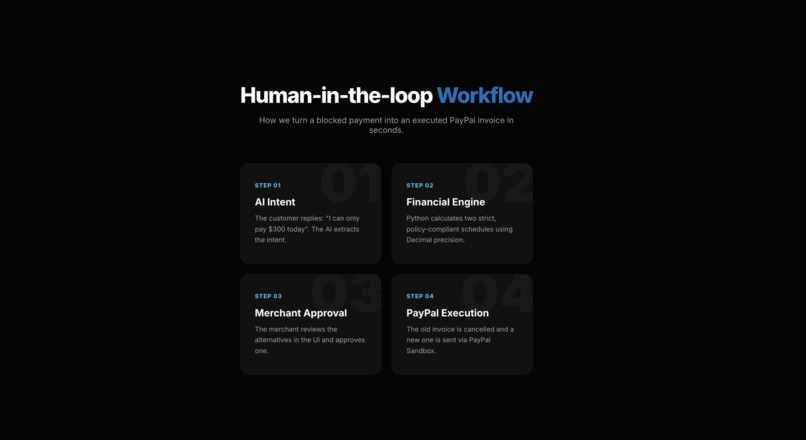
The experience connects seven essential steps:
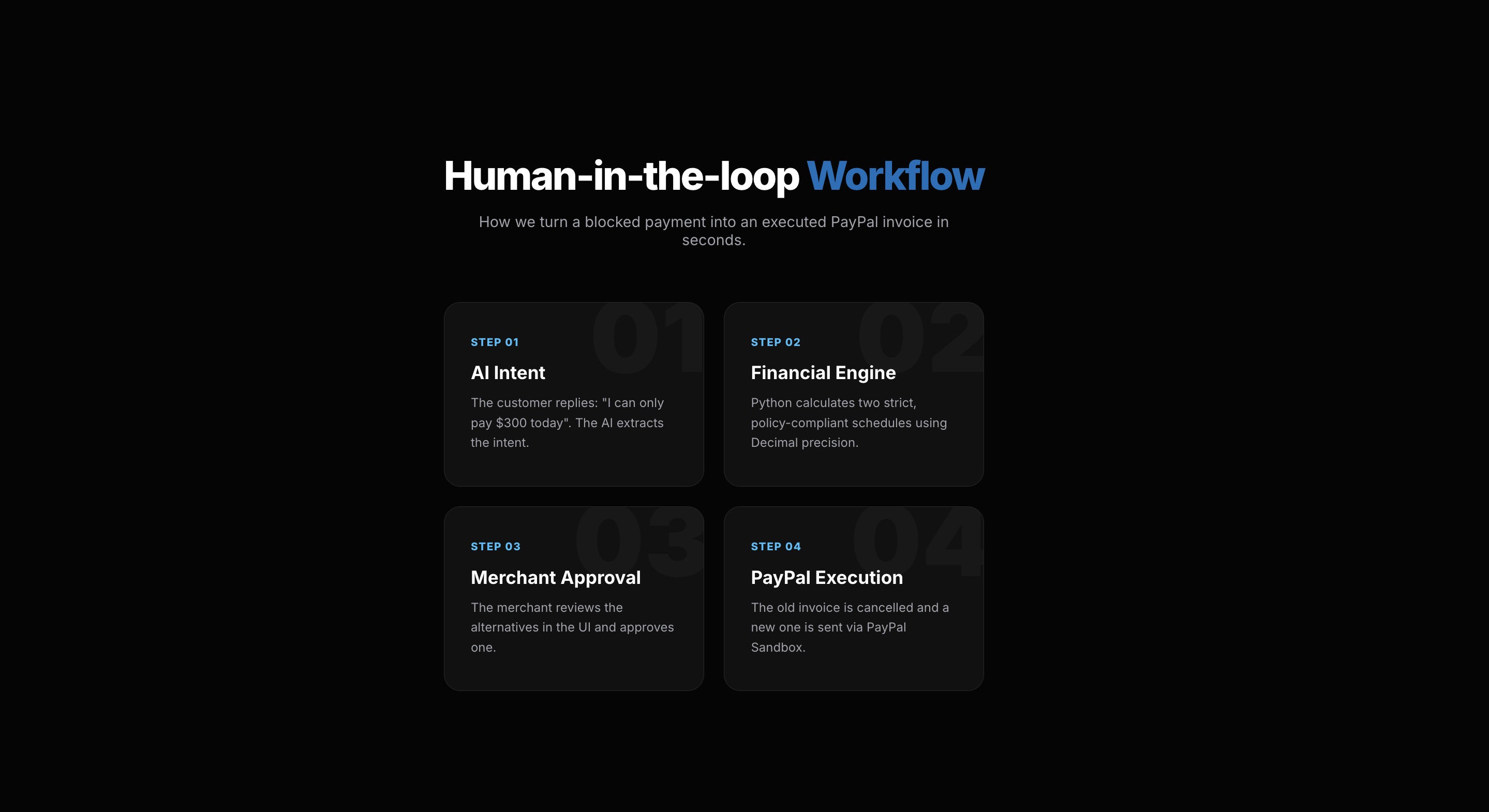
- Understand the situation. AI helps interpret the customer's payment constraints and identify relevant negotiation options.
- Calculate the alternatives. A deterministic financial engine generates accurate, reproducible payment scenarios.
- Enforce business rules. Merchant-defined policies determine which alternatives are eligible.
- Keep humans in control. The merchant reviews and approves the proposed financial terms.
- Give customers a choice. Customers receive a clear proposal they can accept or decline.
- Connect to PayPal. PayPal's Invoicing API supports the corresponding invoicing and payment workflow.
- Make every action traceable. An audit trail records proposals, approvals, customer responses, and payment-related events.
The result is a more flexible recovery experience without turning financial decisions into an AI black box.
AI helps understand the problem. Mathematics protects the numbers. Humans authorize the decision. PayPal supports the payment.
That's the DueGuide approach.
How we built it
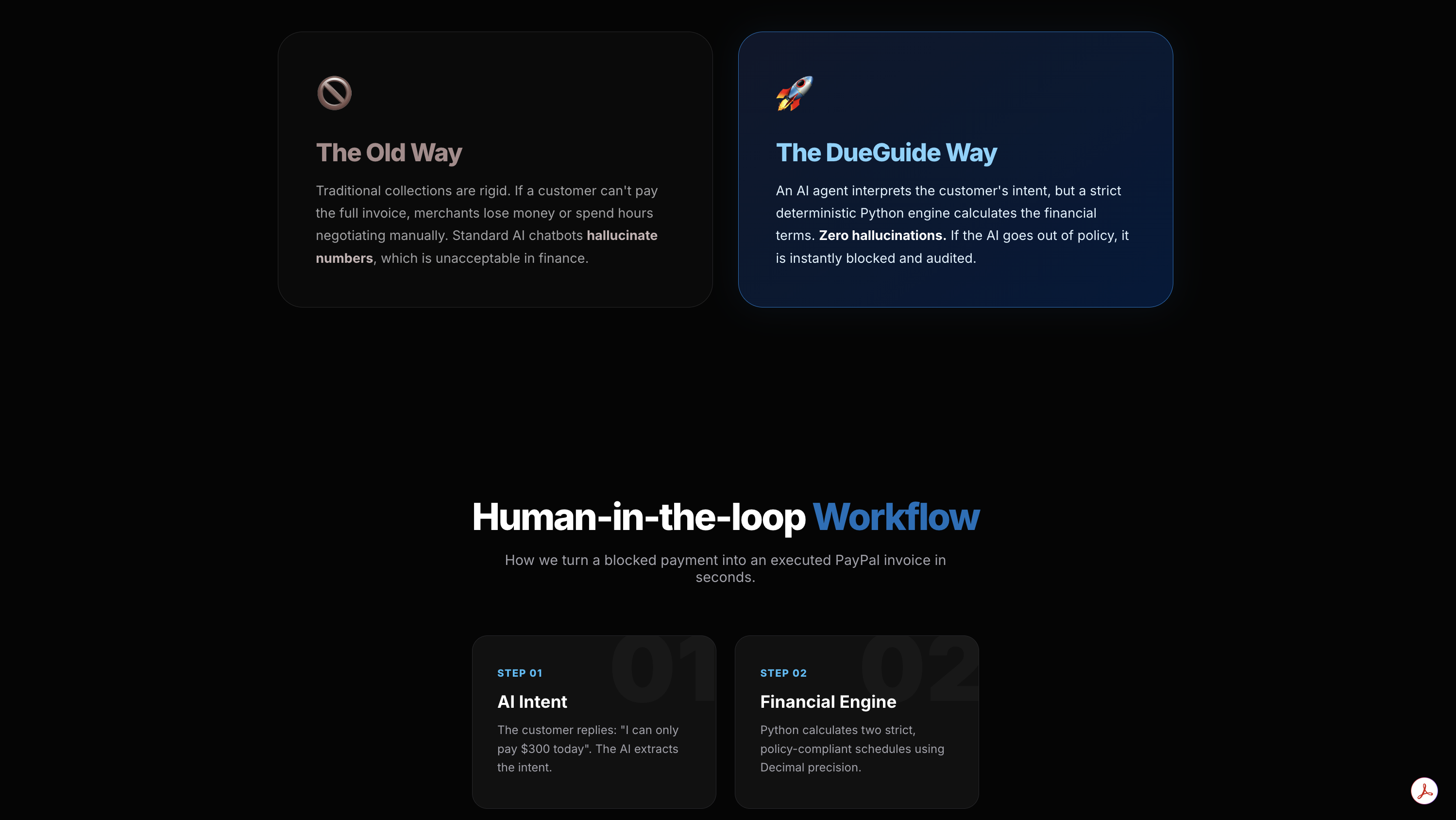
Intelligence where it helps. Determinism where it matters.
DueGuide was developed by Beyond Sprint Labs, an international, multidisciplinary team bringing together expertise in software engineering, artificial intelligence, financial modeling, product management, and quality assurance.
We designed the product around a fundamental architectural decision: AI should support financial decision-making, not replace financial accountability.
Our technical foundation, Recovery, separates responsibilities across specialized components.
The experience layer
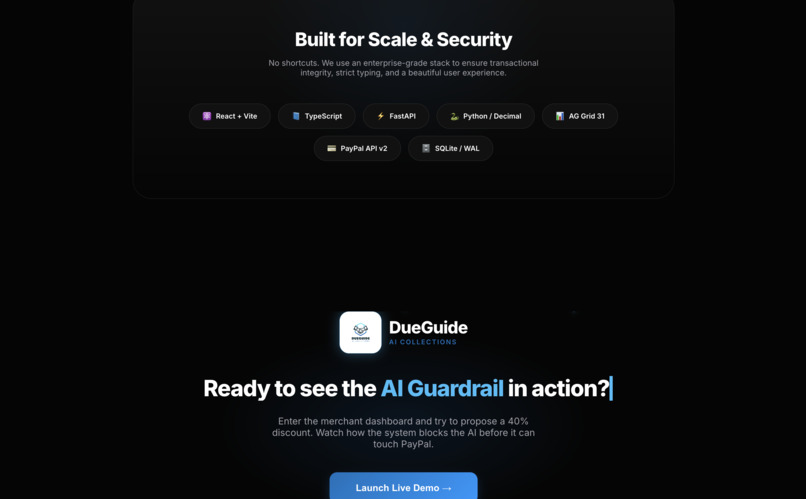
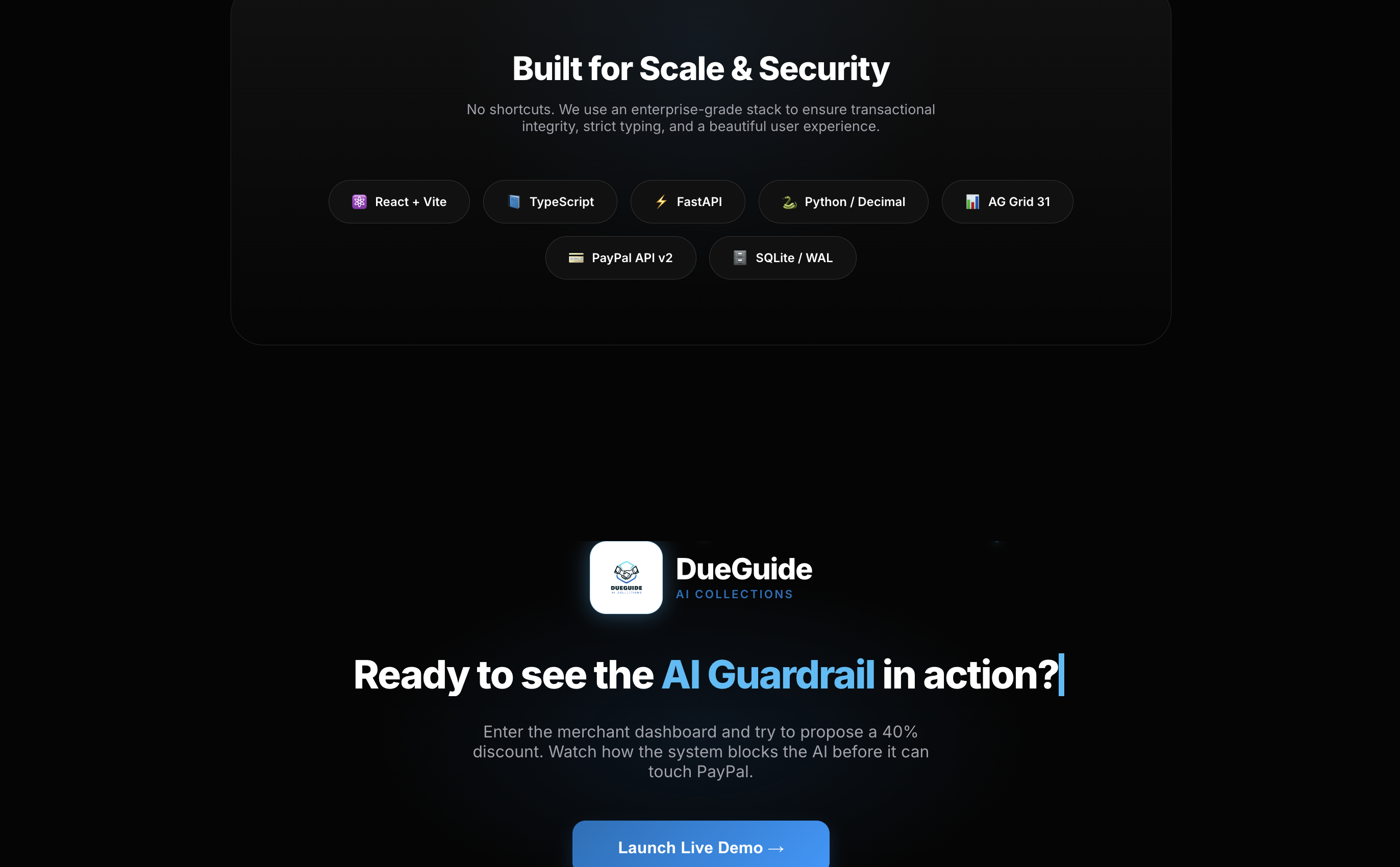
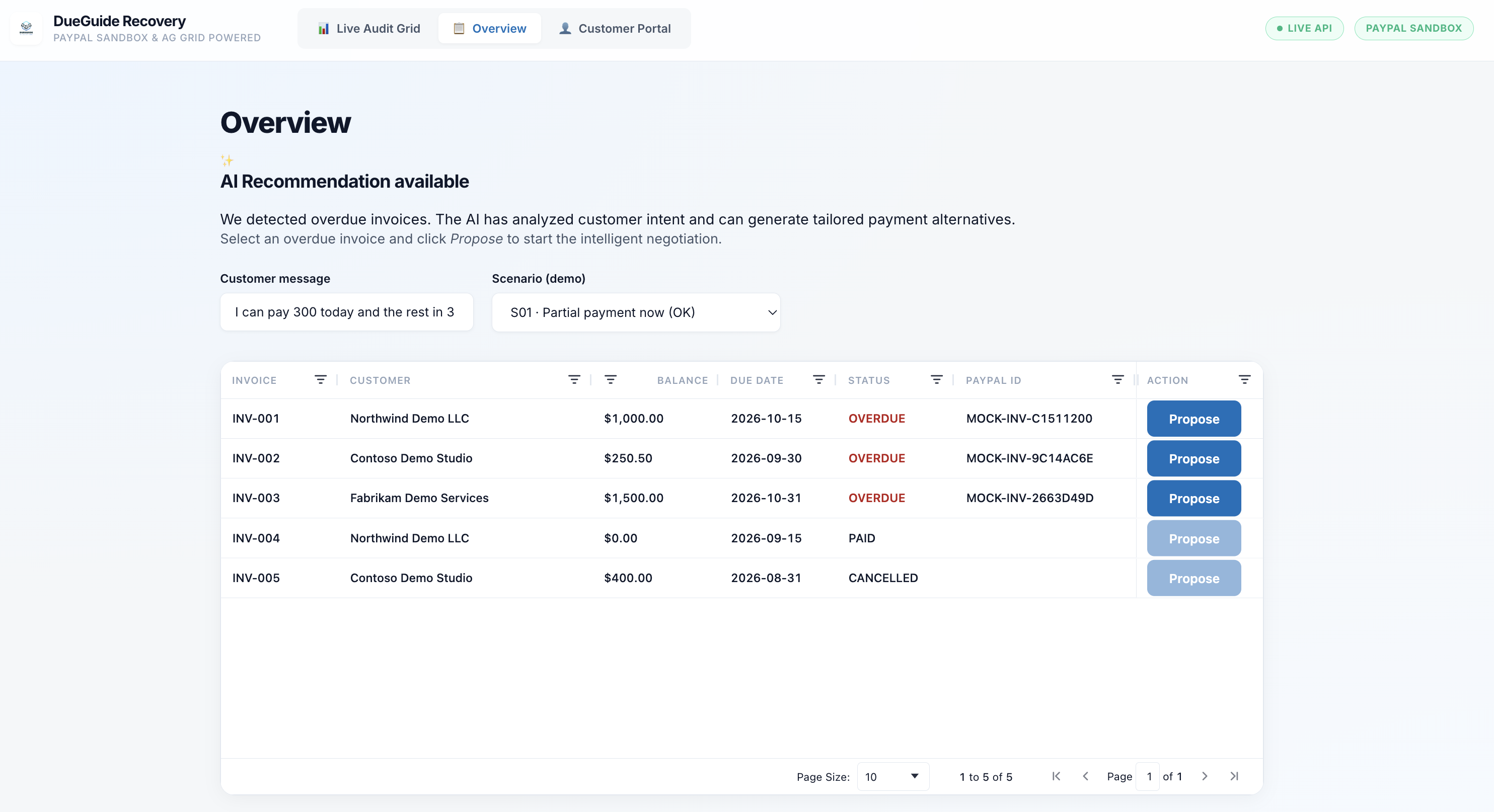
We built the frontend using React and Vite, creating an interface for merchants to review invoices, compare payment alternatives, approve proposals, and monitor activity.
The customer-facing experience provides a straightforward way to review and respond to negotiated terms.
An audit interface makes important workflow events visible and traceable.
The application layer
Python and FastAPI power the backend, connecting invoice management, proposal generation, customer responses, payment operations, and audit records through REST APIs.
Persistent storage maintains the states and relationships needed to support a multi-step financial workflow.
The financial intelligence layer
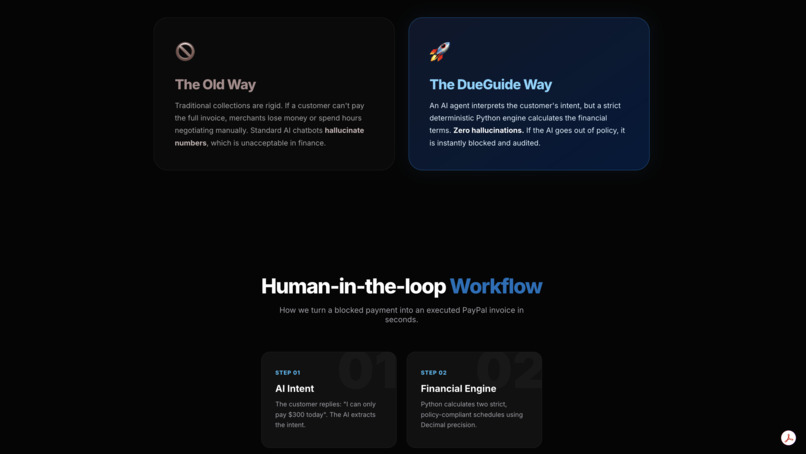
Instead of asking a language model to invent payment amounts, we built a deterministic financial engine that calculates alternatives using explicit financial rules.
This separation allows the system to use AI for interpretation and assistance while preserving predictable calculations and policy constraints.
The payment layer
PayPal's Invoicing API connects the recovery experience to invoice operations.
Webhook handling, idempotency controls, and state management help the application process payment-related events without treating duplicate notifications as new transactions.
The infrastructure and validation layer
We integrated the application components into a deployed environment and tested the workflow across merchant actions, customer responses, backend processing, and payment-related events.
The result is an architecture designed not merely to demonstrate an AI interaction, but to support an auditable financial process.
Challenges we ran into
1. Making AI useful without giving it financial authority
Our first challenge was deciding where AI belonged.
A language model can interpret natural language and assist with negotiation, but it should not independently invent discounts, alter payment obligations, or authorize financial transactions.
We solved this by separating AI-assisted interpretation from deterministic calculations, policy validation, and merchant approval.
The innovation wasn't giving AI more control. It was designing the right boundaries for its intelligence.
2. Turning negotiation into an executable workflow
Suggesting a payment plan is relatively simple.
Building a system that can calculate it, validate it, obtain approval, present it to a customer, and track its outcome is significantly more complex.
We had to design how invoices, proposals, approvals, customer responses, and payment events relate to one another.
Every transition needed a clear meaning.
3. Handling payment events reliably
Financial systems cannot assume that every API request succeeds immediately or that every webhook arrives only once.
We incorporated idempotency and controlled state transitions to reduce duplicate processing and preserve consistency.
We also had to distinguish between a proposal being accepted, a payment being initiated, and a payment being confirmed.
4. Building one product across multiple disciplines
Our team worked simultaneously on frontend development, backend services, AI, financial modeling, PayPal integration, infrastructure, and QA.
The challenge was not simply producing individual components. It was making them behave as one coherent product.
Clear API contracts, modular architecture, GitHub collaboration, and coordinated testing became essential to delivery.
Accomplishments that we're proud of
We didn't build another AI chatbot. We built a financial workflow around responsible AI.
Our proudest accomplishment is connecting several difficult problems into one coherent experience.
A complete recovery journey
DueGuide brings together overdue invoice management, AI-assisted interpretation, calculated payment alternatives, merchant approval, customer acceptance, and PayPal invoicing workflows.
Financial logic that doesn't depend on AI guesswork
Our deterministic engine produces structured alternatives based on explicit calculations and policy constraints, rather than relying on language-model-generated numbers.
Human control built into the product
Merchant approval is part of the workflow, not an afterthought.
A transparent record of decisions
Auditability helps distinguish what the system suggested, what the merchant authorized, what the customer accepted, and what payment events were recorded.
A working, integrated product experience
We connected the frontend, backend, financial engine, AI component, and PayPal Sandbox workflow to demonstrate the recovery journey end to end.
An international team operating as one
Beyond Sprint Labs brought together contributors with different technical backgrounds, responsibilities, and perspectives to turn a complex financial problem into a working prototype under hackathon constraints.
We are proud not only of the technology we built, but of the product decisions behind it.
What we learned
The future of financial AI isn't autonomous decision-making at any cost. It's intelligent assistance with accountability.
Building DueGuide changed how we think about applying AI to financial operations.
We learned that a compelling AI product needs more than a powerful model. It needs clear responsibilities, reliable calculations, explicit authorization, and an experience people can understand.
We learned that a recommendation, an approval, and a confirmed payment are three fundamentally different things — and a trustworthy system must never confuse them.
We also learned how important integration discipline becomes when multiple teams are building interconnected features simultaneously.
But perhaps our most important lesson was about the problem itself:
Recovery isn't only about collecting what is owed. It's about creating a realistic path toward resolution.
Technology becomes more valuable when it understands the constraints on both sides of a transaction.
What's next for DueGuide
From a hackathon prototype to a smarter recovery experience.
Our vision extends beyond demonstrating a single overdue invoice.
We see DueGuide evolving into a financial recovery platform that helps businesses respond to payment difficulties with greater flexibility, consistency, and insight.
Our next priorities include:
- Smarter recovery policies: Give merchants more control over eligible discounts, repayment terms, and negotiation limits.
- Payment-plan monitoring: Track installment obligations, upcoming payments, and changes in repayment status.
- Recovery analytics: Help businesses understand outstanding balances, proposal acceptance, and recovery performance.
- More personalized negotiation: Use customer context to support relevant options while respecting merchant-defined boundaries.
- Scalable integrations: Expand the recovery experience across more business workflows and payment scenarios.
Our long-term ambition is simple:
Make intelligent invoice recovery accessible to businesses that cannot afford to build an entire collections operation.
Because overdue doesn't have to mean unrecoverable.
DueGuide — Turn overdue into opportunity.
Built With
- ag-grid-community
- caddy
- fastapi
- github
- github-actions
- google-gemini
- llm
- paypal-invoicing-api
- paypal-sandbox
- paypal-webhooks
- postman
- pydantic
- python
- react
- rest-api
- sqlalchemy
- sqlite
- typescript
- vite


