-
-
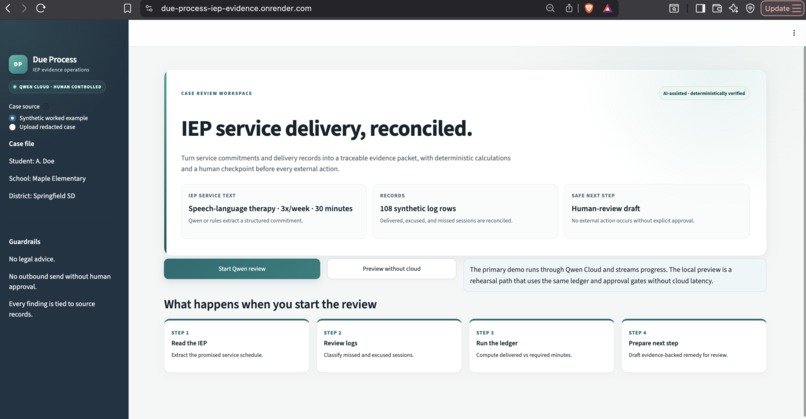
IEP evidence operations with Qwen interpretation, deterministic reconciliation, and human-controlled action.
-
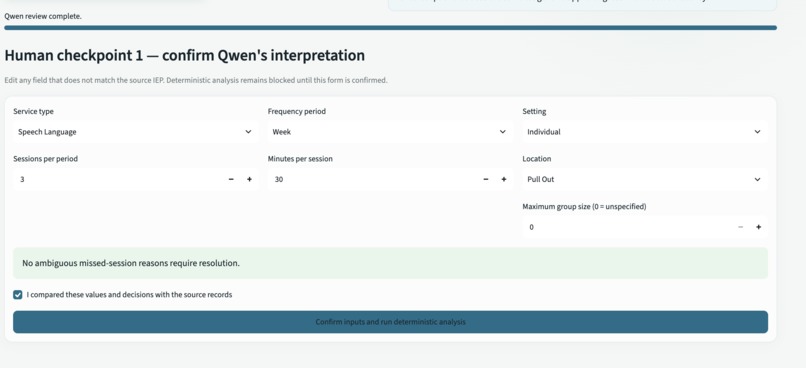
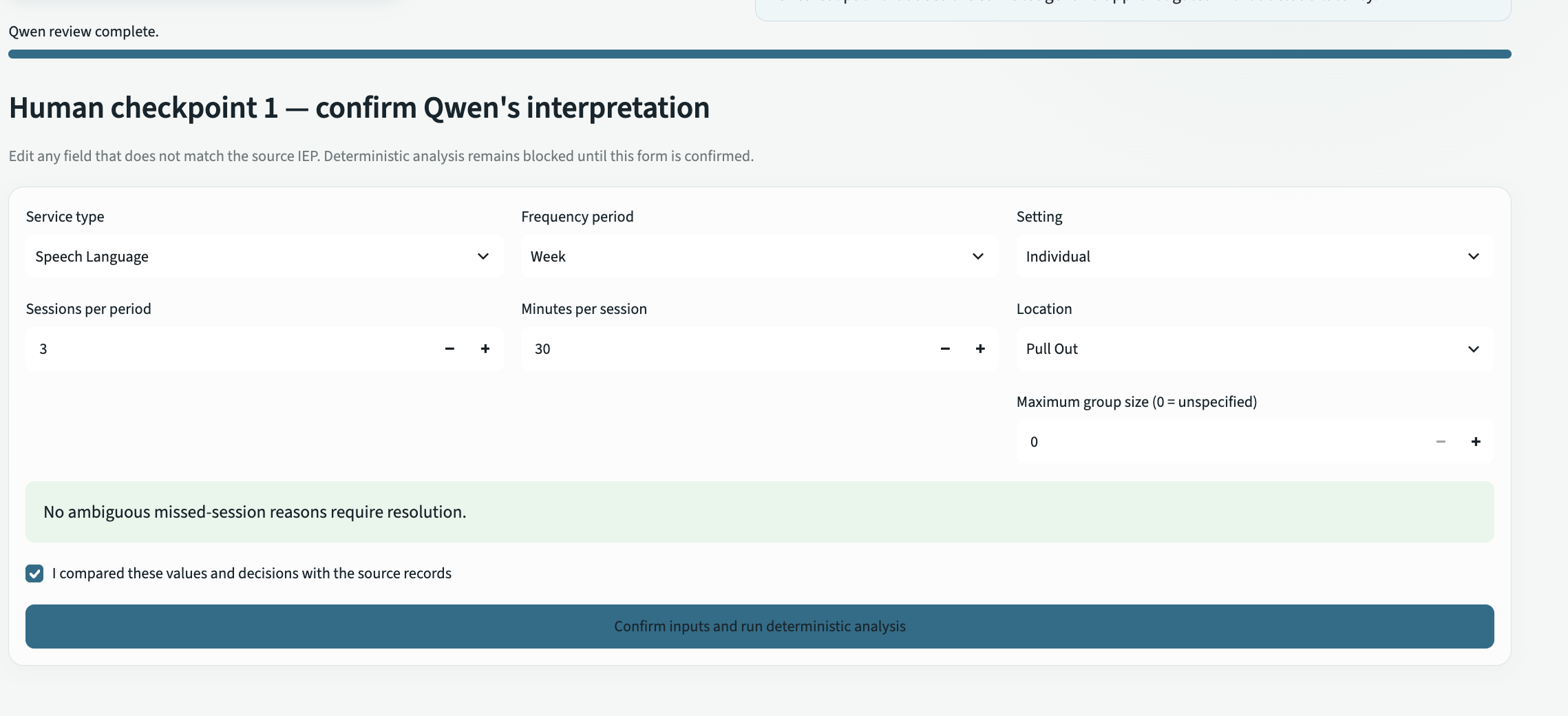
Qwen structures the IEP commitment; deterministic analysis waits for human confirmation.
-
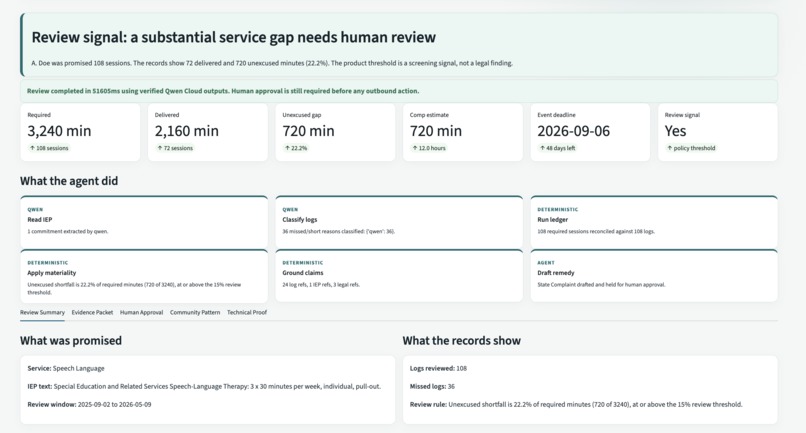
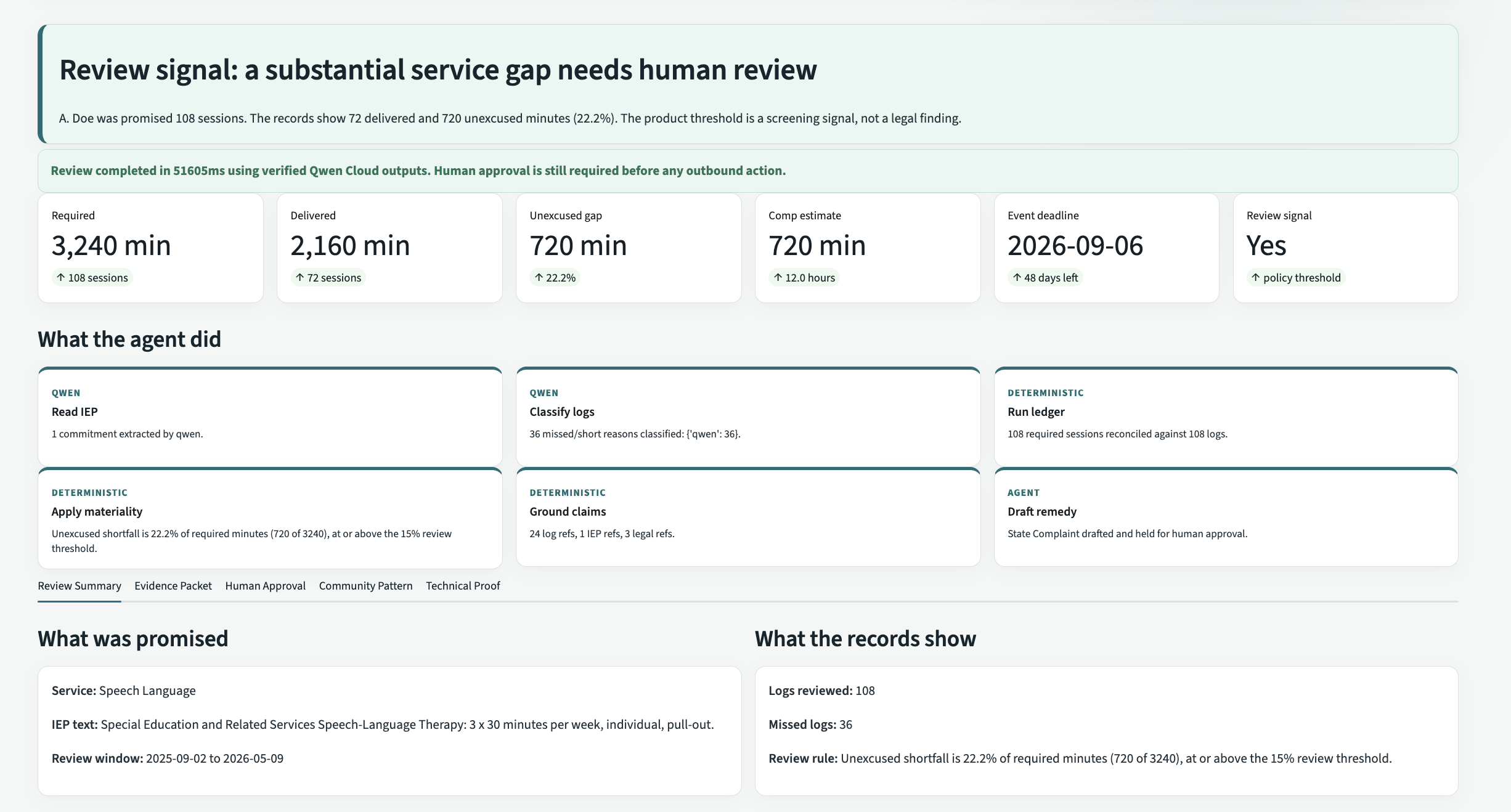
Verified Qwen outputs feed a deterministic ledger that quantifies and grounds every review signal.
-
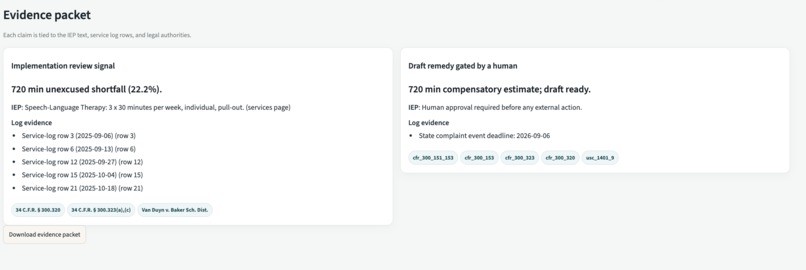
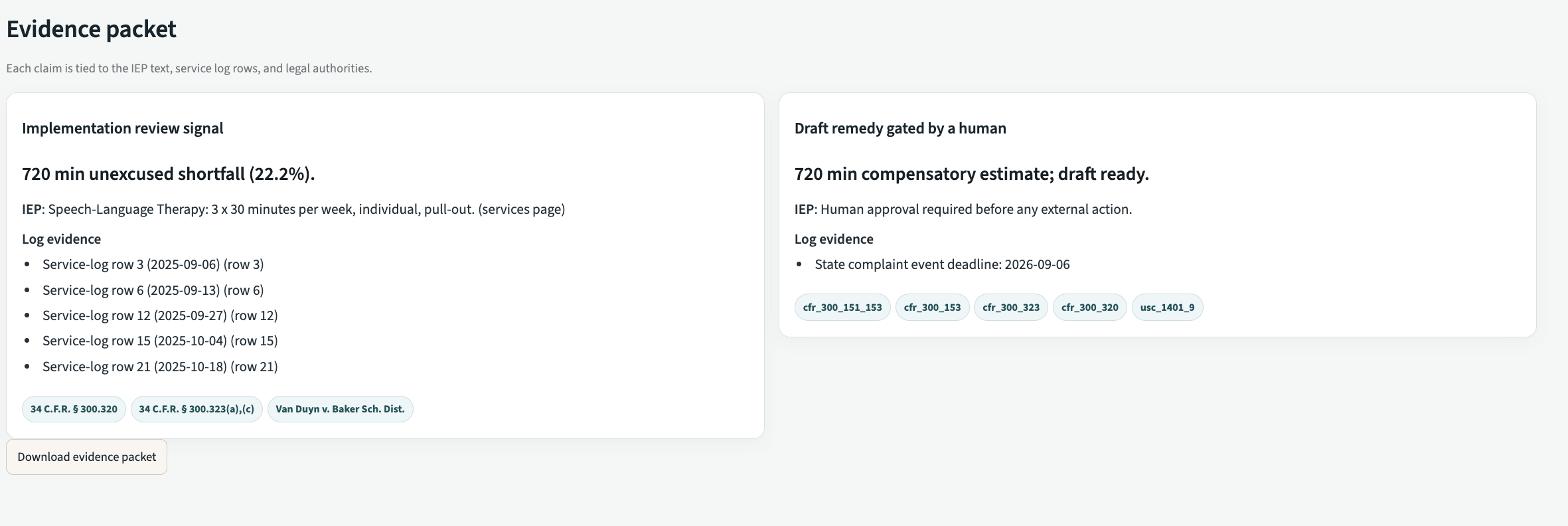
Every claim links to the IEP, service-log rows, controlled authorities, and a human-gated draft.
-
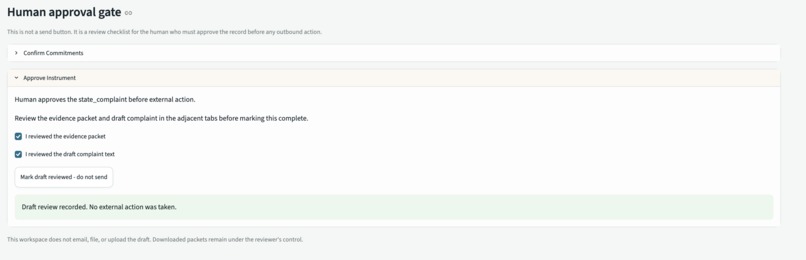
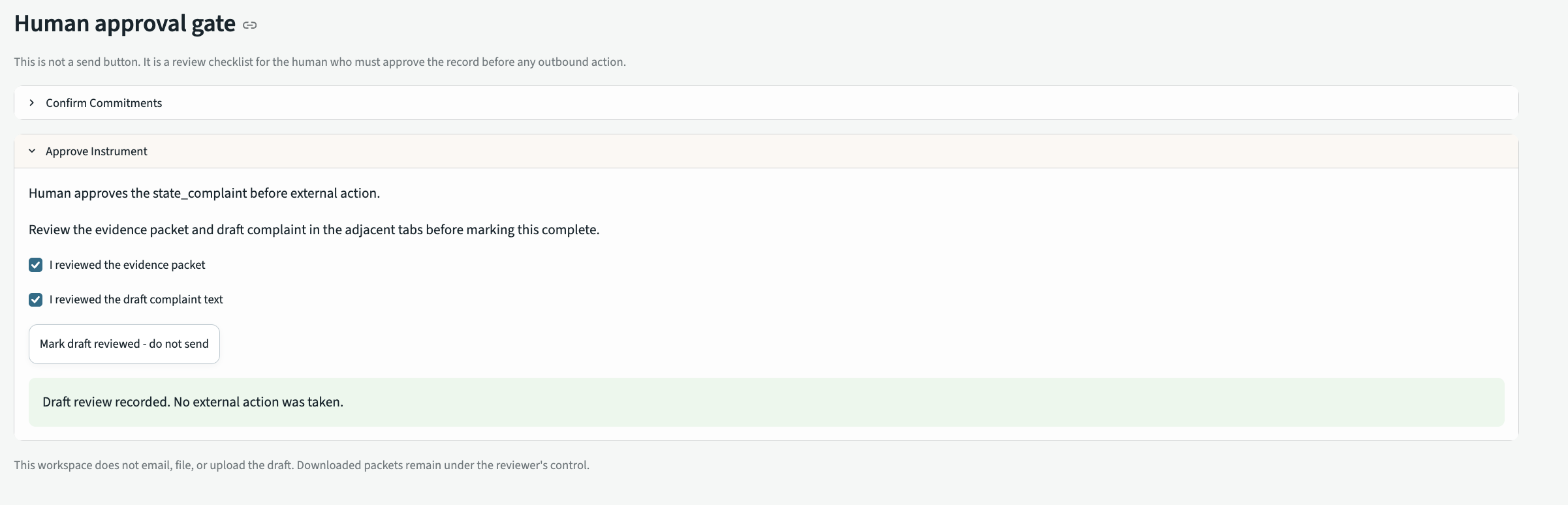
The reviewer approves the evidence and draft while outbound action remains explicitly blocked.
-
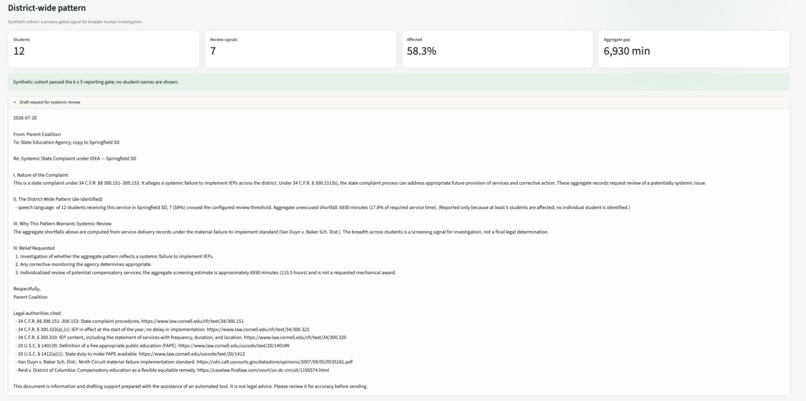
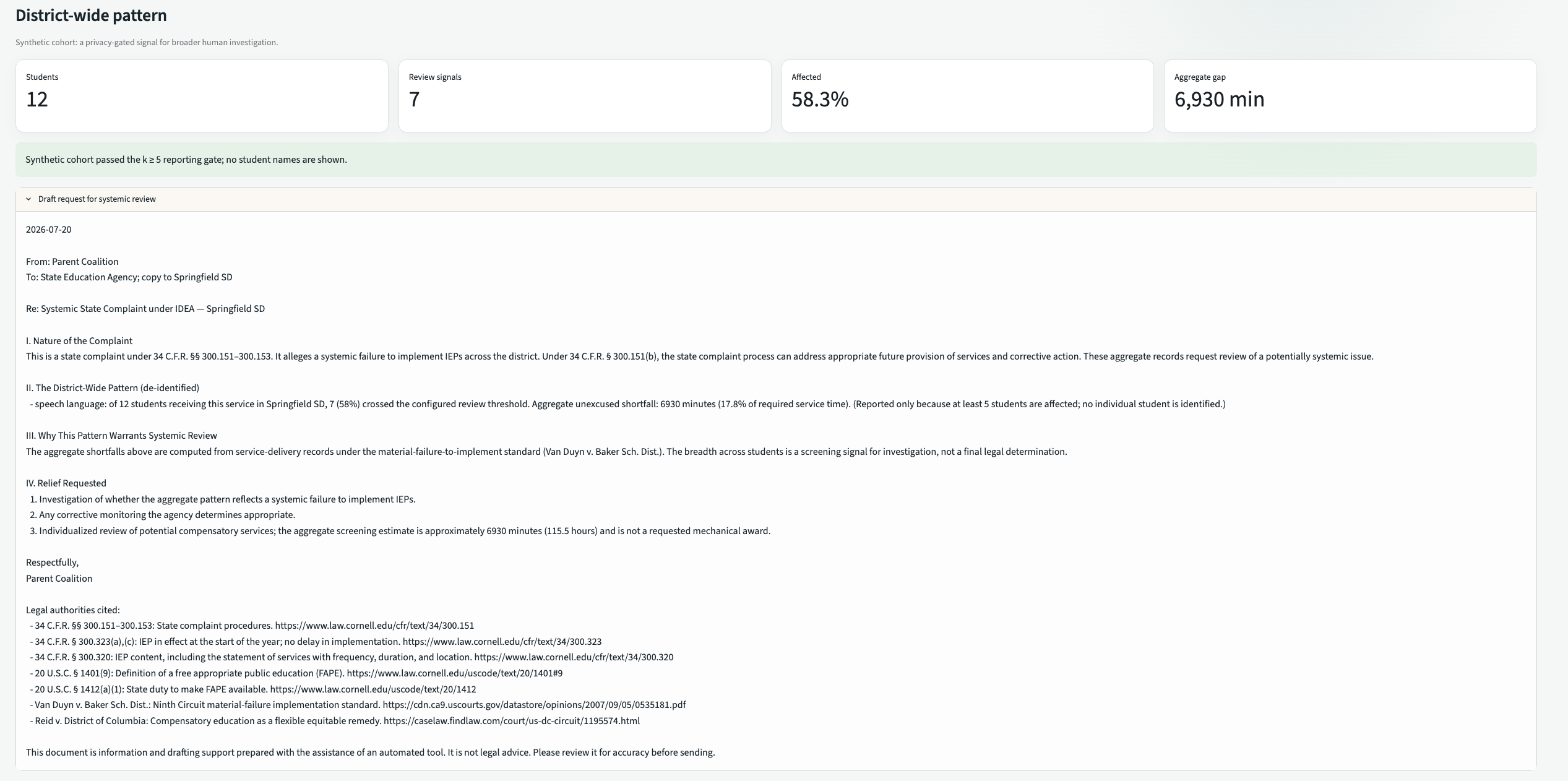
Privacy-gated analysis reveals de-identified patterns only after the minimum reporting threshold is met.
-
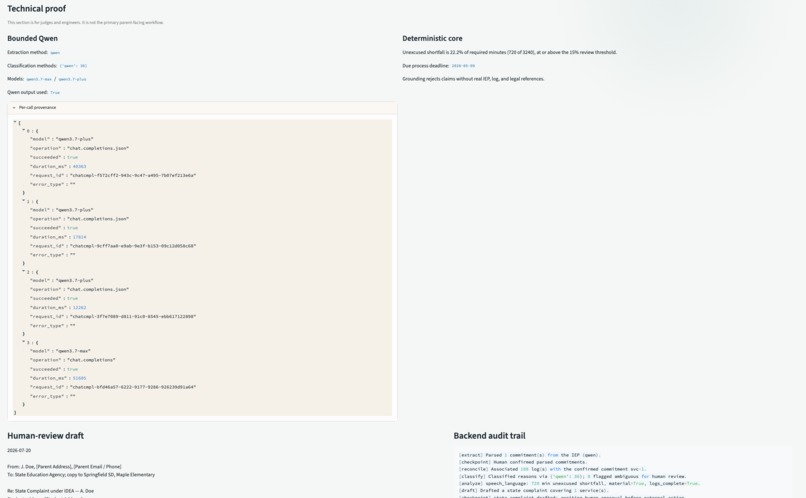
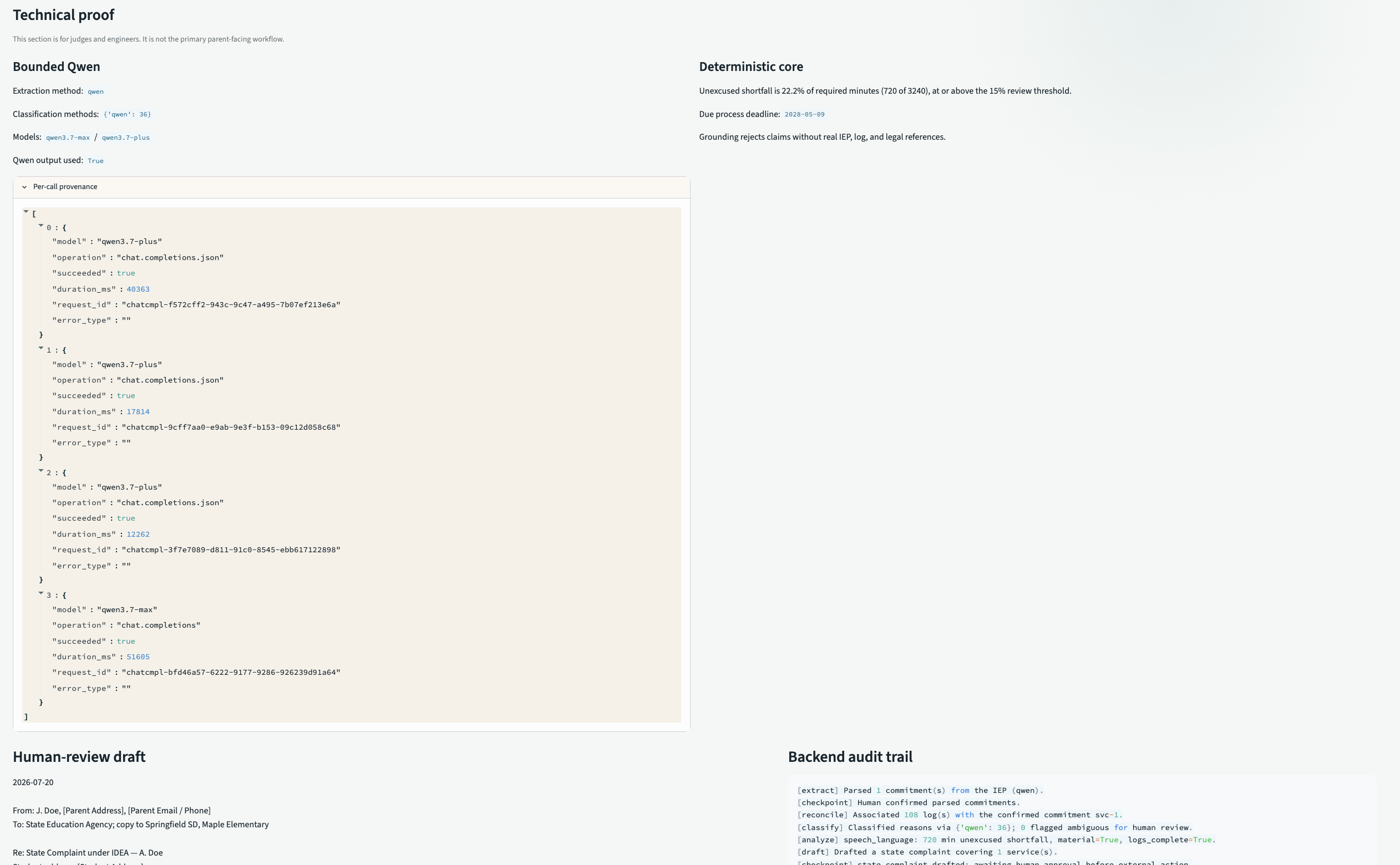
Provenance separates Qwen interpretation, deterministic calculations, and human decisions.
-
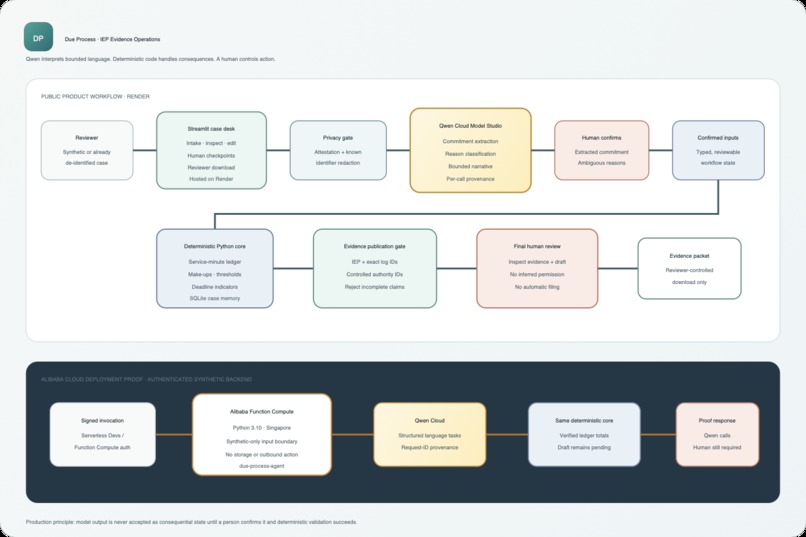
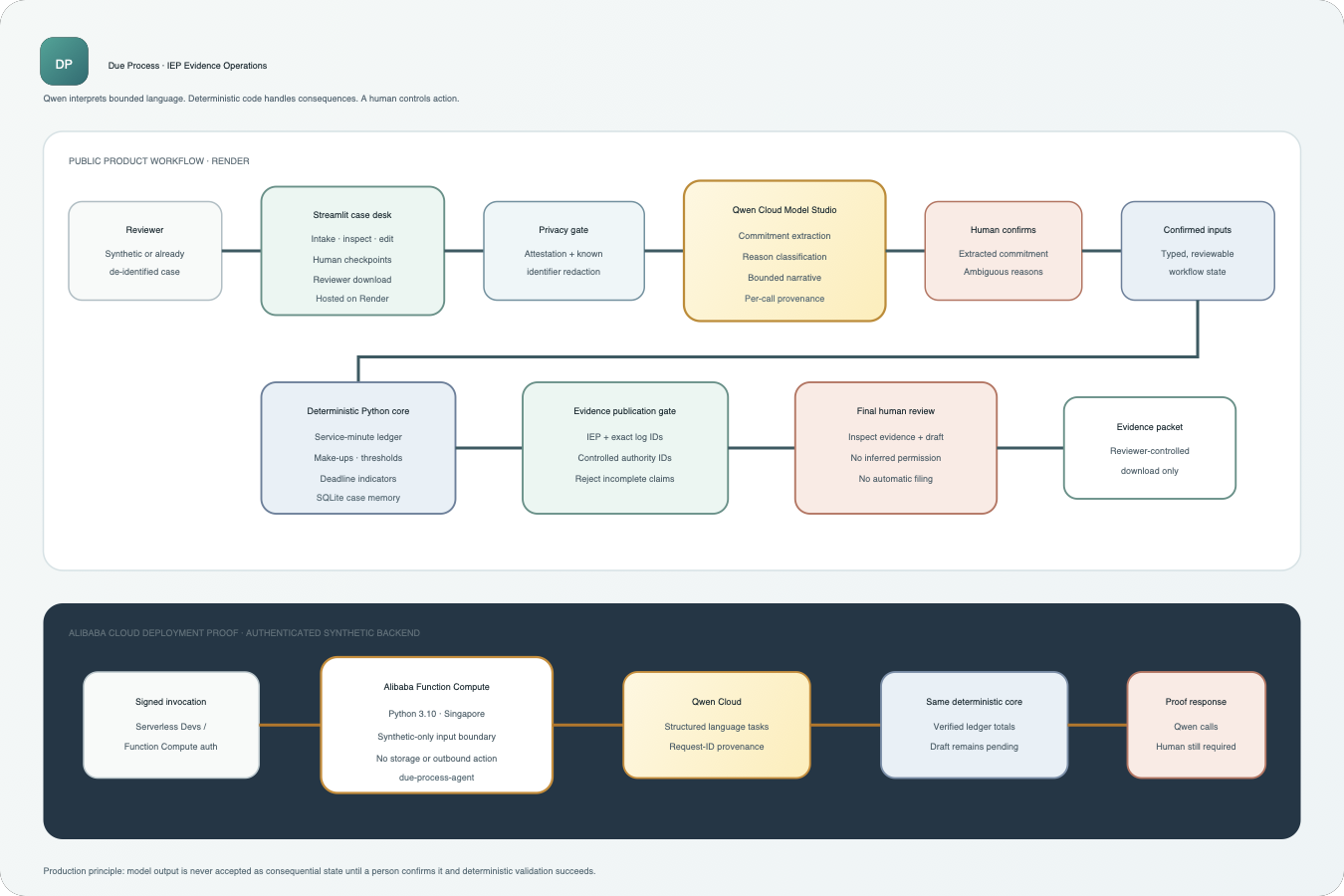
Qwen handles ambiguity, deterministic Python handles consequences, and a human controls action.
-
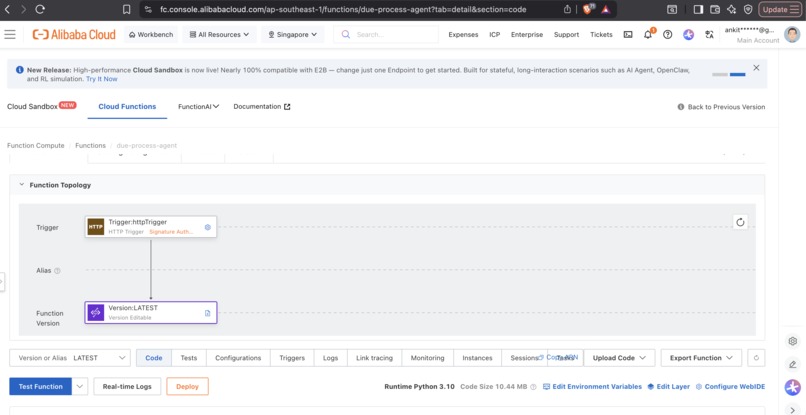
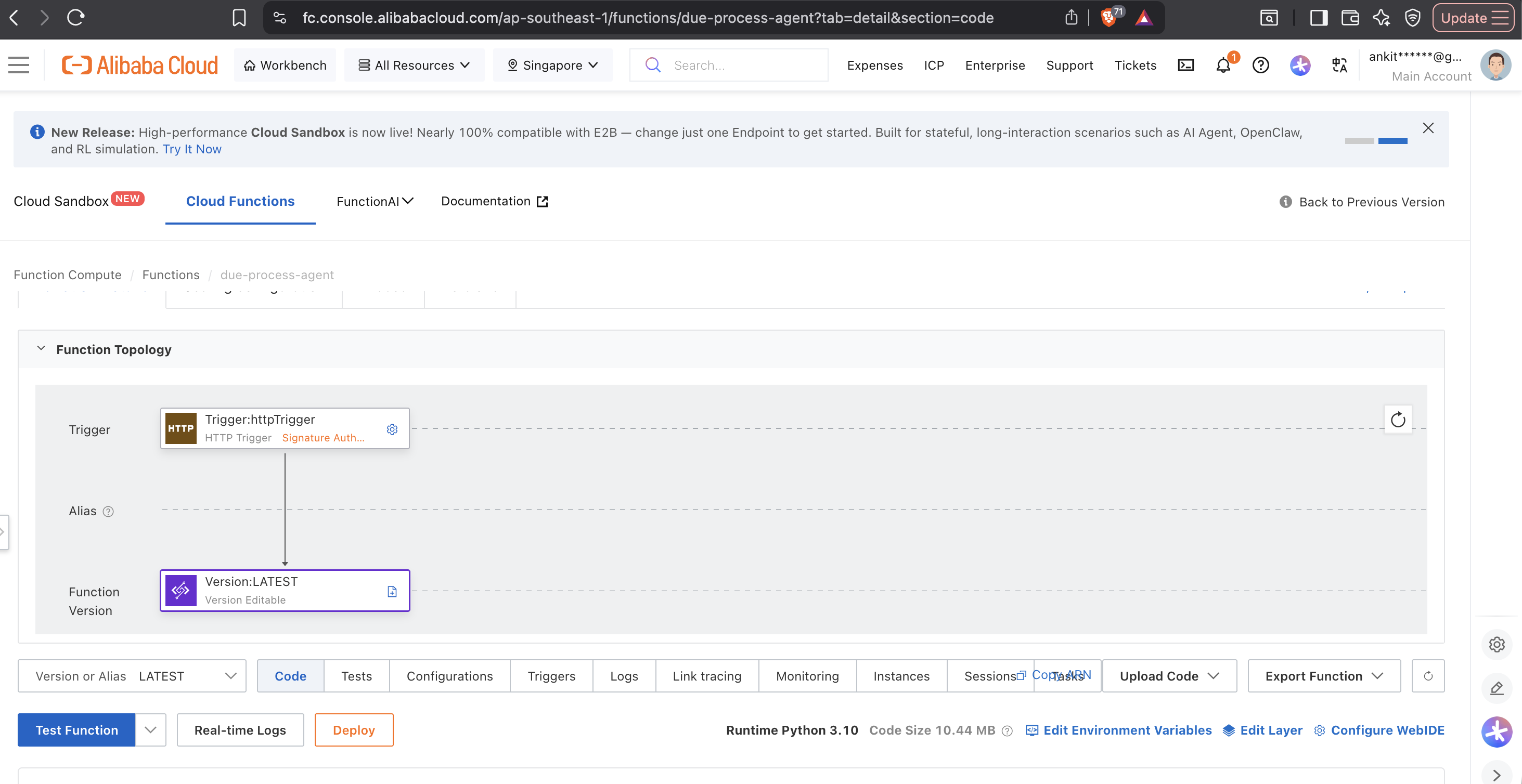
Authenticated Python 3.10 backend running on Alibaba Cloud Function Compute in Singapore.
Inspiration
Special-education teams generate enormous amounts of documentation, yet one critical operational question remains surprisingly difficult to answer:
Were the services described in the IEP actually delivered?
The answer is usually scattered across IEP documents, provider logs, attendance records, emails, and family notes. Families, advocates, and support organizations must manually reconstruct this history while procedural deadlines continue to run.
The problem is not a lack of documents. It is the lack of a reliable evidence operation connecting them.
We created Due Process — IEP Evidence Operations to become that operational layer: a trustworthy workspace where fragmented records become an auditable service-delivery history.
What it does
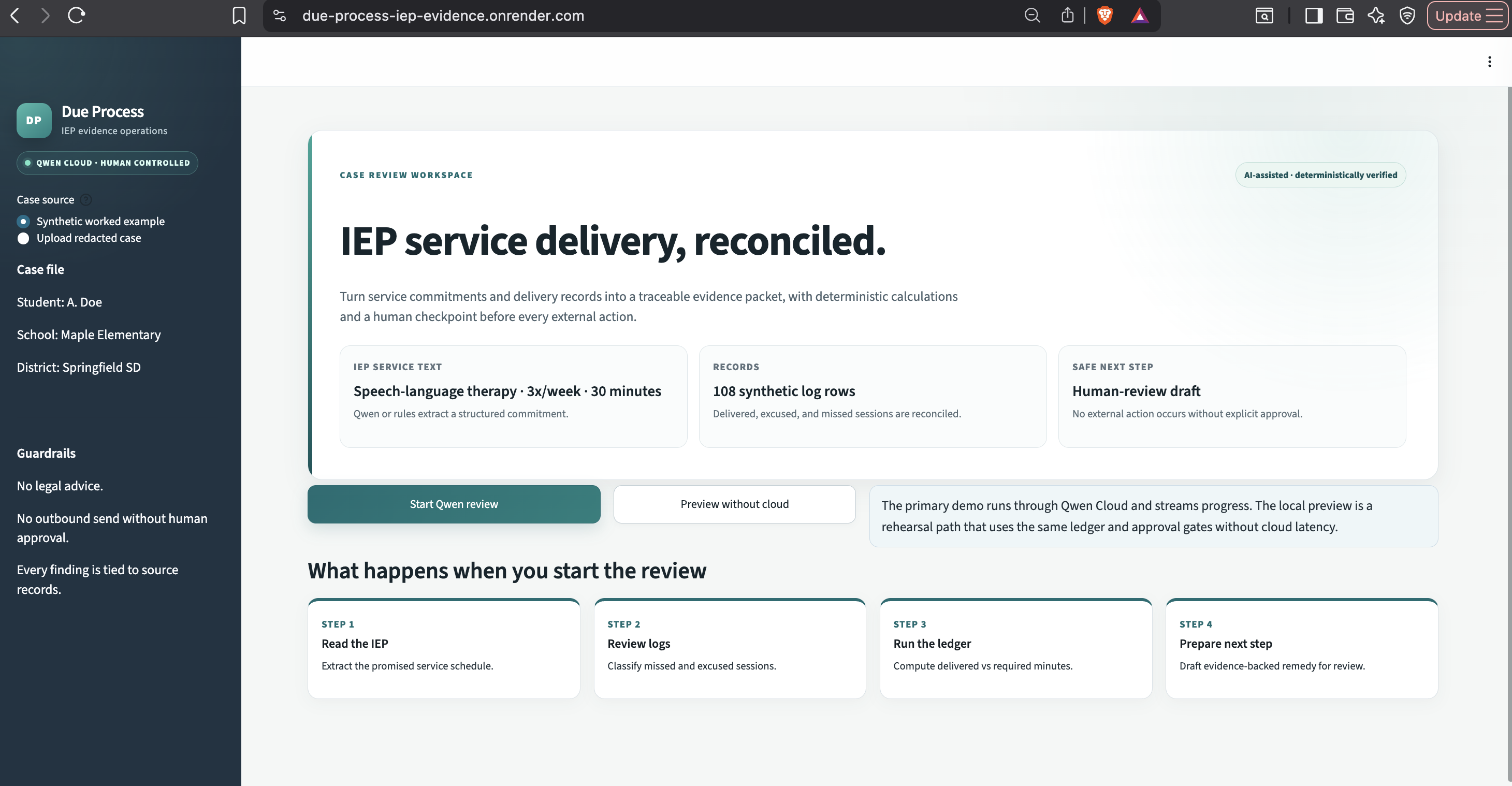
Due Process reviews IEP service delivery from commitment through human-controlled action.
The workflow includes:
Redacted case intake
Users enter de-identified IEP service language and upload service-delivery records through the live workspace.Commitment extraction
Qwen converts inconsistent service language into structured commitments such as service type, frequency, duration, setting, and schedule.Human verification
A reviewer confirms or corrects Qwen’s interpretation before any consequential calculation begins.Delivery reconciliation
A deterministic ledger calculates required, delivered, excused, made-up, and unexcused service minutes.Exception management
Qwen classifies ambiguous missed-session explanations. Unresolved cases become visible human-review tasks instead of silent assumptions.Evidence traceability
Every material claim is connected to the supporting IEP provision, service-log rows, calculation, and controlled authority reference.Deadline awareness
Separate procedural indicators help reviewers identify time-sensitive cases while clearly requiring jurisdiction-specific verification.Action preparation
The system prepares a source-linked evidence packet and draft communication for human review.Human-controlled action
No filing, email, storage, or external escalation occurs automatically.
For authorized organizations, Due Process can also surface privacy-protected patterns across cases without exposing individual records or automatically determining liability.
The product’s operating principle is:
Qwen handles ambiguity. Deterministic code handles consequences. A human controls action.
Why it is different
Due Process is not another document chatbot.
Its novelty is the separation of three responsibilities:
- Qwen intelligence plane: interprets inconsistent language, classifies ambiguous explanations, and prepares controlled narratives.
- Deterministic evidence plane: owns arithmetic, reconciliation, thresholds, deadline indicators, authority selection, and evidence validation.
- Human control plane: confirms extracted commitments and explicitly approves every consequential action.
This architecture preserves the flexibility of generative AI without allowing fluent model output to silently alter service calculations or trigger external action.
How we built it
Due Process was created during the hackathon as a production-oriented Track 4 Autopilot Agent.
The public case workspace is built with Streamlit and deployed on Render. It connects to Qwen Cloud Model Studio through its OpenAI-compatible API.
Qwen is intentionally limited to bounded language tasks:
- structured IEP commitment extraction;
- classification of missed-session explanations;
- controlled narrative and instrument drafting.
Deterministic Python modules handle:
- service-minute arithmetic;
- make-up reconciliation;
- screening thresholds;
- deadline indicators;
- controlled authority selection;
- evidence-ID validation;
- approval state;
- packet generation.
Every model-backed step records execution provenance and reports whether Qwen completed the task or the system used its transparent local fallback.
A separate authenticated backend is deployed to Alibaba Cloud Function Compute in Singapore. It runs the packaged synthetic workflow, invokes Qwen Cloud, reports sanitized provenance, rejects custom student records, and cannot perform storage, email, or filing actions.
The repository includes deployment definitions, architecture documentation, synthetic demonstration records, evaluation tooling, security boundaries, and reproducible testing instructions.
Challenges we ran into
Building trust into the workflow
A fluent AI response is not automatically a reliable product result. Every important conclusion needed to remain inspectable and reproducible.
We solved this by separating Qwen interpretation from deterministic calculations and by recording provenance for every model-backed step.
Handling incomplete and ambiguous records
Service logs are inconsistent. A missed session might be described as “provider unavailable,” “student absent,” or simply “schedule issue.”
Automatically forcing every explanation into a category would create false confidence. Due Process instead turns unresolved ambiguity into a visible human-review task.
Protecting sensitive information
Educational records may contain highly sensitive information. The public experience therefore accepts only synthetic or already-de-identified records.
The intake flow performs privacy checks and requires explicit attestation. Redaction is treated as a safety layer, not as a complete regulatory compliance guarantee.
Avoiding automated legal conclusions
Service delivery, procedural deadlines, and possible remedies depend on facts and jurisdiction.
Due Process produces evidence-backed review signals and discussion starting points—not findings of liability, guaranteed remedies, or legal advice.
Measuring the system honestly
Synthetic policy scenarios can verify software consistency, but they cannot establish legal validity or real-world accuracy.
We therefore present the evaluation as an engineering regression suite and clearly identify advocate-labeled, de-identified validation as future work.
Accomplishments that we're proud of
- 155 passing tests covering ledger arithmetic, ingestion, privacy boundaries, grounding, approval gates, Qwen integrations, Alibaba deployment boundaries, and the complete case workflow;
- all constructed policy-regression scenarios match their encoded expected outcomes;
- every emitted internal authority ID resolves to the controlled corpus;
- synthetic shortfall accounting produces a zero-minute implementation difference;
- a complete redacted demonstration case exercises real CSV intake and deliberate human resolution of ambiguity;
- verified Qwen-backed execution on Alibaba Cloud Function Compute;
- four successful Qwen calls during the recorded synthetic deployment proof;
- an authenticated Function Compute boundary that rejects custom records and outbound actions;
- a live, publicly accessible product workspace rather than a static prototype.
What we learned
We learned that the strongest AI products are not necessarily the most autonomous.
For sensitive operational workflows, the better product clearly identifies which decisions belong to AI, which belong to deterministic software, and which must remain with a person.
We also learned that provenance should be product data—not merely debugging metadata. Reviewers need to know where a statement came from, which record supports it, whether a model completed the task, and where human judgment entered the workflow.
Most importantly, evidence organization is itself a meaningful product outcome. A clear, source-linked record can help a family, advocate, or organization begin a productive conversation before escalation becomes necessary.
What's next for Due Process — IEP Evidence Operations
Our next phase focuses on validation, organizational readiness, and responsible adoption:
- structured pilots with special-education advocates, legal clinics, and Parent Training and Information Centers;
- an advocate-labeled, de-identified evaluation dataset;
- expert-reviewed state procedural modules;
- organization workspaces with role-based access and case ownership;
- accessibility and adversarial privacy testing;
- short-lived Alibaba Cloud identities and formal retention controls;
- approved calendar and email integrations governed by the same human-action boundary;
- reporting tools for authorized organizations to identify recurring service-delivery patterns.
Our long-term goal is to establish Due Process as the evidence operations system for IEP service delivery: a reliable place where fragmented records become an auditable history, concerns become verifiable, and every consequential action remains under human control.


Log in or sign up for Devpost to join the conversation.