Inspiration
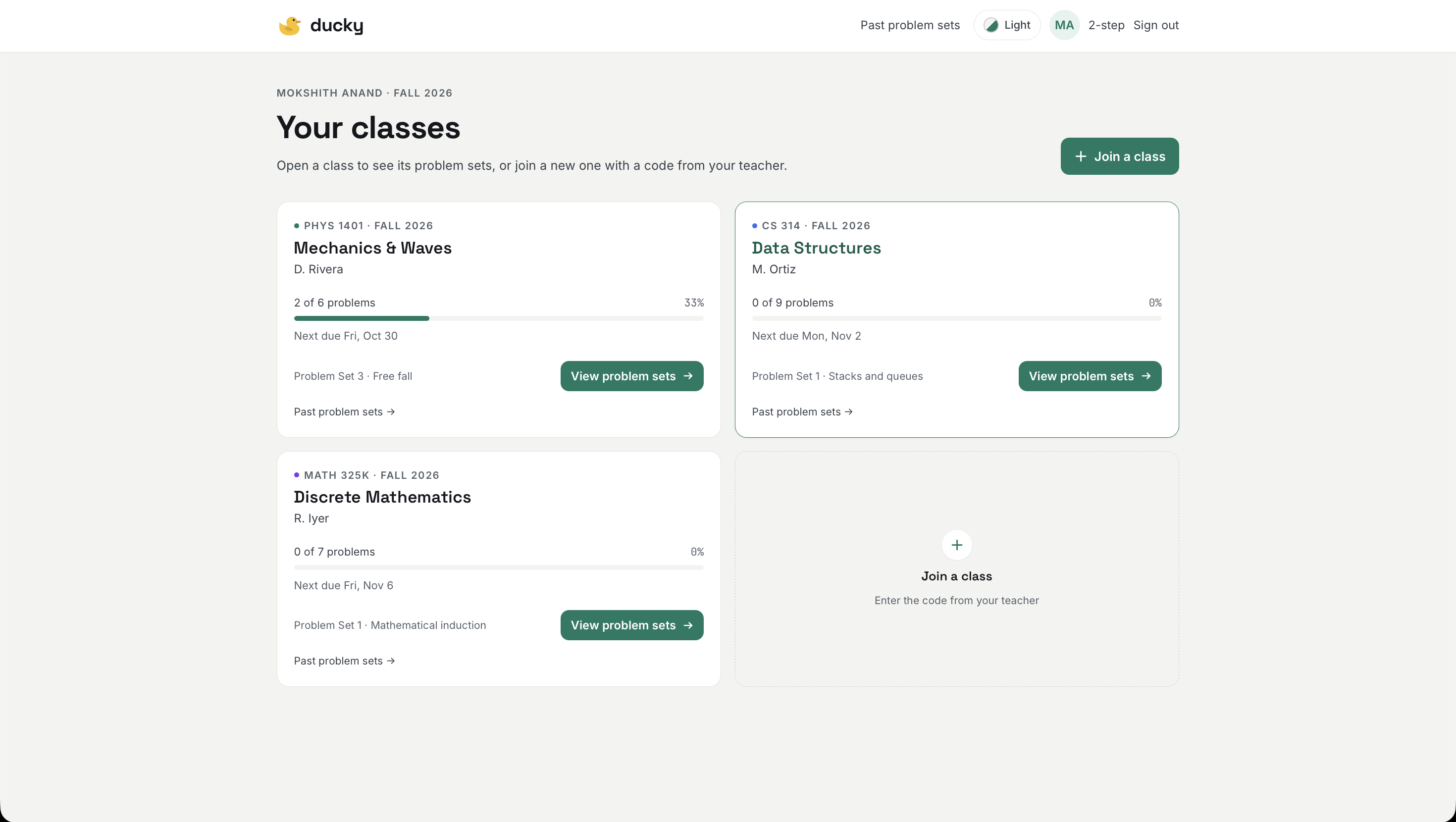
The inspiration behind Ducky comes from the desire to alleviate the overwhelming workloads carried by educators, who spend late nights grading. Having seen firsthand how stretched students (especially high school and college students) are to attend office hours, we want to build a tool that supports students through active dialogue while giving teachers real-time misconception analytics.
What it does
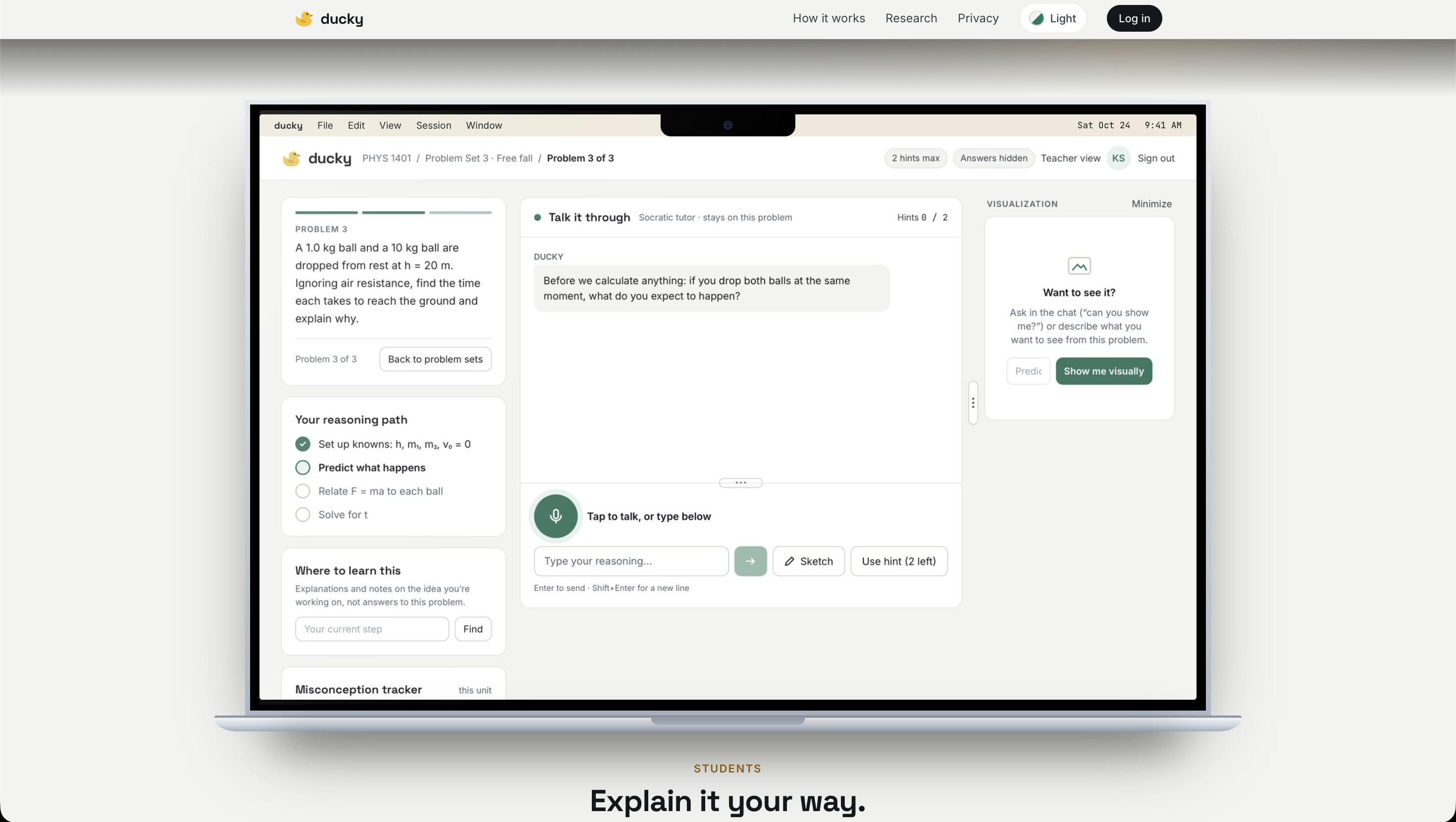
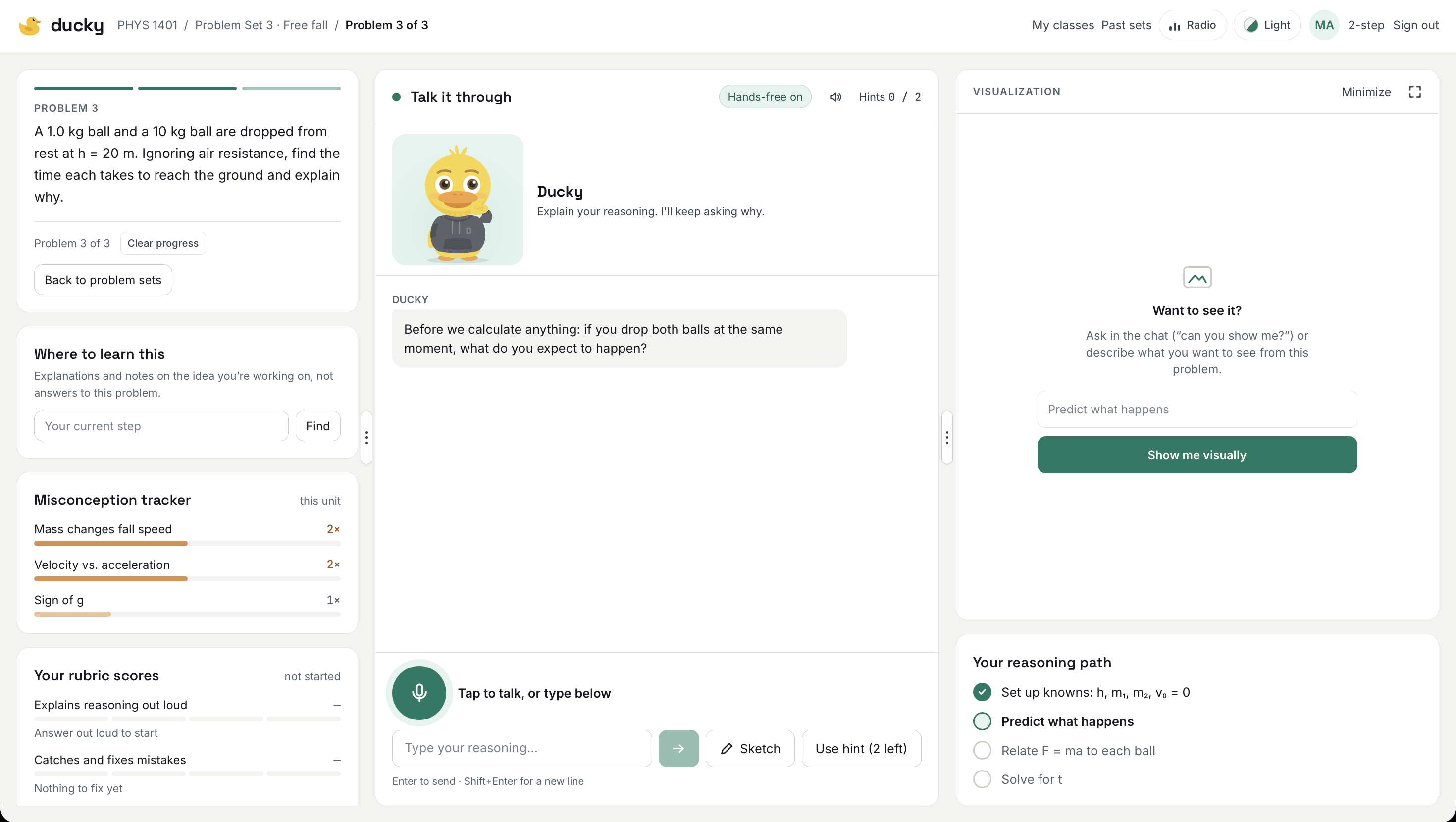
Ducky is an interactive, AI-powered learning system that combines real-time voice conversations and text-to-audio capabilities to help students essential principles through active self-explanation. Instead of handing out direct answers, the platform guides students step-by-step through complex problem sets while automatically catching cognitive misconceptions and mapping them to a teacher dashboard for actionable classroom insights.
How we built it
We built Ducky using HTML, CSS, and TypeScript to create a clean, responsive, and intuitive frontend interface, which we deployed using Vercel. Under the hood, the application integrates low-latency voice AI pipeline and dynamic prompt orchestration for Socratic tutoring.
Challenges we ran into
The biggest challenge was successfully integrating the voice AI pipeline and achieving rapid audio processing and compression. Ensuring that speech generation and conversational turns could happen quickly and reliably without introducing awkward pauses required intense optimization so that the user experience felt like a natural, fluid conversation rather than a sluggish chatbot.
Accomplishments that we're proud of
We’re really proud that we have a rapid response time of under 30 seconds for voice interactions, maintaining a smooth cadence that keeps students engaged in their reasoning path. Successfully getting the real-time AI voice functionality and the automated diagram verification working seamlessly together within a hackathon timeframe was a massive win for our team.
What we learned
Through building Ducky, we learned the intricacies of rapid ideation, tight scoping, and executing under pressure to develop a proper, cohesive minimum viable product (MVP). We obtained deep practical experience in managing AI latency, designing effective Socratic system prompts, and aligning software architecture with real educational research.
What's next for Ducky
We plan on shipping the platform out and allowing the public to use it as a genuine, accessible resource to assist in everyday learning. We plan to further optimize our latency, expand our problem modules across more STEM subjects, and pilot the teacher dashboard in real classrooms to help educators scale support.
Built With
- css
- github
- html
- meta
- muse
- northmark
- postgresql
- serpapi
- supabase
- typescript
- vercel

Log in or sign up for Devpost to join the conversation.