-
-
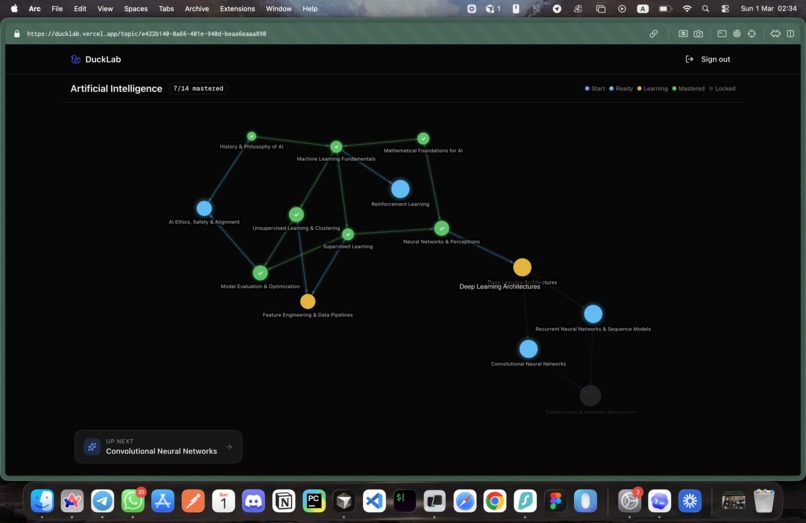
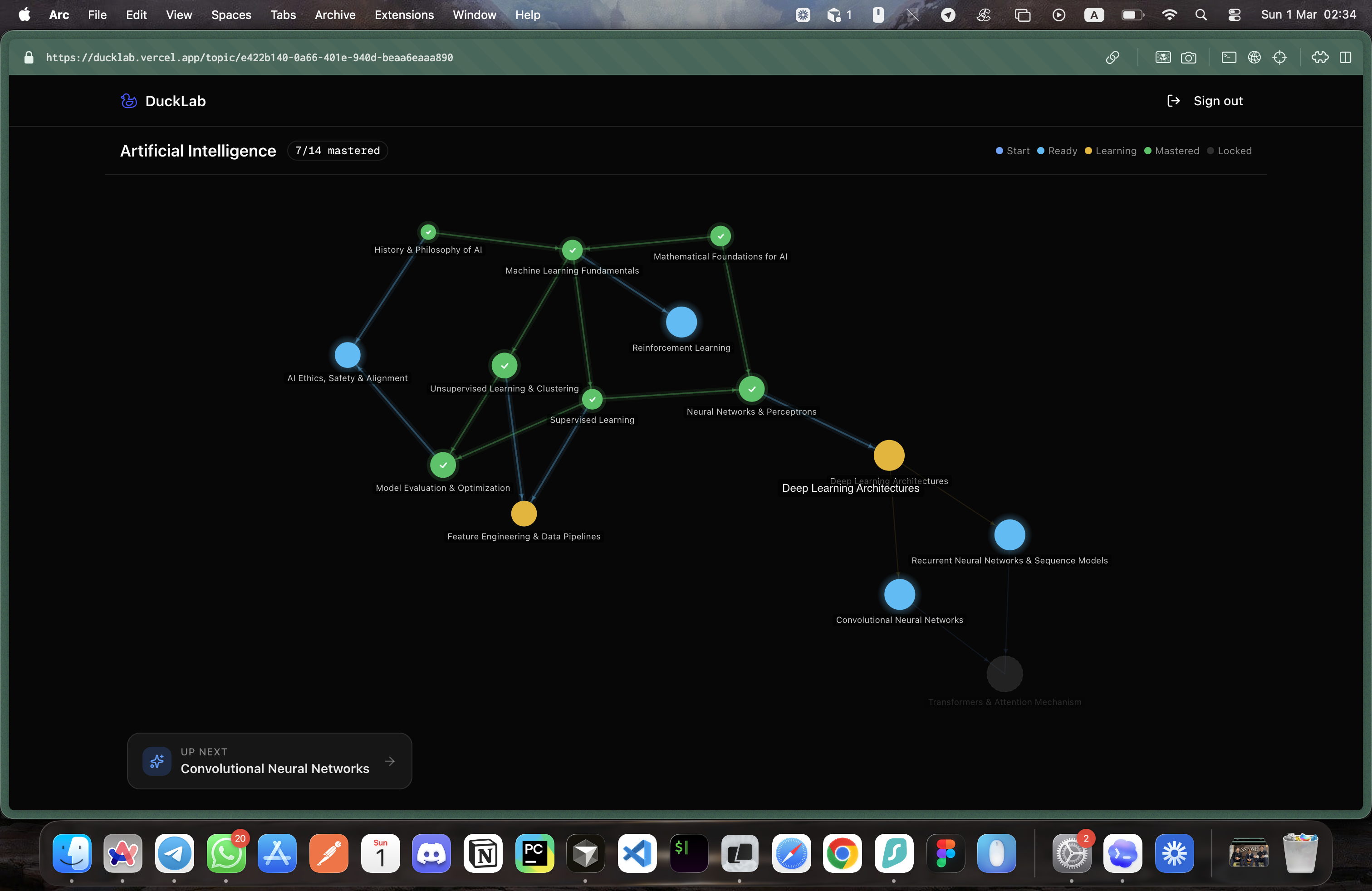
graph
-
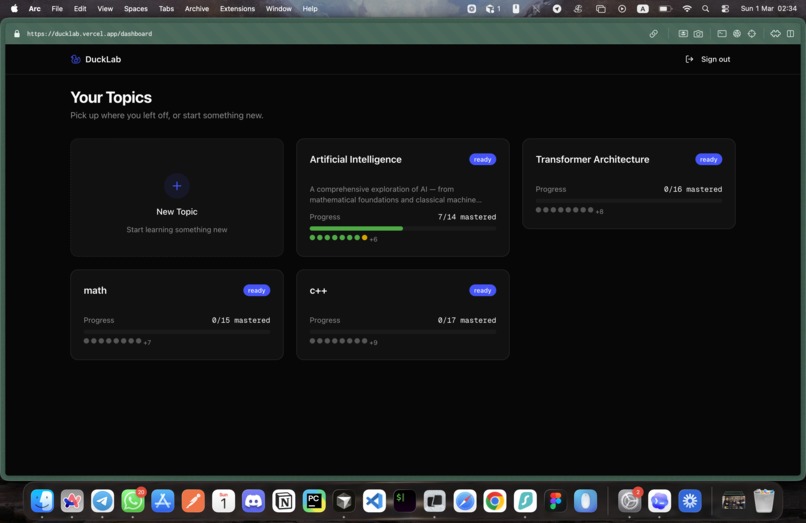
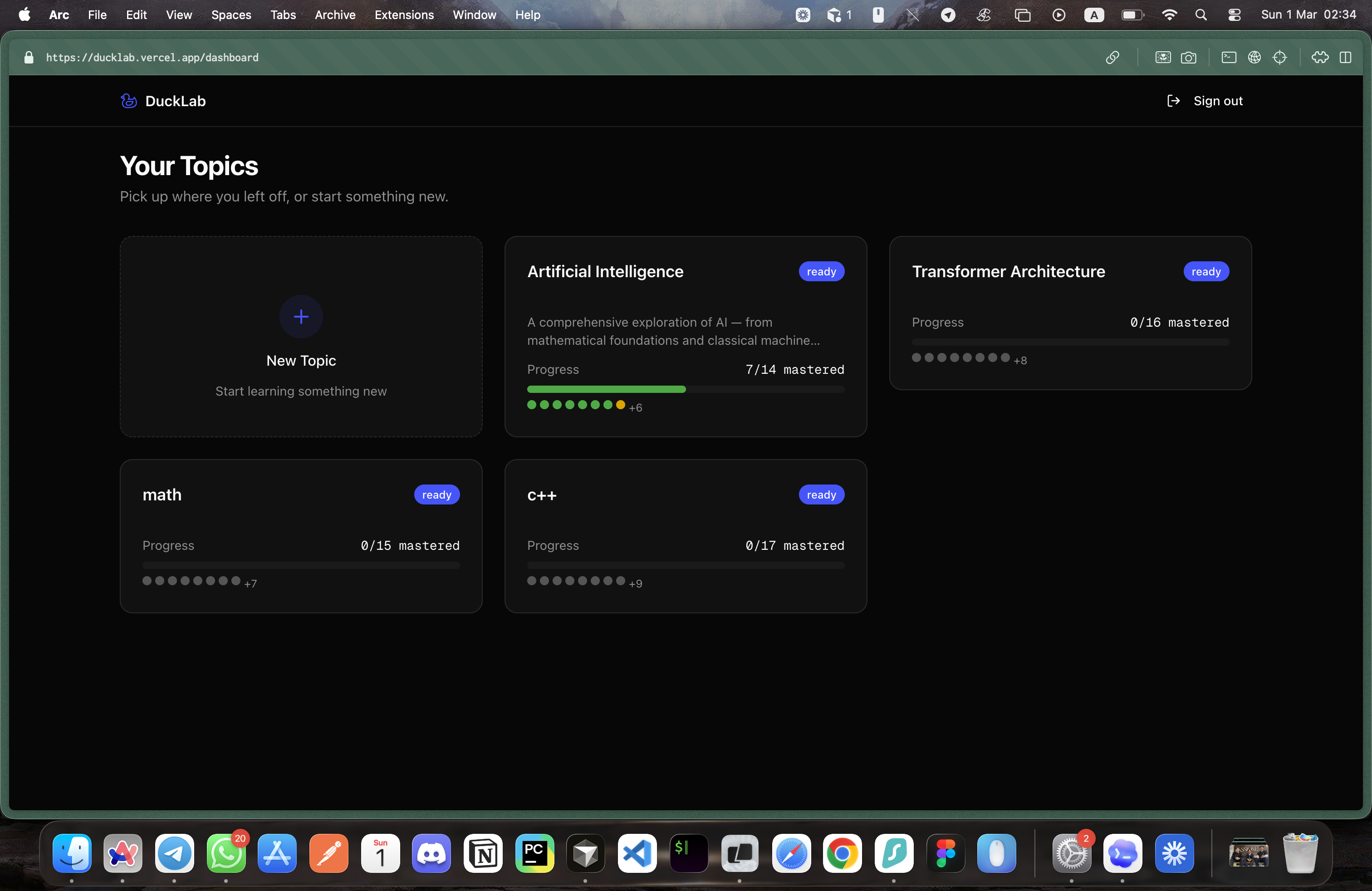
dashboard of all the topics
-
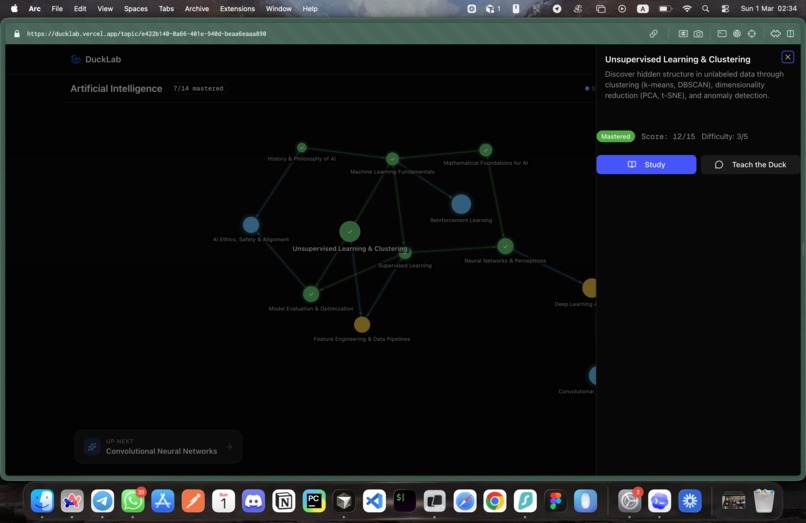
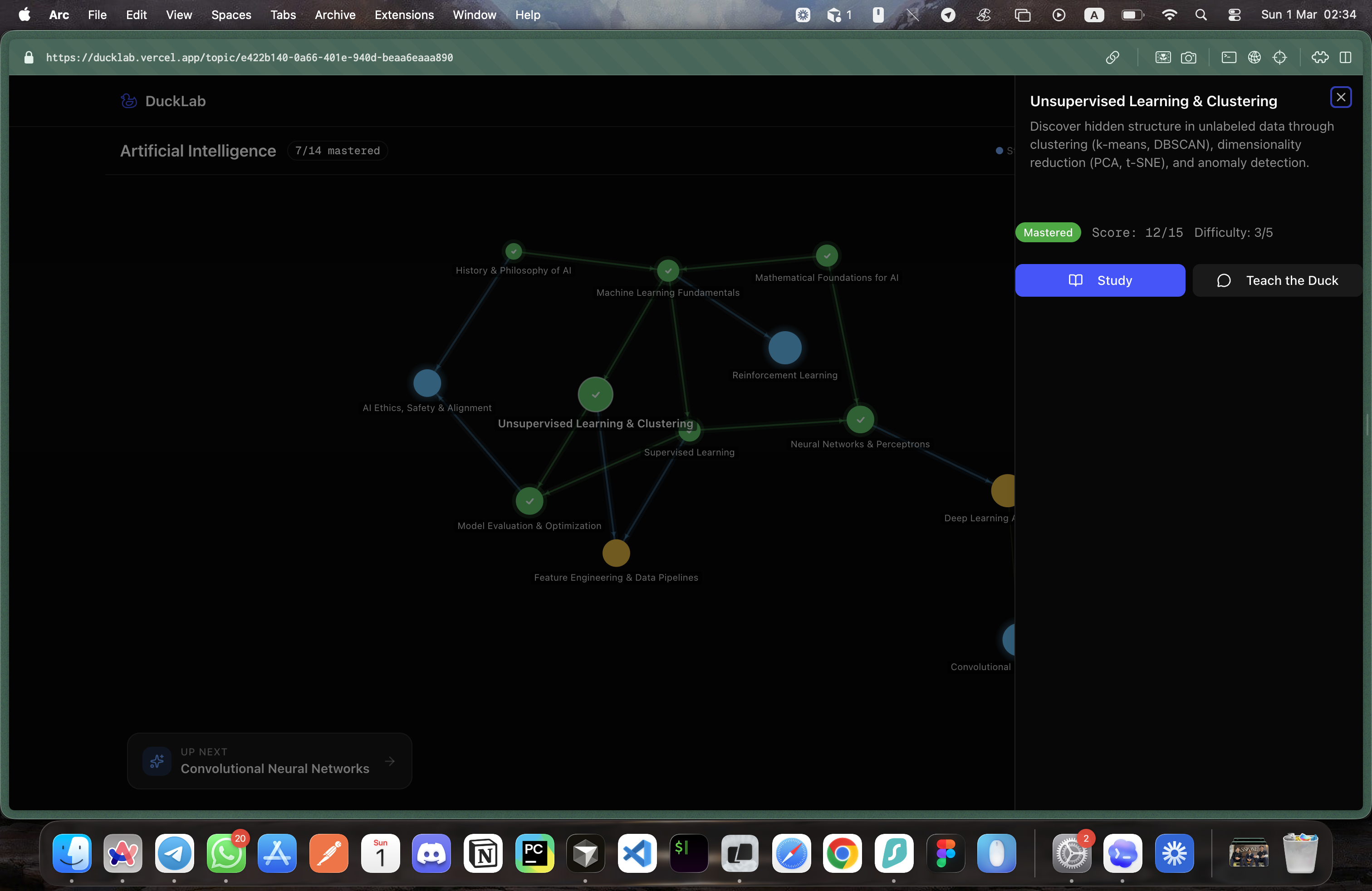
each node has individual scores given by the duck (if been assessed) and difficulty (given in the beginning by minimax)
-
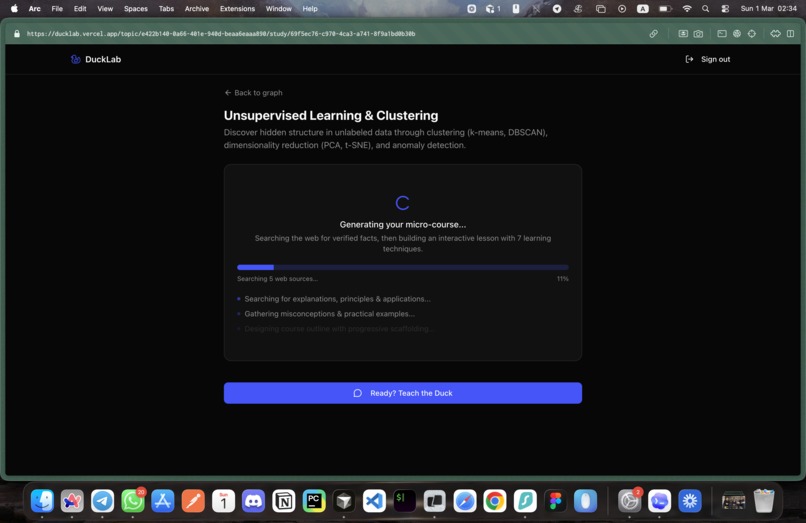
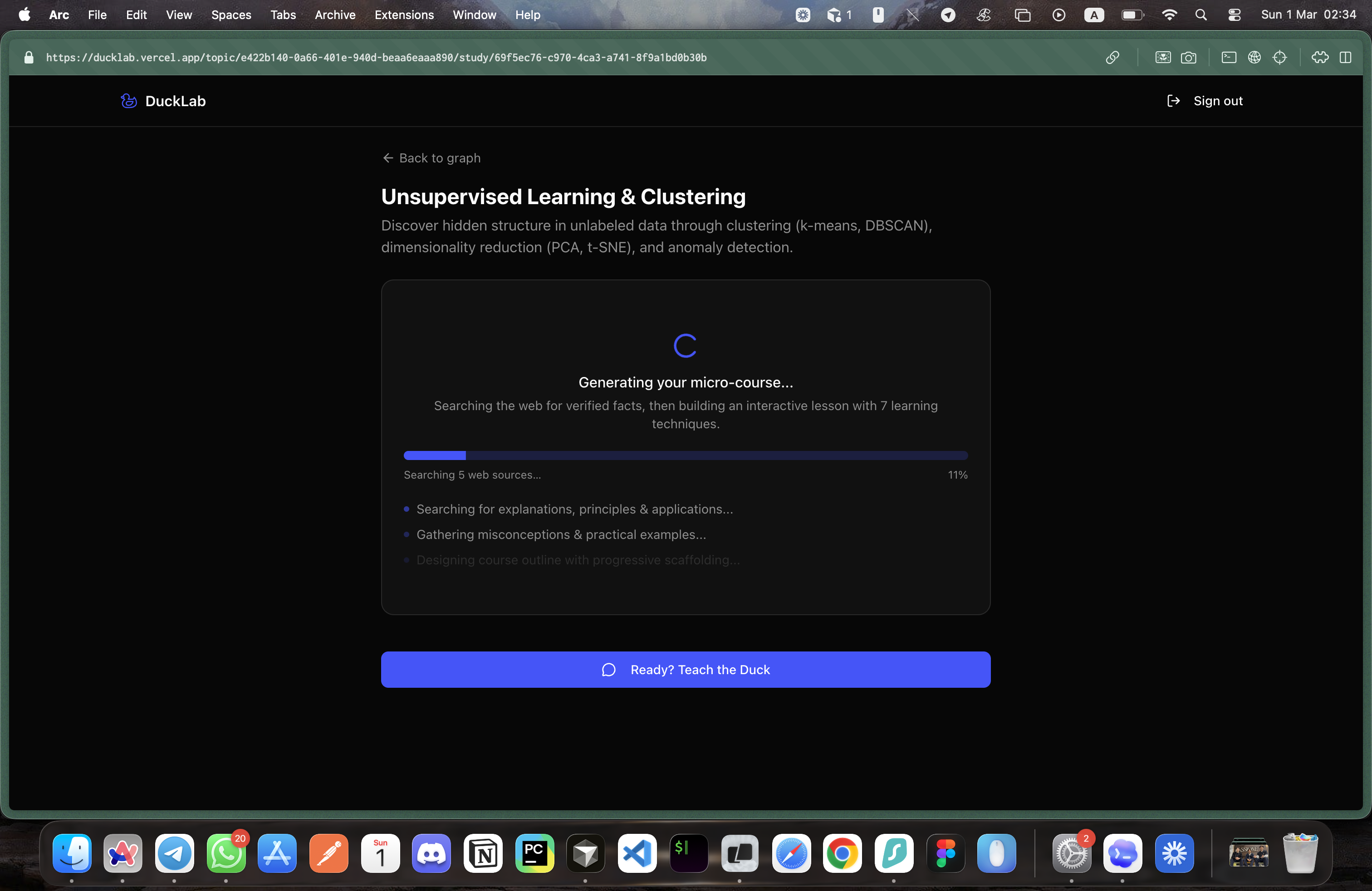
course generation with exa AI
Inspiration
As developers, we often have heard about the term "try to make a rubber duck convinced about your idea first" to validate our knowledge. We applied this rule for every field,
What it does
You type any topic and an agentic pipeline (MiniMax, Exa, Retell AI) generates a knowledge graph, curates web resources into micro-courses, then tests your understanding through Socratic teach-back to an AI rubber duck — scoring accuracy, simplicity, structure, transfer, and metacognition.
How we built it
We used next js full stack + supabase + vercel(deployment) + minimax api for llm + minimax voice + retellAI api for real-time conversational ai agent using minimax voice.
For IDE we used cursor + opus 4.6 and 100$ usd worth of credits for 2 developers LOL
Challenges we ran into
optimizing graph interfaces in the frontend and making them as much customizable as possible (as less rigid as possible)
Accomplishments that we're proud of
The proudest accomplishment we've got so far is that we are truly passionate about the idea and we truly believe that it can be a great add-on for ANY edTech startup. It is as simple as a bottle of water on the desk but so brilliant.
We were able to create something outside of just a gpt wrapper for the first time for the whole team.
we were trying to set up a real-time conversational ai agent manually for 3 hours and have managed to make it but the latency was extremely high. Ultimately, we just added retell ai integration in one prompt.
What we learned
How easy it has become to build as big projects as we built in the last 15 hours. Through vibecoding, the field of software is truly being open to many new inventions and projects. We have also learnt to properly set Auth because we once got 400 auth requests in 5 minutes LOL
What's next for DuckLab
Built With
- exa
- mcp
- minimax-llm-api
- minimax-voice
- next.js
- supabase
- ts
- tsx
- vercel

Log in or sign up for Devpost to join the conversation.