Try it here: https://horizon.meta.com/world/10241323577005469
Inspiration
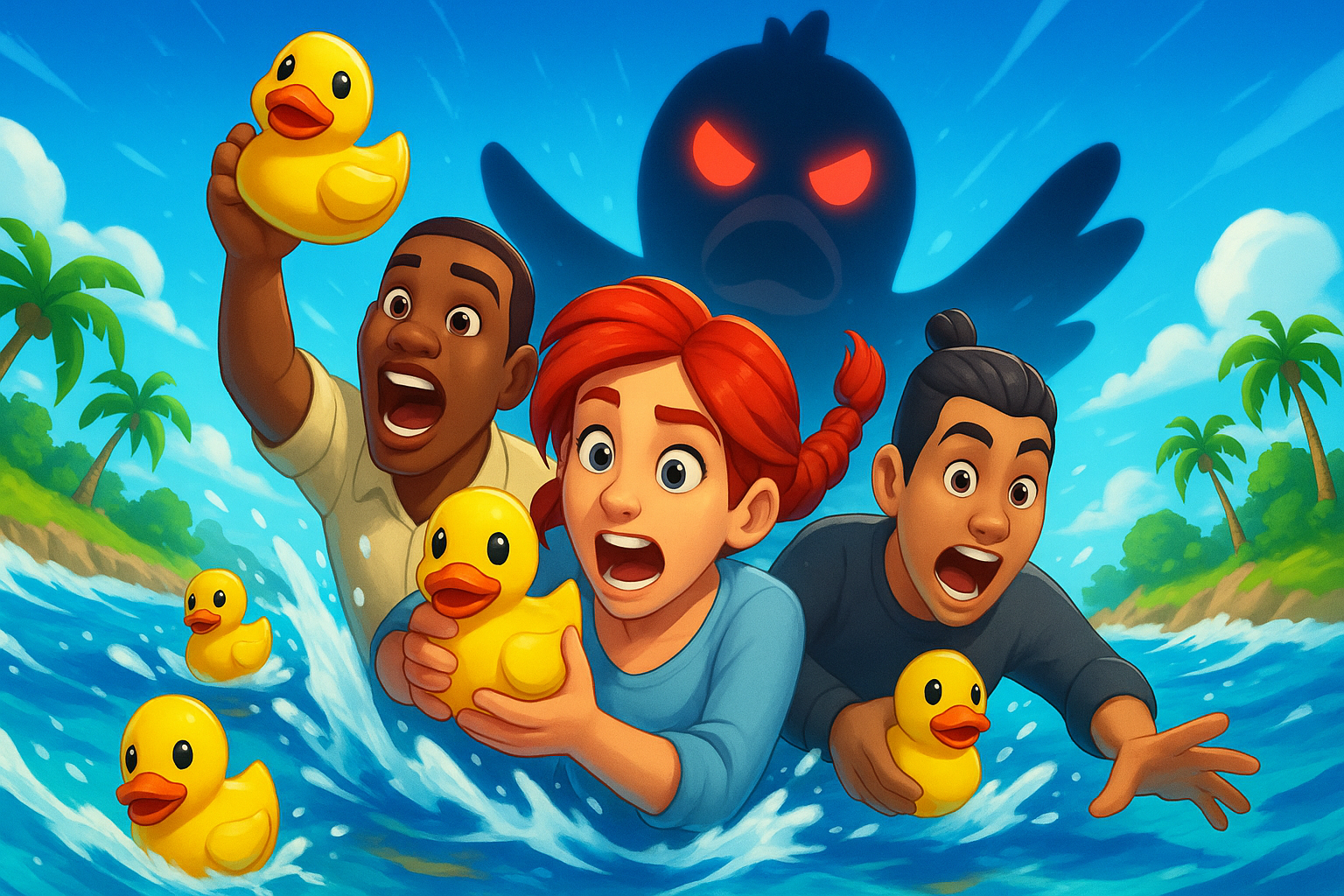
Slenderman meets rubber ducks. I wanted to mix the spooky feel of the classic Slenderman game with the fun of modern co-op games. The challenge was how to combine a dark, scary mood with a bright and friendly look. I was inspired by the true story of Curtis Ebbesmeyer and wanted to make a game where players collect rubber ducks together on a Pacific island.
What It Does
It’s a survival game where players race to find ducks. They must leave the safety of the island and walk out onto the low-tide beach to collect lost rubber ducks. But they have to be careful and get back before the tide comes in. If they don’t, something dark and dangerous will start to hunt them.
How I Built It
I have a strong background in design, so I tried to use the tools in the world editor to make everything else as easy as possible. For coding, I took apart the example scripts from the tutorial worlds and changed them to fit my project. I used Cursor AI to help edit the code and kept it simple so I could follow it easily.
For the art, I didn’t want to model anything myself. I used only the basic shapes and public assets in the editor. To make them feel more original, I used Meta GenAI to create custom textures and adjusted color tint and brightness in the property attributes to match the look I wanted. This saved me time so I could focus on what I love most, laying out the level design carefully to make the world tell the story.
Biggest Challenge
At first, I planned to use the economy tutorial scripts to handle the duck collecting and upgrades. But the IWP system stopped working during the last week of the competition. Instead of giving up, I decided to rewrite the duck collection system from scratch. I made a “bath tub” script that counted ducks when players dropped them into the tub’s trigger zone.
Even though it cost me some sleep, this change actually made the game feel better. It added a more hands-on, satisfying way to collect ducks and gave players a stronger reason to return to the safe area in the center of the map.
Accomplishments I’m Proud Of
Mixing the suspense of a survival game with a friendly, light art style.
Using Meta’s public assets in creative ways.
Creating a whole new duck collection system just two days before the deadline.
What I Learned
I’ve been interested in VR for about ten years. I remember when the DK2 headset came out and developers started making games built for VR first. Back then, creators had to be clever and find ways around the limits of new technology. I used the same mindset for this project with the Horizon editor.
I learned how the editor works, what it’s great at and where it struggles. When things broke or didn’t work the way I hoped, I stayed calm and looked for new ways to solve the problem. It reminded me of how older games would create pixel art or 8-bit music out of simple tools, to make something amazing. This project taught me how to use the editor’s limits to make unique, creative experiences in Horizon worlds.
GenAI Use
Textures: I used GenAI on the rubber duck asset to make it look like it had been lost at sea and turned a bit scary. Sound Effects: The duck collection and level-up sounds were both made using the GenAI tool in the editor. I also created some environment sound effects like birds and water sound effects.
What’s Next for Duck or Die – Survive the Tide
Next, I want to give players a stronger reason to leave the safe island. I plan to add a system that punishes them for staying still too long, probably a health bar on the speakers that goes down over time. Players will need to collect ducks to refill it. If they don’t, the music will stop, the tide will rise, and the monster duck will be able to chase them onto the home island. I also want to implement an upgrade system, to keep players engaged and wanting to progress.
Built With
- horizon
- typescript


Log in or sign up for Devpost to join the conversation.