-
-
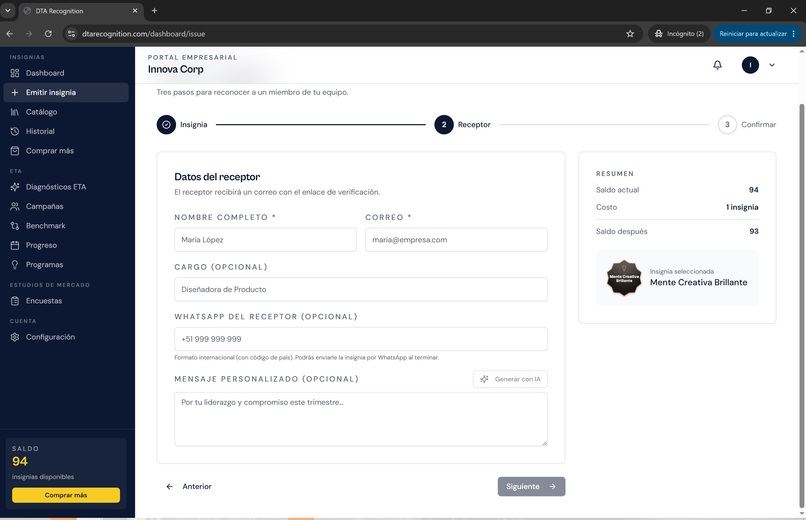
DTA Recognition-Badge Creation
-
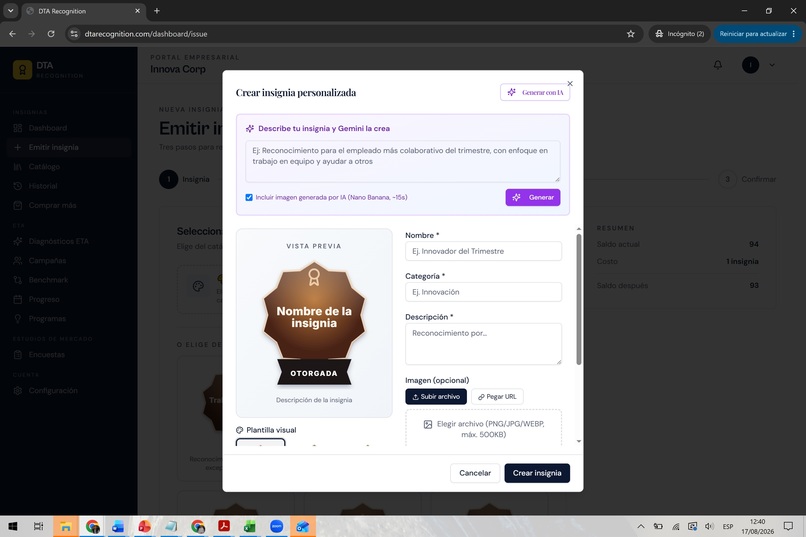
DTA Recognition-Recognize
-
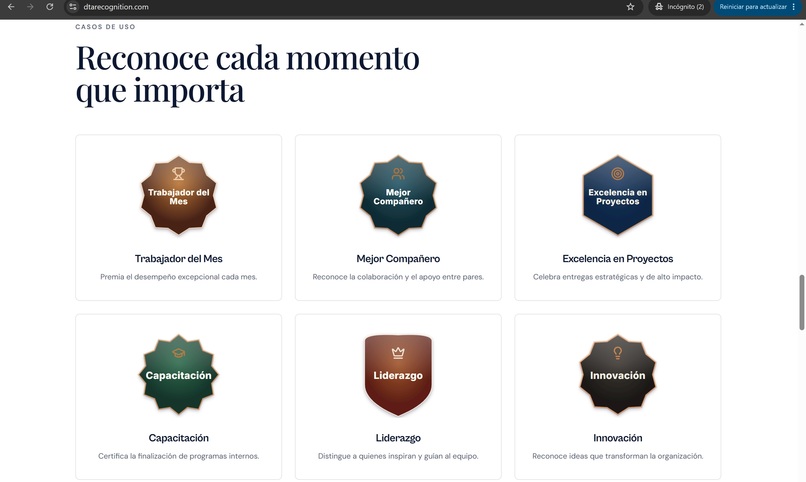
DTA Recognition-Badges
-
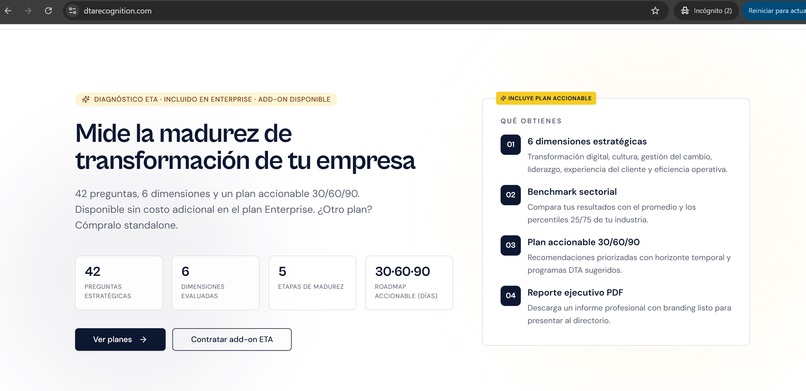
DTA Recognition-Diagnostics
-
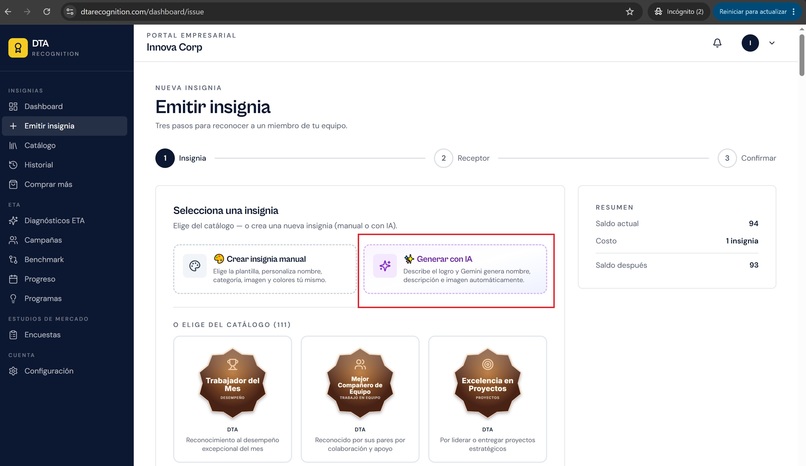
DTA Recognition-Gemini AI
-
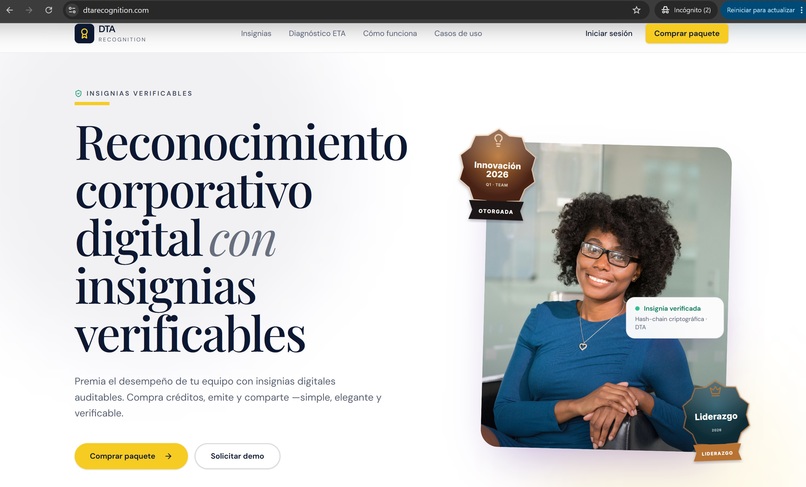
DTA Recognition-Home
-
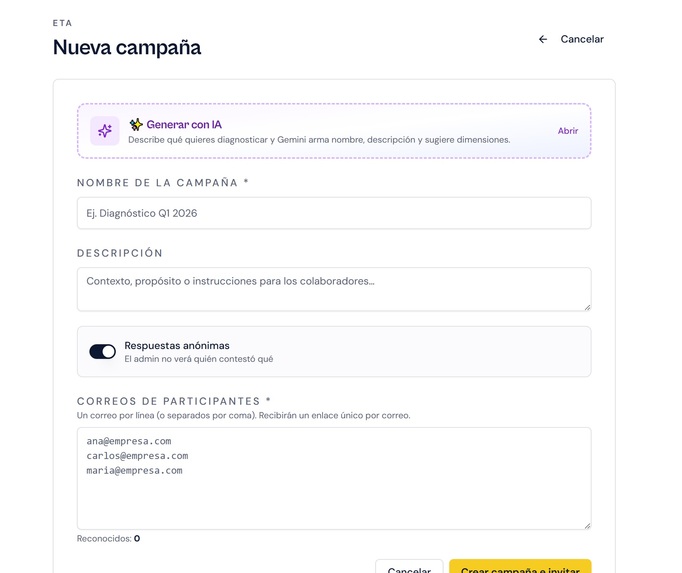
DTA Recognition-Configuration ETA
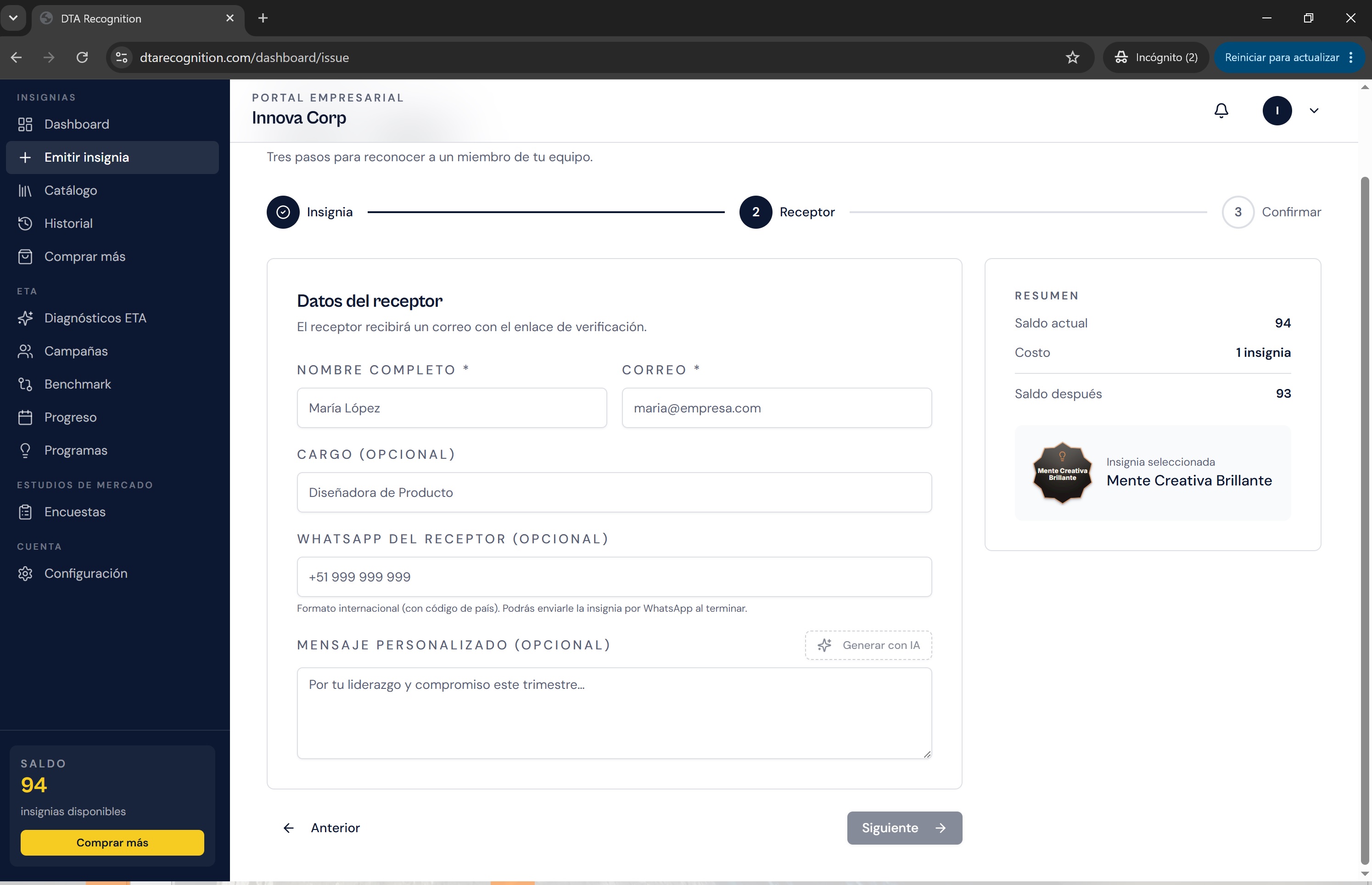
Inspiration
We didn't discover this problem as outsiders. DTA Institute has spent six years as a certification body, issuing over 300 certifications to professionals who train others — Scrum Masters, agile coaches, and instructors across the region. We sat on the administrator side of badge-issuing platforms for our own clients, long before we decided to build something ourselves.
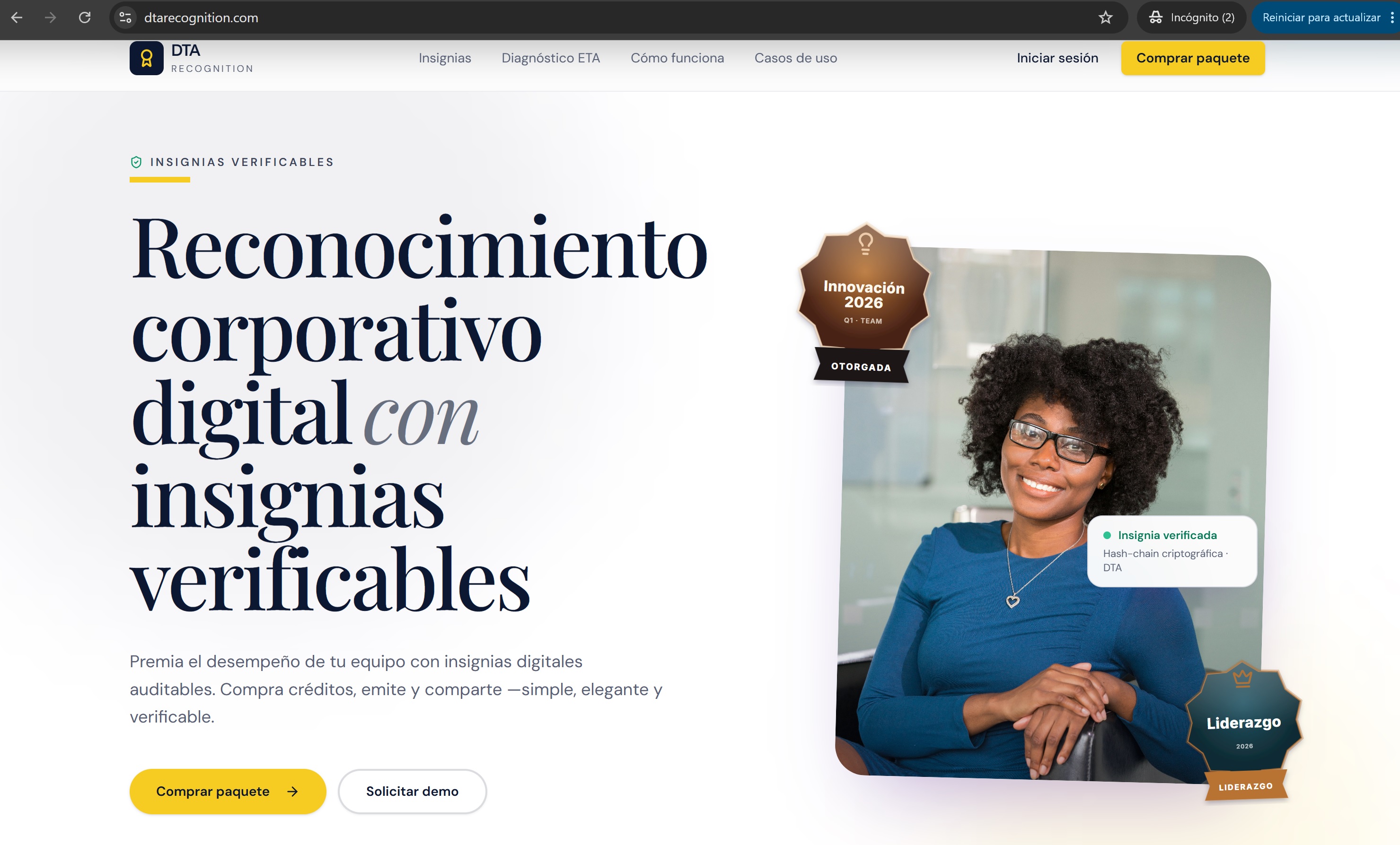
And on that side of the table, we watched the same failure repeat. Every recognition platform on the market works the same way: you pick from a catalog. Employee of the Month. Five Years of Service. Training Completed. If what you want to recognize isn't on the list, you build it by hand — upload an image, write a title, write a description, define the criteria. The custom option technically exists on every platform we used. Nobody used it. It was faster to settle for a badge that didn't quite fit.
We asked the companies we worked with how they actually handle recognition today, and the answers fell into three buckets, none of them visual or shareable. Some make a diploma manually — designed in-house or by whatever design team they have — and print or email it. Some just mention it out loud in a meeting, nothing that outlives the room. And some rely on economic bonuses, paid twice a year or per project, which reward the person financially but leave no public, visual record anyone can see. None of the three gives someone something they can put on LinkedIn.
There are, of course, other badge-issuing platforms already on the market — most of them built primarily for the education and university space rather than for companies recognizing their own employees. And on all of them, you still design the badge yourself: upload your own artwork, pick from a template. None has an AI layer that actually generates the badge for you.
The same companies have a second problem wearing a different coat. They have no honest picture of themselves. Organizational diagnostics exist, but they're sold as consulting engagements priced beyond what a 40-person company will ever pay, arriving as a static PDF measuring whatever the consultant decided was worth measuring.
Catalog or consultant. Either way, someone else decides what your company gets to measure and celebrate. We built the inversion. You describe it. The AI builds it.
What it does
DTA Recognition + ETA is one platform with two generative engines, built as a new business line inside DTA Institute — same company, same six years of certification credibility, new delivery model.
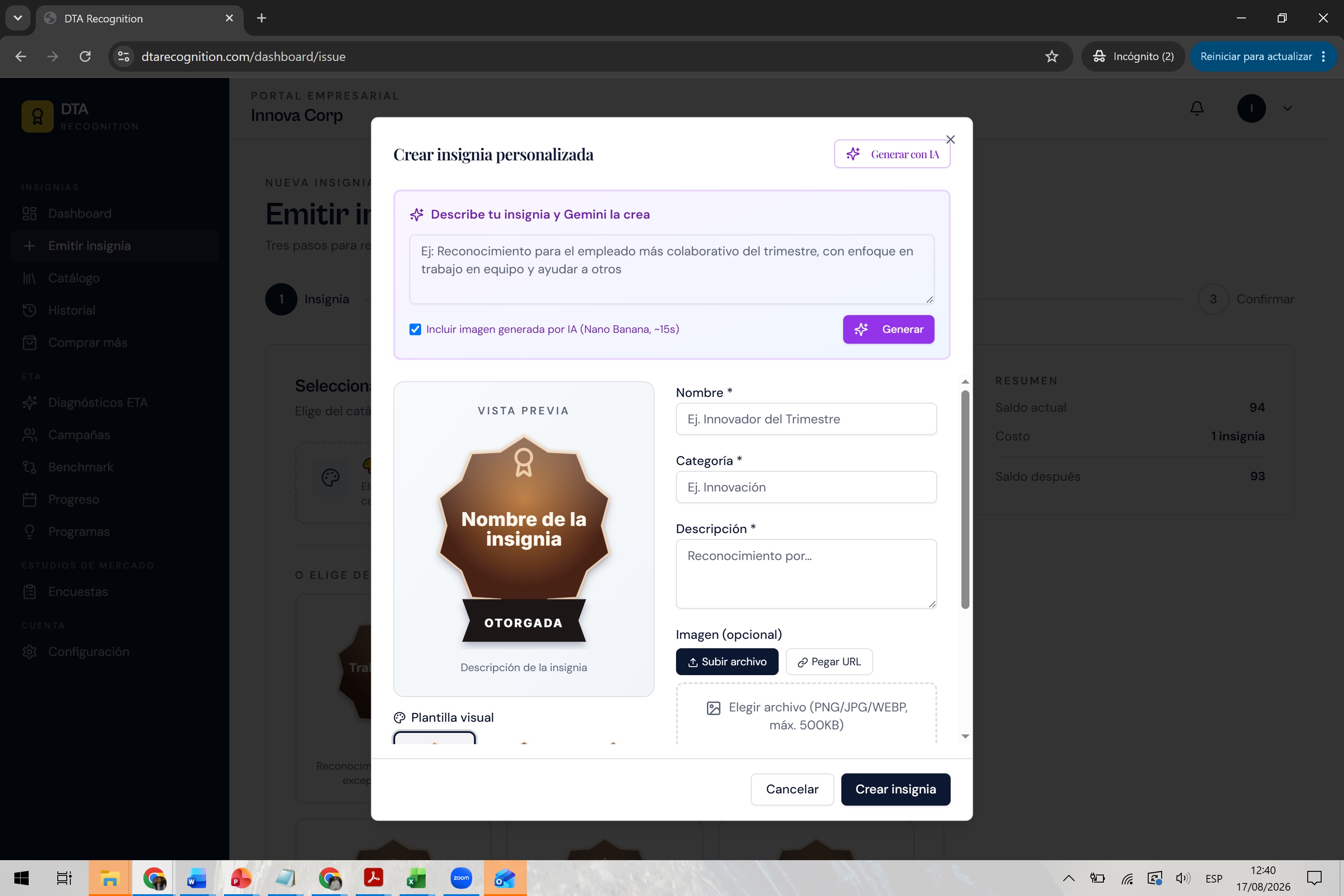
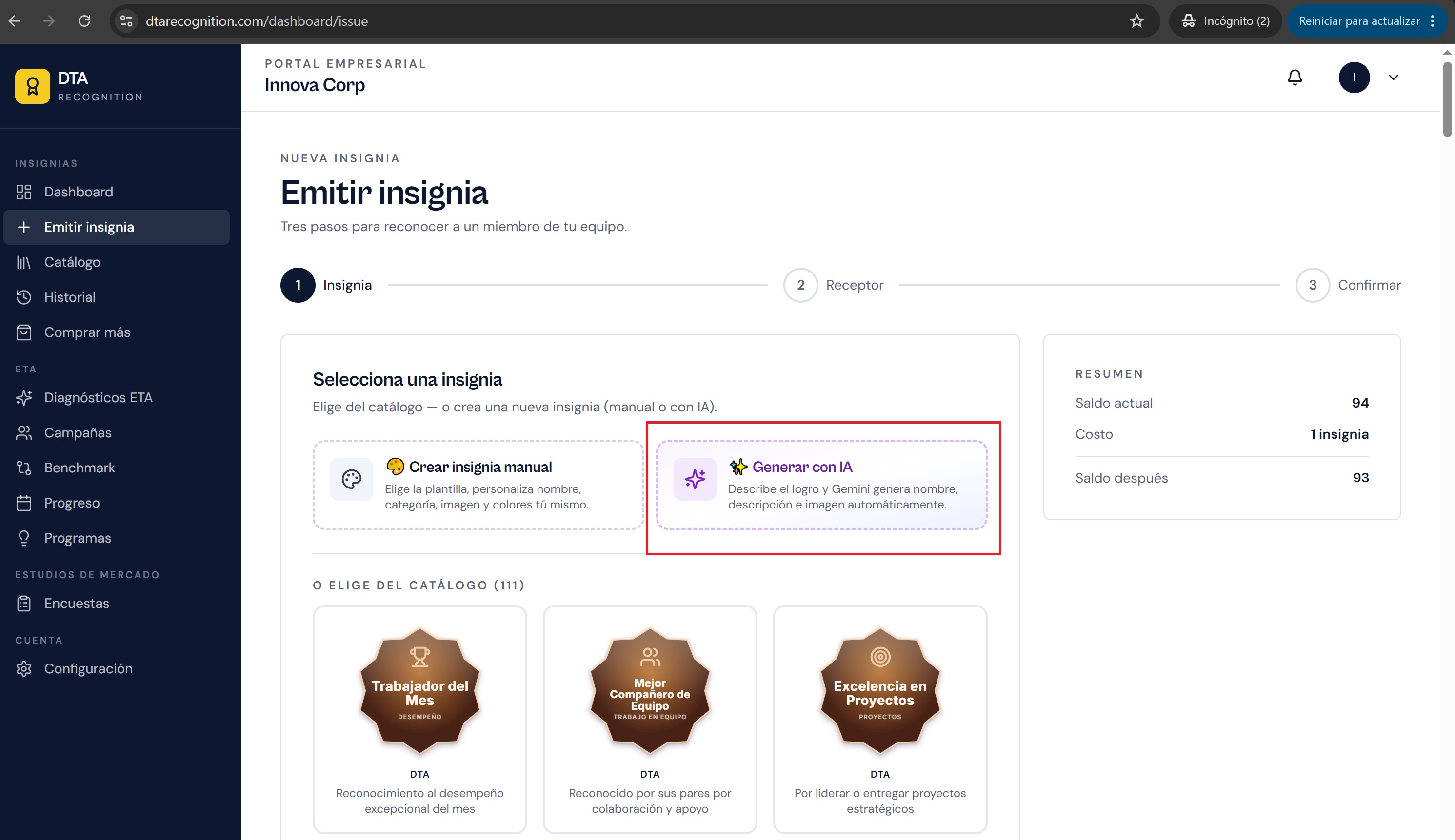
Badge generation. You write what you want to recognize, in plain language. The AI returns the complete badge — design, name, description, and the criteria required to earn it, in your company's branding. A finished artifact, not a draft to repair. Every badge is cryptographically verifiable: the recipient gets it by email, can publish it to LinkedIn, and anyone can confirm its authenticity against a public hash without access to our system.
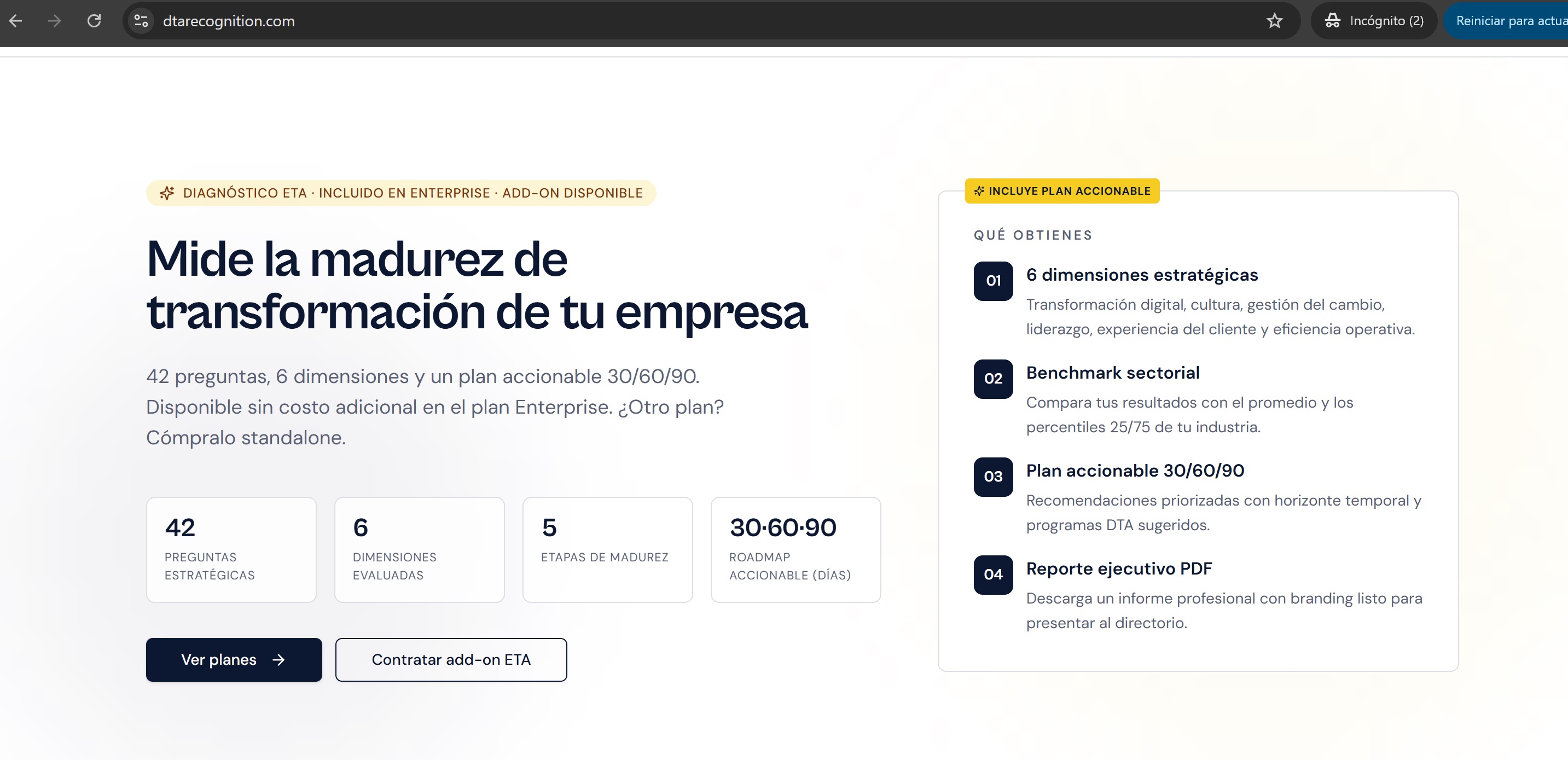
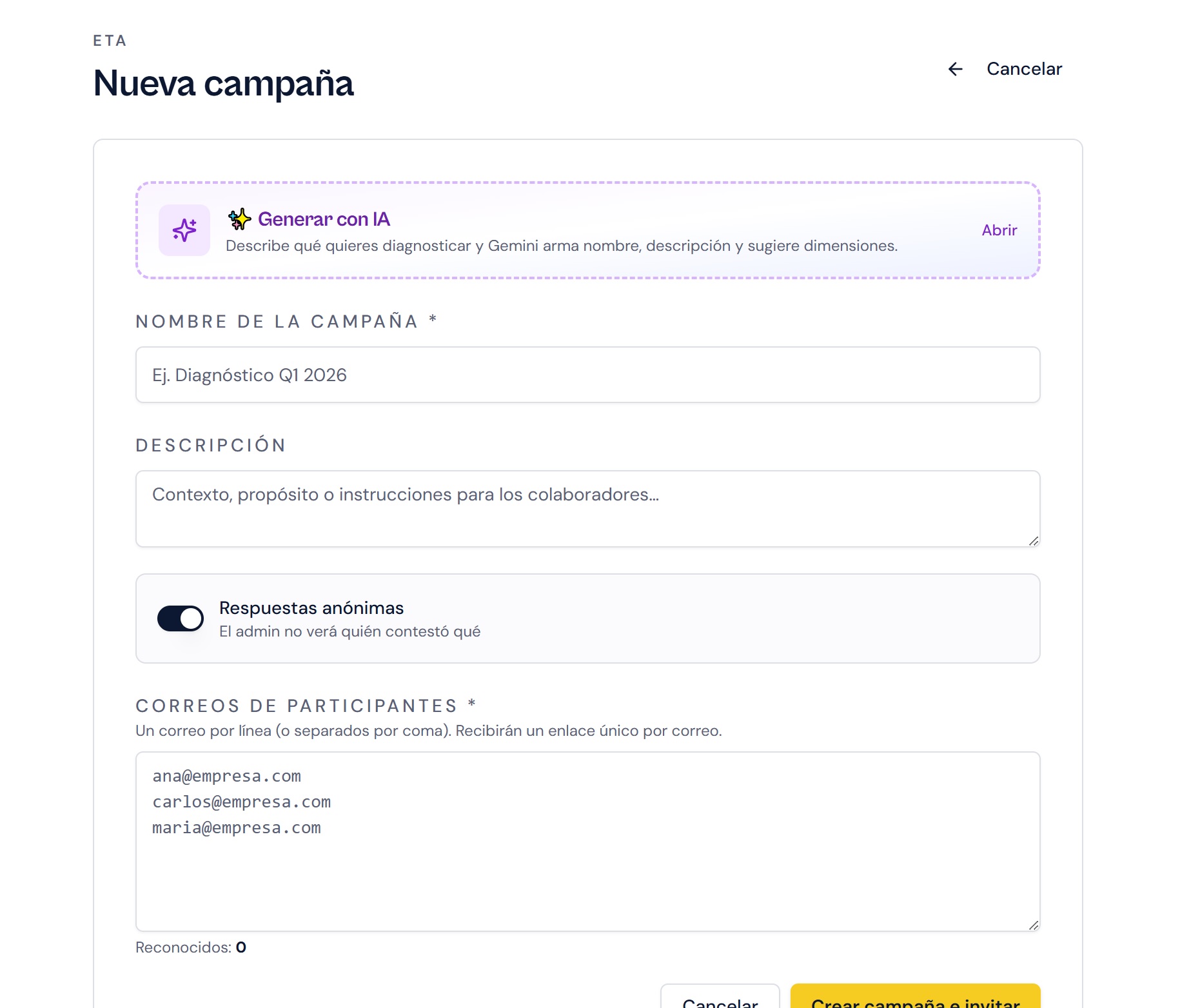
Assessment generation (ETA). The same inversion, applied to organizational diagnostics. You describe what you need to measure — cultural diagnostics, organizational diagnostics, AI-readiness, leadership capability in one specific area — and the AI builds the instrument: dimensions, questions, scoring model. The administrator reviews it in a preview and approves it. Employees respond through a unique emailed link, no account, no password, mobile-first. When the assessment closes, the company receives a maturity radar, its strengths, critical gaps, and a prioritized 30/60/90-day roadmap — generated for that company from that company's own results, and grounded in a knowledge base built from consultants with hands-on experience in organizational transformation, change management, capability assessment, and AI-readiness evaluation — not a report the model improvises on its own.
We estimate our addressable market at over 1,000 target companies in the segment we serve. Other badge-issuing platforms exist, most built primarily for schools and universities rather than for companies — and on all of them, you still design the badge yourself and upload it, or pick from a template. None has an AI layer that generates the badge for you. That's where we differ: ours are AI-generated end to end, organizational rather than educational in focus, and paired with diagnostics a company could otherwise only access through a consulting engagement.
AI generation is the default path for both engines, but it's not the only one. If a client prefers to build a badge or an assessment the traditional way — writing the description themselves, defining criteria by hand, choosing a design manually — the platform supports that too. The AI path is faster and is what most clients end up using once they try it, but nobody is forced through it.
The platform also includes a help center and FAQ section, plus a support desk for questions, doubts, or issues that come up during setup or day-to-day use.
Pricing reflects that inversion directly: Starter at $250/year (10 badges, email support, self-service issuance), Pro at $750/year (50 badges + 3 ETA assessments), and Enterprise at $2,500/year (200 badges + unlimited ETA assessments). Each tier costs a fraction of a single day of consulting.
How AI runs the business
This isn't a platform with AI features attached. The delivery work a customer pays for is performed by AI, and no one on our side produces, edits, or approves it. AI acts as a copilot: it generates the complete deliverable, and the human who reviews, approves, or adjusts it is the customer, not us.
In a traditional engagement, three people stand between a company and what it needs: a designer builds the badge, a specialist designs the assessment instrument, a consultant reads the results and writes the recommendations. Days each, three salaries — precisely why this has always been priced out of reach for small companies. We removed all three.
Badge creation. The customer writes what they want to recognize. The model generates design, name, description, and earning criteria — complete on the first attempt. The customer's administrator accepts it as is, or adjusts any of it (with AI or by hand), then issues it. Nobody from our team designs the badge; the only human involved is the customer's own administrator.
Assessment design. The customer describes what they need to measure. The model builds the full instrument. The administrator approves the preview and it goes out. There's no organizational psychologist reviewing it, because there isn't one on staff for this.
Diagnostic reporting. When an assessment closes, the model reads the consolidated results, identifies strengths and critical gaps, and writes the prioritized roadmap. The administrator reviews it — approving it as-is or enriching it — before it reaches the company. No consultant on our side produces it.
That's the entire delivery cycle of a consulting firm, executed by models in minutes instead of people in weeks — and it's the only reason a $250/year price point is sustainable rather than a loss leader.
Every generative step in this product — badge design, assessment design, and diagnostic reporting — runs on Google's Gemini API, accessed through Vertex AI on our own Google Cloud project in strict mode, with no other model and no editorial pass on our side anywhere in between. That's not an implementation detail; it's the reason this delivery model is possible at this price at all.
How we built it
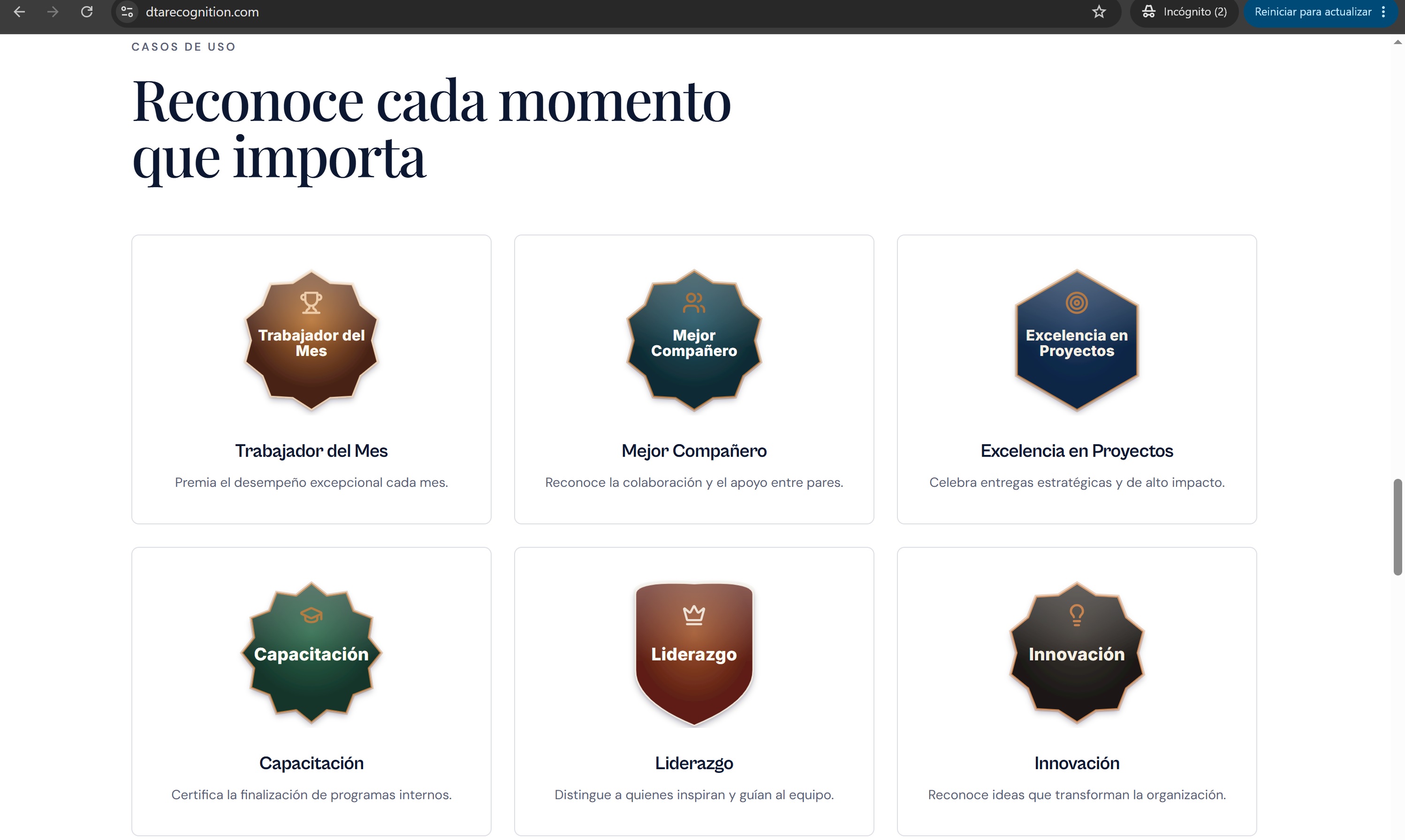
On the front end: React 19 with react-dom 19, built on Create React App + CRACO, with React Router 7 handling role-based nested routing and Axios as the HTTP client. Styling runs on Tailwind CSS with tailwind-merge and tailwindcss-animate, and shadcn/ui — built on Radix primitives — for accessible components (dialog, dropdown, tabs, toast, tooltip, select, and more), with class-variance-authority and clsx handling conditional style variants, Lucide React for icons, and Cabinet Grotesk plus Inter as typefaces. Framer Motion 12 drives page transitions, badge medallions, and the ETA assessment flow, with Sonner for toasts and Vaul for mobile drawers. Forms — login, badge issuance, ETA campaigns, checkout — run through React Hook Form with Zod validation via @hookform/resolvers. Recharts 3 renders the six-dimension ETA radar chart, benchmark bars, and progress lines; date-fns and react-day-picker handle campaign date formatting and selection; cmdk powers the command palette, input-otp handles badge-verification codes, and embla-carousel runs the landing page carousels. A custom BadgeMedallion component generates the badge shape itself — star, scallop, hex, circle, shield — as parametric SVG with a radial gradient and ribbon, rather than a static uploaded image, alongside a dedicated ETA participation flow with a 1–5 Likert scale, autosave, and progress bar, and an internal admin suite (leads CRM, templates, companies, content) built from 40+ local shadcn components. The build ships as a static bundle behind a Cloudflare CDN.
On the back end: FastAPI on Python 3.11 serves the API, with Motor for async access to MongoDB — a document model was a deliberate choice, since no two generated assessments share a schema and forcing one would have meant fighting the product's own premise. All generative calls to Gemini run through Vertex AI on our own Google Cloud project in strict mode, and generated badge artwork and credential assets are stored in Google Cloud Storage. JWT and bcrypt for auth, reportlab for PDF generation, Stripe for payments, deployed on Kubernetes behind an Nginx ingress with immutable builds in production.
Badge generation is constrained to return a structured object with design attributes and earning criteria, complete on the first attempt — no draft state, because a generator that produces something requiring repair is just the old form with extra steps. Assessment generation must return a coherent instrument in which every question maps to a declared dimension. Report generation receives consolidated scoring data and produces recommendations grounded in the knowledge base built with organizational development professionals, so the roadmap reflects established practice rather than model improvisation.
Assessment delivery is where most of the engineering care went: each participant gets a 24-character cryptographically random token with a unique database index — the token is the credential itself. Answers are idempotent per question, so a participant can revise but never duplicate. Once an assessment is marked complete, the token locks; if an administrator closes a campaign, every token in it stops accepting responses.
Challenges we ran into
Beating the form, not just adding AI. Existing platforms already let you build a custom badge — that was never the gap. The gap was what those platforms actually generate for you: the badge's description and text fields. The design itself — the image, the visual — you still had to make yourself, outside the platform, and upload it. That's several extra steps on the client's side before a badge even exists. Our bar wasn't "add AI to the form," it was generating the whole badge — design included — so nobody has to leave the platform to make one.
Badges that mean something. Our early outputs were fluent and empty — criteria that could describe any employee at any company. A badge nobody respects is worse than no badge. Getting to criteria specific enough that a colleague reads it and understands what the person actually did took several iterations of the prompt architecture.
Assessments that measure what they claim to measure. Generating plausible-sounding questions is easy. Generating an instrument where each question genuinely measures its declared dimension — without leading the respondent, without collapsing into a satisfaction survey — is not. We constrained generation so dimensions are defined first and every question is derived from, and validated against, its dimension.
Where we are
The platform has been live since July 2026. We're not starting this business line from zero credibility — DTA Institute already has six years of history and 300+ certifications issued, and that track record is what opened the door to our first two pilots.
Centrum PUCP, the business school, is actively testing the platform: whether it works well, whether it covers their needs, and what they'd want personalized. We've already presented it to their Executive Education director, who is interested and evaluating next steps.
Corporativo Overall is in the same stage — testing badge generation against their real use case, with plans to bring it to their General Management for a final decision.
Neither has issued a badge live from the platform yet; both are in structured pilot evaluation, which is exactly where we'd expect two organizations that size to be one month after launch. What we don't yet have is completed ETA assessment data at scale, or revenue booked specifically to this business line — DTA Institute's core certification business is revenue-generating, but this product is new and pre-revenue by design while these two pilots run.
We're early and we'd rather say so plainly than dress it up. What we have is a product in production, two credible companies evaluating it with named stakeholders already engaged, and a delivery model that costs us almost nothing to serve per customer — which is the part that matters, because it's what makes the $250 entry price sustainable rather than subsidized.
What's next
Converting Centrum PUCP and Corporativo Overall from pilot to paid, and the benchmark layer.
Today a company gets an honest picture of itself. What it still can't get at any accessible price is an honest comparison — against real peers in its sector, at its size. That data exists, but it lives inside large consultancies at consultancy prices. As assessment volume grows, that comparison becomes something we can offer for what a small company can pay. It's the piece that turns a diagnostic into a decision.
Then, deepening the engines until a single sentence produces a complete recognition program: the badges, the criteria, and the assessment behind each one, without ever touching a template.
The goal is simple. Give a 40-person company the recognition infrastructure and the organizational insight that until now you could only buy with a consulting budget — and give it to them because a team with six years inside this exact problem decided to remove the people, not add a feature.


Log in or sign up for Devpost to join the conversation.