-
-
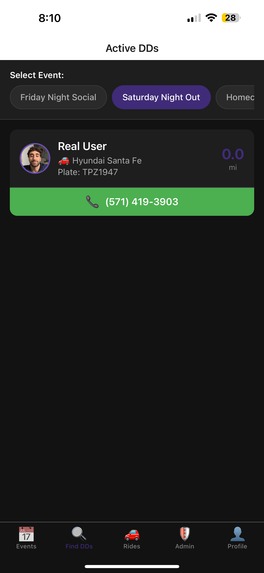
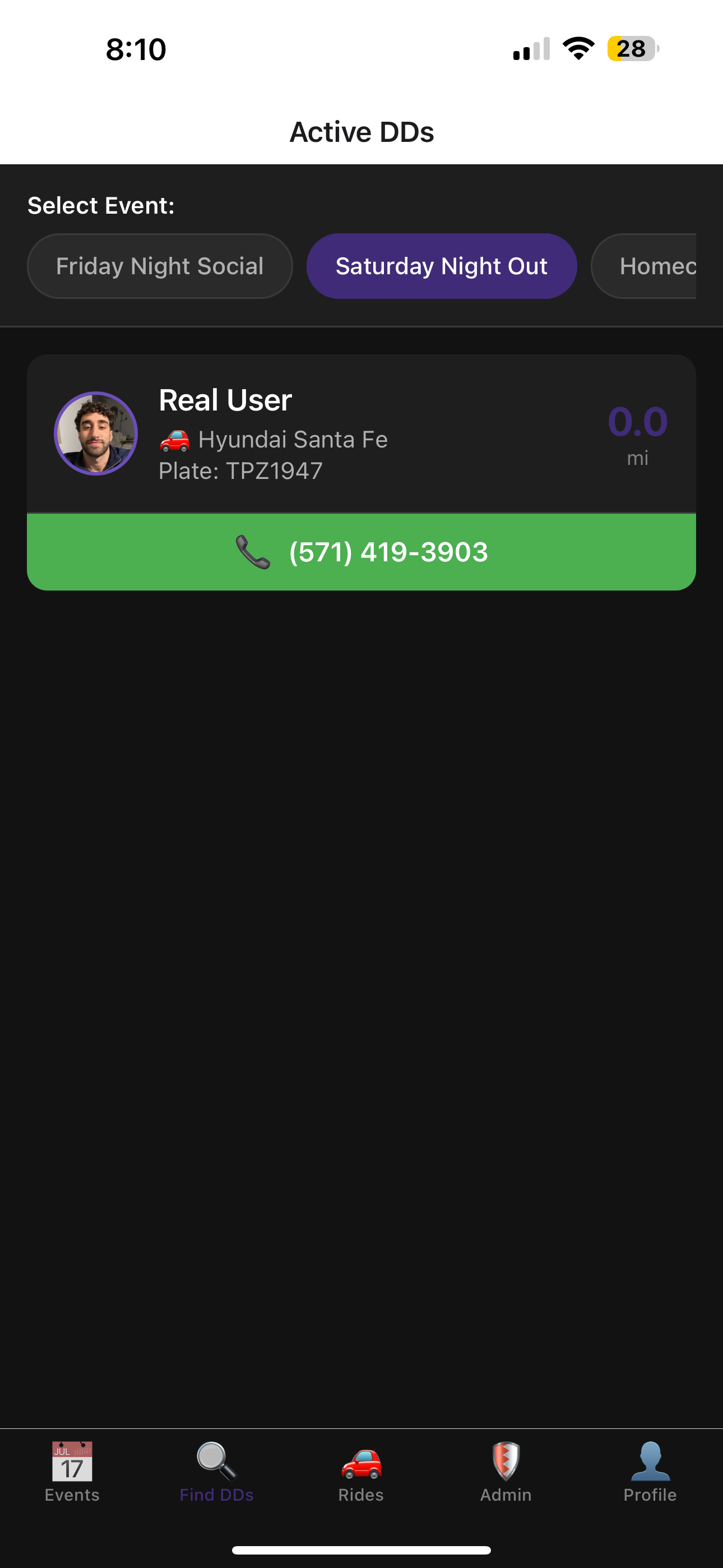
Drivers Tab
-
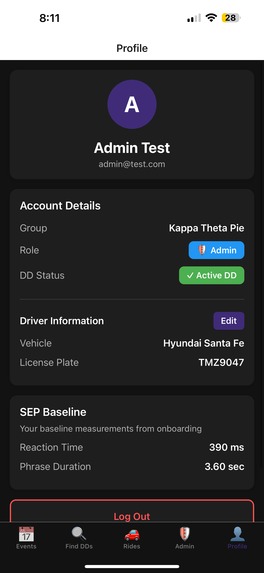
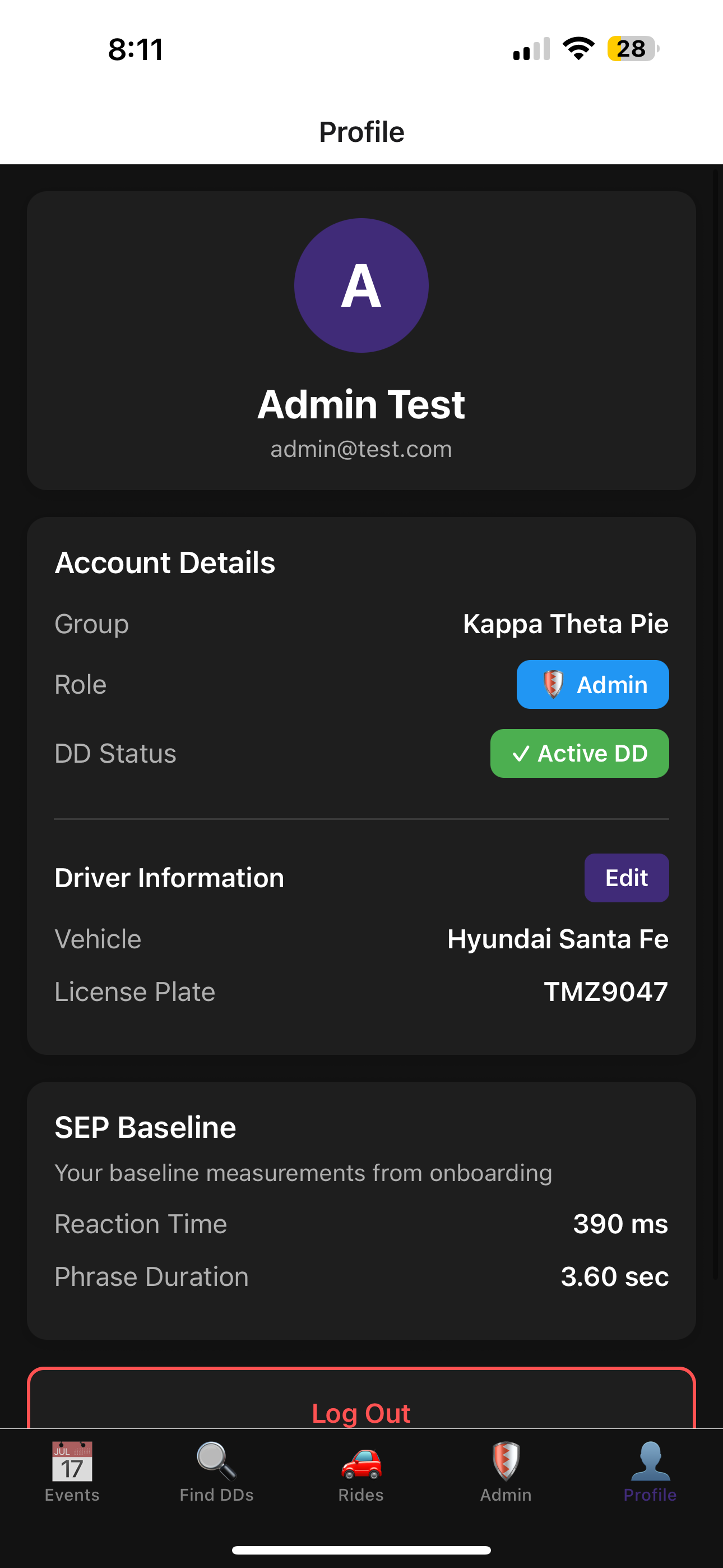
Profile tab
-
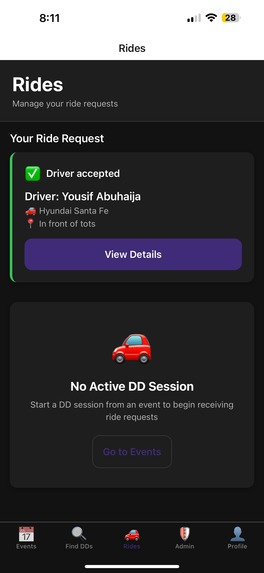
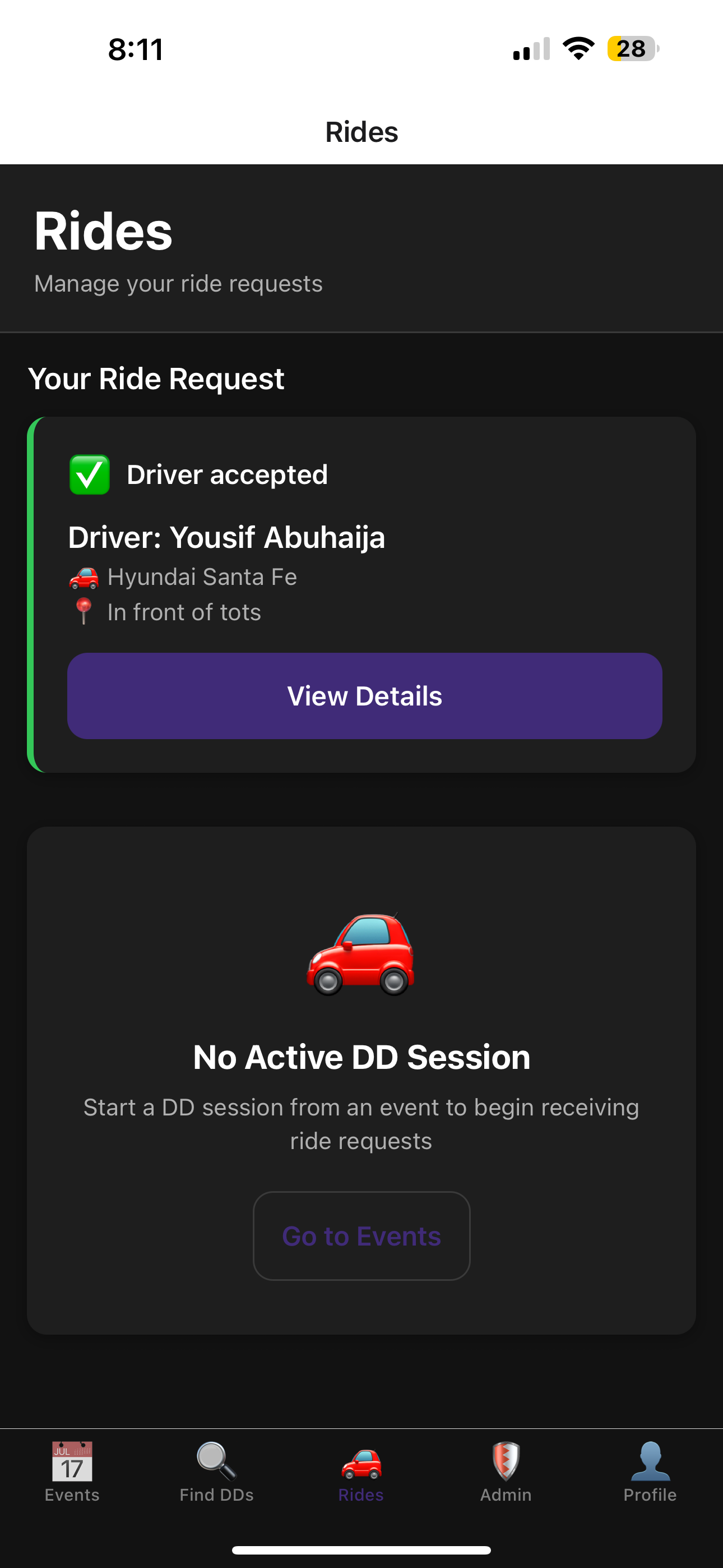
Rides tab
-
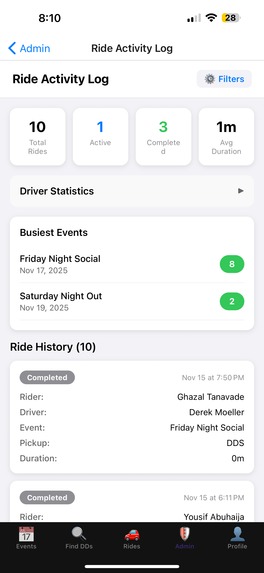
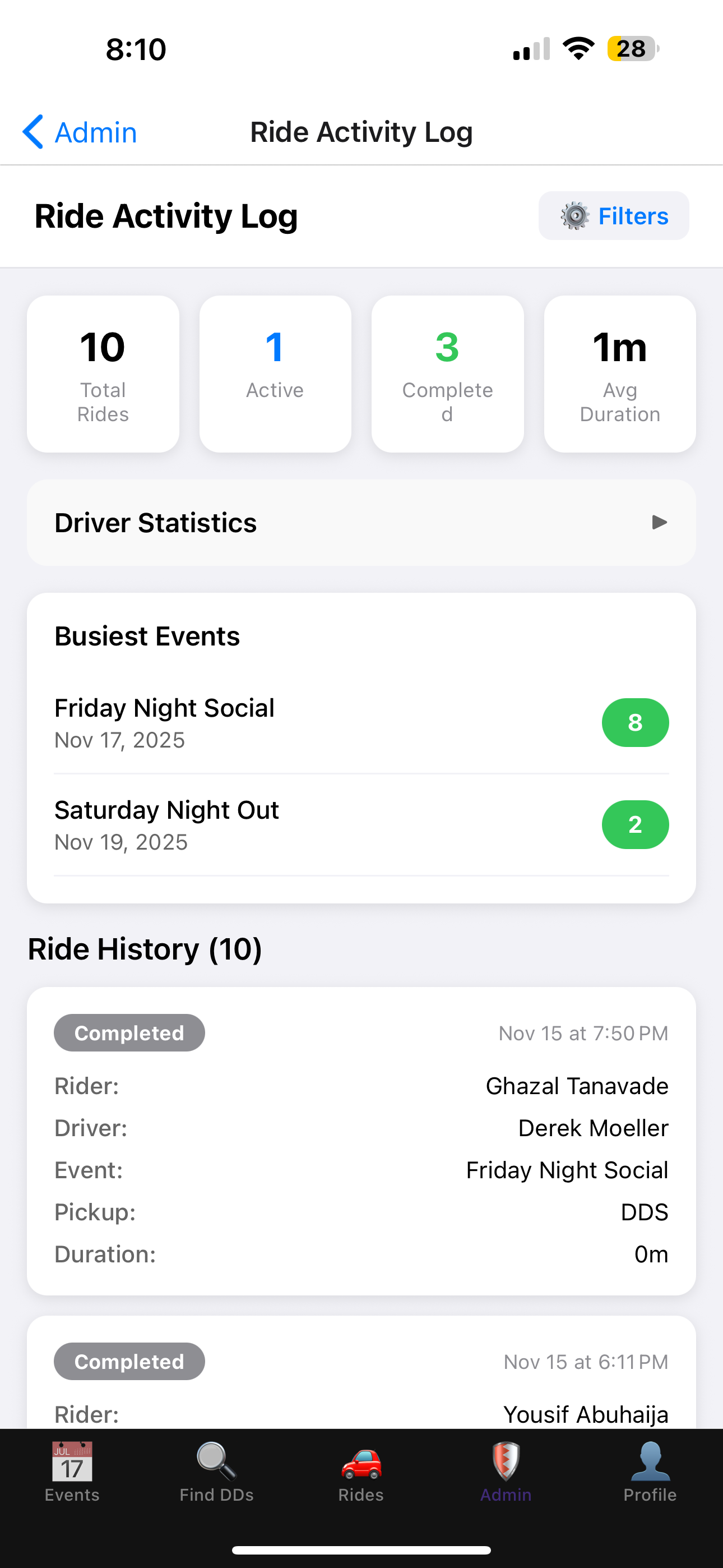
Admin dashboard of all trips (drivers and passengers)
-
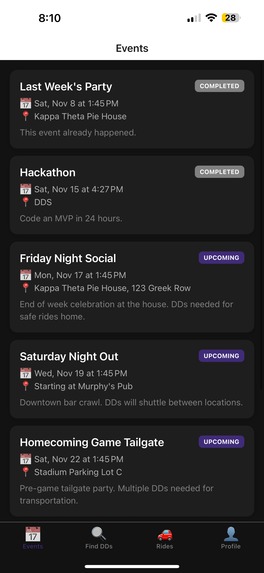
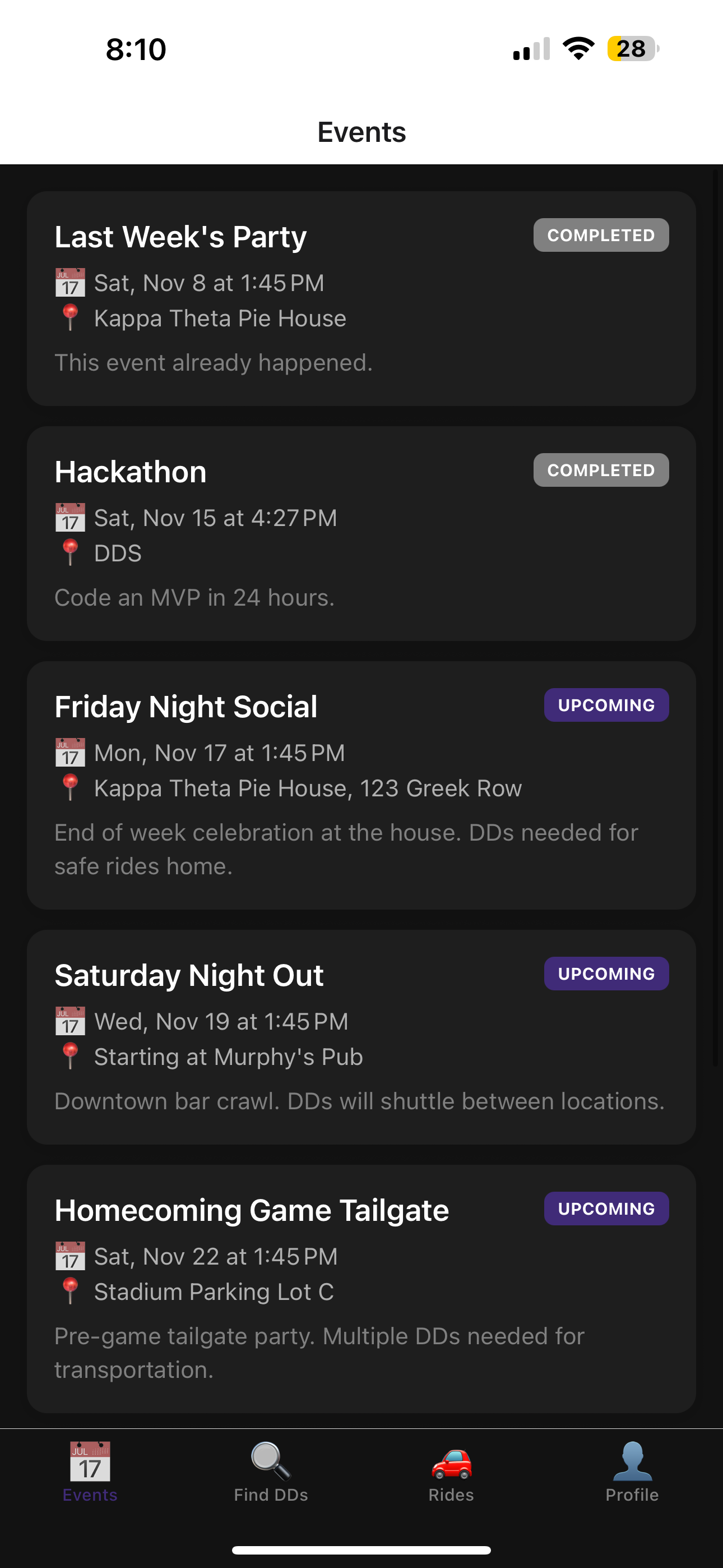
Events list which you can request to DD for
-
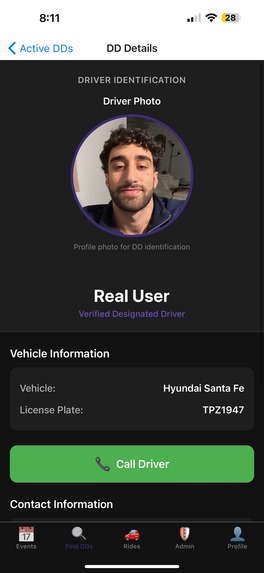
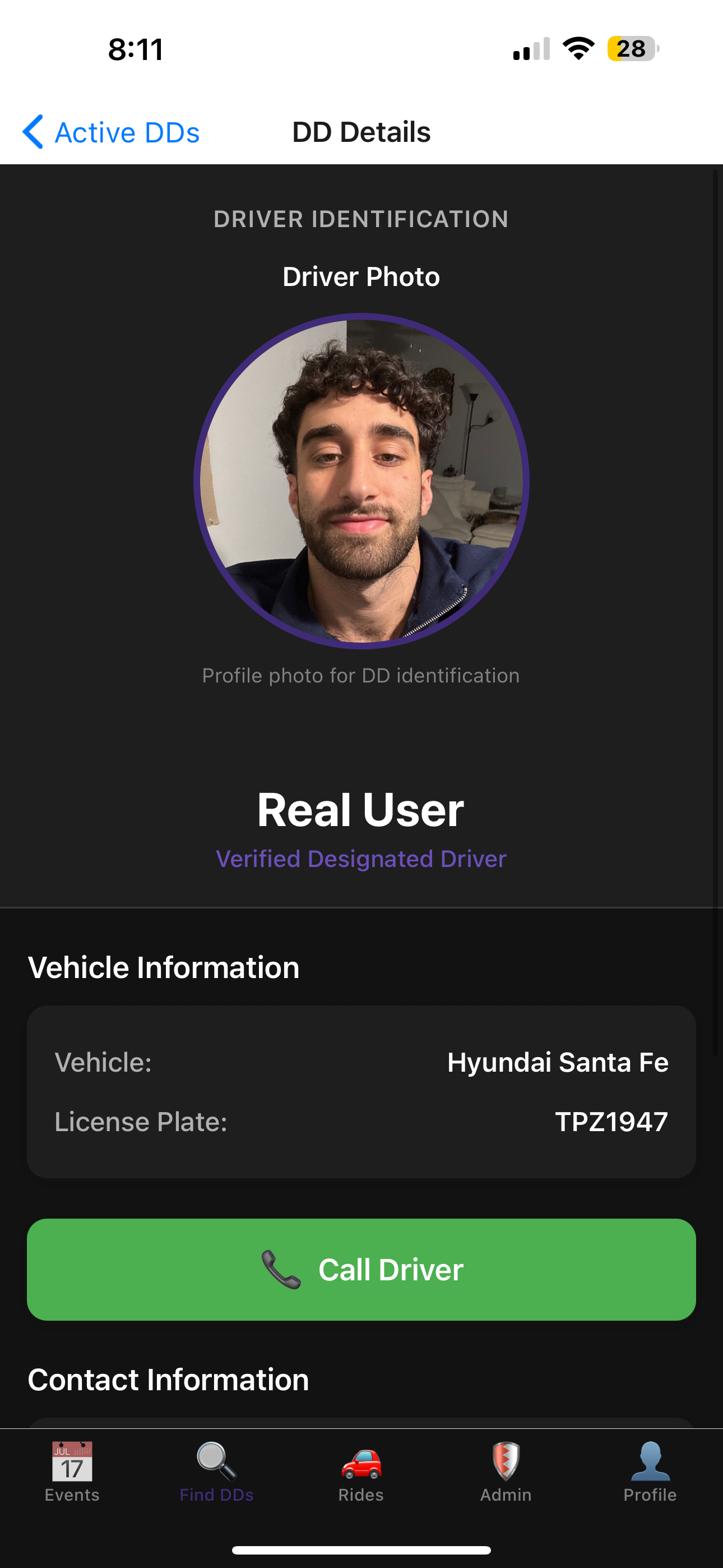
Driver profile for info and safety
Inspiration
Greek life events often rely on verbal promises like “I’m good to drive.” But in reality, there's no system that actually verifies whether someone is sober enough to safely be a designated driver. We wanted to solve a real problem we’ve seen in college life: unsafe rides home because no one wants to “be the bad guy” and question someone’s sobriety.
We were inspired to build DSober as a lightweight, tech-driven accountability tool that lets chapters keep their members safe without awkward conversations, unreliable judgment calls, or trust-based guesswork.
What it does
DSober is a sobriety-verification platform for fraternities and sororities.
It allows chapters to:
- Onboard members into their group using a secure access code
- Let users optionally sign up to be designated drivers (DDs)
- Collect a baseline “sober profile” using:
- A reaction-time game
- A spoken phrase timing test
- A clear selfie
- Create fraternity/sorority events and assign DDs
- Require DDs to pass a Sobriety Estimation Protocol (SEP) before they can drive
- Automatically notify admins if a DD fails the SEP
- Show regular members a list of approved, verified-sober DDs near them, including name, car info, and distance
DSober takes the guesswork out of designated driving and replaces it with real-time verification.
How we built it
We built DSober as a full mobile application using:
- Expo + React Native for the mobile app
- Supabase for authentication, database management, and storage
- Expo Camera for baseline and SEP selfies
- Expo AV for timed audio phrase recording
- Expo Location for showing nearby DDs and sorting them by proximity
- React Navigation for a clean tab-based UI
The workflow:
- Onboarding flow for collecting member info and optional DD registration
- SEP baseline creation (reaction time, spoken phrase duration, selfie)
- Event system for admins to create events and assign DDs
- SEP check system that compares new test results with baseline using threshold logic
- DD session management with live verification
- Admin oversight tools including DD requests and SEP fail alerts
Everything is stored securely in Supabase and synced in real time.
Challenges we ran into
Designing a sobriety test that was realistic in 24 hours.
We originally wanted pitch detection and variance analysis, but simplified it to reaction time + phrase duration to remain hackathon-feasible.
Building multiple user roles (Admin vs Member) cleanly in the UI.
Managing conditional screens and permissions required careful routing and database logic.
Synchronizing event data, DD sessions, and real-time updates.
Ensuring that admins and members always see the right active DD status took more iteration than expected.
Handling camera/audio permissions on mobile.
Getting Expo’s camera and audio recording to behave consistently across devices was tricky.
Balancing safety logic with usability.
The SEP needed to feel fast and not annoying, but still meaningful.
Accomplishments that we're proud of
- We built a fully functional mobile app in under 24 hours with onboarding, real-time database interaction, camera, audio, location, and multiple user flows.
- SEP verification actually works — the app meaningfully compares sober baselines to each new test.
- Smooth admin tools including DD requests, assignments, and automatic SEP fail alerts.
- A polished UI and clear UX, especially given the complexity of user roles and states.
- A platform that could genuinely improve safety at Greek-life events.
What we learned
- How to integrate Supabase auth, storage, and database tables into a mobile app efficiently.
- The importance of designing MVP-friendly versions of complex features (like sobriety tests).
- How to manage multiple permissions (camera, microphone, location) gracefully in Expo.
- How to structure a mobile app with different user types and conditional flows.
- That even small safety improvements can have a major impact when paired with good design.
What's next for DSober
- Pitch & pause analysis for spoken phrases (detecting slurred or delayed speech)
- Face comparison + eye-tracking to detect impaired facial cues
- Ride request system so members can directly ping active DDs
- Driving enforcement:
- Detect when regular members are in a moving car
- Require them to be within a radius of an approved DD
- Push notifications for admin alerts and event reminders
- Chapter analytics dashboard for tracking DD participation and safety metrics
- Full chapter management web portal
DSober has a clear roadmap to becoming a legitimate safety tool for college campuses, and this MVP proves that verified sober driving is not only possible, but practical.
Built With
- javascript
- react-native
- supabase

Log in or sign up for Devpost to join the conversation.