-
-
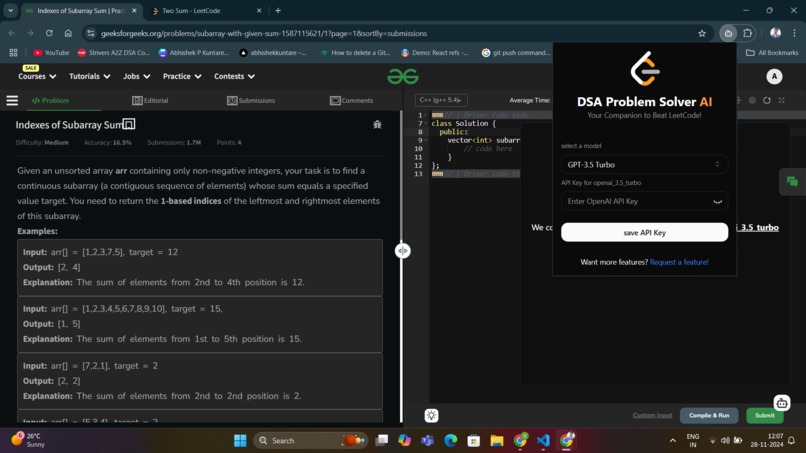
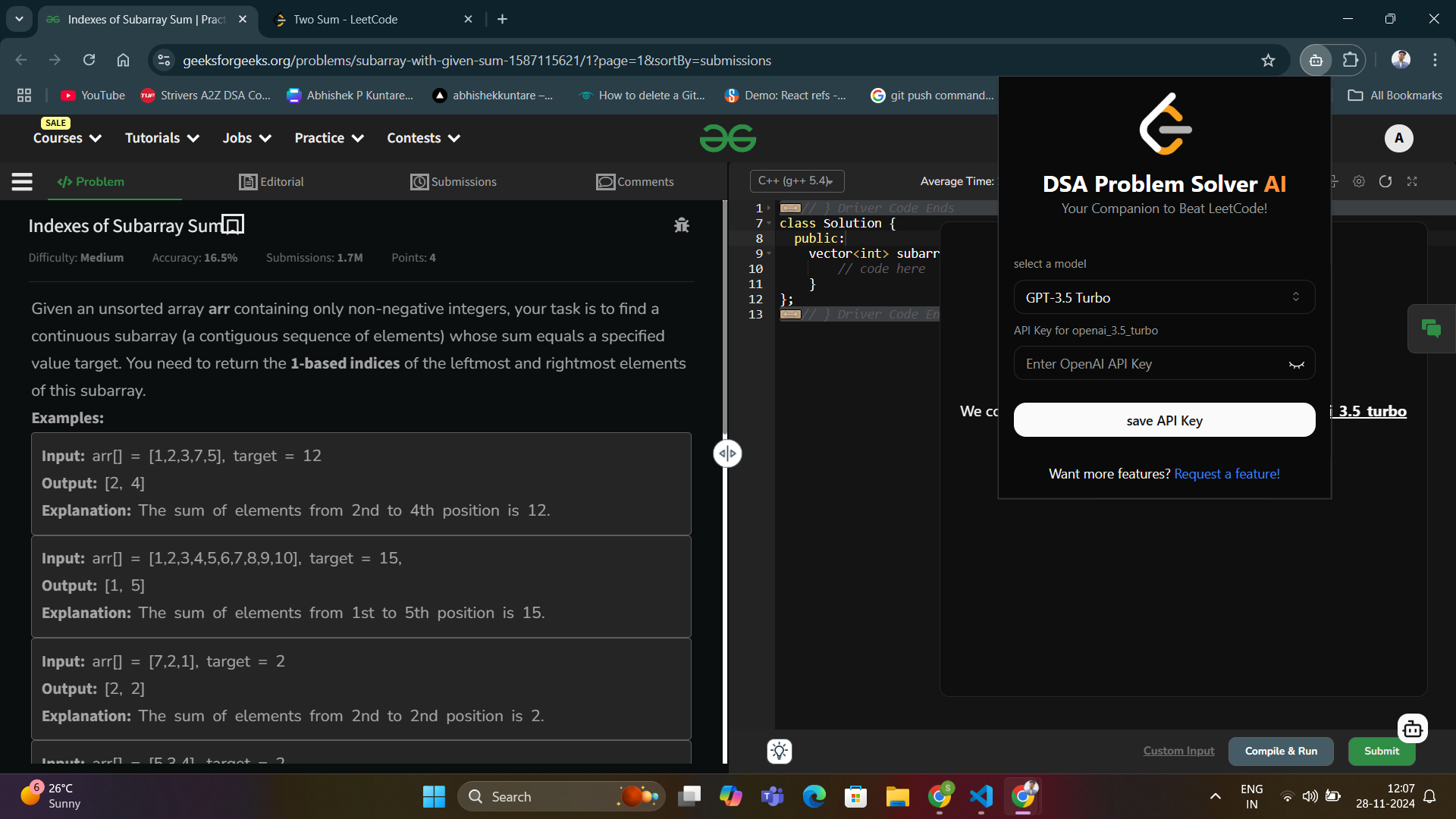
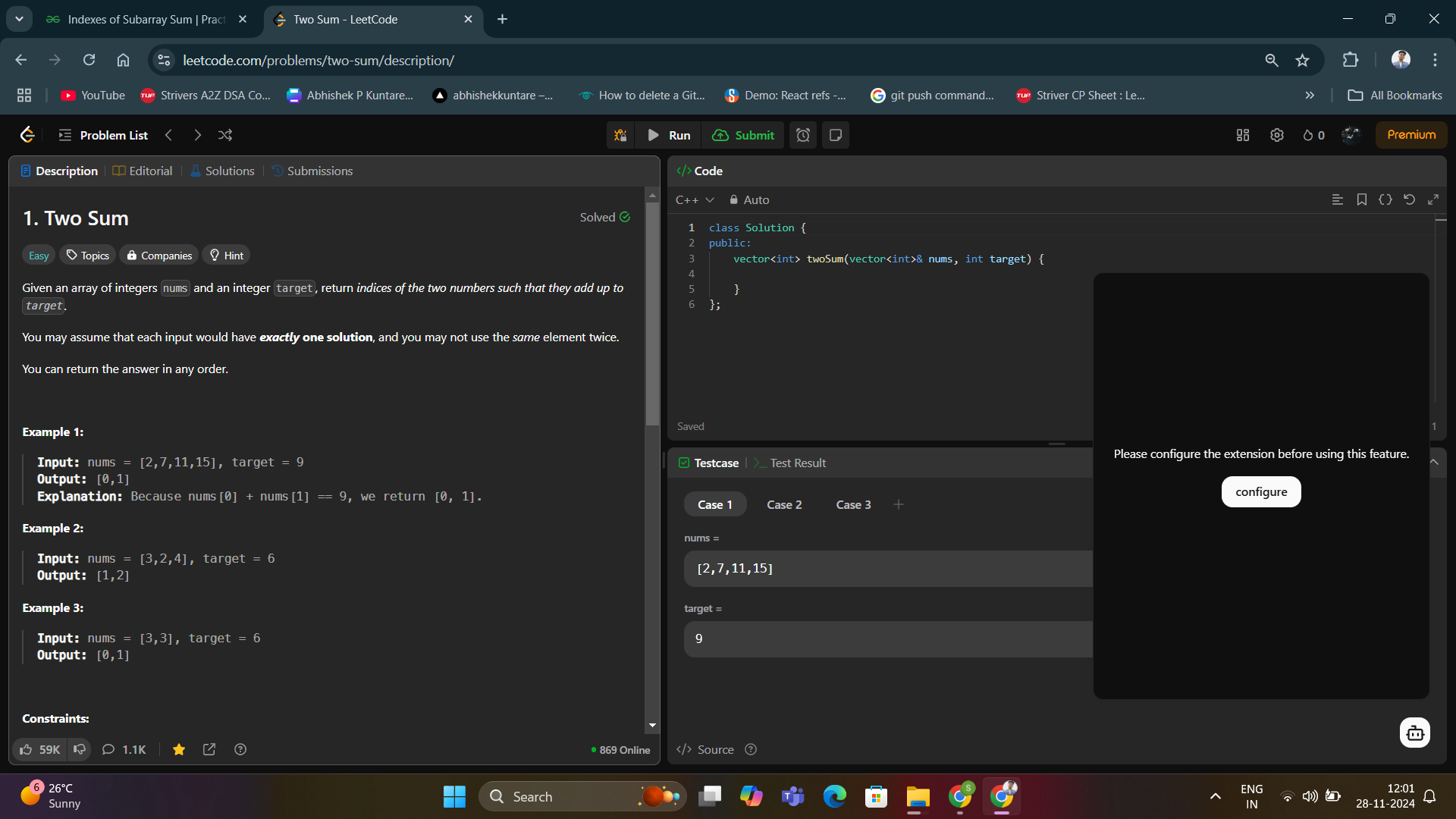
Open a pop and Select the modal and enter your own OpenAikey
-
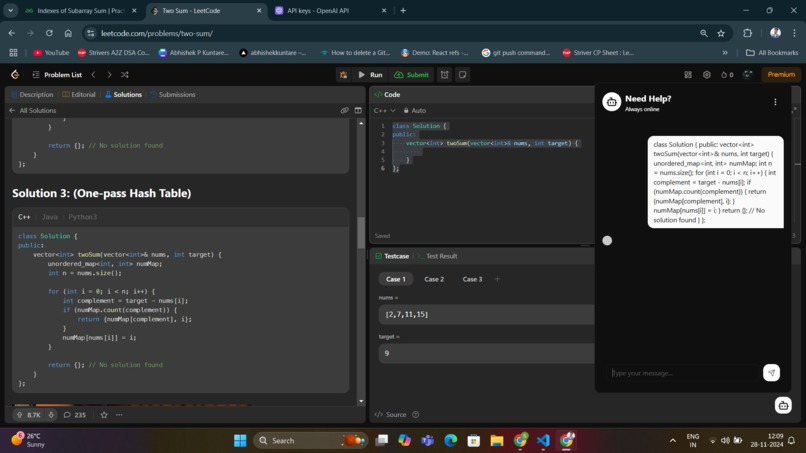
Giving the best code outputs
-
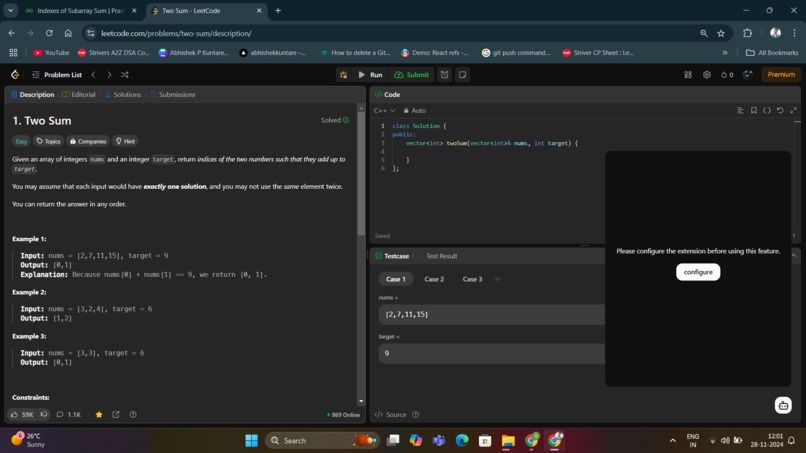
Added also in the GFG platform
-
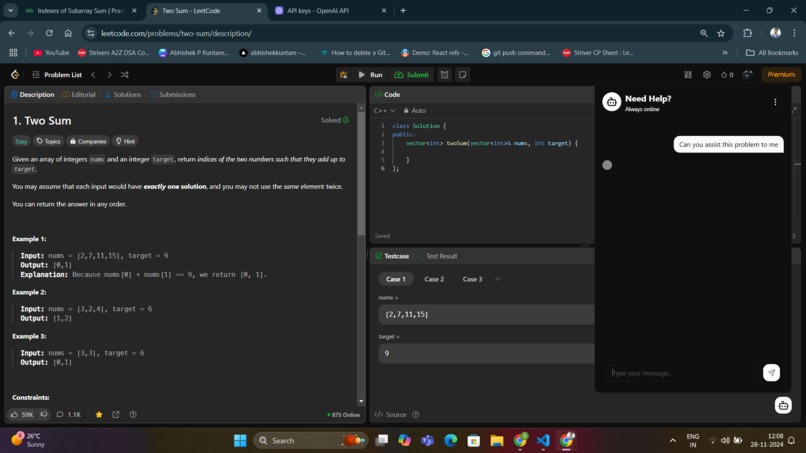
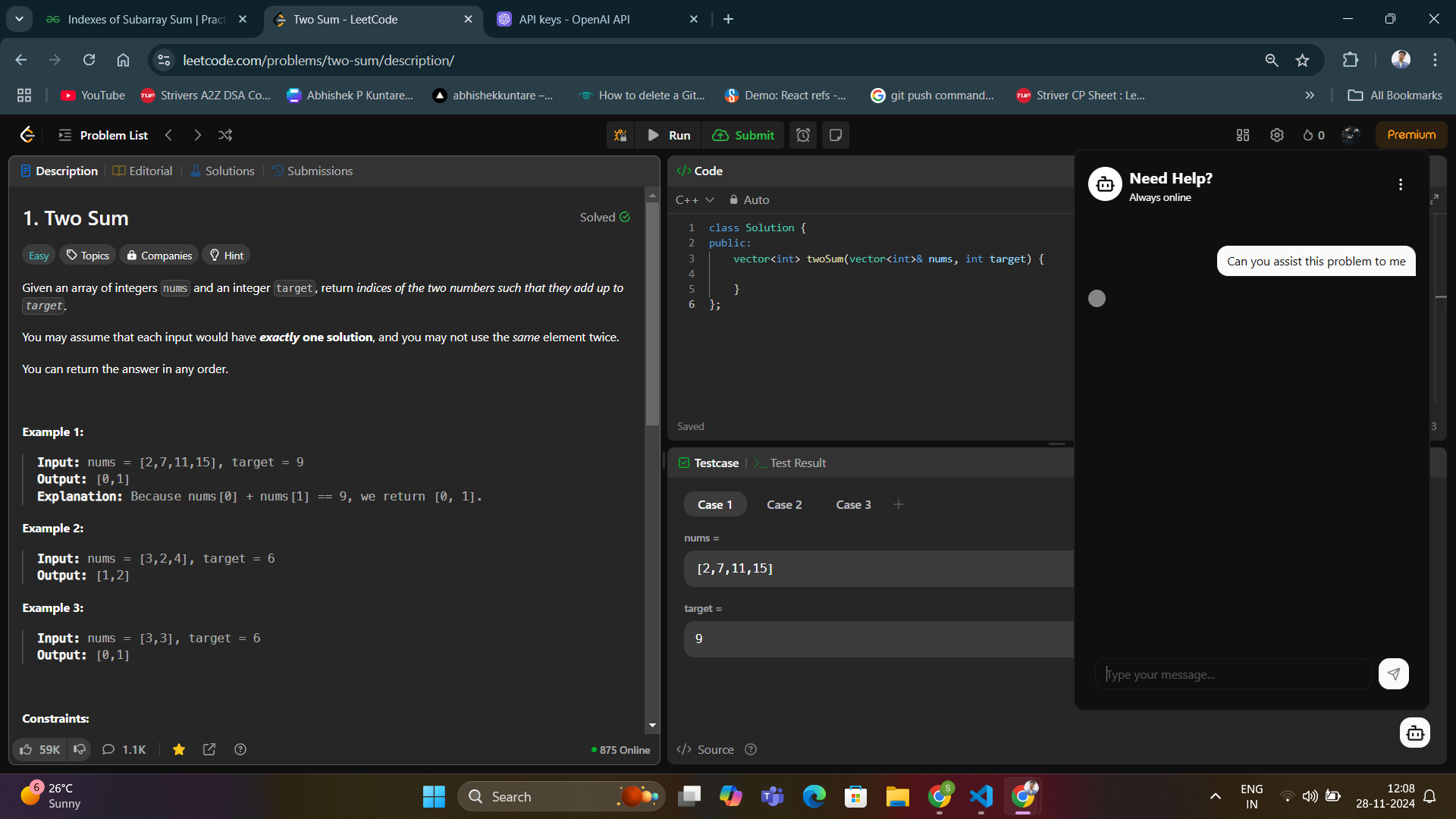
Providing the propt to the ai to solve and approch my problem correctyl
-
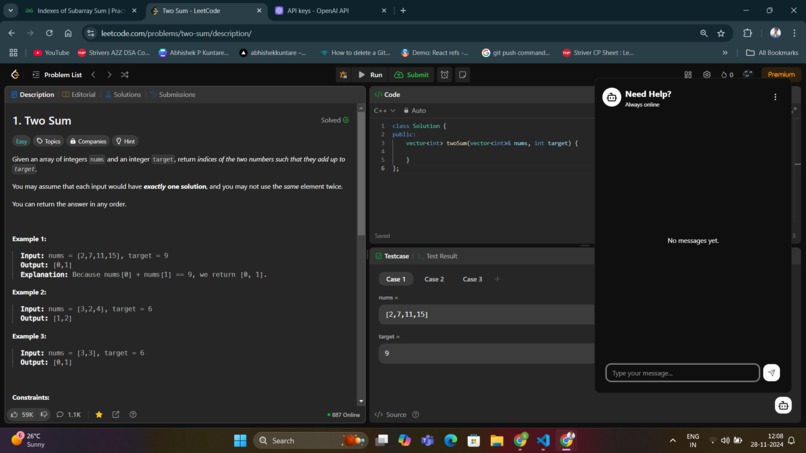
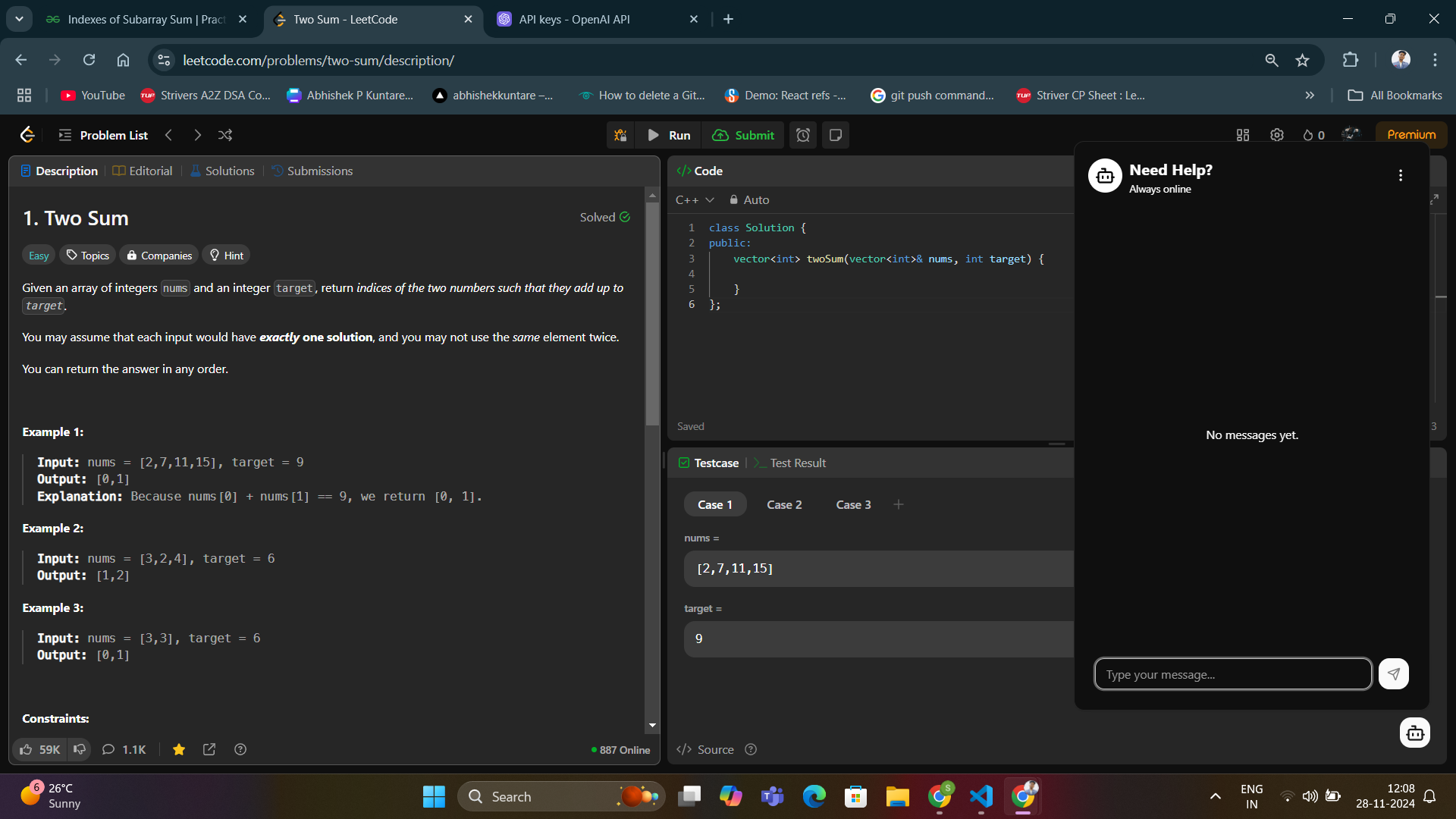
Open the Chat Ai to assist you

Inspiration
The inspiration for creating this project came from my personal struggles when solving coding problems on platforms like LeetCode and GeeksforGeeks. Often, I would find myself stuck without knowing the right approach to solving certain problems. I wished for a tool that could provide me with step-by-step explanations, guidance, and even answer my doubts in real-time. This tool would act as a personal tutor, making learning more efficient and accessible. Thus, I decided to build an AI-powered solution that would teach, guide, and help me solve coding problems more easily.
What it does
The DSA Problem Solver AI is an intelligent tool designed to help users, especially those learning coding and problem-solving, by offering personalized guidance on Data Structures and Algorithms (DSA) problems. The tool can:
Analyze coding problems and suggest optimal approaches for solving them. Provide step-by-step explanations of solutions. Answer queries and doubts in real-time. Offer insights into improving problem-solving strategies. Provide code snippets and examples for different problem types.
How we built it
We built the DSA Problem Solver AI using a combination of cutting-edge technologies to ensure a robust, responsive, and user-friendly experience:
OpenAI API: We integrated the OpenAI API to power the AI's natural language understanding and problem-solving capabilities. The API allows the AI to analyze coding problems, generate explanations, and provide real-time answers to user queries. React.js: We used React.js to build the frontend of the application. React's component-based architecture made it easy to develop a dynamic and interactive user interface that can handle real-time updates seamlessly. Vite: To streamline our development process and optimize build performance, we used Vite, a fast build tool that provides an excellent developer experience with quick hot-reloading and efficient bundling. Tailwind CSS: We used Tailwind CSS for styling the application. Its utility-first approach allowed us to quickly create a responsive and visually appealing design without writing custom CSS from scratch. TypeScript: We utilized TypeScript to add static typing to the project, ensuring code quality and reducing runtime errors. TypeScript's integration with React helped maintain a robust and scalable codebase.
Challenges we ran into
While building the DSA Problem Solver AI, we encountered several challenges, particularly when working with the OpenAI API, React.js, and TypeScript:
API Integration Issues: One of the initial hurdles we faced was integrating the OpenAI API with our React.js frontend. Managing the API calls efficiently while handling large requests and responses posed some challenges. We had to ensure that the API calls were made asynchronously, and the responses were properly managed using state to prevent unnecessary re-renders or UI blocking. Additionally, handling API keys securely without exposing them to the frontend was a significant concern. We had to carefully implement environment variables and server-side API calls to keep the API key secure.
TypeScript Compatibility: Since TypeScript was part of our tech stack, we faced some difficulties with type-checking when dealing with API responses. The OpenAI API returns responses in dynamic formats, and correctly typing those responses in TypeScript required extensive effort. We had to define custom types and interfaces to ensure the application could handle various response formats, which required meticulous planning and testing.
State Management with React: React’s state management sometimes posed challenges, especially when managing multiple states for user input, API responses, and error handling. We had to ensure that the state was updated only when necessary to avoid performance issues or UI glitches. Additionally, managing the state for real-time updates from the OpenAI API (e.g., providing immediate feedback as users ask questions) was a complex task that required careful optimization.
Handling Multiple User Queries: Another challenge was ensuring the AI could handle multiple user queries simultaneously without compromising performance. As the AI interacts with the user, there is a need to handle continuous conversation-like inputs, which required managing session states and ensuring the API responses were aligned with the previous context. This meant implementing an efficient conversation flow and context management system.
Optimizing Response Times: The API responses, depending on the complexity of the question, can sometimes take time. We had to optimize how the user interface interacted with the backend, ensuring that the user experience remained smooth even during longer response times. We employed loading indicators and optimized state management to improve the UI's responsiveness.
Accomplishments that we're proud of
Personalized Guidance: We successfully built an AI that can offer personalized problem-solving strategies and break down complex concepts into digestible steps. Real-Time Learning: The tool provides real-time answers to coding queries, significantly enhancing the learning process. User-Friendly Interface: We created an easy-to-use interface that enables users to interact with the AI without needing technical expertise. AI-Powered Problem Solving: The AI is capable of analyzing coding problems and suggesting efficient approaches, making it a valuable learning resource.
What we learned
Throughout the development process, we learned a great deal about building AI-powered educational tools:
The importance of accurate NLP models: A crucial part of the AI’s effectiveness is its ability to understand and respond appropriately to user queries. Training models for problem-solving: Understanding the different types of coding problems and training the AI to offer relevant solutions and explanations was a challenging yet rewarding task. Building user-centric applications: Designing a simple yet effective user interface that caters to learners of all levels was key to making the tool accessible.
What's next for DSA Problem Solver AI
Moving forward, we have several exciting plans to further enhance the DSA Problem Solver AI:
Expand Problem Coverage: We plan to include more coding problems and cover a wider range of topics in Data Structures and Algorithms. Improve Interactivity: Enhancing the interaction model with features like code execution, live debugging, and interactive quizzes. Multi-Language Support: Implementing support for multiple programming languages to help a broader audience. Personalized Learning Paths: Developing adaptive learning algorithms that can create custom learning paths based on the user’s strengths and weaknesses.
Built With
- git
- github
- openai
- react.js
- tailwind
- typescript


Log in or sign up for Devpost to join the conversation.