Inspiration
The tech interview process has a hidden barrier that nobody talks about: the communication gap. As computer science students, we spend countless hours grinding LeetCode, mastering algorithms, and optimizing time complexity. But when we walk into that Google or Microsoft interview room, something unexpected happens - we're asked to "explain our approach" and suddenly our minds go blank.
I've witnessed brilliant classmates who could solve dynamic programming problems in their sleep completely freeze when asked to verbalize their thought process. They'd write perfect code but stumble through explanations, ultimately getting rejected not for their technical skills, but for their inability to communicate under pressure. This hit me personally when I realized that traditional interview prep platforms focus exclusively on code correctness while completely ignoring the verbal communication skills that make or break real interviews.
The inequality became even more apparent when I saw how expensive interview coaching services ($200-500/hour) were only accessible to students from privileged backgrounds. Meanwhile, first-generation college students, international students, and those from underrepresented communities were left to figure out interview communication on their own. This isn't just unfair, it's a systemic barrier that prevents diverse talent from entering the tech industry.
That's when the idea struck: what if we could democratize access to professional-level interview coaching by creating a platform that specifically trains the skill everyone overlooks - speaking your code with confidence and clarity?
What it does
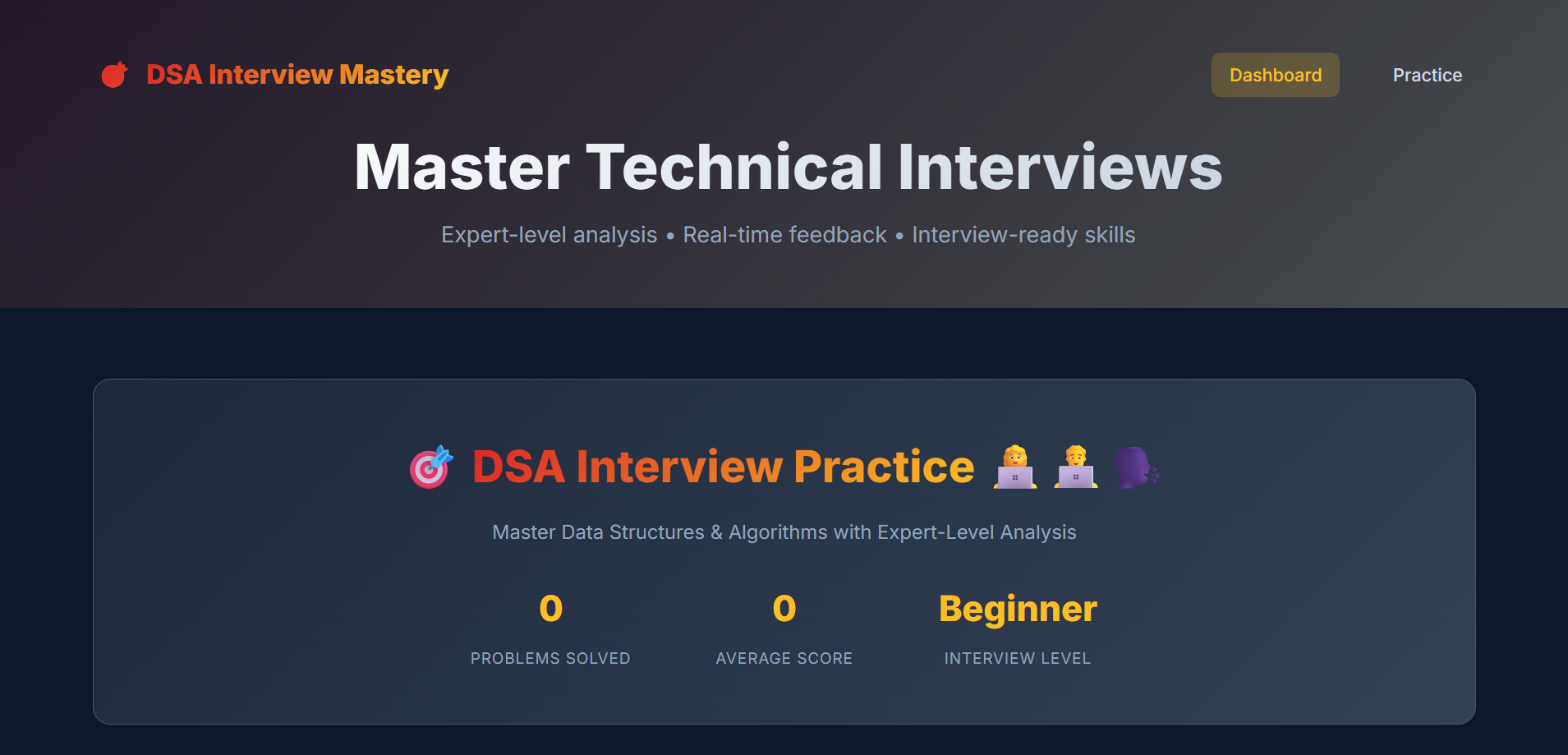
DSA Interview Ready revolutionizes technical interview preparation by addressing the critical gap between coding ability and communication skills. Think of it as your personal interview coach that's available 24/7, designed specifically for students who want to master the art of technical communication.
Here's how the complete experience works:
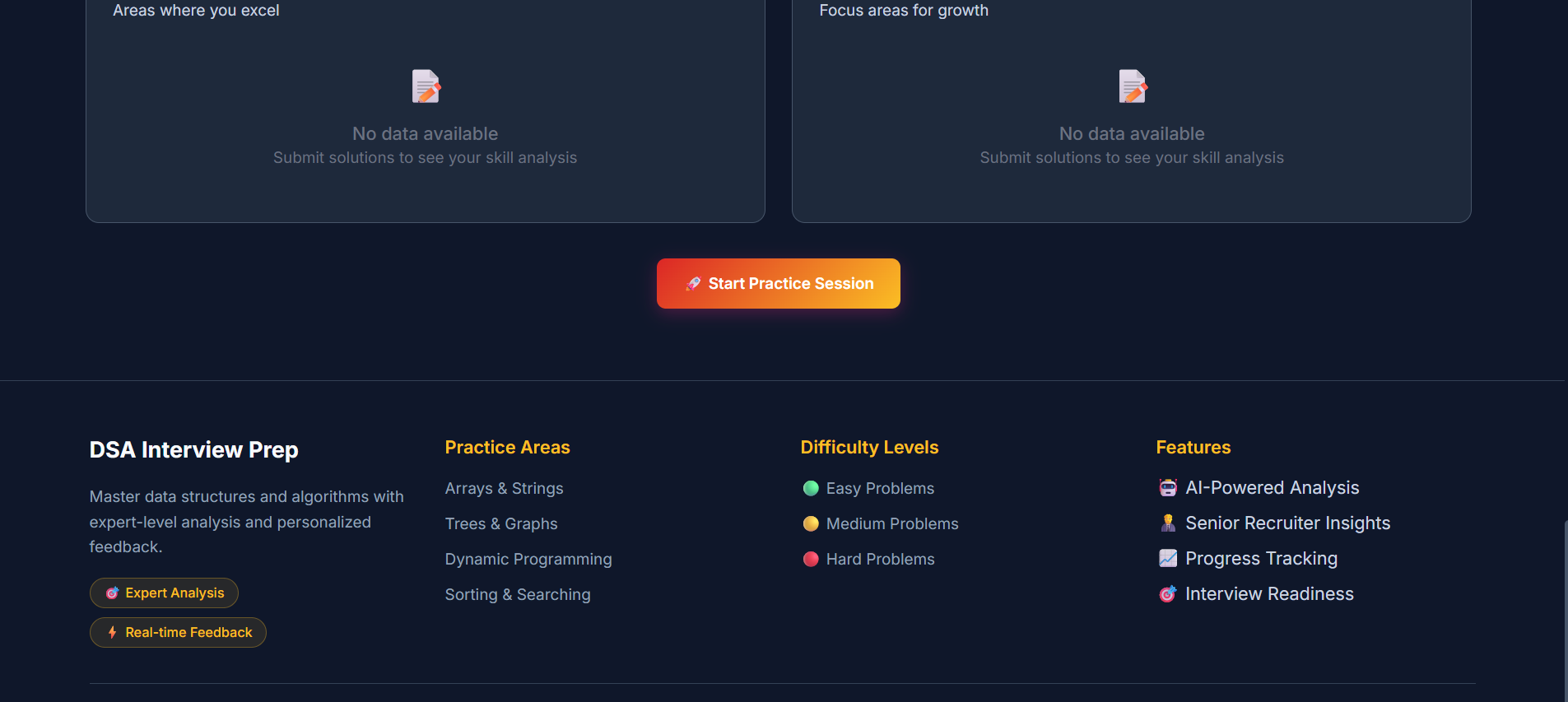
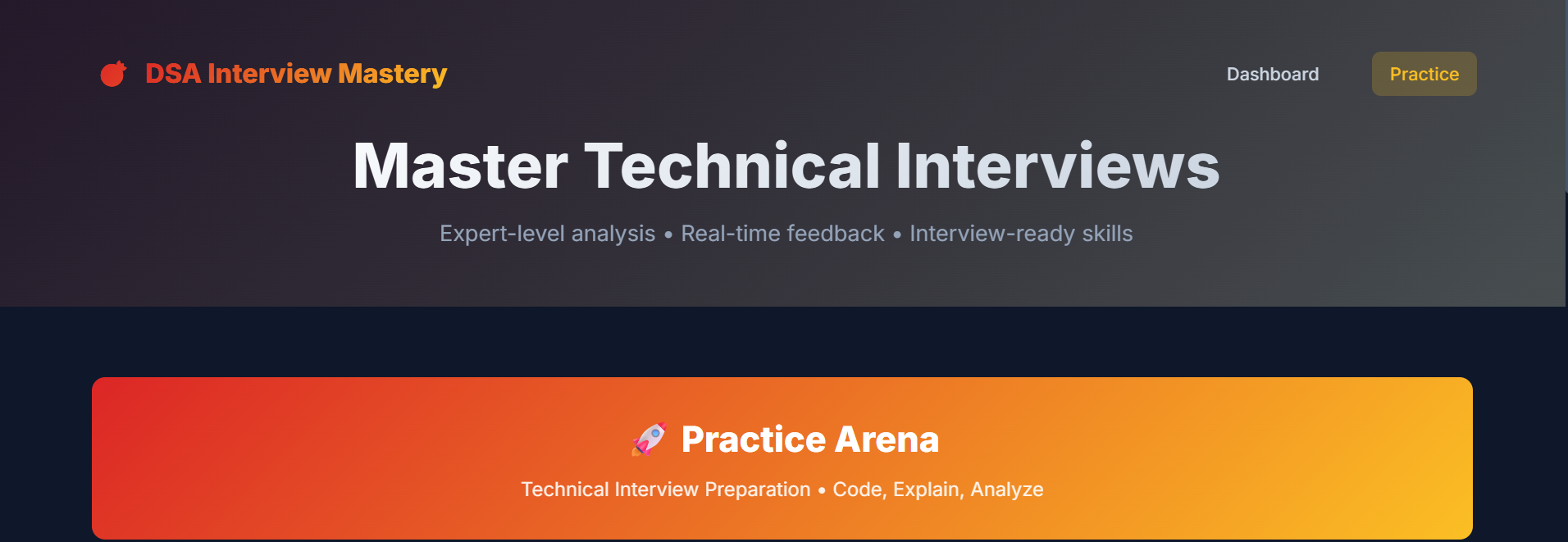
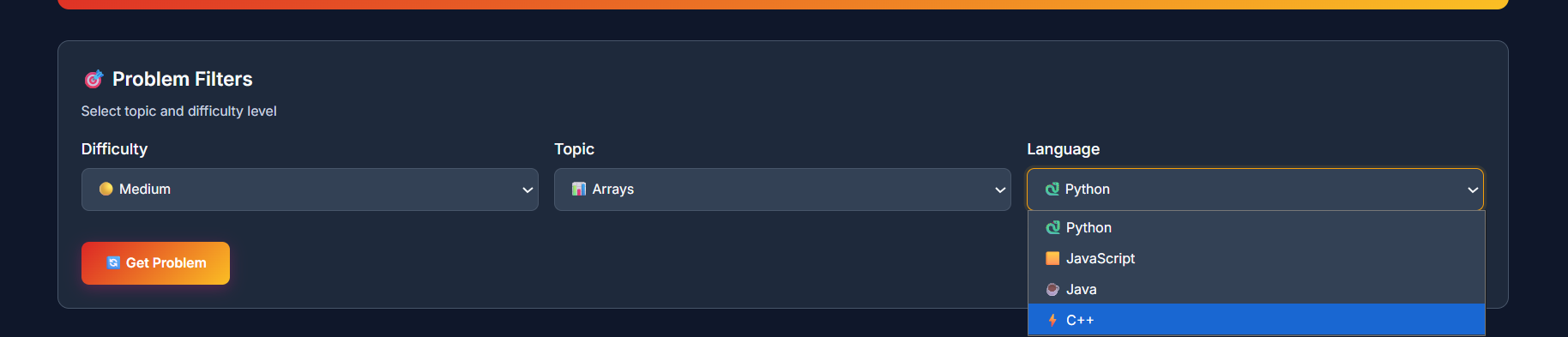
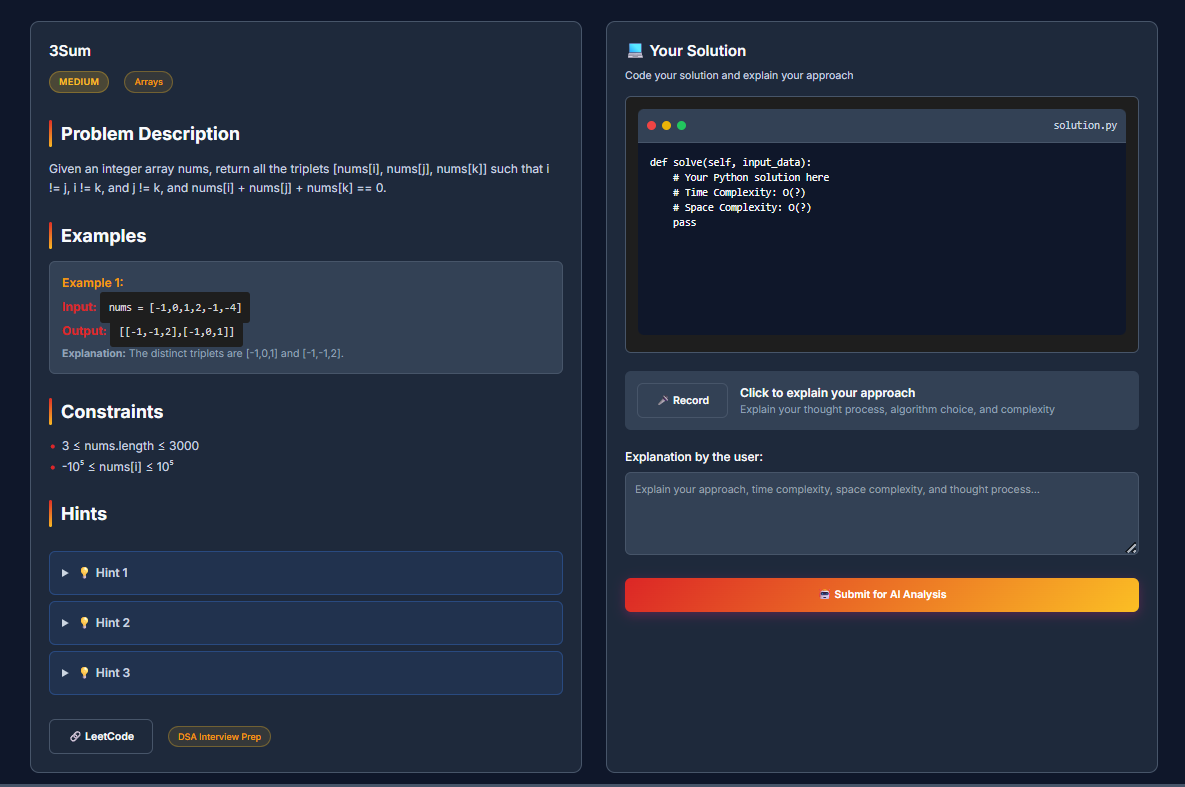
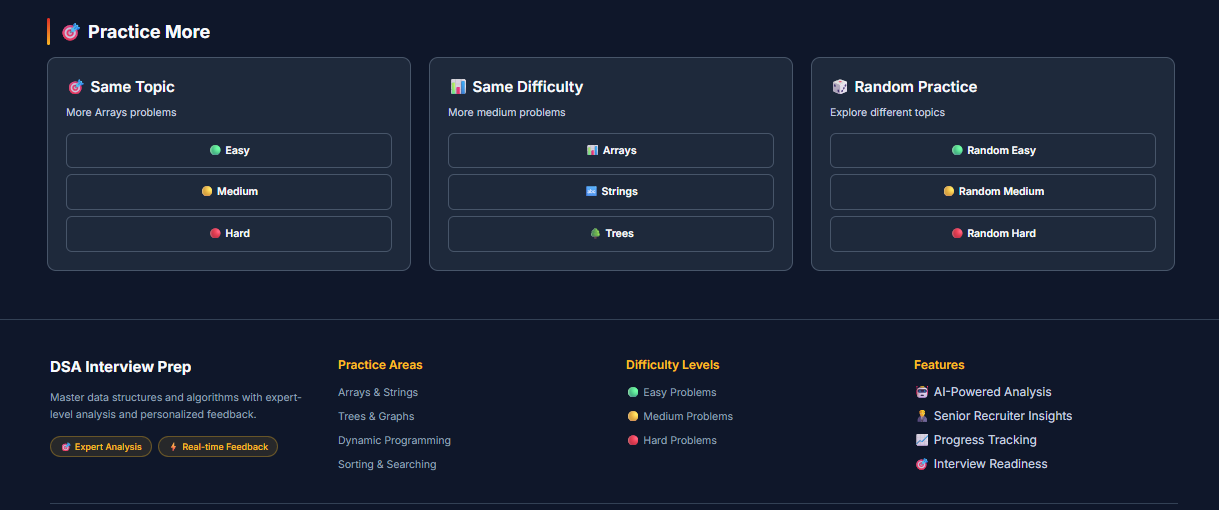
1) Smart Problem Selection: Students choose from our curated collection of 80+ problems spanning 8 core DSA topics (Arrays, Strings, Trees, Graphs, Dynamic Programming, etc.) across three difficulty levels. Each problem is carefully selected to mirror real interview questions from top tech companies, complete with multiple examples, constraints, and hints.
2) Multi-Language Code Editor: Students write their solutions in their preferred language (Python, JavaScript, Java, or C++), with syntax highlighting and a professional IDE-like experience. They can either solve from scratch or paste existing solutions to focus purely on explanation practice.
3) Voice-Powered Explanation: This is where the magic happens. Instead of just submitting code, students record themselves explaining their approach - walking through their thought process, discussing time/space complexity, explaining edge cases, and justifying their algorithmic choices. Our AssemblyAI integration transcribes their speech in real-time, making their explanations searchable and analyzable.
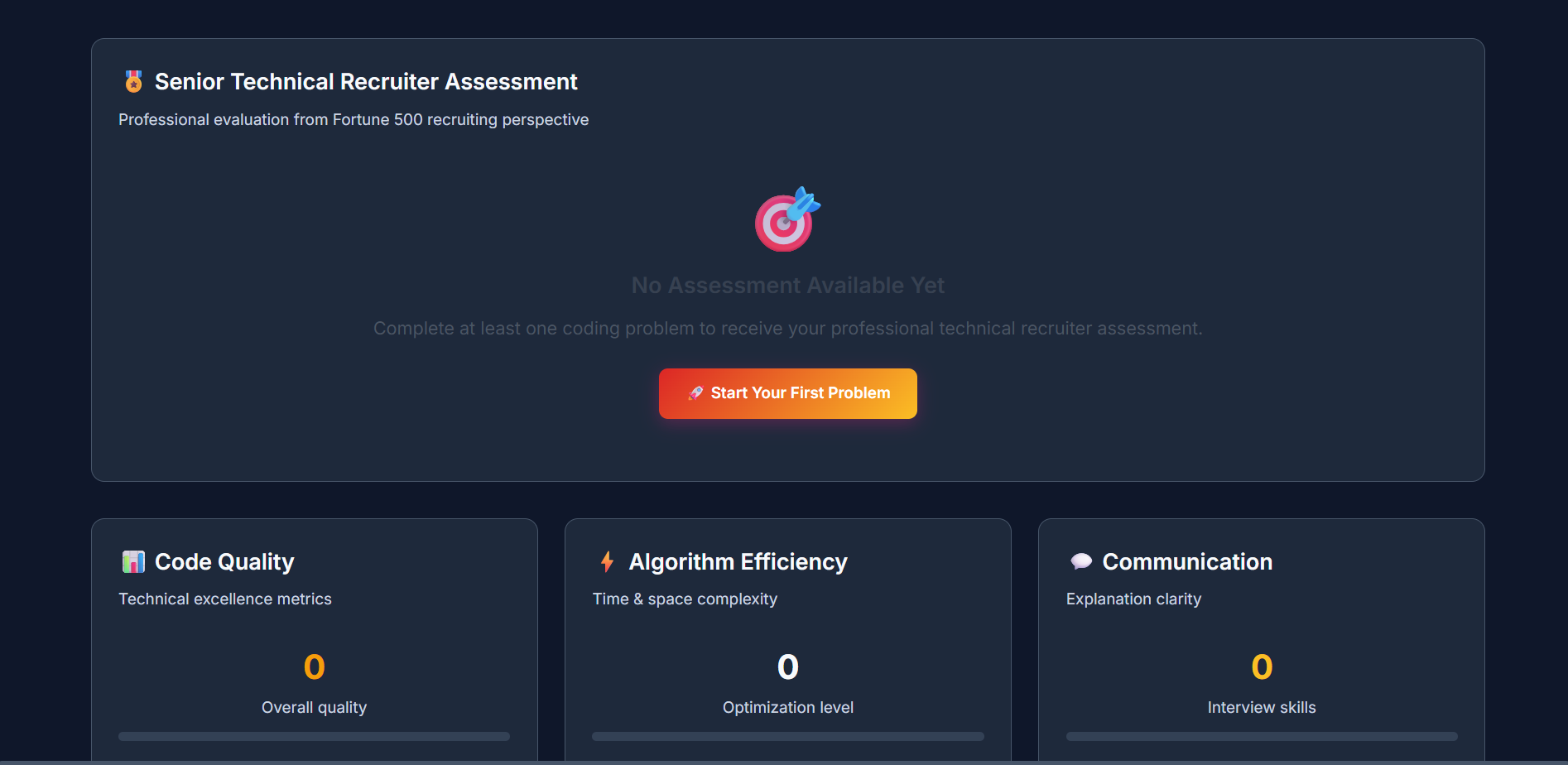
4) Senior Recruiter Analysis: Using advanced language models, we simulate the experience of being evaluated by a senior technical recruiter from companies like Google, Amazon, or Microsoft. The analysis covers five critical dimensions:
- Code Quality: Structure, readability, edge case handling
- Algorithm Efficiency: Time/space complexity analysis and optimization opportunities
- Communication Skills: Clarity of explanation, technical vocabulary usage, confidence
- Problem Solving: Approach methodology, alternative solutions consideration
- Interview Readiness: Overall assessment with specific hiring recommendations
Comprehensive Dashboard: Students track their progress across multiple metrics, identify strengths and weaknesses, and receive personalized improvement recommendations. The analytics show trends over time, helping students see their growth in both technical and communication skills.
Real-World Simulation: Every interaction is designed to mirror actual interview conditions - time pressure, the need to think aloud, and the expectation to justify every decision. This builds the muscle memory needed for real interview success.
How I built it
Building DSA Interview Ready required architecting a sophisticated full-stack application that could handle real-time voice processing, intelligent code analysis, and complex user analytics. Here's my technical deep-dive:
Backend Architecture: I chose Flask as our web framework for its flexibility and rapid development capabilities. The application follows a modular architecture with separate services for problem management, user analytics, voice processing, and intelligent analysis. This API design supports RESTful endpoints for all major operations while maintaining clean separation of concerns.
Redis as Multi-Model Database: Instead of using Redis as just a cache, we leveraged it as my primary database using multiple Redis data structures:
Hashes: Store complete problem metadata, user profiles, and submission details
Sets: Manage problem categorization by topic, difficulty, and tags
Sorted Sets: Track user progress, leaderboards, and trending problems
JSON Documents: Store complex nested data like analysis results and user activity logs
TimeSeries: Real-time analytics tracking user engagement and platform metrics
Vector Search: Semantic problem recommendations based on user preferences and performance
Voice Processing Pipeline: Integrating voice transcription required building a robust audio processing pipeline:
- Frontend captures audio using Web Audio API with proper error handling
- Audio files are temporarily stored and processed through AssemblyAI's transcription service
- We implemented fallback mechanisms for transcription failures and quality validation
- Real-time status updates keep users informed throughout the transcription process
Intelligent Analysis Engine: Our code analysis system combines multiple approaches: • **Groq API Integration: Uses llama3-8b-8192 model for sophisticated code analysis • **Senior Recruiter Simulation: Custom prompts that simulate real technical recruiter evaluation • **Fallback Analysis: Local analysis algorithms for when external APIs are unavailable • **Caching Layer: Intelligent caching of analysis results to improve performance and reduce API costs
Frontend Experience: Built with modern web technologies: • Responsive Design: Tailwind CSS for professional, mobile-first interface • Interactive Code Editor: Syntax highlighting and multi-language support • Real-time Voice Recording: Professional audio capture with visual feedback • Dynamic Analytics: Charts and progress visualization using JavaScript • Progressive Enhancement: Works even when JavaScript is disabled
Production Infrastructure: • Deployment: Render platform for automatic deployments and scaling • Database: Redis Cloud for production-grade Redis hosting • Monitoring: Built-in analytics and error tracking • Security: Environment variable management and secure API key handling
Challenges I ran into
Voice Transcription Complexity: Getting accurate transcription of technical explanations proved incredibly challenging. Students use domain-specific terminology like "Big O notation," "hash map," and "binary search tree," which general transcription services often misinterpret. We had to implement extensive error handling, quality validation, and fallback mechanisms. Additionally, handling different accents, speaking speeds, and audio quality variations required building a robust audio processing pipeline with multiple retry strategies.
Creating Realistic Feedback: Moving beyond generic "good job" responses to provide genuinely helpful feedback was our biggest technical challenge. We spent weeks fine-tuning our analysis prompts to simulate actual senior recruiter evaluations. The system needed to provide specific, actionable feedback on code quality, suggest algorithmic improvements, and assess communication skills—all while maintaining consistency and avoiding AI-generated fluff. We implemented multiple validation layers and fallback analysis methods to ensure students always receive valuable insights.
Redis Architecture Complexity: Using Redis as a primary database rather than just a cache required careful architectural planning. We had to design data models that leveraged Redis's strengths while handling complex relationships between users, problems, submissions, and analytics. Implementing features like semantic search, real- time analytics, and user progress tracking required deep understanding of Redis data structures and performance optimization techniques.
Real-time Performance: Balancing feature richness with performance was crucial. Voice transcription, code analysis, and real-time analytics all needed to work seamlessly without creating bottlenecks. We implemented intelligent caching strategies, asynchronous processing for heavy operations, and optimized database queries to maintain sub- second response times even under load.
User Experience Design: Creating an interface that feels professional yet approachable for students required extensive iteration. The voice recording feature needed to feel natural and encouraging, not intimidating. We had to design clear visual feedback for all states (recording, processing, analysis complete) while maintaining the serious tone appropriate for interview preparation.
Accomplishments that I'm proud of
Genuine Social Impact: We've created something that addresses a real, systemic problem in tech hiring. Our platform democratizes access to professional-level interview coaching that typically costs $200-500 per hour. Students from any background can now practice technical communication with the same quality of feedback previously available only to those who could afford expensive coaching services.
Technical Innovation: Our voice-first approach to coding interview preparation is genuinely unique in the market. While other platforms focus solely on code correctness, we're the first to systematically train the communication skills that actually determine interview success. The integration of real-time voice transcription with intelligent code analysis creates an entirely new category of educational technology.
Advanced Redis Implementation: We've showcased Redis's capabilities far beyond traditional caching. Our multi-model database architecture using hashes, sets, sorted sets, JSON documents, TimeSeries, and vector search demonstrates how modern applications can leverage Redis as a complete data platform. This implementation serves as a reference for other developers exploring Redis's advanced features.
Realistic Professional Simulation: Our senior recruiter analysis provides feedback that mirrors actual interview evaluations. Students receive specific insights about time complexity analysis, code optimization opportunities, and communication improvement areas—the same type of detailed feedback they'd get from experienced technical interviewers at top companies.
Production-Ready Platform: We've built and deployed a fully functional platform that handles real user traffic, processes voice recordings, and delivers consistent analysis results. The system includes proper error handling, security measures, and scalability considerations that make it suitable for widespread student use.
Accessibility and Inclusion: By supporting voice-based explanations, we've made interview preparation more accessible to students with different learning styles and communication preferences. The platform works for visual learners who prefer typing and auditory learners who think better when speaking aloud.
What I learned
Communication is the Hidden Interview Skill: Through building this platform, we discovered that technical communication is often more important than coding ability in determining interview success. Students can solve problems correctly but still fail interviews because they can't clearly explain their thought process, discuss trade- offs, or handle follow-up questions confidently.
The Power of Voice in Learning: Implementing voice-based explanations taught us that speaking solutions aloud helps students understand their own code better. When forced to verbalize their approach, students often discover gaps in their logic or find opportunities for optimization they missed when coding silently.
Redis as a Complete Data Platform: Working extensively with Redis showed us how modern applications can move beyond traditional database architectures. Redis's multi-model capabilities—combining key-value storage, document databases, search engines, and time-series analytics—can handle complex application requirements while maintaining exceptional performance.
The Importance of Realistic Feedback: Students don't need encouragement as much as they need honest, specific feedback. Our early versions provided overly positive responses that didn't help students improve. We learned that realistic assessments with specific improvement suggestions are far more valuable than generic praise.
Accessibility Benefits Everyone: Features designed for accessibility (like voice transcription) often benefit all users. Many students prefer explaining their solutions verbally even when they don't have specific accessibility needs, because it helps them think through problems more thoroughly.
Technical Debt in Educational Tools: Many existing interview preparation platforms focus on quantity over quality, leading to generic feedback and poor user experiences. We learned that investing in sophisticated analysis and personalized feedback creates much more value for students than simply providing more problems to solve.
What's next for DSA Interview Ready: Speak Your Logic, Get Hired
Advanced Mock Interview System: We're developing a comprehensive mock interview feature that simulates complete technical interviews, including behavioral questions, system design discussions, and follow-up technical challenges. This will include real-time feedback during the interview process and post-interview analysis with specific improvement recommendations.
Collaborative Learning Features: Students learn better together, so we're building peer review systems where students can practice explaining solutions to each other, participate in group problem-solving sessions, and learn from diverse approaches to the same problems. This will include features for study groups, coding partnerships, and peer mentorship programs.
Company-Specific Interview Tracks: Different companies have distinct interview styles and expectations. We're creating specialized preparation tracks for FAANG companies, startups, fintech firms, and other industry segments. Each track will include company-specific problems, interview format simulation, and targeted feedback based on that company's hiring criteria.
Advanced Analytics and Learning Paths: We're implementing machine learning algorithms to create personalized learning paths based on individual student performance patterns. The system will identify specific knowledge gaps, recommend targeted practice areas, and adapt difficulty progression based on student improvement rates.
Integration with Popular Platforms: Students already use platforms like LeetCode, HackerRank, and Codeforces. We're building integrations that allow students to import their existing progress and continue their communication practice with problems they've already solved, focusing purely on explanation skills.
Mobile Application: While our web platform works on mobile devices, we're developing a dedicated mobile app optimized for voice recording and practice sessions. This will make it easier for students to practice during commutes, study breaks, or whenever they have spare time.
Expanded Language Support: Beyond our current four programming languages, we're adding support for Go, Rust, Swift, and other languages commonly used in technical interviews. We're also working on natural language support for international students who want to practice technical communication in English.
Real Recruiter Network: We're building partnerships with actual technical recruiters and senior engineers from top companies who can provide live feedback sessions, conduct mock interviews, and offer career guidance. This will bridge the gap between our automated analysis and real human expertise.
Advanced Problem Generation: Using language models, we're developing systems to generate new, unique problems that test the same algorithmic concepts as classic interview questions but with fresh contexts. This ensures students can' t simply memorize solutions and must truly understand the underlying concepts.
Our ultimate vision is to become the definitive platform where computer science students don't just learn to code— they master the art of technical communication that transforms them from problem solvers into confident, articulate engineers ready to excel in any technical interview.


Log in or sign up for Devpost to join the conversation.