-
-
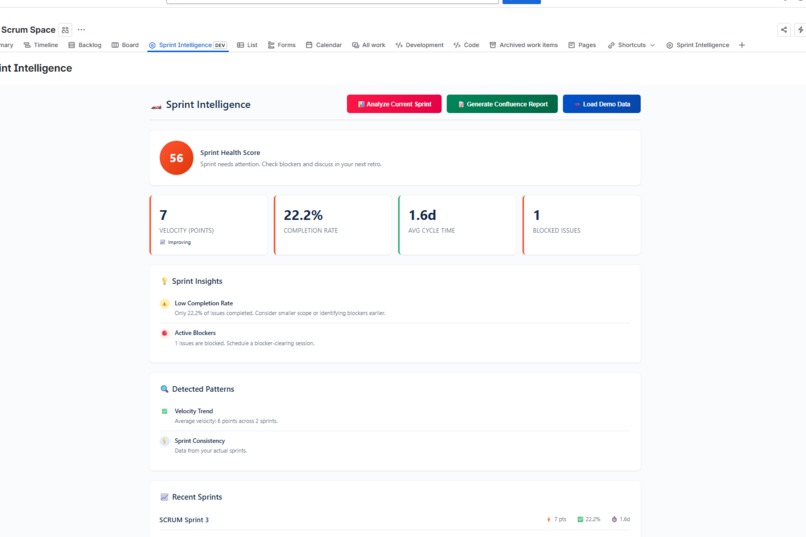
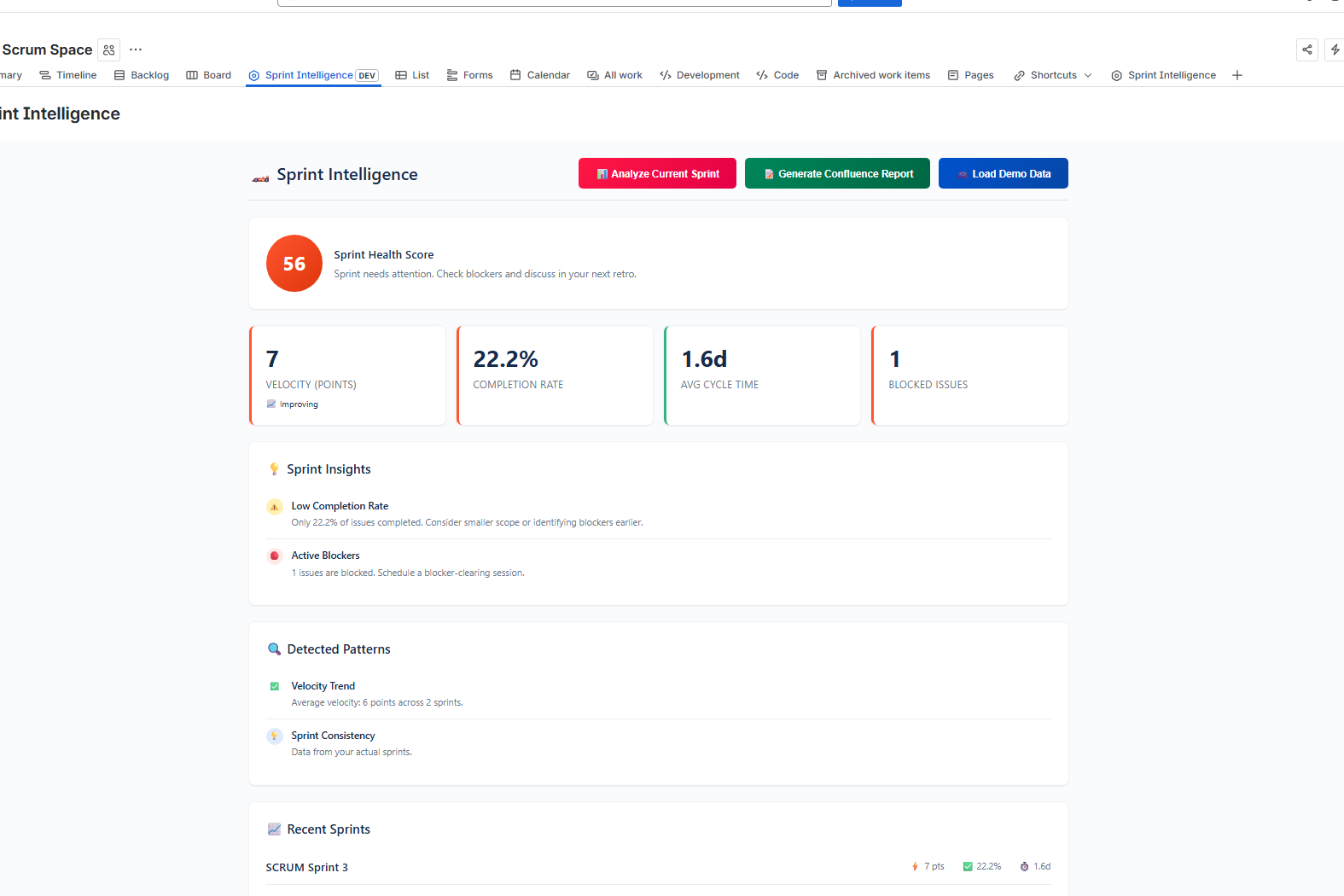
Sprint Intelligence Dashboard with Health Score, Metrics, Insights, and Pattern Detection
-
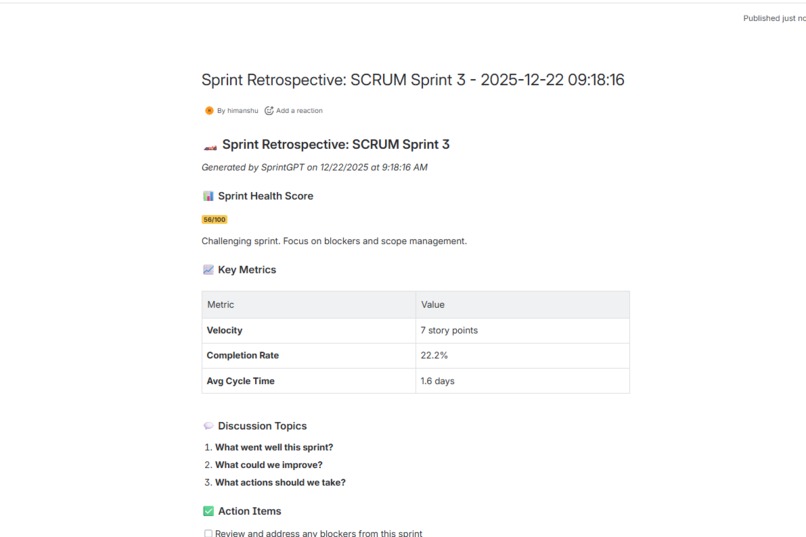
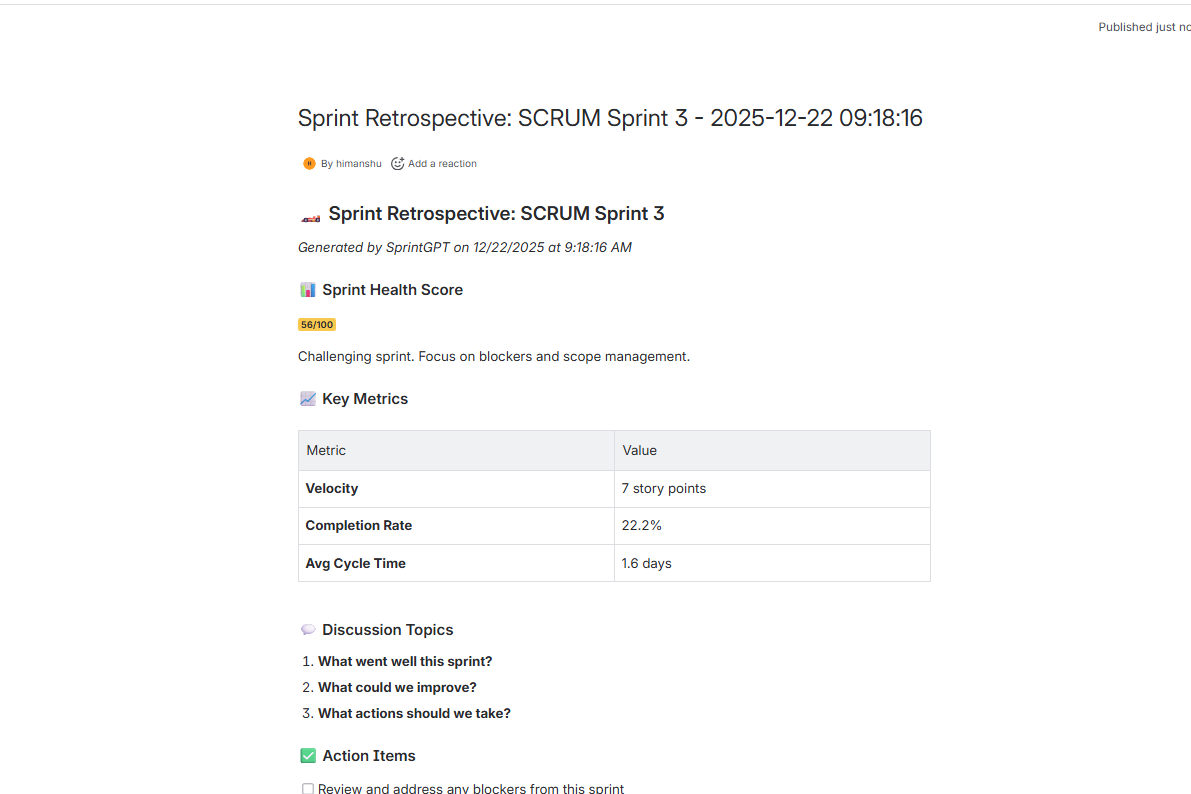
Confluence Retrospective Page - Auto-generated with Sprint Metrics and Action Items
-
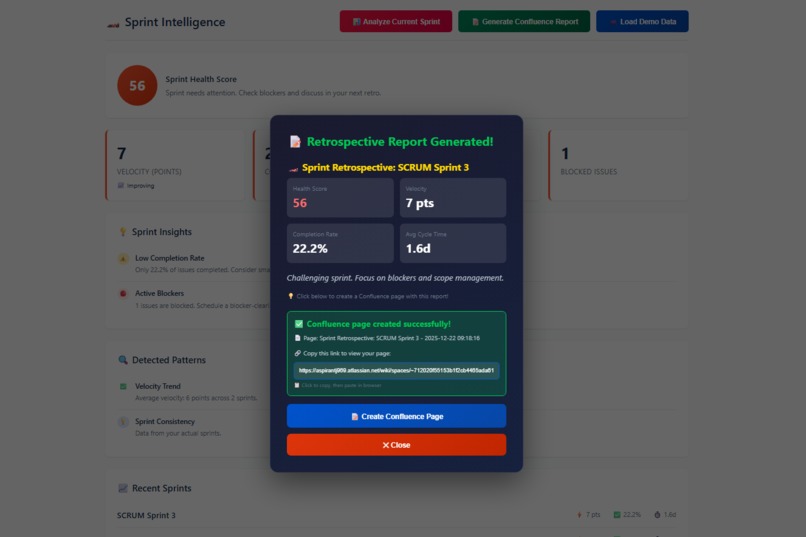
One-click Confluence Page Creation from Jira Dashboard
-
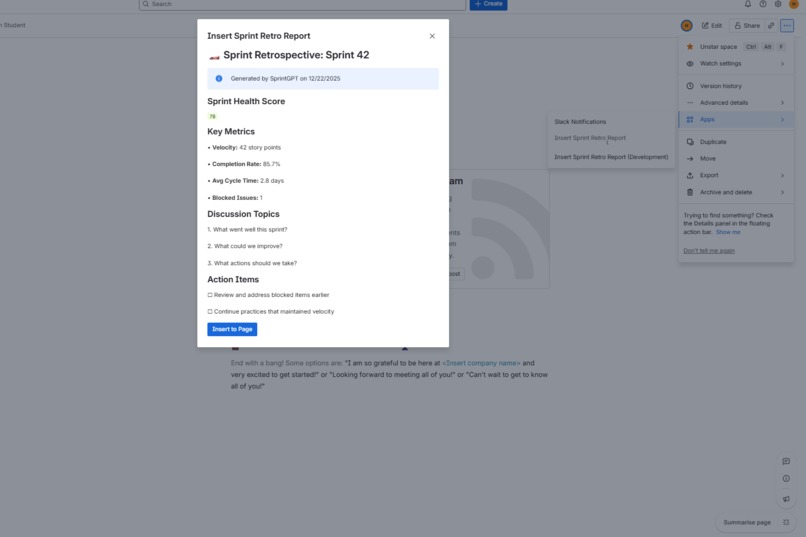
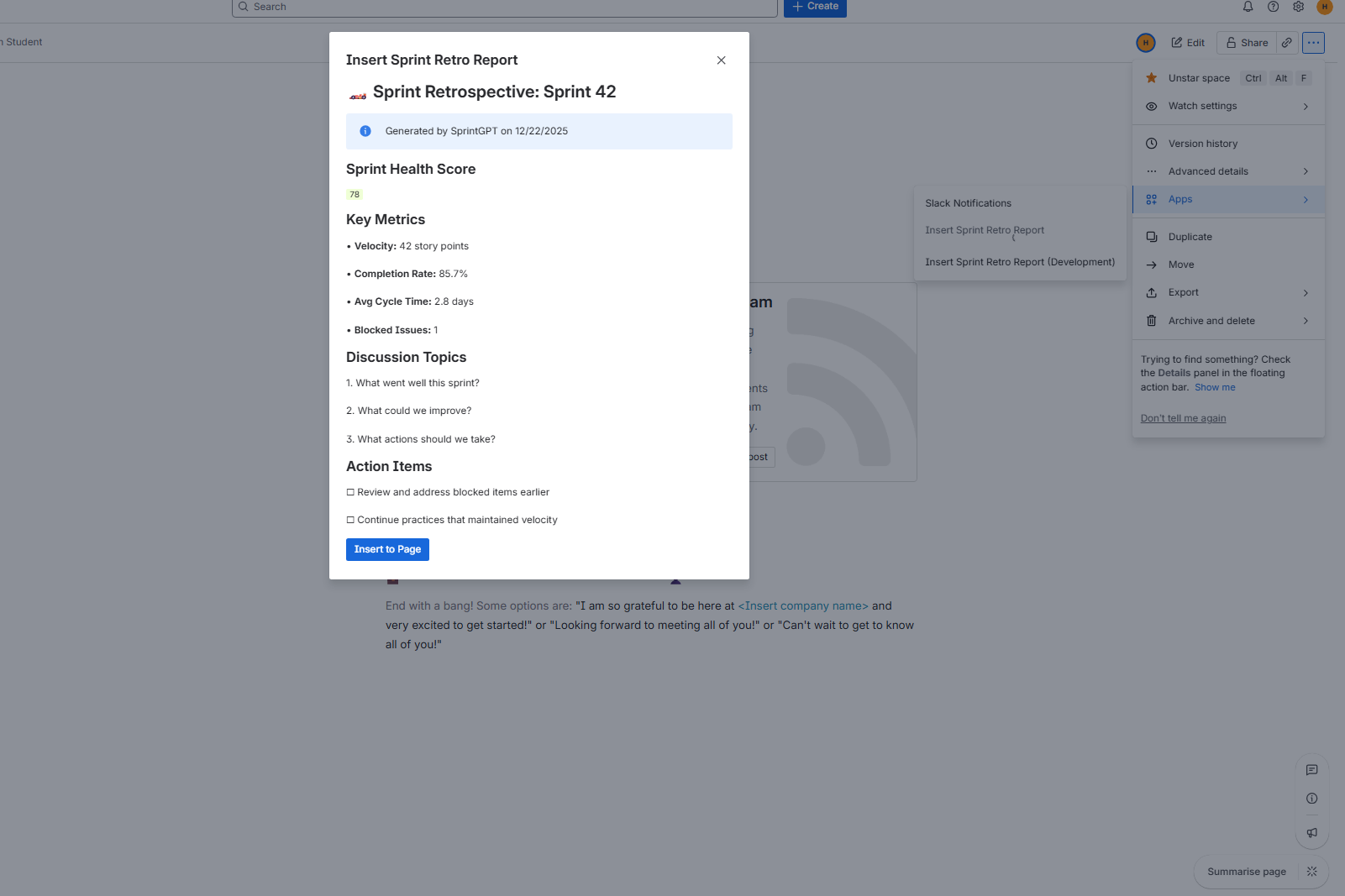
Confluence Content Action - Insert Sprint Retro Report into any page

Inspiration
Sprint retrospectives are broken. Teams spend hours in subjective discussions with no data to back up observations. The same issues resurface sprint after sprint. Action items get forgotten. Scrum masters waste time manually gathering metrics.
I wanted to fix this by bringing data-driven insights to retrospectives - like how F1 race engineers analyze telemetry data to improve performance.
What it does
SprintGPT is an AI-powered Sprint Retrospective Engine that:
- Calculates a Sprint Health Score (0-100) using velocity, completion rate, cycle time, and blockers
- Provides a Rovo AI Agent for natural language sprint analysis
- Detects patterns across multiple sprints automatically
- Generates Confluence reports with one click
- Auto-triggers analysis on sprint completion
How I built it
- Platform: Atlassian Forge (Node.js 22)
- Frontend: React 18 Custom UI with F1-themed styling
- APIs: Jira Agile REST API for real sprint data
- Storage: Forge Storage for persisting sprint history
Challenges I faced
- Getting real data - Making sure all metrics came from actual Jira APIs, not mock data
- Health Score algorithm - Balancing the weighted formula to give meaningful scores
- Installation link expiry
What I learned
- How to build production-ready Forge apps
- Rovo Agent architecture and action design
- Jira Agile API for sprint and issue data
- Forge Storage for persisting data across sessions
What's next
- Add velocity prediction using historical trends
- Slack/Teams notifications for sprint insights
- Team comparison dashboards
- Integration with more Atlassian products
Built With
- atlassian-forge
- confluence
- forge
- javascript
- jira
- node.js
- react
- rovo

Log in or sign up for Devpost to join the conversation.