-
-
-
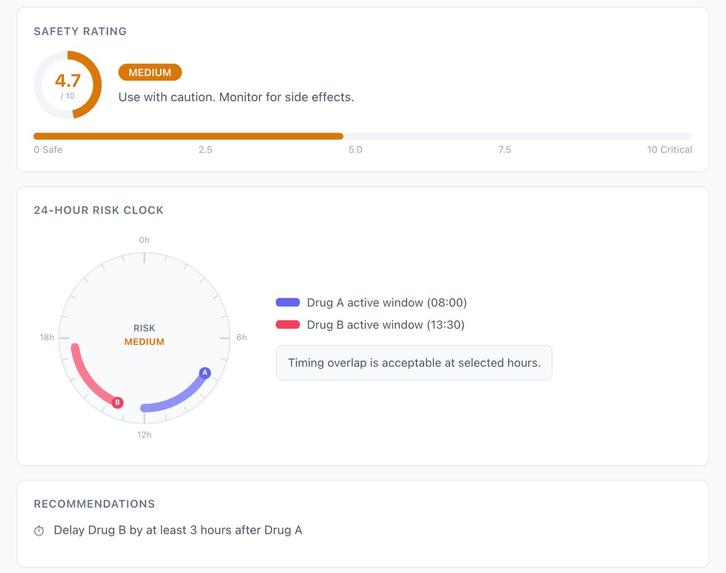
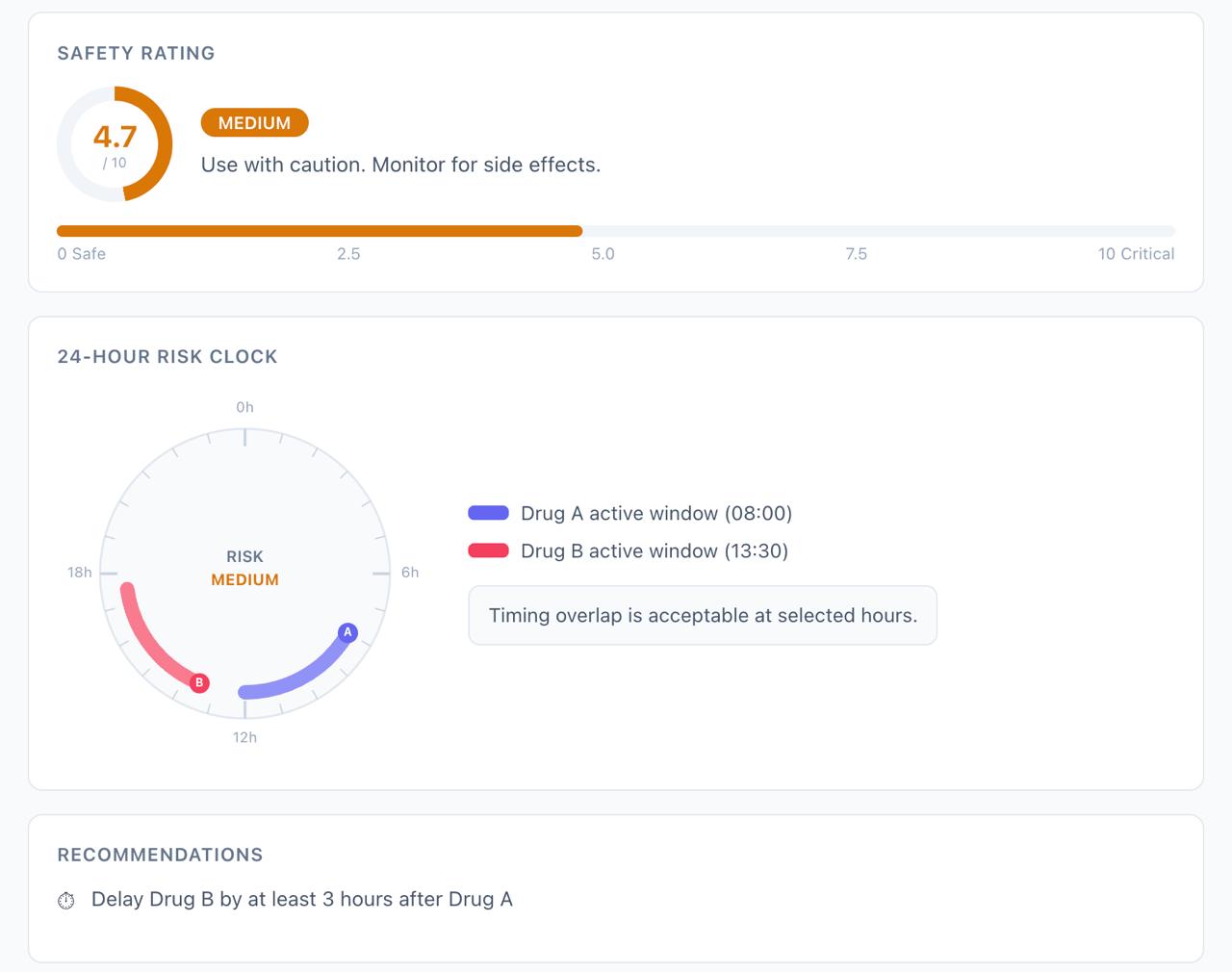
Output Dashboard
-
Inspiration
Our main idea was: What if instead of just flagging interactions between two or more drugs, we could explain them better and personalize the risks using individual circadian rhythm.
What it does
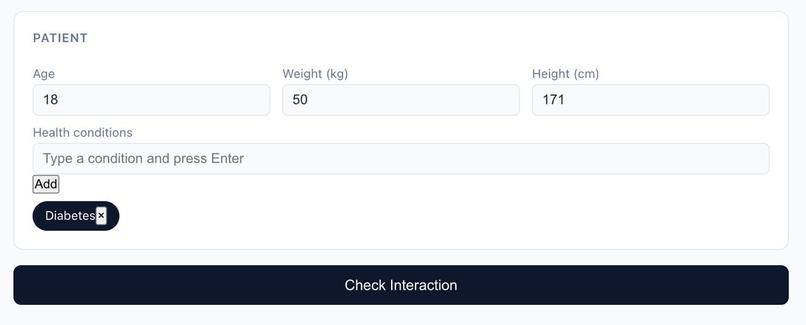
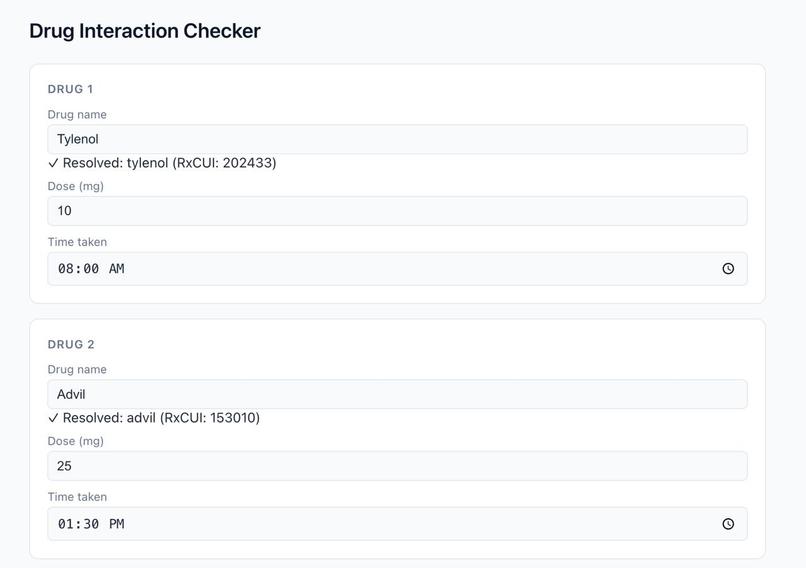
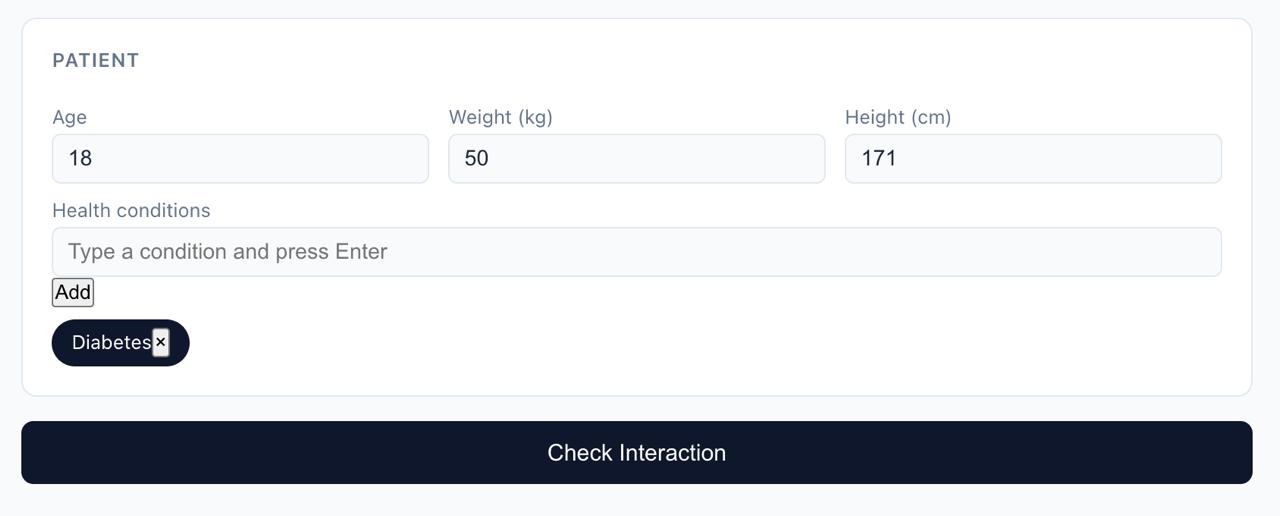
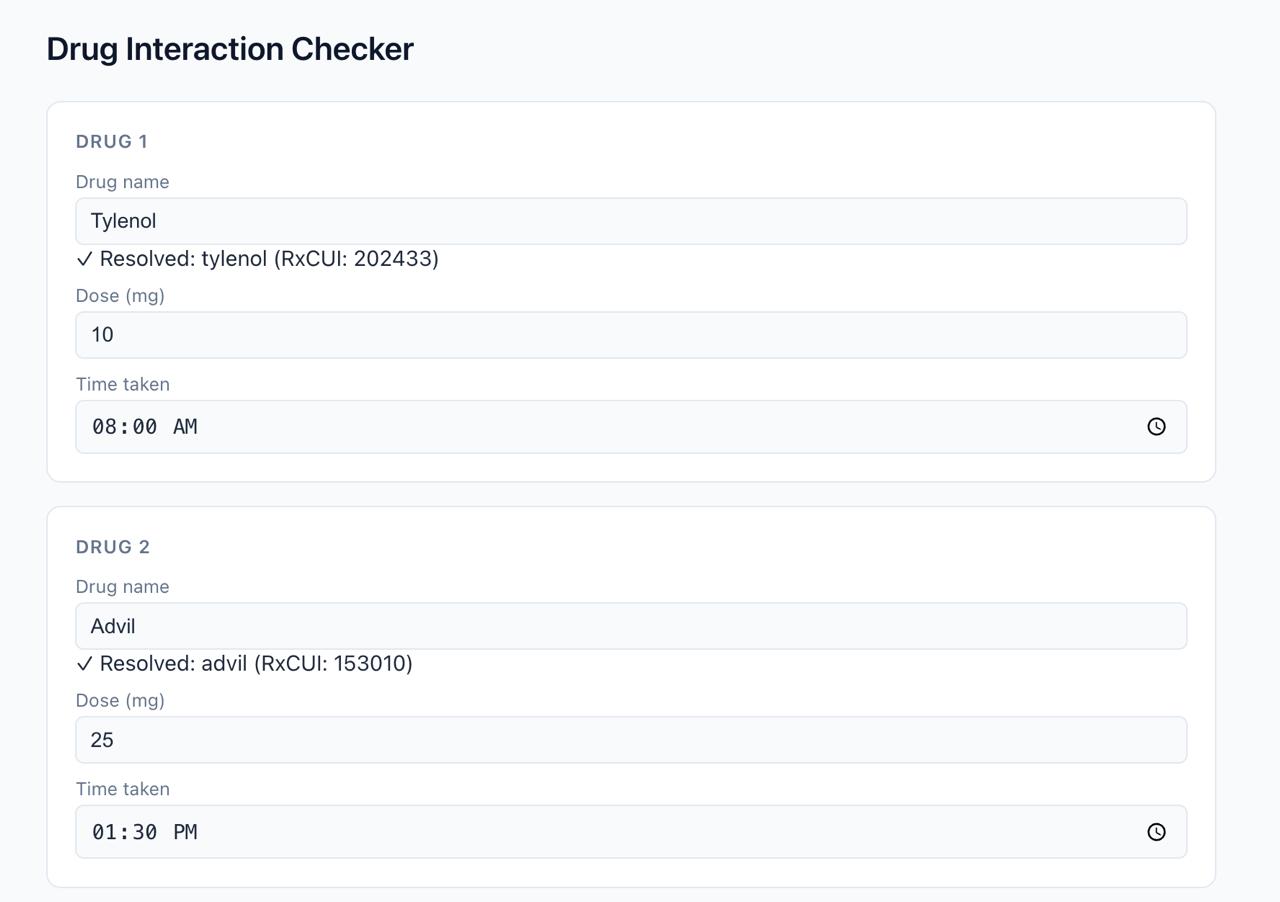
→ The user inputs the drugs taken, the time at which they were consumed, and their age ,height and weight. → It compares the mechanism of the drug pair and peak times of both the drugs, as well as patient’s circadian rhythm → Based on whether the two drugs overlap, or may cause serious risks, the model gives us a score of how harmful the pair is. → The recommendation consists of changes which can be made in the time gap between the two drugs and the ideal and the most dangerous time to consume the drugs based on the circadian rhythm of the patient.
How we built it
Drug Name Resolution: We used RxNorm APIs to standardize drug names and map them to unique identifiers (RxCUIs).
A custom module calculates how long two drugs coexist in the body based on: →dosage timing →peak hours of the drug →Patient's circadian rhythm
A weighted scoring algorithm computes risk based on: →drug interaction →overlap duration →patient factors (age, weight, BMI) →dosage levels
Challenges we ran into
→Accurately estimating overlap required simplifying pharmacokinetics without losing realism. →Designing a scoring system that is meaningful, but not overly alarmist, required careful tuning.
Accomplishments that we're proud of
→Built a mechanism-aware and time independent system →Created a personalized risk score based on patient's personalized input.
What we learned
→Real-world healthcare data is messy and fragmented →Simple rule-based systems are insufficient—context matters
What's next for Drug Interaction Risk Analysis and Optimisation
Integrating AI models to learn patient patterns and improve prediction.
