-
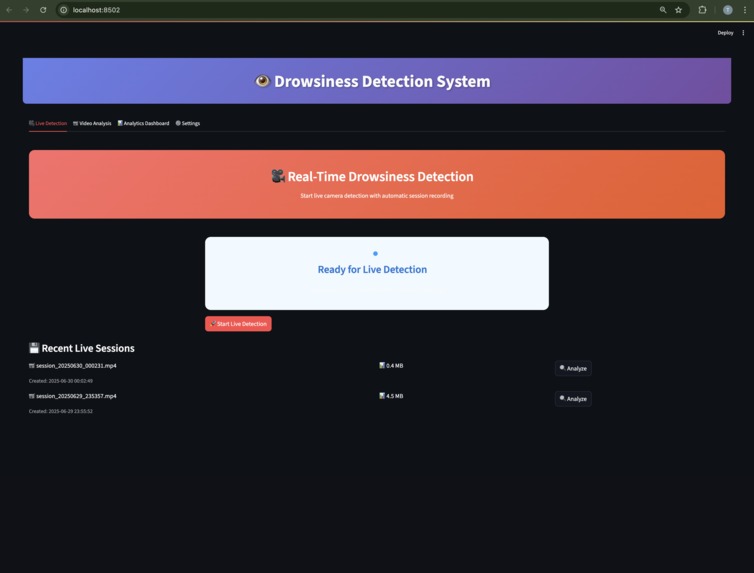
Main_navigation
-
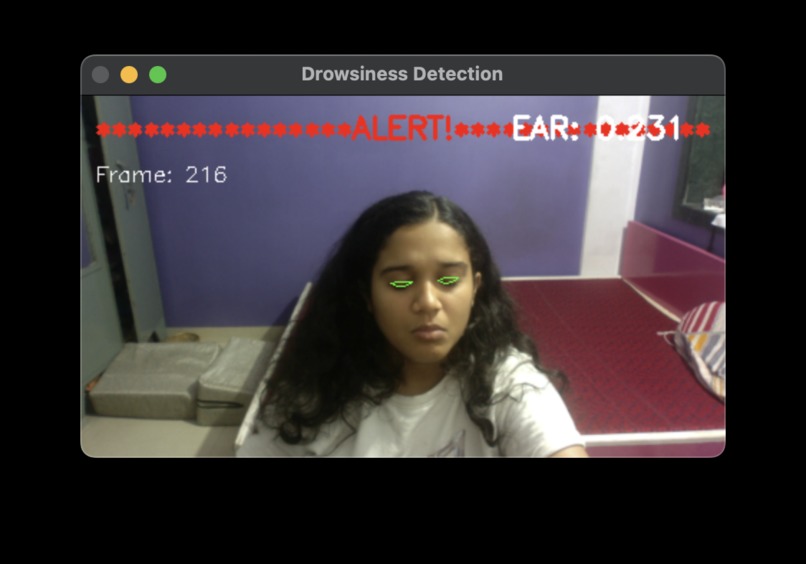
Live Cam-Alert Detection
-
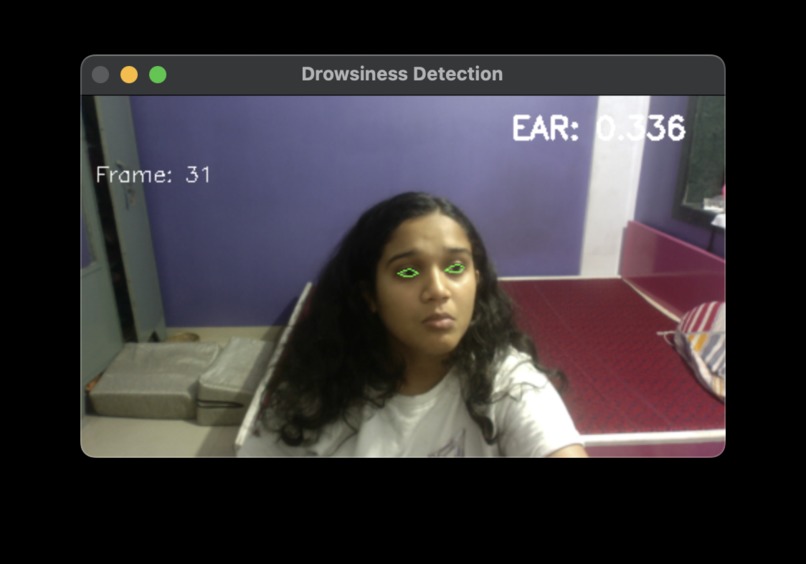
Live_cam
-
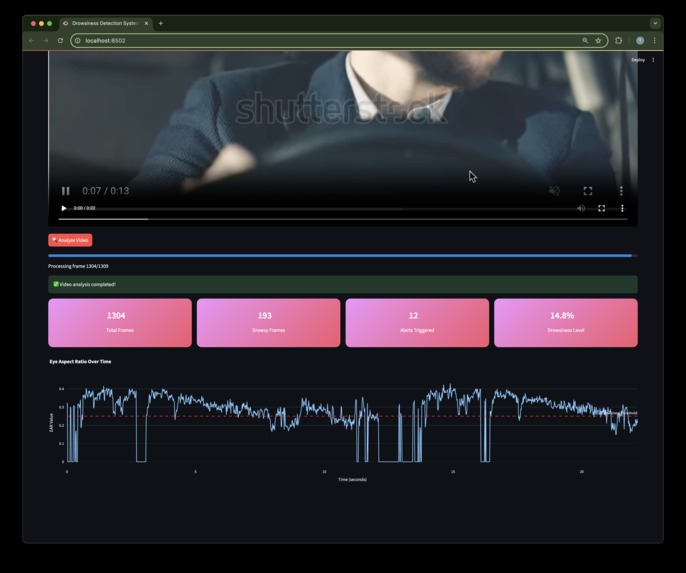
Video Analysis
-
Alert Analysis
-
Log analysis
Inspiration
Fatigue-induced accidents account for a significant portion of road mishaps globally. The need for a proactive, accessible, and real-time solution to monitor drowsiness—particularly in long-haul driving and high-risk workplace environments—was the core motivation behind developing this system. I aimed to build a tool that could provide real-time alerts, be easy to deploy, and offer insightful analytics for future safety improvements.
What it does
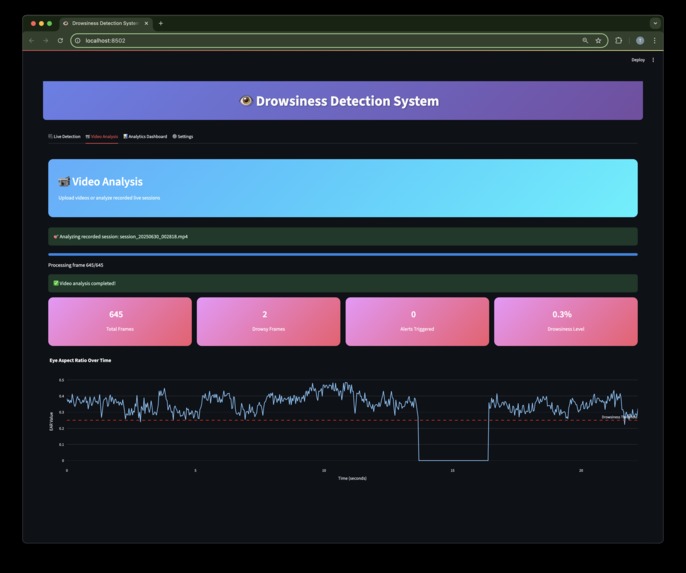
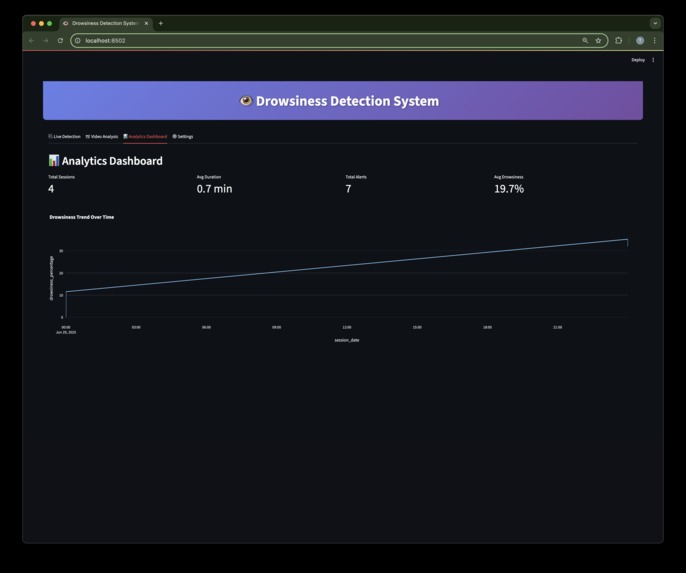
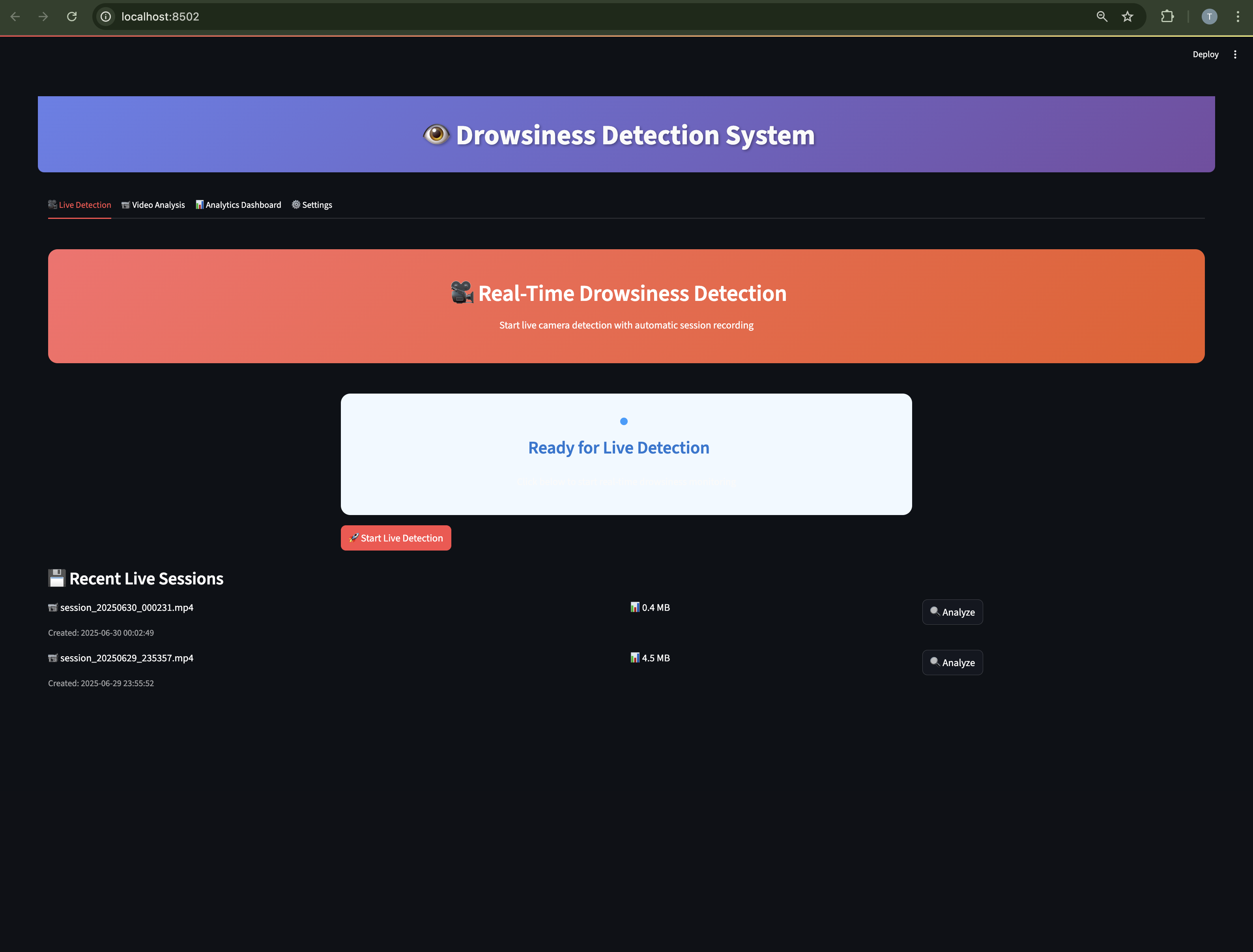
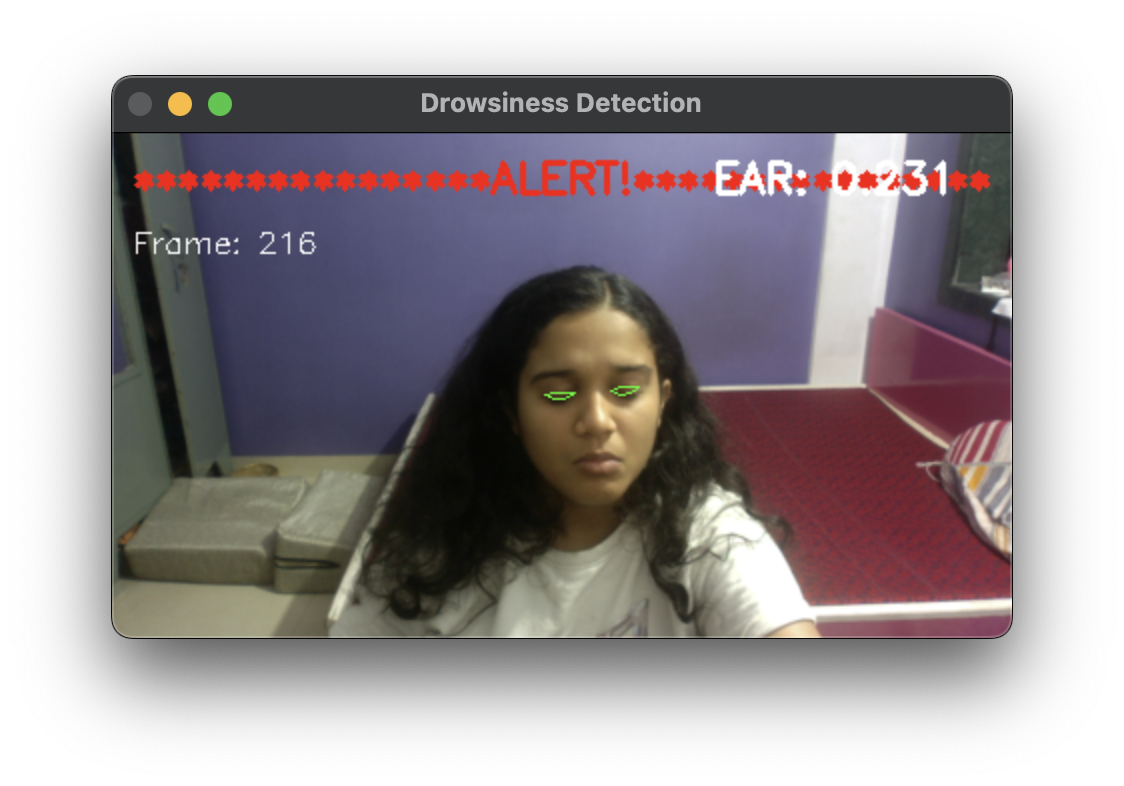
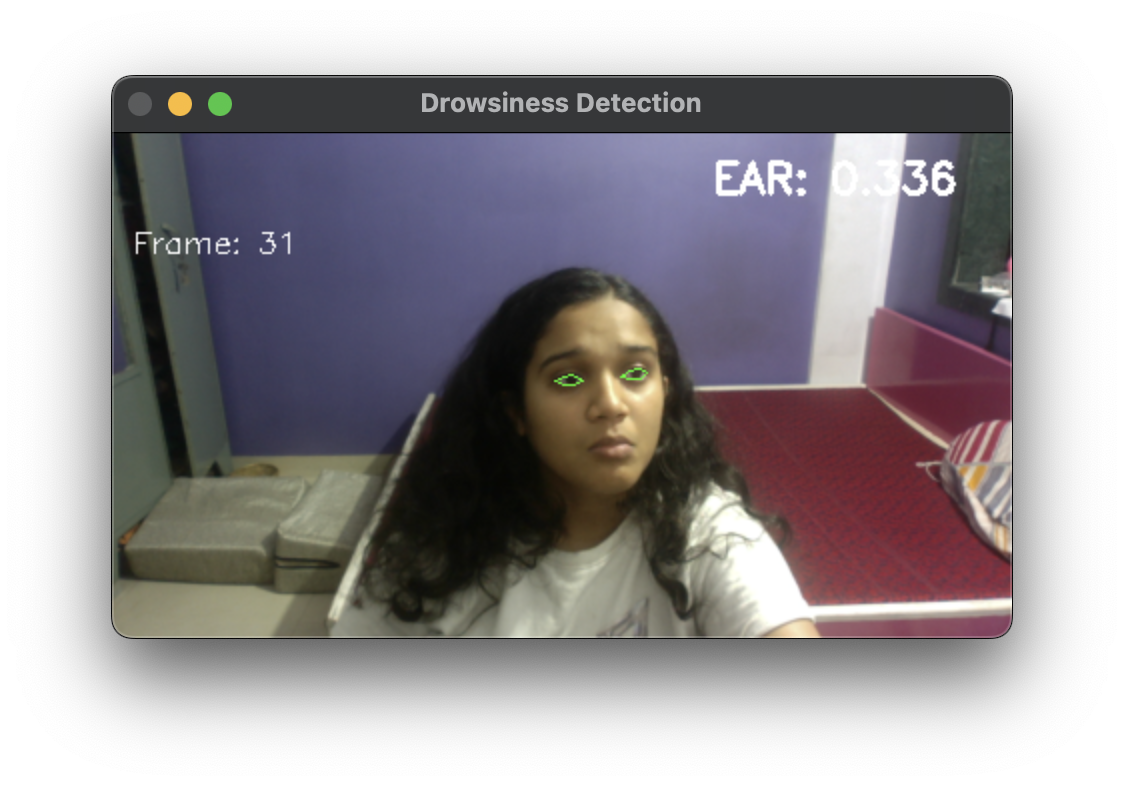
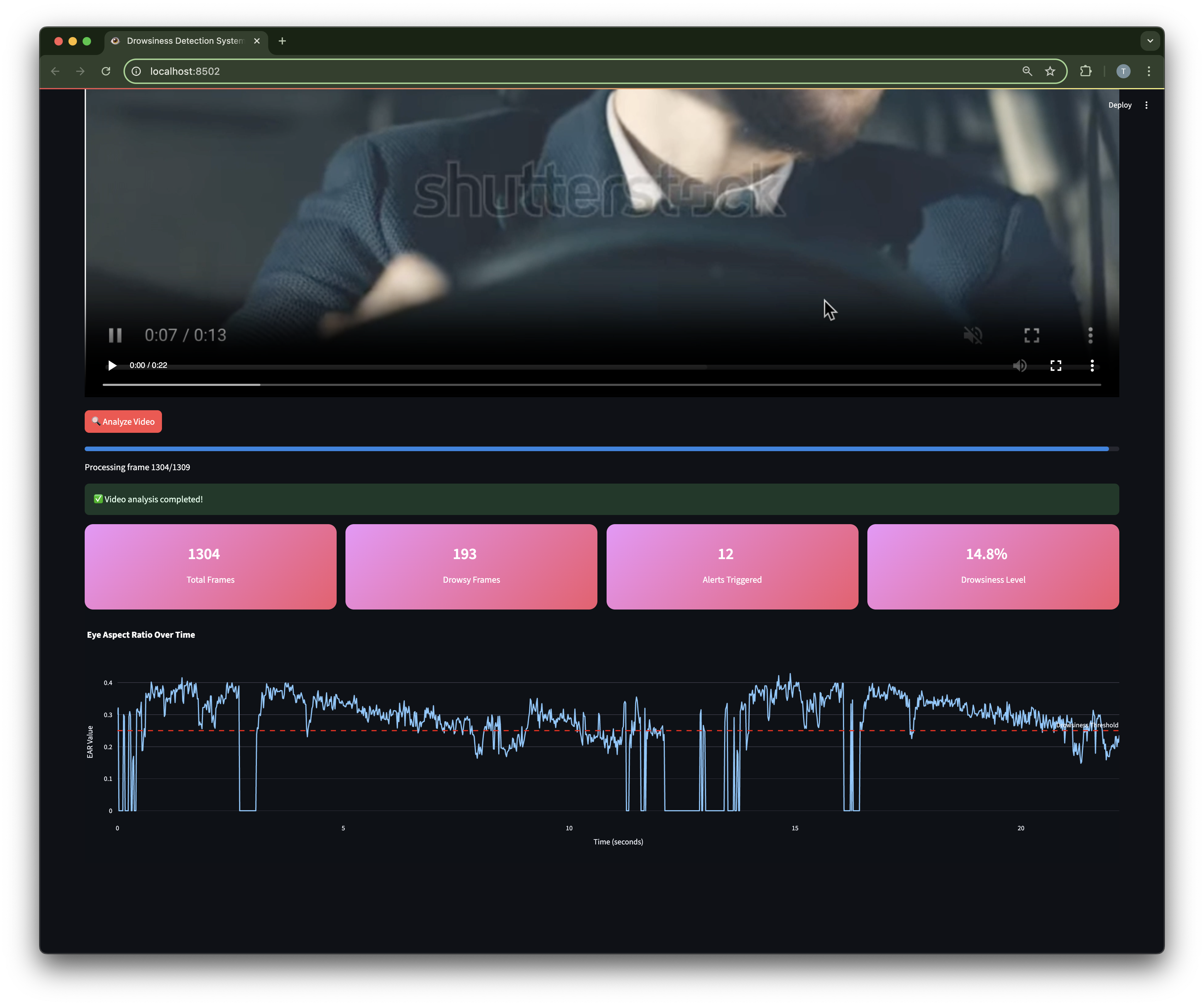
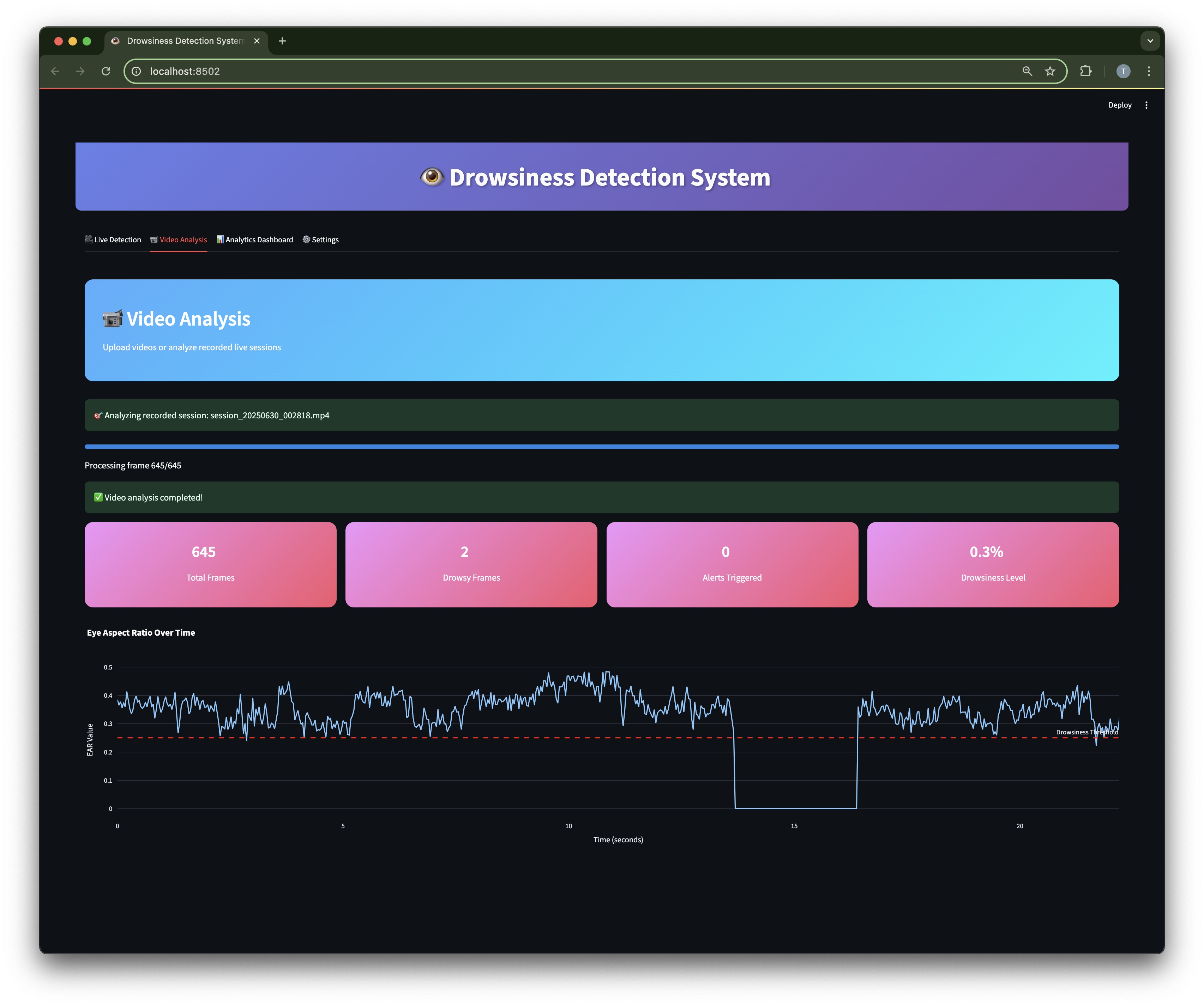
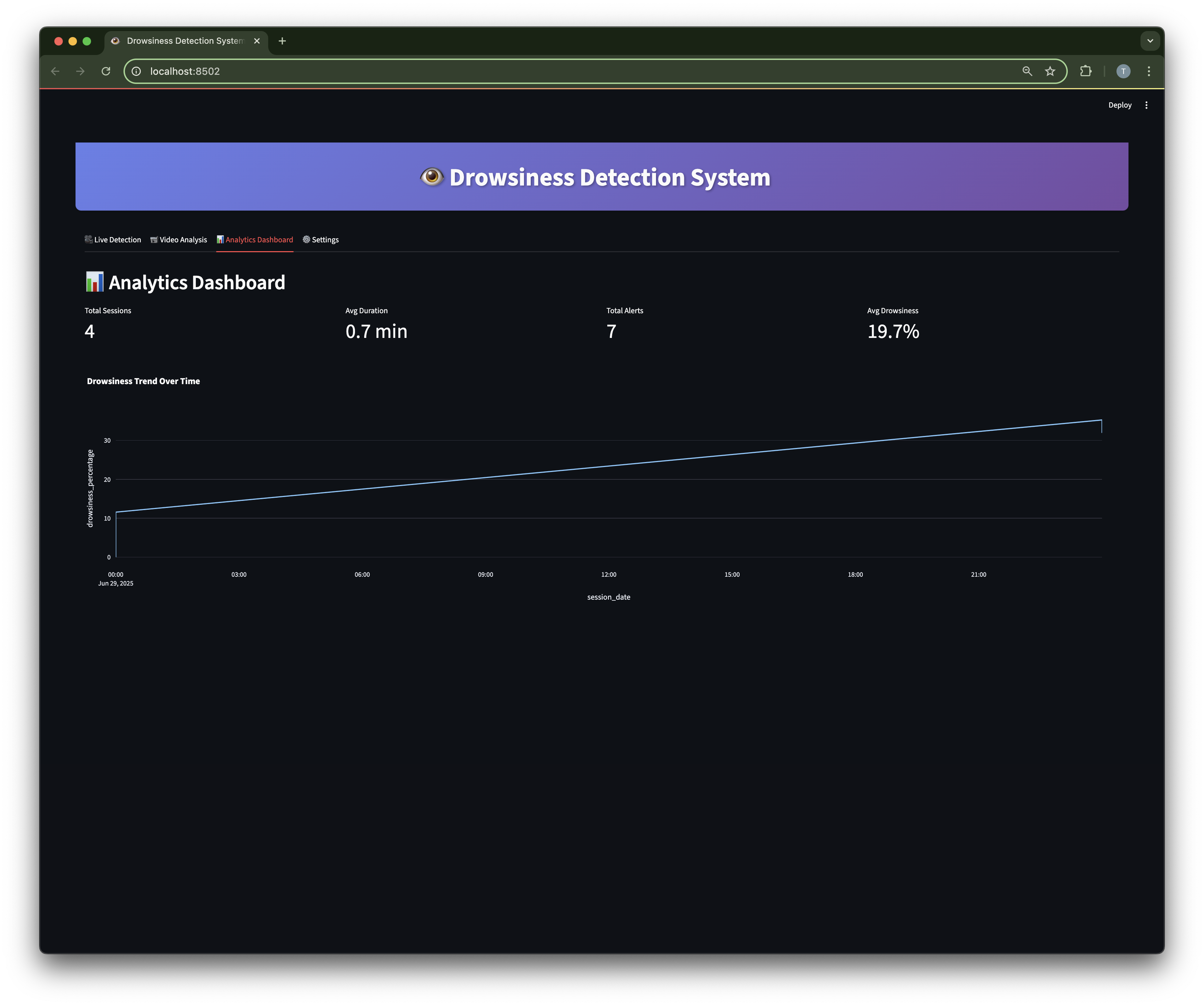
The Drowsiness Detection System monitors the user’s eye movements in real time using the Eye Aspect Ratio (EAR) algorithm. It detects signs of drowsiness by analyzing blink duration and frequency. Upon detection, the system issues audio-visual alerts to prevent microsleep episodes. Additionally, it tracks session metrics, logs drowsiness events, and provides analytical insights through a web interface built with Streamlit. The system supports live camera feeds, video processing, and configurable thresholds for adaptable deployment.
How we built it
This project was built using Python with key libraries including OpenCV for image processing, Dlib for facial landmark detection, and Pygame for audio alerting. The core detection leverages a 68-point facial landmark model (shape_predictor_68_face_landmarks.dat) to isolate eye regions and compute the Eye Aspect Ratio (EAR).
I developed:
- A real-time detection engine (
realtime_detector.py) - A Streamlit-based dashboard (
streamlit_app.py) for user interaction and analytics - Logging mechanisms to track sessions and performance The system is modular, allowing easy configuration and expansion into different environments.
Challenges we ran into
- Facial Landmark Accuracy: Ensuring consistent landmark detection under varying lighting and camera angles was difficult.
- Performance Optimization: Maintaining 30+ FPS on CPU while analyzing live video streams required careful frame resizing and sampling strategies.
- Audio Playback: Cross-platform handling of audio alerts introduced dependency-related challenges.
- Solo Development: Managing both the computer vision backend and the web frontend single-handedly demanded strict time and task management.
Accomplishments that we're proud of
- Successfully implemented a robust real-time drowsiness detection algorithm with over 95% accuracy using the EAR metric.
- Developed a fully functional and interactive web interface with session tracking and analytics capabilities.
- Created a deployable, standalone system that can operate across multiple input types (live camera, video files) with flexible parameter control.
- Designed a modular codebase that's both hackathon-ready and suitable for real-world integration.
What we learned
This project deepened my understanding of real-time computer vision systems, particularly around facial landmark models and how subtle biometric cues can be translated into actionable data. I also learned how to integrate multiple technologies—like Streamlit, OpenCV, and Pygame—into a cohesive pipeline. Beyond the technical, working solo improved my time management, debugging efficiency, and full-stack development capability.
What's next for Drowsiness Detection System
Future improvements will focus on:
- Deep Learning Integration: Replacing EAR with a CNN-based model to improve accuracy in diverse conditions.
- Mobile App Development: Bringing the system to smartphones using lightweight models for real-time detection.
- Multi-person Detection: Extending functionality to monitor multiple subjects simultaneously.
- Cloud & IoT Integration: Hosting the detection system as an API and enabling hardware-based deployments for in-vehicle systems.
- Advanced Analytics: Adding fatigue scoring, head pose tracking, and predictive drowsiness alerts for earlier intervention.

Log in or sign up for Devpost to join the conversation.