Inspiration:Drowning is one of the fastest and quietest accidents that can happen in a swimming pool. Even with cameras and lifeguards, it’s almost impossible for a human to watch every swimmer all the time. We were inspired to build DrownDetect after realizing how many lives could be saved if there was a smart system that could notice danger early and alert someone immediately. Our goal was to use technology not just for convenience, but to genuinely protect people and prevent tragedies.
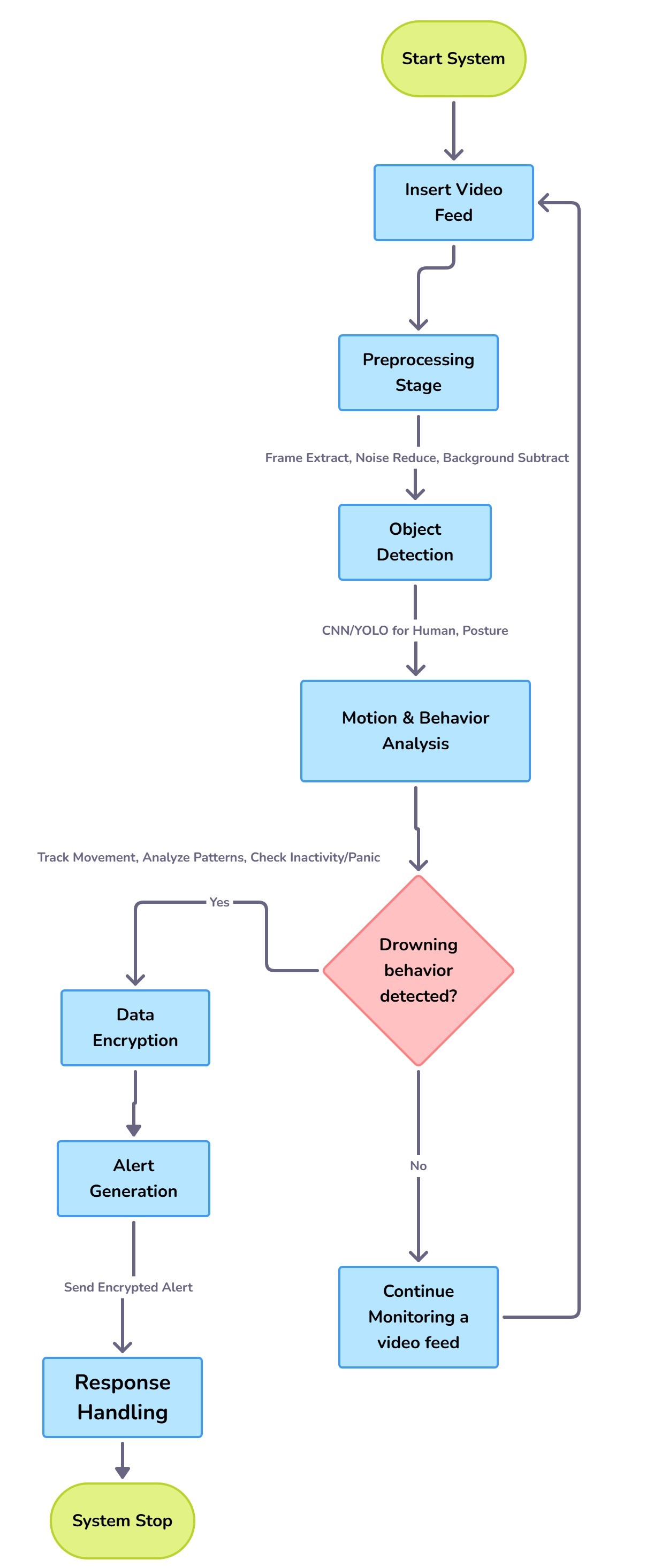
DrownDetect monitors live video from poolside cameras and analyzes how each person in the water is moving. It identifies dangerous patterns like struggling, sinking, or sudden stillness. If it detects signs of drowning, it instantly sends an alert so a lifeguard or responsible person can take action. The system works in real time, uses normal CCTV cameras, and does not require swimmers to wear any device.
How I built it
We built DrownDetect using a combination of computer vision and deep learning:
Python for the main development
OpenCV for handling video frames
YOLO-based person detection for finding swimmers
Mediapipe pose estimation for body keypoints
A custom CNN/LSTM model for understanding motion patterns
Real-time processing pipeline to detect drowning behavior
Alert system for immediate notifications
The system is designed to run on normal hardware, making it practical for small and large facilities.
Challenges I ran into
While building DrownDetect, we faced several challenges:
Getting realistic drowning or near-drowning data was very difficult
Water reflections, light changes, and splashes often confused the model
The system needed to detect danger fast without raising too many false alarms
Ensuring real-time performance was hard with limited hardware
Integrating pose estimation smoothly with tracking required careful tuning
Each challenge helped us improve the accuracy and reliability of the system.
Accomplishments that I'm proud of
Some achievements we are proud of:
Building a working drowning detection pipeline from scratch
Successfully analyzing live video and identifying risky behavior
Getting the model to run in real time with good accuracy
Reducing false alarms through smart pre-processing and tuning
Creating a system that can actually help save lives
Seeing the system detect danger correctly felt like a major milestone.
What I learned
This project taught us:
How to work with real-time computer vision systems
How human motion changes in water compared to normal movement
How to combine object detection, pose estimation, and temporal deep learning
How to handle noisy video conditions like splashes and reflections
The importance of accuracy, safety, and reliability in life-saving systems
It also improved our teamwork, debugging, and problem-solving skills.
What's next for DrownDetect
We plan to take DrownDetect even further:
Add multi-camera support to cover blind spots
Improve night-time and low-light detection using infrared video
Create a mobile app for instant remote alerts
Train on larger datasets to make the model more robust
Integrate with drones that can drop flotation devices automatically
Deploy it in real pools for real-world testing
Our long-term aim is to make DrownDetect a trusted safety tool in every public and private swimming facility.

Log in or sign up for Devpost to join the conversation.