-
-
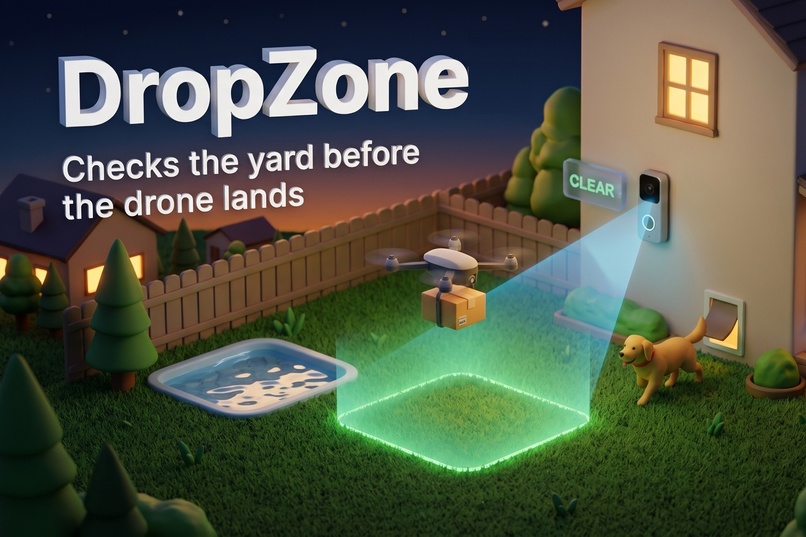
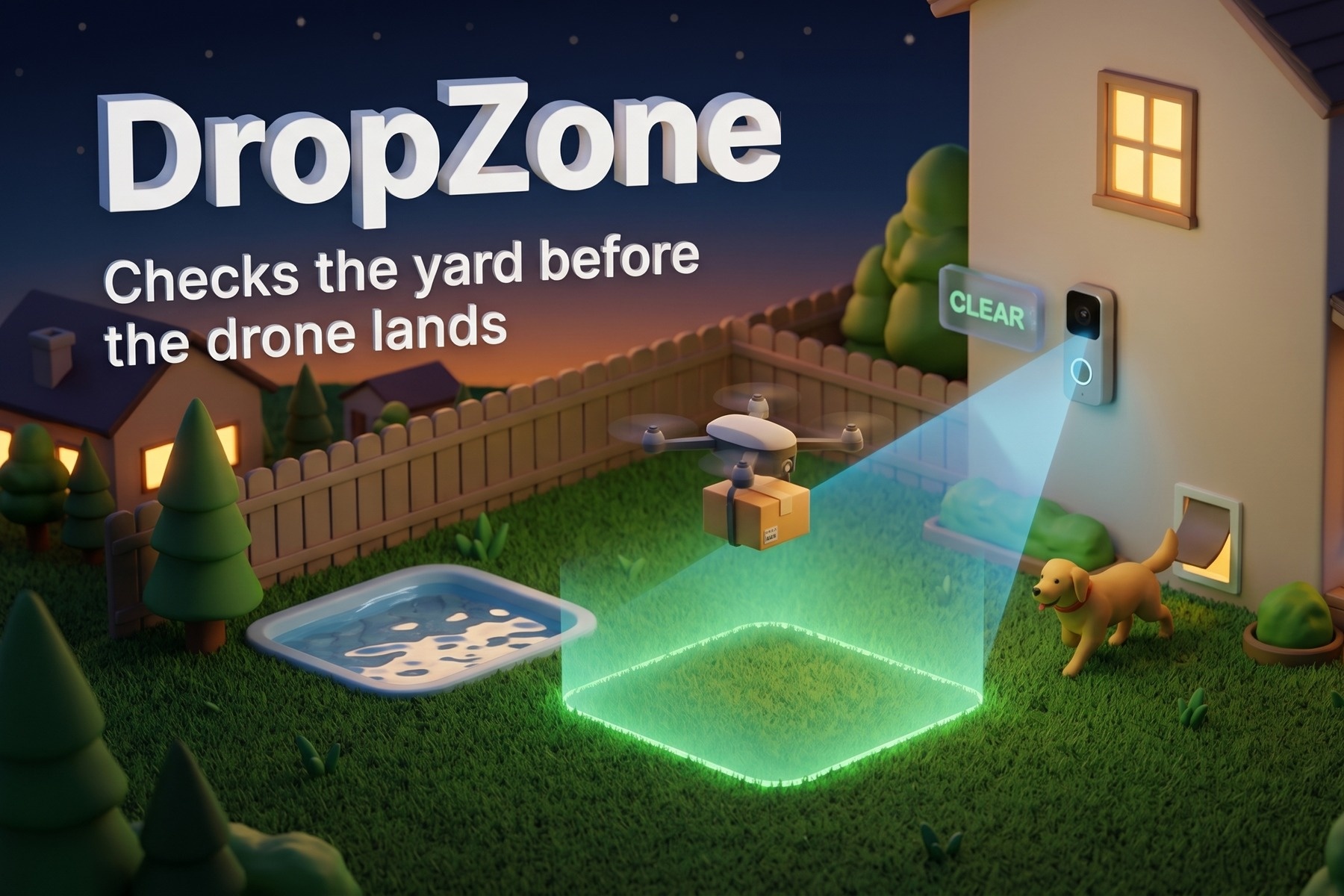
DropZone checks the drop zone before the drone arrives
-
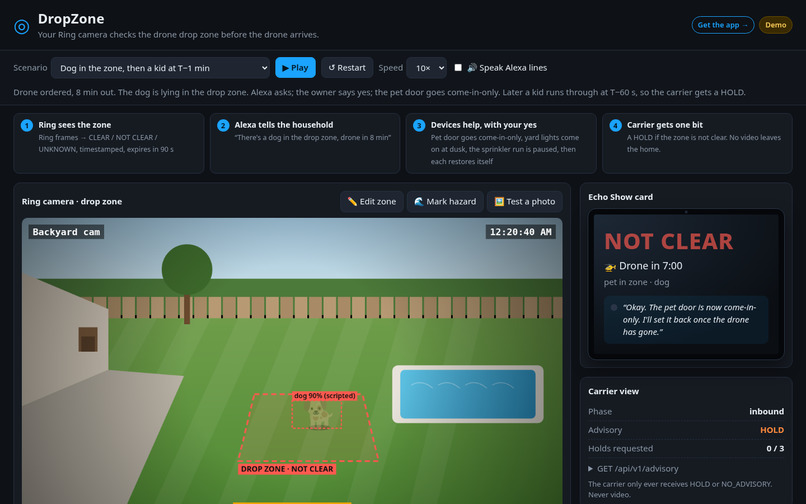
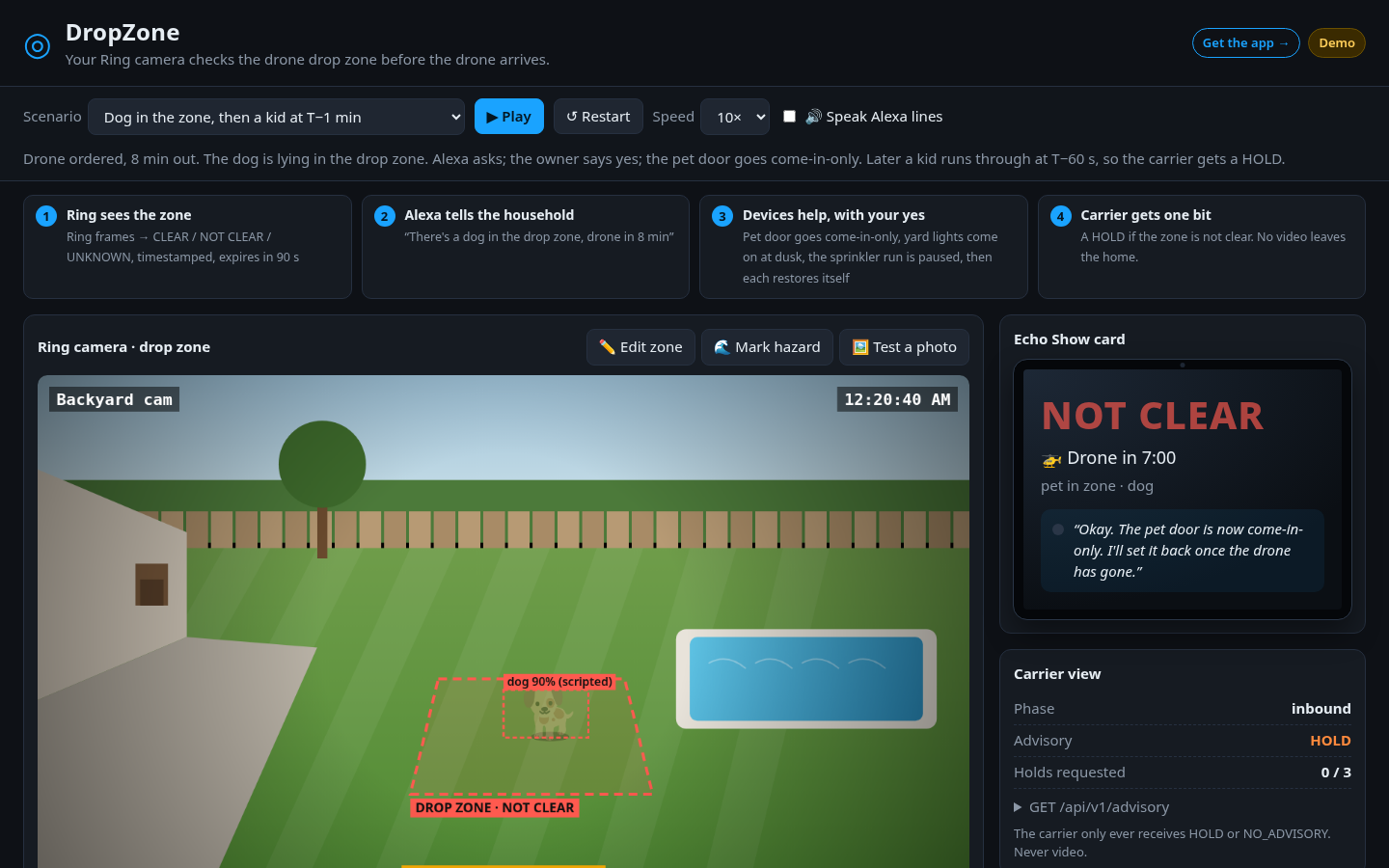
Dog in the drop zone: NOT CLEAR, Alexa offers the pet door, carrier gets a HOLD (simulated replay)
-
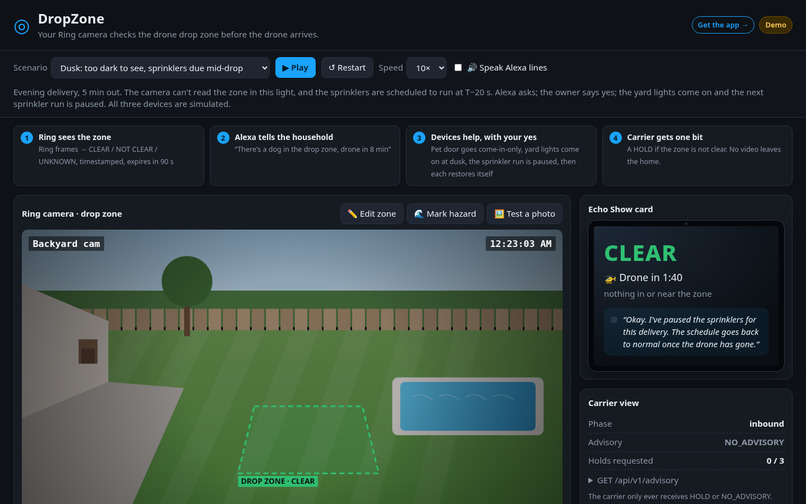
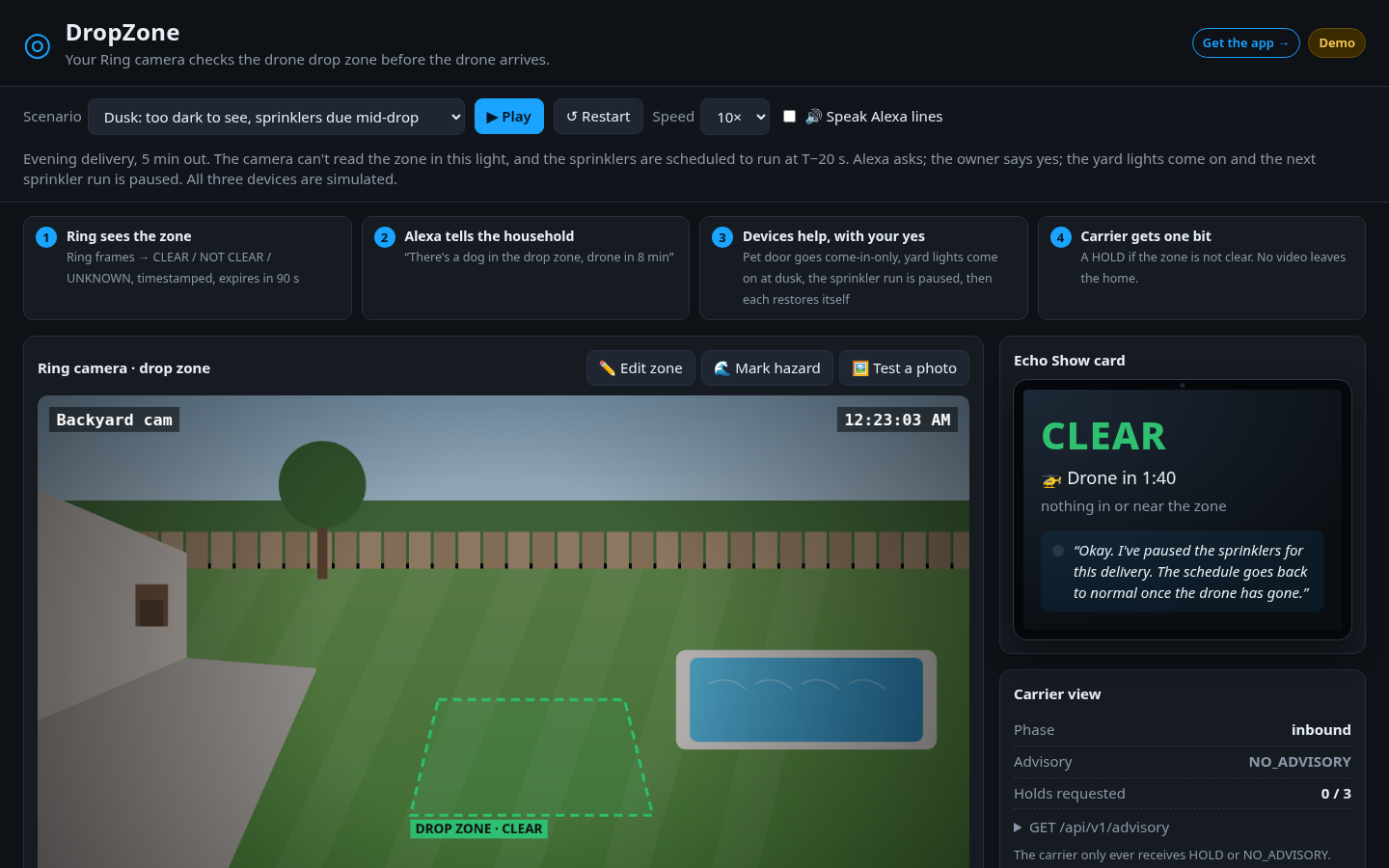
At dusk the owner says yes: yard lights on, sprinkler paused, zone CLEAR (simulated devices)
-
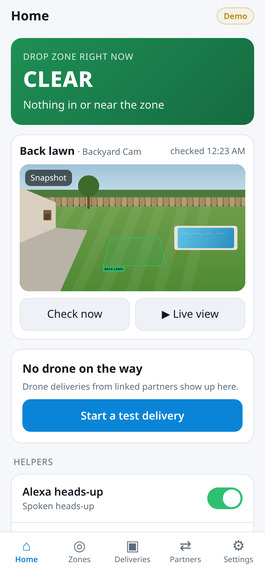
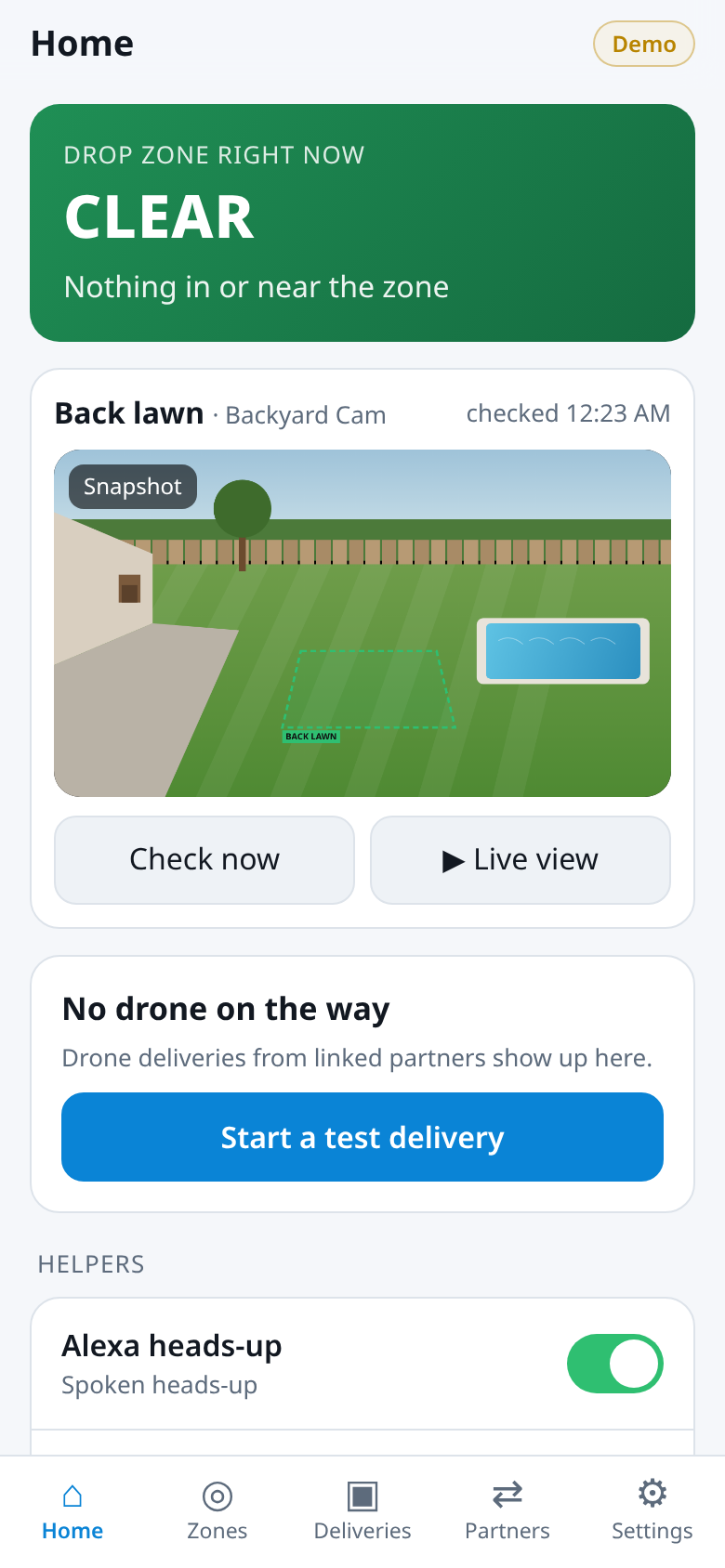
Phone app home: Back lawn drop spot CLEAR (demo home, simulated)
-
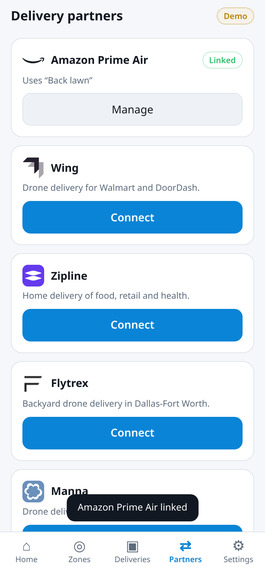
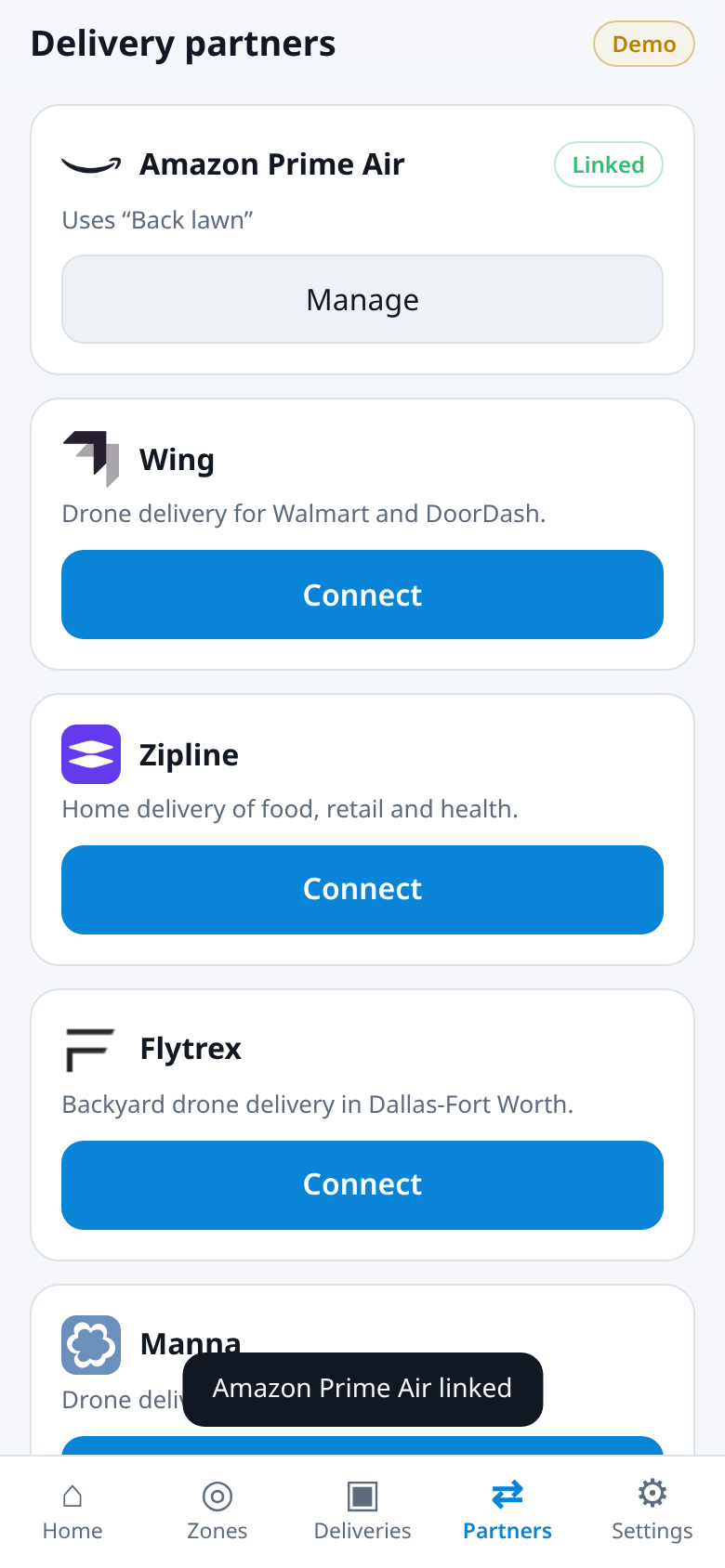
Delivery partners: Amazon Prime Air first, preview only
-
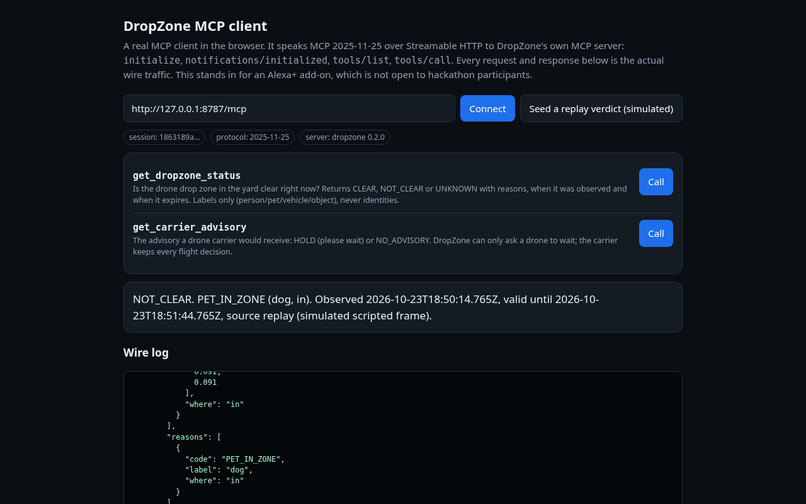
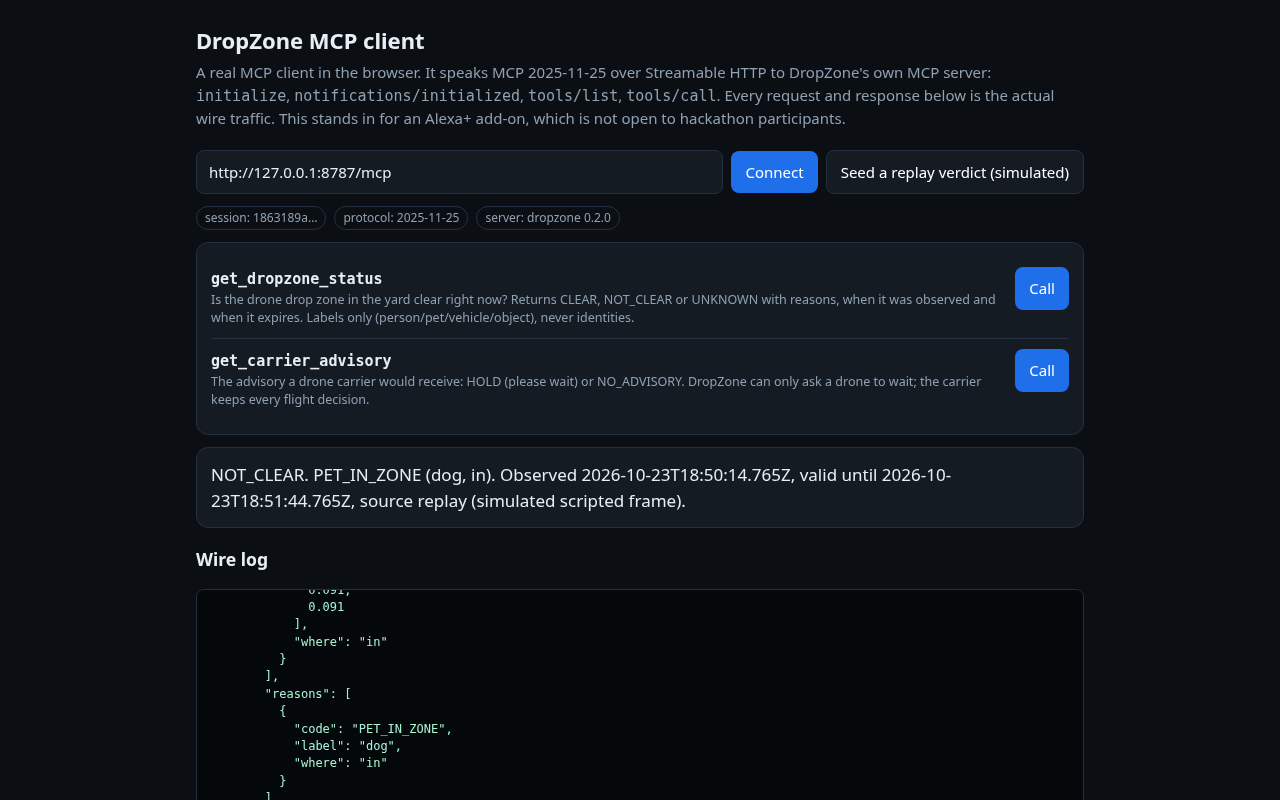
DropZone MCP server answering a real MCP client
Inspiration
Drone delivery is leaving the pilot stage. Amazon says Prime Air aims to deliver 500 million packages a year by the end of the decade (Amazon), Zipline passed 2 million deliveries in January 2026 (Zipline), and Walmart passed 1 million in May 2026 (Walmart).
So the last few feet of delivery are moving into ordinary backyards, and backyards are messy. Amazon asks customers to keep people, pets and vehicles at least 10 feet from the delivery point (Amazon), and packages have still ended up in pools (The Verge). Nobody looks at the yard right before the drone comes in, yet many of those homes already have a Ring camera pointed at it and an Echo in the kitchen.
What it does
You connect Ring and draw your drop spot once. When a drone delivery is on its way, DropZone:
- Checks the spot on fresh Ring frames: CLEAR, NOT CLEAR or UNKNOWN, each with an expiry.
- Tells you what is in the way through Alexa: "there's a dog in the drop zone".
- Helps clear it with your devices, only after you say yes, and restores them after the drop: the pet door goes come in only, yard lights turn on at dusk so the camera can see, and a sprinkler run in the delivery window is paused.
- Asks the drone to wait. If the spot is still not clear, the carrier gets a HOLD before landing.
- Keeps proof with before and after frames showing where the box landed.
Amazon Prime Air is the natural first partner, since Ring, Alexa and Prime Air are all Amazon, and its MK30 lowers packages from about 13 feet (Prime Air), exactly when a fresh look at the yard matters. Carrier, partner linking and replay footage are simulated and labelled as such.
How we built it
- Ring Partner API for device discovery, status, capabilities, event history, snapshots and WHEP live view, run against the Ring Developer Playground.
- Vision: TensorFlow.js COCO-SSD in the browser, or Amazon Rekognition on the server, scored against the drawn zone.
- Alexa: a custom skill, "drop zone", and a Smart Home skill, DropZone Home, exposing Yard Lights, Sprinkler and Pet Door, both on AWS Lambda.
- MCP server (Streamable HTTP) so any assistant can ask whether the yard is clear.
- Apps: an installable PWA, a judge demo with replay scenarios, and a Three.js scene comparing the Ring view with the drone's view.
- ring-partner-sandbox: our open source Ring API mock with signed webhooks, since the Playground has none.
We followed Ring's program rules throughout, so DropZone only ever adds caution: if it is down or unsure, the carrier flies exactly as it does today.
Challenges
- The Playground has one doorbell, a 30 minute token and no webhooks, so live and replay had to share one pipeline.
- Snapshots returned 403 and live view sent no frames, so UNKNOWN had to be a first class answer, not an error.
Accomplishments that we're proud of
- A real Ring Playground run, reported honestly, including what failed.
- Three devices that each fix a specific reason a drop goes wrong, all behind the owner's yes, reachable from Alexa.
- A complete journey from connecting Ring to proof of drop.
What we learned
- A WHEP 201 with a valid SDP answer does not mean video will arrive, so our checks look for real frames.
- Recordings can be minutes old, so frames older than 120 seconds count as UNKNOWN.
- Rekognition returns Pool and Water as scene labels without boxes: good hazard hints, not enough to call a spot safe.
- Consent-gated devices need three things in code: refuse without a yes, restore after the drop, restore anyway after a timeout.
What's next
- A real hold signal with a carrier, starting with Prime Air.
- DropZone Home driving real smart pet doors, lights and sprinklers.
- Night and rain testing on real Ring cameras.
Built With
- alexa-skills-kit
- amazon-rekognition
- aws-lambda
- aws-sdk
- coco-ssd
- hmac-sha256
- javascript
- mcp
- node.js
- onnx-runtime-web
- pwa
- ring-api
- service-worker
- tensorflow.js
- three.js
- webrtc
- whep

Log in or sign up for Devpost to join the conversation.