-
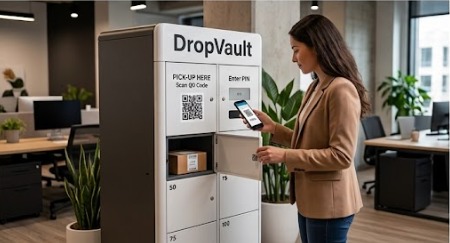
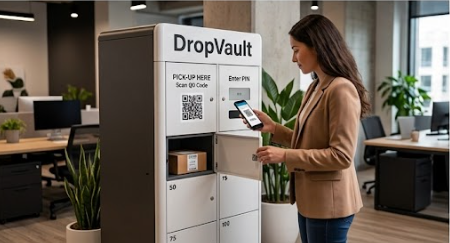
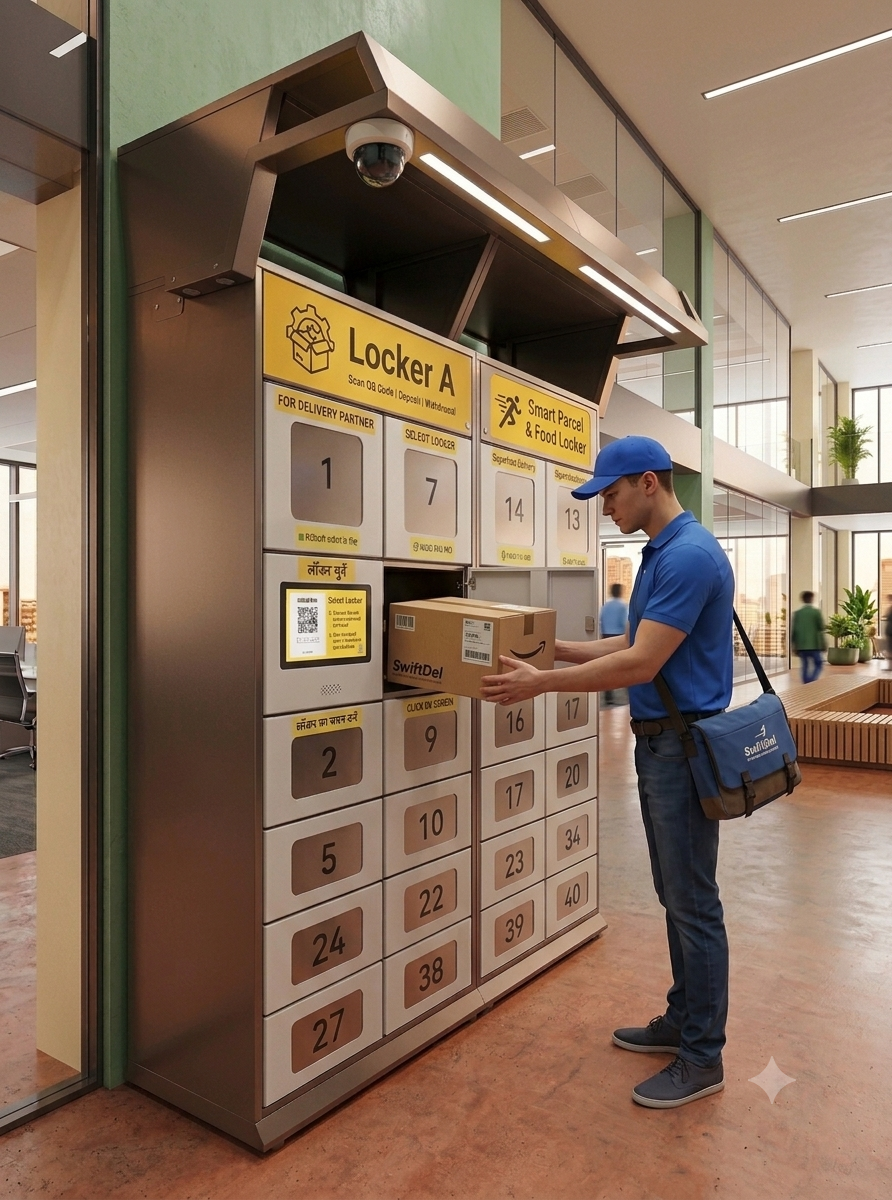
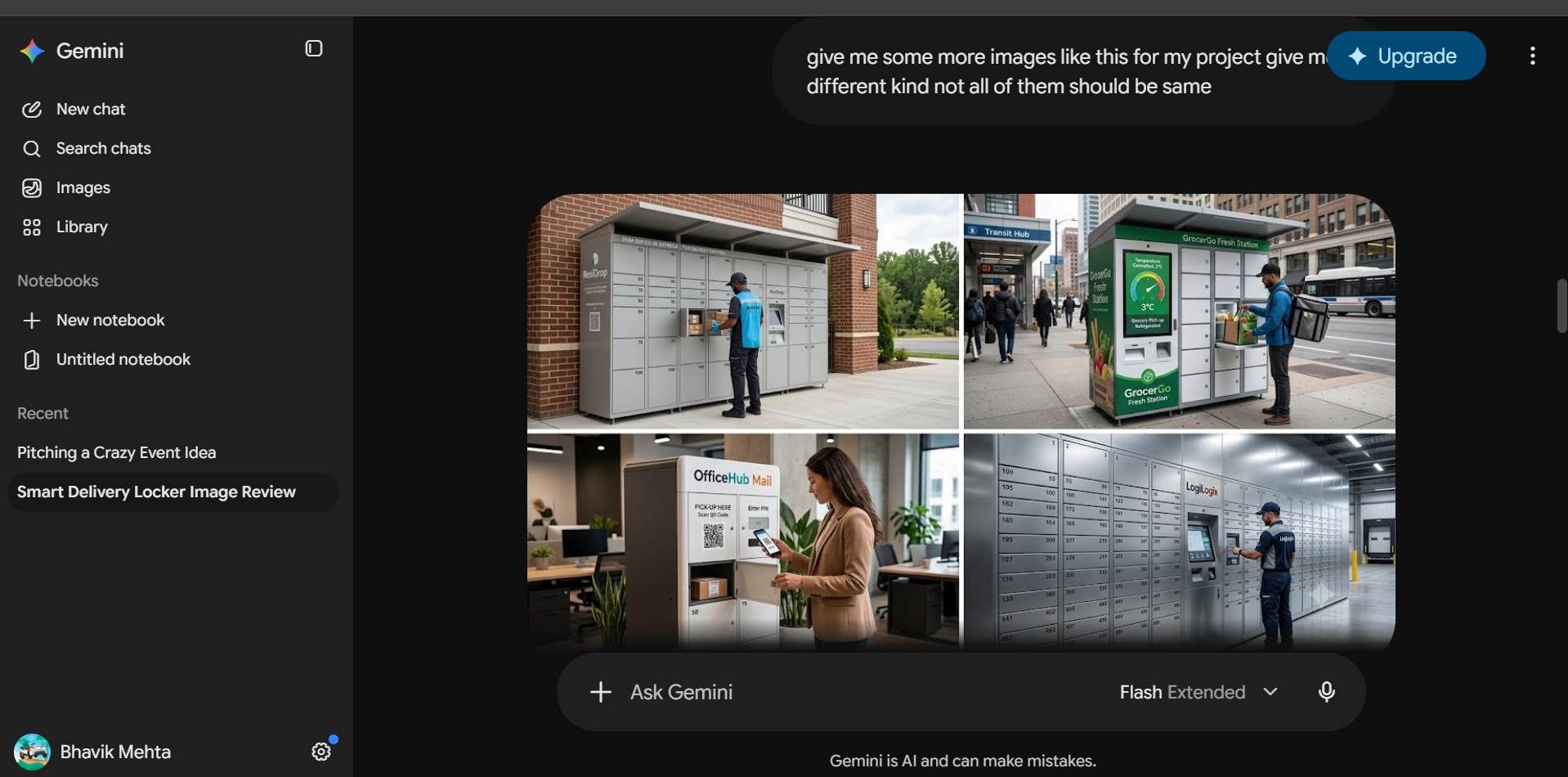
in a office building
-
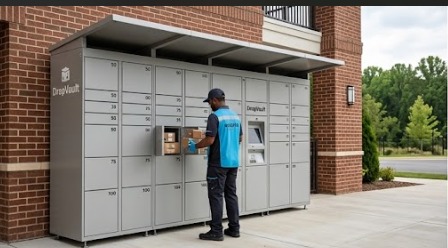
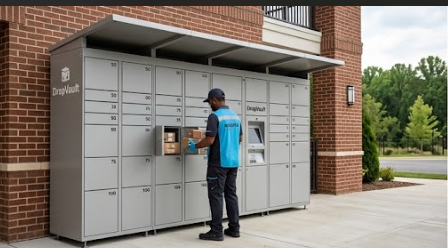
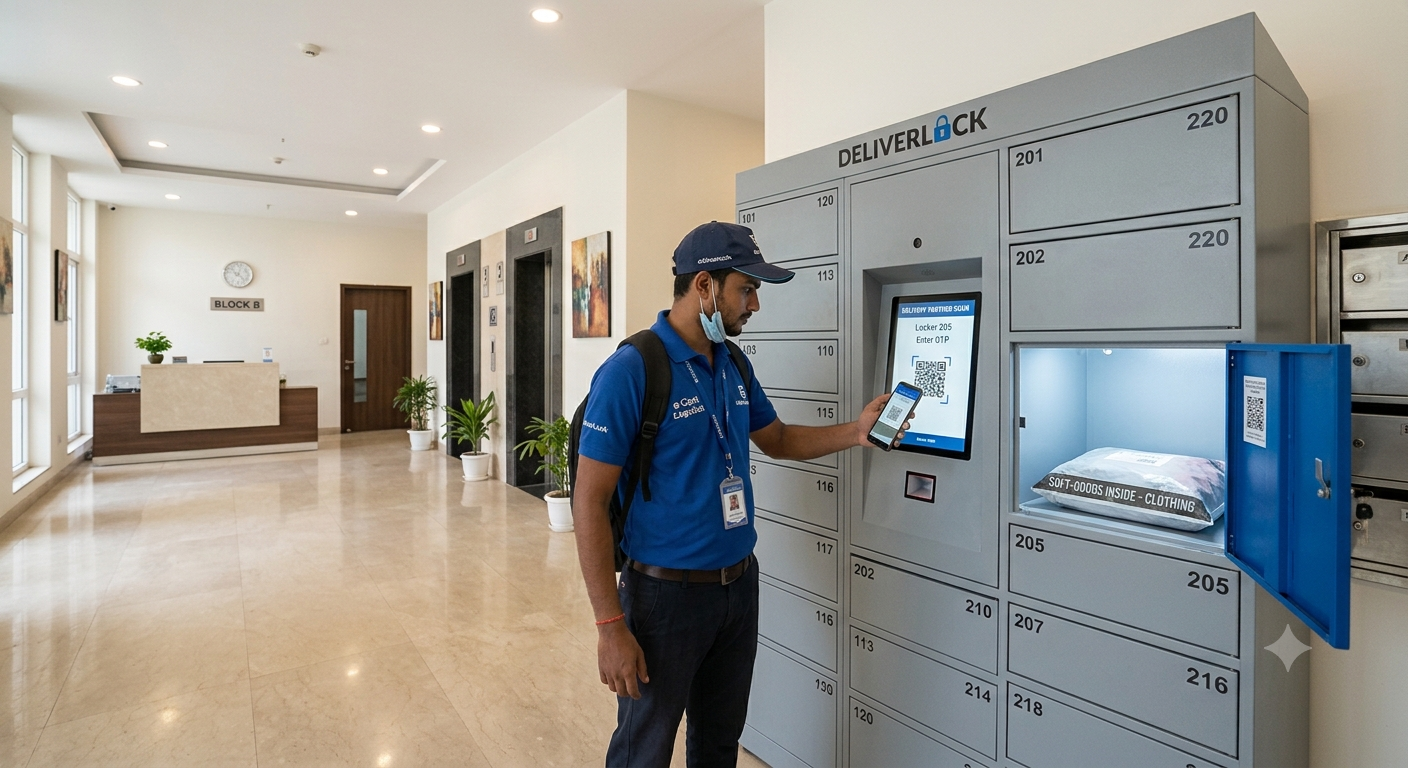
in a apartment complex
-
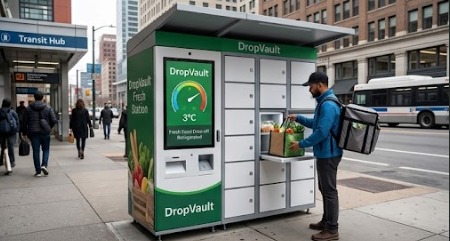
in a office building
-
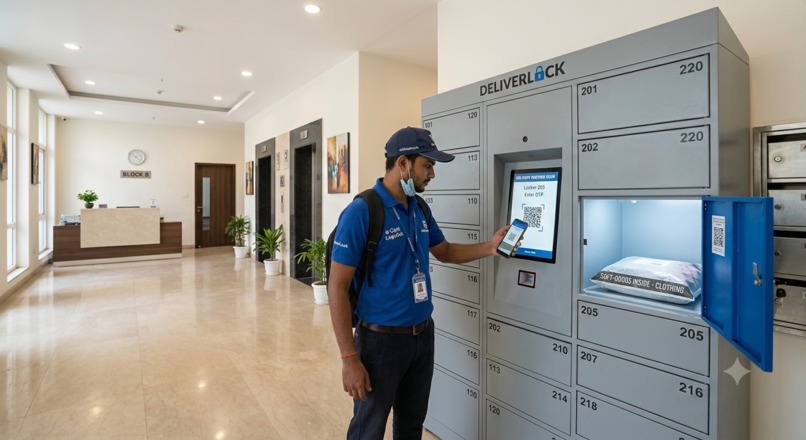
in a apartment complex
-
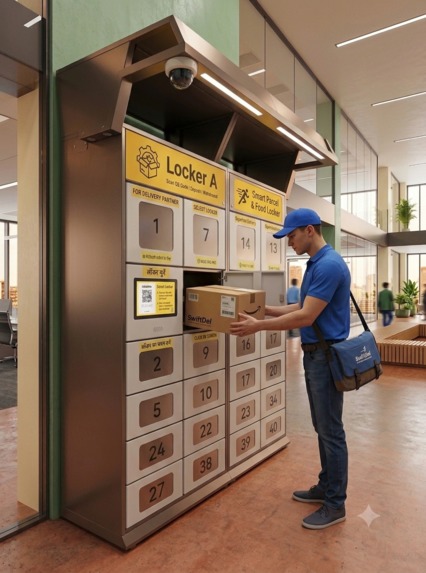
in a office lobby
-
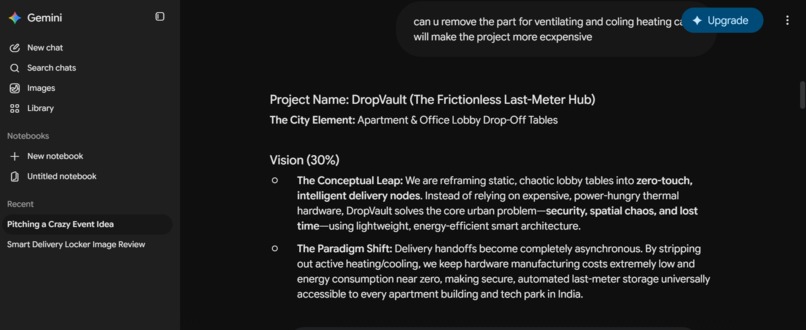
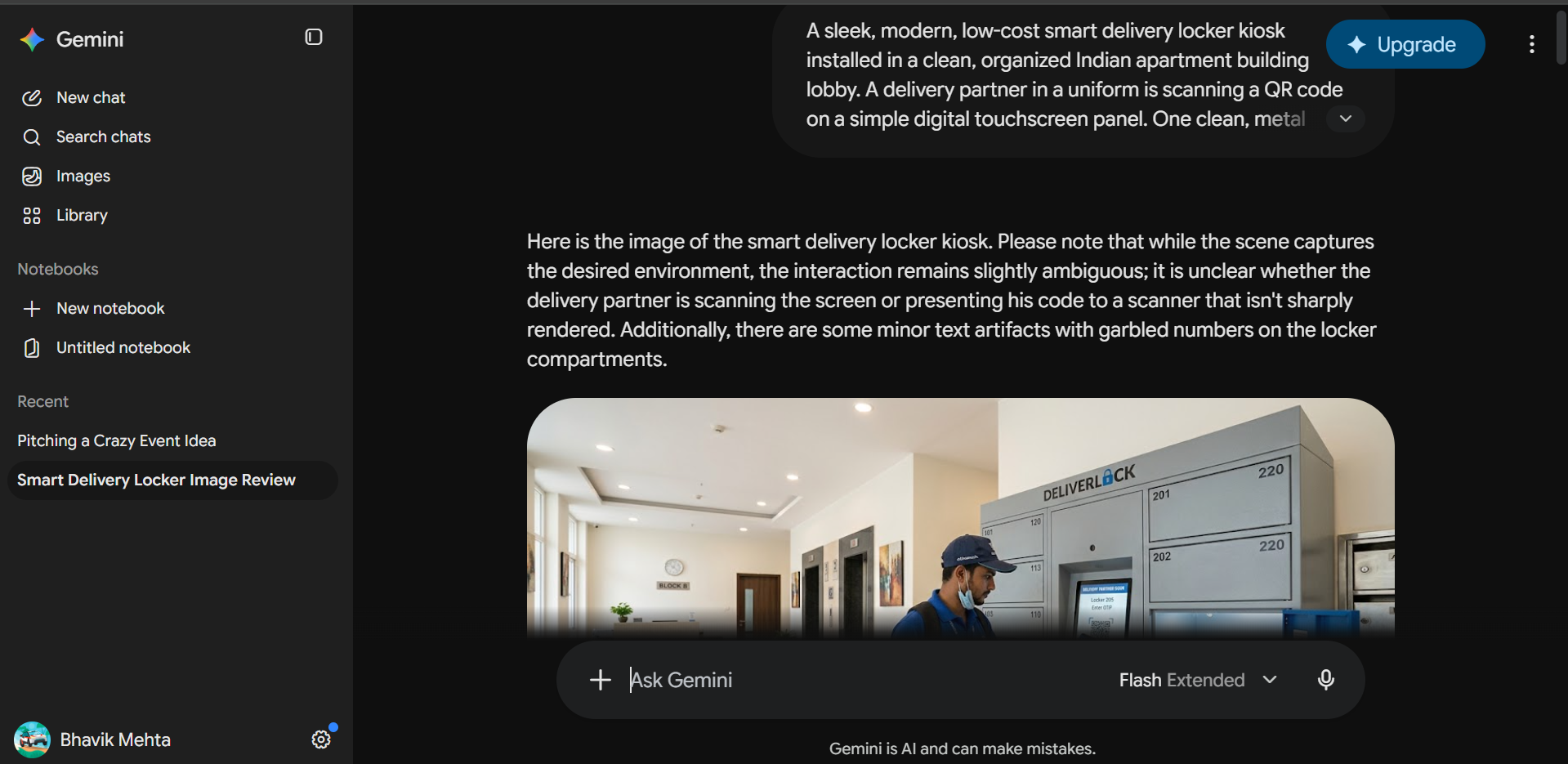
made by Gemini
-
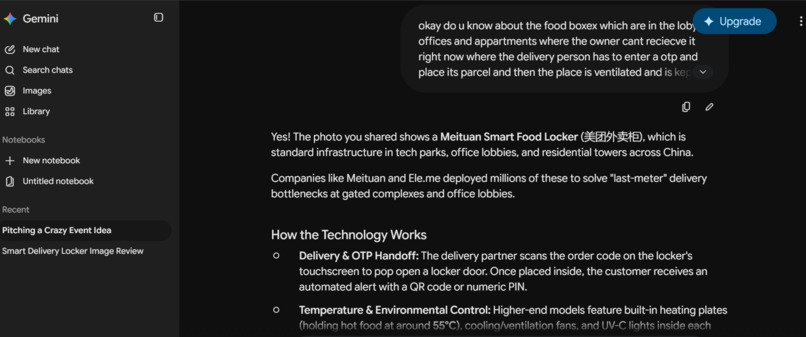
made by Gemini
-
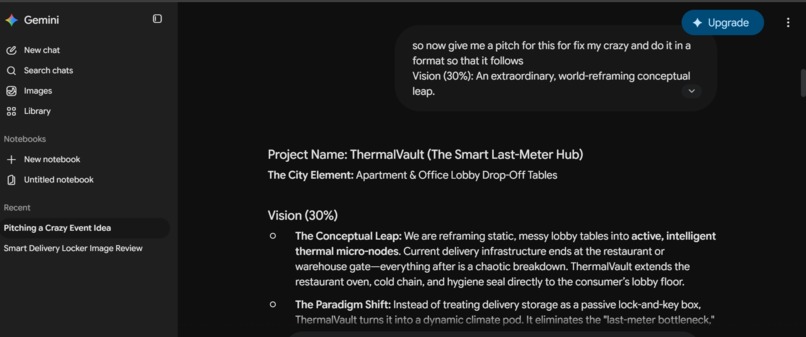
made by Gemini
-
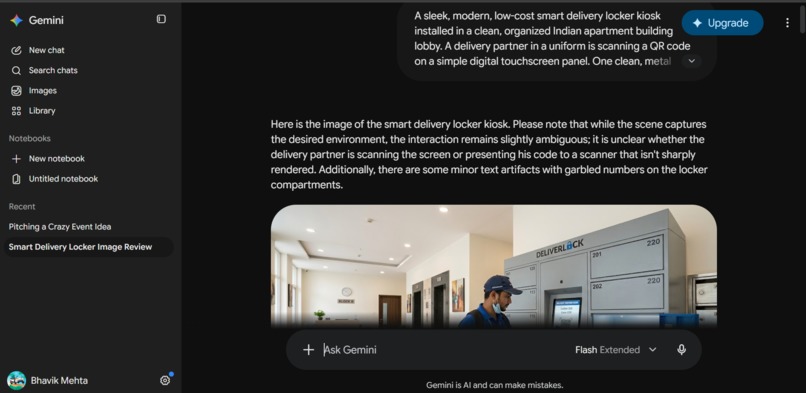
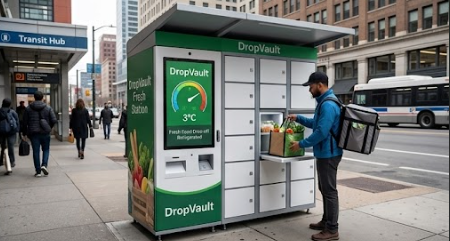
made by Gemini and Nanobanana
-
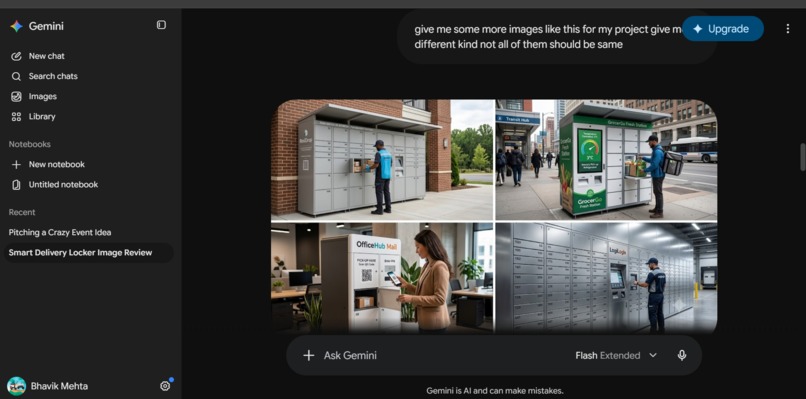
made by Gemini Nanobanana
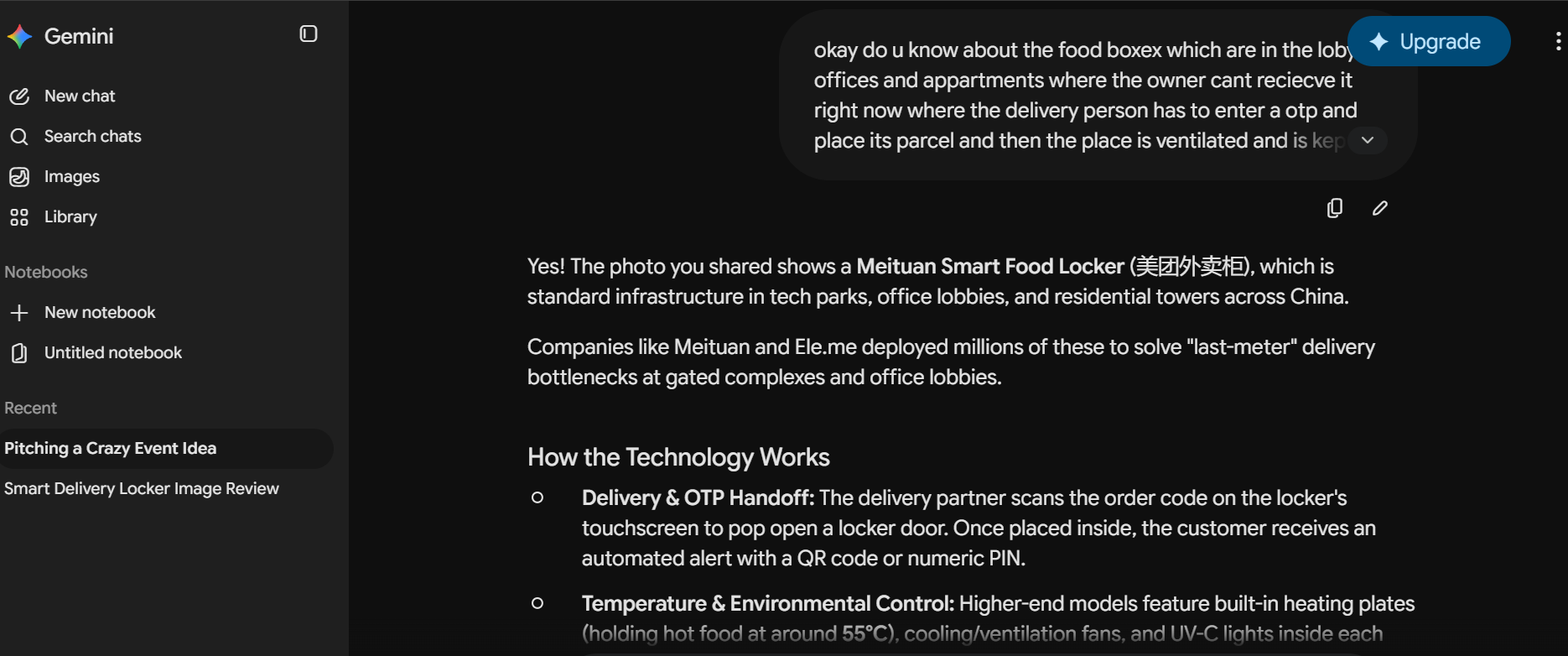
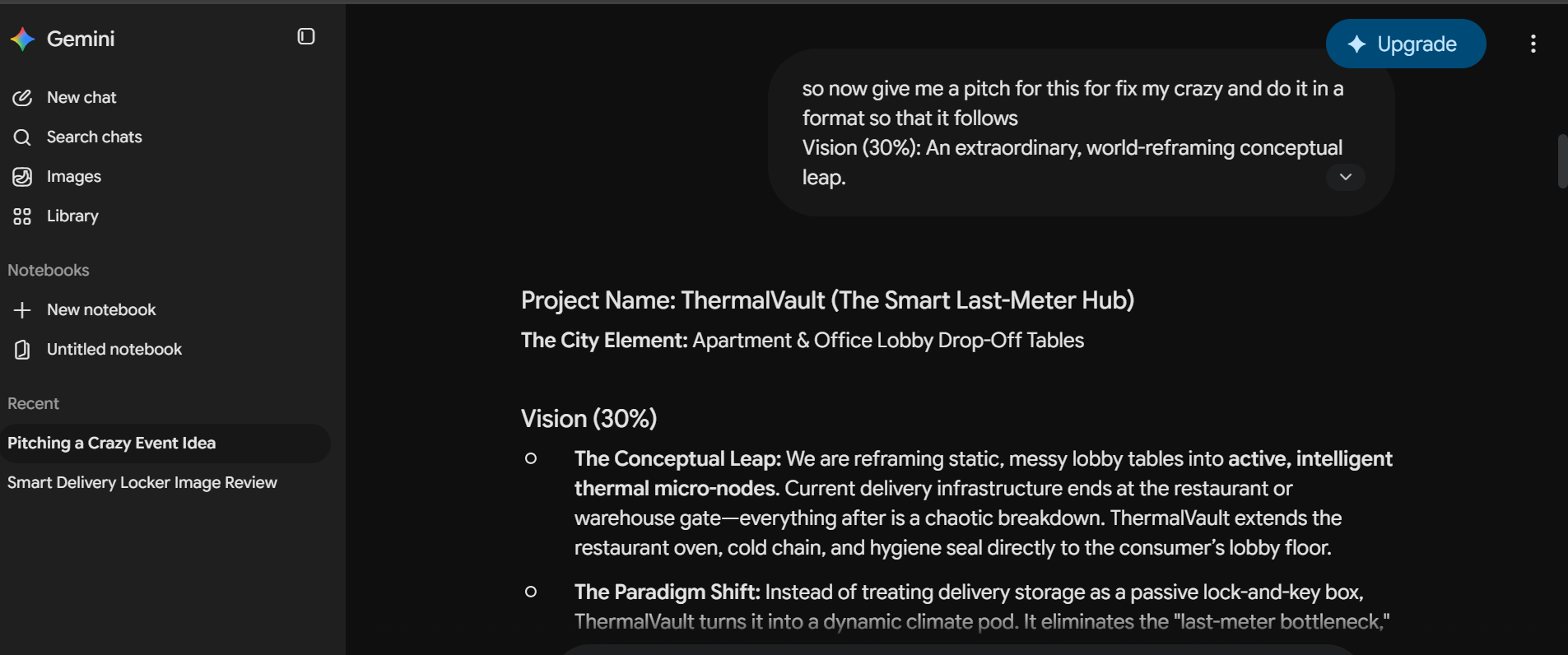
Inspiration
DropVault If you’ve ever watched a delivery partner enter a busy apartment complex or a office building , you’ve probably seen this happen The problem starts once they reach the gate They have to get through security, find the right building, wait for an elevator, call the resident, and sometimes figure out where they’re even supposed to leave the package or even wait for the person to come pick it up. Spending 15–20 minutes on one delivery may not sound like much. Do that dozens of times a day, and it becomes a serious amount of wasted time Residents have their own problem. Most apartment lobbies simply weren’t designed to deal with this many deliveries every day. Food, groceries, and parcels end up on tables, chairs, reception desks, or wherever there’s space. Things get mixed up, damaged, and sometimes even go missing Getting the package there usually isn’t the hard part. The hassle starts in the last few meters Delivery has become faster and more convenient over the last few years, but the experience inside the building hasn’t really caught up. We’re still relying on a table in the lobby to manage dozens of deliveries a day It felt like there had to be a better way That’s why we built DropVault
What it does
For Delivery Drivers: A driver enters a 4-digit OTP generated directly within their delivery app (or scans a kiosk QR code) to pop open a secure sheet-metal compartment where they place their parcels For Residents: When a parcel is deposited, the system automatically sends a WhatsApp/SMS notification with a pickup PIN. Residents retrieve their parcels safely whenever they walk through the lobby or whenever they are free For Building Management: Eliminates lobby mess, enhances security by keeping unregistered visitors out of residential corridors (curtail for office buildings )
How we built it
Hardware Architecture: Designed using modular sheet-metal lockers, 12V DC solenoid electronic latches, battery backups, and a local controller board Software Logic & APIs: Built a Python-based controller managing real-time locker state allocation, dynamic PIN generation, and simulated GPIO relay signals. Connected via lightweight REST API webhooks for delivery app integration and SMS/WhatsApp notifications Powered by Google Gemini: We used Gemini as our core design partner. Gemini’s multimodal vision analyzed quick-commerce package dimensional ratios to calculate our optimal compartment sizing mix (Small, Medium, Large). Gemini also generated our zero-text, multilingual UI wireframes for low-friction driver interactions
Challenges we ran into
Zero-Integration Fallback: Navigating the assumption that third-party delivery aggregators wouldn't open APIs on Day 1. We built an offline-first QR code fallback loop that generates local time-based OTPs without needing external API dependencies
Optimizing Unit Economics: High manufacturing costs kill smart locker startups. We systematically stripped out active compressor cooling and heating hardware to reduce CAPEX by 70% keeping the production costs as low as gym lockers
Peak-Hour Throughput: Solving the dinner-rush capacity bottleneck where lockers risk staying full. We implemented dynamic dwell-time tracking to encourage rapid retrieval and cycle compartments continuously
Accomplishments that we're proud of
Drop Time: Engineered an intuitive, language-agnostic interface that allows delivery partners to complete drops 80% faster than manual lobby handoffs
Offline & Power Resilience: Built a system capable of operating up to 19 hours on local battery buffers with offline cryptographic PIN validation during power blackouts (well nowadays no office or apartment has blackouts for hours....they all have power back within a minute tho wer well prepared)
What we learned
Designing for Low-Friction UX: In high-stress logistics, every second matters. Interface design for delivery partners must be zero-text and require fewer than 3 taps
Asynchronous Living: Urban citizens prioritize predictability and security over instantaneous doorstep handoffs when given a trusted micro-hub in their lobby it matches what they are looking for
Small problems when solved can create a big impact: we dont think much about it at all well its just a few mins in our day but for the people on the other side where they are delivering this happening constantly wastes a lot of their time and cuts their productivity
What's next for DropVault (The Frictionless Last-Meter Hub)
Phase 1: Pilot Deployment We’ll start with a 10-unit pilot in high-density gated community or a office building across Bengaluru. The goal is to see how the lockers perform in real-world and, more importantly, measure how much time they actually save delivery drivers and if is feasible
Delivery App Integration We plan to work with platforms like Swiggy, Zomato, Zepto and Blinkit to connect the lockers directly with their delivery apps. This would allow drivers to get the locker OTP automatically instead of having to enter or share it manually.
Phase 2: Temperature-Controlled Lockers Once the basic system is proven effective , we’ll introduce plug-and-play heating and cooling modules for selected compartments. This will make it possible to safely store food, groceries and other temperature-sensitive deliveries for a few hours (as the cost is high this is only for some specific modules)
Ready for Autonomous Delivery We’re also designing the locker system with future autonomous delivery in mind. The physical docking points can eventually be adapted to work with ground-level delivery robots and sidewalk bots, so the infrastructure is ready if autonomous delivery becomes more common
