-
-
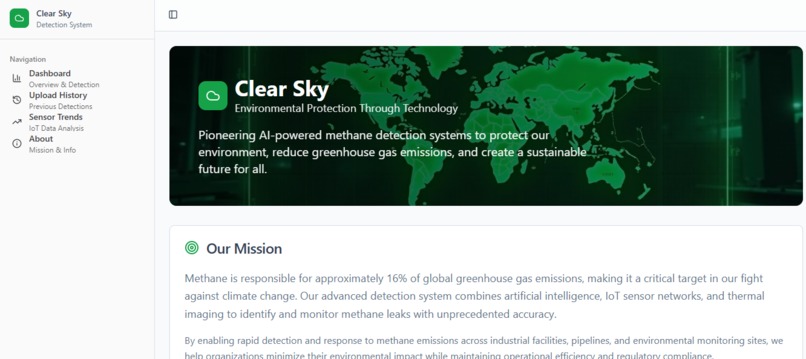
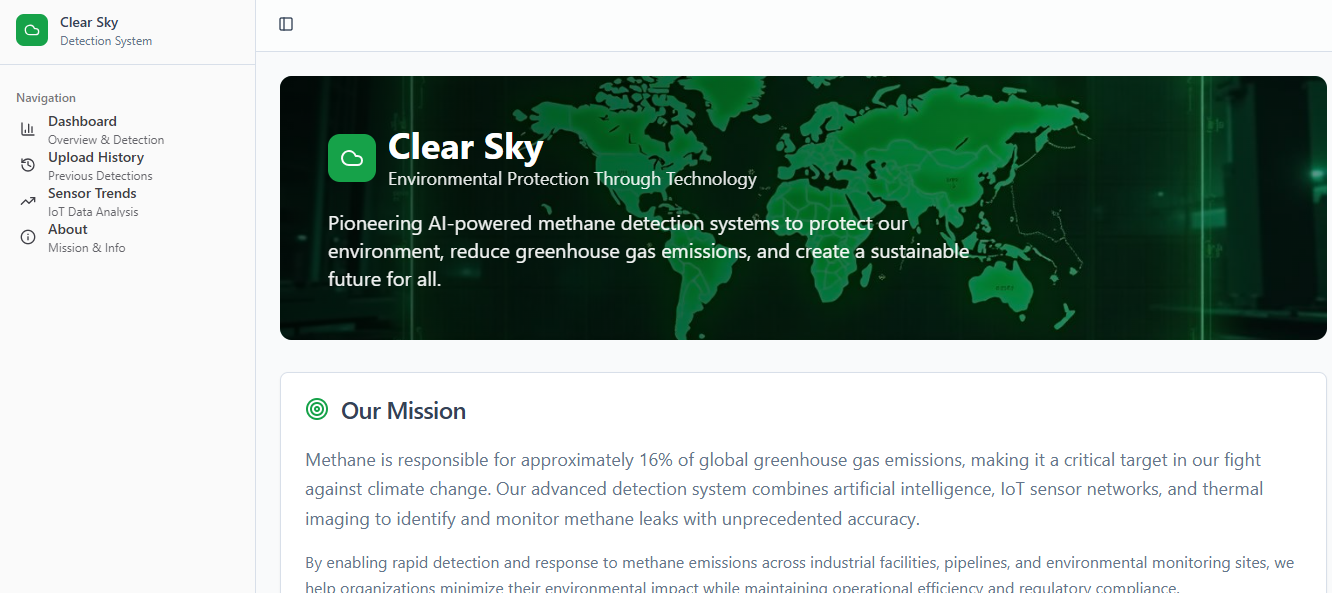
overview
-
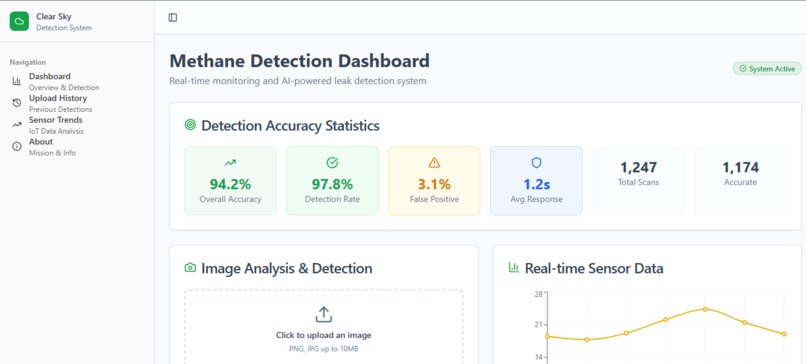
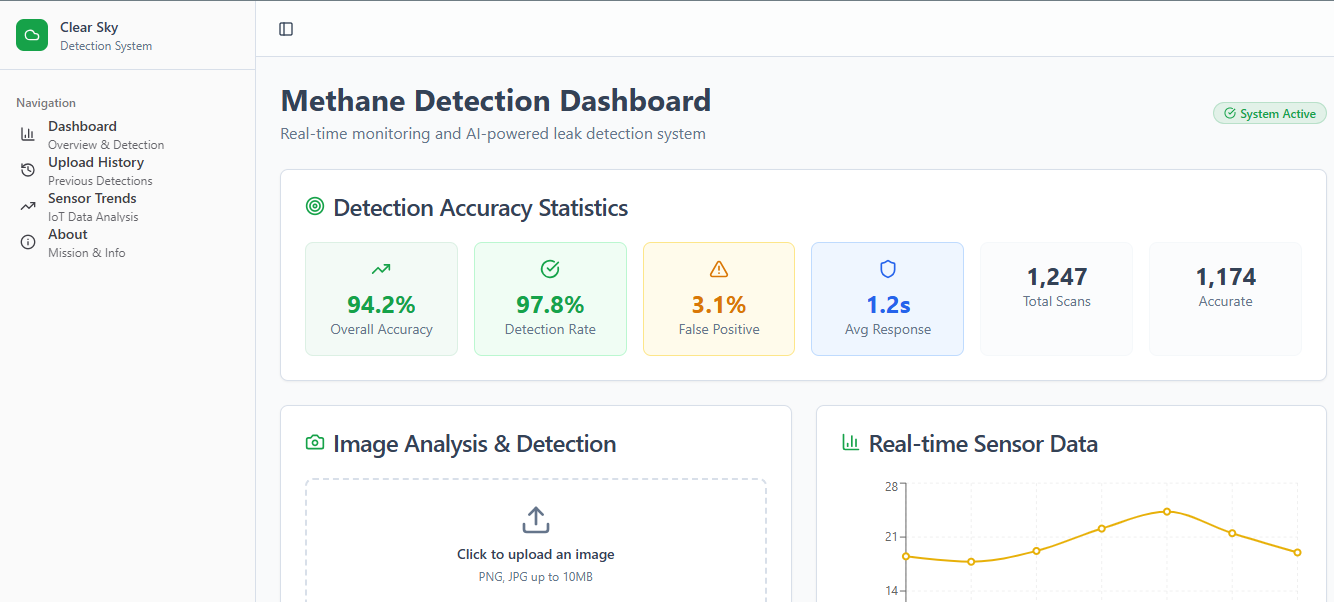
dashboard
-
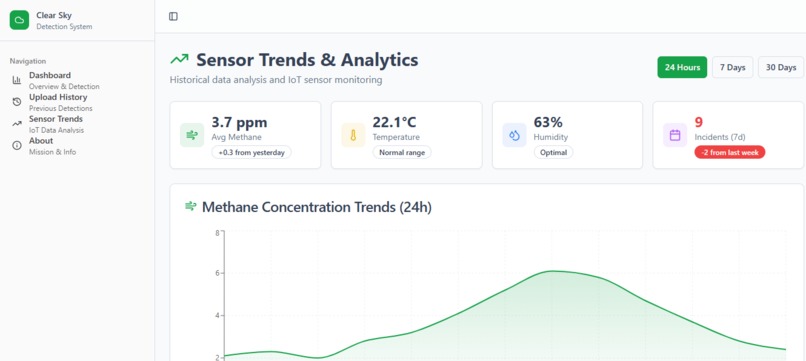
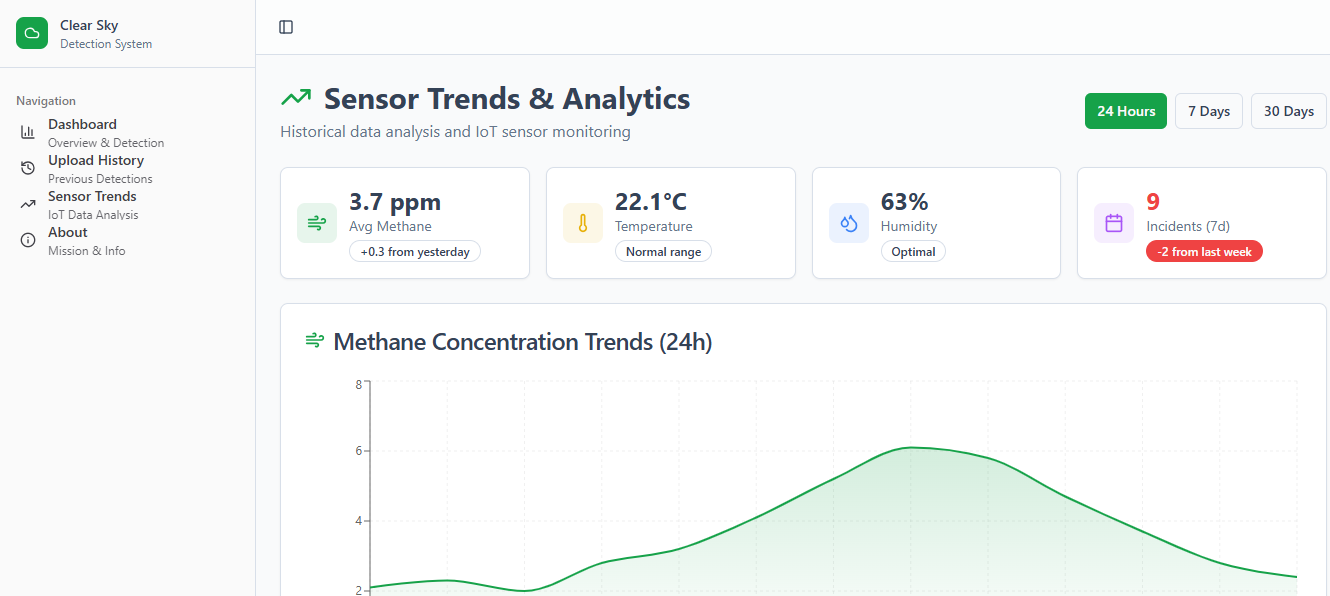
chart-analysis
-
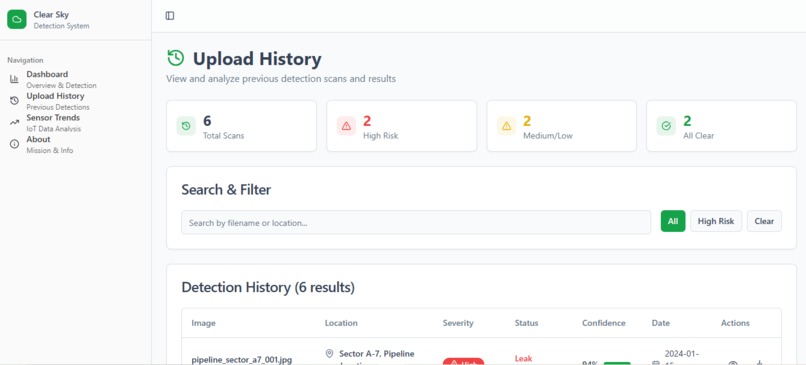
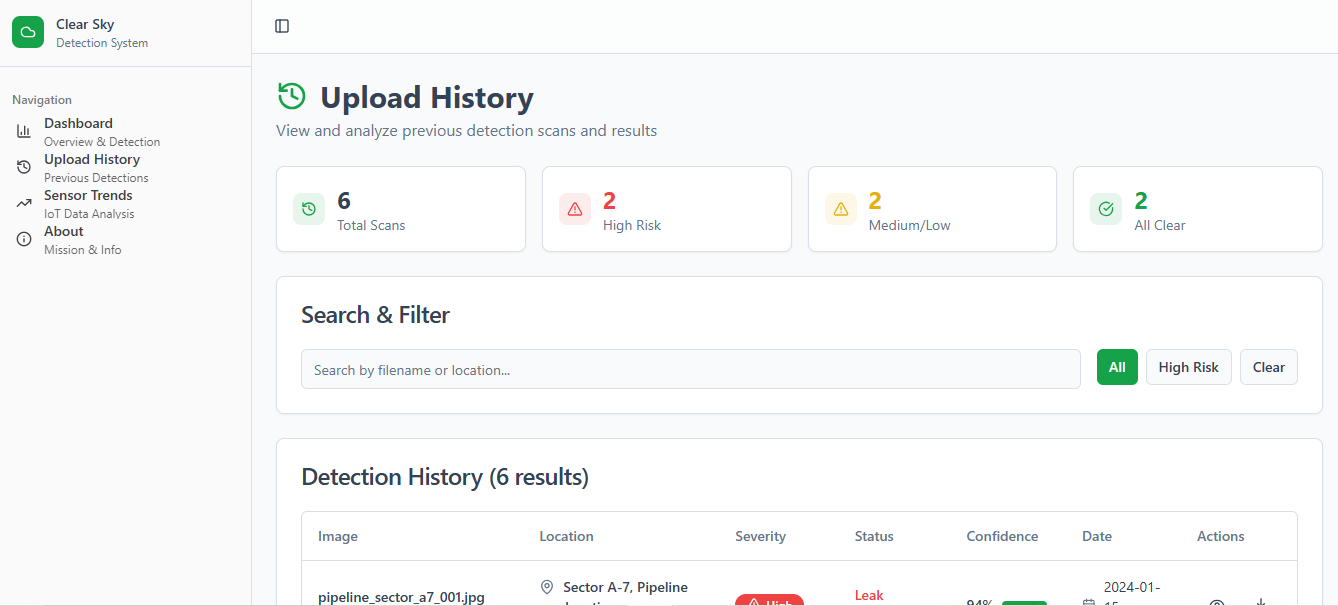
upload history
-
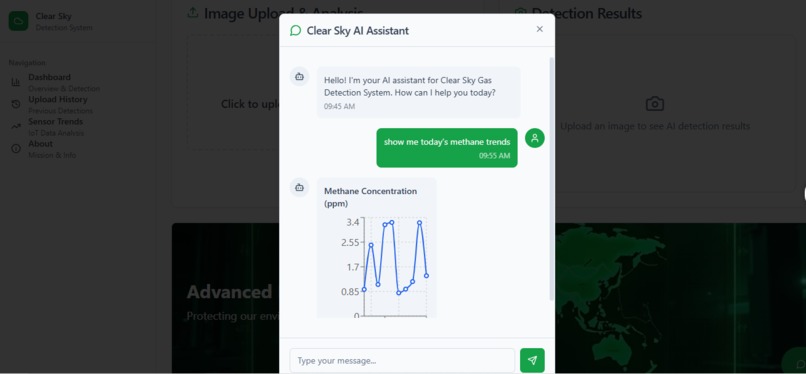
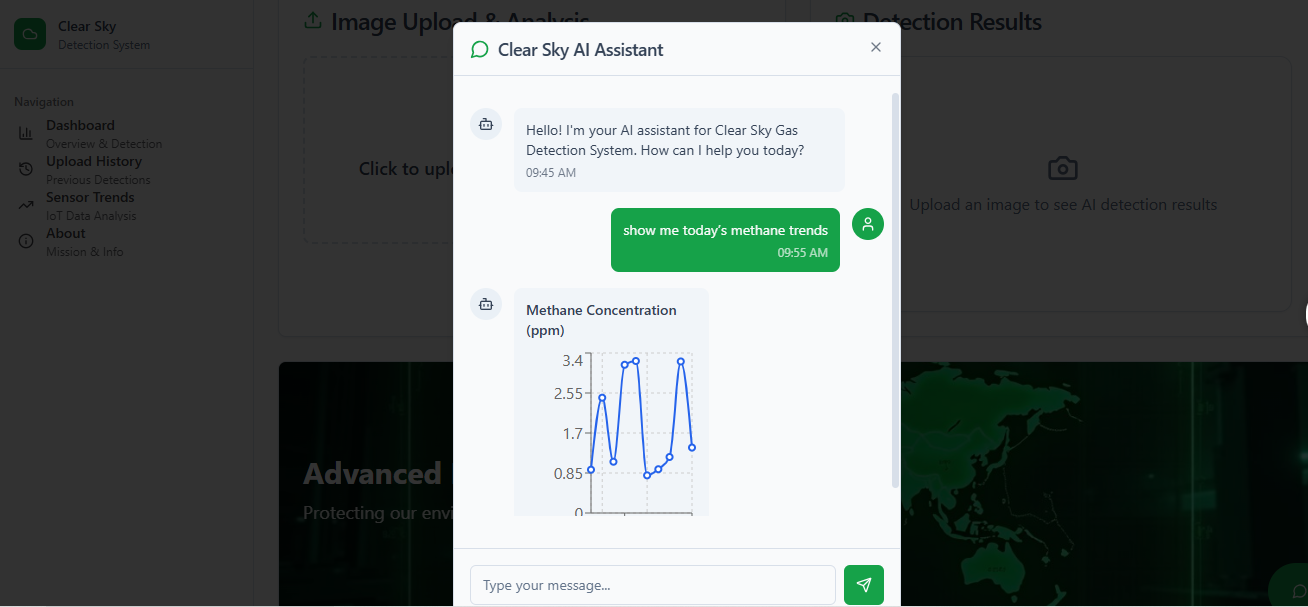
clearskies AI chat assistant
-
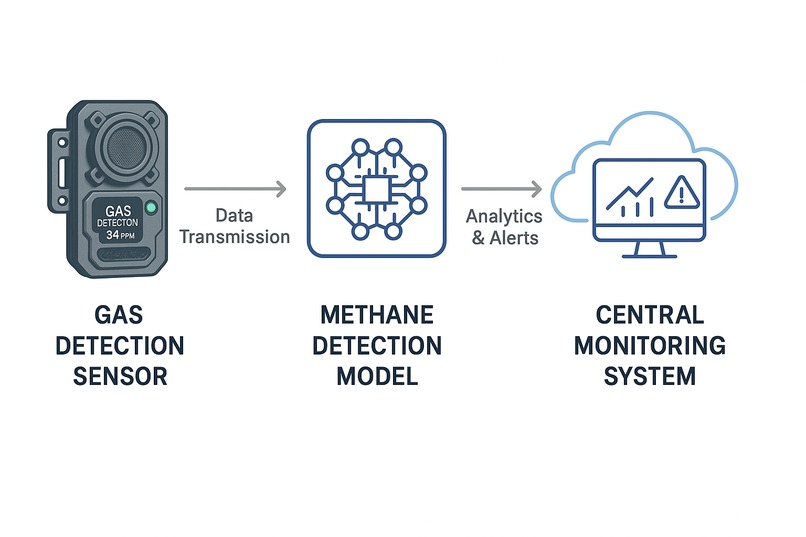
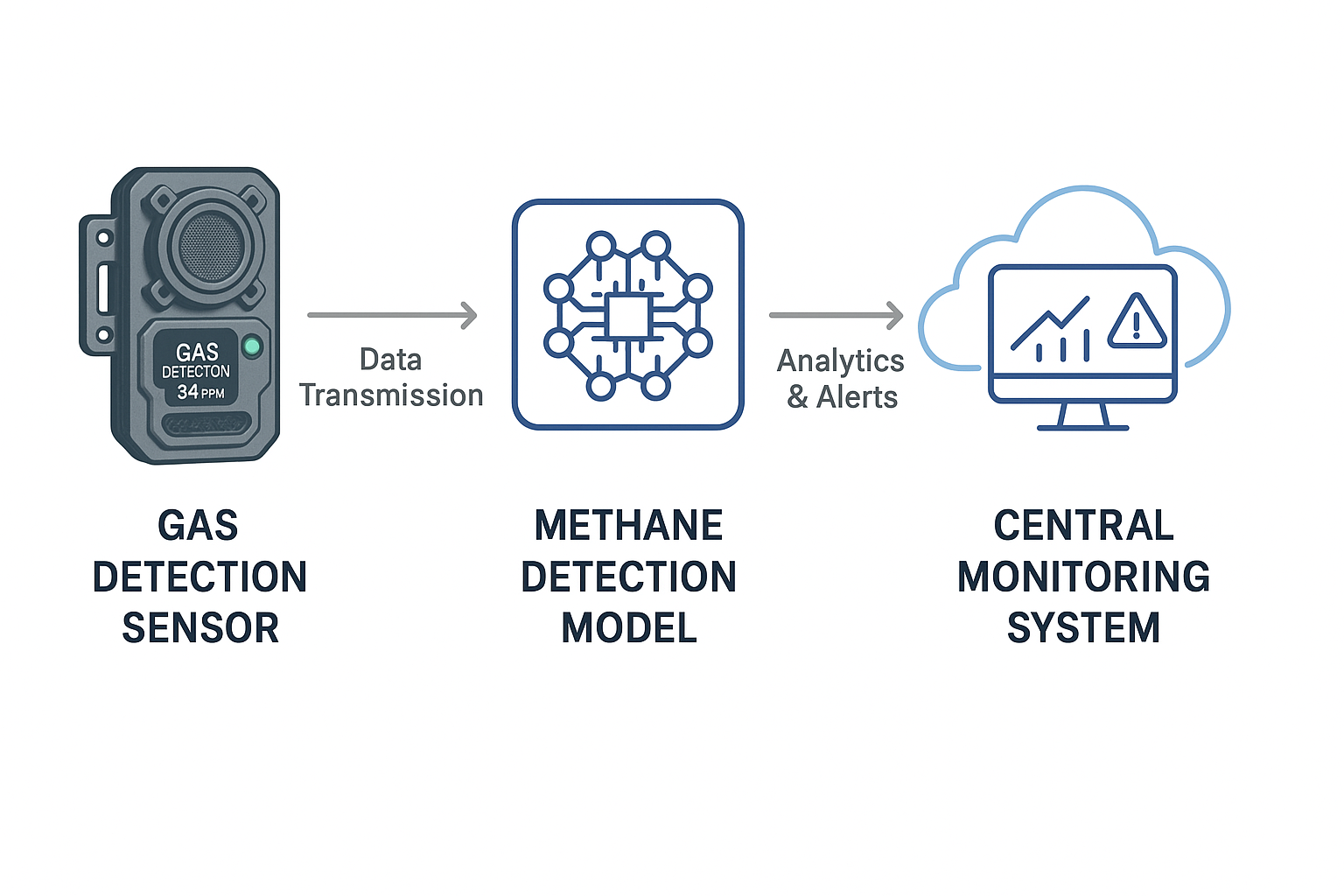
gas sensors
Inspiration
Methane is a potent greenhouse gas, far more harmful than CO₂ in the short term.
Detecting leaks early can save lives, protect the environment, and reduce industrial losses.
We wanted to create a low-cost, AI-driven solution that could work in real time and be deployable in everyday scenarios like gas stations or refineries.
What it does
Uses a custom-trained YOLOv8 model to detect methane leaks from camera feeds or uploaded images.
Provides an API endpoint where users can send images and get back bounding boxes and confidence scores.
Shows results visually by drawing bounding boxes around potential leaks.
Can be integrated into a dashboard or monitoring system for safety alerts.
How we built it
Trained a YOLOv8 medium model on a curated methane dataset.
Used Google Colab for training with augmentation to simulate varied leak scenarios.
Deployed the trained model with a FastAPI backend that accepts image uploads and runs inference.
Tested with sample industrial environment images to validate performance.
Challenges we ran into
Methane is invisible in normal RGB images, so making the model generalize required creative annotations and data augmentation.
Limited compute time in Colab meant we had to balance epochs vs. early stopping.
Integrating the trained model with FastAPI required handling dependencies and CORS issues.
lack of sleep.
Accomplishments that we're proud of
Successfully trained and deployed a working methane detection model.
Built an end-to-end system (training → deployment → API inference → visualization).
Learned to optimize models and infrastructure under time constraints.
Built a working dashboard plus a AI chatting assistant
What we learned
The importance of domain-specific data when training computer vision models.
How to connect machine learning with real-world applications via APIs.
Deployment skills with FastAPI, Uvicorn, and environment management.
The power of small optimizations (augmentation, confidence thresholds) in improving performance.
Importance of team work and problem solving
We learned that anything is possible if you put your mind into it
What's next for Clear Skies
Collect more realistic datasets (thermal/infrared methane imaging)
Improve detection accuracy with YOLOv8-large or YOLOv9 models.
Deploy as a cloud-based API or IoT edge device for industrial monitoring.
Get a 3D printer and produce real time gas sensors that people can purchase for their homes, small businesses and companies.
Partner with energy and climate organizations to scale the solution.
Built With
- collab
- javascript
- python
- react
- sql

Log in or sign up for Devpost to join the conversation.