-
-
-
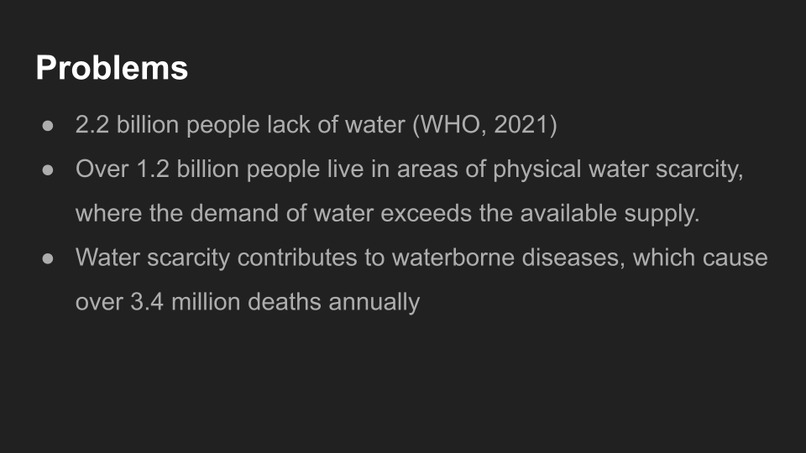
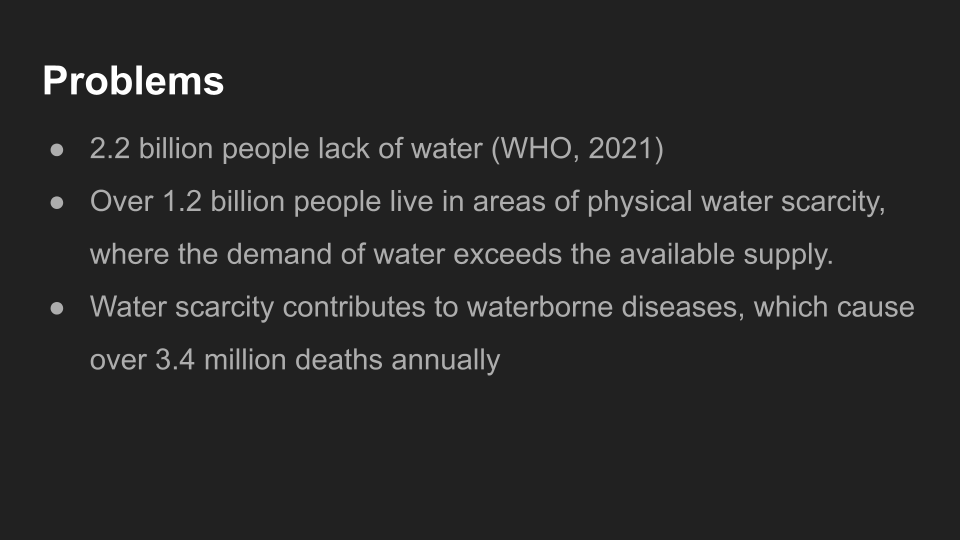
problems
-
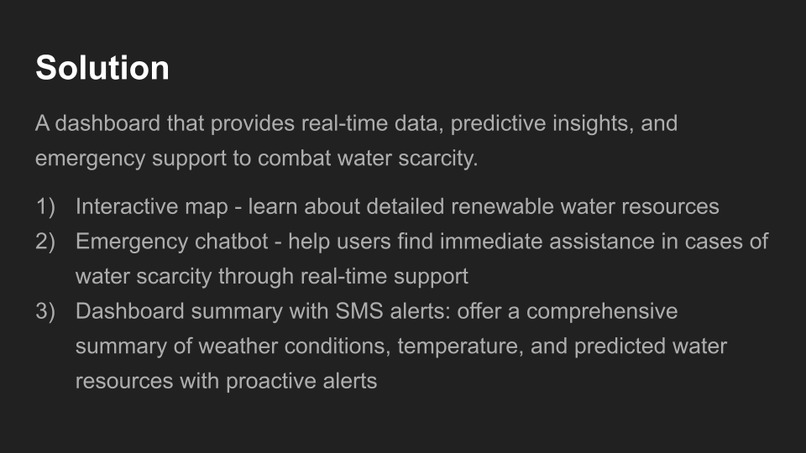
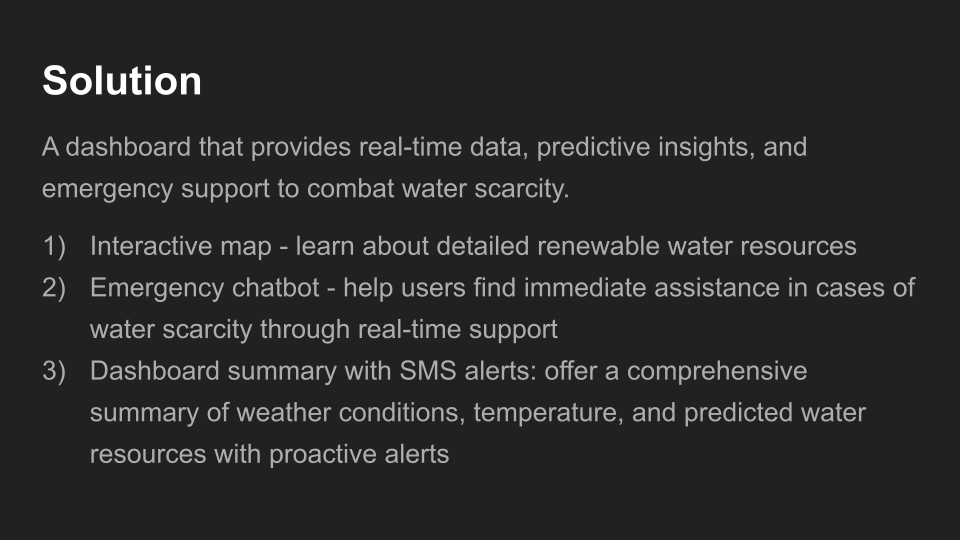
solution
-
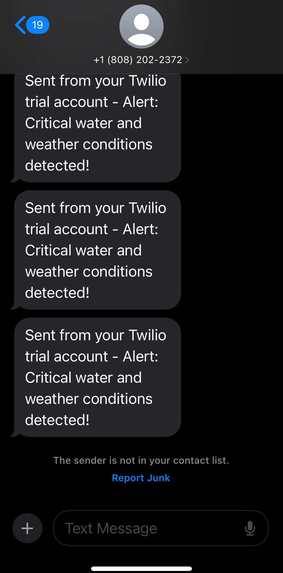
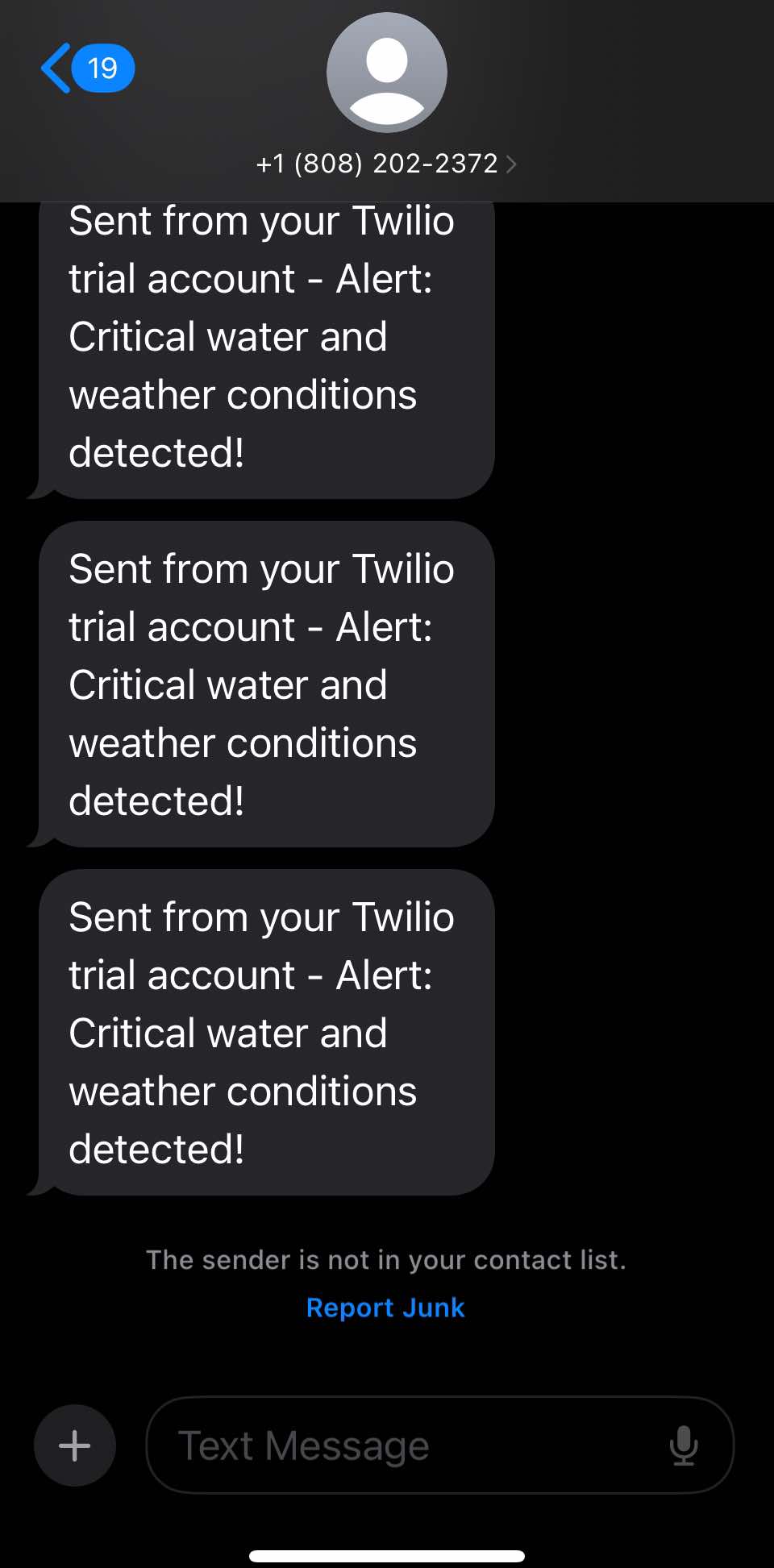
sms alert when extreme conditions + low renewable water resources
Inspiration
In a world where water scarcity and the lack of access to reliable data on renewable water resources are increasingly pressing issues, we were inspired to create a solution that offers critical insights and immediate support. With a growing need for accurate information on freshwater resources and an urgent call for effective response systems, we set out to build a platform that addresses these challenges.
What it does
Our platform, Dropless, is a comprehensive dashboard designed to provide real-time data and actionable insights on water resources. It features:
Interactive Map: Allows users to explore global water resources and access detailed information about renewable water resources in different countries. Emergency Support Chatbot: Connects users to nearby freshwater sources in case of emergencies. Dashboard Summary: Offers a summary of weather conditions, temperatures, and predicted water resources. It also sends SMS alerts if critical thresholds are met, ensuring users stay informed about potential water shortages and adverse conditions.
How we built it
Frontend: ReactJS Backend: Flask APIs: Google Maps for geolocation and interactive mapping, and custom models for predicting water resources. SMS Integration: Twilio for sending real-time alerts to users. Machine Learning Model: Predicts renewable water resources for upcoming years.
Challenges we ran into
Data Accuracy: Ensuring the precision of water resource predictions and integrating various data sources. UI/UX Design: Designing an intuitive and responsive interface that caters to diverse user needs.
Accomplishments that we're proud of
Seamless Integration: Successfully integrated multiple data sources and APIs into a cohesive platform. Real-Time Alerts: Implemented a robust system for sending SMS alerts based on predicted water resource levels and weather conditions. User-Centric Design: Developed an interactive map and chatbot that enhance user engagement and provide valuable insights.
What we learned
Data Handling: Gained valuable insights into managing and processing large volumes of real-time data. User-Centric Design: Learned how to create a design that is easily accessible and engaging for users.
What's next for Dropless
Expand Data Sources: Incorporate more data sources to cover countries with limited information on renewable water resources. Automate Emergency Alerts: Develop automated systems to send alerts to the most vulnerable regions.
Built With
- flask
- geolocation-api
- google-places
- react


Log in or sign up for Devpost to join the conversation.