-
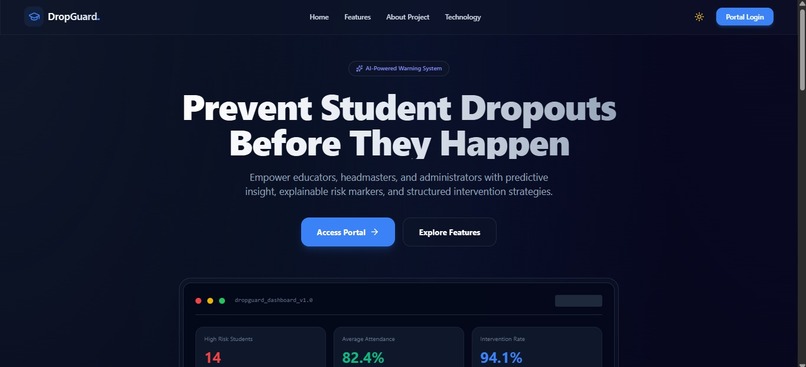
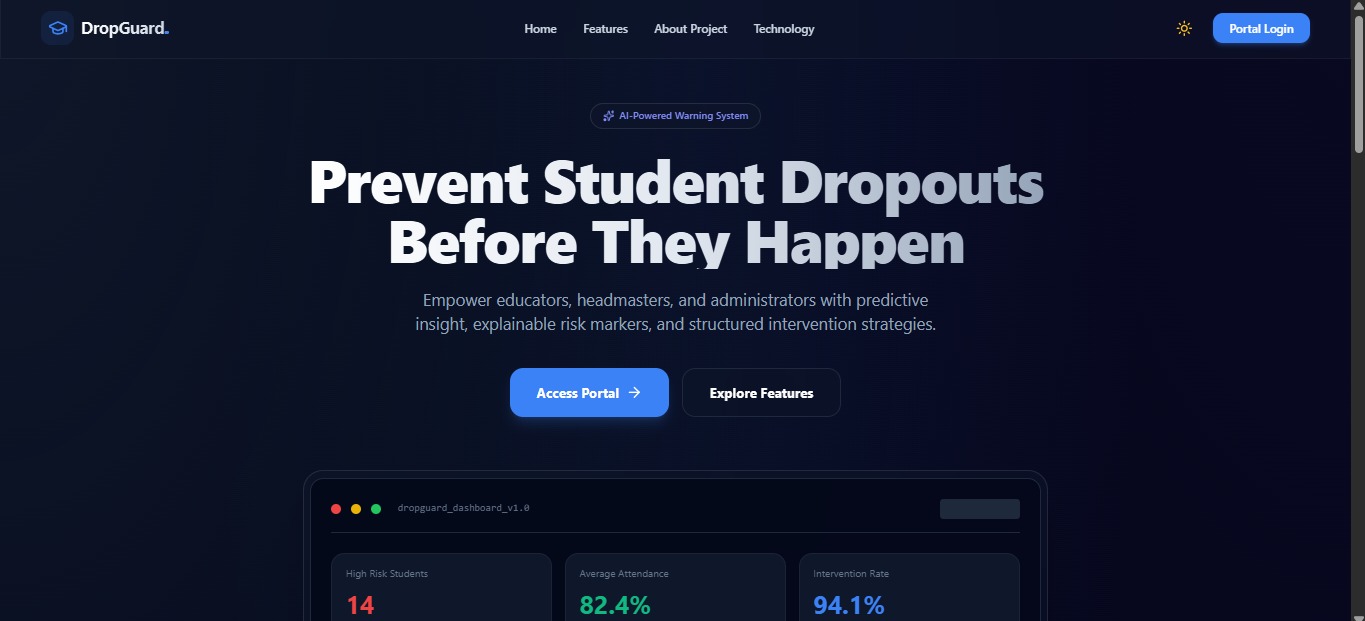
DropGuard Homepage
-
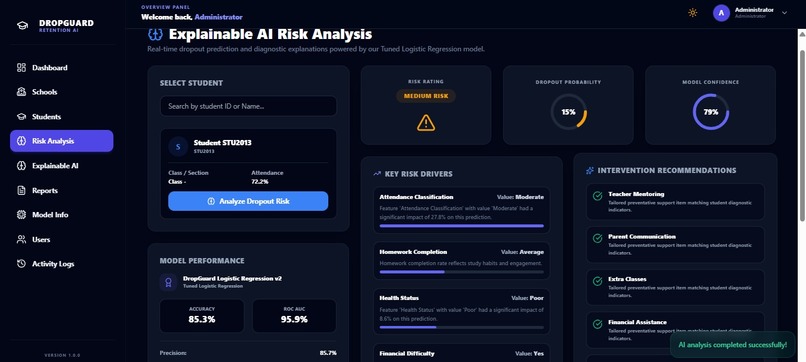
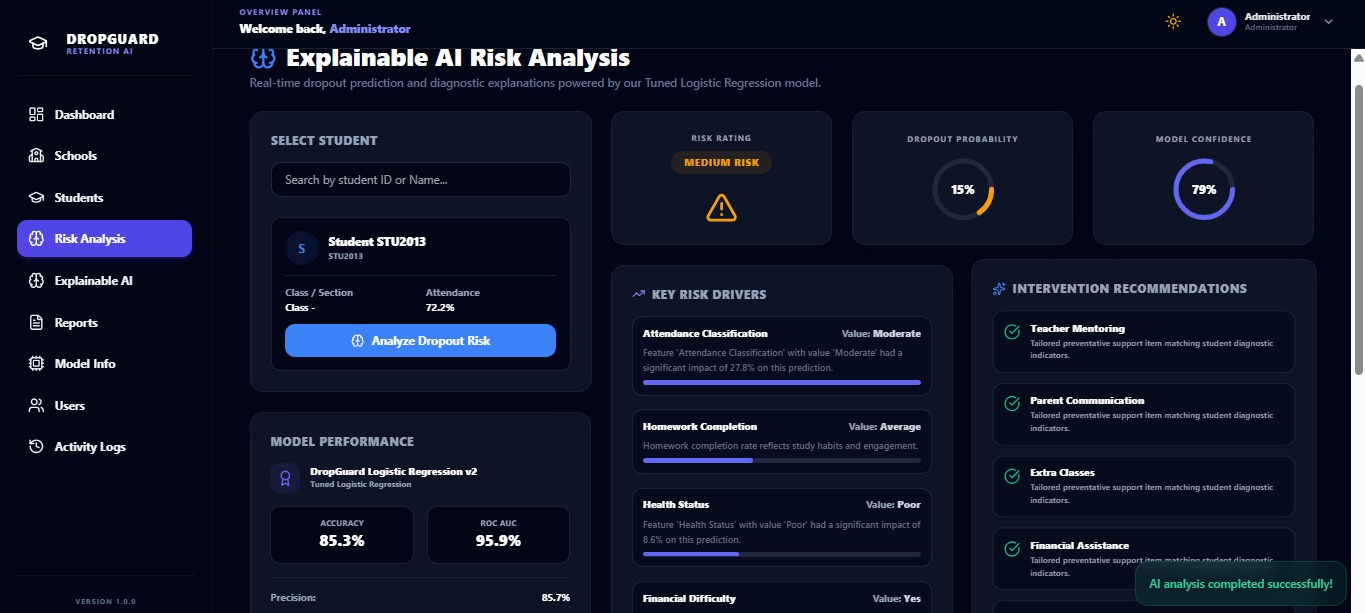
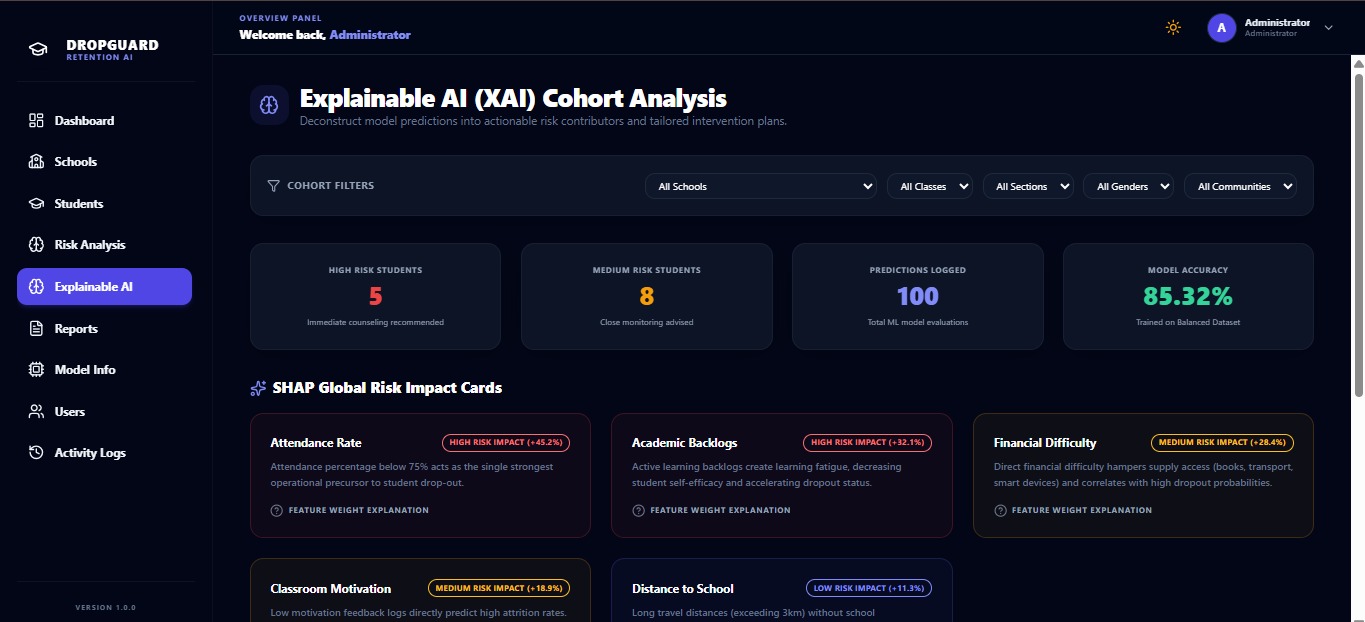
Explainable AI Risk Analysis
-
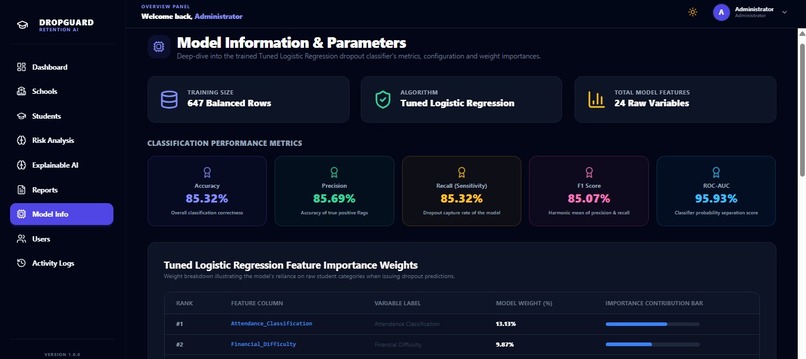
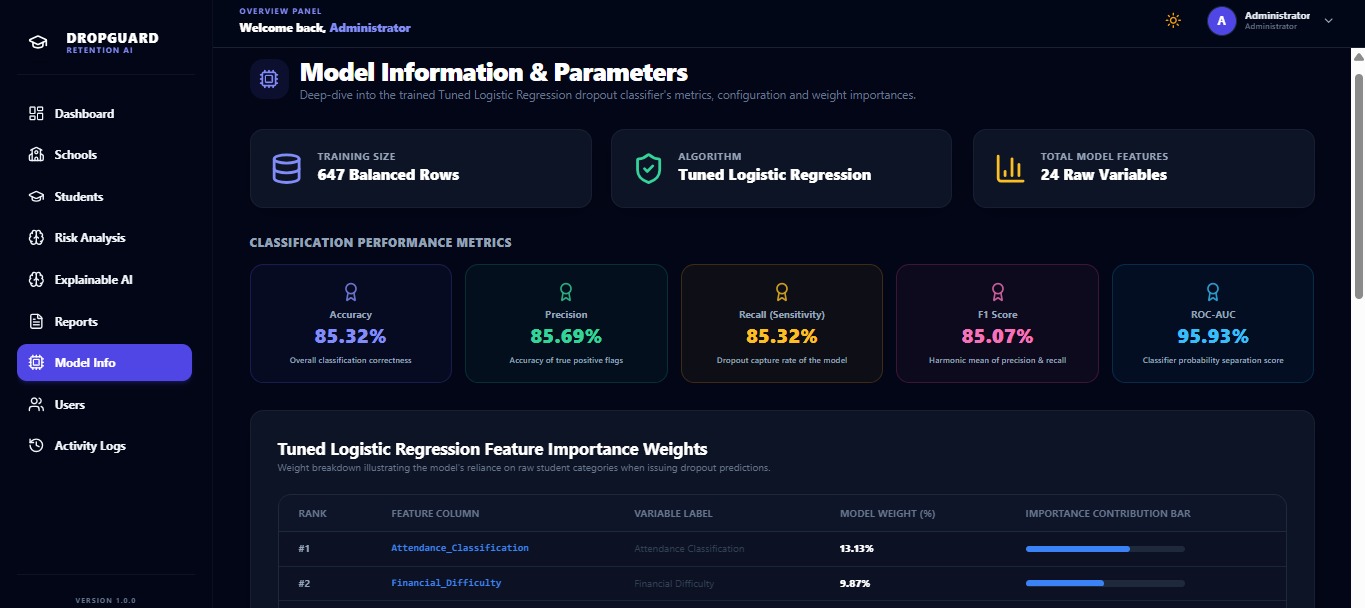
Model Information and Performance Metrics
-
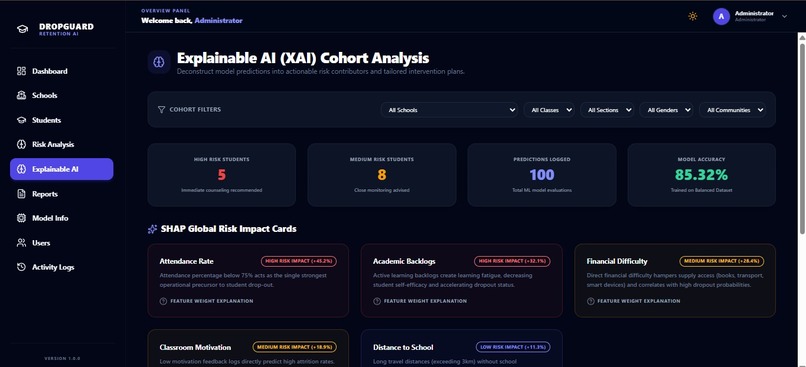
Explainable AI (XAI) Cohort Analysis
-
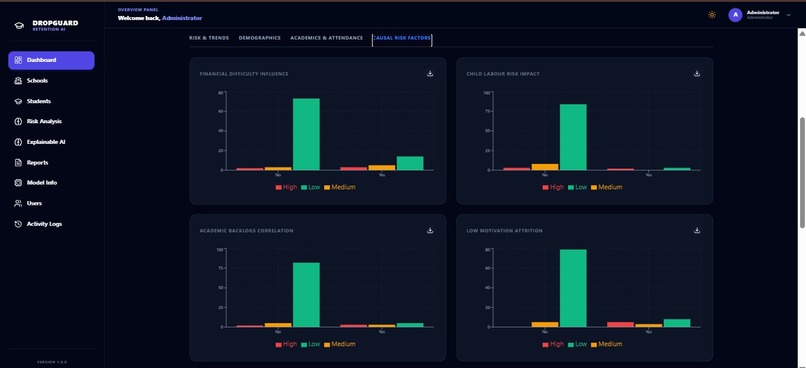
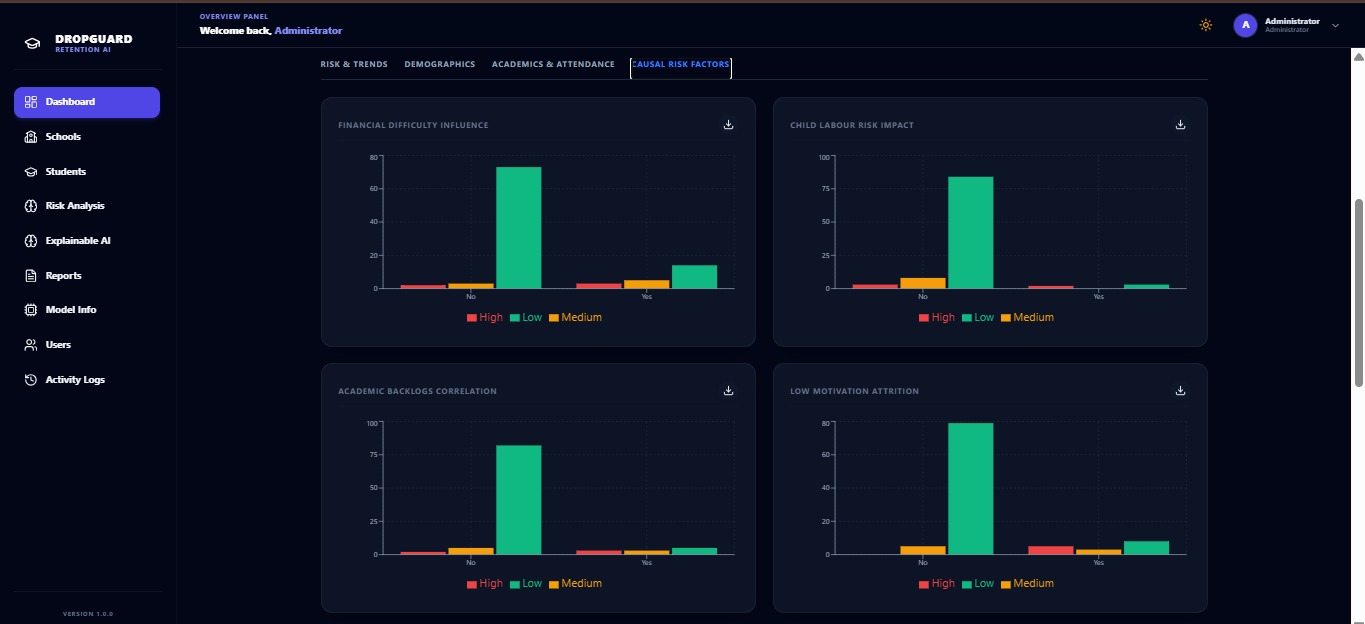
Causal Risk Factors Dashboard
-
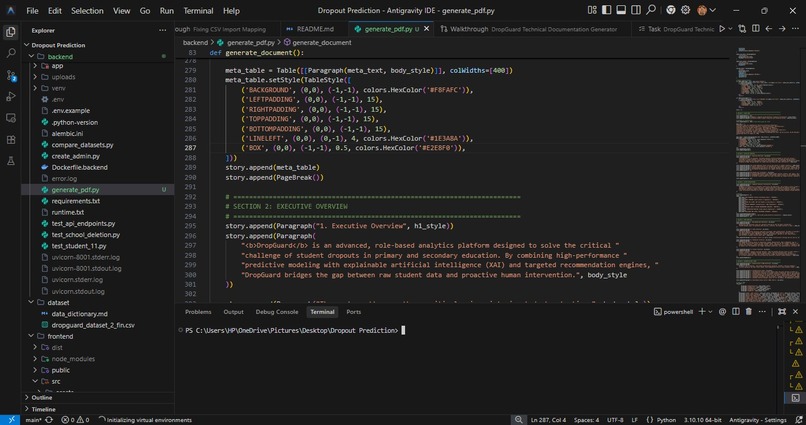
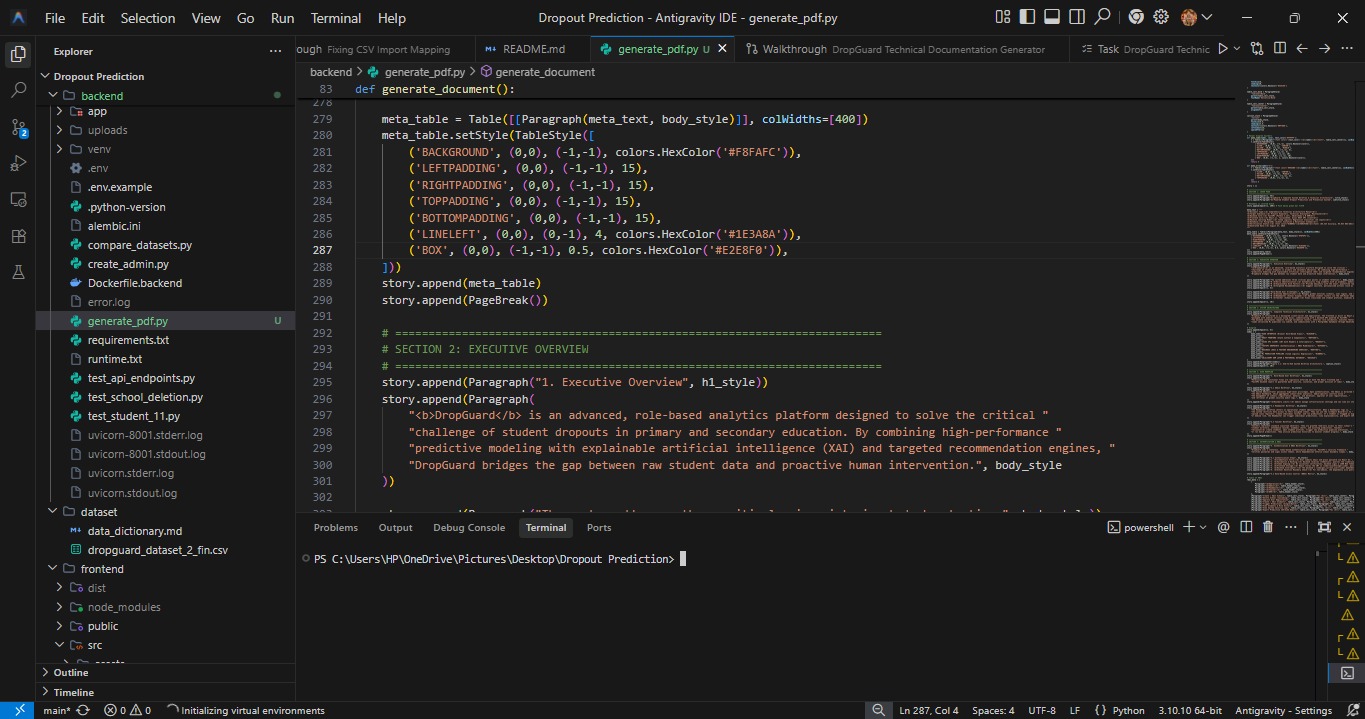
Backend PDF Report Generation
About DropGuard – AI-Powered Student Dropout Prediction System
💡 Inspiration
Student dropout is a major challenge in education, often caused by academic difficulties, irregular attendance, financial constraints, and other personal circumstances. Many institutions identify these problems only after a student begins to disengage from their studies.
We were inspired to develop DropGuard, an AI-powered early-warning system that helps educators identify students who may be at risk of dropping out and take timely, supportive action. Our goal is to use artificial intelligence not just to predict risk, but also to help institutions make informed decisions that support student success.
🚀 What It Does
DropGuard analyzes student-related indicators and uses machine learning to estimate dropout risk. It aims to transform student data into actionable insights that help educators understand potential risk factors and prioritize appropriate support.
Key features include:
- Dropout Risk Prediction: Identifies students who may be at risk using machine learning.
- Explainable Insights: Helps educators understand the factors contributing to a student's predicted risk.
- Personalized Interventions: Supports targeted recommendations to address students' individual needs.
- Analytics Dashboard: Presents risk-related information to help educators monitor patterns and make data-driven decisions.
🛠️ How We Built It
We developed DropGuard using a full-stack approach that integrates machine learning with a web application.
Our machine learning workflow includes data preparation, feature engineering, model training, and performance evaluation. We use a tuned Logistic Regression model to predict student dropout risk and evaluate its performance using classification metrics.
The application combines a React frontend, a FastAPI backend, Python-based machine learning with scikit-learn, and PostgreSQL for data management. These components work together to connect predictive analytics with an accessible interface for users.
🧠 Challenges We Faced
One of the key challenges was transforming student-related data into meaningful features for reliable prediction. We also needed to evaluate the model carefully, select suitable performance metrics, and present the predictions in a way that educators can understand and use.
Another important challenge was connecting the machine learning component with the web application while keeping the system practical and easy to use. These challenges helped us understand the importance of data quality, model evaluation, explainability, and effective system integration.
📚 What We Learned
Through this project, we strengthened our understanding of machine learning, feature engineering, model evaluation, API integration, database management, and full-stack development. We also learned that an effective AI solution should do more than generate predictions: it should communicate useful insights and support responsible decision-making.
🌍 Future Scope
We aim to improve DropGuard by validating the model with real-world, anonymized student data, enhancing personalized interventions, and exploring automated alerts and institutional integrations. Privacy, fairness, and educator oversight will remain important considerations as the system evolves.
🎯 Our Vision
DropGuard aims to turn early warning into early support. By combining AI-driven predictions with actionable insights, we hope to help educational institutions identify students who need assistance sooner and create better opportunities for them to continue their education.
Built With
- analytics
- artificial
- data
- fastapi
- intelligence
- learning
- logistic
- machine
- postgresql
- predictive
- python
- react
- regression
- scikit-learn

Log in or sign up for Devpost to join the conversation.