-
-
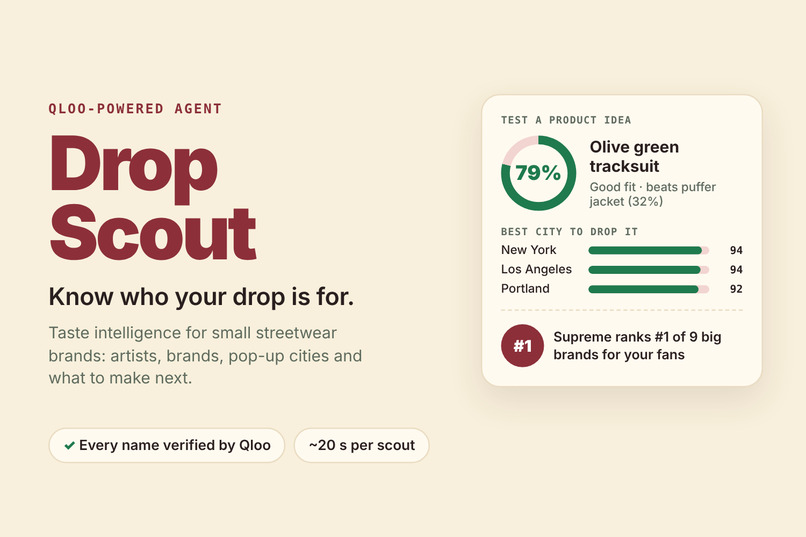
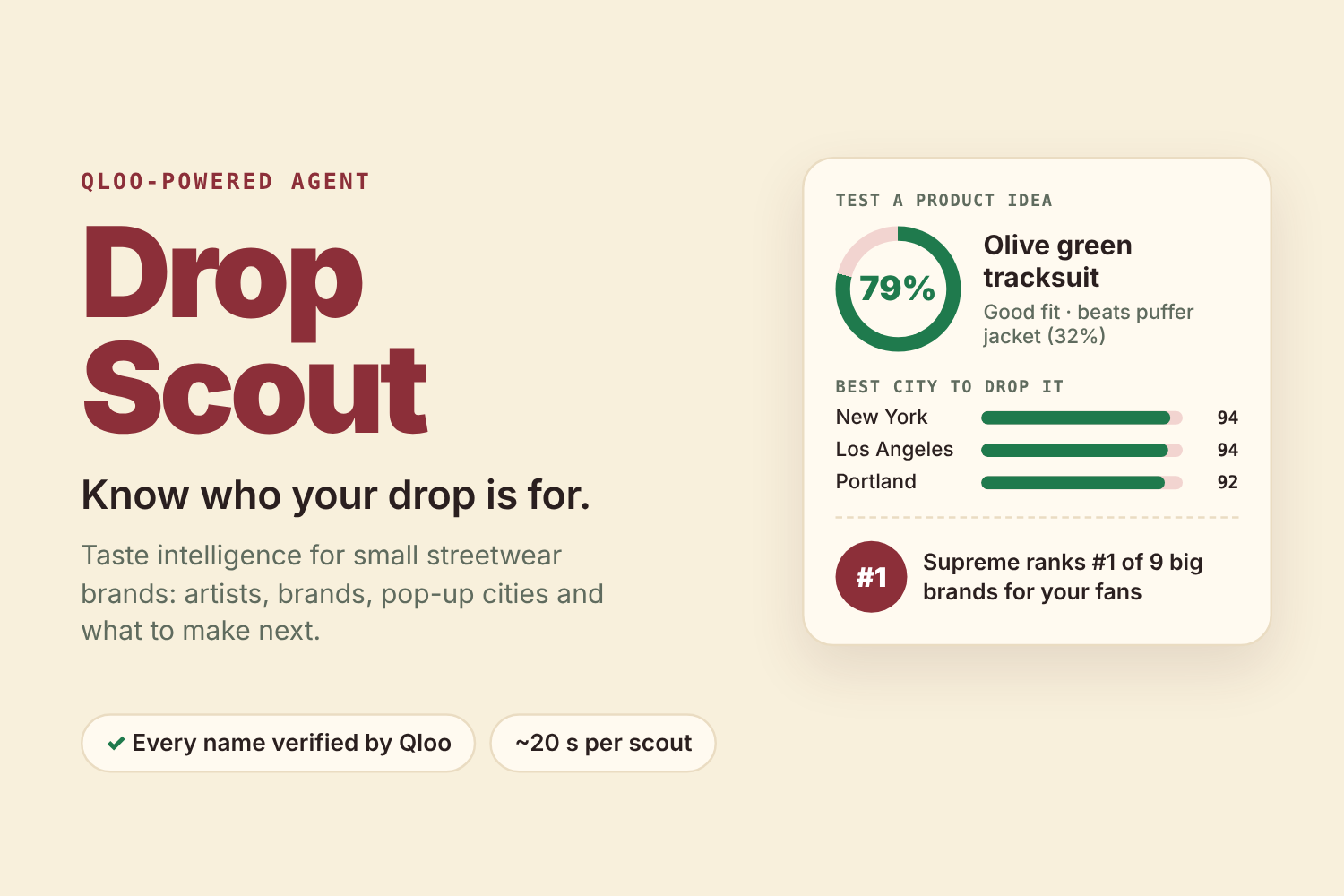
Drop Scout: a Qloo-powered agent for small streetwear brands
-
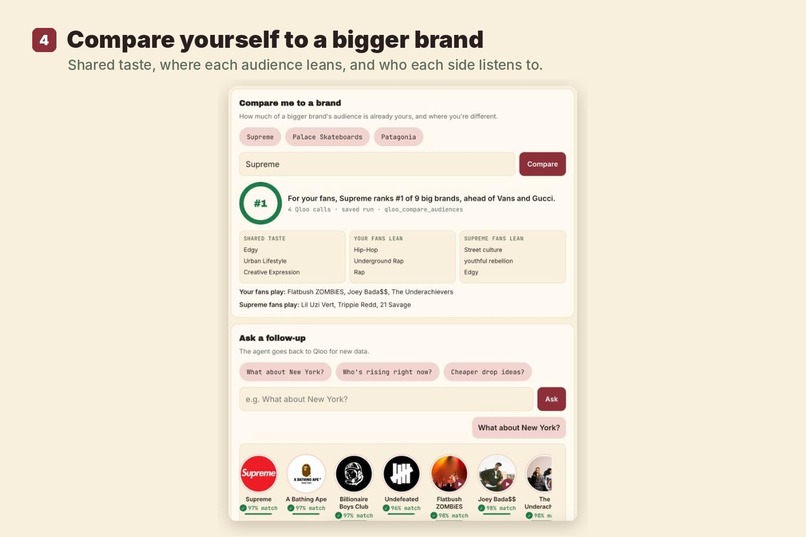
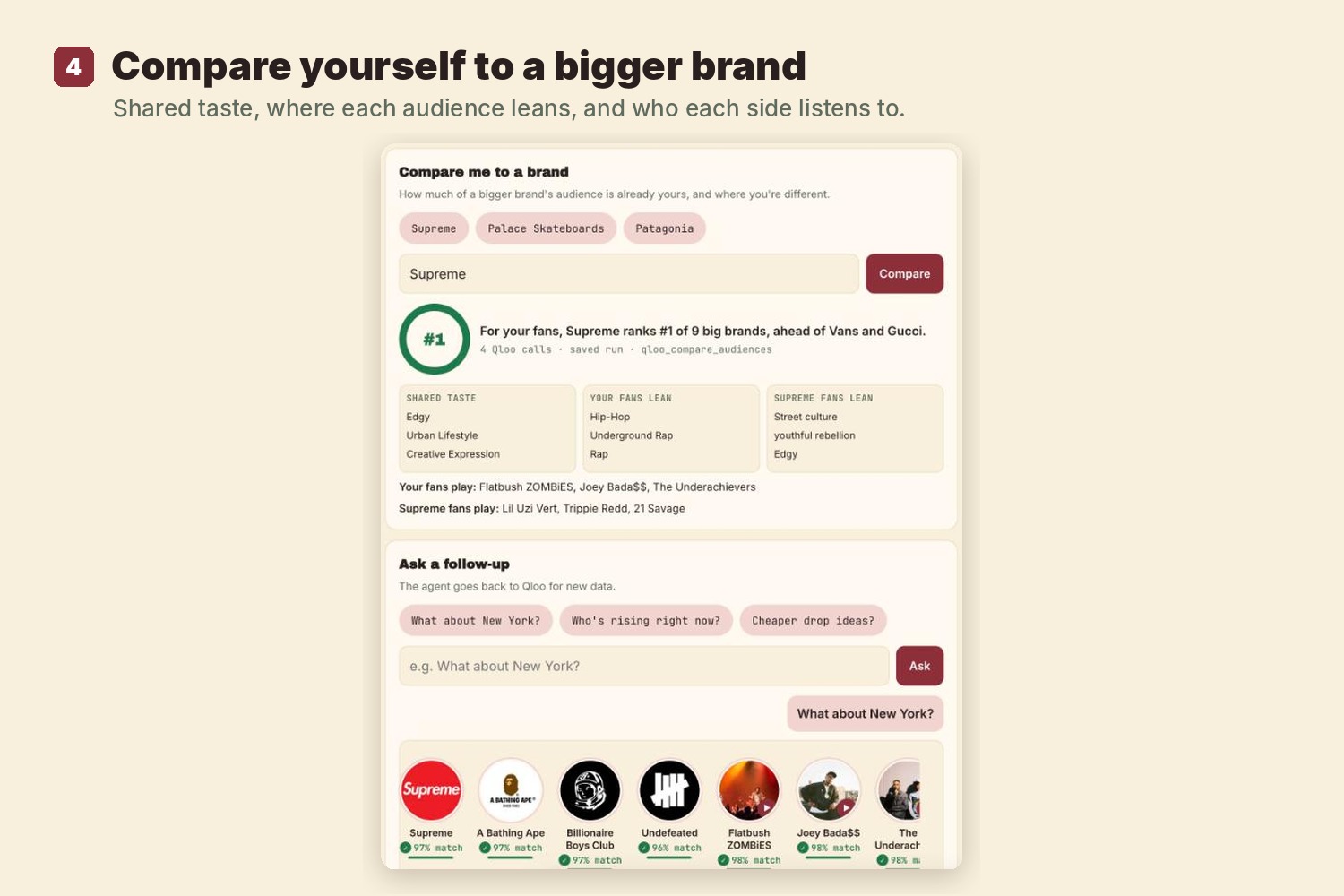
Compare yourself to a bigger brand: shared taste and where each audience leans
-
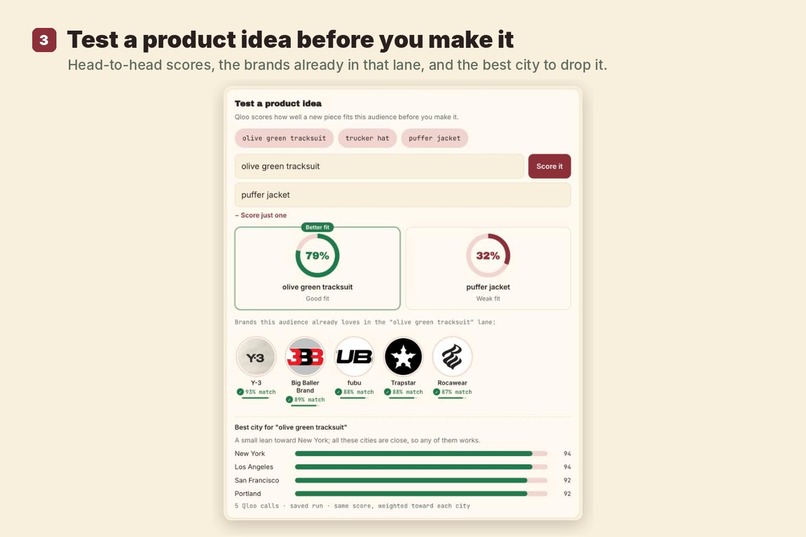
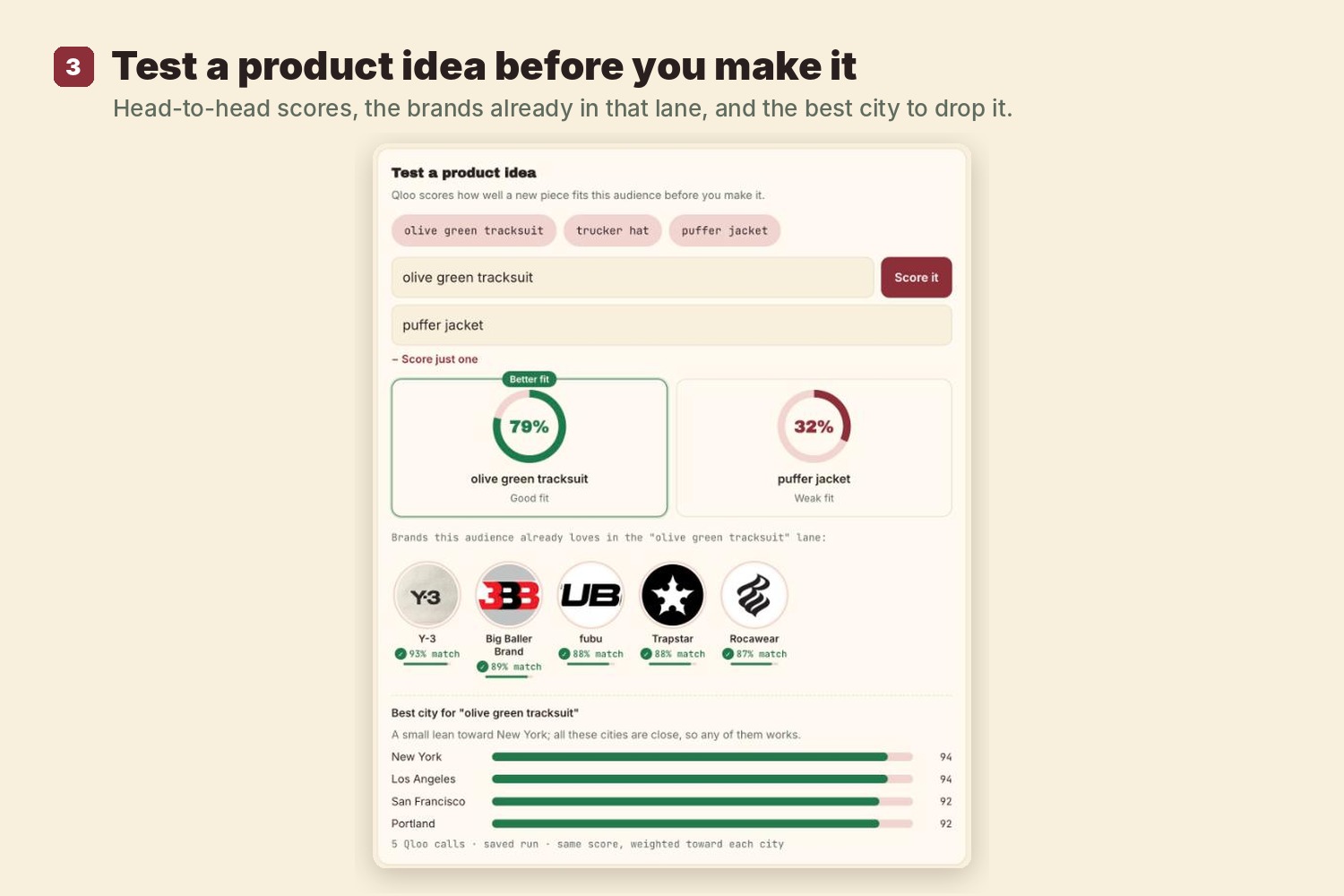
Test a product idea: head-to-head scores, brands in that lane, and the best city
-
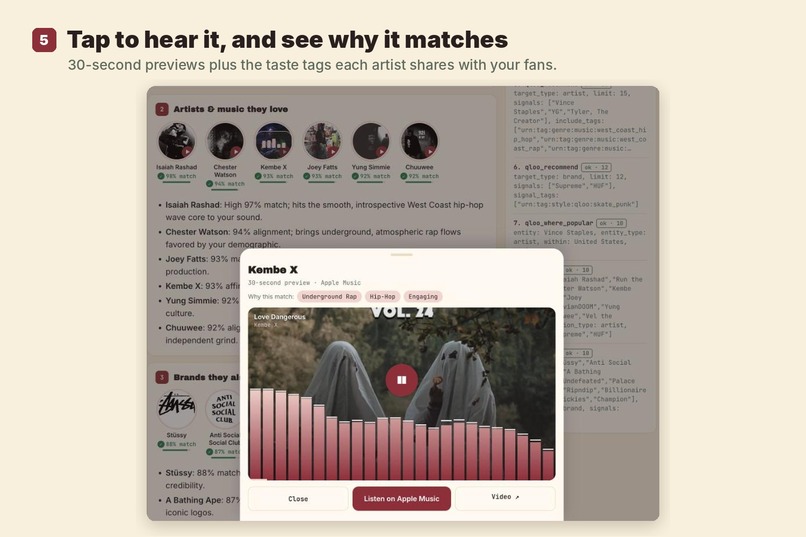
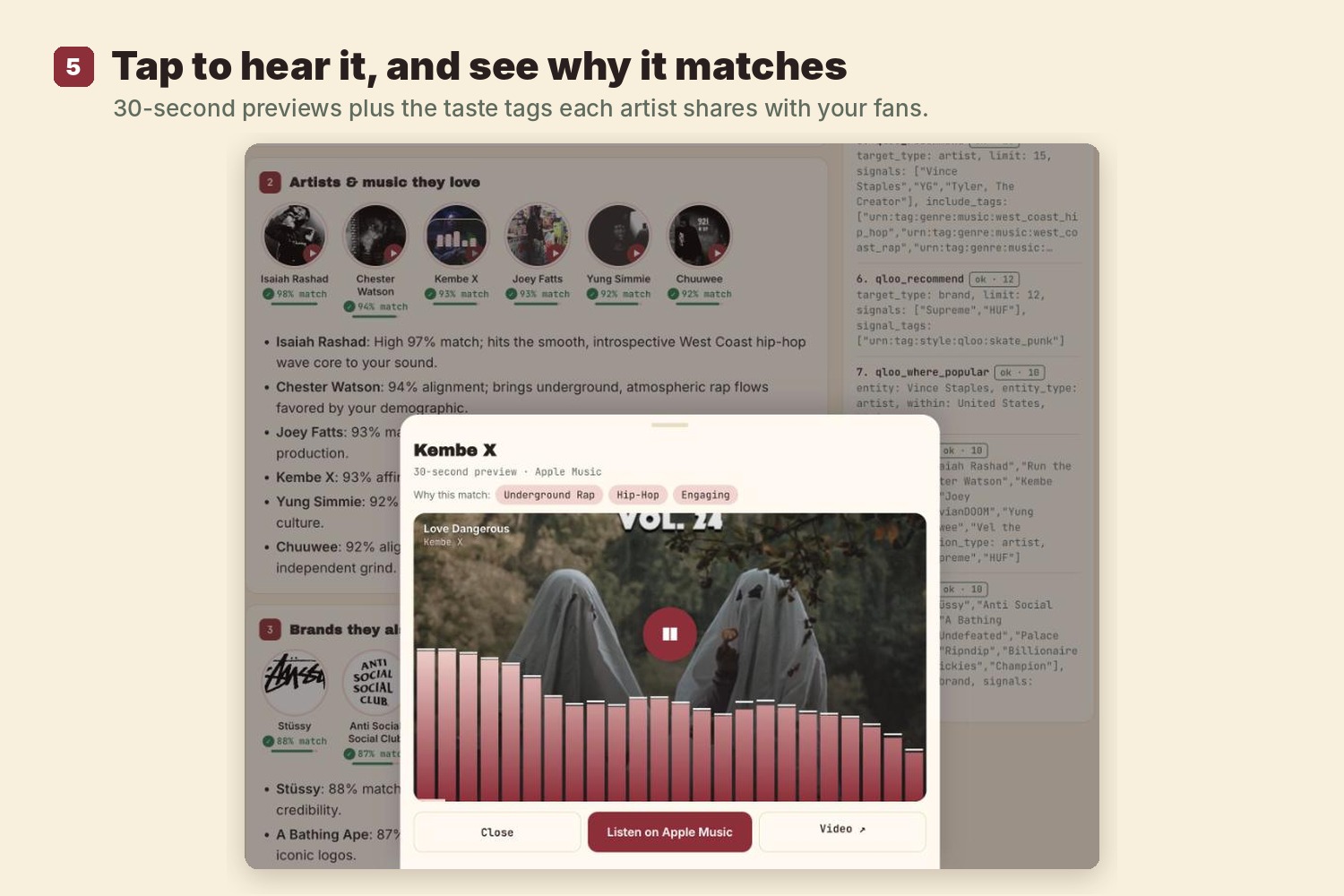
Tap an artist to hear a preview and see why they match your fans
-
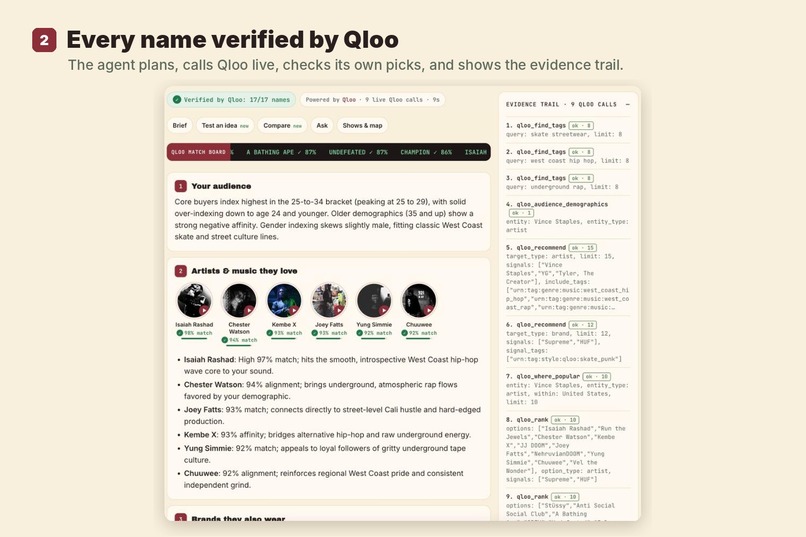
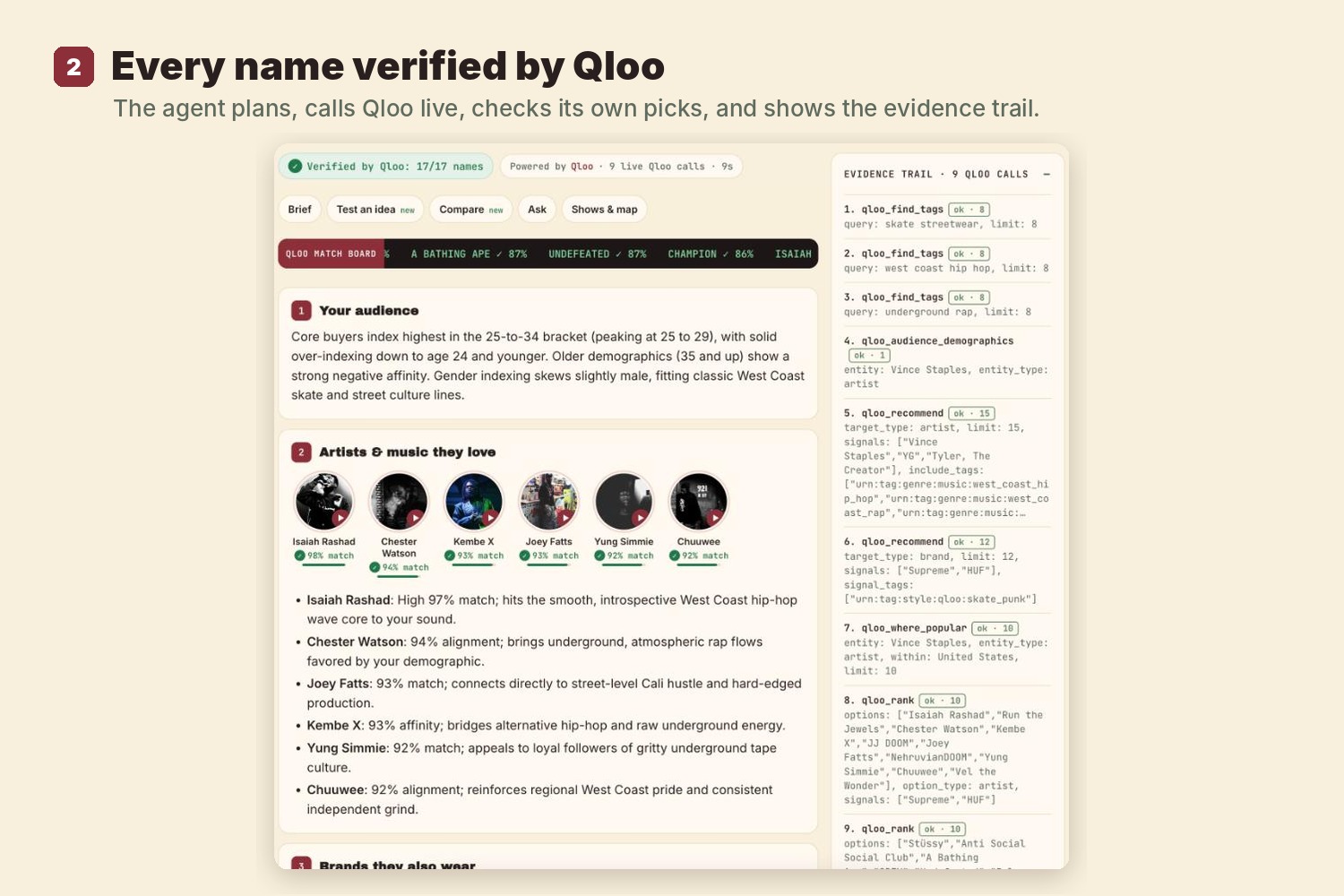
Every name in the brief is verified by Qloo, with the full evidence trail
Inspiration
Built next to a real brand: Smacked, an independent brand. Helped my friend open up his storefront and at the same time gave me ideas. Every drop came with the same questions. Which artists does our audience actually listen to? Which brands do they already wear? Which city should we pop up in? What do we make next?
Big brands pay agencies for that research. Small brands guess, and waste time doing it. Qloo's taste graph already knows how music, fashion and places connect across millions of people. Using Qloo's tools, the idea was to put that power in the hands of brand owners and small businesses.
What it does
You describe your brand in a sentence or two, and Drop Scout's agent goes to work. First it plans the scout, picking the brand's core music genres, a few well-known reference artists and comparable brands. Then it asks Qloo which artists and brands this audience also loves, and where those fans are concentrated geographically. Next it checks its picks against the brand's audience with qloo_rank and automatically drops the weakest fits. It writes a short brief from that evidence only, covering the audience, artists, brands, pop-up cities, tour tie-ins, what to drop next and marketing moves for this week. Finally it verifies every artist, brand and city in the brief against what Qloo returned, then, when finished, displays a "Verified by Qloo: N/N names" badge.
The brief then turns into actions. Artists and brands appear with a green check and their Qloo match score. Tapping an artist plays a 30-second preview with an equalizer that reacts to the music. A 3D globe shows Qloo's hot spots, and tapping one flies in to the city. Upcoming shows by the matched artists are listed, with shows in a hot spot ranked first, and one tap drafts a pitch to the venue for a pop-up or merch table that quotes the Qloo match; the user sends it themselves. The page has an English and Spanish toggle, plus an instant real example so anyone can see a full result in two seconds.
It also helps with the next decision. Test a product idea scores a new piece, like an olive green tracksuit, against the brand's audience before anything gets made, shows the brands those fans already love in that lane, and ranks the pop-up cities where it should drop first. Two ideas can go head to head so the better fit is obvious. Compare me to a brand puts your audience next to a bigger label's, like Supreme, and shows the taste you share, where each side leans and which artists each side plays. And tapping any artist or brand explains the match with the taste tags it shares with your fans.
How it was built
The backend is Node.js on Render. It starts Qloo's official qloo mcp server once and calls its tools over the Model Context Protocol. Google Gemini plans the scout and writes the brief, while my server runs the pipeline: plan, resolve names, ask Qloo in parallel, self-check, write and verify. Follow-up questions use a Gemini function-calling loop with Qloo's tools.
It uses qloo_find_tags, qloo_describe, qloo_recommend, qloo_where_popular, qloo_audience_demographics, qloo_rank and qloo_compare_audiences, and qloo_trends is wired up too. For verification, the server parses every named artist, brand and city in the brief and checks it against Qloo's results; cities have to sit near a Qloo hot spot.
The front end is a single mobile-first page that streams live progress, so you can watch each Qloo call happen. It uses Qloo's own images for the picture tiles, a MapLibre globe on OpenFreeMap tiles, Apple's public iTunes previews with a Web Audio visualizer, and Wikipedia photos for cities. Concert listings come from Ticketmaster's Discovery API, read-only.
I tested 20 different brand descriptions on the live app, from West Coast streetwear and Atlanta trap to Nashville western and Detroit techno. Every run was fresh, with no cache. On the first draft, 97.9% of the names the agent wrote (326 of 333) were confirmed by Qloo. The other 7 were removed automatically, so 100% of the names users see are Qloo-backed. A scout took 20.6 seconds on average (median 18 seconds) and made about 9 live Qloo calls. 19 of the 20 runs completed; the one failure was Google's AI being busy, which now triggers an automatic retry.
Challenges
The biggest problem was the model inventing names. In the first version the model called Qloo freely, named signals like "Snoop Dogg" came back as "needs input", and the model quietly filled the gaps from its own memory. I fixed it by resolving every name to a Qloo entity ID first, then added the self-check and the verifier so a made-up name can never reach the user.
Speed was the next challenge. Early scouts took two to three minutes. Running Qloo calls in parallel, turning down the model's thinking time and trimming tool results brought that down to about 20 seconds.
Relevance took work too. Tag-only recommendations once returned metal bands for a West Coast rap brand. Seeding with reference artists, filtering to genre tags and re-ranking with qloo_rank fixed it.
qloo_where_popular returns map points rather than city names, so I turn each point into the nearest major city and check the distance, while the globe plots the real points. And qloo_trends returned no data points in the hackathon dataset, so instead of faking trend arrows I show a live board of Qloo match scores.
Qloo always returns its best matches, so the first version rated almost anything as a good fit, even a lace wedding veil for a streetwear brand. Scoring each idea against how strongly the audience likes its favorite brands overall fixed that: a hoodie scores 98 for Smacked, a puffer jacket 32 and yoga pants 0. I also tested qloo_entity_tags for explaining matches, but it returned ratings, venue types and demographic labels, so explanations use the shared taste tags from qloo_compare_audiences instead, with demographic tags filtered out.
Accomplishments
Every name a user sees is backed by Qloo, and the app proves it on screen. The agent visibly plans, checks its own work and revises instead of answering from a single prompt. It goes past a report: you can tap to hear an artist, fly to a city, find a real show and have a pitch ready to send. It is fast, built for phones, and Smacked is already using it.
learned
Agents get better when the predictable steps live in code and the model only handles the parts that need judgment. Connecting music, brands and places is exactly what small brands are missing.
What's next for Drop Scout
Smacked will keep using Drop Scout for every release, so I can measure how its picks hold up against real results: which pop-up cities sell, which collab ideas land, and which drops move. Next I'm adding Qloo-matched local shops and venues in each pop-up city, each with its own pitch.Then I'll open it up to other independent brands, with Shopify and Instagram connections so recommendations turn straight into drops and posts.
Built With
- css
- gemini
- html
- itunes-search-api
- javascript
- maplibre
- model-context-protocol
- node.js
- openfreemap
- qloo
- render
- ticketmaster-api
- web-audio-api

Log in or sign up for Devpost to join the conversation.