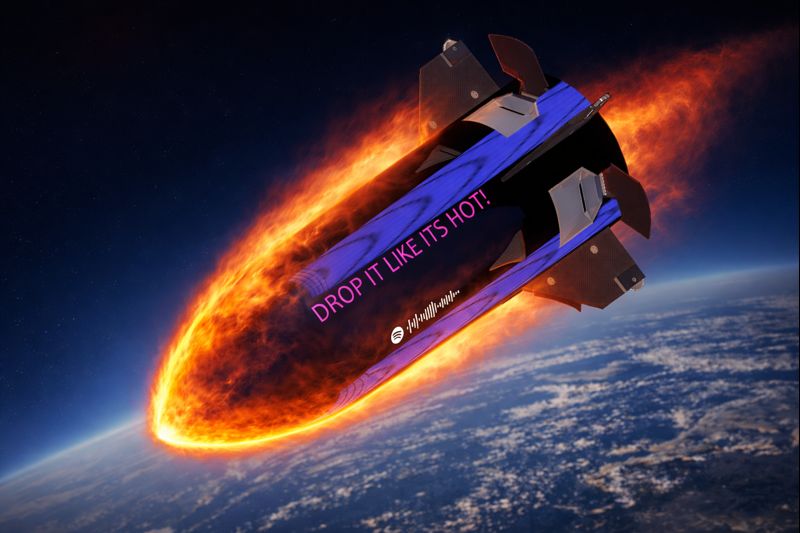
Through this project, we learned how multidisciplinary engineering principles come together in real aerospace applications, particularly the balance between thermal protection, impact absorption, stability, and weight minimization. Our team chose a sacrificial capsule rocket design because it allows delicate extraterrestrial samples to survive extreme re-entry temperatures and high-impact landing forces while remaining simple, reliable, and largely passive. One of the main challenges we faced was selecting materials that could withstand extreme thermal loads while remaining lightweight and compatible with additive manufacturing. Another challenge was optimizing the lattice geometry to absorb impact energy without exceeding the failure limits of the samples, requiring careful comparison of different unit cell structures and their anisotropic behavior. We also encountered trade-offs between system complexity and reliability, especially when evaluating active versus passive velocity reduction and stabilization methods. Overall, this project strengthened our understanding of materials selection, systems integration, and engineering trade-offs, while demonstrating how thoughtful design decisions can mitigate real-world engineering constraints.
Built With
- autodesk-cfd
- inventor


Log in or sign up for Devpost to join the conversation.