Inspiration
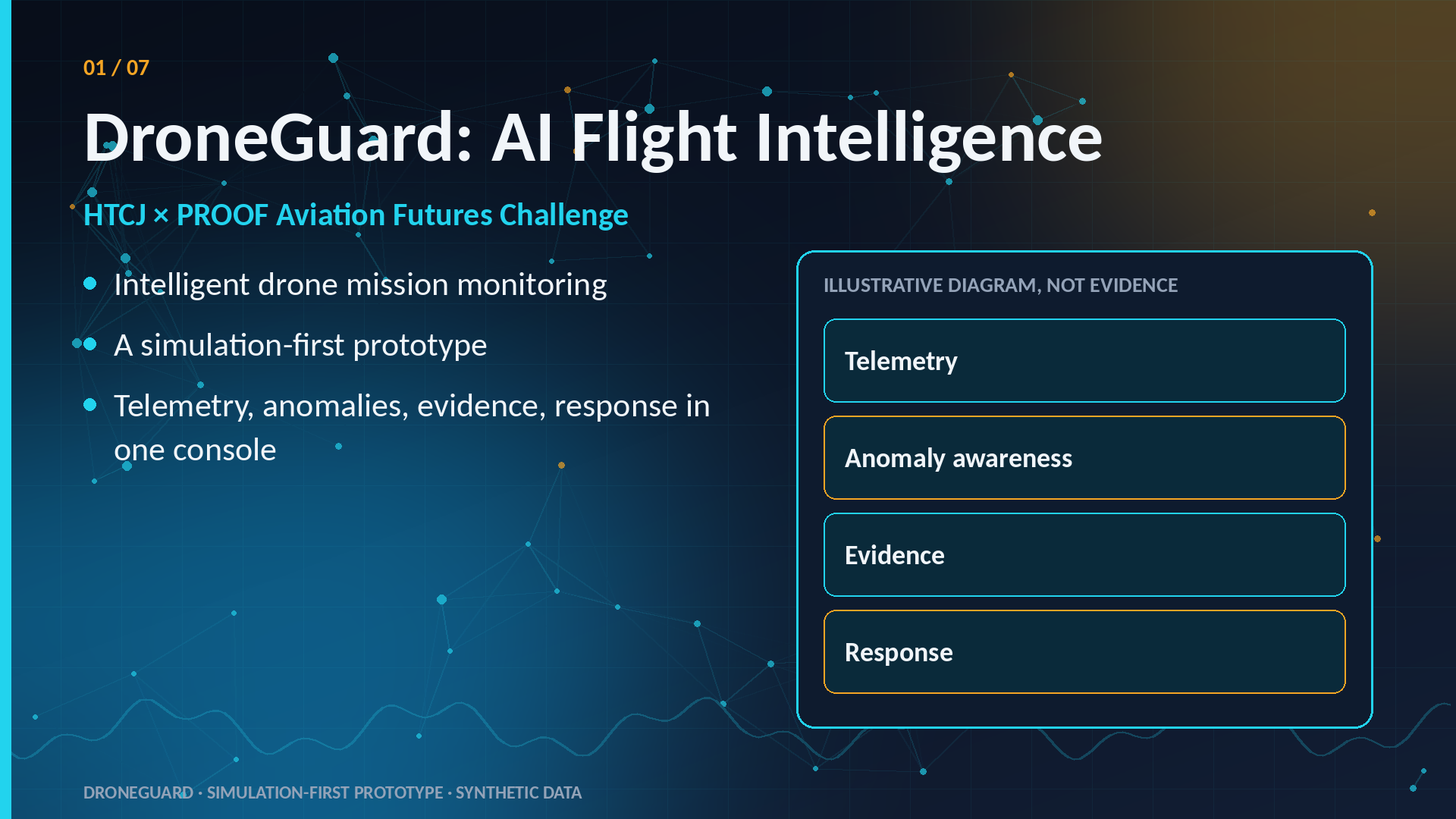
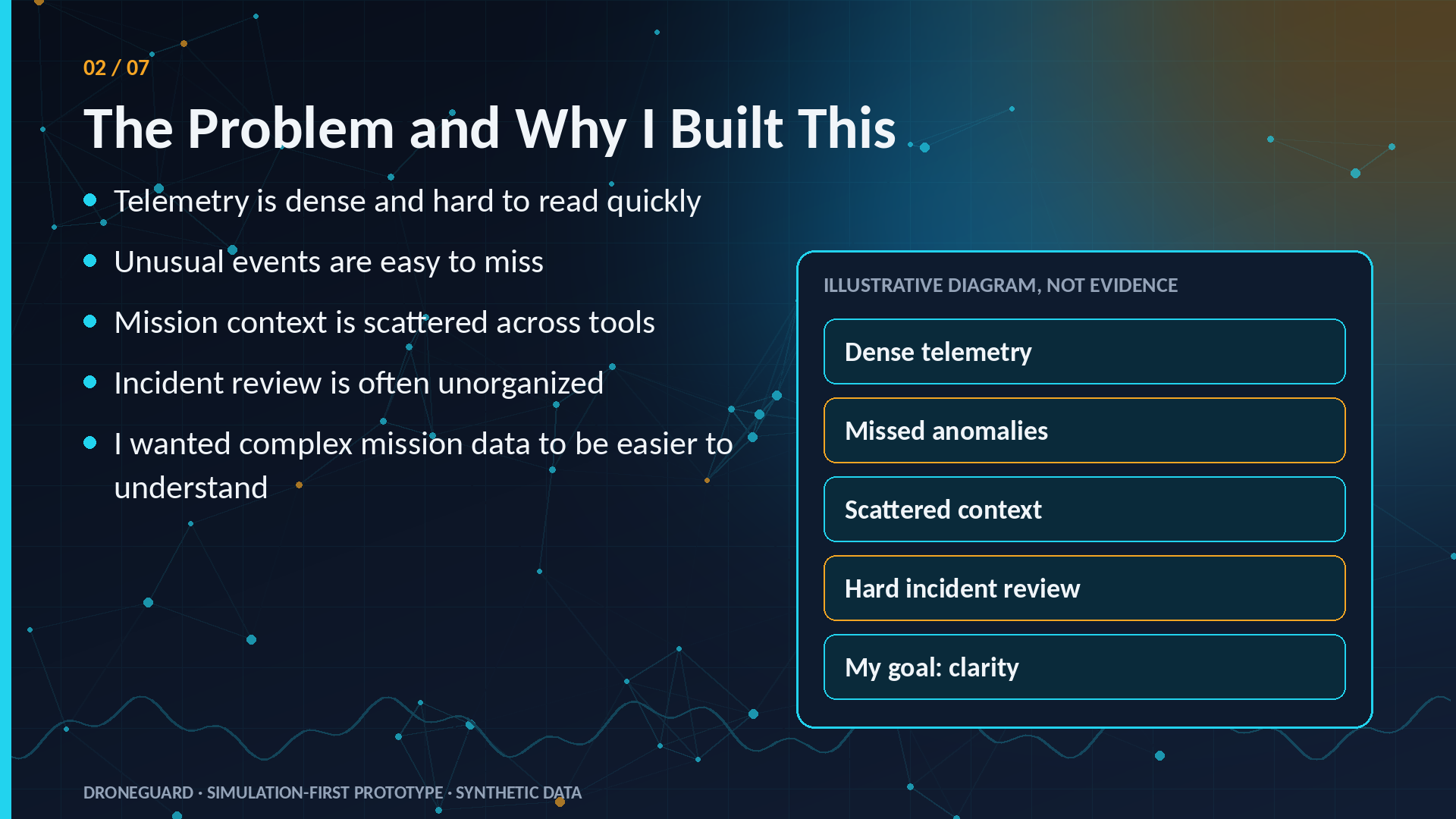
I’ve always been interested in how technology can help people make better decisions, especially in situations where understanding what is happening can make a real difference. When I started thinking about drone operations, I realized that there is a lot more to managing a mission than simply watching a drone fly. Operators may need to understand flight data, notice unusual behavior, review what happened, and decide what to do next.
That got me thinking about a JARVIS-style assistant for drones: something that brings the important information together in one place and makes it easier to understand. That idea became DroneGuard: AI Flight Intelligence. I wanted to build something that felt like a real mission command center while exploring how better visualization and intelligent monitoring could support safer drone operations.
What it does
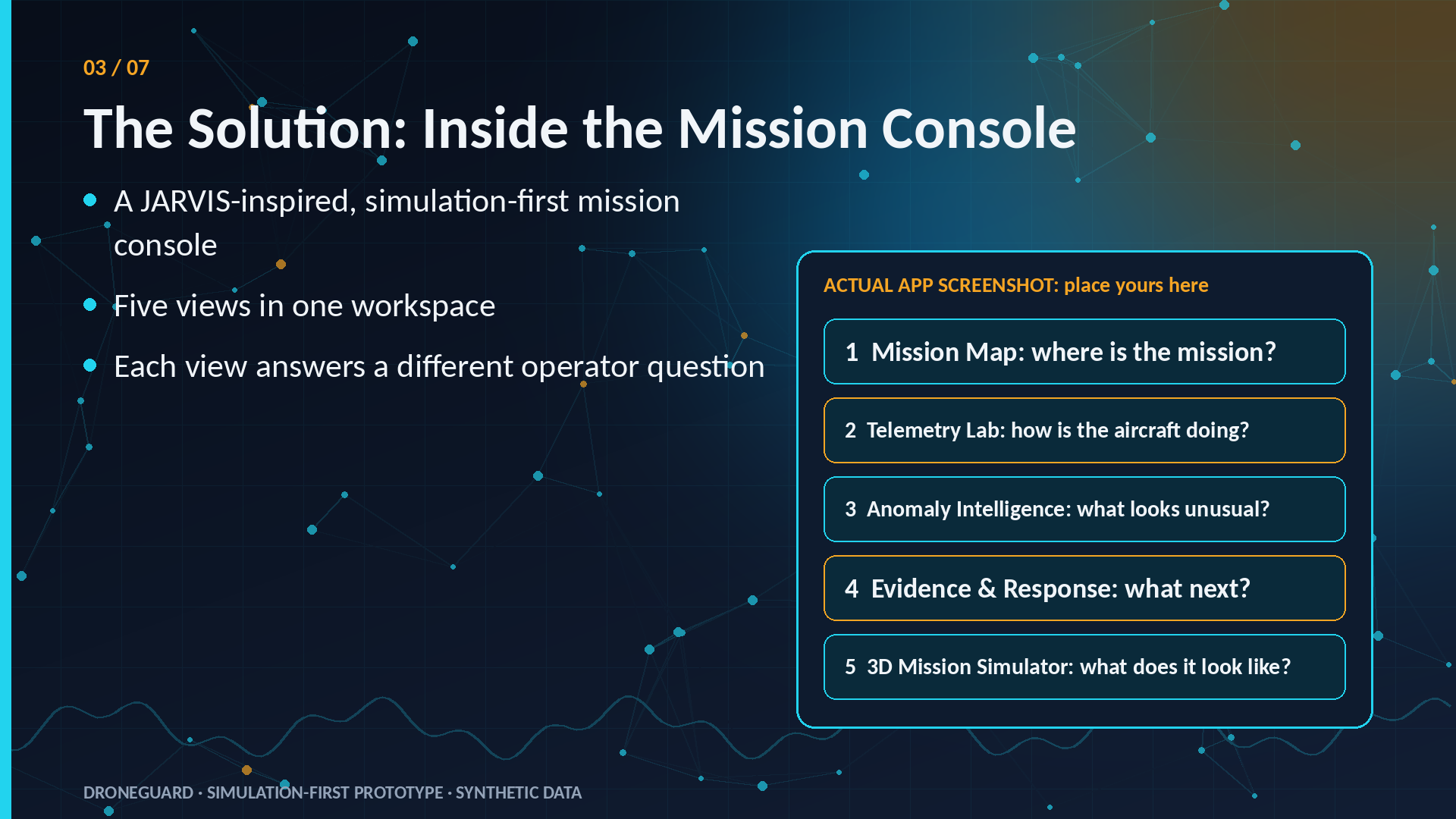
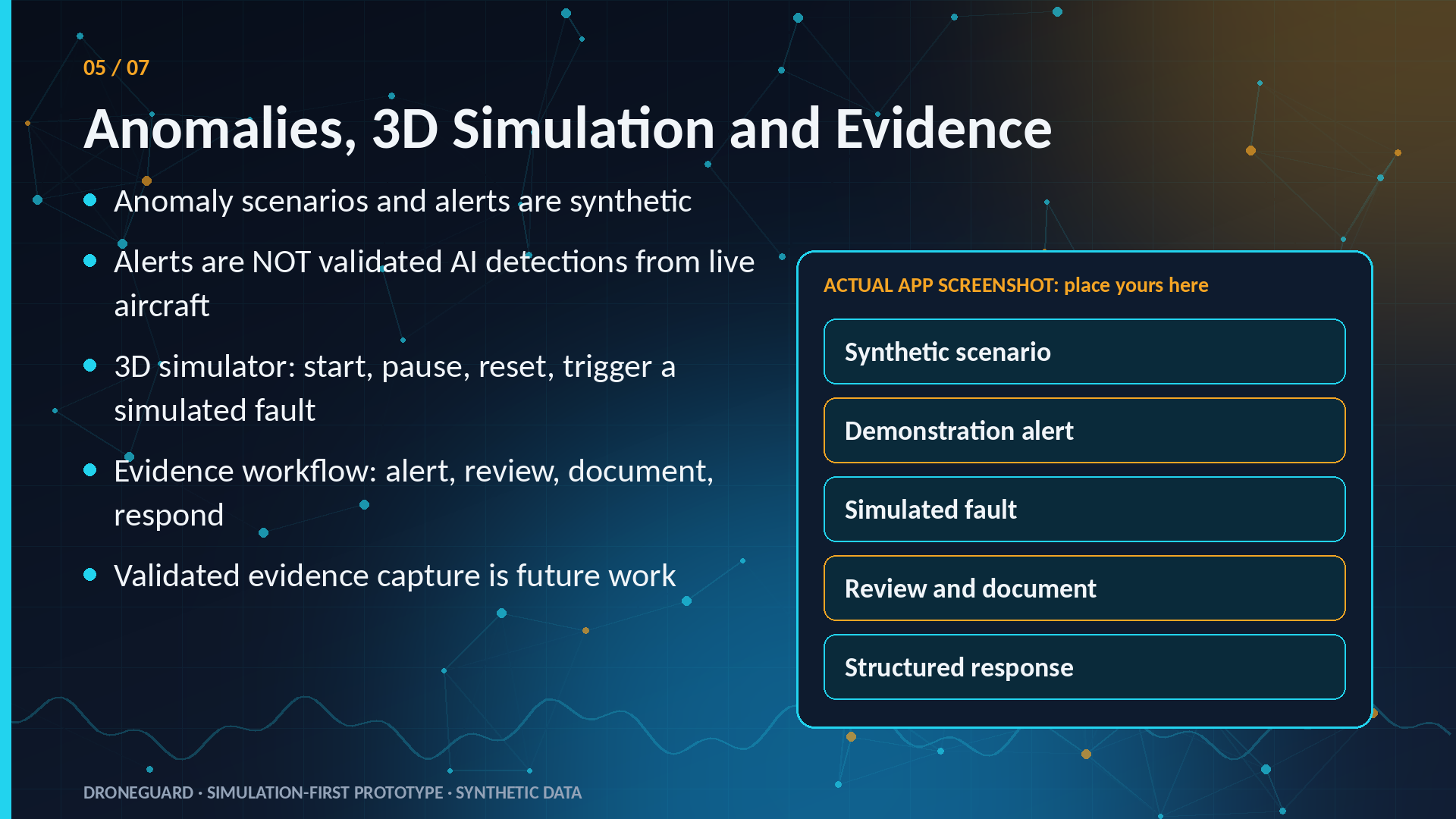
DroneGuard is an interactive dashboard that brings different parts of a drone mission into one place. It has five main views: Mission Map, Telemetry Lab, Anomaly Intelligence, Evidence & Response, and a 3D Mission Simulator.
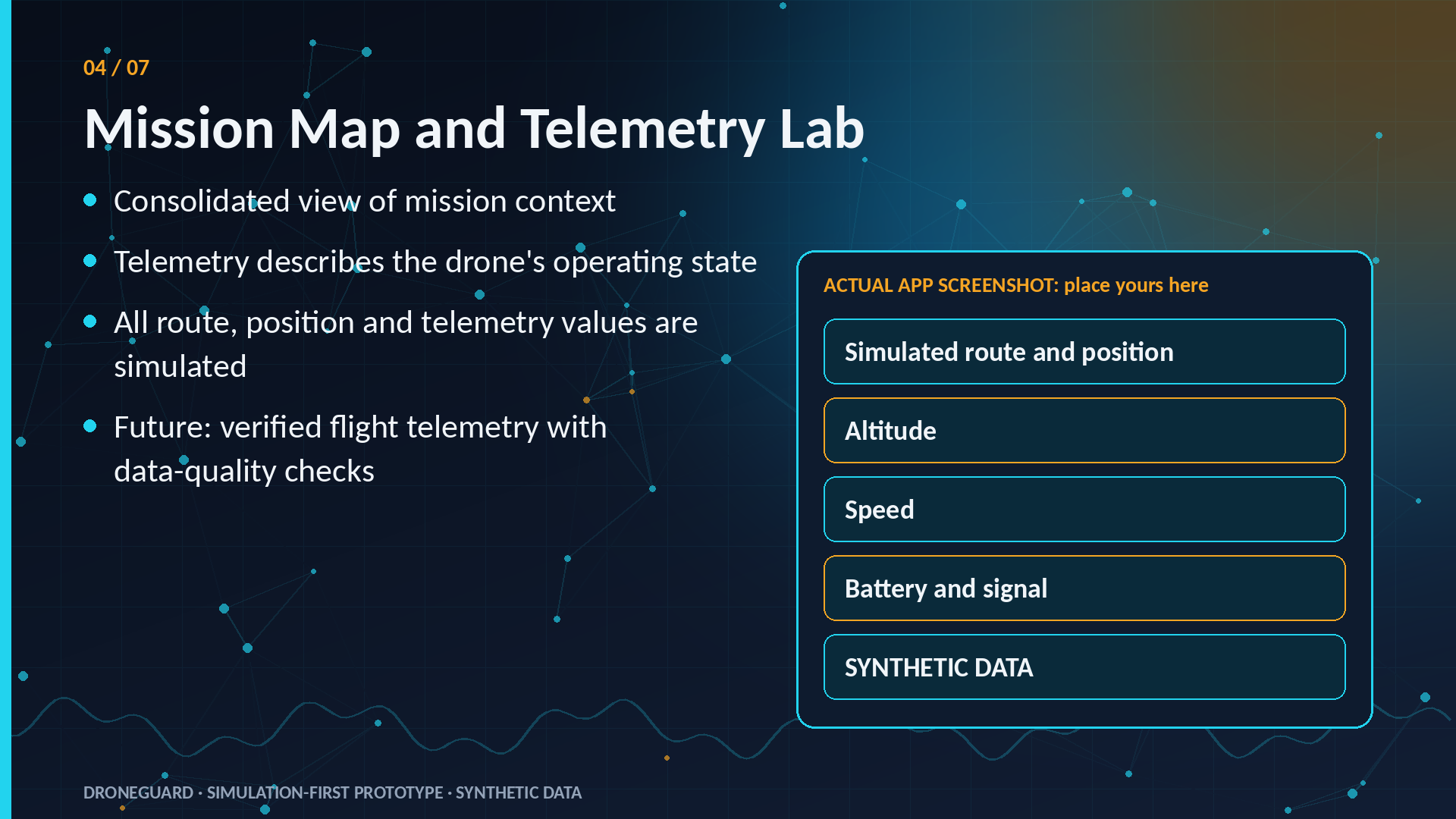
I built it so people can explore a mission, look at simulated telemetry, introduce a fault scenario, and see how a monitoring interface could help them investigate a potential problem. The goal is to connect the dots between what is happening during a mission, what might deserve attention, and how an operator could review the situation.
The current version uses simulated data, so it is a working prototype of the experience rather than a live drone monitoring system. Its alerts are demonstrations, not verified AI detections. I wanted to make the idea tangible first and create a foundation that I can continue testing and improving.
How we built it
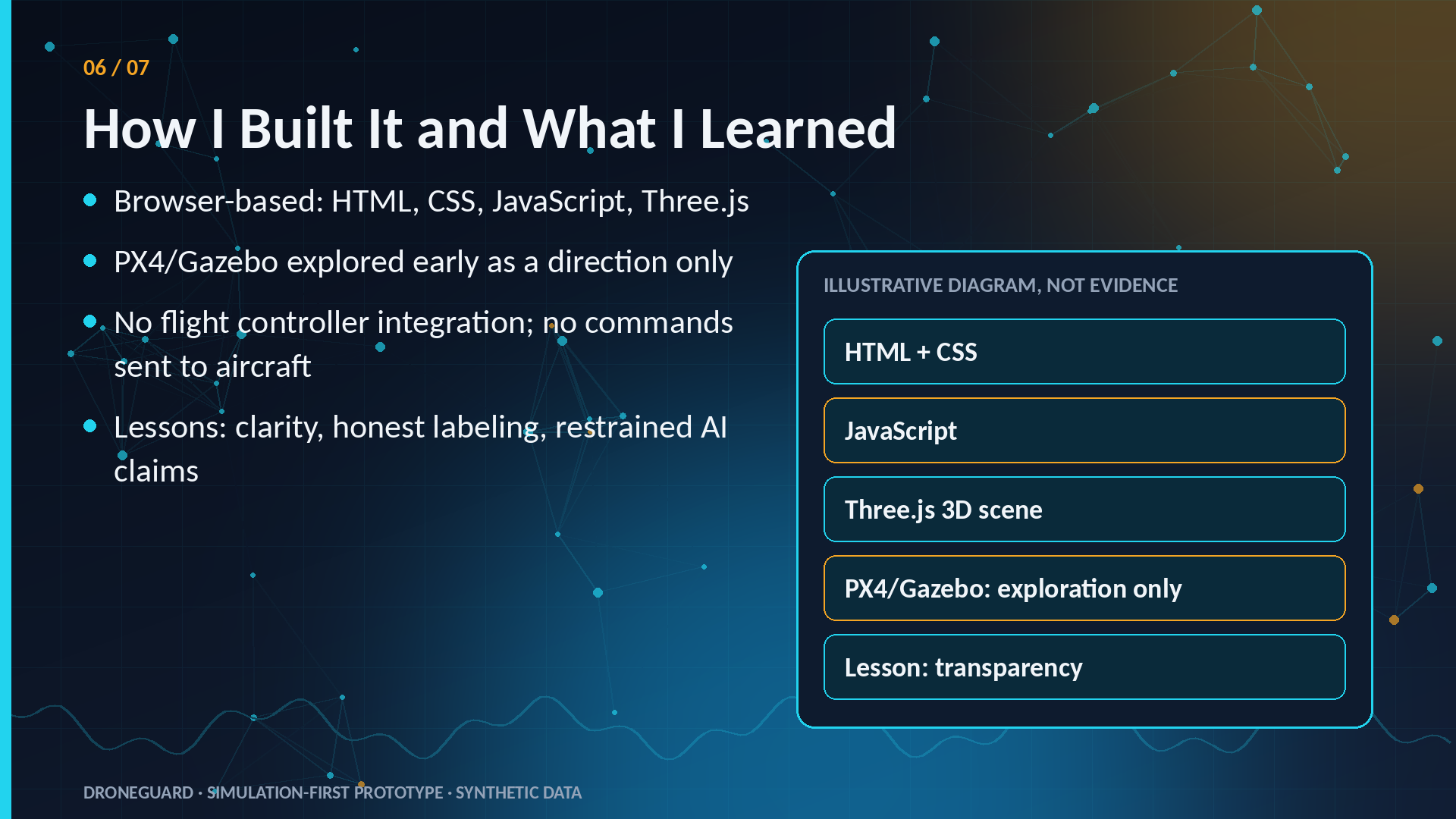
I built DroneGuard as a browser-based application using HTML, CSS, and JavaScript, with Three.js supporting the 3D mission visualization. I focused on making the interface feel like a unified command center instead of a collection of disconnected screens.
I also added controls to start, pause, reset, and change the simulated mission scenario, so someone exploring the project can interact with it rather than just look at screenshots. Alongside the dashboard, I put together documentation and an initial development path for exploring PX4 and Gazebo simulation testing, including a read-only telemetry probe.
There is still integration work to do. The hosted dashboard is not yet connected to a real aircraft or a validated end-to-end flight simulation. I have tried to keep that distinction clear because I want the project to grow through testing and evidence, not just ambitious claims.
Challenges we ran into
One of the biggest challenges was figuring out how to bring flight telemetry, 3D visualization, anomaly awareness, and incident response together without making the interface feel overwhelming. Each part serves a different purpose, but I wanted the whole experience to feel connected and easy to explore.
Another challenge was deciding how to demonstrate the idea without pretending that a simulation proves something about real-world flight safety. It is easy to display an alert on a dashboard, but proving that a system can reliably detect a real problem is a much harder task.
That helped shape how I approached DroneGuard. I focused on building an interactive prototype, documenting what it can currently do, and identifying what needs to be tested before it could be considered for real operational use.
Accomplishments that we're proud of
What I’m most proud of is taking an idea that started as a vision for an intelligent drone assistant and turning it into something people can actually explore in a browser.
The five dashboard views give the project a clear structure, while the interactive simulation controls and 3D visualization make the concept more engaging than a static mockup. I also put time into the documentation so that someone evaluating the project can understand how it works, what is simulated, and where I want to take it next.
I’m proud that DroneGuard is not just about how a futuristic aviation dashboard might look. It is also an opportunity to work through the practical questions of telemetry, anomaly investigation, evidence, and validation that would matter if the idea were developed further.
What we learned
Working on DroneGuard has reinforced something important for me: having information available is not the same as helping someone understand it. A useful mission interface should make it easier to see what is happening, recognize when something needs a closer look, and understand the evidence behind an alert.
I’ve also learned that trust has to be part of the design from the beginning. Simulated values, possible anomalies, actual sensor measurements, and verified model results are not interchangeable. If I want DroneGuard to become something people can rely on, I need to be able to explain where its information comes from and demonstrate that its behavior holds up under testing.
That is why I see the current prototype as a starting point. It has helped me turn the idea into something concrete, and it has given me a clearer understanding of what needs to happen next.
What's next for DroneGuard: AI Flight Intelligence
My next step is to move DroneGuard beyond a standalone simulated dashboard and toward a more thoroughly tested prototype. I want to establish a repeatable PX4 and Gazebo simulation workflow, verify that telemetry can be read and interpreted correctly, and test how the system behaves when known faults are introduced.
From there, I want to explore how anomaly detection could be evaluated using measurable results, including missed events and false alarms. I also want to make the evidence workflow more useful by connecting alerts to relevant timestamps, telemetry, and mission events, so an operator can investigate what happened rather than simply seeing a warning.
Eventually, I would like to explore validated computer-vision models and a more capable mission assistant that can help operators interpret information without taking responsibility away from the human making the decision.
There is a lot left to do, but that is what makes this project exciting to me. DroneGuard is my first step toward an intelligent mission console that brings flight information, visual context, and incident review together in a way that people can actually use and trust. I want to keep building it carefully, testing what works, and earning every claim the project makes.
Built With
- 3d
- anomaly
- aviation
- css
- cv
- detection
- drone
- github
- html
- intelligence
- javascript
- safety
- three.js
- uav

Log in or sign up for Devpost to join the conversation.