-
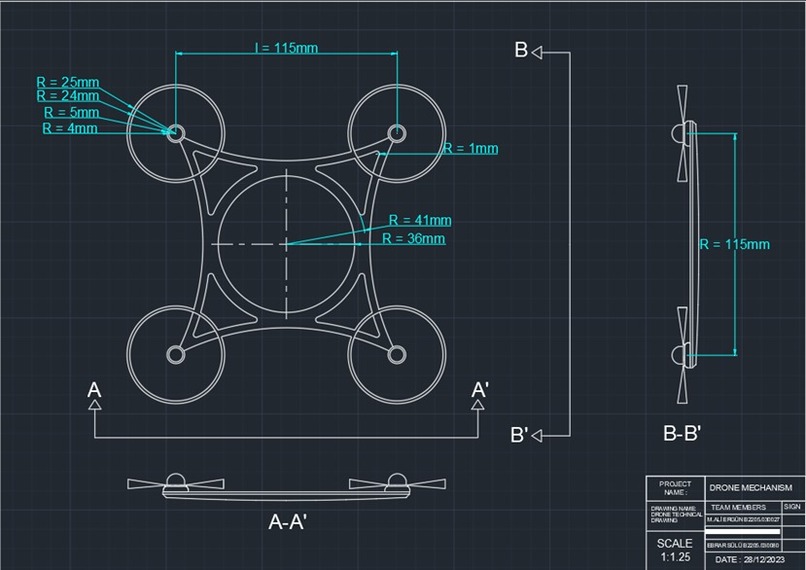
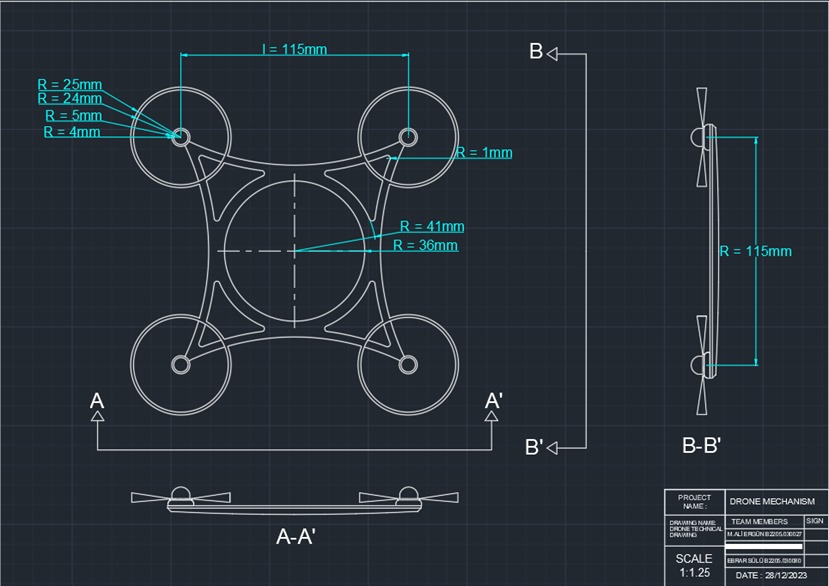
Drone Technical Drawing
-
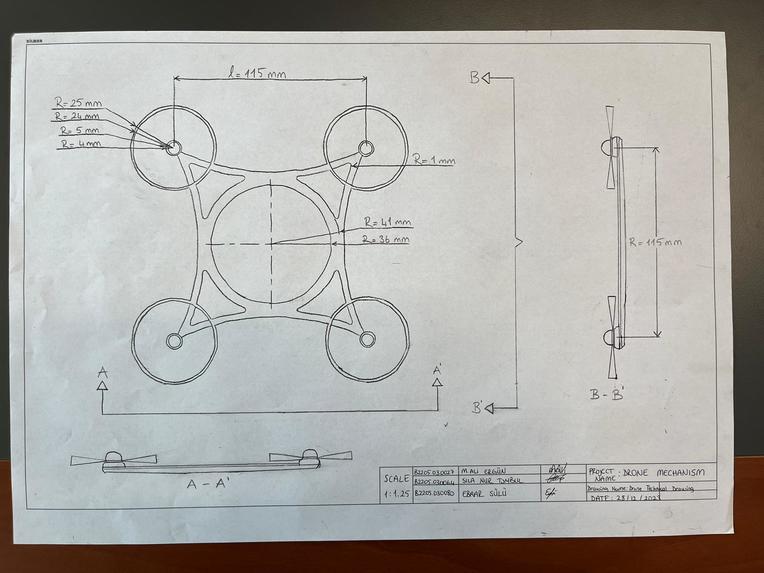
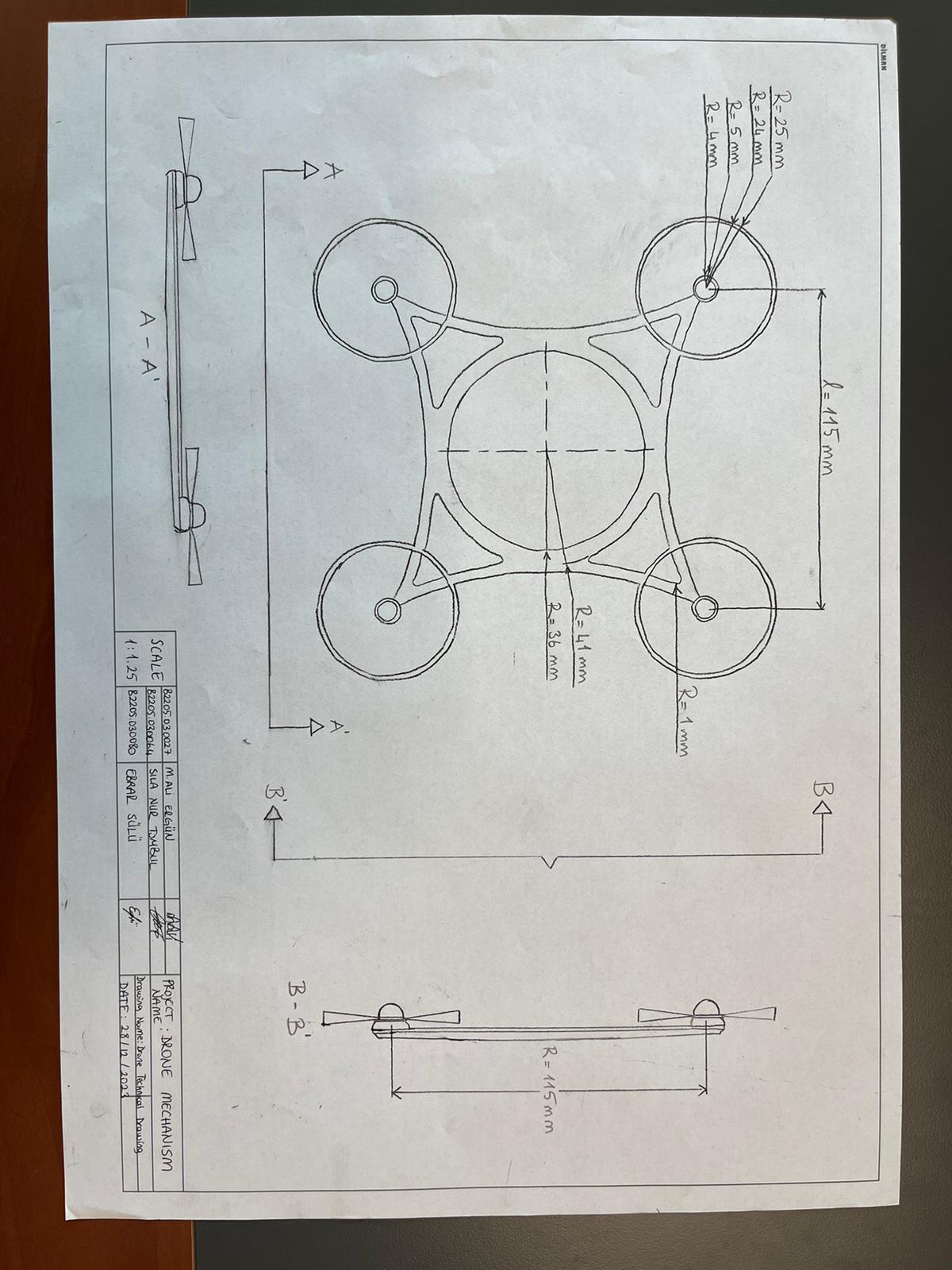
Drone Hand Drawing
-
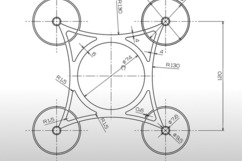
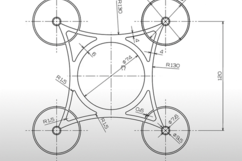
Drone Referance Drawing
-
Linkedin Post
INTRODUCTION
Humanity's enduring dream has been flight, and with advancing technology, various flying products have emerged, prominently among them being drones. These portable devices have rapidly evolved and penetrated multiple domains.
1. HOW IT WORKS
Drones are constructed using lightweight materials for agility and reduced weight, allowing for high-altitude flights. Equipped with sensors, navigation systems, and advanced technology like infrared cameras and GPS, drones rely on rotors—propellers linked to motors—to maneuver in the air. The vehicle's balance is maintained by the different rotational directions of its four rotors.
Accelerometers and altimeters provide crucial data about speed, direction, and altitude, ensuring safe and controlled flight. The mechanism of drone flight is rooted in Newton's laws of motion, enabling manual or autonomous movements through controller sticks and advanced flight control technologies.
2. DRAWING DETAILS
Outlined are AutoCAD commands such as Circle, Fillet, Mirror, Trim, Arc, and Polyline used for drawing drone designs. Details about assumptions for dimensions, scale estimation, print paper selection, and reference figures/resources are provided.
3. CONCLUSIONS
This project involves creating a drone drawing using AutoCAD commands, offering comprehensive information about drones supplemented with images. Pending sections are intended to be completed in the final examination, as outlined in the project plan.
4. PROJECT PLAN FOR THE FINAL EXAM
Create a side section AutoCAD drawing. Print digital drawings in DWG and PDF formats. Calculate scaling and obtain a physical printout on A3 paper for clear dimension understanding. Craft a hand-drawn technical drawing with accurate dimensions. Update references during the ongoing project. Complete the drone mechanism report. Compile a digital drawing CD.
Built With
- autcad
- english
- powerpoint
- word


Log in or sign up for Devpost to join the conversation.