-
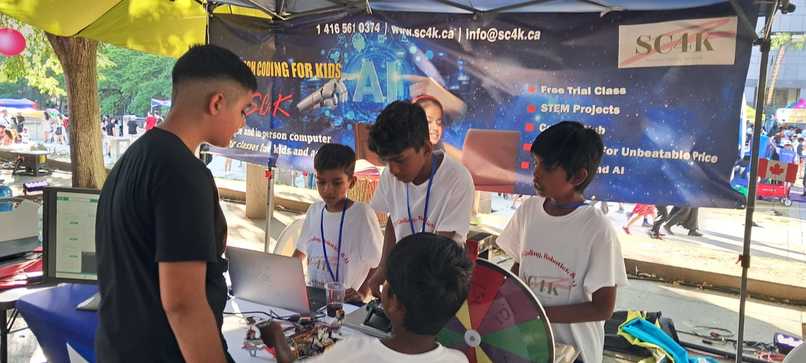
SkyNova.EXE demo
-
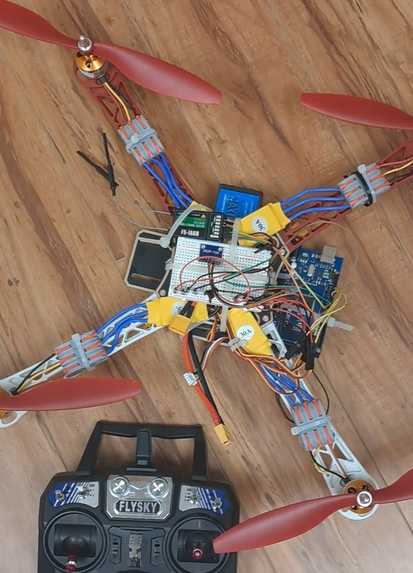
Project SkyNova.EXE
-
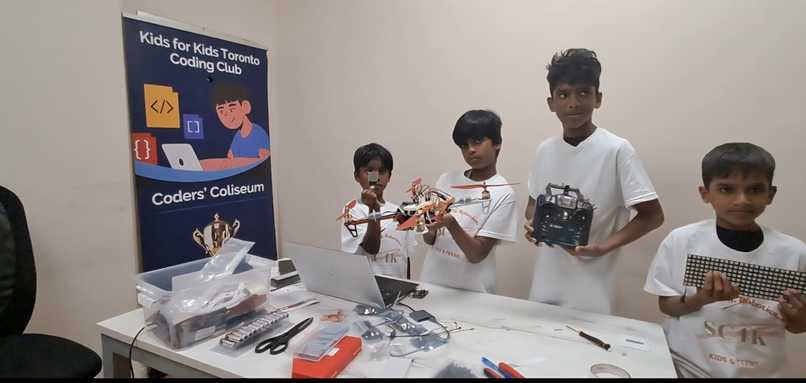
Team SkyNova
-
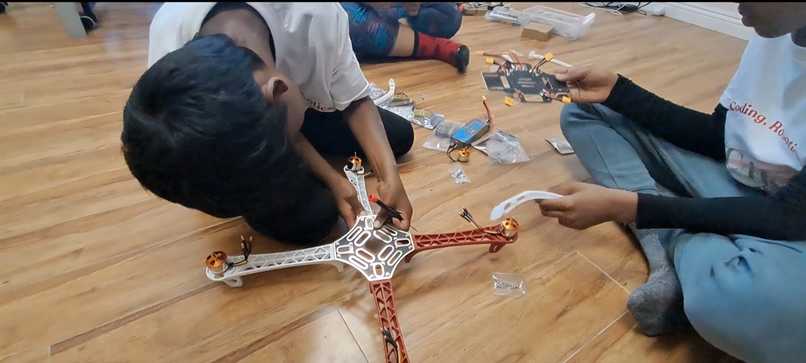
During the project
Project Title: SkyNova.EXE: DIY Arduino Quadcopter
Overview
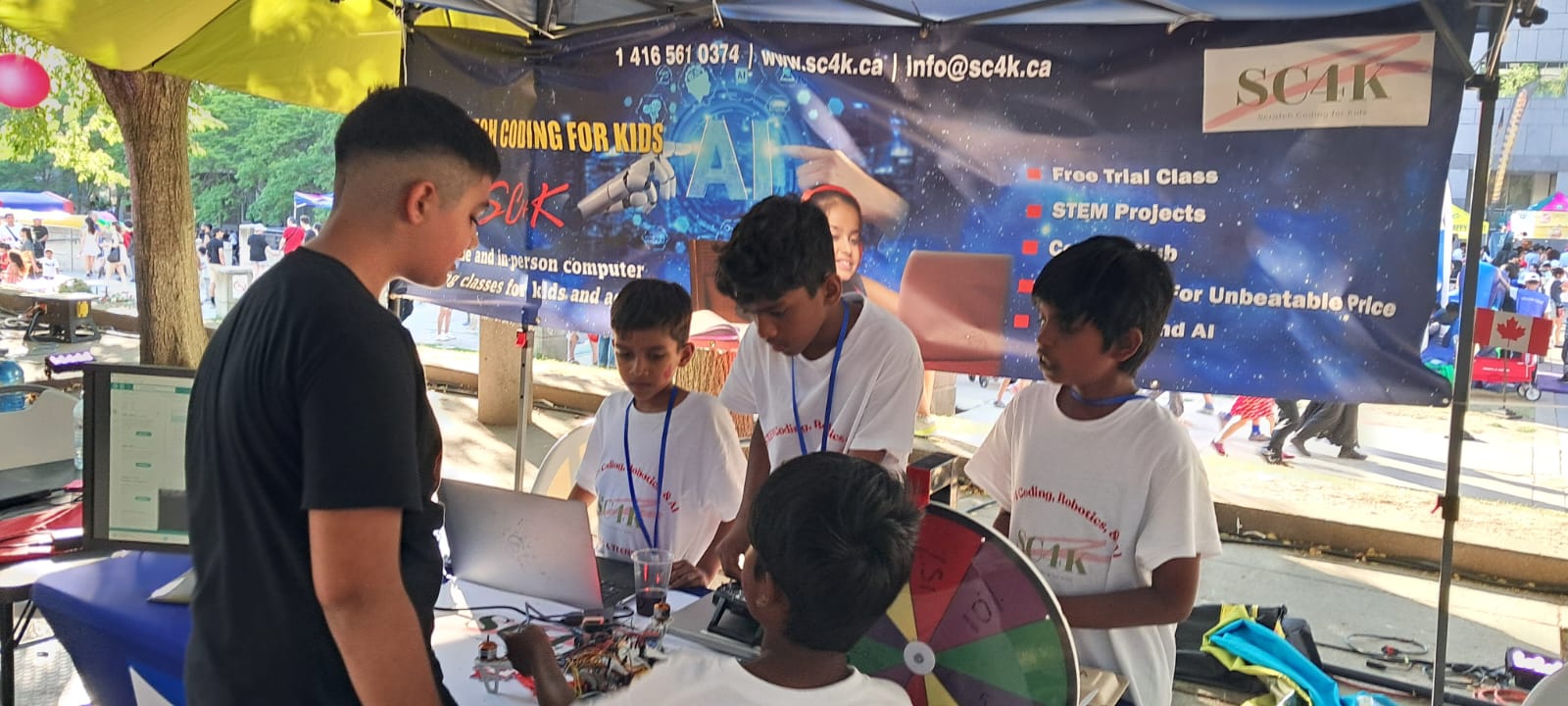
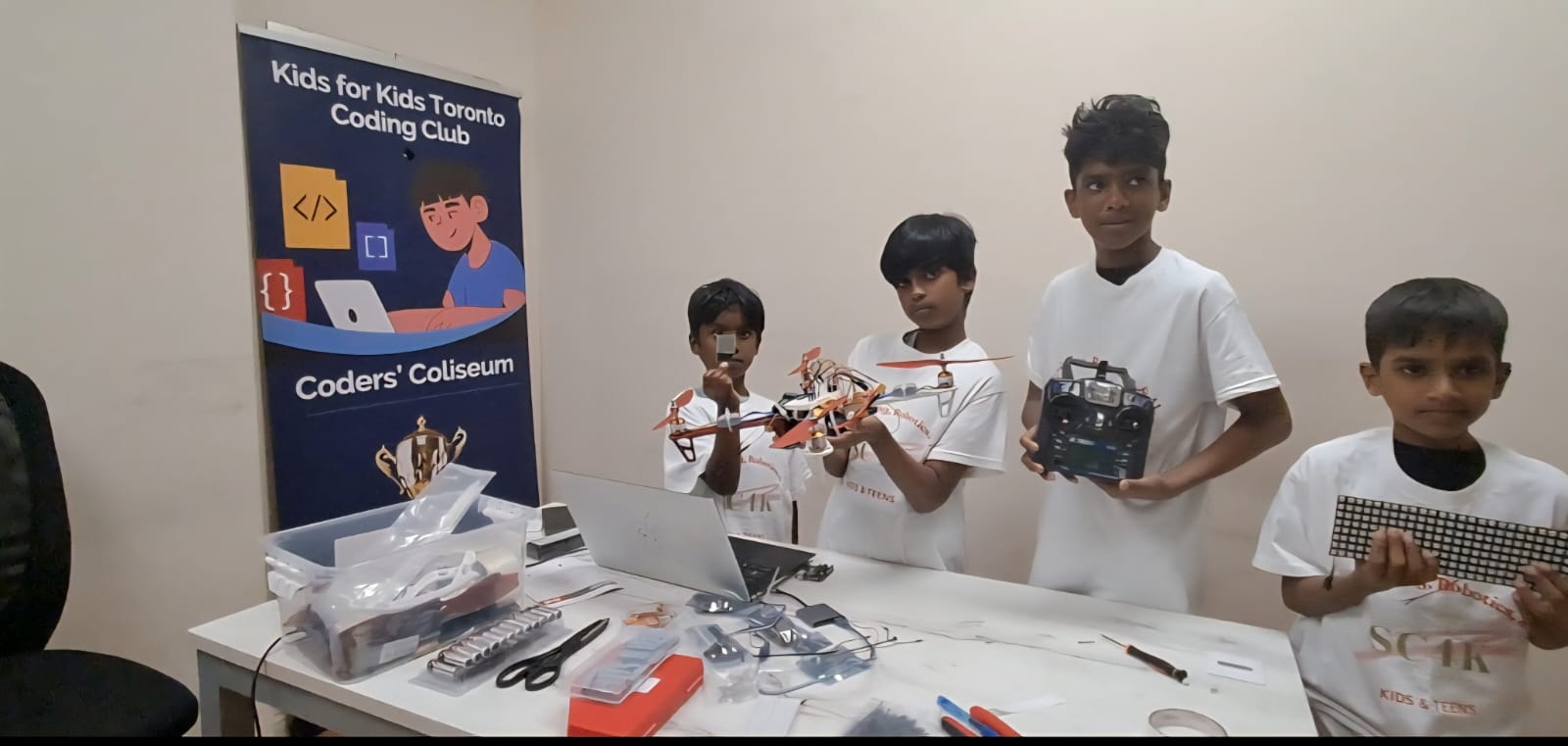
Our four-member team collaborated on a custom quadcopter project for a free demo during the North York Canada Day Celebration. This project, named SkyNova.EXE, was a hands-on exploration of mechatronics, electronics, and flight control programming.
How We Built It
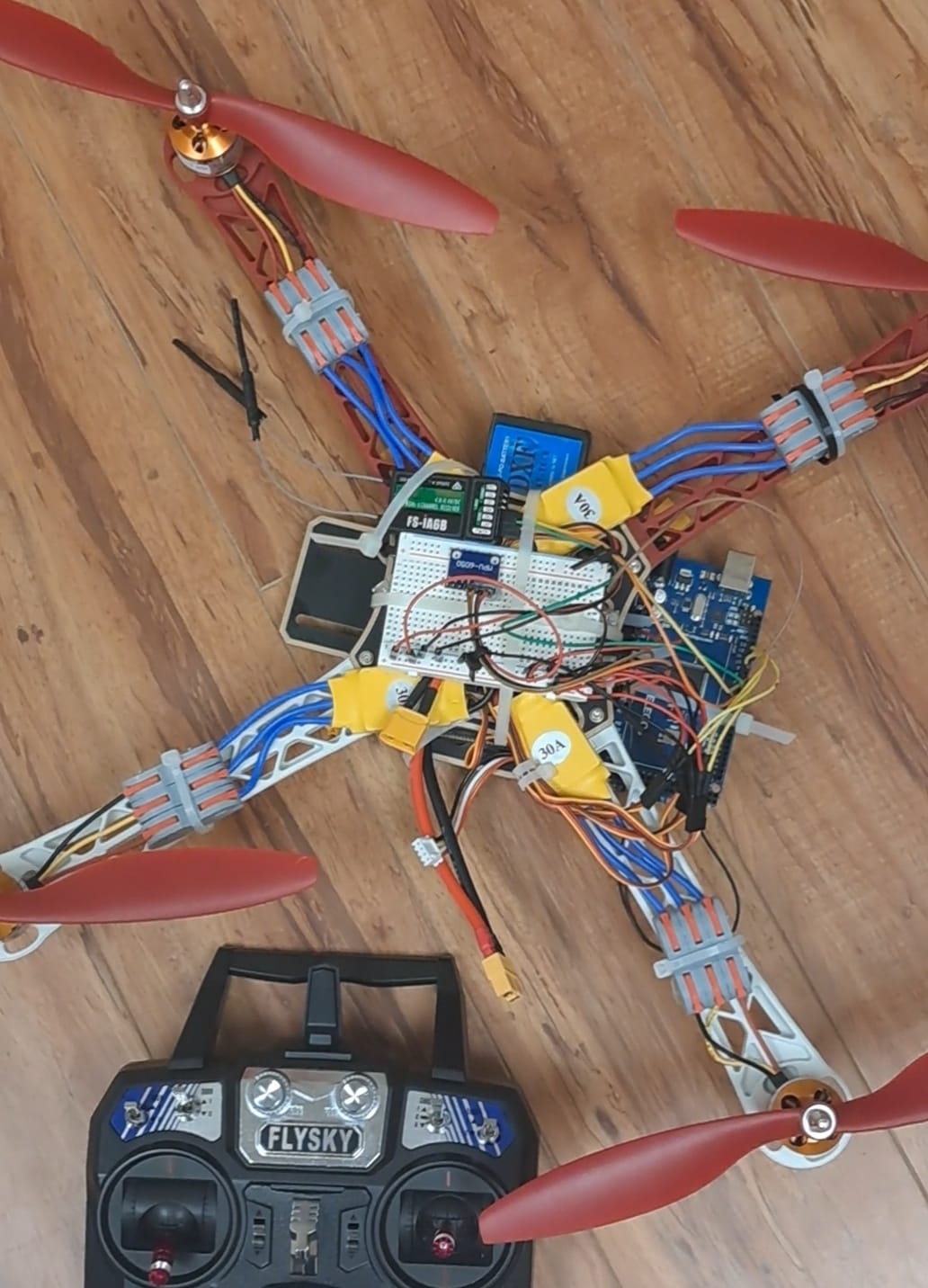
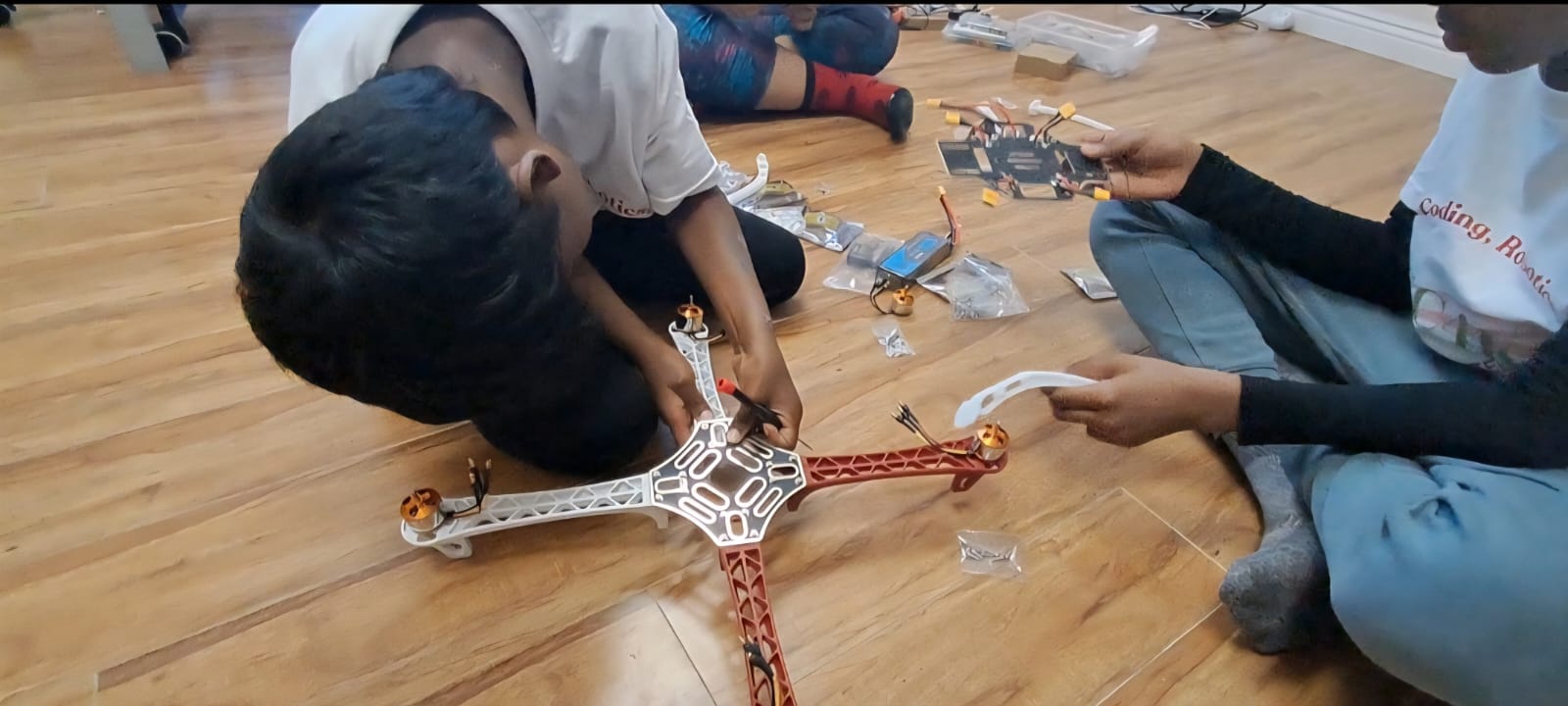
As a team, we constructed the drone using a custom-designed frame and a combination of essential components: #4 Brushless Motors: These provided the necessary thrust to lift the quadcopter. #ESCs (Electronic Speed Controllers): We used these to precisely control the speed and direction of each motor. #LiPo Battery: A powerful battery was used to supply power to all components. #Arduino Mega: This served as our flight controller. We programmed the Arduino to read sensor data and adjust the motor speeds to maintain stable flight. #FlySky Remote & FS-iA6B Receiver: We integrated the FS-iA6B receiver with the Arduino to receive signals from the FlySky remote control, allowing us to wirelessly command the drone's flight.
Challenges
The main challenge we faced as a team was tuning the flight controller. Getting the drone to hover stably required a lot of trial and error to calibrate the PID (Proportional-Integral-Derivative) loop in the code. A small change in one value could cause the drone to become unstable, so it was a great lesson in precision and systematic problem-solving.
What We Learned
Through this project, our team gained a deep understanding of mechatronics, including the relationship between hardware and software. We learned how to wire complex electronic systems, program a microcontroller to process real-time sensor data, and apply principles of control theory to achieve stable flight. The project was a fantastic way to showcase how coding and robotics can bring an idea to life.


Log in or sign up for Devpost to join the conversation.