Inspiration
In the aftermath of natural disasters, delivering essentials quickly can mean the difference between survival and loss. I was inspired by how autonomous systems can overcome physical barriers (floods, landslides, or collapsed roads) to reach isolated communities faster than traditional aid. I wanted to combine our passion for drones and humanitarian tech into something that saves lives.
What it does
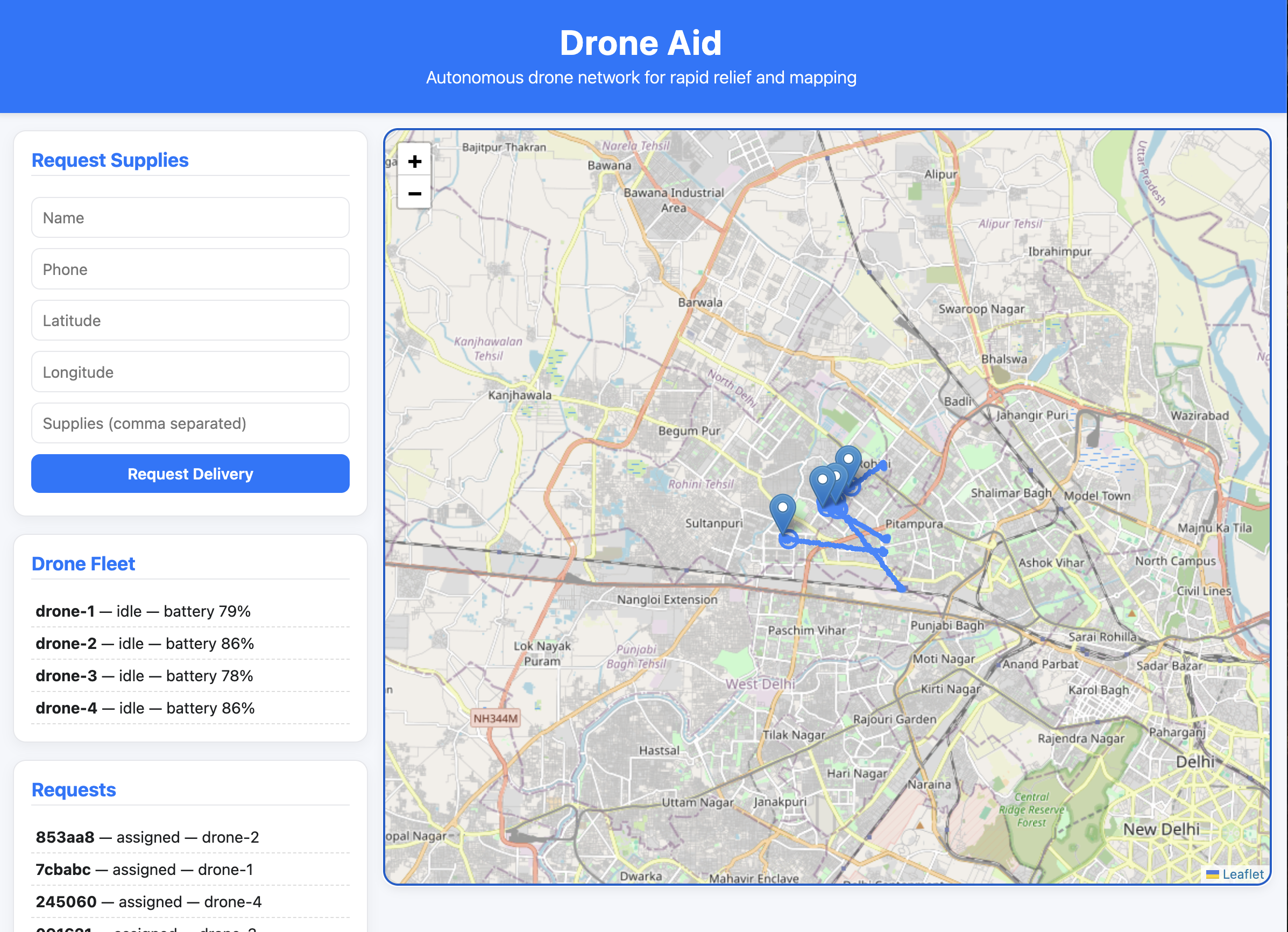
Drone Aid uses autonomous drones to deliver supplies, map affected areas, and connect stranded communities with first responders. Through a simple web interface: Users or relief operators can submit supply requests by location and need. Drones automatically assign themselves to tasks based on proximity and battery level. The system visualizes live drone movements, delivery statuses, and mapping coverage in real time. This creates a transparent, data-driven aid network that bridges the gap between crisis zones and responders.
How we built it
I built Drone Aid using Node.js, Express, and Socket.io for real-time communication between the server and the browser. The frontend is a simple, accessible HTML/CSS/JS interface using Leaflet.js for live map visualization. I designed a simulation script that generates realistic drone missions, automatically updating positions, routes, and delivery confirmations. The project is structured for easy deployment and can later connect to physical drones via APIs like DJI SDK or PX4 MAVLink.
Challenges we ran into
Managing real-time synchronization of drone data and multiple requests without lag. Designing a simple UI that still conveys complex live data effectively.
Accomplishments that we're proud of
Building a fully functional demo that shows real-time drone operations and automated deliveries. Designing a clean, intuitive interface accessible to both rescue teams and civilians
What we learned
I deepened my understanding of real-time systems, autonomous coordination, and how small technical choices can scale into life-saving solutions. Finally, this project reminded me that technology’s greatest purpose is to serve humanity.
What's next for Drone Aid
Integrate real drone APIs for physical field testing. Add machine learning for optimized route planning and hazard detection. Build Twilio SMS/WhatsApp alerts for communities without internet access. Partner with NGOs and disaster response agencies to pilot the system in real relief operations.

Log in or sign up for Devpost to join the conversation.